NoonPost NoonPost

NoonPost

  • Home
  • Politics
  • Economy
  • Society
  • Culture
  • Files
  • Long Reads
  • Podcast
AR
Notification Show More
نون بوست
“There Are Nights I Can’t Close My Eyes”: How Gazans Are Living in Homes on the Brink of Collapse
نون بوست
From al-Jolani to Ahmad al-Shara: The Evolution of Syria’s New Leader
نون بوست
When Political Islam Receded in Egypt: Who Filled the Void?
نون بوست
An Extension of Genocide: Gaza’s Detainees Speak Out
نون بوست
A Tightrope Between Survival and Sovereignty: The Syrian Government Faces Normalization Pressures
نون بوست
American Aircraft Carriers: Has the Era of “100,000 Tons of Diplomacy” Ended?
نون بوست
U.S. Regime‑Change Policies: Why They Are Destined to Fail
نون بوست
Transformations of Israeli Judaism: Between the Victim Complex and the Colonizer’s Doctrine
نون بوست
The Gulf’s Balancing Act: Iran, Israel, and Hidden Links
نون بوست
Iraq–Turkey Oil Export Treaty: Why Did Ankara Cancel It After 52 Years?
نون بوست
Syria’s Northeast on Edge: QSD Between Ankara and Damascus
نون بوست
Has Europe Changed Its Stance on Israel… or Just Its Language?
NoonPost NoonPost
AR
Notification Show More
نون بوست
“There Are Nights I Can’t Close My Eyes”: How Gazans Are Living in Homes on the Brink of Collapse
نون بوست
From al-Jolani to Ahmad al-Shara: The Evolution of Syria’s New Leader
نون بوست
When Political Islam Receded in Egypt: Who Filled the Void?
نون بوست
An Extension of Genocide: Gaza’s Detainees Speak Out
نون بوست
A Tightrope Between Survival and Sovereignty: The Syrian Government Faces Normalization Pressures
نون بوست
American Aircraft Carriers: Has the Era of “100,000 Tons of Diplomacy” Ended?
نون بوست
U.S. Regime‑Change Policies: Why They Are Destined to Fail
نون بوست
Transformations of Israeli Judaism: Between the Victim Complex and the Colonizer’s Doctrine
نون بوست
The Gulf’s Balancing Act: Iran, Israel, and Hidden Links
نون بوست
Iraq–Turkey Oil Export Treaty: Why Did Ankara Cancel It After 52 Years?
نون بوست
Syria’s Northeast on Edge: QSD Between Ankara and Damascus
نون بوست
Has Europe Changed Its Stance on Israel… or Just Its Language?
Follow US

Targeting the U.S. Embassy in Baghdad… Is Iraq Officially Entering the War?

عماد عنان
Emad Anan Published 26 March ,2026
Share
نون بوست
نون بوست

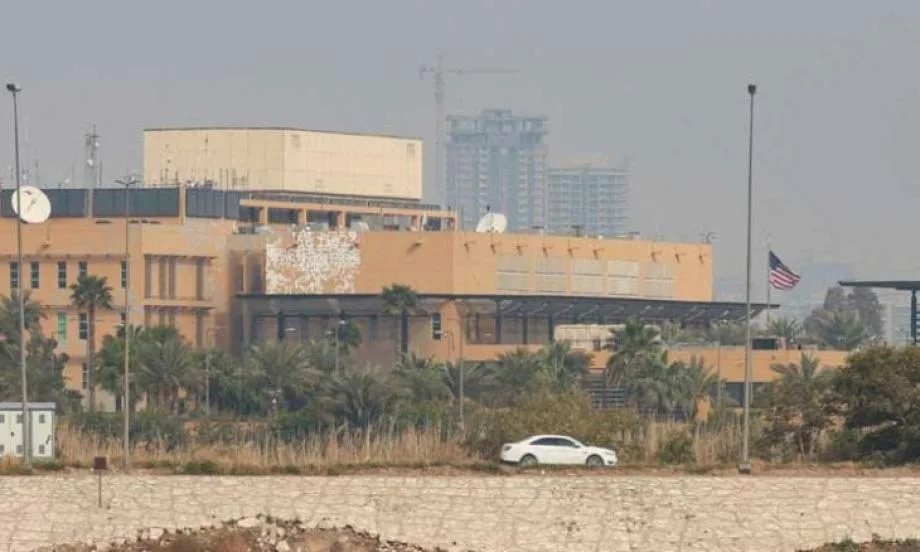
In a highly telling sign of the widening regional confrontation, the targeting of the U.S. Embassy in Baghdad at dawn on Tuesday, March 17, underscores a trajectory of gradual escalation in the U.S.-Israeli war against Iran. It also reveals that the conflict is beginning to extend beyond its immediate actors into more volatile and sensitive arenas.

According to Iraqi security sources, the attack was carried out using rockets and no fewer than five drones launched from the outskirts of the capital. It has been described as the most intense assault on the U.S. Embassy since the outbreak of the war. Reuters, citing a witness, reported that at least three drones headed toward the embassy; air defenses intercepted two, while the third struck inside the compound, leaving visible scenes of fire and rising smoke.

This attack did not occur in isolation, but rather as part of a broader wave targeting the Green Zone and sensitive facilities within the governmental and diplomatic complex, including the Al-Rashid Hotel, which hosts the European Union mission and several European embassies.

The targeting of the U.S. Embassy—given its sovereign and political symbolism—cannot be viewed as a standalone security incident. Instead, it represents a direct message that the war has entered a new phase, one in which traditional restraints are receding in favor of expansion and reciprocal pressure. This raises the likelihood of a more serious, wide-scale regional escalation.

Not Merely a Symbolic Message

Since the outbreak of the war in late February, operations carried out by Iran-aligned factions inside Iraq had largely been symbolic, focusing on harassing U.S. targets across Iraqi provinces. These actions functioned more as warning signals than as attempts to inflict significant, direct losses.

However, this latest attack on the U.S. Embassy has gone beyond its usual symbolic limits, targeting the most prominent representation of American sovereignty in Iraq and resulting in tangible damage, including fires around the embassy compound. Media outlets described it as the most severe attack of its kind since the war began.

Perhaps the most significant message conveyed by this operation is that fortified American installations including political headquarters, foremost among them the embassy are no longer beyond reach. U.S. interests across Iraq have effectively become legitimate targets, reflecting a shift from symbolic pressure to a more daring and dangerous phase in the rules of engagement.

With this operation, Iraq transitions from being a secondary theater of war serving as a support front for Tehran to a directly engaged party in the confrontation. The targeting of the U.S. Embassy in Baghdad, alongside the hotel housing European diplomats, signals that Iraq has clearly and openly entered the battlefield, no longer merely a supportive environment or a secondary arena for exchanging messages.

It appears that Iran-aligned factions in Iraq have adopted a calculated and gradual escalation strategy in their involvement. They initially targeted military sites in an effort to exhaust U.S. capabilities within Iraq, before raising the level of engagement to its highest point by striking the U.S. Embassy itself an act laden with profound political and security implications.

In the same context, Iraq’s direct involvement in the war can be seen as a response to the assassination of the military spokesperson for Iraq’s Kataib Hezbollah, known as Abu Ali al-Askari. This response carries a distinctly retaliatory character, sending a clear message: any U.S. or Israeli targeting of factions inside Iraq will be met with an increase in the cost of the American presence not only at military bases but also in Baghdad itself, at the heart of U.S. diplomatic presence.

Expanding the Scope of the Conflict

Iraq’s involvement in this manner reflects a direct Iranian message to the United States: the confrontation will not remain confined to its immediate actors but will expand into multiple regional arenas. This underscores Tehran’s possession of a clear offensive depth through its network of allied groups across the region, capable of mobilization whenever required by the dynamics of the conflict.

The process began with Hezbollah’s direct involvement, and now the Iraqi front is moving beyond warning signals to become an influential theater in the confrontation. Meanwhile, the Houthi card remains present in Iranian calculations, particularly regarding potential developments in the Strait of Hormuz and the Bab al-Mandeb two highly sensitive strategic corridors.

Iran’s core message today is that even under direct pressure within its own territory, it retains regional levers capable of achieving its objectives beyond its borders. Observers note that this carries particular strategic importance: wars marked by asymmetry in power and resources are not determined solely by the number of targets struck within Iran, but also by Tehran’s and its allies’ ability to distribute the cost of confrontation across embassies, bases, and vital energy corridors throughout the region.

The Failure of U.S. Deterrence Strategy

The targeting of the U.S. Embassy in Baghdad following earlier attacks on American military bases reveals a clear weakness in the effectiveness of Washington’s deterrence strategy inside Iraq. It suggests that this approach is no longer sufficient to guarantee the protection of Americans themselves from Iran-linked forces, a deeply consequential message in military terms.

Despite the limited direct human and military losses, the political and symbolic significance of these attacks far outweighs their field results. They place the United States in a deeply embarrassing position: a superpower unable to protect its most fortified facilities and its most prominent symbols of sovereignty inside Iraq.

Since its entry into Iraq more than two decades ago, Washington has built a significant part of its presence on the premise of deterrence preventing adversaries from approaching its vital interests. Today, however, that assumption appears more fragile than ever, potentially necessitating profound reassessments regarding the future of U.S. deployment and positioning within Iraq.

The United States Between Two Options

What stands out in this development is that the American presence in Iraq is increasingly becoming a political and security burden rather than a manageable temporary condition. The situation has moved beyond limited harassment or symbolic provocations, now striking at the core of U.S. presence and directly threatening its continuity.

If this escalation continues—whether briefly or over a prolonged period it will likely force the United States to confront two difficult options.

The first is to pursue broader escalation against Iran-aligned factions, a path that would carry heavy repercussions for the entire Iraqi landscape and place the Iraqi government in an extremely delicate position both domestically and internationally. This could negatively impact the safety of Americans inside Iraq and Washington’s broader regional interests.

The second option is for the United States to reduce its presence inside Iraq, even if temporarily, until the trajectory of the confrontation with Iran becomes clearer, or to reposition its forces in areas less exposed to targeting by Iran-backed factions.

However, this scenario while potentially reducing immediate risks carries significant political weight. It could be interpreted as a clear American retreat and a success for Iran in imposing its agenda and raising the cost of U.S. presence to an unsustainable level.

With this escalation, the U.S. war against Iran enters a highly sensitive phase, having moved beyond its traditionally limited framework into a direct, multi-front war of attrition. As the scope of confrontation widens and new fronts emerge, fears are growing that the region may slide further toward an open regional war one whose outcomes remain deeply complex and difficult to predict.

Download this article as PDF
Share this Article
Facebook Twitter Whatsapp Whatsapp Telegram Email Copy Link
عماد عنان
By عماد عنان كاتب صحفي وباحث في الإعلام الدولي
Follow:
Previous Article نون بوست On Its 15th Anniversary, Can Syria Transition from Revolution to Statehood?
Next Article نون بوست Regional Escalation Gives Israel Cover to Intensify Its Policies… An Interview with Nihad Abu Ghosh

Read More

  • U.S. Regime‑Change Policies: Why They Are Destined to Fail U.S. Regime‑Change Policies: Why They Are Destined to Fail
  • The Gulf’s Balancing Act: Iran, Israel, and Hidden Links
  • Iraq–Turkey Oil Export Treaty: Why Did Ankara Cancel It After 52 Years?
  • Syria’s Northeast on Edge: QSD Between Ankara and Damascus
  • Has Europe Changed Its Stance on Israel… or Just Its Language?
part of the design
NoonPost Weekly Newsletter

You May Also Like

U.S. Regime‑Change Policies: Why They Are Destined to Fail

U.S. Regime‑Change Policies: Why They Are Destined to Fail

إسراء سيد Esraa sayed 8 April ,2026
The Gulf’s Balancing Act: Iran, Israel, and Hidden Links

The Gulf’s Balancing Act: Iran, Israel, and Hidden Links

فريق التحرير Noon Post 8 April ,2026
Iraq–Turkey Oil Export Treaty: Why Did Ankara Cancel It After 52 Years?

Iraq–Turkey Oil Export Treaty: Why Did Ankara Cancel It After 52 Years?

فريق التحرير Noon Post 8 April ,2026

15 سببًا سيجعلونك تقرر السفر حول العالم

ماريا اورلاندو
ماريا اورلاندو Published 29 April ,2015
Share
DSC_0110

ترجمة صهيب حجاب

هناك دومًا سبب جيد للسفر في جميع أنحاء العالم، الحياة نفسها هي رحلة رهيبة، إذا لم تكن تعلم لم كنت مسافرًا، ربما لم تستخلص الجوهر الحقيقي من السفر، نحن نقدم لك قائمة من العوامل الوجيهة لتسافر حول العالم الآن، بحيث يمكنك التفكير فيما تريد الشروع فيه، كمغامرة جديدة مثلاً، ستمكنك من الحصول على أكبر قدر من الفائدة المرجوة لنفسك.

1 – لتختبر فضولك: الفضول هو محرك الحياة، خلال رحلتك يتيح لك اكتشاف أماكن تقع قبالة الطريق لم تكن تعرفها من قبل، إضافة لكونه يساعدك في اكتشاف ذاتك وما تريده حقا.

2 – لتوسع آفاقك: النظر إلى العالم والتعرف على وجهات نظر مختلفة؛ سيجعلك تفهم أن الجمال هو كل ما يحيط بك، وخصوصا في الأشياء الصغيرة التي تحيط بك عندما تسافر، من السهل أن ترى بعد نهاية أنفك، نعم، فالسفر هو شكل من أشكال الانفتاح ولكن تذكر: “الأفاق المنفتحة ليست كسرًا في الجمجمة” مجهول  (ماريا أورلاندوا)

3- للاكتشاف والتعرف على ثقافات جديدة: في أغلب الأحيان نميل إلى التفكير في ثقافتنا على أنها تعتبر أفضل من أي وقت مضى (تفكير أناني)، لقد ترسخت في عقولنا صورة نمطية خطيرة أغفلت عقولنا عن الحقيقة، السفر يسمح لك أن تزج نفسك تمامًا في عالم آخر، لفهم الديناميكيات الاجتماعية والتاريخ، العادات والتقاليد، وكثيرًا ما تتعطل الأساطير، عليك أيضًا أن تتعلم كيف تعيش كالإنسان المحلي.

4- بناء صداقات جديدة: من الأشياء التي ستحبها في السفر هي لقاء أشخاص جدد تتبادل معهم خبرات الحياة، فكل شخص تلتقيه يجلب شيئًا جديدًا لحياتك، إذا راودك القلق بأن الصداقات في الخارج لاتستمر إلى الأبد بسبب بعد المسافات، فأننا نؤكد لك أنه في معظم الأحيان، تصبح تلك الصداقات هي أكثر قيمة وقوة من أي شيء آخر.

5- لتكتشف نفسك: هل أنت متأكد من أنك تعرف نفسك حق المعرفة؟ أثناء رحلتك ستكتشف جوانب جديدة من شخصيتك لم تتوقع أن تكون لديك، وسيكون بمقدورك أيضًا التعرف على مواهبك واكتشاف مشاعرك الحقيقية.

6- لتختبر حدودك وتتعلم كيفية التكيف:السفر وسيلة لتختبر نفسك وتتعلم كيف تتكيف مع مخاوف وتحديات لم تكن تستطيع التغلب عليها في السابق.

7- الشعور بالحرية: لاتعتبر هذه الرحلة على أنها وسيلة للتخلص من شيء ما، وليس كوسيلة للتركيز على نفسك فقط، إذا كنت معتادًا على صخب المدينة، يجب عليك أن تحاول أن تجرب الطبيعة، ستتمكن من إعادة الإيقاع الحيوي لحياتك اليومية وستعيش لحظات نقية وحقيقية من الحرية.

8 – للتواصل: ستتعلم من السفر أن تتحاور مع ثقافات مختلفة، إضافة إلى أن السفر يساعدك في إرساء طابع شبابي ومثير على حياتك، ويجعلك تقدر منزلتك، ويكسبك حب الناس، دون أن ننسى أن منظورك للحياة سيتغير بشكل مختلف، وكم هو عدد المرات التي قد تجاهلت فيها منزلتك؟

9- النمو: يجعلك السفر تنمو وتتطور كشخص، الناس الذين يعيشون الرحلة انطلاقًا من رغباتهم يحصلون على أكبر قدر من الفائدة الممكنة لحياتهم فلن يكون نفس الشخص عند عودته لمنزله، من مزايا السفر هو أنه يمنحك فرصة تعلم أشياء جديدة (لغات – وصفات جديدة) لأنه يحمل مزايا تعليمية.

10 – تجربة الوحدة: في أغلب الأحيان نعتبر أن الشعور بالوحدة قيمة سالبة، فالوحدة هي حوار خاص مع نفسك خصوصًا إذا كنت بعيدًا عن منزلك، هي فرصة لتتواصل مع ذاتك الداخلية للحصول على نوع من الولادة الجديدة في حياتك.

11 – لتخبرنا بقصتك: فكر في أنه كم يكون من الرائع أن تتبادل المشاعر والعواطف مع أصدقائك وعائلتك عند عودتك للمنزل، سوف تتحول إلى حاكٍ ملهم، الناس يحتاجون لسماع قصصك الرائعة، ستحتفظ بذكريات رحلتك في أي وقت حتما ستفكر في الناس الذين التقيتهم في بلد أجنبي أو ستتذكر المواقف المضحكة.

12 – العيش بدون ندم: ليس لديك وقت لتتأخر، إذا كنت ترغب في زيارة وجهة أحلامك افعل ذلك الآن، لن تندم عليها في حياتك.

13- اقتناص فرص جديدة: هل أنت متأكد أنك ستبقى دومًا في بلدك؟ إذا كنت مسافرًا يمكنك الاستفادة أيضًا من فرص عمل جديدة، تذكر نحن لسنا أشجارًا، ولسنا من وضع الجذور، السفر قد يحمل مفاجآت لك، رحلة واحدة قد تجعلك تخوض تجربة أشياء لم تتخيلها مثلاً: كحب جديد أو فرصة عمل جديدة، السفر يحول الأمور العادية إلى أشياء غير عادية.

14- قطع الاتصال بالعالم: نحن معتادون جدًا على مطاردة الدقائق، الساعات، الأيام، وكثيرًا ما نجد أنفسنا في نهاية اليوم نتساءل: “لم يكن لدينا الوقت لـ …..” السفر يسمح لك بالاسترخاء.

15- تذكر كم أنت محظوظ: الناس في جميع أنحاء العالم يعيشون حقائق قاسية، لقد كنت محظوظا بما فيه الكفاية ليكون لديك سقف فوق رأسك، وجبة ساخنة، وكذلك الناس الذين يحبونك ويثرون حياتك، سوف تصبح نظرتك إلى الأشياء منطلقة من منظور مختلف، وستتعلم أن تقول: “شكرا”.

ماهي أفكارك؟ لماذا تسافر وماذا تعلمت من السفر؟

مقال مترجم من المصدر:

https://www.travellector.com/15-reasons-to-travel-around-th…/

TAGGED: السفراء العرب ، المنع من السفر ، جواز السفر
TAGGED: المجتمع
Download this article as PDF
Share this Article
Facebook Twitter Whatsapp Whatsapp Telegram Email Copy Link
ماريا اورلاندو
By ماريا اورلاندو مدونة ايطالية
Follow:
Next Article نون بوست The Stigma of “ISIS”: A Heavy Legacy Haunting Women and Children of Former Members

Read More

  • U.S. Regime‑Change Policies: Why They Are Destined to Fail U.S. Regime‑Change Policies: Why They Are Destined to Fail
  • The Gulf’s Balancing Act: Iran, Israel, and Hidden Links
  • Iraq–Turkey Oil Export Treaty: Why Did Ankara Cancel It After 52 Years?
  • Syria’s Northeast on Edge: QSD Between Ankara and Damascus
  • Has Europe Changed Its Stance on Israel… or Just Its Language?
part of the design
NoonPost Weekly Newsletter
dark

An independent media platform founded in 2013, rooted in slow journalism, producing in-depth reports, analysis, and multimedia content to offer deeper perspectives on the news, led by a diverse young team from several Arab countries.

  • Politics
  • Society
  • Rights & Liberties
  • Opinions
  • History
  • Sports
  • Education
  • Technology
  • Economy
  • Media
  • Arts & Literature
  • Entrepreneurship
  • Travel
  • Cinema & Drama
  • Food
  • Health
  • Culture
  • Latest Reports
  • Files
  • Long Reads
  • Interviews
  • Podcast
  • Interactive
  • Encyclopedia
  • In Pictures
  • About Us
  • Our Writers
  • Write for Us
  • Editorial Policy
  • Advanced Search
Some rights reserved under a Creative Commons license

Removed from favorites

Undo
Go to mobile version