NoonPost NoonPost

NoonPost

  • Home
  • Politics
  • Economy
  • Society
  • Culture
  • Files
  • Long Reads
  • Podcast
AR
Notification Show More
نون بوست
“There Are Nights I Can’t Close My Eyes”: How Gazans Are Living in Homes on the Brink of Collapse
نون بوست
From al-Jolani to Ahmad al-Shara: The Evolution of Syria’s New Leader
نون بوست
When Political Islam Receded in Egypt: Who Filled the Void?
نون بوست
An Extension of Genocide: Gaza’s Detainees Speak Out
نون بوست
A Tightrope Between Survival and Sovereignty: The Syrian Government Faces Normalization Pressures
نون بوست
American Aircraft Carriers: Has the Era of “100,000 Tons of Diplomacy” Ended?
نون بوست
U.S. Regime‑Change Policies: Why They Are Destined to Fail
نون بوست
Transformations of Israeli Judaism: Between the Victim Complex and the Colonizer’s Doctrine
نون بوست
The Gulf’s Balancing Act: Iran, Israel, and Hidden Links
نون بوست
Iraq–Turkey Oil Export Treaty: Why Did Ankara Cancel It After 52 Years?
نون بوست
Syria’s Northeast on Edge: QSD Between Ankara and Damascus
نون بوست
Has Europe Changed Its Stance on Israel… or Just Its Language?
NoonPost NoonPost
AR
Notification Show More
نون بوست
“There Are Nights I Can’t Close My Eyes”: How Gazans Are Living in Homes on the Brink of Collapse
نون بوست
From al-Jolani to Ahmad al-Shara: The Evolution of Syria’s New Leader
نون بوست
When Political Islam Receded in Egypt: Who Filled the Void?
نون بوست
An Extension of Genocide: Gaza’s Detainees Speak Out
نون بوست
A Tightrope Between Survival and Sovereignty: The Syrian Government Faces Normalization Pressures
نون بوست
American Aircraft Carriers: Has the Era of “100,000 Tons of Diplomacy” Ended?
نون بوست
U.S. Regime‑Change Policies: Why They Are Destined to Fail
نون بوست
Transformations of Israeli Judaism: Between the Victim Complex and the Colonizer’s Doctrine
نون بوست
The Gulf’s Balancing Act: Iran, Israel, and Hidden Links
نون بوست
Iraq–Turkey Oil Export Treaty: Why Did Ankara Cancel It After 52 Years?
نون بوست
Syria’s Northeast on Edge: QSD Between Ankara and Damascus
نون بوست
Has Europe Changed Its Stance on Israel… or Just Its Language?
Follow US

Gas Deal with the Occupation: Is Jordan Paying the Price of Dependence?

فريق التحرير
Noon Post Published 26 March ,2026
Share
نون بوست
نون بوست

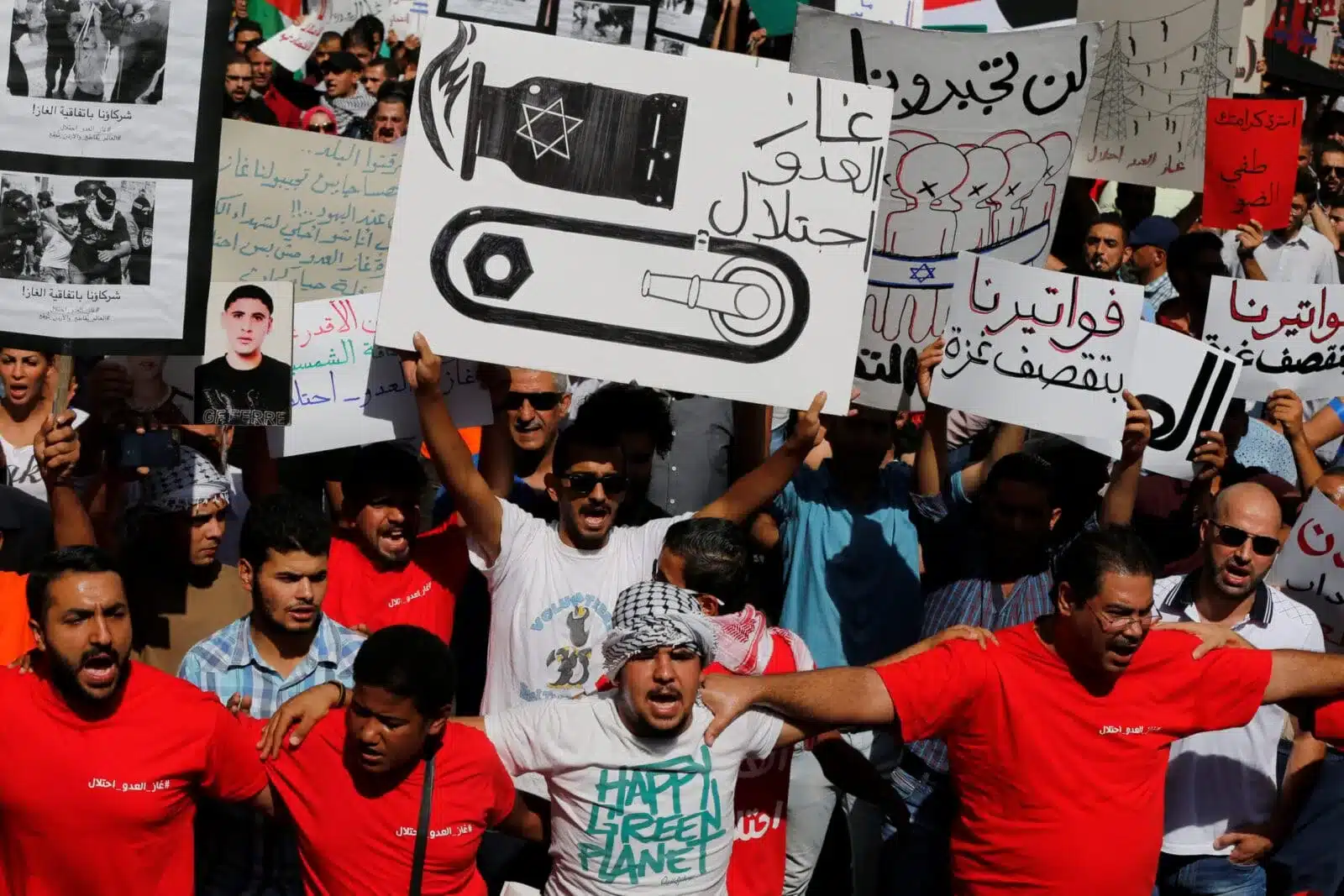
Young Jordanians gathered in Al-Rabiah, near the Israeli embassy in Amman, in front of the U.S. embassy in Abdoun, across downtown streets, and throughout the country’s governorates, chanting a slogan whose echo has not faded for more than twelve years: “From the south to the north, the enemy’s gas is occupation.” What began as a chant has become the defining headline of recurring protests present in the streets, yet absent from the ears of successive governments.

This has remained the case even after Israel cut gas supplies to Jordan for the second time in less than a year, following the U.S.-Israeli assault on Iran earlier this month.

In 2014, Amman signed a letter of intent to import gas from Israel, followed by a formal agreement in 2016. Gas began flowing in 2020. Today, Israeli gas covers more than 50% of Jordan’s needs, with reports indicating that the supplied volumes continue to rise.

Annual imports have reached approximately 3 billion cubic meters in recent years marking a profound economic shift for a country whose consumption was virtually nonexistent before 2019.

Historically, Jordan relied on neighboring Arab countries for oil and gas. From the 1960s through the 1980s, supplies primarily came from Saudi Arabia and other Gulf states. After the First Gulf War in 1990, dependence shifted to Iraq until the U.S. invasion in 2003. Jordan then turned to Egypt, but the unrest following the 2011 revolution disrupted supplies.

To compensate, Jordan imported crude oil from global markets at a high cost, leading to significant deficits for the state-owned National Electric Power Company (NEPCO).

In 2016, NEPCO signed the agreement for gas extracted from the Leviathan field in the Mediterranean Sea, operated by the American oil giant Chevron and under Israeli control.

Following the U.S.-Israeli assault on Iran, Israel abruptly cut gas supplies to Jordan without prior notice. Minister of Energy and Mineral Resources Saleh Kharabsheh stated that recent regional developments had disrupted the kingdom’s access to natural gas from Mediterranean fields used in electricity generation.

An emergency plan was activated, shifting to alternative energy sources, including liquefied natural gas via a floating terminal, as well as diesel and heavy fuel oil.

In late February, Israel’s Ministry of Energy announced that natural gas exports had been halted following reduced production amid Iranian missile attacks. A spokesperson explained in press statements that “due to the security situation, operations at some natural gas fields have been temporarily suspended, which has, among other things, led to a temporary halt in exports at this stage.”

Why Has Jordan Not Canceled the Agreement?

The Jordanian National Campaign to Abolish the Gas Agreement with the Zionist Entity—active for over 12 years—issued a statement asserting that the moment is ripe for Jordan to terminate the deal. It cited the supplier’s failure to meet contractual obligations and the suspension of supply during a critical emergency as grounds for immediate cancellation and a shift toward sovereign energy investments.

The statement stressed that no justification remains for maintaining what it described as “catastrophic” agreements with the enemy, calling for their immediate termination.

The government, however, defends its position by noting Jordan’s heavy reliance on natural gas to operate power plants. Around 97% of the country’s energy needs are imported, making any sudden cancellation a risk to national energy security.

Officials also highlight the agreement’s role in reducing electricity production costs, with NEPCO estimates suggesting savings of around $600 million annually compared to diesel and heavy fuel alternatives.

Energy and natural resources consultant Mubarak Al-Tahrawi argues that Israel halted supplies without officially declaring force majeure, potentially constituting a breach of contract if continued without clear legal justification. He estimates that the disruption could cost Jordan roughly $1.5 million per day due to reliance on more expensive alternative fuels.

In comments posted on Facebook, Al-Tahrawi noted that international commercial law offers Jordan several options: demanding specific performance to compel the supplier to resume agreed deliveries, seeking financial compensation for direct damages such as higher fuel costs, and addressing indirect damages like increased deficits at NEPCO.

Another option would be contract termination if a fundamental breach is proven particularly if force majeure was not properly declared. Al-Tahrawi explained that international energy contracts typically include complex provisions regarding force majeure and good faith, potentially allowing Jordan to challenge any selective application of these clauses.

What Options Does Jordan Have?

Jordan is not without alternatives in the event of supply disruptions. It can use the liquefied natural gas terminal in Aqaba to import gas from global markets if pipeline supplies stop. The government has also explored coordination with Gulf states to secure gas in case of prolonged disruptions.

The campaign’s statement pointed to additional alternatives, including investing in sovereign energy sources, redirecting billions toward the Risha gas project, oil shale, renewable energy, and green hydrogen. Until full energy independence is achieved, Jordan can rely on floating regasification vessels and the Aqaba LNG port to secure global supplies.

Jordan may also pursue a more independent path, having discovered new natural gas reserves in late 2024. Given its limited fossil fuel resources, the country has strong potential—abundant sunlight and technical expertise to expand renewable energy production.

Campaign secretary-general Mohammed Al-Absi emphasized that all agreements with the “Zionist entity” are categorically rejected, noting that this is not the first disruption in gas supply. He argued that it is unjust to abandon domestic potential while relying on an adversary for energy security.

Speaking to Noon Post, Al-Absi stressed the need to sever the agreement and avoid linking energy to occupation, arguing that the billions spent could have been invested in sovereign energy projects.

Energy expert Amer Al-Shobaki, however, believes the available options are limited. Importing oil or gas from countries such as Libya or Algeria poses political and logistical challenges. He also warned that an expanded regional conflict could increase global pressure on non-Gulf energy sources, placing Jordan’s energy security under one of its toughest tests in decades.

Abdel Salam Al-Zyoud, spokesperson for the Energy and Minerals Regulatory Commission, stated that sufficient reserves of petroleum products and gas are available, reassuring that incoming shipments are on their way to the kingdom.

What Is the Impact of the Gas Cut on Jordan?

The disruption in gas supplies has immediate implications for Jordan’s energy sector, particularly rising electricity production costs as power plants switch to diesel and heavy fuel both significantly more expensive than natural gas.

If the disruption persists, the government may be forced to borrow to cover the growing cost gap, with potential consequences for consumers and industry through higher electricity prices.

Al-Shobaki described the situation as extremely critical, noting Jordan’s near-total dependence on imports for energy importing all its oil and around 97% of its natural gas.

As gas supplies decline, pressure has shifted to diesel, with demand rising sharply for electricity generation and industrial use by major companies such as the Jordan Phosphate Mines Company and the Arab Potash Company after gas supplies halted.

This surge in demand prompted the Ministry of Energy to issue directives rationing diesel sales at fuel stations an indication, Al-Shobaki said, that the country has entered what he called an “energy crisis tunnel” that may persist as regional tensions continue.

He warned of potential economic repercussions, including unprecedented increases in gasoline and diesel prices in the coming months unless the government intervenes an option that would place additional strain on the public budget.

In the electricity sector, the issue extends beyond cost increases potentially multiplying several times to the risk of outages if oil supplies from the Gulf, particularly Saudi Arabia, are disrupted. While the Attarat oil shale plant supplies about 15% of electricity needs and solar energy contributes during daylight hours, the sector remains vulnerable to regional supply fluctuations.

Chairman of the parliamentary Energy Committee, MP Ayman Abu Hanieh, noted that alternative energy sources are available but still limited. Renewable energy accounts for around 27% of electricity production, while oil shale contributes 17%. The floating LNG terminal in Aqaba supplies gas every 15 days from Egypt.

He stated that the current emergency plan is effective so far, stressing the importance of avoiding power outages. He also noted that the parliamentary committee has recently pushed to accelerate the approval of the 2025 Gas Purchase Law to expand self-reliance and investment in new energy discoveries.

It is worth noting that the Israel Electric Corporation filed an arbitration case before the International Chamber of Commerce in Paris in December 2015 following attacks on the Sinai gas pipeline and the halt of Egyptian gas supplies to Israel in 2011.

The arbitration ruling favored Israel, obliging Egyptian entities the Egyptian General Petroleum Corporation and EGAS to pay $1.76 billion in compensation to the Israel Electric Corporation.

This raises a pressing question: if Israel was able to sue Egypt and pursue compensation in international courts, why has Jordan not taken similar legal action following repeated supply disruptions? And when will Amman heed the voices of its youth and cancel the gas agreement or at least demand compensation for these interruptions?

Download this article as PDF
Share this Article
Facebook Twitter Whatsapp Whatsapp Telegram Email Copy Link
فريق التحرير
By فريق التحرير تقارير يعدها فريق تحرير نون بوست.
Follow:
Previous Article نون بوست Regional Escalation Gives Israel Cover to Intensify Its Policies… An Interview with Nihad Abu Ghosh
Next Article نون بوست Trump Warns of a “Bleak Future for NATO” Could the Alliance Be Drawn Into War With Iran?

Read More

  • U.S. Regime‑Change Policies: Why They Are Destined to Fail U.S. Regime‑Change Policies: Why They Are Destined to Fail
  • The Gulf’s Balancing Act: Iran, Israel, and Hidden Links
  • Iraq–Turkey Oil Export Treaty: Why Did Ankara Cancel It After 52 Years?
  • Syria’s Northeast on Edge: QSD Between Ankara and Damascus
  • Has Europe Changed Its Stance on Israel… or Just Its Language?
part of the design
NoonPost Weekly Newsletter

You May Also Like

U.S. Regime‑Change Policies: Why They Are Destined to Fail

U.S. Regime‑Change Policies: Why They Are Destined to Fail

إسراء سيد Esraa sayed 8 April ,2026
The Gulf’s Balancing Act: Iran, Israel, and Hidden Links

The Gulf’s Balancing Act: Iran, Israel, and Hidden Links

فريق التحرير Noon Post 8 April ,2026
Iraq–Turkey Oil Export Treaty: Why Did Ankara Cancel It After 52 Years?

Iraq–Turkey Oil Export Treaty: Why Did Ankara Cancel It After 52 Years?

فريق التحرير Noon Post 8 April ,2026

المآلات القلقة لمعركة لا تبدو سهلة ولا قصيرة

بشير موسى
بشير موسى Published 30 April ,2015
Share
1368Day4Egy-1024x671

تفاجأ الرأي العام السعودي والعربي مساء الأربعاء 22 أبريل/ نيسان بالإعلان الرسمي من الرياض حول نهاية عملية “عاصفة الحزم”، بعد شهر واحد فقط من انطلاقها، وبدء ما سمي بعملية “إعادة الأمل”.

ما فهم خلال الساعات القليلة التالية للإعلان السعودي أن ثمة صفقة تم التوصل إليها، ذكرت مصادر غير معرفة بأنها تستند إلى وساطة عمانية أو مقترحات تركية، وأن كلاً من روسيا وإيران تعهدتا بالتزام عبد الله صالح والحوثيين ببنود الصفقة. ونشر، استناداً إلى المصادر ذاتها، أيضاً، أن الصفقة تضمنت مغادرة الرئيس السابق عبد الله صالح وأفراد أسرته اليمن؛ وانسحاب الحوثيين والقوات التي تساندهم من قطاعات الجيش الموالية لصالح من المدن اليمنية، وتسليم الحوثيين السلاح الذي نهبوه من معسكرات الجيش اليمني، والإقرار بشرعية الرئيس عبد ربه منصور هادي، على أن يستأنف الحوار اليمني السياسي تحت إشراف الأخير وحكومته. ما فاجأ عموم السعوديين والعرب، أولاً، أن بيان توقف “عاصفة الحزم” لم يواكبه تغيير جوهري على أرض المعركة؛ وأن الإعلان الرسمي السعودي حول المرحلة التالية أكتنفه الكثير من الغموض. في الجانب الآخر من المعركة، حيث أوساط الحوثيين والمعسكر الإيراني المؤيد، اندلعت حالة من الابتهاج والاحتفال بما وصف بـنهاية “العدوان الخارجي على اليمن وشعبه”.

بيد أن احتفال الحوثيين وحلفائهم كان مبكراً بعض الشيء، كما يبدو. نحن نعرف اليوم، بعد مرور أكثر من أسبوع على توقف “عاصفة الحزم” أن شيئاً كبيراً أو ملموساً في ساحة الحرب لم يتغير. لم تزل جماعات المقاومة الشعبية والقوات الموالية للرئيس الشرعي تخوض المعارك ضد جماعات الحوثيين والقوات الموالية لصالح. ولم تزل الطائرات السعودية وحلفائها تغير على مواقع الحوثيين وقوات صالح، وإن تغيرت طبيعة عملها من الهجمات على أهداف استراتيجية إلى الأهداف التكتيكية المتعلقة بالمواجهات الدائرة على الأرض والقوات المتحركة. مصادر مقربة من الرئيس السابق أكدت أن لا صالح ولا أفراد أسرته بصدد مغادرة اليمن واللجوء إلى الخارج. ولم يصدر عن الحوثيين أو المتحدثين باسمهم أية إشارة تفيد بموافقتهم على قرار مجلس الأمن الدولي 2216 المتعلق باليمن، والذي قيل أنه الأساس الذي ارتكزت إليه صفقة الإتفاق. ومنذ مساء 24 نيسان/إبريل، انتهت المهلة التي تضمنها القرار الدولي، قبل أن تبدأ محاولات نقل الحرب من مظلة الشرعية اليمنية، إلى مظلة الأمم المتحدة.

لم تعد الحرب في اليمن مجرد حرب داخلية للسيطرة على الحكم والبلاد؛ بل أنها لم تكن كذلك منذ أيلول/سبتمبر الماضي، عندما بدأ الحوثيون توسعهم باتجاه صنعاء وإطاحة الرئيس هادي وحكومته. القول بأن الحوثيين ولدوا من رحم إيراني هو بالطبع قول غير صحيح؛ ولكن ما إن اتضحت توجهات الحوثيين الدينية ورغبتهم في بناء روابط وثيقة مع إيران حتى أصبحوا جزءاً من استراتيجية التوسع الإيرانية. ويصعب تصور تحول الحوثيين من قوة محلية إلى التحالف مع عبد الله صالح، وإلى مشروع سيطرة على اليمن، بدون دعم إيراني مالي وسياسي. والحقيقة، أن الدعم الإيراني العسكري للحوثيين بدأ من سنوات، والأدلة على هذا الدعم يصعب إنكارها أو تجاهلها. ولكن لا قوة الحوثيين البشرية، ولا الدعم الزيدي المحدود لهم، أهلاهم للمضي في مشروع السيطرة الكاملة. ما وفر لهم السند الضروي هو بالتأكيد الرئيس السابق وقطاعات الجيش المرتبطة به وأسرته، والتي تفوق نصف القوات المسلحة اليمنية، على الأقل، بما في ذلك الحرس الجمهوري، القوات الخاصة، سلاح الجو ووحدات الصواريخ. بهذا المعنى، انفجرت الأزمة اليمنية كمشروع ردة على الثورة اليمنية وعملية الانتقال الديمقراطي، ومشروع سيطرة طائفية مطلقة على الحكم والبلاد، بدعم كبير من الخارج. وبمجرد انطلاق “عاصفة الحزم” تطورت الأزمة إلى معركة صراع إقليمي بين المشروع التوسعي الإيراني، في جهة، والمملكة العربية السعودية وحلفائها، من جهة أخرى؛ وهي في طريقها إلى التحول لأزمة دولية. ليس من الواضح ما إن كان مجلس الأمن يتجه إلى نوع من التوافق شبيه بذلك الذي أدى إلى صدور القرار 2216، سيما أن مثل هذا التوافق يتطلب استرضاء إضافياً للروس. والأرجح أن توافقاً جديداً سيوفر للعملية العسكرية في اليمن، التي تقوم بها السعودية وحلفاؤها، غطاءً دولياً لم تكن تتمتع به عندما بدأت.

مهما كان المسار السياسي والدبلوماسي للحرب، فالواضح أن شهراً من القصف الجوي والمقاومة الشعبية اليمنية قد صنع متغيرات ملموسة. ما شاع منذ بدء الحرب أن القصف الجوي لن يؤدي إلى نتيجة ما، ولن يغير موازين القوى على الأرض. وهذا بالتأكيد ليس صحيحاً، ولا علاقة له بطبيعة الحروب الحديثة. لا يحسم القصف الجوي الحروب، ولكن في حال استناده إلى معلومات استخباراتية وعملياتية دقيقة، يمثل أداة بالغة الضراوة للحرب.
أوقعت المرحلة الأولى من القصف الجوي دماراً واسعاً بقوات صالح ونقاط الحشد والارتكاز للحوثيين؛ ويترك دخول الحرب إلى مرحلتها الثانية وما باتت القوة الجوية تقدمه من دعم للعمليات على الأرض، أثراً ملموساً على أداء المقاومة الشعبية وقوات الجيش الموالية للحكومة الشرعية. ولكن المهم في النهاية أن هذه معركة طويلة ومعقدة، أطول وأعقد مما ظن كثيرون، ربما بما في ذلك السعودية التي اتخذت قرار الحرب. لا تتطلب هذه الحرب صبراً ونفساً طويلاً وحسب، ولكنها تتطلب أيضاً جهوداً متعددة الأوجه، إضافة إلى العملية الجوية.

تتطلب الحرب تجهيزاً أفضل للمقاومة الشعبية والقوات الموالية، بما في ذلك المقاومة التي تشكلت وفي طريقها للتشكل في المدن الرئيسية، مثل عدن وتعز ومأرب وصنعاء والحديدة، وقوات القبائل المسلحة. اليمنيون هم بالطبع شعب مسلح أصلاً، ولكن هذه مواجهة تفوق القدرات التسليحية التقليدية لليمنيين. ولا ينبغي الإصغاء للأمريكيين الذين يخشون وقوع السلاح في يد جماعات القاعدة وأخواتها. هذه الحرب لا يجب أن يحسمها، ولن يحسمها، سوى اليمنيين أنفسهم، وعلى السعودية وحلفائها تجنب التورط برياً، ليس فقط لأن دخول قوات غير يمنية أرض المعركة هو أمر محفوف بالمخاطر، ولكن أيضاً لأن الشعب اليمني هو وحده المسؤول عن المآل النهائي لهذه المعركة. وإلى جانب المساعدات العسكرية، لابد من العمل على تنظيم قيادة يمنية مركزية للمقاومة الشعبية وقوات الجيش الموالية. وهذه أيضاً مسؤولية الحكم اليمني الشرعي، سيما رئيس الحكومة ونائب الرئيس. بدون وجود قيادة مركزية، ستتحول المواجهة على الأرض إلى جبهات معزولة عن بعضها البعض، لا تحكمها استراتيجية واحدة، ولا تستطيع الواحدة منها مساندة الأخرى، أو الإسهام في بناء توازن جديد للقوة في عموم البلاد.

بيد أن الأزمة اليمنية، في النهاية، لن تحل بإبادة الحوثيين أو القوات الموالية لصالح. هؤلاء يمنيون وجزء من الشعب اليمني، وسيبقون كذلك، حتى بعد أن تورطوا في مشروع لا ناقة لليمنيين فيه ولا جمل، ودفعوا البلاد إلى حافة الحرب الأهلية. الهدف الاستراتيجي للحرب لابد أن يكون إيقاع هزيمة لا جدل فيها بالحوثيين وصالح، وضع حد لمشروع السيطرة الذي تعهدوه، ورسم خط في الرمال أمام التدخل الإيراني في اليمن. بعد ذلك، وبعد ذلك فقط، يجب أن يعود اليمنيون، بلا هيمنة طرف على آخر، أو إرهاب طرف لآخر، إلى طاولة الحوار، للاتفاق على مستقبل توافقي لوطنهم، يحقق الاستقرار ويفتح المجال لبناء دول حرة وعادلة.

TAGGED: #عاصفة_الحزم ، النفوذ الإيراني في اليمن ، عاصفة الحزم
TAGGED: عاصفة الحزم
Download this article as PDF
Share this Article
Facebook Twitter Whatsapp Whatsapp Telegram Email Copy Link
بشير موسى
By بشير موسى كاتب وباحث عربي في التاريخ الحديث
Follow:
Next Article نون بوست The Stigma of “ISIS”: A Heavy Legacy Haunting Women and Children of Former Members
part of the design
NoonPost Weekly Newsletter
dark

An independent media platform founded in 2013, rooted in slow journalism, producing in-depth reports, analysis, and multimedia content to offer deeper perspectives on the news, led by a diverse young team from several Arab countries.

  • Politics
  • Society
  • Rights & Liberties
  • Opinions
  • History
  • Sports
  • Education
  • Technology
  • Economy
  • Media
  • Arts & Literature
  • Entrepreneurship
  • Travel
  • Cinema & Drama
  • Food
  • Health
  • Culture
  • Latest Reports
  • Files
  • Long Reads
  • Interviews
  • Podcast
  • Interactive
  • Encyclopedia
  • In Pictures
  • About Us
  • Our Writers
  • Write for Us
  • Editorial Policy
  • Advanced Search
Some rights reserved under a Creative Commons license

Removed from favorites

Undo
Go to mobile version