NoonPost NoonPost

NoonPost

  • Home
  • Politics
  • Economy
  • Society
  • Culture
  • Files
  • Long Reads
  • Podcast
AR
Notification Show More
نون بوست
“There Are Nights I Can’t Close My Eyes”: How Gazans Are Living in Homes on the Brink of Collapse
نون بوست
From al-Jolani to Ahmad al-Shara: The Evolution of Syria’s New Leader
نون بوست
When Political Islam Receded in Egypt: Who Filled the Void?
نون بوست
An Extension of Genocide: Gaza’s Detainees Speak Out
نون بوست
A Tightrope Between Survival and Sovereignty: The Syrian Government Faces Normalization Pressures
نون بوست
American Aircraft Carriers: Has the Era of “100,000 Tons of Diplomacy” Ended?
نون بوست
U.S. Regime‑Change Policies: Why They Are Destined to Fail
نون بوست
Transformations of Israeli Judaism: Between the Victim Complex and the Colonizer’s Doctrine
نون بوست
The Gulf’s Balancing Act: Iran, Israel, and Hidden Links
نون بوست
Iraq–Turkey Oil Export Treaty: Why Did Ankara Cancel It After 52 Years?
نون بوست
Syria’s Northeast on Edge: QSD Between Ankara and Damascus
نون بوست
Has Europe Changed Its Stance on Israel… or Just Its Language?
NoonPost NoonPost
AR
Notification Show More
نون بوست
“There Are Nights I Can’t Close My Eyes”: How Gazans Are Living in Homes on the Brink of Collapse
نون بوست
From al-Jolani to Ahmad al-Shara: The Evolution of Syria’s New Leader
نون بوست
When Political Islam Receded in Egypt: Who Filled the Void?
نون بوست
An Extension of Genocide: Gaza’s Detainees Speak Out
نون بوست
A Tightrope Between Survival and Sovereignty: The Syrian Government Faces Normalization Pressures
نون بوست
American Aircraft Carriers: Has the Era of “100,000 Tons of Diplomacy” Ended?
نون بوست
U.S. Regime‑Change Policies: Why They Are Destined to Fail
نون بوست
Transformations of Israeli Judaism: Between the Victim Complex and the Colonizer’s Doctrine
نون بوست
The Gulf’s Balancing Act: Iran, Israel, and Hidden Links
نون بوست
Iraq–Turkey Oil Export Treaty: Why Did Ankara Cancel It After 52 Years?
نون بوست
Syria’s Northeast on Edge: QSD Between Ankara and Damascus
نون بوست
Has Europe Changed Its Stance on Israel… or Just Its Language?
Follow US

Trump Warns of a “Bleak Future for NATO” Could the Alliance Be Drawn Into War With Iran?

عماد عنان
Emad Anan Published 26 March ,2026
Share
نون بوست
نون بوست

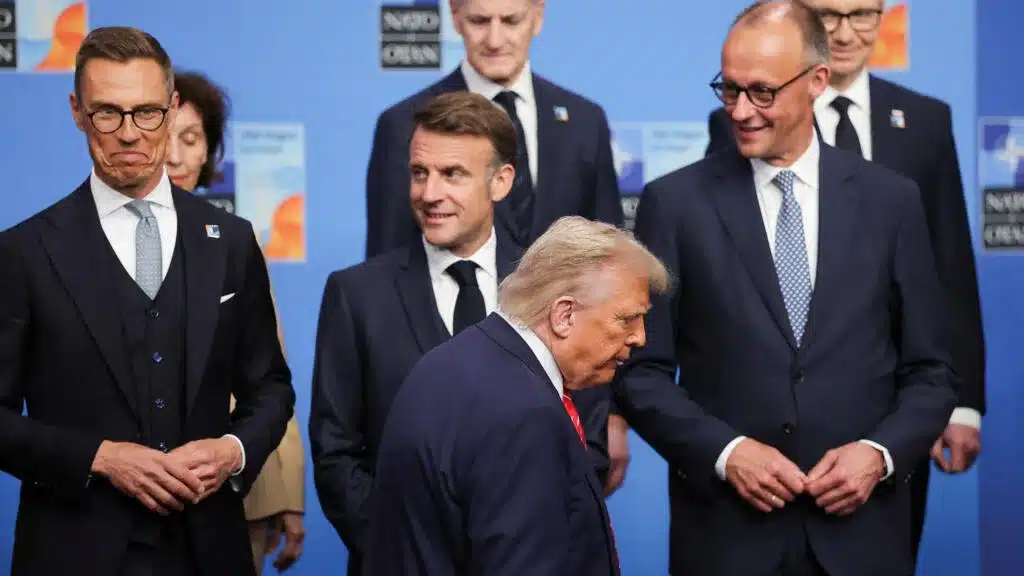
U.S. President Donald Trump has issued new threats to his European allies, warning of what he described as a “very bad future” that may await the North Atlantic Treaty Organization (NATO) if it does not move to provide practical support in securing the Strait of Hormuz, which is facing growing disruption and partial closure due to the fallout from the war against Iran.

In an interview with the Financial Times, Trump argued that European countries now owe Washington politically and strategically, particularly after the extensive support the United States has provided to Europe and Ukraine in recent years. He called on several European states—most notably Britain and France—to deploy naval forces, minesweepers, and special units to help reopen the strait, alongside other international actors such as China, Japan, and South Korea.

The American president added in a tone that carried both skepticism and pressure: “We’ll see now if they help us. I’ve always said we’ll be there for them, but they won’t be there for us, and I’m not sure they will.” The remark once again underscores Trump’s approach to redefining obligations within Western alliances according to a logic of mutual interest and equal burden-sharing an approach that has fueled tensions between the United States and its European partners in recent months.

In light of this warning far from the first of its kind NATO now finds itself facing a deeply complex dilemma: balancing fears of sliding into a broader confrontation with Iran against concerns about provoking Trump’s anger and the possibility of harsher American positions toward the alliance. What strategy, then, can NATO adopt to escape this predicament without paying a heavy strategic price on either side?

War Deepens Europe’s Internal Divisions

The U.S.-Israeli war against Iran has exposed the fragility of European cohesion, contributing to deeper divisions across the continent and revealing growing fractures within the NATO structure between Europe and the United States, according to Britain’s The Telegraph.

The newspaper argues that one of the war’s most significant indirect consequences has been the widening rift between Europe and Washington. The Atlantic alliance which has served as one of the pillars of American dominance since 1945 appears at this moment like a “hollow shell,” amid a decline in the sense of mutual obligation and a growing tendency to prioritize narrow national interests over the demands of strategic partnership.

The paper traced the signs of this divergence back to the earliest moments of the conflict, noting that Trump launched the war without meaningful coordination with European allies. Meanwhile, the ultimate objective of the military operation remained ambiguous whether the aim was to undermine Iran’s military capabilities, push for regime change, or impose a form of total capitulation on Tehran.

The newspaper also cited the positions of several European capitals particularly Madrid, London, and Rome as clear indicators of tensions with Washington. In Spain, Foreign Minister José Manuel Albares accused the United States and Israel of violating international law in Iran and called on Europe to condemn the ongoing airstrikes. Madrid subsequently moved to permanently withdraw its ambassador to Israel amid escalating diplomatic tensions over its opposition to the American and Israeli attacks.

In Britain, relations with Washington also appeared strained after the war exposed differences in the two countries’ approaches. According to the newspaper, Trump voiced objections to London’s refusal to participate in the initial strikes. British Prime Minister Keir Starmer also faced a degree of mockery from the American president after Britain considered sending an aircraft carrier to West Asia, only to later abandon the move and cancel emergency plans related to the deployment.

NATO’s Strategic Calculations

NATO’s approach to the ongoing war is shaped by five key determinants guiding its political and military behavior.

First: Avoid turning the alliance into a direct party to the war

NATO is keen to distance itself from direct involvement in a confrontation with Iran, recognizing the dangers of sliding into an open-ended war that goes beyond the alliance’s traditional defensive framework. This approach is rooted in clear precedents. During the 2019 Strait of Hormuz crisis, former NATO Secretary General Jens Stoltenberg stressed that the presence of some member states in the region did not mean NATO itself was present as an alliance.

The same logic reappeared during the first Iranian war in June 2025, when the alliance’s official response was limited to daily consultations and managing developments without announcing a new combat mission under NATO’s umbrella.

Second: Protecting existing forces and missions rather than opening new fronts

One of NATO’s top priorities is safeguarding its forces already deployed in the Middle East, particularly in Iraq, where the alliance carries out logistical and training missions within existing international frameworks. From this perspective, NATO prefers strengthening its current presence and preventing the war’s spillover from threatening its assets and personnel in the region, rather than becoming entangled in new fronts for which it is neither politically nor militarily prepared especially given the significant operational and financial burdens such involvement would entail.

Third: Preserving limited military capabilities and avoiding exhaustion

Considerations of capacity and readiness play a significant role in the alliance’s calculations, particularly in light of chronic imbalances in defense spending and armament levels among several of its members an issue that Trump has repeatedly used to criticize NATO and its European partners.

As a result, NATO has little strategic interest in becoming involved in another war that could further deplete its remaining military capabilities, especially after the heavy strain that the war in Ukraine has already placed on member states’ weapons stockpiles and defense resources.

Fourth: Managing regional balances and protecting strategic interests

NATO countries recognize that they maintain a broad network of economic, logistical, and strategic interests across the Middle East. Entering the war as a direct party could expose those interests to Iranian retaliation, as occurred with American assets during previous escalations.

For this reason, European states have shown considerable caution regarding any direct involvement, preferring to maintain a delicate balance between safeguarding their regional interests and avoiding a wider confrontation that could undermine their influence and presence in the region.

Fifth: Concerns over the war’s economic and political repercussions

NATO and European capitals more broadly are increasingly worried about the indirect repercussions of the war, particularly on the economic and social levels within Europe. Since the first day of the conflict, its effects have quickly begun to reverberate across the continent through rising gas and fuel prices and growing discussions about possible austerity measures to contain the anticipated costs of the crisis.

Should European countries become directly involved in the war, these repercussions could intensify significantly, increasing pressure on European governments. This factor is especially sensitive at a time when public opinion in Europe is becoming more cautious about automatically aligning with American foreign policy approaches particularly when their economic and political costs are high and when their benefits for Europe’s direct interests remain uncertain.

Possible Paths of Involvement

At the same time, European policymakers are acutely aware of the sensitivity of relations with the Trump administration, especially given the tone of warning and pressure adopted by the American president. Even as European capitals emphasize sovereignty and strategic autonomy, they understand that the United States still shoulders the largest share of NATO’s defense burden and maintains the alliance’s most extensive military presence, in addition to serving as its primary security umbrella.

As a result, while NATO is reluctant to enter the war directly as an institutional actor, it is equally unwilling to trigger another cycle of tensions with Washington. The alliance is therefore likely to pursue a middle-ground approach, offering partial or limited forms of support that ease American pressure without sliding into full-scale involvement.

This scenario appears even more realistic given that Trump’s request was directed at specific countries rather than at NATO as a unified entity. That distinction provides European states with greater room for maneuver while reducing the institutional embarrassment facing the alliance itself.

Any European or NATO support for the United States is therefore likely to come through contributions from individual member states rather than through a formal NATO operation. Such cooperation could take the form of maritime security arrangements outside the alliance’s institutional framework, similar to the initiatives led by the United States or individual European states during the 2019 crisis.

European participation—if it occurs—is expected to focus on defensive or technical roles such as mine clearance, escorting vessels, and providing aircraft or drones for surveillance and protection rather than engaging in an open war against Iran.

Through this pragmatic balancing act, NATO appears intent on managing the complex equation by protecting strategic interests, ensuring maritime security, and avoiding becoming a direct participant in the war. Consequently, any response by individual alliance members will likely remain limited, national in scope, and outside NATO’s formal umbrella.

A direct NATO operation against Iran therefore remains politically unlikely at least for the time being unless developments on the ground or shifts in European strategic calculations force a reassessment in the future.

Download this article as PDF
Share this Article
Facebook Twitter Whatsapp Whatsapp Telegram Email Copy Link
عماد عنان
By عماد عنان كاتب صحفي وباحث في الإعلام الدولي
Follow:
Previous Article نون بوست Gas Deal with the Occupation: Is Jordan Paying the Price of Dependence?
Next Article نون بوست Targeting Kharg Island Militarily… Will It End the War or Prolong It?

Read More

  • U.S. Regime‑Change Policies: Why They Are Destined to Fail U.S. Regime‑Change Policies: Why They Are Destined to Fail
  • The Gulf’s Balancing Act: Iran, Israel, and Hidden Links
  • Iraq–Turkey Oil Export Treaty: Why Did Ankara Cancel It After 52 Years?
  • Syria’s Northeast on Edge: QSD Between Ankara and Damascus
  • Has Europe Changed Its Stance on Israel… or Just Its Language?
part of the design
NoonPost Weekly Newsletter

You May Also Like

U.S. Regime‑Change Policies: Why They Are Destined to Fail

U.S. Regime‑Change Policies: Why They Are Destined to Fail

إسراء سيد Esraa sayed 8 April ,2026
The Gulf’s Balancing Act: Iran, Israel, and Hidden Links

The Gulf’s Balancing Act: Iran, Israel, and Hidden Links

فريق التحرير Noon Post 8 April ,2026
Iraq–Turkey Oil Export Treaty: Why Did Ankara Cancel It After 52 Years?

Iraq–Turkey Oil Export Treaty: Why Did Ankara Cancel It After 52 Years?

فريق التحرير Noon Post 8 April ,2026

لماذا رفض الأمير طلال قرارات الملك سلمان الأخيرة؟

فريق التحرير
Noon Post Published 30 April ,2015
Share
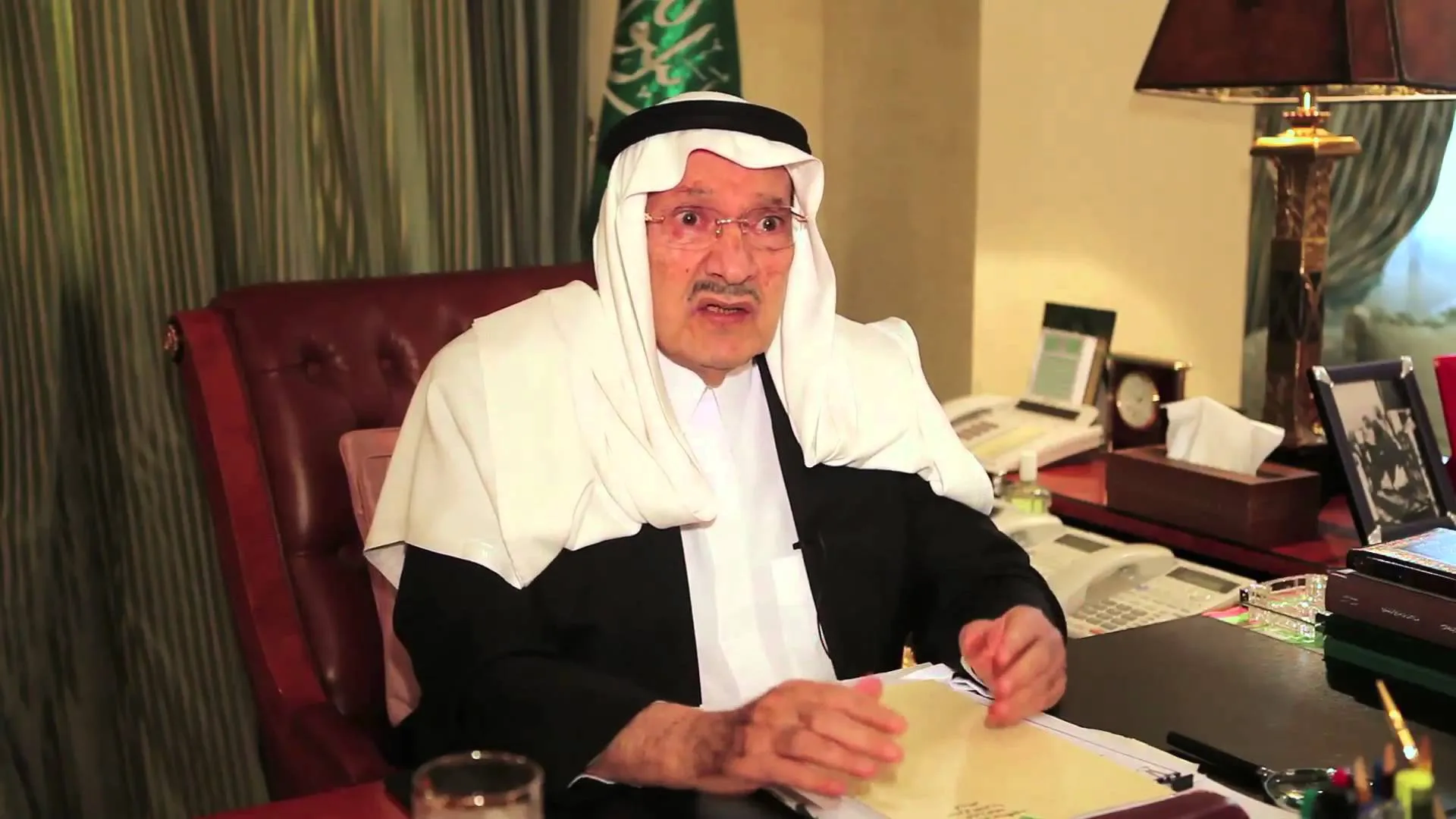
maxresdefault

عقب إعادة الهيكلة التي حدثت بالبيت الداخلي السعودي، من خلال قرارات العاهل السعودي سلمان بن عبدالعزيز، حيث أعفى ولي العهد من منصبه “مقرن بن عبدالعزيز” الذي عينه الملك الراحل عبدالله وليًا لولي العهد، كما عين سلمان الأمير “محمد بن نايف” في منصب ولي العهد، ووضع ابنه الثلاثيني “محمد بن سلمان” وليًا لولي العهد بجانب كونه وزيرًا للدفاع، بالإضافة لإعفاء سعود الفصيل وزير الخارجية التاريخي للمملكة، وبعض التعديلات الوزارية الأخرى.

هذه التعديلات التي غيرت من التسلسل القيادي الوراثي داخل الأسرة الحاكمة بالمملكة “آل سعود”، حظت بشبه قبول شعبي بعدما أطاحت ببعض الوجوه القديمة في الأسرة الحاكمة، لكنها بالطبع لم ترضِ الجميع داخل الأسرة، وإن لم يبد البعض امتعاضه الظاهر، لكن ثمة رجل واحد هو من أبدى اعتراضه على هذه التغييرات هو الأمير “طلال بن عبدالعزيز آل سعود” الذي أعلن امتعاضه من هذه القرارات علانيةً من خلال تغريدات دونها على موقع التواصل الاجتماعي “تويتر” واصفًا إياها “بالقرارات الارتجالية”، مضيفًا في تدوينة مطولة: “أنها لا تتفق مع شريعتنا الإسلامية ولا أنظمة الدولة وسبق لي أن ذكرت في هذا الموقع أنه لا سمع ولا طاعة، وبالتالي لا بيعة لمن خالف هذا وذاك”، فالأمير طلال يرى أن قرارات الملك سلمان لا تتفق مع الشريعة الإسلامية وبالطبع فلا سمع ولا طاعة لمن أتى في المناصب عبر هذه القرارات.

فوجئت عند نهاية العهد ما قبل الحالي وهذا العهد بقرارات ارتجالية أعتقد بعد التوكل على الله أنها لا تتفق مع (cont) https://t.co/dzheCz5NS2

— طلال بن عبدالعزيز (@TalalAbdulaziz) April 29, 2015


الرجل الذي اختلف مع إخوته أبناء عبدالعزيز لسنوات عدة يرى أن هذه القرارات أتت مخالفة لما اتفق عليه في اجتماعات مكة بين أبناء عبدالعزيز، داعيًا إلى اجتماع عاجل لهيئة البيعة مع أبناء عبدالعزيز وأعضاء مجلس الشورى وهيئة كبار العلماء للنظر في هذه القرارات، فمن هو هذا الرجل الذي تجرئ وحده على انتقاد هذا التغييرات بهذه الصورة العلنية؟

طلال بن عبدالعزيز هو الابن الثامن عشر من أبناء الملك عبدالعزيز الذكور، وهو أخ للملك الحالي سلمان بن عبدالعزيز، تقلد عدة مناصب داخل الدولة السعودية منها وزير المواصلات، ونائبًا لوزير المالية، ثم تولى زارة المالية بعد ذلك.

أسس طلال حركة سياسية داخل المملكة بزعامته وعضوية أمراء بالأسرة الحاكمة عقب التوترات التاريخية التي سادت بين الملك فيصل والملك سعود، وكان أبرز أمراء الحركة هم الأمير مشاري بن عبد العزيز آل سعود، والأمير بدر بن عبد العزيز آل سعود، والأمير تركي الثاني بن عبد العزيز آل سعود، والأمير فواز بن عبد العزيز آل سعود، والأمير مساعد بن عبد العزيز آل سعود، والأمير نواف بن عبد العزيز آل سعود، والأمير سعد بن عبد العزيز آل سعود الذين اضطروا جميعًا إلى الخروج من السعودية على خلفية هذه الحركة التي دعت إلى الملكية الدستورية، وفصل الأسرة الحاكمة عن الحكم، وإنشاء حياة برلمانية داخل المملكة والمساواة بين الرجال والنساء.

بعد طرد الأمير طلال إلى مصر، استضافه جمال عبدالناصر نكايةً في الملك فيصل الذي كانت بينه وبين الملك فيصل عداوة صريحة، فسحبت منه الجنسية السعودية، وتنازل عن لقب الأمير، إلى أن تم العفو عنه في منتصف الستينيات بشروط ملكية وهي عدم تدخله في شؤون الحكم، حتى انشغل الأمير طلال بأعمال تنموية بعيدة عن السياسة، كان أبرزها تأسيس “برنامج الخليج العربي لدعم منظمات الأمم المتحدة الإنمائية”.

هذه ليست المرة الأولى التي يخرج فيها الأمير طلال بن عبدالعزيز معلنًا اعتراضه على قرارات ملكية بعد عودته إلى السعودية، فبعد تعيين الأمير نايف بمنصب ولي العهد إبان حكم الملك عبدالله، ثم وفاته وتعيين سلمان في منصب ولي العهد، اعترض الأمير طلال وعلى إثره استقال من هيئة البيعة، مؤكدًا أن القرار تم بدون اجتماع لهيئة البيعة للتشاور في ترشيح اسم الأمير سلمان آنذاك لمنصب ولي العهد، غير أن الرجل معروف بآرائه التي تنتقد الأسرة الحاكمة في السعودية والنظام الملكي عامةً الحاكم في السعودية، حيث يرى أن هذا النظام من الحكم لم يعد يناسب هذه العصور، متوقعًا انهيار بقايا الحكم الملكي في العالم العربي.

تعد هذه القرارات انقلابًا في القصر السعودي وانتقالًا بالسلطة من الجيل الثاني في المملكة إلى جيل الأحفاد مباشرةً، ما أثار امتعاض عدد من الأمراء الباقين من الجيل الثاني الذين يرى معظمهم أنهم أولى بولاية العهد من الشاب الصغير محمد بن نايف، حيث تجاوزت القرارات الأمير طلال بن عبدالعزيز، والأمير عبدالإله بن عبدالعزيز مستشار الملك سلمان الحالي، والأمير ممدوح بن عبدالعزيز أمير منطقة تبوك السابق، والأمير تركي الثاني بن عبدالعزيز، والأمير عبدالرحمن بن عبدالعزيز، والأمير أحمد بن عبدالعزيز، إلا أن المعارضة العلنية الأبرز والتي كانت مفاجأة للجميع بسبب حدتها جاءت من الأمير طلال بن عبدالعزيز، بينما قبل آخرون من نفس الجيل بهذه القرارات وبايعوا الأمير محمد بن نايف والأمير محمد بن سلمان في مواقعهم القيادية الجديدة حسب القرارات الملكية.

الجدير بالذكر أنه على النقيض من والده بايع الابن الثاني الأمير “الوليد بن طلال” نجل الأمير طلال بن عبدالعزيز، الأمير محمد بن نايف وليًا للعهد، والأمير محمد بن سلمان وليًا لولي العهد على عكس موقف والده الرافض لهذه القرارات، حيث نشر هذه البيعة في تدوينة له على موقع التواصل الاجتماعي “تويتر”، لتثير هذه القرارات موجة من الجدل حول كيفية تدوال السلطة في المملكة العربية السعودية.

بايعت أخي الأمير #محمد_بن_نايف
بولايةالعهد
بايعت أخي الأمير #محمد_بن_سلمان
بولايةولي العهد
لخدمةالدين ثم الملك والوطن pic.twitter.com/eB5Pkwjfyd

— الوليد بن طلال (@Alwaleed_Talal) April 29, 2015

TAGGED: أمير سعودي يرفض قرارات الملك ، الأسرة الحاكمة في السعودية ، قرارات الملك سلمان
TAGGED: الإصلاح في السعودية
Download this article as PDF
Share this Article
Facebook Twitter Whatsapp Whatsapp Telegram Email Copy Link
فريق التحرير
By فريق التحرير تقارير يعدها فريق تحرير نون بوست.
Follow:
Next Article نون بوست The Stigma of “ISIS”: A Heavy Legacy Haunting Women and Children of Former Members

Read More

  • U.S. Regime‑Change Policies: Why They Are Destined to Fail U.S. Regime‑Change Policies: Why They Are Destined to Fail
  • The Gulf’s Balancing Act: Iran, Israel, and Hidden Links
  • Iraq–Turkey Oil Export Treaty: Why Did Ankara Cancel It After 52 Years?
  • Syria’s Northeast on Edge: QSD Between Ankara and Damascus
  • Has Europe Changed Its Stance on Israel… or Just Its Language?
part of the design
NoonPost Weekly Newsletter
dark

An independent media platform founded in 2013, rooted in slow journalism, producing in-depth reports, analysis, and multimedia content to offer deeper perspectives on the news, led by a diverse young team from several Arab countries.

  • Politics
  • Society
  • Rights & Liberties
  • Opinions
  • History
  • Sports
  • Education
  • Technology
  • Economy
  • Media
  • Arts & Literature
  • Entrepreneurship
  • Travel
  • Cinema & Drama
  • Food
  • Health
  • Culture
  • Latest Reports
  • Files
  • Long Reads
  • Interviews
  • Podcast
  • Interactive
  • Encyclopedia
  • In Pictures
  • About Us
  • Our Writers
  • Write for Us
  • Editorial Policy
  • Advanced Search
Some rights reserved under a Creative Commons license

Removed from favorites

Undo
Go to mobile version