NoonPost NoonPost

NoonPost

  • Home
  • Politics
  • Economy
  • Society
  • Culture
  • Files
  • Long Reads
  • Podcast
AR
Notification Show More
نون بوست
“There Are Nights I Can’t Close My Eyes”: How Gazans Are Living in Homes on the Brink of Collapse
نون بوست
From al-Jolani to Ahmad al-Shara: The Evolution of Syria’s New Leader
نون بوست
When Political Islam Receded in Egypt: Who Filled the Void?
نون بوست
An Extension of Genocide: Gaza’s Detainees Speak Out
نون بوست
A Tightrope Between Survival and Sovereignty: The Syrian Government Faces Normalization Pressures
نون بوست
American Aircraft Carriers: Has the Era of “100,000 Tons of Diplomacy” Ended?
نون بوست
U.S. Regime‑Change Policies: Why They Are Destined to Fail
نون بوست
Transformations of Israeli Judaism: Between the Victim Complex and the Colonizer’s Doctrine
نون بوست
The Gulf’s Balancing Act: Iran, Israel, and Hidden Links
نون بوست
Iraq–Turkey Oil Export Treaty: Why Did Ankara Cancel It After 52 Years?
نون بوست
Syria’s Northeast on Edge: QSD Between Ankara and Damascus
نون بوست
Has Europe Changed Its Stance on Israel… or Just Its Language?
NoonPost NoonPost
AR
Notification Show More
نون بوست
“There Are Nights I Can’t Close My Eyes”: How Gazans Are Living in Homes on the Brink of Collapse
نون بوست
From al-Jolani to Ahmad al-Shara: The Evolution of Syria’s New Leader
نون بوست
When Political Islam Receded in Egypt: Who Filled the Void?
نون بوست
An Extension of Genocide: Gaza’s Detainees Speak Out
نون بوست
A Tightrope Between Survival and Sovereignty: The Syrian Government Faces Normalization Pressures
نون بوست
American Aircraft Carriers: Has the Era of “100,000 Tons of Diplomacy” Ended?
نون بوست
U.S. Regime‑Change Policies: Why They Are Destined to Fail
نون بوست
Transformations of Israeli Judaism: Between the Victim Complex and the Colonizer’s Doctrine
نون بوست
The Gulf’s Balancing Act: Iran, Israel, and Hidden Links
نون بوست
Iraq–Turkey Oil Export Treaty: Why Did Ankara Cancel It After 52 Years?
نون بوست
Syria’s Northeast on Edge: QSD Between Ankara and Damascus
نون بوست
Has Europe Changed Its Stance on Israel… or Just Its Language?
Follow US

From 1941 to 1980: What Does Modern History Tell Us About a Ground Invasion of Iran?

فريق التحرير
Noon Post Published 26 March ,2026
Share
نون بوست
نون بوست
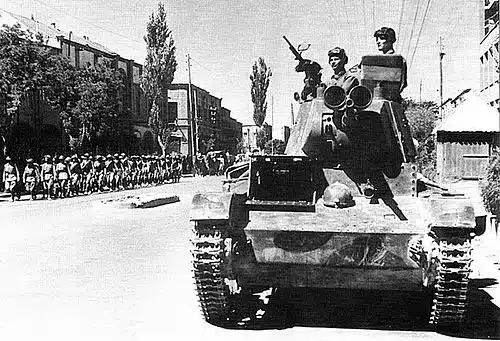
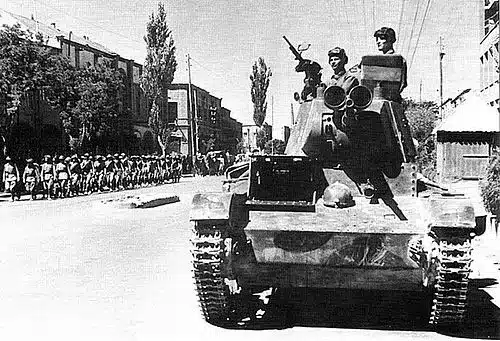
Soviet soldiers on board a T-26 tank in the city of Tabriz, northern Iran

Despite the intensity of U.S. and Israeli airstrikes on Iran, Washington continues to approach the question of a ground war with caution, sending mixed signals about the possibility. President Donald Trump has not entirely ruled it out, saying: “I’m not saying there won’t be ground troops. We may not need them or if necessary.”

Amid an open-ended air campaign and unresolved hints about a possible shift toward ground operations, an old question has resurfaced: can Iran be penetrated by land as it was during earlier moments in its modern history, or has the cost of such an operation today become immeasurably higher?

A look back at Iran’s modern history reveals two notable cases in which its borders were breached: the swift Anglo-Soviet invasion of 1941 and Iraq’s large-scale assault at the start of the 1980 war. But what has changed today in geography, military structure, state capacity, and deterrence tools that could make any ground invasion an extraordinarily costly gamble?

The Anglo-Soviet Invasion of Iran, 1941

On the eve of World War II, Reza Shah Pahlavi the founder and ruler of the Pahlavi state sought to keep Iran neutral between the competing powers. Britain and the Soviet Union, however, feared the growing influence of Germany in Tehran and its potential impact on oil supplies and transport routes to the Soviet Union.

At dawn on August 25, 1941, the Anglo-Soviet alliance launched Operation Countenance. Units from the British Army and the 8th Indian Division crossed the Shatt al-Arab River from Basra toward the city of Abadan in southwestern Iran, quickly seizing its oil refineries with the support of a small naval force.
نون بوست
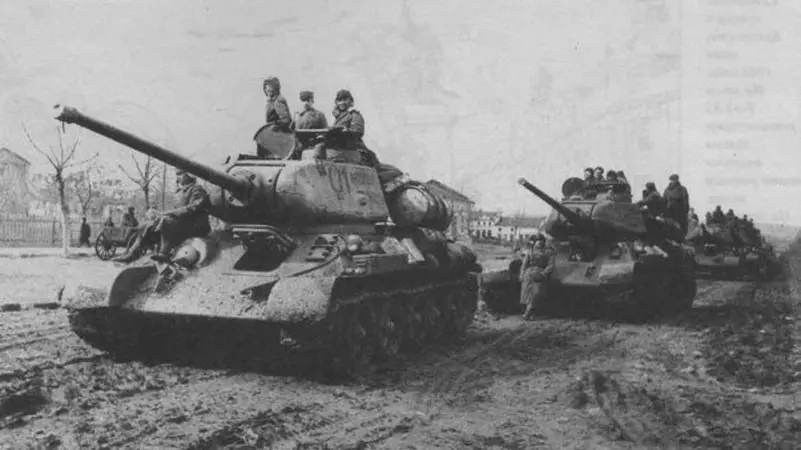
A number of Soviet T-34 tanks

At the same time, other British units advanced from Khanaqin on the Iraqi border, pushing into the Naft Shah oil field (Naft Shahr) and then crossing the Pai Tak Pass toward Kermanshah in the northwest after Iranian defenders withdrew.

From the north, three Soviet armies attacked Iran through the Caucasus, while amphibious landings took place at Bandar Pahlavi on the Caspian Sea coast. Soviet forces advanced toward Maku and then toward Sanandaj the capital of Kurdistan province in western Iran as well as Qazvin.

Iranian forces were poorly trained and lacked tanks and air power. Reza Shah also refused to destroy roads and railway lines to slow the invading armies, which facilitated the rapid advance.

By August 30, British and Soviet forces had linked up in Sanandaj and Qazvin. Iranian defenses collapsed, and the Shah agreed to surrender. On September 16, he was forced to abdicate the throne in favor of his son, Mohammad Reza.

The occupation proved a decisive turning point. After the signing of a tripartite treaty in January 1942, the Allies were allowed to keep their troops in Iran until the war ended, turning the country into the so-called “Persian Corridor” used to supply the Soviet Union with weapons and aid.

The success of the invasion was not due solely to numerical superiority Anglo-Soviet forces mobilized around 200,000 troops against nine relatively weak Iranian divisions but also to the weakness of Iran’s leadership and its failure to mobilize the population or exploit the country’s mountainous terrain. Allied reliance on amphibious units and modern airpower, which quickly secured control of the skies, also played a decisive role.

These factors made the invasion swift and relatively low-cost for the Allies, leaving a bitter memory in Iranian political consciousness about the monarchy’s rapid collapse in the face of an easy foreign advance.

The Iraqi Invasion of Iran, 1980

Eighteen months after the Islamic Revolution, Iraqi President Saddam Hussein believed he had a strategic opportunity to seize territory in oil-rich Khuzestan and weaken the new Iranian regime.

On the morning of September 22, 1980, the Iraqi Air Force launched strikes on ten Iranian air bases, followed by a ground invasion along three main axes.

On the northern front, Iraqi forces quickly captured Qasr-e Shirin, cutting the strategic road linking Baghdad and Tehran.

In the central sector, the Iraqi army seized the city of Mehran in Ilam province.
نون بوست
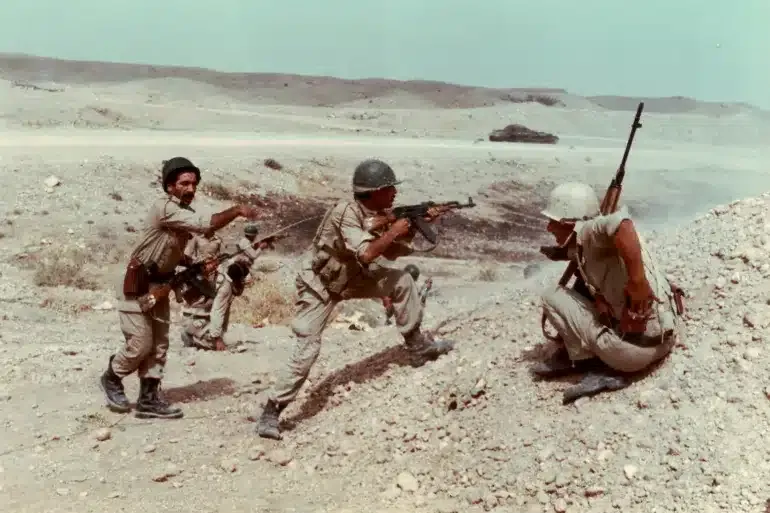
Iraqi soldiers during the war with Iran (Getty)

In the south, three armored divisions and two mechanized divisions crossed the Shatt al-Arab River toward Khorramshahr, Abadan, and Ahvaz.

Within the first days, Iraqi troops advanced nearly 80 kilometers into Khuzestan and nearly isolated Khorramshahr and Abadan from Ahvaz. Yet Baghdad’s calculations proved flawed.

The initial air campaign failed to destroy Iran’s air force. Iraqi strikes targeted runways rather than aircraft themselves, allowing Iran to retain its F-4 bombers and launch counterattacks.

On the ground, Iraqi troops encountered fierce resistance in southern cities. Abadan held out despite being besieged, while Khorramshahr fell only after two months of urban combat that cost Iraq roughly 6,000 casualties.

Although Iraqi forces achieved early gains in the north and center, they stalled near Dezful and Ahvaz and failed to penetrate deeper into Iranian territory.

The invasion faltered due to several interconnected factors:

  • Iran released detained pilots and integrated the regular army with the Islamic Revolutionary Guard Corps and volunteer Basij forces, creating a broad defensive mobilization.

  • Many Arab residents of Khuzestan joined the resistance rather than siding with Baghdad, depriving Iraq of a potential local “Trojan horse.”

  • Iraqi forces committed tactical mistakes, dispersing their efforts across multiple objectives and failing to prioritize the advance toward Ahvaz or the destruction of the Dezful air base. The command structure was also ill-prepared for large-scale urban warfare.

As a result, what began as a rapid incursion turned into a long war of attrition. Iran eventually recaptured the occupied territories in 1981–1982. While Baghdad succeeded in surprising Tehran, the invasion neither toppled the Iranian state nor forced it into surrender. Instead, it strengthened the revolutionary narrative of the “Sacred Defense” and triggered widespread popular mobilization.

Why a Ground Invasion Appears Far More Complex Today

The current conflict has largely unfolded in the air and at sea, with Washington repeatedly signaling that it does not intend to repeat the experiences of Iraq or Afghanistan wars that drained U.S. resources for years.

U.S. Defense Secretary Pete Hegseth has stated that the campaign’s objectives are to destroy missile capabilities and nuclear infrastructure rather than “nation-building,” stressing that “you don’t need to send 200,000 troops there and stay for 20 years.” Trump himself has framed a ground option as a last resort, suggesting it may not be necessary.

This caution reflects an assessment of several factors that make a ground invasion far more costly than in the past:

1. Geography:
Iran is a vast country covering more than 1.6 million square kilometers, with complex and rugged terrain. The Zagros Mountains line the Iraqi border, the Alborz Mountains dominate the north, and vast deserts stretch across the interior features that collectively provide significant defensive advantages.

2. Population Density:
With around 85 million people living across large cities and rural areas, any invading force would face the challenge of occupying densely populated urban centers while confronting ideologically driven resistance shaped by the experience of the Iran-Iraq War and later asymmetric conflicts.

3. Military and Security Experience:
Over four decades, Iran has accumulated significant operational experience. The Islamic Revolutionary Guard Corps and Basij forces have evolved from a popular militia into an ideological institution with land, air, and naval units, as well as a broad volunteer network something demonstrated during the June 2025 confrontation and the current war.

According to a report by the Center for Strategic and International Studies, Iran possesses “the largest and most diverse missile arsenal in the Middle East,” with thousands of ballistic and cruise missiles, some capable of reaching Israel and Eastern Europe. Over the past decade, Tehran has invested heavily in improving the precision of these systems.

Iran also fields long-range drones and maintains missile capabilities among its regional allies in Iraq, Lebanon, and Yemen meaning any invading force would face constant threats to supply lines and rear bases.

4. Combat Experience:
Iran has become highly practiced in asymmetric warfare. Its defense doctrine based on centralized planning and decentralized execution has enabled it to absorb the initial shock of the current war and continue launching missiles despite heavy electronic warfare strikes.

Its long history of supporting militia movements across the Middle East and deploying advisory units regionally also provides Tehran with the ability to open multiple fronts against adversaries.

Taken together, recreating the scenarios of 1941 or 1980 in a contemporary context would likely be an extremely risky political and military venture particularly given divisions within American public opinion. Recent polls show that support for the strikes stands at only about 27 percent.

Download this article as PDF
Share this Article
Facebook Twitter Whatsapp Whatsapp Telegram Email Copy Link
فريق التحرير
By فريق التحرير تقارير يعدها فريق تحرير نون بوست.
Follow:
Previous Article نون بوست 15 Years After the Revolution: How Has Syrians’ Political Consciousness Changed?
Next Article نون بوست How the Iran War Threatens Fuel and Food Security in Sudan

Read More

  • U.S. Regime‑Change Policies: Why They Are Destined to Fail U.S. Regime‑Change Policies: Why They Are Destined to Fail
  • The Gulf’s Balancing Act: Iran, Israel, and Hidden Links
  • Iraq–Turkey Oil Export Treaty: Why Did Ankara Cancel It After 52 Years?
  • Syria’s Northeast on Edge: QSD Between Ankara and Damascus
  • Has Europe Changed Its Stance on Israel… or Just Its Language?
part of the design
NoonPost Weekly Newsletter

You May Also Like

U.S. Regime‑Change Policies: Why They Are Destined to Fail

U.S. Regime‑Change Policies: Why They Are Destined to Fail

إسراء سيد Esraa sayed 8 April ,2026
The Gulf’s Balancing Act: Iran, Israel, and Hidden Links

The Gulf’s Balancing Act: Iran, Israel, and Hidden Links

فريق التحرير Noon Post 8 April ,2026
Iraq–Turkey Oil Export Treaty: Why Did Ankara Cancel It After 52 Years?

Iraq–Turkey Oil Export Treaty: Why Did Ankara Cancel It After 52 Years?

فريق التحرير Noon Post 8 April ,2026

دراويش العصر الحديث: أتباع مولانا جلال الدين الرومي

ميدل إيست آي
ميدل إيست آي Published 1 May ,2015
Share
Dervishes_1

ترجمة وتحرير نون بوست

إذا رأيت شخصًا يقبّل الملعقة قبل أن يبدأ بتناول طعامه، أو جماعة تقبّل يد بعضها البعض عندما تلتقي، فكن متأكدًا حينها أنك التقيت بأتباع العصر الحديث لمولانا جلال الدين الرومي، أو المولوية.

المولوية – والتي تعرف في الغرب باسم الصوفية – هي مدرسة فكرية دينية إسلامية مستقاة من فكر الشاعر والمفكر الإسلامي جلال الدين الرومي، الذي ولد عام 1207 في أفغانستان، وتوفي عام 1273 في محافظة قونيا بتركيا.

في كتابه (المثنوي) الذي كتبه إثر خسارة صديقه المقرب شمس الدين التبريزي، ركز الرومي على ثقافة الحب والتسامح والمحبة، وبنى إرثًا دينيًا، ترك تأثيره وانطباعاته على جميع أنحاء العالم، وخاصة في تركيا، إيران، أذربيجان، أفغانستان، وأسيا الوسطى.

السياح في تركيا يألفون رقصة الدراويش الدورانية الصوفية المبدعة، ولكن قصة هذه الجماعة تغور عميقًا وتختفي خلف هذه التهجدات المتضرعة لله تعالى، حيث يقول أحد كبار الدراويش – يسمى ديدي أو المرشد الروحي – قدري يتيس (78 عامًا) وهو مهندس إلكتروني أساسًا “أنصح طلابي دائمًا ألا يقولوا عن أنفسهم بأنهم مولوية، لأن في هذا ضرب من الأنانية، يجب أن يلاحظ الأشخاص أنهم مولوية من تصرفاتهم ومواقفهم تجاه كل شيء”.

من المعروف عن أتباع الطريقة المولوية تسامحهم ولطفهم والتزامهم، مما يفصلهم عن الوتيرة المحمومة التي تتميز بها الحياة اليوم، “المولوية لديهم احترام متبادل لتساوي حق الوجود لدى كل كائن في هذا العالم”، تقول ناجيهان جيفتارلار (38 عامًا) إحدى طلاب يتيس، ومن أوائل النساء اللواتي انضممن إلى دراويش المولوية في تركيا، والتي تعمل كمحاسبة في “مهنتها الدنيوية” – كما تسميها – “هناك بعض الجماعات التي تؤدي رقصات الدراويش المبدعة بالجمع بين المؤدين الذكور والإناث معًا، ولكن تاريخيًا وتقليديًا يجب أن تتم تأدية الرقصات بشكل منفصل”.

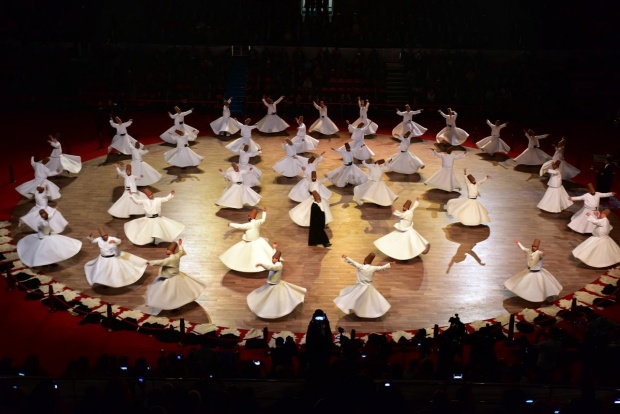
في منتصف ديسمبر من كل عام يتجمهر آلاف من الناس، وخاصة في قونيا، لرؤية عروض الدراويش المولوية، ويحضر هذه العروض والاحتفالات أهم رجالات الدولة، مثل الرئيس التركي ورئيس وزراء الحكومة التركية.

تستند حياة المولوية إلى الانضباط وقواعد السلوك، وفقًا لما تذكره مؤسسة مولانا الدولية، وهي المؤسسة المسؤولة عن الطريقة المولوية، والتي تأسست في عام 1996 في مدينة قونيا حيث دُفن جلال الدين الرومي، ورئيسها هو فاروق حمدان شلبي، الحفيد الثاني والعشرون لجلال الدين الرومي.

وفقًا للتقاليد، يوجد ترتيب هرمي في نظام المولوية، فيتبع الشلبي أو “المولى” الشيوخ أو “المعلمون الروحيون”، ومن بعدهم الدراويش “المعلمون”، أما بقية المجتمع المولوي فيسمون كان أو “زملاء الروح”.

يقول فاروق حميد شلبي “على الرغم من أن الصوفية لها شعبية كبيرة جدًا، وخاصة في تركيا، إلا أن مضمونها الحقيقي غير معروف حقًا لدى أغلب الأشخاص”، كما ينتقد الشلبي قيام الناس بدعوة الدراويش للغناء في المناسبات مثل حفلات الزفاف أو افتتاح المحلات.

تم إغلاق التكيات المولوية أو السمعخانات – وتعني أماكن السمع التابعة للمولوية بالتركية – عام 1925 من قِبل الحكومة التركية في عهد أتاتورك في محاولة لنقل البلاد إلى المنهج العلماني، ولكن مع ذلك، ابتداءً من عام 1953، سمحت الحكومة التركية للمولوية الدراويش بتقديم رقصاتهم في العروض العامة في قونيا، وفقًا لما ذكره الشيخ الأمريكي والباحث الرومي إبراهيم جامراد (67 عامًا).

جامراد هو طبيب نفسي مرخص، ومؤلف لكتابين عن جلال الدين الرومي، حيث استقر به المطاف لاعتناق التصوف الإسلامي، بعد أن جرب جميع الممارسات الروحية من كافة تقاليد العالم، ولكن “الصوفية كانت محببة لي أكثر من غيرها” وفقًا لجامراد.

ويقول جامراد الذي اعتنق الإسلام بعدها “إن نهج المولوية هو باطني تصوفي إسلامي، ولكن في الغرب يرغبون في فصل الإسلام عن التصوف، حتى إنهم يمارسون الصوفية، ويقرأون كتبها بشكل منفصل عن الإسلام، وكتب جلال الدين الرومي تحظى بشعبية واسعة في الولايات المتحدة الأمريكية”.

نون بوست

يشير الشلبي أنه يوجد حوالي 101 سمعخانة أو تكية مولوية في جميع أنحاء العالم، منتشرة من بغداد إلى مقدونيا، ومن مصر إلى بلغاريا، ويضيف أن السمعخانات أو التكيات المولوية في تركيا تابعة للحكومة التركية حاليًا، ويردف قائلًا “تقدير العدد الدقيق لأتباع الطريقة المولوية أمر صعب، فمن الصعب حقًا أن تعطي رقما دقيقًا عن عدد المولوية في عالم اليوم، ولكن على الرغم من وجود العديد من المتعاطفين، بيد أن عدد المولوية لا يتجاوز الـ1000 إلى 1500 مولوي، إن عدد الناس الذين يدرّسون الطريقة المولوية يتناقص كل يوم”.

“مجرد قراءة كتاب جلال الدين الرومي لا تجعل الشخص جزءًا من المولوية” يقول المعلم يتيس، ويتابع “يجب على المرء أن يتخلى عن أناه وغروره ويحترق في الأوجاك “أو الموقد” – وهو المكان الذي يتجمع فيه المولوية -“، ويضيف يتيس مشيرًا إلى كلمات الرومي “يقول مولانا: كنت نيئًا ثم نضجت ثم احترقت، ويمكن تفسير هذه العبارة الصوفية بالقول: لم أكن شخصًا راشدًا، ولكنني عانيت، ونضجت، وأصبحت مستنيرًا”.

المولويون هم أناس طبيعيون، كأي إنسان آخر، بعضهم طلاب ويدرسون، وبعضهم موظفين، والبعض الآخر من رجال الأعمال، كما يقول يتيس.

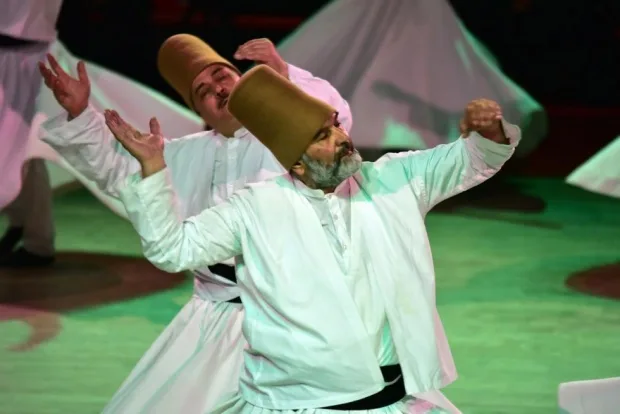
ملابس الدراويش المولوية مثقلة بالرمزية الصوفية، فالقبعة المخروطية التي يعتمرها الدراويش “اسمها بالتركية سيكيه وفي بلاد الشام تدعى بالكلّة” تمثل شواهد القبور في دلالة رمزية إلى موت الأنا والغرور، والعباءة السوداء لها دلالة على القبر، والصدرية البيضاء هي الغرور بحد ذاته.

باكير ينيرير هو أحد الدراويش المولوية يبلغ من العمر 55 عامًا، رجل أعمال متقاعد اختار طريق الدراويش قبل تسع سنوات، ويوضح باكير أنه لم ينشأ في أسرة متدينة، ولكنه لطالما كان قريبًا من مفهوم الله، وفي سن الـ46، واجهته مشاكل في حياته الشخصية وفي عمله، ورمته الأقدار ليتعرف على قدري يتيس، ويتعرف على المنهج المولوي، وبعد سنة واحدة من التدريب، قدّم أول رقصة مولوية “دائرية”، أو ما يسمى برحلة الصعود الروحي.

“بعد أن بدأت بتعلم المولوية الصوفية تغيرت حياتي كلها تلقائيًا، لقد فتحت لي أبواب جديدة في حياتي” يقول ينيرير، ويتابع “عالمنا اليوم هو مكان صعب، فنحن نعيش في بيئة تتشابك بها جميع القيم، نحن نعيش في سيناريو متسارع نذهب فيه إلى العمل ونعود إلى المنزل ونحن في عجلة من أمرنا لإرضاء غرورنا، ولكن عندما نتراجع خطوة واحدة إلى الوراء، تبزغ الصوفية، وحينها نبدأ بالتفكير، لماذا نقوم بكل هذا؟”.

المصدر: ميدل إيست آي

TAGGED: التصوف ، الصوفية ، قونيا
TAGGED: ثقافة
Download this article as PDF
Share this Article
Facebook Twitter Whatsapp Whatsapp Telegram Email Copy Link
ميدل إيست آي
By ميدل إيست آي تقارير ينشرها موقع ميدل إيست آي البريطاني
Follow:
Next Article نون بوست The Stigma of “ISIS”: A Heavy Legacy Haunting Women and Children of Former Members

Read More

  • U.S. Regime‑Change Policies: Why They Are Destined to Fail U.S. Regime‑Change Policies: Why They Are Destined to Fail
  • The Gulf’s Balancing Act: Iran, Israel, and Hidden Links
  • Iraq–Turkey Oil Export Treaty: Why Did Ankara Cancel It After 52 Years?
  • Syria’s Northeast on Edge: QSD Between Ankara and Damascus
  • Has Europe Changed Its Stance on Israel… or Just Its Language?
part of the design
NoonPost Weekly Newsletter
dark

An independent media platform founded in 2013, rooted in slow journalism, producing in-depth reports, analysis, and multimedia content to offer deeper perspectives on the news, led by a diverse young team from several Arab countries.

  • Politics
  • Society
  • Rights & Liberties
  • Opinions
  • History
  • Sports
  • Education
  • Technology
  • Economy
  • Media
  • Arts & Literature
  • Entrepreneurship
  • Travel
  • Cinema & Drama
  • Food
  • Health
  • Culture
  • Latest Reports
  • Files
  • Long Reads
  • Interviews
  • Podcast
  • Interactive
  • Encyclopedia
  • In Pictures
  • About Us
  • Our Writers
  • Write for Us
  • Editorial Policy
  • Advanced Search
Some rights reserved under a Creative Commons license

Removed from favorites

Undo
Go to mobile version