








The wars that have swept the Middle East over the past decades have served as defining moments for Ankara, reshaping its perception of regional security and the limits of its role in the region’s conflicts.
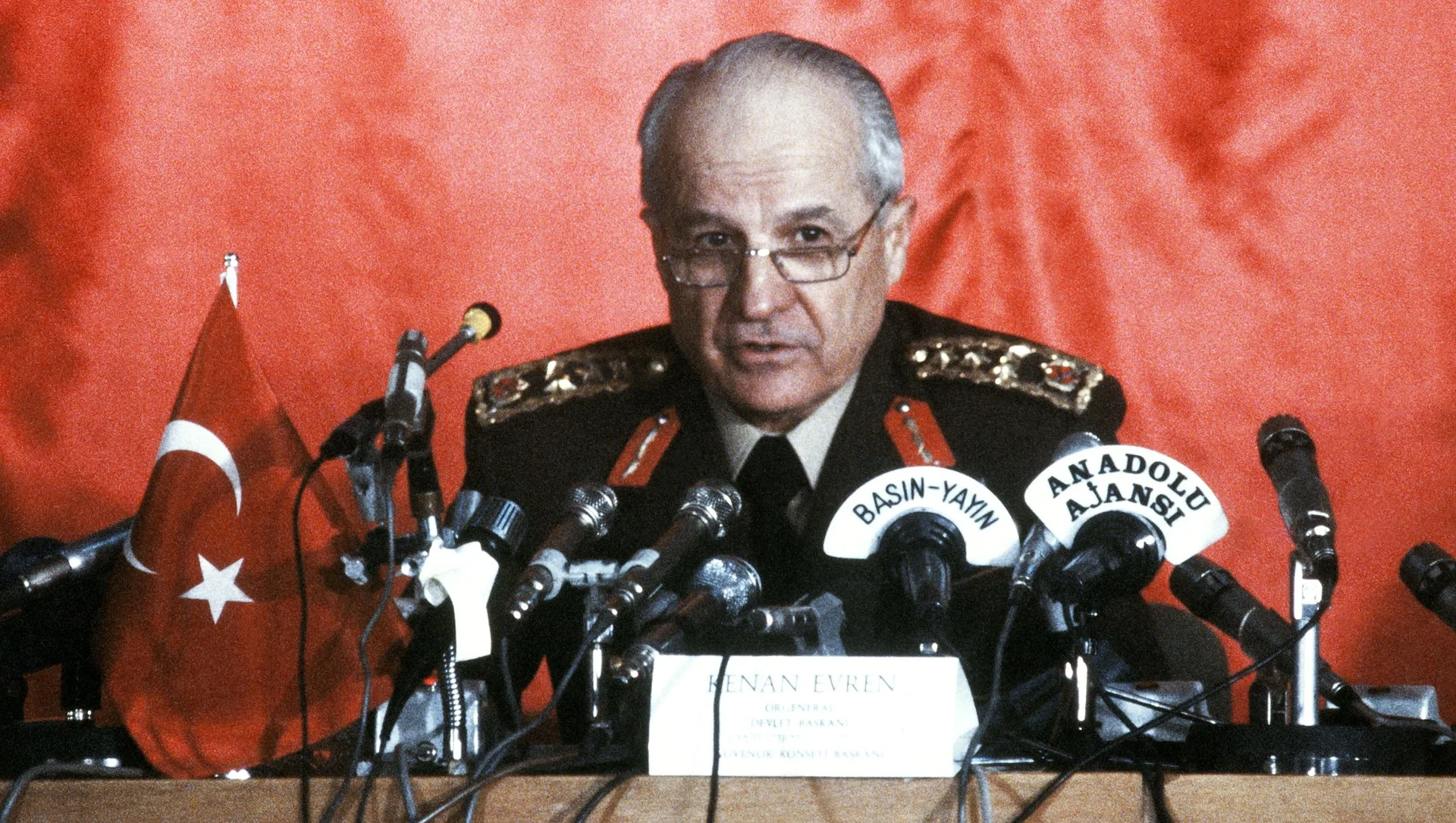
During the 1991 Gulf War, Turkey aligned itself with the U.S.-led international coalition against Iraq. It halted Iraqi oil exports through its territory and opened the Incirlik Air Base to military operations. This alignment strengthened Ankara’s position within the Western alliance and elevated its geopolitical weight. Yet it also revealed the heavy costs of becoming entangled in regional wars.
Turkey suffered economic losses estimated at around $30 billion annually due to disrupted trade, the closure of energy routes, and declining tourism, in addition to hosting hundreds of thousands of Iraqi refugees. The creation of a Kurdish safe zone in northern Iraq after the war also energized the activities of the Kurdistan Workers’ Party (PKK) along Turkey’s southern border, ushering in a new chapter of security challenges that lasted for years.
This difficult experience remained deeply embedded in Turkey’s political memory. When the United States asked Ankara in 2003 to allow tens of thousands of American troops to pass through Turkish territory to open a northern front against Iraq, the response was markedly different.
The Turkish parliament rejected the request, reflecting broad public opposition to the war as well as concerns within the political and security establishment about repeating the post–Gulf War chaos without clear guarantees for Turkey’s interests.
At the time, Ankara demanded assurances to protect its borders and economy, and insisted on a role in shaping Iraq’s future. When these guarantees failed to materialize, Turkey opted to distance itself from the confrontation.
Although the decision caused temporary tensions with Washington, it cemented a principle that has since become part of Turkish foreign policy doctrine: alliances matter, but Turkey’s national security and interests remain the decisive reference point when calculations clash.
The Diplomacy of Refusal
As military confrontation intensifies between the United States and Israel on one side and Iran on the other, Turkey finds itself facing a complex equation that requires a delicate balance between alliance obligations and geographic realities.
Ankara appears committed to what might be described as “cautious neutrality.” It seeks to avoid being drawn into the conflict while emphasizing that its national security remains a red line.
Recent developments have heightened the sensitivity of this stance, particularly after Turkish defense systems—supported by NATO—announced the interception of an Iranian ballistic missile that had been heading toward Turkish territory. The incident revived serious questions about the limits of Turkey’s role and the possibility of its involvement in the escalating regional confrontation.
From the first moments of exchanges between the warring parties, Ankara moved quickly to express its rejection of military escalation and called for a revival of diplomatic channels.
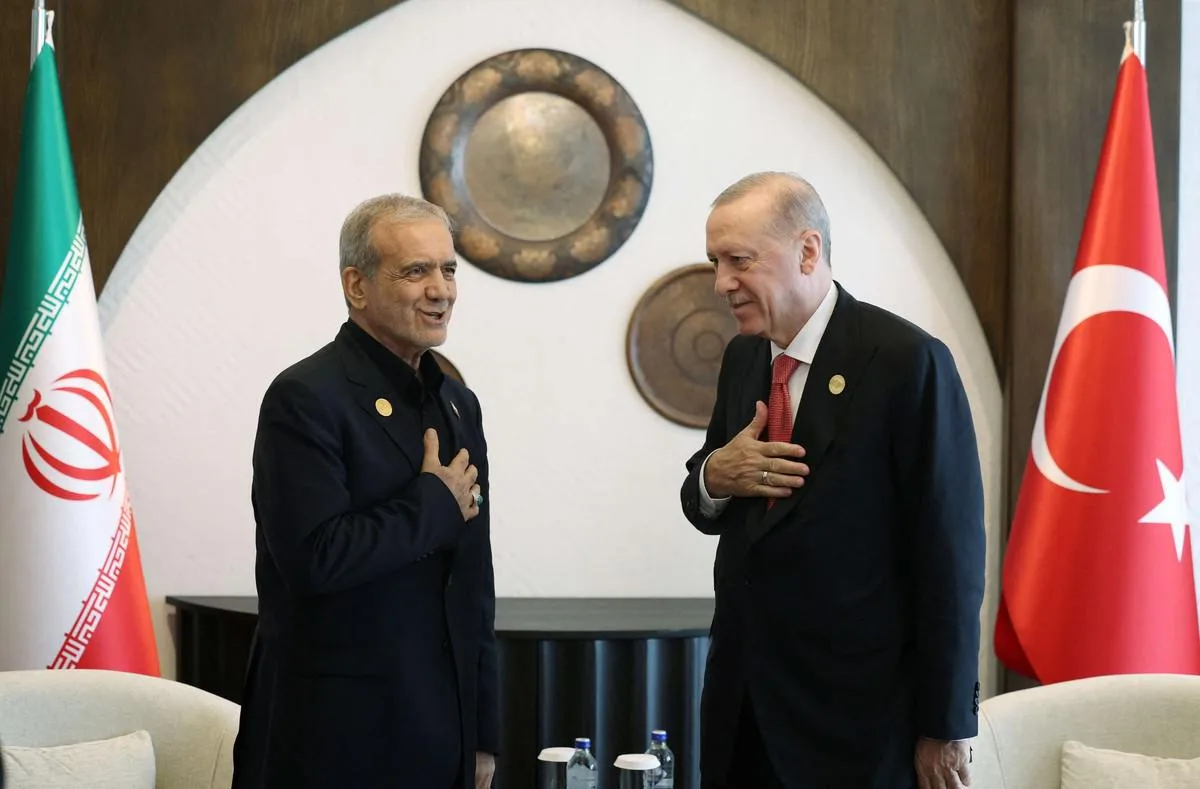
President Recep Tayyip Erdoğan voiced regret over the collapse of political efforts that had preceded the outbreak of hostilities, holding Israel responsible for igniting the first spark of escalation. He described U.S. and Israeli strikes on Iran as illegitimate and a violation of a sovereign state’s territorial integrity.
At the same time, Erdoğan criticized Iranian retaliatory strikes targeting U.S. military bases in several Gulf countries—a stance reflecting Ankara’s clear effort to maintain equal distance from the conflict’s opposing sides.
Within this framework, the Turkish president intensified contacts with regional leaders in an effort to contain tensions. He also sent a message of condolence to the Iranian people following confirmation of the death of Iranian Supreme Leader Ali Khamenei, urging all parties to prioritize reason and return to diplomacy to preserve regional stability.
The stance has not been limited to the government. A notable internal consensus has emerged in Turkey rejecting the war. Devlet Bahçeli, leader of the Nationalist Movement Party and an ally of Erdoğan, blamed Israel for igniting what he described as an unjust and illegitimate war and called for an immediate halt to military operations.
Similarly, opposition leader Özgür Özel rejected foreign military intervention in Iran, warning that an expanded confrontation could push the region toward a catastrophe difficult to contain.
Could the War Expand to Turkey and NATO?
The interception of the Iranian missile over Turkish territory has revived sensitive questions about whether the confrontation could expand beyond its current boundaries and involve NATO itself.
As a member of the alliance, Turkey possesses legal mechanisms allowing it to elevate the issue to a broader NATO level. If Ankara believes its security is under threat, it could invoke Article 4 of the NATO treaty, which calls for emergency consultations among member states.
The theoretical possibility of invoking Article 5, which considers an attack on one member an attack on the entire alliance, also remains if attacks are repeated or if Turkish territory is directly targeted. Should such a scenario materialize, the confrontation could shift to an entirely new level transforming a regional war into a major international crisis.
So far, however, indications suggest that Ankara has little desire to push matters that far. Following the missile incident, Turkey limited its response to reaffirming its right to defend its security while simultaneously urging restraint and de-escalation.
The Turkish leadership has shown no immediate intention to activate NATO’s collective defense mechanisms, a position that aligns with statements from the U.S. secretary of defense indicating there are currently no signs warranting the activation of Article 5. The message appears aimed at containing tensions and preventing the conflict from spiraling into a wider confrontation.
This cautious stance reflects Turkey’s awareness of the moment’s sensitivity. A direct clash between Iran and NATO could propel the conflict beyond its regional framework into an international confrontation that would be difficult to control. Ankara therefore appears determined to strike a delicate balance between demonstrating defensive readiness and avoiding any step that might be interpreted as an attempt to draw the alliance into war.
The message from Ankara to Tehran appears clear: Turkey’s security is a red line, but transforming the confrontation into a broader international conflict would serve no one’s interests.
Ankara’s Concerns
Turkey’s insistence on rejecting war and avoiding military involvement can be understood through the web of security and economic concerns shaping decision-making in Ankara.
On the security front, Turkey fears that a collapse of stability in Iran could open a new zone of unrest along its eastern border one whose repercussions could quickly spill into Turkish territory. Ankara is already surrounded by chronic tension zones in Syria and Iraq, in addition to the fallout from the war in Ukraine. It appears unwilling to shoulder the burden of yet another regional crisis involving a major neighbor like Iran.
At the top of these concerns is the issue of armed Kurdish organizations. Turkey is wary of the ties between some Kurdish factions in Iran particularly the Kurdistan Free Life Party (PJAK), which is linked to the PKK. Ankara fears that any security vacuum inside Iran could expand the activities of such groups across borders, a scenario it views as a direct threat to national security.
Humanitarian and economic concerns are also significant. A large-scale war or the collapse of state institutions in Iran could trigger a new wave of refugees heading toward Turkey, which already hosts millions of displaced people. Turkish officials recognize that the country’s economy and social fabric may struggle to absorb another influx.
At the same time, economic relations between Ankara and Tehran are at stake. Iran is an important trade partner and a major source of natural gas imports for Turkey. Prolonged conflict—or attacks on energy infrastructure—could threaten gas supplies and undermine bilateral trade worth billions of dollars annually.
Iranian strikes targeting oil facilities and maritime navigation in the Gulf have also heightened concerns in Ankara, which sees disruption in global energy markets as a direct threat to its economy.
In this context, Turkish Foreign Minister Hakan Fidan warned that attacks on energy infrastructure might be part of an Iranian strategy to raise the cost of war and pressure the United States into retreat. However, he argued that such an approach would likely fail to achieve its goals and could instead trigger a broad economic confrontation affecting everyone.
This assessment reflects Ankara’s clear understanding that an expanding conflict would lead to a war of economic attrition one that regional countries, including Turkey, would ultimately pay dearly for.
Complex Relationships
Turkey’s position regarding the ongoing war is shaped by a complex web of relations linking Ankara to both Iran and the West. Despite evident regional rivalry, relations with Tehran have long been governed by pragmatism.
Over the decades, the two countries have managed their differences without sliding into direct confrontation, whether in Syria where their strategic calculations diverged or in other regional issues. Beyond economic ties, including Turkey’s partial reliance on Iranian gas, the two countries share a long land border stretching nearly 530 kilometers that has remained relatively stable for decades.
For this reason, Ankara does not view the prospect of the Iranian state collapsing or descending into internal chaos with comfort. Turkish policymakers believe a unified and stable Iran better serves regional balance and Turkey’s security interests than scenarios involving fragmentation or the rise of a new regime potentially more hostile to Ankara.
Before the outbreak of war, Turkey supported diplomatic efforts aimed at reviving negotiations with Tehran, including talks over Iran’s nuclear program, and offered to act as a mediator to prevent military confrontation.
At the same time, Turkey maintains a traditional alliance with the United States within NATO and retains fluctuating relations with Israel. In the current crisis, however, Ankara appears far from adopting the American or Israeli perspective on the conflict.
Turkey views the strikes against Iran as inseparable from what it sees as an Israeli attempt to reshape regional power balances by weakening Tehran or pushing for regime change an approach Ankara regards as closer to a project of regional dominance than a genuine attempt to achieve stability.
Yet Ankara does not grant Iran a blank check. President Erdoğan described Iranian missile attacks targeting some countries in the region as unacceptable regardless of their motivations—particularly when they targeted Gulf states with which Turkey has growing political and economic ties.
This balanced rhetoric reflects a clear effort to avoid fully aligning with either camp.
In light of this delicate balance, Turkey’s actions so far indicate a clear desire to avoid direct involvement in the war unless forced to act in defense of its own security. Ankara has repeatedly stressed that it is not a party to the conflict and has shown no intention of sending troops or supporting military operations against Iran. Nor has it provided logistical assistance for Western strikes.
At the same time, Turkey has been active on the diplomatic front. Turkish officials have intensified contacts with regional and international capitals in an effort to contain escalation and bring the parties back to the negotiating table.
Ankara is presenting itself as a potential mediator capable of communicating with all sides, leveraging its unique position as both a NATO member and a regional power with ties to Tehran and the broader Muslim world. The role Turkey appears to be seeking is one aimed at ending the war—not expanding it.
Still, this position remains contingent on developments on the ground. Turkey has drawn a clear red line: any direct threat to its national security.
If Iran crosses that line by targeting Turkish territory or vital interests, Ankara’s calculations could change dramatically.
Turkey would then face a difficult choice either responding militarily on its own or within NATO, with the risks of widening the conflict, or attempting to contain the situation to prevent the region from sliding into a broader confrontation.