







NoonPost NoonPost

NoonPost

  • Home
  • Politics
  • Economy
  • Society
  • Culture
  • Files
  • Long Reads
  • Podcast
AR
Notification Show More
نون بوست
“There Are Nights I Can’t Close My Eyes”: How Gazans Are Living in Homes on the Brink of Collapse
نون بوست
From al-Jolani to Ahmad al-Shara: The Evolution of Syria’s New Leader
نون بوست
When Political Islam Receded in Egypt: Who Filled the Void?
نون بوست
An Extension of Genocide: Gaza’s Detainees Speak Out
نون بوست
A Tightrope Between Survival and Sovereignty: The Syrian Government Faces Normalization Pressures
نون بوست
American Aircraft Carriers: Has the Era of “100,000 Tons of Diplomacy” Ended?
نون بوست
U.S. Regime‑Change Policies: Why They Are Destined to Fail
نون بوست
Transformations of Israeli Judaism: Between the Victim Complex and the Colonizer’s Doctrine
نون بوست
The Gulf’s Balancing Act: Iran, Israel, and Hidden Links
نون بوست
Iraq–Turkey Oil Export Treaty: Why Did Ankara Cancel It After 52 Years?
نون بوست
Syria’s Northeast on Edge: QSD Between Ankara and Damascus
نون بوست
Has Europe Changed Its Stance on Israel… or Just Its Language?
NoonPost NoonPost
AR
Notification Show More
نون بوست
“There Are Nights I Can’t Close My Eyes”: How Gazans Are Living in Homes on the Brink of Collapse
نون بوست
From al-Jolani to Ahmad al-Shara: The Evolution of Syria’s New Leader
نون بوست
When Political Islam Receded in Egypt: Who Filled the Void?
نون بوست
An Extension of Genocide: Gaza’s Detainees Speak Out
نون بوست
A Tightrope Between Survival and Sovereignty: The Syrian Government Faces Normalization Pressures
نون بوست
American Aircraft Carriers: Has the Era of “100,000 Tons of Diplomacy” Ended?
نون بوست
U.S. Regime‑Change Policies: Why They Are Destined to Fail
نون بوست
Transformations of Israeli Judaism: Between the Victim Complex and the Colonizer’s Doctrine
نون بوست
The Gulf’s Balancing Act: Iran, Israel, and Hidden Links
نون بوست
Iraq–Turkey Oil Export Treaty: Why Did Ankara Cancel It After 52 Years?
نون بوست
Syria’s Northeast on Edge: QSD Between Ankara and Damascus
نون بوست
Has Europe Changed Its Stance on Israel… or Just Its Language?
Follow US

Activists’ Phones Under Surveillance: Supporting Gaza Leads to Courtrooms in Jordan

فريق التحرير
Noon Post Published 26 March ,2026
Share
نون بوست
نون بوست

Several months ago, Jordanian security authorities summoned Manal Khaled (a pseudonym) after she published posts on her Facebook account expressing support for the Islamic Resistance Movement, Hamas.

Manal told Noon Post that her phone was confiscated at the time and returned only weeks later. Since then, however, she has been afraid to use it, fearing that her data may have been compromised or that she might be under surveillance. She was also worried that authorities could fabricate charges against her after she transferred money to help an acquaintance in Gaza, particularly if security services read the messages exchanged between them.

Ma’moun Mohsen (a pseudonym), meanwhile, is a well-known activist who had been engaged in activism even before the genocide in Gaza. When he was arrested, security services discovered that his social media accounts were deactivated.

Authorities then searched one of his old accounts, where they found a post supporting the resistance and opposing normalization. According to documents in his case file, he was subsequently sentenced to one year in prison.

Security Agencies and Surveillance

The issue extends beyond forcibly confiscating phones or searching them for information that might lead to charges. Security services have also reportedly engaged in surveillance of activists’ devices.

According to a report titled “From Protest to Peril” published last January by the Citizen Lab, authorities used the Israeli tool Cellebrite to extract data from the phones of activists who support Gaza and its resistance.

The report points to a dramatic contraction of civic space in Jordan, noting that authorities have increasingly adopted both legal and extralegal repressive measures against freedom of expression. Since 2024, Freedom House has classified digital freedom in Jordan as “partly free,” while rating the country’s overall state of freedoms as “not free.”

This trend coincides with security summonses targeting activists for expressing support for the resistance and discussing it publicly, as well as the arrest and prosecution of supporters under the Anti-Terrorism Law.

In an unprecedented move, Jordan’s Court of Cassation the country’s highest judicial body upheld a ruling by the State Security Court sentencing four defendants to twenty years of temporary hard labor on charges of supporting the resistance and attempting to deliver weapons to it.
نون بوست
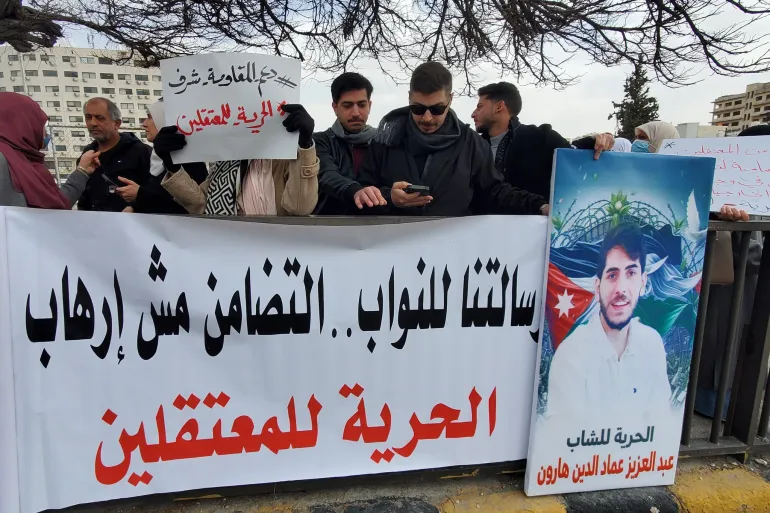
Families of detainees hold a protest in front of the Jordanian Parliament to denounce the arrest of their sons. March 2025 (Al Jazeera)

Earlier, the State Security Court sentenced three young men to ten years in prison after accusing them of supporting the resistance and planning to infiltrate the West Bank to attack Israeli targets.

Jordan’s Anti-Terrorism Law defines a terrorist act as “any intentional act, threat, or omission, regardless of its motives, purposes, or means, carried out as part of an individual or collective criminal project that endangers the safety and security of society or incites sedition if it disrupts public order, spreads fear among people, intimidates them, or endangers their lives.”

At the time the law was passed, many voiced concern over this definition. Among them was attorney Fathi Abu Nassar, then head of the Freedoms Committee at the Professional Associations, who said in press statements that the most dangerous aspect of the law is that it fails to distinguish between legitimate resistance and terrorism, effectively criminalizing solidarity with resistance against occupation a charge now used against activists supporting Gaza.

Between Surveillance and Prosecution

Abdul Qader Al-Khatib, a defense attorney representing Jordanians detained over cases related to supporting the resistance, links surveillance directly to prosecutions.

He told Noon Post that security agencies have the authority to refer individuals to court or cybercrime charges if they find anything on their phones that raises suspicion or displeases authorities.

He added that Hamas is not officially classified under Jordanian law as a terrorist organization. Nevertheless, supporting it may still be interpreted as undermining national security even though international law recognizes the legitimacy of resistance. Despite this, such support is effectively treated as terrorism under the Anti-Terrorism Law.

Another legal expert, who requested anonymity for his safety, said that American and Israeli actors stand behind the operation of surveillance programs used by security agencies, allowing them access to activists’ phones and personal data.

He told Noon Post that phone surveillance primarily targets activists active in the streets in order to deter their activism, intimidate them, and track their movements. Spyware is also used against supporters of the resistance and individuals working on files opposing government policies toward Israel, such as the land bridge project, the peace treaty, and U.S. policies and influence in the country. These groups, he said, are among the most heavily targeted by such surveillance tools.

Through these methods, authorities may expose activists to interrogation, security pursuit, prosecution, or referral to cybercrime courts. At times, they may also use the data extracted from phones to identify other individuals whom security services wish to arrest or investigate.

The legal expert criticized the Jordanian authorities for acquiring Israeli surveillance programs to monitor protesters and supporters of Gaza, despite Jordan’s official statements opposing Israel and the genocide in the Gaza Strip.

He warned that this contradiction endangers the security of Jordanians. As many of his clients who experienced surveillance have expressed: “You handed me over and failed to protect my data, exposing it to a party that poses a threat during wartime.”

Calls to Amend the Law

The legal defense committee for detainees accused of supporting the resistance in Jordan has called on the Jordanian parliament to amend the Anti-Terrorism Law. The committee argues that the legislation has become a primary instrument for criminalizing legitimate national activity.

It urged parliament to fulfill its legislative responsibility by introducing amendments that explicitly end the criminalization of resistance and affirm the right to support it.

Yanal Freihat, spokesperson for the parliamentary Reform Bloc, told Noon Post that the bloc has already submitted a draft amendment to the Anti-Terrorism Law that would exclude support for resistance from its provisions. The proposal is currently before the legal committee, which will later present it to parliament for a vote.

At the same time, the parliamentary Palestine Committee has taken no action regarding the criminalization of Palestinian resistance or the surveillance of Gaza supporters and activists. Committee chairman Suleiman Al-Saoud confirmed this to Noon Post.

Amending the Anti-Terrorism Law could halt the criminalization of resistance, potentially curbing security agencies’ surveillance of its supporters and restoring citizens’ confidence in using their phones without fear.

Kamel Al-Shawarib, a researcher at Citizen Lab, described the profound emotional toll experienced by individuals whose devices were confiscated. Drawing on interviews and testimonies, he recalled the words of one victim: “I felt wronged and violated, as if something had been stolen from me. This happened not because they are strong, but because their legal position is weak.”

Through his work with numerous individuals whose phones had been seized, Al-Shawarib observed noticeable changes in their daily digital behavior. Many have turned to secure messaging applications such as Signal and enabled disappearing messages that delete themselves within hours or even minutes.

He said that anxiety has driven users to avoid storing their real names on their devices. Questions such as “Where and how should I keep my private photos?” now dominate their thinking.

The knowledge that security services may be able to access everything from passwords and personal photos to potentially recovering deleted files has significantly altered people’s technological habits in what he described as a desperate attempt to protect their personal space.

According to estimates cited by the lawyer, dozens—perhaps approaching hundreds—have been detained for directly supporting the resistance through alleged attempts to supply weapons or carry out cross-border operations. Meanwhile, thousands face cases related to expressing opinions or participating in protest activities.

The number of people summoned by security agencies is also estimated to be in the thousands. A joke circulating among Jordanians reflects the frequency of these summonses: “They haven’t called you in yet?” or “They haven’t spoken to you?” a reference to the growing number of security interrogations, particularly by the General Intelligence Directorate.

This situation, many argue, calls for legal reform that would prevent security agencies from surveilling phones simply because of supportive activism especially during the genocide in Gaza and halt the transfer of Jordanians’ data to foreign entities or Israeli surveillance programs.

Download this article as PDF
Share this Article
Facebook Twitter Whatsapp Whatsapp Telegram Email Copy Link
فريق التحرير
By فريق التحرير تقارير يعدها فريق تحرير نون بوست.
Follow:
Previous Article نون بوست How Does Turkey View the War Between Iran, the United States, and Israel?
Next Article نون بوست A Shifting Tone: Are Gulf States Heading Toward War With Iran?

Read More

  • U.S. Regime‑Change Policies: Why They Are Destined to Fail U.S. Regime‑Change Policies: Why They Are Destined to Fail
  • The Gulf’s Balancing Act: Iran, Israel, and Hidden Links
  • Iraq–Turkey Oil Export Treaty: Why Did Ankara Cancel It After 52 Years?
  • Syria’s Northeast on Edge: QSD Between Ankara and Damascus
  • Has Europe Changed Its Stance on Israel… or Just Its Language?
part of the design
NoonPost Weekly Newsletter

You May Also Like

U.S. Regime‑Change Policies: Why They Are Destined to Fail

U.S. Regime‑Change Policies: Why They Are Destined to Fail

إسراء سيد Esraa sayed 8 April ,2026
The Gulf’s Balancing Act: Iran, Israel, and Hidden Links

The Gulf’s Balancing Act: Iran, Israel, and Hidden Links

فريق التحرير Noon Post 8 April ,2026
Iraq–Turkey Oil Export Treaty: Why Did Ankara Cancel It After 52 Years?

Iraq–Turkey Oil Export Treaty: Why Did Ankara Cancel It After 52 Years?

فريق التحرير Noon Post 8 April ,2026

كيف قُتل بن لادن؟

فريق التحرير
Noon Post Published 12 May ,2015
Share
21-11-14-805722505

فجر الثاني من مايو عام 2011، على بعد 120 كيلو مترًا من العاصمة الباكستانية إسلام آباد حيث آبوت أباد التي شهدت عملية اقتحام أشرفت عليها وكالة الاستخبارات الأمريكية استغرقت حوالي 40 دقيقة نفذتها وحدات من السيلز التابعة للقوات البحرية الأمريكية، أعلنت بعدها الولايات المتحدة عن مقتل أسامة بن لادن زعيم تنظيم القاعدة في هذه العملية.

هذه الرواية الأمريكية الباكستانية التي تصدرت وسائل الإعلام تقول أن الولايات المتحدة وباكستان تمكنتا من رصد المرسال الشخصي لبن لادن منذ فترة طويلة حتى تمكنوا من معرفة المكان الذي يختبئ به بن لادن في مجمع سكني بمدينة آبوت آباد.

قتل أسامة بن لادن وفقًا للرواية الأمريكية التي أعلنها البيت الأبيض في علية أطلق عليها الأمريكان اسمًا حركيًا “جيرانيمو”، وقد روت الولايات المتحدة أن أسامة بن لادن قد حاول المقاومة مما أدى إلى اغتياله برصاصة في الرأس.

هذه الرواية لم ترض البعض خاصة في باكستان، بالرغم من علم الحكومة الباكستانية بالأمر، وبالرغم من ذلك، عبرت وزارة الخارجية الباكستانية عن “قلقها العميق” إزاء “عمل من جانب واحد غير مصرح به”، في إشارة لعملية اغتيال بن لادن، وقد صرح أيضًا الرئيس الباكستاني السابق “برويز مشرف” أن العملية كانت “انتهاكًا لسيادة البلاد”، بجانب الأوساط الشعبية الساخطة على هذه الرواية.

الأمر لم يتنهي عند هذا الحد، وقد ظنت الإدارة الأمريكية أن أمر أسامة بن لادن قد انتهى باغتياله والترويج لدفنه في قاع البحر، دونما الكشف عن مكانه، إلا أن الأمر بعد مرور أربع سنوات عليه قد فُتح من جانب الصحفي الأمريكي “سيمور هيرش” في مقال مطول نشرته مجلة ” لندن ريفيو أوف بوكس “.

هيرش يؤكد أن الحكومة الأمريكية كذبت في روايتها حول مقتل بن لادن على العالم كله، كما أكد أن أيضًا أن الرواية الأمريكية هي رواية مختلقة والسبب ورائها هو أن أوباما كان يطمع في تحقيق مجد سياسي.

يزعم هيرش أن الحكومة الباكستانية كانت تعرف مكان اختباء بن لادن في مجمع بلدة أبوت آباد، الذي يقع في منطقة سكنية يسكنها مسؤولون عسكريون كبار، كما يقول أن الاستخبارات الأمريكية نسقت مع الحكومة الباكستانية ومسؤولي الاستخبارات الباكستانية قبل الغارة على هذا المجمع، وهو ما يكشف كذب الرواية الباكستانية والأمريكية على حد سواء.

واستند هيرش في تقريره على مصدر لم يكشف عن اسمه، ولكن يُعتقد أن يكون مسؤولاً استخباراتياً بارزاً متقاعداً كان على دراية بمكان وجود بن لادن في أبوت أباد، إذ قام بالكشف عن مكان بن لادن لوكالة الاستخبارات الأمريكية مقابل مكافأة قدرها 25 مليون دولار أمريكي رصدتها واشنطن عام 2001.

وكشفت هذه الرواية الجديدة أيضًا زيف ادعاء الولايات المتحدة بن لادن قتل وهو يحاول المقاومة من خلال بندقيته، أي أن عناصر فرقة “سيل” قتلوه في حالة الدفاع عن النفس، وهو الأمر الذي ينفيه الكاتب الأمريكي، كما نقل الكاتب عن شاهد أن بن لادن لم يدفن في بحر العرب كما تدعي الولايات المتحدة.

ولكن ما الذي دعى الأمريكان للإعلان عن العملية بهذه التفاصيل المختلقة من وجهة نظره، يقول هيرش في تحقيقه حول هذا الأمر أن تحطم طائرة “بلاك هوك” أحد الطائرات التي استخدمت في الاقتحام، أدى إلى الإسراع بالإعلان عن مقتل بن لادن، خشية معرفة الحقيقة، بالرغم من مخالفة ذلك الترتيبات التي كانت معدة لاستغلال هذا الحدث، ألا وهي الإعلان عن ذلك لاحقًا، لاستخدام الأمر في أغراض سياسية، إذ يقول هيرش إن “مقتل أسامة بن لادن كان نقطة الذروة في ولاية أوباما، وكان عاملا  مهما في إعادة انتخابه”.

هذه الرواية الجديدة حول مقتل بن لادن أخذت انتشارًا واسعًا بين الصحف عقب نشرها، ما دعى البيت الأبيض لعدم تجاهل الأمر وإصدار تصريحات تصف هذه الرواية بأنها “غيرصحيحة”.

حيث خرج المتحدث باسم البيت الأبيض “جوش إرنست” ليقول “إن مقال الصحافي سيمور هيرش حافل بالعديد من المغالطات والأكاذيب”،وأشار إرنست في تصريحاته إلى رد فعل نائب مدير وكالة الاستخبارات المركزية السابق “مايكل موريل” على الرواية التي أوردها هيرش، حيث أكد الرجل لم يكمل قراءة المقال بزعم أن كل جملة وردت فيه كانت خاطئة.

لتظل الحقيقة بين هاتين الروايتين والتي للباكستانيين فيها دور، لكنهم لم يعقبوا حتى الآن على ما ورد في الرواية الجديدة التي تدينهم بشكل مباشر في عملية التنسيق، لقتل بن لادن مع علمهم بوجوده في مساكن آبوت آباد، ليبقى السؤال المطروح بين تلك الروايات كيف قُتل بن لادن؟.

TAGGED: تفاصيل جديدة حول مقتل بن لادن ، سيمور هيرش ، مقتل أسامة بن لادن
Download this article as PDF
Share this Article
Facebook Twitter Whatsapp Whatsapp Telegram Email Copy Link
فريق التحرير
By فريق التحرير تقارير يعدها فريق تحرير نون بوست.
Follow:
Next Article نون بوست The Stigma of “ISIS”: A Heavy Legacy Haunting Women and Children of Former Members

Read More

  • U.S. Regime‑Change Policies: Why They Are Destined to Fail U.S. Regime‑Change Policies: Why They Are Destined to Fail
  • The Gulf’s Balancing Act: Iran, Israel, and Hidden Links
  • Iraq–Turkey Oil Export Treaty: Why Did Ankara Cancel It After 52 Years?
  • Syria’s Northeast on Edge: QSD Between Ankara and Damascus
  • Has Europe Changed Its Stance on Israel… or Just Its Language?
part of the design
NoonPost Weekly Newsletter

You May Also Like

U.S. Regime‑Change Policies: Why They Are Destined to Fail

U.S. Regime‑Change Policies: Why They Are Destined to Fail

إسراء سيد Esraa sayed 8 April ,2026
The Gulf’s Balancing Act: Iran, Israel, and Hidden Links

The Gulf’s Balancing Act: Iran, Israel, and Hidden Links

فريق التحرير Noon Post 8 April ,2026
Iraq–Turkey Oil Export Treaty: Why Did Ankara Cancel It After 52 Years?

Iraq–Turkey Oil Export Treaty: Why Did Ankara Cancel It After 52 Years?

فريق التحرير Noon Post 8 April ,2026
dark

An independent media platform founded in 2013, rooted in slow journalism, producing in-depth reports, analysis, and multimedia content to offer deeper perspectives on the news, led by a diverse young team from several Arab countries.

  • Politics
  • Society
  • Rights & Liberties
  • Opinions
  • History
  • Sports
  • Education
  • Technology
  • Economy
  • Media
  • Arts & Literature
  • Entrepreneurship
  • Travel
  • Cinema & Drama
  • Food
  • Health
  • Culture
  • Latest Reports
  • Files
  • Long Reads
  • Interviews
  • Podcast
  • Interactive
  • Encyclopedia
  • In Pictures
  • About Us
  • Our Writers
  • Write for Us
  • Editorial Policy
  • Advanced Search
Some rights reserved under a Creative Commons license

Removed from favorites

Undo
Go to mobile version