
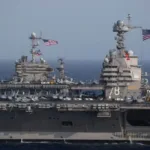



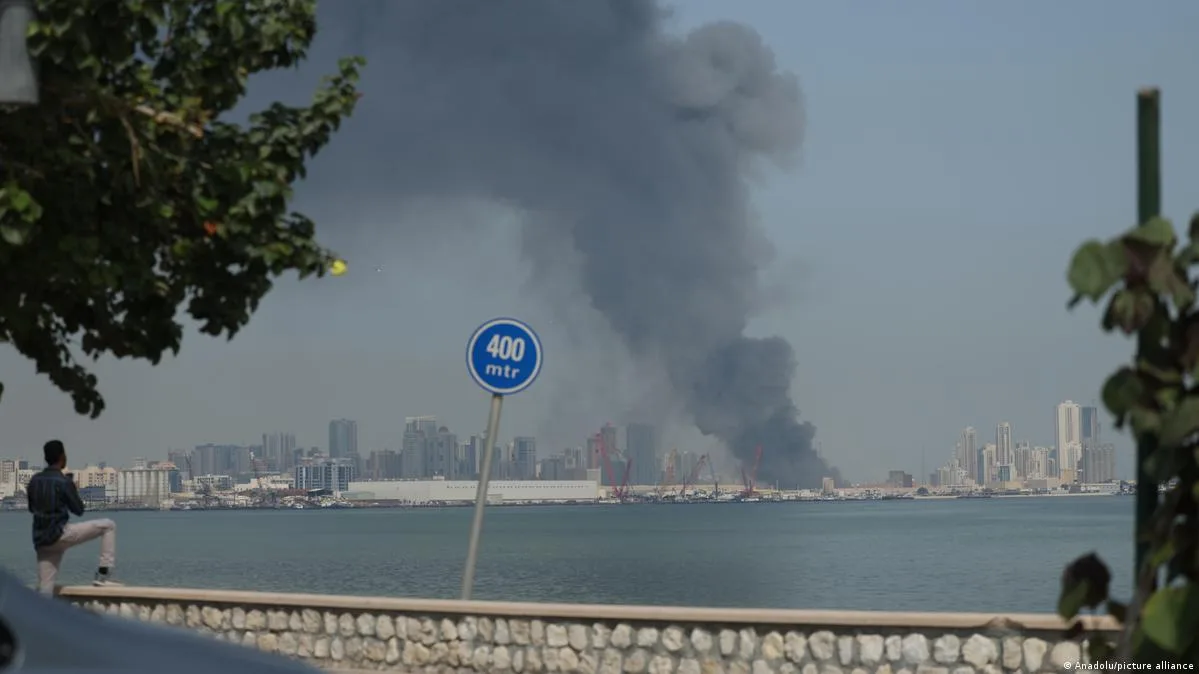
Since the early hours of the U.S.–Israeli war against Iran that erupted in late February, the Gulf states have effectively found themselves at the heart of the confrontation even though they are not declared parties to it. As events accelerated, their territories gradually turned into direct targets, subjected to successive waves of Iranian missiles and drones that have continued at a high pace.
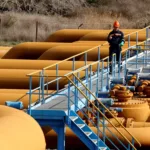
These strikes have spread a wide atmosphere of anxiety and uncertainty across Gulf capitals, particularly after they expanded beyond facilities linked to the American military presence to include civilian and critical infrastructure most notably oil and gas installations.
The attacks have cast a heavy shadow over energy security and triggered sharp repercussions across global markets. For Gulf observers, moreover, they represent a direct violation of sovereignty that cannot be dismissed as an isolated incident.
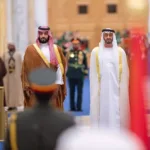
Faced with this complex landscape, the Gulf states have adhered to a policy of restraint and attempted to contain the escalation. In the initial phase, they limited their response to a series of diplomatic statements condemning Tehran and rejecting any effort to turn the region into a theater of proxy warfare, while simultaneously seeking to keep their territories outside the trajectory of the confrontation.
Yet growing pressure—both domestic and external—and calls to abandon “diplomatic rhetoric” in favor of military engagement, particularly as Iranian escalation continues, have revived a central question: What viable Gulf approach exists to manage this situation, caught between the cost of being dragged into war and the price of continued targeting?
What About the Iranian Approach?
Before examining the Gulf response, it is necessary to pause and consider Iran’s own strategy and the motivations behind Tehran’s decision to make the Gulf a central target in its escalation calculus. This is especially striking given the potential political risks involved, including undermining the recent relative improvement in relations and possibly alienating Gulf actors that have long served as reliable partners most notably Oman and Qatar, both of which have played key roles in mediation channels between Iran and the United States in the past.
At its core, Iran’s strategy seeks to exploit the Gulf’s sensitivity within the global economic system. Tehran appears to be betting that expanding the scope of attacks to include military and strategic infrastructure—particularly oil and gas facilities—could push Gulf governments to exert political pressure on Washington to halt the escalation, especially if these strikes are perceived as direct threats to economic security and domestic stability.
Through this lens, Iran aims to raise the cost of the war to the highest possible level by leveraging the fact that Gulf states represent a global energy lifeline whose disruption cannot be ignored by markets or major powers.
Under this logic, any sustained threat to Gulf energy infrastructure would generate repercussions far beyond the region, extending from Europe to Asia. Such disruptions could create international pressure dynamics that partially align with Iran’s objective of slowing the momentum of its adversaries.
Indeed, signs of this “economic pressure” have already begun to appear, with notable surges in energy prices fueled by fears of an expanding crisis and its impact on supply and global logistics chains. This illustrates how the transformation of Gulf security from a regional issue into a global variable can reshape the calculations of multiple stakeholders.
It is also worth noting that the strategy of raising economic costs is not new to Iranian strategic thinking. It has deep roots in Tehran’s security doctrine and has manifested in various forms over decades, particularly during major conflicts such as the Iran–Iraq War, when economic leverage, energy resources, and maritime routes were used as parallel instruments of pressure alongside military tools.
Within this framework, Iran seeks to weaponize geography as a geopolitical asset capable of compensating—at least partially—for the imbalance in conventional military power vis-à-vis its adversaries. In the current context, the Gulf, the Strait of Hormuz, and global energy corridors become central pressure points in a strategy designed to transform Iran’s geographic position and maritime environment into instruments capable of imposing significant costs on its opponents, even without direct military superiority.
“Not Our War”: The First Gulf Approach
The first interpretation shaping Gulf discourse regarding the current escalation begins with a basic premise: what is unfolding cannot fundamentally be classified as a “Gulf war.” Rather, it is an extension of a trilateral confrontation between Iran on one side and the United States and Israel on the other.
According to this view, Gulf states are not original parties to the conflict nor responsible for its direct consequences even if they now find themselves within the scope of its repercussions.
On this basis, both official and unofficial reactions have remained disciplined within this framework. Political rhetoric has focused on two key points: first, that the Gulf has not joined the war nor chosen to align itself with either side; and second, that Gulf territories and airspace have not been used as operational platforms in the ongoing confrontation. This approach aims to strip Tehran of any justification for portraying its strikes as attacks against the American military presence in the Gulf rather than against the Gulf states themselves.
This framework largely explains the language of restraint adopted by most Gulf capitals, even as Iranian targeting has expanded beyond military bases to include civilian infrastructure, oil facilities, and threats to societal security within the Gulf.
Nevertheless, the Gulf mindset—according to this reading—tends to interpret Iranian escalation as part of a broader strategy aimed primarily at raising the cost of war and generating political and economic pressure on Washington and Tel Aviv, rather than settling direct scores with the Gulf states themselves.
Avoiding the Trap: The Second Approach
The second pillar of the Gulf approach places clear priority on avoiding the trap of direct confrontation with Iran through a hasty military response to attacks targeting Gulf territory.
According to this perspective, there is a “provocative” narrative attempting to exploit the moment of escalation and push Gulf capitals toward military retaliation that would automatically place them at the center of the war rather than on its margins.
Proponents of this view argue that direct Gulf involvement would transform the equation from a U.S.–Israeli–Iranian conflict into a four-sided war in which the Gulf becomes a principal actor. In such a scenario, the United States and Israel might later reduce their level of confrontation or reposition themselves according to their own calculations, leaving the Gulf to face Iran alone in a costly confrontation that could undermine one of its greatest achievements: the economic stability accumulated over decades.
This logic has been reinforced by circulating reports of attacks on Gulf oil facilities allegedly linked to Israel but attributed to Iran, a tactic that could further inflame tensions between the Gulf and Tehran and push regional states toward a pre-calculated response. Some media platforms have discussed such scenarios, echoing statements from Tehran as well as voices within the United States, including commentator Tucker Carlson.
In a similar vein, former Qatari Prime Minister Sheikh Hamad bin Jassim Al Thani articulated the essence of this approach when he warned against a direct confrontation between the Gulf Cooperation Council and Iran. Such a scenario, he argued, would lead to the “exhaustion of both sides’ resources” and open the door for multiple external powers to intervene and shape the course of the crisis under the pretext of containing it.
In a post on the platform X, the former Qatari prime minister stressed that avoiding direct confrontation with Iran remains a necessary choice in his view. He suggested that certain actors are seeking to push Gulf states into a direct clash with Tehran, even as the ongoing confrontation between the United States and Israel on one side and Iran on the other may eventually subside.
He warned that the aftermath of this round could witness shifts in regional power balances, including an expansion of Israel’s influence in the region developments that would require Gulf states to adopt more cautious and precise calculations in managing the escalation.
Gradual Containment Instead of Confrontation: The Third Approach
According to Gulf assessments, the first 48 hours of the war delivered a harsh test of regional defense systems, as Gulf skies appeared exposed to waves of Iranian missiles and drones.
Even more telling, according to this perspective, is that Tehran has not yet deployed the full extent of its advanced missile capabilities. Instead, it has relied primarily on conventional missiles and relatively limited drones. Yet even under these circumstances, defense systems in which Gulf capitals have invested for years particularly those imported from the United States have not been able to decisively prevent breaches.
At the same time, concern has grown within Gulf decision-making circles as the scope of targeting expanded to include—or approach—sensitive logistical sites, most notably refineries and oil infrastructure. This development suggests that the region’s economic core may now fall within the potential target bank.
At such a moment, it has become clear that the presence of U.S. bases on Gulf territory does not necessarily translate into immediate and effective protection. This realization has deepened the sense that reliance on traditional security arrangements may not be sufficient in the face of the current pattern of attacks.
These realities have sharpened Gulf awareness of the gap between possessing advanced weaponry and the ability to deploy it effectively against Iranian threats that, while relatively low-cost, are rapid and persistent in their impact.
Consequently, the Gulf strategic mood—at least in the initial phase—has leaned toward managing and containing the escalation rather than slipping into direct confrontation, given the immense costs and risks such a war would pose to economic stability and energy security.
Although some Gulf capitals have raised the tone of their warnings, emphasizing the right to defend national sovereignty and hinting at the possibility of different response options, keeping the door open to diplomacy has remained the dominant approach. This has been reflected in the activation of multiple political channels and efforts to reinforce a narrative separating the U.S.–Iran confrontation from Gulf security, thereby reducing the likelihood of Gulf capitals becoming direct parties to the war.
A Narrow Margin for Maneuver
Although the Gulf approach fundamentally favors diplomacy, avoidance of confrontation, and resistance to being drawn into an open war, this does not mean accepting a passive “wait-and-see” stance in the face of escalating Iranian attacks. Nevertheless, the realities of the equation impose a relatively narrow margin for maneuver on Gulf capitals one shaped by calculations of cost, capability, and potential repercussions.
Within this framework, that margin revolves around two primary tracks.
The first is political-diplomatic escalation, beginning with symbolic yet meaningful measures such as summoning Iranian ambassadors for consultations. More severe steps could follow, including reducing diplomatic representation or expelling missions in a coordinated move across Gulf Cooperation Council states.
This track could eventually expand to more advanced tools, foremost among them bringing the issue before the United Nations Security Council in order to place responsibility on the international community for what is viewed as a violation of sovereignty. At the same time, Gulf states could signal the suspension of existing understandings and agreements with Tehran, reflecting a shift from containment toward a policy of “calibrated pressure.”
The second track involves activating networks of regional and international allies. Gulf states may seek to bring influential actors into the crisis, either through political pressure on Iran particularly from countries with communication channels or influence in Tehran, such as Russia and China or by expanding defense partnerships with European allies.
Such cooperation could include security and coordination arrangements designed to reinforce deterrence and defense systems against ongoing attacks. In this context, discussions have surfaced about potential European contributions to building a defensive umbrella or joint security arrangements, with indications that some European capitals—including France, Italy, and the United Kingdom—may be considering such roles.
What About Military Engagement?
Despite the rising tone of Gulf political rhetoric in response to what are viewed as repeated Iranian provocations and attacks, the option of direct military engagement with Tehran remains—at least for now—outside the circle of immediate decision-making.
However, this does not mean the option is entirely excluded, particularly if Iran continues escalating to levels that approach or cross what Gulf capitals consider “red lines.”
Should Gulf states conclude that their economic and social security is under direct threat and that the attacks can no longer be contained politically, they may be compelled to reconsider their current approach of relative neutrality and restraint. At that point, the military option could emerge—if only as a last resort—on the table of strategic deliberations.
Even then, the most likely scenario would not involve unilateral responses by individual Gulf states. Rather, any military engagement would likely take the form of a coordinated collective response within a broader alliance framework. If Gulf forces were to become involved militarily, it would most likely occur in the context of a joint operation with the United States, supported or assisted by certain European powers providing both political and military cover while reducing the risks of isolation.
Under this reading, the military option is regarded as a “final card” to be played only if the crisis reaches a dead end and Tehran continues to raise the cost of war to the point where Gulf capitals judge that the cost of restraint has become greater than the cost of engagement.
Until such a threshold is reached, Gulf states are likely to maintain a cautious diplomatic approach and measured responses, with a clear bet on time as a factor that might cool the crisis whether through a decisive outcome that removes the Iranian regime or through negotiated arrangements for de-escalation, whatever form they may ultimately take.
In any case, this war appears likely to push the Gulf—so the assumption goes—toward a sweeping reassessment of several political, military, and security approaches. Such reconsideration could reshape its perception of its position within regional and international alliance networks and redefine the limits of reliance on traditional security guarantees.
In that sense, according to the Gulf perspective, the period before February 28, 2026, will not be the same as what follows not in terms of security calculations nor strategic positioning.