NoonPost NoonPost

NoonPost

  • Home
  • Politics
  • Economy
  • Society
  • Culture
  • Files
  • Long Reads
  • Podcast
AR
Notification Show More
نون بوست
“There Are Nights I Can’t Close My Eyes”: How Gazans Are Living in Homes on the Brink of Collapse
نون بوست
From al-Jolani to Ahmad al-Shara: The Evolution of Syria’s New Leader
نون بوست
When Political Islam Receded in Egypt: Who Filled the Void?
نون بوست
An Extension of Genocide: Gaza’s Detainees Speak Out
نون بوست
A Tightrope Between Survival and Sovereignty: The Syrian Government Faces Normalization Pressures
نون بوست
American Aircraft Carriers: Has the Era of “100,000 Tons of Diplomacy” Ended?
نون بوست
U.S. Regime‑Change Policies: Why They Are Destined to Fail
نون بوست
Transformations of Israeli Judaism: Between the Victim Complex and the Colonizer’s Doctrine
نون بوست
The Gulf’s Balancing Act: Iran, Israel, and Hidden Links
نون بوست
Iraq–Turkey Oil Export Treaty: Why Did Ankara Cancel It After 52 Years?
نون بوست
Syria’s Northeast on Edge: QSD Between Ankara and Damascus
نون بوست
Has Europe Changed Its Stance on Israel… or Just Its Language?
NoonPost NoonPost
AR
Notification Show More
نون بوست
“There Are Nights I Can’t Close My Eyes”: How Gazans Are Living in Homes on the Brink of Collapse
نون بوست
From al-Jolani to Ahmad al-Shara: The Evolution of Syria’s New Leader
نون بوست
When Political Islam Receded in Egypt: Who Filled the Void?
نون بوست
An Extension of Genocide: Gaza’s Detainees Speak Out
نون بوست
A Tightrope Between Survival and Sovereignty: The Syrian Government Faces Normalization Pressures
نون بوست
American Aircraft Carriers: Has the Era of “100,000 Tons of Diplomacy” Ended?
نون بوست
U.S. Regime‑Change Policies: Why They Are Destined to Fail
نون بوست
Transformations of Israeli Judaism: Between the Victim Complex and the Colonizer’s Doctrine
نون بوست
The Gulf’s Balancing Act: Iran, Israel, and Hidden Links
نون بوست
Iraq–Turkey Oil Export Treaty: Why Did Ankara Cancel It After 52 Years?
نون بوست
Syria’s Northeast on Edge: QSD Between Ankara and Damascus
نون بوست
Has Europe Changed Its Stance on Israel… or Just Its Language?
Follow US

The Alliance Fractures: Where Does Europe Stand on the War with Iran?

فريق التحرير
Noon Post Published 26 March ,2026
Share
نون بوست
نون بوست
The war on Iran has led experts to describe the current phase as a “great rupture” of the global order.

As the American–Israeli war against Iran escalates, the contours of a deeply complex geopolitical crisis are coming into view one that extends far beyond the Middle East and strikes directly at the heart of the transatlantic alliance.

The reverberations of this confrontation have not been limited to military targets. Instead, they have triggered an unprecedented political earthquake between Washington and its European allies. Where do European countries stand on the war, and how prepared are they to intervene militarily?

This report examines Europe’s positions on the American–Israeli war against Iran.

1. Spanish Rejection and Threats of Sanctions

Spain has emerged as the spearhead of European opposition to Washington’s approach. Prime Minister Pedro Sánchez has taken a firm stance against involvement in the conflict, rallying behind the slogan “No to war.”

Madrid translated that position into concrete policy by openly refusing to allow the United States to use the jointly operated military bases at Rota and Morón to launch combat strikes against Iran.

Sánchez warned that the military escalation amounts to a “game of Russian roulette with the fate of millions,” stressing that Spain would not participate in a campaign that violates international norms.

The stance angered US President Donald Trump, who launched a scathing attack on Madrid, describing Spain as a “terrible ally.”

Trump did not stop at rhetoric. He announced that he had ordered the Treasury Secretary to sever all trade relations with Spain, exploiting Madrid’s refusal to raise its NATO defense spending to 5 percent.

Facing what it described as economic coercion, the European Commission swiftly intervened to affirm its protection of the bloc’s collective interests raising the specter of a full-scale transatlantic trade war.

2. An Independent French Course

Rather than fall in line, France has chosen a path that reflects its longstanding ambition to preserve strategic autonomy.

President Emmanuel Macron openly declared that the military operations launched by Washington and Tel Aviv had taken place “outside the framework of international law.”

He stressed that Paris cannot accept unilateral American–Israeli military actions that destabilize the entire region and push it into the unknown.

To translate this political stance into military positioning, Macron ordered the aircraft carrier Charles de Gaulle to deploy to the Mediterranean while strengthening French air defenses in Cyprus to protect European interests exclusively.

This French posture reflects a deeper strategy aimed at leveraging the crisis to advance genuine European “strategic autonomy,” distancing the continent from what Paris views as reckless American military adventures. The move is also accelerating the erosion of institutional trust between Paris and Washington.

3. British Hesitation and American Mockery

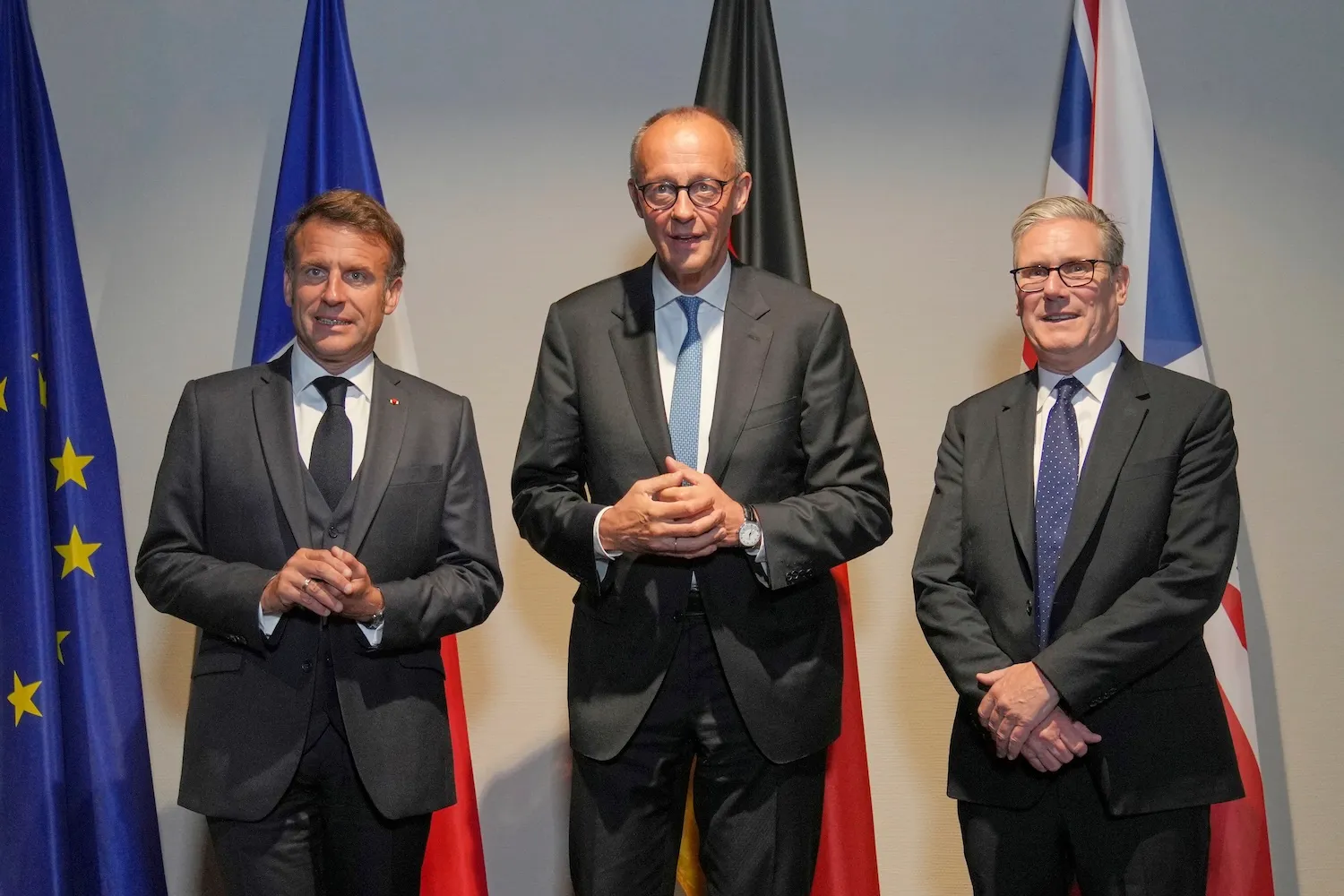
The government of British Prime Minister Keir Starmer has found itself caught between the pressures of the historic “special relationship” with Washington and mounting legal and ethical constraints.

In the early days of the military operations, London declined to grant the United States permission to use its strategic bases particularly Diego Garcia and British air bases in Cyprus citing serious concerns about the legality of the strikes.

Although Britain eventually reversed course and allowed limited use of its facilities for missile interception and defensive purposes, the initial hesitation was enough to spark a deep crisis of confidence.
نون بوست
The Iran war has caused an unprecedented political earthquake between Washington and its European allies.

Trump publicly mocked Starmer, saying in a media statement, “We’re not dealing with Winston Churchill here,” expressing deep disappointment at Britain’s delay.

He added bluntly that he did not actually need their help to wage a war in the Middle East remarks that underscored a dismissive attitude toward one of Washington’s closest allies and hinted at the potential marginalization of Britain’s role in the future.

4. Constitutional Constraints in Germany

In Berlin, extreme caution has defined the German response, articulated by Chancellor Friedrich Merz during his recent visit to Washington.

Merz clearly indicated that military plans aimed at political change in Tehran “are not without serious risks and repercussions.” He also voiced doubts about whether military force alone could impose a new reality without dragging the region into a broader regional war.

In practical terms, Germany has tied any potential military involvement to prior approval by the Bundestag, adhering strictly to its constitutional framework.

While Merz appeared flexible regarding US pressure for European allies to increase defense spending, he has maintained a safe distance that prevents Germany from becoming entangled in an open conflict that could undermine its energy security and economic stability.

5. Italy Will Not Send Troops

Italy, given its geographic position and relative dependence on energy imports, views the crisis through the lens of its direct impact on Mediterranean stability.

Prime Minister Giorgia Meloni expressed deep concern, placing the crisis within the broader context of a collapse of international law that began with the war in Ukraine. At the same time, she called on Tehran to halt its attacks against Gulf states.

Deputy Prime Minister Matteo Salvini echoed that position, stating: “Italy is not at war with anyone. We have always said we would not send troops to Ukraine, and I imagine we will not send troops to Iran either.”

He added: “Supporting an alliance of free and Western nations is one thing; sending soldiers to a battlefield is another and that is not part of the plan.”

Salvini continued: “The issue concerns the lives of people in Italy and around the world. For me, diplomacy will always remain the best path.”

6. Contradictions Within the European Bloc

At the same time, sharp contradictions have emerged among Western institutions themselves. The European Union’s High Representative for Foreign Affairs, Kaja Kallas, warned of a deteriorating diplomatic environment and called for restraint.

Kallas described the situation in the Middle East as “dangerous,” emphasizing that the European Union is coordinating with Arab partners to explore diplomatic pathways aimed at reducing tensions.

Meanwhile, NATO Secretary-General Mark Rutte quickly praised the American operations targeting Iran’s nuclear and missile capabilities.

This divergence between European calls for de-escalation and NATO’s support for the strikes reveals a profound structural crisis in the formulation of a unified European foreign and security policy.

Redefining Transatlantic Relations

Europe’s responses to the conflict did not emerge in a vacuum. Since late 2025, the continent has been reassessing its relationship with Washington following the first year of Donald Trump’s return to the White House a year marked by tensions across multiple fronts: security (Ukraine and NATO) and economics (tariff disputes).

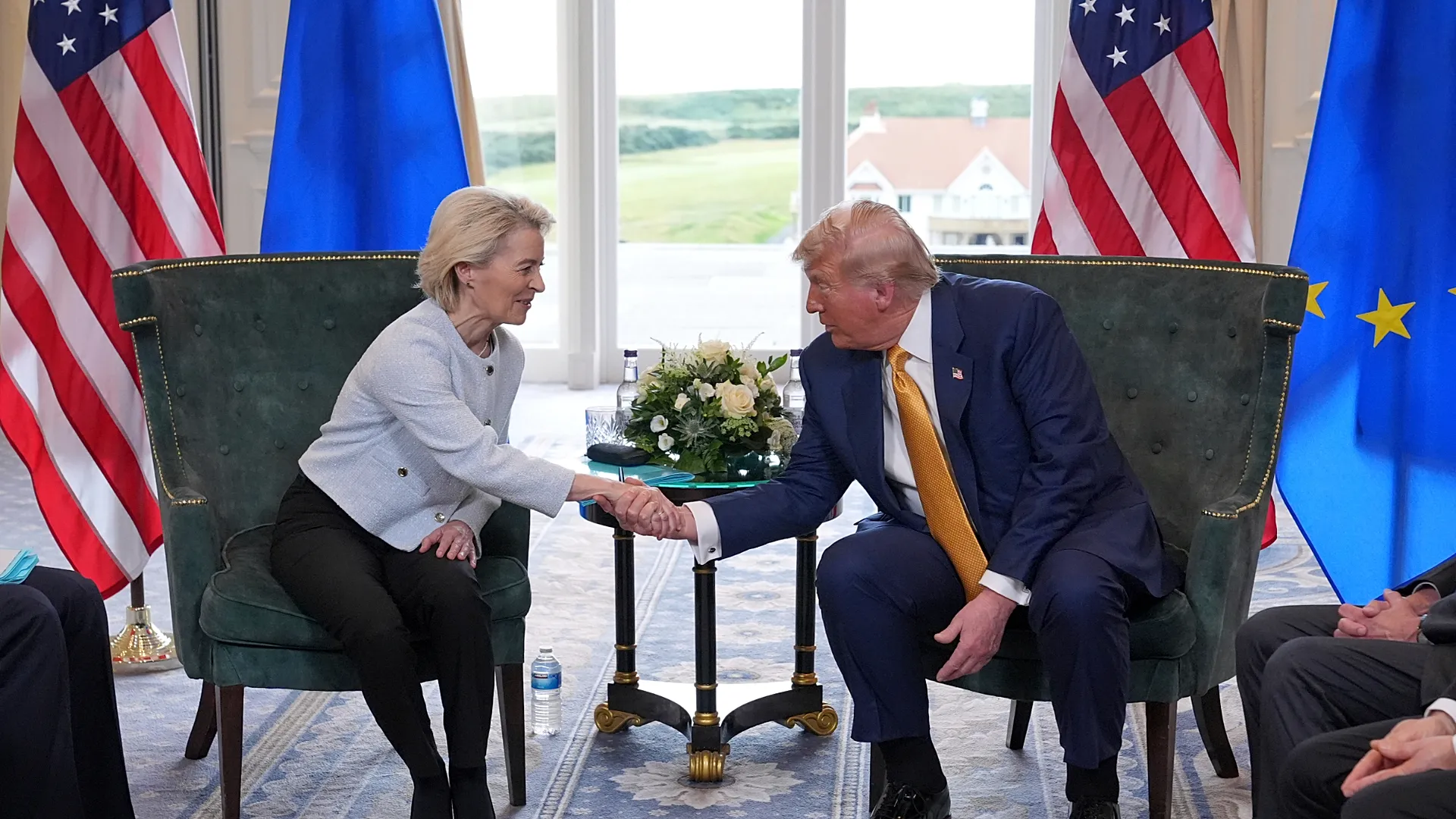
This reality was evident in the Trump administration’s actions from its earliest days. In July 2025, when Trump met European Commission President Ursula von der Leyen in Scotland, the encounter was far from the cordial or symbolic meetings that once characterized transatlantic diplomacy. Instead, it culminated months of escalating tension.
نون بوست
Trump’s meeting with the President of the European Commission in Scotland was neither friendly nor symbolic.

Trump questioned the value of NATO for the United States and hinted that Washington might ignore the alliance’s collective defense principle.

He revived the idea of purchasing Greenland from Denmark as if it were a commodity.

He did not hesitate to impose punitive tariffs on imports from the European Union and the United Kingdom.

The height of the European shock came in November 2025 with the release of the US National Security Strategy, which portrayed Europe as a weak partner that must be “reshaped.” The document declared that the era of global dependence on the United States as the “giant of the international order” was over and urged Europeans to shoulder their own defense burden.

The crisis spilled into the economic arena in April 2025 when Trump imposed sweeping tariffs on EU imports (20 percent) and increased duties on steel and aluminum (from 25 percent to 50 percent).

Faced with the shock, the European Union adopted countermeasures, including retaliatory tariffs on American goods worth €72 billion, and Brussels threatened to deploy its new Anti-Coercion Instrument against the United States.

Yet Europe’s security dependence on Washington amid the war in Ukraine narrowed its room for maneuver. The crisis ultimately ended in a July 2025 deal that European leaders described as humiliating and a clear concession to Washington. The agreement included:

  • The European Union eliminating most industrial tariffs on American products.

  • Washington maintaining tariffs of 15 percent on European exports three times higher than before the trade war.

  • Europeans committing to invest $600 billion in the United States and purchase $750 billion in American energy by 2028.

For that reason, the divisions visible today are not merely tactical disagreements or diplomatic sparring. They represent a structural rupture that threatens the entire architecture of the Western alliance.

The open war against Iran launched without United Nations Security Council authorization has led experts to describe the current moment as the “great rupture” of the global order.

It is unfolding within the broader trajectory of the Trump administration’s policy of imposing facts on the ground while disregarding European reservations and wielding economic threats to pressure allies rather than consulting them.

Download this article as PDF
Share this Article
Facebook Twitter Whatsapp Whatsapp Telegram Email Copy Link
فريق التحرير
By فريق التحرير تقارير يعدها فريق تحرير نون بوست.
Follow:
Previous Article نون بوست Nights of Fear in the West Bank: How Palestinian Families Cope With Night Raids
Next Article نون بوست The Illusion of Diplomacy: How Washington Deceived Tehran Through Negotiations

Read More

  • U.S. Regime‑Change Policies: Why They Are Destined to Fail U.S. Regime‑Change Policies: Why They Are Destined to Fail
  • The Gulf’s Balancing Act: Iran, Israel, and Hidden Links
  • Iraq–Turkey Oil Export Treaty: Why Did Ankara Cancel It After 52 Years?
  • Syria’s Northeast on Edge: QSD Between Ankara and Damascus
  • Has Europe Changed Its Stance on Israel… or Just Its Language?
part of the design
NoonPost Weekly Newsletter

You May Also Like

U.S. Regime‑Change Policies: Why They Are Destined to Fail

U.S. Regime‑Change Policies: Why They Are Destined to Fail

إسراء سيد Esraa sayed 8 April ,2026
The Gulf’s Balancing Act: Iran, Israel, and Hidden Links

The Gulf’s Balancing Act: Iran, Israel, and Hidden Links

فريق التحرير Noon Post 8 April ,2026
Iraq–Turkey Oil Export Treaty: Why Did Ankara Cancel It After 52 Years?

Iraq–Turkey Oil Export Treaty: Why Did Ankara Cancel It After 52 Years?

فريق التحرير Noon Post 8 April ,2026

كويتي لأوباما: لا تقابل الأمير قبل أن تقرأ هذا!

فريق التحرير
Noon Post Published 14 May ,2015
Share
150512_jasem_obama_gty

“على مدار الأيام العشرة الأخيرة، لم أغادر منزلي في العاصمة الكويت وحدي. دوما ما يكون شخص ما معي. فأنا جد ولدي مشاكل في القلب، لكن ليس لأسباب صحية أتخذ حذري، ولا لأني أخشى من أن أسقط من الإعياء. لكنه مجرد إجراء قد لا يجدي غالبا، من أجل ألا أُختطف قسريا من حكومتي.”

هكذا بدأ محمد الجاسم رسالته إلى الرئيس الأمريكي باراك أوباما والذي عنونها بـ “أرجوك سيدي الرئيس، اقرأ هذه الرسالة قبل أن تذهب إلى كامب ديفيد”، وفي عنوان جانبي نقرأ “عندما تقابل الكويتيين، اسألهم لماذا يظلون يرسلونني إلى السجن عقابا على قول ما أؤمن به”.

وفي رسالته يقول الجاسم إن مخاطر أن تكوّن رأيا في الكويت عديدة، فقد حدث أن اختُطف ثلاثة أشخاص في آخر أربعة أسابيع فقط. وتابع الجاسم قائلا إنه كان أول كويتي يُحكم عليه في قضية رأي، لكنه لم يكن الأخير بالقطع.

والجاسم بحسب تعريفه لنفسه هو مدون حاول أن يكتب بحرية عن الأوضاع في الملكية المطلقة التي تعيشها الكويت، كما أنه محام يشارك الآن في الدفاع عن أكثر من 20 قضية تتعلق بحرية الرأي والتعبير.
وفي رسالته أوضح الجاسم أنه كان قد أضرب عن الطعام أثناء اعتقاله في عام 2010، حيث انهار في اليوم الرابع ونُقل إلى مشفى عسكري، قيدت قدماه ويده اليمنى، وكانت الأجهزة متصلة بيده اليسرى، ورغم ذلك لم يُسمح لأهله برؤيته.

وروى الجاسم كيف أنه عندما كان يتحرك من السجن بحراسة 24 شخصا من القوات الخاصة، فيما يتم تقييد يديه وقدميه.وبعد خروجه حكى الجاسم قصته في كتاب نشره بعنوان “في طريقي إلى السجن”، بيد أن السلطات الكويتية قامت بحظر نشره.

ورغم الضجة التي حدثت عند اعتقال الجاسم، إلا أن الأمر أصبح اعتياديا الآن، فمئات الأشخاص يُحاكمون بتهم سياسية، والكثيرون يتم سجنهم لمدد تصل إلى خمس سنوات.

وفي رسالته قال الجاسم “اليوم الخميس، سيكون أمير الكويت الشيخ صباح الأحمد الصباح أحد حُكام الخليج القلائل الذين سيحضرون القمة المرتقبة في كامب ديفيد مع الرئيس باراك أوباما”.

وقال الجاسم إن قطاعا كبيرا من داعمي الحريات وحقوق الإنسان في الكويت انتظروا عقد هذه القمة منذ الانتقادات التي وجهها أوباما للوضع الحقوقي في دول الخليج خلال حواره مع الصحفي توماس فريدمان في نيويورك تايمز في الخامس من أبريل الماضي.

وتساءل الجاسم عما إذا كان البيت الأبيض مهتما بتحسين أوضاع حقوق الإنسان في الدول الحلفاء لواشنطن، خاصة وأن الكويت لن ترفض طلبا أمريكيا بالقيام بإصلاحات حقوقية وسياسية في البلاد. وأجاب الجاسم على تساؤله إنه لا يعتقد أن الرئيس الأمريكي يهتم بوضع حقوق الإنسان، إنه يهتم فقط بالإبقاء على علاقاته بحلفائه خاصة بعد الصفقة النووية مع إيران.

الجاسم الذي عمل رئيس تحرير للنسخ العربية من مجلات نيوزويك وفورين بوليسي، كما عمل محاميا ومراقبا لصالح منظمة العفو الدولية في مصر والبحرين قال إنه يؤمن أن إدارة أوباما تعمل من أجل حماية الأنظمة لا من أجل الشعوب، خاصة إذا كانت تلك الأنظمة هي المتحكمة في النفط العالمي.

ومع الربيع العربي، تراجعت الحكومة الكويتية في أساليبها القمعية، فقد أُجبر رئيس الوزراء، ناصر محمد الصباح، على الاستقالة في نوفمبر 2011، قبل أن تسيطر المعارضة بشكل ما على البرلمان الذي انتُخبر في فبراير 2012.

لكن تراجع الربيع العربي انعكس على الكويت كذلك، فقد عادت إلى ما تعرفه من قمع للمعارضين، وبعد خمسة أشهر من الانتخابات البرلمانية، قامت المحكمة الدستورية بحل البرلمان، وقامت الحكومة بتعديل قانون الانتخابات ليضمن لها سيطرة على نتائج الانتخابات.

وتتمحور المطالبات في الكويت من قبل العديد من قادة المعارضة حول الملكية الدستورية. لكن الحكومة ردت بسحب الجنسية من معارضيها، هذا ما حدث مع عبدالله برغش، معارض ونائب برلماني سابق، حيث نُزعت الجنسية الكويتية عنه وعن كامل عائلته بما فيها الأطفال والذين يبلغ عددهم 57 شخصا. المعارض سعد العجمي حدث معه الأمر نفسه، قبل أن يُختطف في أبريل الماضي من قبل 70 شخصا من الشرطة السرية.

وحذر الجاسم في ختام رسالته من أن المواطنين في دول الخليج قد يتم حصر خياراتهم بين القمع أو التطرف، في حين أن الخيار الثالث، وهو دولة ديمقراطية ومجتمع مدني قوي يحترم حقوق الإنسان هو الخيار الأولى.

وبحسب بيان لهيومن رايتس ووتش في أبريل الماضي فإن السلطات الكويتية انقضت بقوة القانون على حرية الرأي والتعبير خلال العام الماضي، وعلى الحكومة أن تسمح للشعب بحرية القول والكتابة والوفاء بوعودها بمعالجة مطالب “البدون” في الجنسية.

وبحسب المنظمة فقد تم تسجيل فقط 8 حالات لأشخاص أدينوا في قضايا حرية الرأي والتعبير منذ 1962 وحتى 2006، لكن العدد ارتفع بين عامي 2012 و2013 إلى 200 شخص، وهذا لا يتضمن من أدينوا بتهمة الاساءة إلى دول أخرى أو إلى المذاهب الدينية أو إلى المسؤولين، وان أخذنا بعين الإعتبار هؤلاء فسيصل العدد إلى 250 شخصا، وذلك وفقاً لمنظمات حقوقية محلية.

وتستند الكويت في قراراتها المستمرة بسحب الجنسية إلى قانون تعسفي ومخالف للمواثيق الدولية يتيح لها سحب الجنسية لكل من تراه يشكل تهديدا لها وهو نص فضفاض إستخدمته الحكومة في قمع معارضيها.

جدير بالذكر أن الكويت تحتل المرتبة 90 من أصل 180 بلداً في النسخة الأحدث من التصنيف العالمي لحرية الاعلام الذي نشرته منظمة مراسلون بلا حدود مطلع عام 2015.

TAGGED: الإصلاح في الكويت ، الحكومة الكويتية ، الخليج العربي ، هيومان رايتس ووتش
Download this article as PDF
Share this Article
Facebook Twitter Whatsapp Whatsapp Telegram Email Copy Link
فريق التحرير
By فريق التحرير تقارير يعدها فريق تحرير نون بوست.
Follow:
Next Article نون بوست The Stigma of “ISIS”: A Heavy Legacy Haunting Women and Children of Former Members

Read More

  • U.S. Regime‑Change Policies: Why They Are Destined to Fail U.S. Regime‑Change Policies: Why They Are Destined to Fail
  • The Gulf’s Balancing Act: Iran, Israel, and Hidden Links
  • Iraq–Turkey Oil Export Treaty: Why Did Ankara Cancel It After 52 Years?
  • Syria’s Northeast on Edge: QSD Between Ankara and Damascus
  • Has Europe Changed Its Stance on Israel… or Just Its Language?
part of the design
NoonPost Weekly Newsletter

You May Also Like

U.S. Regime‑Change Policies: Why They Are Destined to Fail

U.S. Regime‑Change Policies: Why They Are Destined to Fail

إسراء سيد Esraa sayed 8 April ,2026
The Gulf’s Balancing Act: Iran, Israel, and Hidden Links

The Gulf’s Balancing Act: Iran, Israel, and Hidden Links

فريق التحرير Noon Post 8 April ,2026
Iraq–Turkey Oil Export Treaty: Why Did Ankara Cancel It After 52 Years?

Iraq–Turkey Oil Export Treaty: Why Did Ankara Cancel It After 52 Years?

فريق التحرير Noon Post 8 April ,2026
dark

An independent media platform founded in 2013, rooted in slow journalism, producing in-depth reports, analysis, and multimedia content to offer deeper perspectives on the news, led by a diverse young team from several Arab countries.

  • Politics
  • Society
  • Rights & Liberties
  • Opinions
  • History
  • Sports
  • Education
  • Technology
  • Economy
  • Media
  • Arts & Literature
  • Entrepreneurship
  • Travel
  • Cinema & Drama
  • Food
  • Health
  • Culture
  • Latest Reports
  • Files
  • Long Reads
  • Interviews
  • Podcast
  • Interactive
  • Encyclopedia
  • In Pictures
  • About Us
  • Our Writers
  • Write for Us
  • Editorial Policy
  • Advanced Search
Some rights reserved under a Creative Commons license

Removed from favorites

Undo
Go to mobile version