

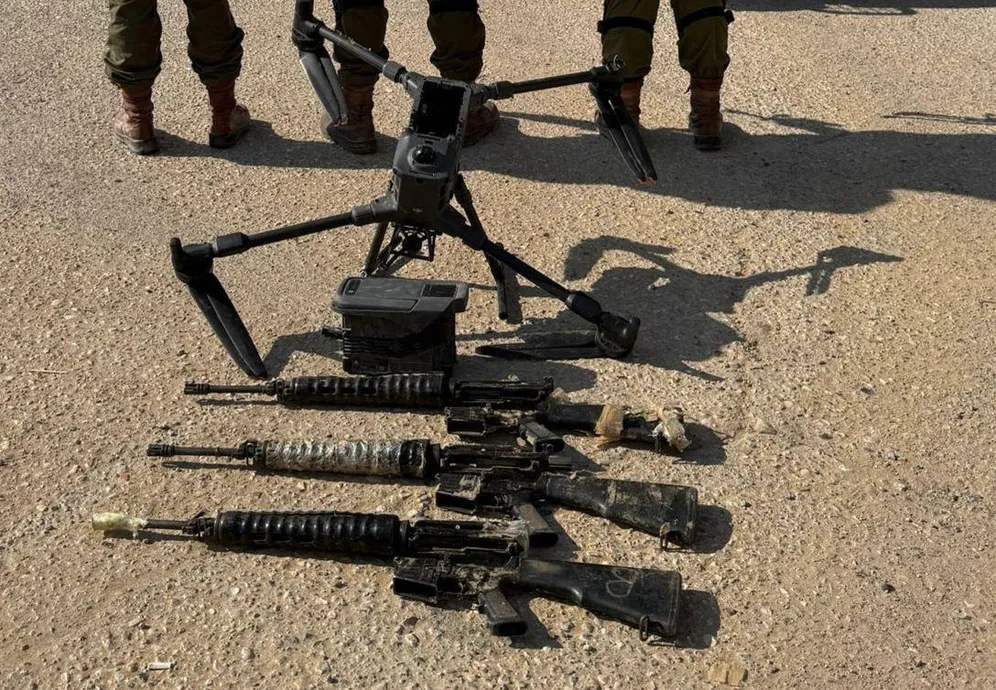
Since October 7, 2023, Egypt’s border with the occupied Palestinian territories has returned to the forefront of the security and political agenda. This frontier constitutes the only geographic link between the Gaza Strip and the outside world via Egyptian territory specifically along the Salah al-Din corridor, known in Israel as the Philadelphi Corridor.
For years, Israel has portrayed this corridor as a primary gateway for weapons smuggling into Gaza, building an enduring security narrative around it. The focus has shifted over time from underground tunnels to commercial trucks, land incursions, and even maritime routes.
Yet developments during the war revealed that the main weapons relied upon by Palestinian resistance groups documented in battlefield footage were largely domestically manufactured, weakening the credibility of that narrative, even as Israel has continued to invoke it.
Subsequent developments, however, have exposed a different reality: smuggling does indeed exist, but in a different form, employing new tools and serving objectives not necessarily aligned with the traditional narrative of arming resistance factions. Over recent months, repeated attempts to detect, intercept, and at times thwart various smuggling operations have been reported along the border between Israel and the Sinai Peninsula.
These operations began in conventional land-based forms before evolving into a more complex pattern centered on unmanned aerial vehicles—drones—at a rate of dozens of attempts per month. The phenomenon appears to be expanding, according to assessments from Israeli security circles and residents of settlements adjacent to the border.
At present, the criminal dimension appears most prominent, with smuggling networks linked to organized crime groups operating within Israeli society. But the danger extends beyond criminality. The security breach this trend exposes carries far more complex potential scenarios.
Cross-Border Networks: A Smuggling Legacy That Predates Drones
On the evening of Monday, January 16, 2024, an armed group in northeastern Sinai moved approximately 174 kilograms of narcotics toward the border with the occupied Palestinian territories, specifically near the al-Auja crossing known in Israel as Nitzana roughly 40 kilometers from the Rafah crossing.

The incident was not exceptional; rather, it underscored the long-standing presence of organized smuggling networks operating along this border between Sinai and the occupied territories. In February 2023 months before the war Israel’s army announced it had thwarted a drug-smuggling attempt from Egypt valued at approximately $13 million.
A vehicle was intercepted near the border, driven by a Bedouin Israeli citizen carrying 120 kilograms of hashish, heroin, and cocaine.
According to Israeli military data, drug smuggling across the Egyptian border peaked in 2019, with 726 recorded incidents. The numbers declined in 2020 and 2021, only to rise again in 2022 to around 575 operations in a single year reflecting the networks’ capacity to adapt to shifting security measures.
Despite Israel’s construction of a roughly 246-kilometer steel border fence equipped with surveillance cameras, radar systems, and motion detectors completed in December 2013 and stretching from the northern tri-border area near Gaza to Eilat in the south, these networks have persisted.
Observers attribute this resilience to complex economic and security dynamics. Drug traffickers in Sinai reportedly prefer the Israeli market, which they view as “safer” than transporting shipments deep into Egypt, where numerous checkpoints particularly before and after the Suez Canal pose heightened risks.
By contrast, exploiting a vulnerability along the 245-kilometer border fence can be sufficient, especially given long-standing cross-border relationships between Sinai smugglers and their counterparts inside Israel ensuring a sustainable and reproducible trade route.
From Land to Air: Drones as the Networks’ New Adaptation Tool
Israel’s war on Gaza has reshaped the security landscape along the Egyptian border with the occupied territories, leading to intensified surveillance and military deployment.
This shift has prompted new forms of adaptation among smuggling networks whose backbone consists largely of Bedouin tribes straddling both sides of the border and engaged in smuggling activities for decades.
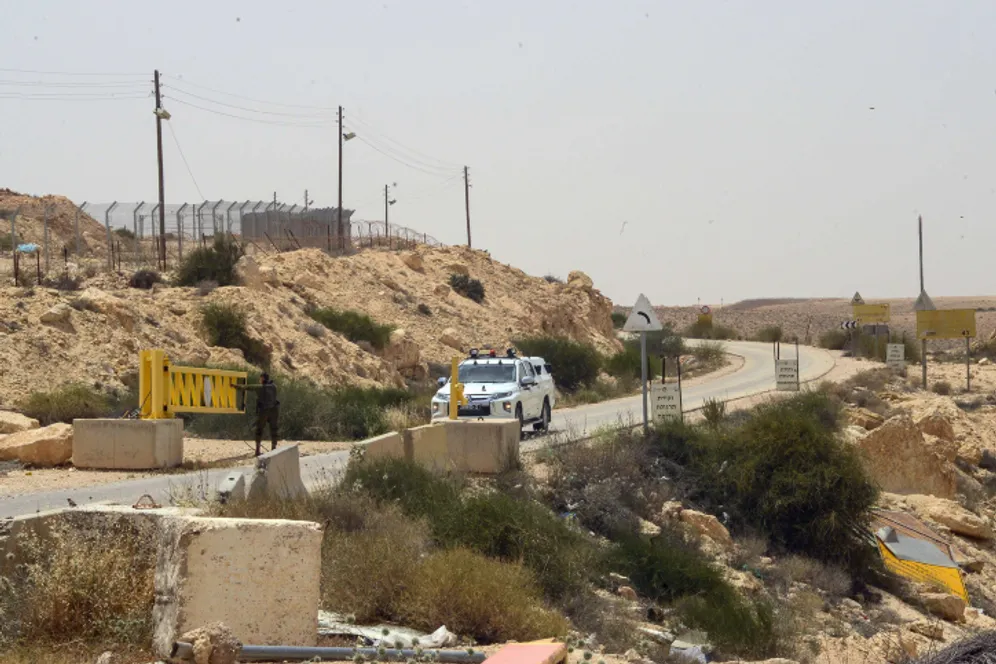
Within this context, drones have emerged as a more effective tool for navigating the new security reality. Their use did not begin with the war; isolated cases were reported earlier. However, land routes remained preferable due to lower costs and greater carrying capacity. Post-war tightening of surveillance accelerated the transition to aerial routes as a more flexible and less easily intercepted alternative.
As reported cases mounted, the outlines of a growing phenomenon became clearer. Israeli estimates suggest that hundreds of drones crossed the border within just a few months—particularly over the Ramat HaNegev Regional Council area, which spans vast territories adjacent to the Egyptian border.
The Hebrew news outlet Ynet quoted settlers describing the scale of the activity. “Dozens of drones pass every day,” one resident said. “The numbers no longer surprise us. For the smugglers, this is an open and successful route. Sometimes a drone crashes or is shot down, but they keep going.
It’s like a delivery service you can smuggle almost anything: weapons, ammunition, batteries, even food. They send the drone and it comes back. It can be reused. They operate in the skies as if they own them and that’s deeply frightening.”
Hebrew media accounts describe a common mechanism: smugglers approach the border fence in vehicles carrying remotely operated drones, launching them from a safe distance toward the other side. There, the drones are loaded with narcotics or weapons and flown back into Israeli territory. On some nights, a single drone makes multiple round trips, each counted as a separate smuggling operation.
Upon landing, accomplices retrieve and conceal the drone in vehicles before transferring the shipment to criminal networks or pre-arranged buyers. Israeli estimates suggest that some individual shipments can be worth up to half a million shekels.
By contrast, the newspaper Haaretz has cited Israeli military officers describing a somewhat different pattern: some drones are launched from deep within Egyptian territory sometimes up to 20 kilometers inside Sinai before landing at scattered points inside Israel, making it nearly impossible to trace their origin or operators.
According to those assessments, these drones are relatively large and capable of carrying loads of up to 60 kilograms. Their cost ranges between 50,000 and 100,000 shekels. Israeli data further indicates that many of the drones intercepted or seized were purchased within Israel itself, where the sale of such models is prohibited in the Egyptian market adding another layer of complexity to the phenomenon.
Record Numbers and an Open Breach: A Multi-Level Security Failure
Israeli data published in 2025 and 2026 points to an unprecedented escalation in drone-based smuggling across the Egyptian border levels that now suggest a multifaceted security crisis exceeding the containment capacity of various agencies.
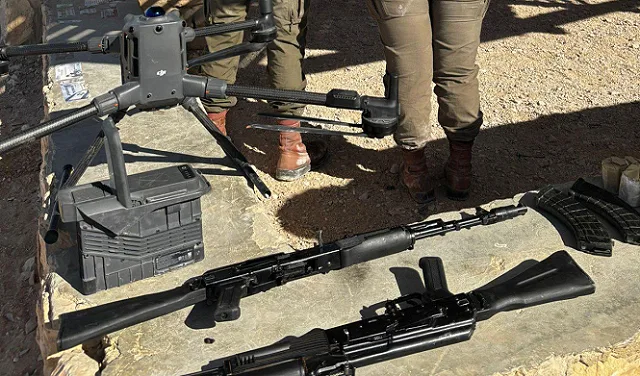
According to figures published by Yedioth Ahronoth in September 2025, hundreds of drone incursions were recorded within a short timeframe. In just one month between July 16 and August 25 at least 384 drone crossings were registered in the Faran border brigade area, alongside 248 sightings of smugglers on the Egyptian side and 254 on the Israeli side.
Data presented before the Knesset’s Foreign Affairs and Defense Committee indicated a sharp increase: 896 drone-smuggling operations were recorded over three months in the previous year, compared to 464 during the same period in 2024 nearly doubling within a year.
Field estimates cited by i24NEWS from border settlement residents suggest even higher figures: between 20 and 40 drones crossing daily, carrying weapons, ammunition, narcotics, cigarettes, and sometimes live animals. In many cases, a single drone makes multiple nightly trips, raising the monthly total to between 700 and 1,000 operations.
During just three days of the Hebrew New Year holiday, 550 drones were recorded more than 100 per day. Israeli security estimates indicate that a single drone can transport up to 100 kilograms of material, including M-16 rifles, medium machine guns, and occasionally advanced weapons such as anti-tank projectiles or explosive devices.
Data from the Ramat HaNegev Regional Council, citing Division 80, confirms the upward trajectory: 104 smuggling operations were recorded in the first half of 2024; 464 in the second half; 559 during the final three months of that year; and 627 in the first quarter of 2025 roughly double the corresponding period the year before.
This quantitative escalation has been accompanied by evident failures in Israel’s multi-agency response system. In theory, responsibilities are divided among several bodies: the army secures the border; the police pursue smugglers inside the country; the Shin Bet monitors organized networks; and Border Police conduct field arrests. In practice, this layered structure has revealed coordination gaps and ongoing exchanges of blame over responsibility for the failures.
Amid mounting concern, Israel’s defense minister declared what he described as a “war on smuggling,” designating the border area a closed military zone. In November 2025, the army chief of staff ordered intensified joint efforts to confront what he termed “the escalating drone threat on the western front” a reference to the Egyptian border.
The Israeli army subsequently established a new monitoring center under the Air Force within Division 80, dedicated to tracking aerial activity along the border, including drone movement. Military officials describe the issue as a “complex security threat” and say both short- and long-term technological solutions are being developed.
Yet the data reveals a persistent gap between political declarations and operational realities. Even as the defense minister declared the area a closed military zone, Hebrew media cited military sources describing the measure as “practically unenforceable” under current field conditions.
In the same month, the army announced it had thwarted 130 drone-smuggling attempts in a single month an implicit acknowledgment that the phenomenon remains active at a high tempo despite new measures.
From Smuggling Phenomenon to Open Strategic Challenge
Israel’s framing of drone-based smuggling has expanded beyond criminality into broader security and strategic terminology reflecting rising anxiety within military and intelligence institutions.
Last December, the Shin Bet formally joined efforts to combat the smuggling of weapons via drones across the Egyptian and Jordanian borders. Its director, David Zini, described the phenomenon as an “ongoing catastrophe” and a “strategic threat to Israel,” according to Haaretz.
His remarks came during intensive security deliberations involving senior officials from the Shin Bet, police, and military, alongside high-level legal authorities, in an exceptional meeting convened by the government’s legal adviser.
Data presented during those discussions indicated that tens of thousands of drone airspace violations had been recorded over the past year. A senior security official reportedly acknowledged, “We are four to five years behind in dealing with this phenomenon,” implicitly admitting to an accumulated security gap that will be difficult to close quickly.
Concern has also permeated the political echelon. The Knesset’s Foreign Affairs and Defense Committee convened urgent sessions featuring unusually stark warnings. Several lawmakers cautioned that weapons flowing across the Egyptian border could threaten military bases and sensitive sites in the south.
One lawmaker likened the phenomenon to “tunnels in the sky” a metaphor capturing the shift from underground tunnel threats to airborne smuggling routes that are harder to control.
Lawmakers further warned that the continued influx of weapons could enable armed groups or criminal networks to carry out large-scale operations inside the occupied territories. Israeli assessments suggest that some factions may be seeking to rebuild their military capabilities by exploiting this breach.
The Gaza Strip has not been entirely absent from the aerial smuggling route. Local sources documented the arrival of similar drones in southern Gaza, particularly around Rafah, where smuggled materials including narcotics, weapons, and electronic devices were reportedly received by networks linked to counterparts on both sides of the border.
In separate incidents, drones reached areas populated by displaced civilians west of Khan Younis. Some were targeted by Israeli aircraft; others reportedly reached local criminal groups that seized their cargo incidents underscoring the limited ability to impose full control over low-altitude airspace, even in heavily surveilled areas.
Ultimately, the phenomenon transcends conventional smuggling. It points to a broader dilemma: the transformation of security breaches in the digital age. The proliferation of small drones in global markets, their declining cost, and their ease of remote operation make them versatile tools capable of penetrating even the most fortified borders and advanced surveillance systems.
While their current use remains largely confined to organized crime networks, the more alarming dimension from Israel’s perspective lies in the latent potential of this breach should it be militarized by more structured actors. That shift from criminal nuisance to open strategic threat encapsulates the limits of security control in an environment where technological adaptation often outpaces even the most sophisticated defense systems.