NoonPost NoonPost

NoonPost

  • Home
  • Politics
  • Economy
  • Society
  • Culture
  • Files
  • Long Reads
  • Podcast
AR
Notification Show More
نون بوست
“There Are Nights I Can’t Close My Eyes”: How Gazans Are Living in Homes on the Brink of Collapse
نون بوست
From al-Jolani to Ahmad al-Shara: The Evolution of Syria’s New Leader
نون بوست
When Political Islam Receded in Egypt: Who Filled the Void?
نون بوست
An Extension of Genocide: Gaza’s Detainees Speak Out
نون بوست
A Tightrope Between Survival and Sovereignty: The Syrian Government Faces Normalization Pressures
نون بوست
American Aircraft Carriers: Has the Era of “100,000 Tons of Diplomacy” Ended?
نون بوست
U.S. Regime‑Change Policies: Why They Are Destined to Fail
نون بوست
Transformations of Israeli Judaism: Between the Victim Complex and the Colonizer’s Doctrine
نون بوست
The Gulf’s Balancing Act: Iran, Israel, and Hidden Links
نون بوست
Iraq–Turkey Oil Export Treaty: Why Did Ankara Cancel It After 52 Years?
نون بوست
Syria’s Northeast on Edge: QSD Between Ankara and Damascus
نون بوست
Has Europe Changed Its Stance on Israel… or Just Its Language?
NoonPost NoonPost
AR
Notification Show More
نون بوست
“There Are Nights I Can’t Close My Eyes”: How Gazans Are Living in Homes on the Brink of Collapse
نون بوست
From al-Jolani to Ahmad al-Shara: The Evolution of Syria’s New Leader
نون بوست
When Political Islam Receded in Egypt: Who Filled the Void?
نون بوست
An Extension of Genocide: Gaza’s Detainees Speak Out
نون بوست
A Tightrope Between Survival and Sovereignty: The Syrian Government Faces Normalization Pressures
نون بوست
American Aircraft Carriers: Has the Era of “100,000 Tons of Diplomacy” Ended?
نون بوست
U.S. Regime‑Change Policies: Why They Are Destined to Fail
نون بوست
Transformations of Israeli Judaism: Between the Victim Complex and the Colonizer’s Doctrine
نون بوست
The Gulf’s Balancing Act: Iran, Israel, and Hidden Links
نون بوست
Iraq–Turkey Oil Export Treaty: Why Did Ankara Cancel It After 52 Years?
نون بوست
Syria’s Northeast on Edge: QSD Between Ankara and Damascus
نون بوست
Has Europe Changed Its Stance on Israel… or Just Its Language?
Follow US

What Role Could Jordan Play in a Potential Strike on Iran?

فريق التحرير
Noon Post Published 26 March ,2026
Share
نون بوست
نون بوست
The stark contrast between political statements and the realities on the ground places Oman at the center of Iranian suspicion.

The Middle East stands on the brink of an unprecedented military escalation, as the pace of U.S. military deployments across the region accelerates to levels reminiscent of preparations for past regional wars. At the heart of these shifting sands, Jordan has emerged as a geostrategic pivot of exceptional importance.

While Jordanian diplomacy insists on strict neutrality and avoiding entanglement in a direct conflict, the movement of military aircraft and the view from satellite intelligence paint a markedly different operational picture.

This stark divergence has placed Amman under Iranian scrutiny and raised fundamental questions about the implications of any Jordanian role in a potential U.S. and Israeli strike on Tehran particularly amid overlapping strategic alliances and complex security imperatives.

U.S. Reinforcements in Jordan

1. The Scale of Military Deployment

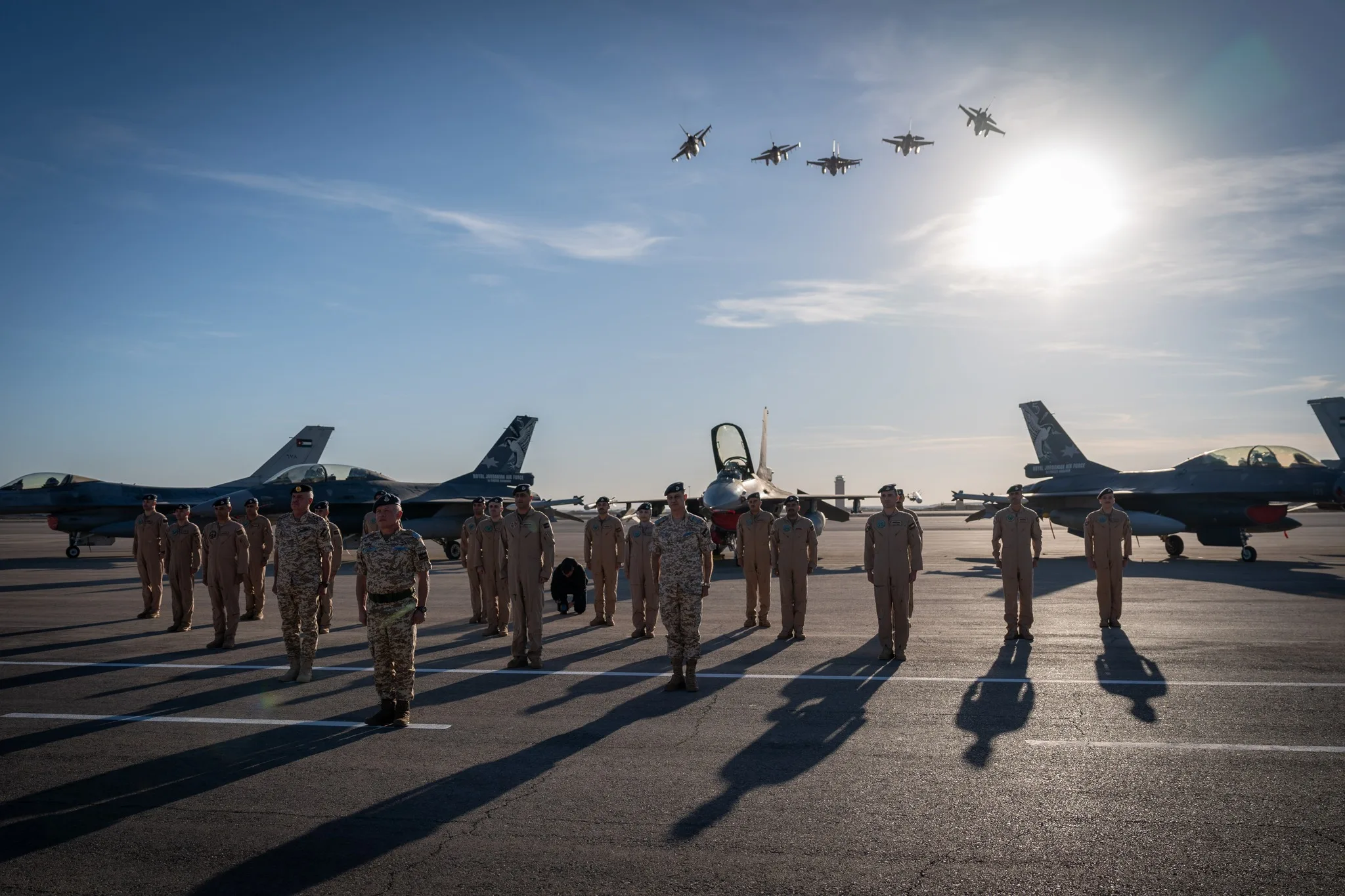
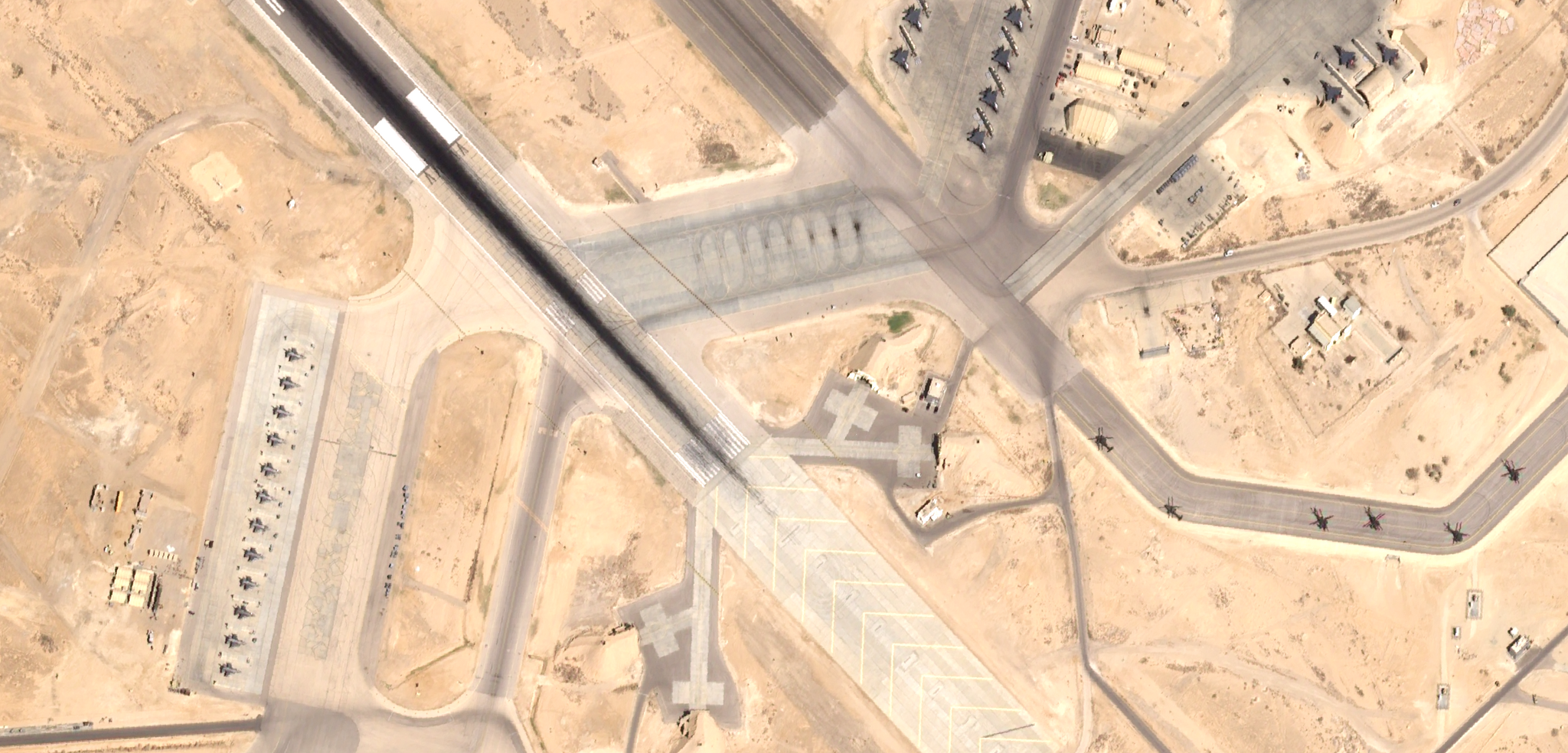
Muwaffaq Salti Air Base has transformed into a major hub for American aircraft. The New York Times described the base as the “primary hub” of U.S. plans concerning Iran, noting tracking data showing at least 60 combat aircraft stationed there, including around 30 F-35A stealth fighters, 24 F-15E strike fighters, and A-10 aircraft.

The buildup also includes six EA-18G Growler electronic warfare aircraft, MQ-9 Reaper drones, and air defense systems such as THAAD and Patriot. Within just days, 68 transport aircraft reportedly landed at the base.

These figures make it the largest U.S. air concentration in the region since the Iraq War, enabling precision strikes through stealth aircraft and the suppression of Iranian air defenses via electronic warfare.

2. Military and Strategic Rationale

The base’s location in Jordan’s eastern desert allows rapid access to Israel, Iraq, and Saudi Arabia, and lies roughly 850 kilometers from Iran’s western border.

An analysis by the Iranian outlet Fararu suggests the base is less vulnerable than Gulf installations, making it an ideal launch point for stealth aircraft to penetrate and dismantle Iranian air defenses. The 2021 U.S.-Jordan Defense Cooperation Agreement grants American forces operational freedom across 12 Jordanian bases for 15 years, widely seen as a legal framework for expanding the U.S. footprint.

According to U.S. military estimates, deploying Patriot and THAAD systems helps shield the base from potential Iranian missile strikes, while EA-18G aircraft could jam Iranian radar systems.

A Divergent Stance and Precedents That Fuel Speculation

Despite the buildup, Amman has publicly rejected the use of its territory to launch attacks on Iran. The New York Times quoted a Jordanian official as saying the U.S. presence falls within the existing defense agreement and that the kingdom hopes Washington and Tehran can reach a deal to avert war.
نون بوست
Fighter jets are visible on the left and a helicopter on the right at the US base in Jordan.

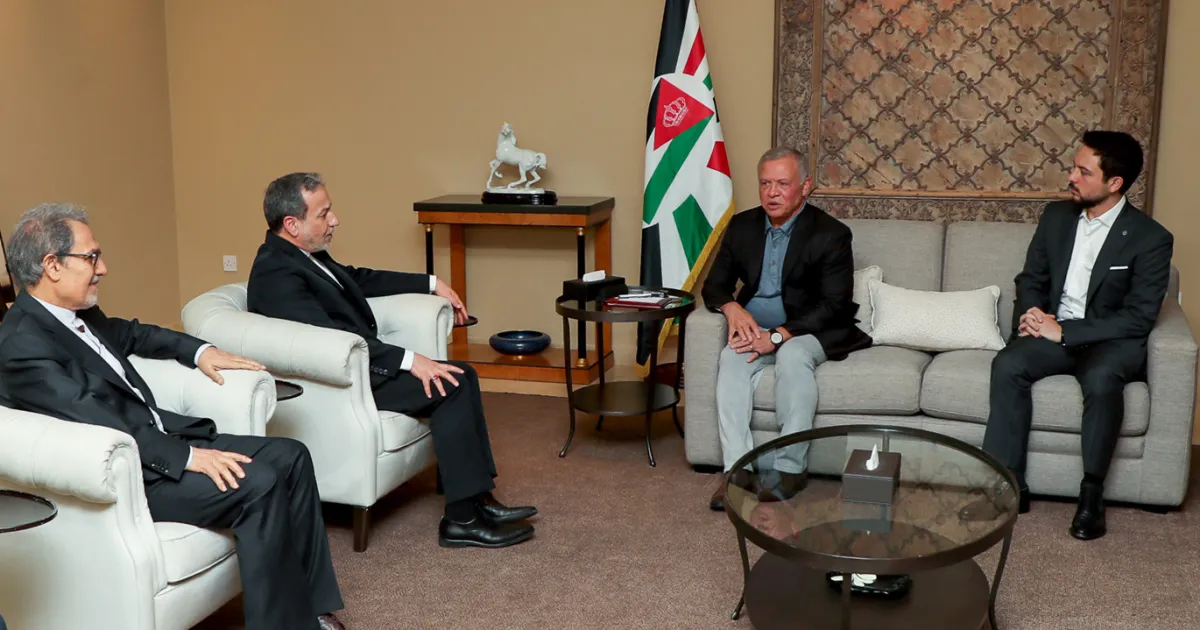
On February 2, 2026, Jordanian Foreign Minister Ayman Safadi told his Iranian counterpart Abbas Araghchi that Jordan would not become a “battlefield” for any conflict, nor allow violations of its airspace, pledging to use all available capabilities to counter any incursion.

King Abdullah II reaffirmed this position during a February 5, 2026 meeting with political figures, emphasizing Jordan’s support for dialogue and diplomacy to ease tensions and its commitment to prioritizing citizens’ interests an apparent effort to reassure Iran and Arab public opinion that Amman is not party to Washington’s offensive plans.

Yet past precedents complicate these assurances. On June 13, 2025, Iran launched missiles and drones at Israeli targets in response to an Israeli strike on Iranian nuclear facilities. Jordanian skies became an arena of engagement. The Jordan Armed Forces said they activated air defenses to intercept missiles and drones that entered the kingdom’s airspace, preventing them from falling on populated areas and protecting civilians.

The Jewish Institute for National Security of America (JINSA) reported that Jordanian defenses intercepted Iranian missiles and drones during the conflict, while Jordan allowed foreign aircraft to operate in its airspace.

Debris from defensive interceptions injured civilians and caused material damage in Irbid and Amman, intensifying criticism. The Times of Israel cited speculation that Jordan was intercepting some projectiles in defense of Israel, and noted public discontent on social media. Some Jordanians viewed the interceptions as protection for citizens; others saw them as entangling the kingdom in a war not its own.

A report by the Foundation for Defense of Democracies (FDD) observed that while Jordan consistently declares it will not serve as a launchpad for attacks on Iran, it nonetheless cooperates with the United States and Israel in intercepting Iranian missiles.

Jordan and Iran: A History of Caution and Limited Rapprochement

Amman and Tehran have no legacy of historic enmity; diplomatic relations have remained formally normal since Iran’s 1979 revolution. In February 2026, Iran’s chargé d’affaires in Amman, Davoud Kalantari, described bilateral ties as “normal and stable,” citing economic and scientific memoranda of understanding and increased student exchanges.
نون بوست
The King of Jordan had previously assured Araqchi that his country would not be an arena for regional conflicts (Jordanian News Agency).

The Iranian official warned that U.S. mobilization would affect the entire region, but stressed Iran’s respect for Jordan’s security. Still, despite conciliatory rhetoric, many Iranians remain skeptical of Jordan’s alignment with Washington and Tel Aviv. In February 2026, Iranian MP Mojtaba Zarei urged Jordanians to “seize Muwaffaq Salti Air Base and capture American soldiers,” claiming it had been used to protect Israel during the war.

Iranian outlets such as Fararu and Hamshahri have published detailed reports on Muwaffaq Salti Air Base, underscoring Washington’s reliance on it for any potential strike on Iran and questioning Amman’s ability to prevent its use. Fararu catalogued the types of American aircraft deployed, estimating them at triple the usual number and portraying the base as a command center for a possible offensive.

Hamshahri reported that the base sits 850 kilometers from Iran’s border and that Washington has expanded its facilities since 2019 to include aircraft shelters and ammunition depots effectively rendering it “American soil,” despite official Jordanian denials. Such coverage fuels domestic Iranian narratives casting Jordan as a partner in any prospective aggression.

Meanwhile, Yedioth Ahronoth described Jordan as “in the eye of the storm, but unwilling to be part of it,” noting that U.S. soldiers are installing defensive systems at their Jordanian base. The paper quoted a Jordanian source saying public opinion in the kingdom leans against war, fearing economic and security repercussions, and that Jordan insists on neutrality.

Israeli media also highlight Amman’s reliance on American support and its fear of Iranian retaliation factors that drive it to publicly affirm neutrality while continuing security cooperation.

Ultimately, the trajectory of Jordan-Iran relations hinges on Amman’s ability to strike a delicate balance between safeguarding internal security and avoiding provocation of Tehran. Jordan faces domestic pressure from opposition to normalization with Israel and mounting economic hardship, even as it depends on U.S. and Gulf assistance.

While Jordanian officials advocate dialogue with Tehran, the continued use of Jordanian territory as a platform for military operations will make Amman’s position increasingly difficult both at home and among its neighbors.

Download this article as PDF
Share this Article
Facebook Twitter Whatsapp Whatsapp Telegram Email Copy Link
فريق التحرير
By فريق التحرير تقارير يعدها فريق تحرير نون بوست.
Follow:
Previous Article نون بوست Corruption Amid Starvation: How the War Economy Pierced the Siege on Gaza
Next Article نون بوست Somaliland Woos the U.S. and Israel With Its Mineral Wealth, What Lies Beneath Its Soil?

Read More

  • U.S. Regime‑Change Policies: Why They Are Destined to Fail U.S. Regime‑Change Policies: Why They Are Destined to Fail
  • The Gulf’s Balancing Act: Iran, Israel, and Hidden Links
  • Iraq–Turkey Oil Export Treaty: Why Did Ankara Cancel It After 52 Years?
  • Syria’s Northeast on Edge: QSD Between Ankara and Damascus
  • Has Europe Changed Its Stance on Israel… or Just Its Language?
part of the design
NoonPost Weekly Newsletter

You May Also Like

U.S. Regime‑Change Policies: Why They Are Destined to Fail

U.S. Regime‑Change Policies: Why They Are Destined to Fail

إسراء سيد Esraa sayed 8 April ,2026
The Gulf’s Balancing Act: Iran, Israel, and Hidden Links

The Gulf’s Balancing Act: Iran, Israel, and Hidden Links

فريق التحرير Noon Post 8 April ,2026
Iraq–Turkey Oil Export Treaty: Why Did Ankara Cancel It After 52 Years?

Iraq–Turkey Oil Export Treaty: Why Did Ankara Cancel It After 52 Years?

فريق التحرير Noon Post 8 April ,2026

إلغاء مشروع لمنع العرب من استخدام الحافلات الإسرائيلية

فريق التحرير
Noon Post Published 22 May ,2015
Share
3471

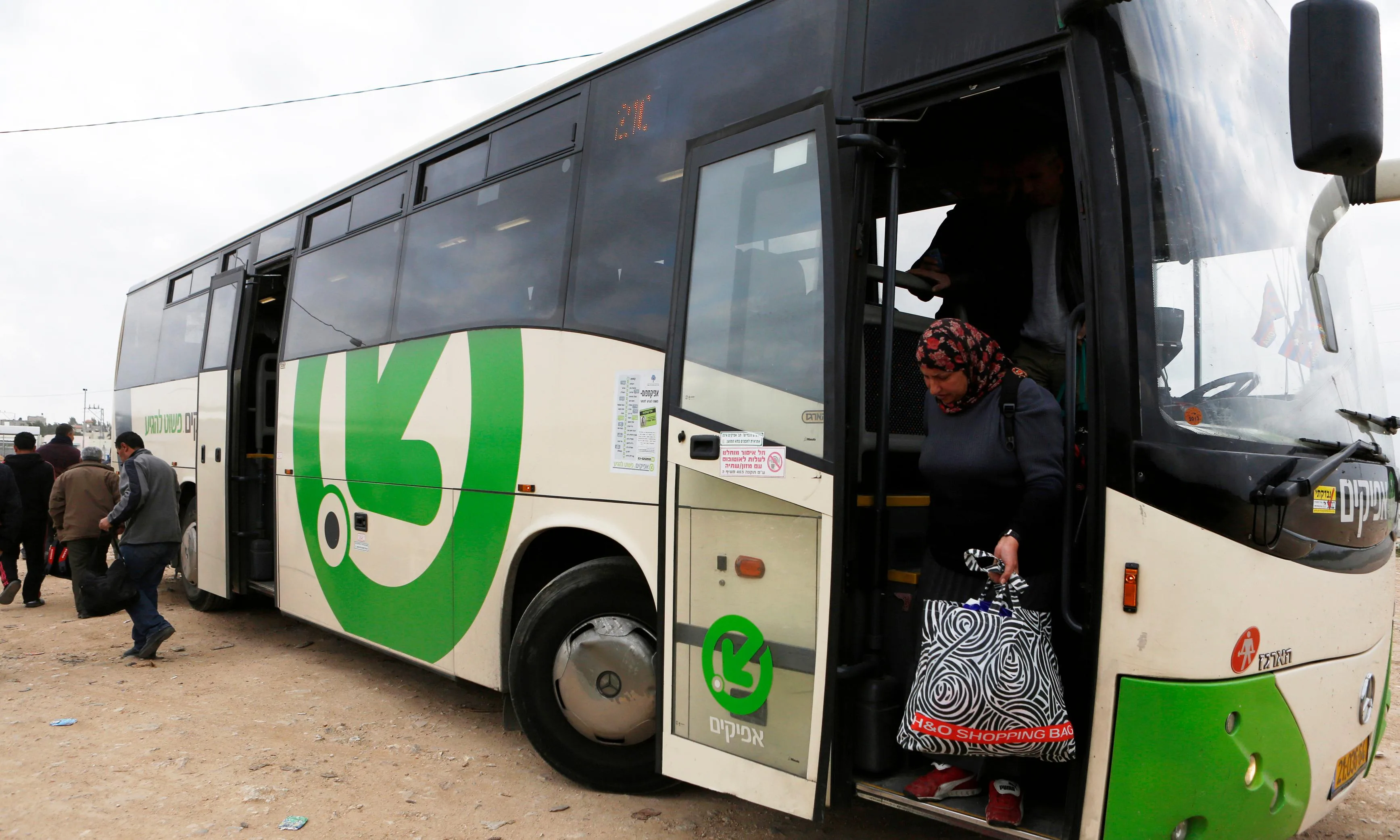
اشتعلت أولى أزمات الحكومة الإسرائيلية الجديدة برئاسة بنيامين نتنياهو بعد أن قام رئيس الوزراء بإلغاء مشروع لمنع العمال الفلسطينيين من ركوب الحافلات الإسرائيلية في الضفة الغربية بعد ساعات قليلة من صدوره بموافقة وزير الدفاع موشيه يعالون، إثر بدء موجة من الهجوم من مختلف القوى السياسية على القانون العنصري الجديد وخطورته على صورة إسرائيل في الخارج، لا سيما قبل أيام من زيارة الممثل الأعلى للسياسة الخارجية الأوروبية فريدريكا موغريني، والتي تتعرض لضغوط لاتخاذ مواقف أكثر تشددًا من إسرائيل.

كان من المفترض أن يبدأ مشروع القانون بتجربة لمدة ثلاثة أشهر يتم فيها الفصل بين اليهود والفلسطينيين في خطوط الباصات المتجهة من إسرائيل إلى الضفة الغربية، ليكون الفلسطينيون مجبرين على العودة إلى بيوتهم في الضفة فقط عبر نقاط التفتيش الأربع المعروفة لهم، والتي لا تمر عبرها باصات إسرائيلية، وكانت ستُخصَّص لها بالتبعية حافلات فلسطينية خاصة، فيما اعتبره كثيرون نوعًا من أنواع الفصل العنصري.

هذا وصرح مكتب رئيس الوزراء أن نتنياهو قرر إلغاء المشروع بعد أن رآه “غير مقبول”، إذ قال المتحدث باسم رئاسة الوزراء أن نتنياهو “تحدث مع وزير الدفاع يعالون صباح الأمس، وقرر أن يجمّد المشروع برمته،” في إشارة لأول خلاف بين أقطاب الحكومة اليمينية الجديدة، والتي اعتمد فيها نتنياهو بالكامل على اليمين المتطرف المؤيد للصناعات العنصرية.

من جانبه قال الرئيس الإسرائيلي، ريوفين ريفلين، “إنني أشعر بالخزي من كل تلك الأصوات التي سمعناها اليوم تدعم الفصل بين اليهود والعرب على أساس غير صحيح، وهي أفكار لا مكان لها بيننا، وتنافي تمامًا أسس الدولة الإسرائيلية الديمقراطية، ورغبتنا في تأسيس دولة يهودية وديمقراطية.”

من ناحية أخرى، يقول البعض أن نتنياهو، على عكس ما بدا، كان على دراية بالقانون، ولكنه تراجع بعد ضغط الرأي العام، والمخاوف من ردود الفعل في أوروبا أثناء زيارة موغريني، والمجتمع الدولي بشكل واسع، وقرر بذلك أن يحقق نوعًا من النصر السياسي لشخصه على حساب وزير الدفاع، والذي لم يدلي بأي تصريحات رسمية حتى الآن.

يقول المحللون أن الحادثة تشي باتجاه سيستمر طوال فترة حُكم الائتلاف الحالي، وستسبب الكثير من المتاعب لحزب الليكود بقيادة نتنياهو، إذ أن اليمين المتطرف الآن يملك قوة كبيرة، لا سيما وأن رئيس الوزراء قد وضع البيض كله في سلته تقريبًا، مما يعني أنه سيتعرض للضغوط من أجل تنفيذ سياساته العنصرية، وسيكون صعبًا عليه أن يلجأ للوسط واليسار في إسرائيل لدعم أي توجهات أكثر اعتدالًا في الفترة المقبلة نتيجة الابتعاد الشديد عنهم أثناء الانتخابات، والمواقف المتطرفة التي تبناها من ملفات عدة، مثل رفض حل الدولتين الذي يدعمه المجتمع الدولي.

في هذا الملف تحديدًا، على سبيل المثال، يبرز نفس التحدي، إذ أن المسؤول عن المفاوضات مع الفلسطينيين من أجل التوصل إلى تسوية للصراع الفلسطيني الإسرائيلي، سيلفان شالوم، له مواقف متطرفة هو الآخر من حل الدولتين، وأعلن في مرات عدة رفضه لتأسيس دولة فلسطينية، وهو أمر سيعرّض حكومة نتنياهو للإحراج على المستوى الدولي، لا سيما وأن ملف المفاوضات والضغط الذي تقوم به السلطة الفلسطينية حاليًا هو أبرز ما يجذب الانتباه دوليًا.

لا تأتي التحذيرات فقط من الوسط واليسار، وبل من قياديي حزب الليكود السابقين ذوي المواقف الأكثر اعتدالًا، والذين عبروا عن قلقهم من اتجاه حزب الليكود المتطرف الجديد وتهديده لإسرائيل وموقعها في التحالف الغربي وفي المجتمع الدولي، وليس أدل على ذلك مما قاله دان مريدور، الوزير السابق بحكومة الليكود، في حوار مع صحيفة هآرتز، حيث حذر من استمرار الحزب في اتجاهه الحالي، ووصف أفكاره صراحة بتعزيز “الفصل العنصري” في سابقة لأي عضو بالليكود.

“لطالما كان الليكود حريصًا على الموازنة بين الحلم الصهيوني والقومية من ناحية، والليبرالية والديمقراطية من ناحية أخرى، بيد أن هذا التوازن قد اختل تمامًا مؤخرًا، حيث نرى الآن اتجاهًا نحو القومية بشكل شديد، وتجاهلًا للقيم الليبرالية، وما إن يتحدث أي منا عن حقوق الإنسان أو الديمقراطية إلا ويتم اتهامه بالانتماء لليسار.. وكل ما يهتم به الحزب الآن هو ابتلاع المزيد من الأراضي ليس إلا،” هكذا قال مريدور.

TAGGED: الصراع العربي الإسرائيلي ، الصهيونية ، العنصرية في إسرائيل ، اليمين اليهودي ، حزب إسرائيل بيتنا
TAGGED: إسرائيل من الداخل
Download this article as PDF
Share this Article
Facebook Twitter Whatsapp Whatsapp Telegram Email Copy Link
فريق التحرير
By فريق التحرير تقارير يعدها فريق تحرير نون بوست.
Follow:
Next Article نون بوست The Stigma of “ISIS”: A Heavy Legacy Haunting Women and Children of Former Members

Read More

  • U.S. Regime‑Change Policies: Why They Are Destined to Fail U.S. Regime‑Change Policies: Why They Are Destined to Fail
  • The Gulf’s Balancing Act: Iran, Israel, and Hidden Links
  • Iraq–Turkey Oil Export Treaty: Why Did Ankara Cancel It After 52 Years?
  • Syria’s Northeast on Edge: QSD Between Ankara and Damascus
  • Has Europe Changed Its Stance on Israel… or Just Its Language?
part of the design
NoonPost Weekly Newsletter
dark

An independent media platform founded in 2013, rooted in slow journalism, producing in-depth reports, analysis, and multimedia content to offer deeper perspectives on the news, led by a diverse young team from several Arab countries.

  • Politics
  • Society
  • Rights & Liberties
  • Opinions
  • History
  • Sports
  • Education
  • Technology
  • Economy
  • Media
  • Arts & Literature
  • Entrepreneurship
  • Travel
  • Cinema & Drama
  • Food
  • Health
  • Culture
  • Latest Reports
  • Files
  • Long Reads
  • Interviews
  • Podcast
  • Interactive
  • Encyclopedia
  • In Pictures
  • About Us
  • Our Writers
  • Write for Us
  • Editorial Policy
  • Advanced Search
Some rights reserved under a Creative Commons license

Removed from favorites

Undo
Go to mobile version