NoonPost NoonPost

NoonPost

  • Home
  • Politics
  • Economy
  • Society
  • Culture
  • Files
  • Long Reads
  • Podcast
AR
Notification Show More
نون بوست
“There Are Nights I Can’t Close My Eyes”: How Gazans Are Living in Homes on the Brink of Collapse
نون بوست
From al-Jolani to Ahmad al-Shara: The Evolution of Syria’s New Leader
نون بوست
When Political Islam Receded in Egypt: Who Filled the Void?
نون بوست
An Extension of Genocide: Gaza’s Detainees Speak Out
نون بوست
A Tightrope Between Survival and Sovereignty: The Syrian Government Faces Normalization Pressures
نون بوست
American Aircraft Carriers: Has the Era of “100,000 Tons of Diplomacy” Ended?
نون بوست
U.S. Regime‑Change Policies: Why They Are Destined to Fail
نون بوست
Transformations of Israeli Judaism: Between the Victim Complex and the Colonizer’s Doctrine
نون بوست
The Gulf’s Balancing Act: Iran, Israel, and Hidden Links
نون بوست
Iraq–Turkey Oil Export Treaty: Why Did Ankara Cancel It After 52 Years?
نون بوست
Syria’s Northeast on Edge: QSD Between Ankara and Damascus
نون بوست
Has Europe Changed Its Stance on Israel… or Just Its Language?
NoonPost NoonPost
AR
Notification Show More
نون بوست
“There Are Nights I Can’t Close My Eyes”: How Gazans Are Living in Homes on the Brink of Collapse
نون بوست
From al-Jolani to Ahmad al-Shara: The Evolution of Syria’s New Leader
نون بوست
When Political Islam Receded in Egypt: Who Filled the Void?
نون بوست
An Extension of Genocide: Gaza’s Detainees Speak Out
نون بوست
A Tightrope Between Survival and Sovereignty: The Syrian Government Faces Normalization Pressures
نون بوست
American Aircraft Carriers: Has the Era of “100,000 Tons of Diplomacy” Ended?
نون بوست
U.S. Regime‑Change Policies: Why They Are Destined to Fail
نون بوست
Transformations of Israeli Judaism: Between the Victim Complex and the Colonizer’s Doctrine
نون بوست
The Gulf’s Balancing Act: Iran, Israel, and Hidden Links
نون بوست
Iraq–Turkey Oil Export Treaty: Why Did Ankara Cancel It After 52 Years?
نون بوست
Syria’s Northeast on Edge: QSD Between Ankara and Damascus
نون بوست
Has Europe Changed Its Stance on Israel… or Just Its Language?
Follow US

“KAAN” in Three Prototypes… Turkey Accelerates the Race Toward Fifth-Generation Fighters

فريق التحرير
Noon Post Published 26 March ,2026
Share
نون بوست
نون بوست

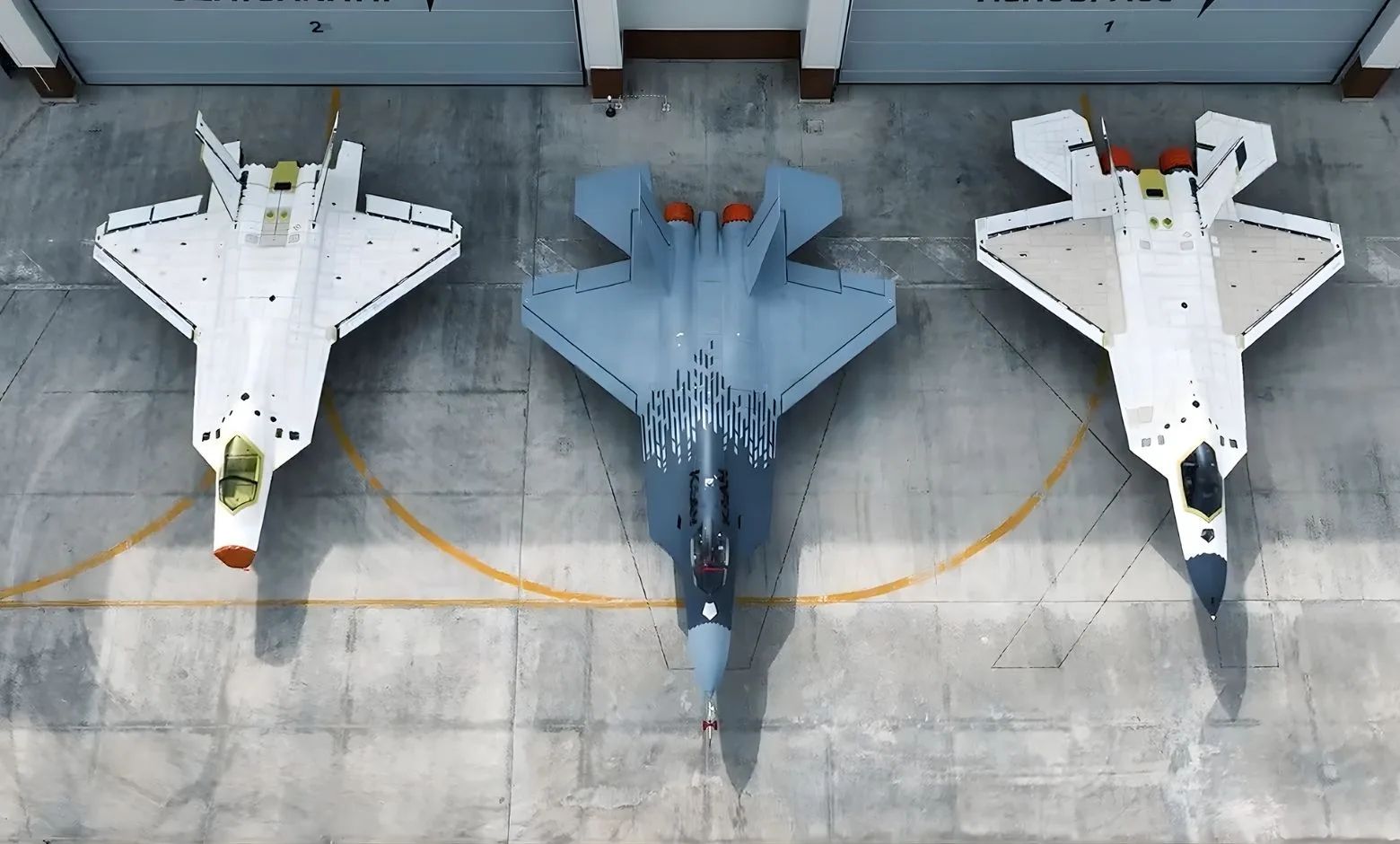
On February 21, 2026, Turkish Aerospace Industries (TAI) marked the second anniversary of the maiden flight of its fifth-generation fighter, KAAN, with the release of a commemorative image and video.

The footage revealed three distinct prototypes of the national combat aircraft: the jet that first flew on February 21, 2024 (P0); the prototype designated to shoulder the main flight-test campaign (P1); and the “iron bird,” a full-scale structural test article designed for ground and static testing, known as TBST-P.

Such a scene had not been witnessed before. It underscored the project’s rapid acceleration and its evolution from a single demonstrator into a multi-prototype program operating in parallel, supported by a broad and expanding industrial base.

From Concept to Name — and Then to Flight

KAAN began as the National Combat Aircraft project, launched in 2016 by Turkey’s Presidency of Defense Industries after the United States removed Ankara from the F-35 program.

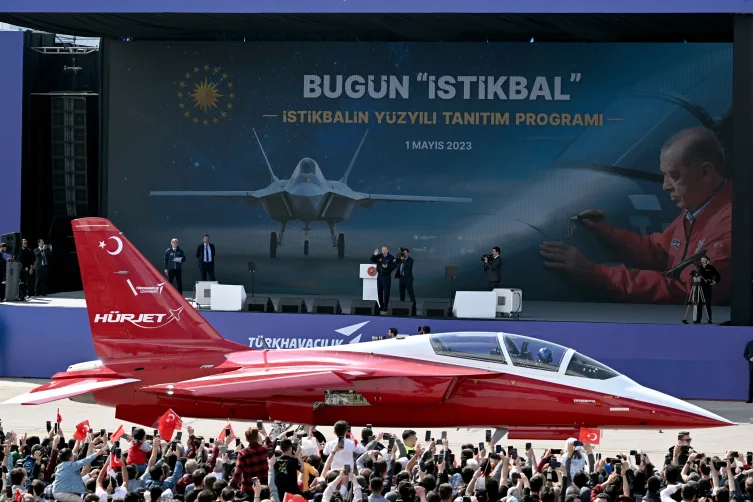
On May 1, 2023, President Recep Tayyip Erdoğan unveiled the aircraft’s name during the “Century of the Future” event, explaining that “KAAN,” meaning “Supreme Ruler,” was chosen to emphasize Turkish roots and national independence in decision-making.

Behind the scenes, technical preparations were advancing steadily at TAI’s facilities. In February 2024, the first prototype, P0, completed structural assembly and endurance tests, followed by the installation of its landing gear.

On February 21, 2024, the aircraft made its maiden flight, lasting 13 minutes and reaching an altitude of 8,000 feet at a speed of 230 knots confirming the airframe and flight systems were functioning in harmony and marking the formal entry into the flight-test phase.

A second test flight followed on May 6, 2024, lasting 14 minutes and reaching 10,000 feet, allowing engineers to gather critical data to refine stability and onboard systems.

The program relies heavily on leading Turkish defense firms, including Aselsan (radar and electronic warfare systems), Roketsan (missile development), and TUSAŞ Engine Industries (TEI), which is responsible for developing the indigenous engine, alongside aerospace and systems companies such as TAI and Havelsan.

Three Prototypes — Dividing Roles, Parallel Testing

The image released by TAI in February 2026 shows three platforms operating simultaneously:

  • P0, serving as a technology demonstrator, continues flight tests to expand altitude and speed envelopes.

  • P1, the first fully equipped prototype, will focus on systems validation and combat capability testing.

  • TBST-P, or the “iron bird,” is a full-scale structural and systems test article outfitted with control systems, engines, and avionics to conduct rigorous ground trials without risking flight prototypes.

    نون بوست

The presence of these three platforms side by side signals a transition from reliance on a single aircraft to a multi-variant testing program reducing development time and cost while enabling continuous design refinements.

Compared with the initial P0 version, the new prototypes display significant improvements. The airframe has been redesigned, and engine air intakes optimized to enhance aerodynamic efficiency and stealth characteristics, particularly in reducing radar cross-section.

The landing gear design has also been modified to increase internal volume, accommodating internal weapons bays without compromising stealth.

According to Haluk Görgün, head of Turkey’s Presidency of Defense Industries, the milestone reflects the maturation of a vast industrial ecosystem comprising more than 300 companies across 20 Turkish cities and employing over 5,000 personnel making the project a central driver of the country’s technological infrastructure.

Technical Specifications — The Language of Numbers

KAAN is designed as a multi-role air superiority fighter, exceeding several Western and Eastern counterparts in certain specifications, particularly in cost efficiency and payload capacity.

The overall development cost of the program is estimated at $10–12 billion a highly competitive figure compared with the €60–65 billion cost of developing the Eurofighter Typhoon and the approximately $1.7 trillion lifecycle cost of the F-35 program. Unit cost is projected between $80 million and $110 million.

Technically, KAAN stands out in payload capacity, capable of carrying 10–12 tons of weapons, surpassing the F-35’s 8.16-ton payload.

The fighter is equipped with the advanced “TOLGAR” helmet, offering exceptional situational awareness, and the MURAD AESA radar developed by Aselsan, enhancing electronic warfare and sensor fusion capabilities.

According to official specifications, KAAN measures approximately 21 meters in length, with a wingspan of 14 meters and a height of six meters.

It is powered by two GE F-110 engines, each generating 29,000 pounds of thrust. The aircraft can reach speeds of Mach 1.8 at altitudes up to 55,000 feet and maneuver at +9g/-3.5g.

Two internal weapons bays enable it to carry air-to-air and air-to-ground munitions without affecting radar signature. It also features “supercruise” capability, allowing sustained supersonic flight without afterburners.

Together, these specifications highlight Ankara’s ambition to field a fighter capable of achieving air superiority and executing ground-attack missions effectively in complex electronic environments.

Ambitious Timelines Between Testing and Production

According to TAI CEO Mehmet Demiroğlu in January 2026, flight testing of P0 is ongoing, while three additional flight prototypes are under construction. P1 is expected to conduct its maiden flight in June 2026.

P2 is scheduled for rollout before the end of 2026, followed by P3 in early 2027, bringing the total number of test aircraft to six.

Demiroğlu indicated that the first operational fighters—equipped with F-110 engines—are now expected to enter service in 2029 rather than 2028 due to the intensity of testing. The initial production batch is projected to include between 20 and 40 aircraft.

Transition to the indigenous TF35000 engine is planned for 2032—a pivotal milestone toward full strategic autonomy. The engine remains the project’s most sensitive component, as it is currently the only major imported element.

According to TEI leadership, the TF35000 is undergoing critical design review and is scheduled for its first test run in 2026 before integration into KAAN in 2032.

For now, the program relies on GE F-110 engines already in Turkey’s inventory. However, adopting a domestic engine would grant Ankara greater freedom to export the aircraft to third countries without U.S. ITAR restrictions.

Indonesia offers a case in point. In January 2026, Jakarta signed a $15 billion framework agreement to purchase KAAN, opting to wait for the variant equipped with the indigenous engine an indication of interest in a configuration free from U.S. export constraints.

The timeline is corroborated by other reports, including TRT Haber, which noted that P0 is expected to resume flights by June 2026 and that new platforms may fly later this year or early next year. The first production aircraft are anticipated to enter service in 2029, with the indigenous engine integrated by 2032.

This aligns with the Defense Ministry’s broader vision of a long-term program spanning 2029 to 2035 to achieve full fifth-generation capability.

Strategic Significance and Upcoming Challenges

The simultaneous appearance of three KAAN prototypes signals a shift from proving flight capability to achieving industrial maturity and combat systems validation. For Turkey, the program carries multiple strategic implications:

Restoring air sovereignty: Following its removal from the F-35 program, KAAN provides a domestic alternative, ensuring the Turkish Air Force fields an advanced stealth aircraft capable of air superiority and ground attack missions, fully integrated with national systems.

Technology transfer and industrial growth: The project establishes a broad technological base and trains thousands of engineers and technicians, benefiting other platforms such as the Bayraktar Kızılelma unmanned combat aircraft and the Hürjet trainer.

Political independence and export potential: Progress on KAAN enhances Turkey’s ability to export the aircraft to allied nations without restrictions, as illustrated by preliminary agreements with Indonesia. Regionally, KAAN could emerge as a competitor to aircraft such as the F-35 and China’s J-35, potentially reshaping the strategic balance.

Yet significant challenges remain. Developing the indigenous engine on schedule is paramount, alongside securing sustained financial support to navigate years of intensive testing. Seamless integration of advanced electronic systems and resilience against political and diplomatic pressures will also be critical.

Turkey must also build advanced training and maintenance infrastructure and convince pilots of the merits of transitioning to an unproven domestic platform.

Download this article as PDF
Share this Article
Facebook Twitter Whatsapp Whatsapp Telegram Email Copy Link
فريق التحرير
By فريق التحرير تقارير يعدها فريق تحرير نون بوست.
Follow:
Previous Article نون بوست “Without Pluralism, No Constitution Can Operate Democratically”.. An Interview with Nathan Brown
Next Article نون بوست The Long War Scenario with Iran: Can the Parties Withstand the Costs of Potential Attrition?

Read More

  • U.S. Regime‑Change Policies: Why They Are Destined to Fail U.S. Regime‑Change Policies: Why They Are Destined to Fail
  • The Gulf’s Balancing Act: Iran, Israel, and Hidden Links
  • Iraq–Turkey Oil Export Treaty: Why Did Ankara Cancel It After 52 Years?
  • Syria’s Northeast on Edge: QSD Between Ankara and Damascus
  • Has Europe Changed Its Stance on Israel… or Just Its Language?
part of the design
NoonPost Weekly Newsletter

You May Also Like

U.S. Regime‑Change Policies: Why They Are Destined to Fail

U.S. Regime‑Change Policies: Why They Are Destined to Fail

إسراء سيد Esraa sayed 8 April ,2026
The Gulf’s Balancing Act: Iran, Israel, and Hidden Links

The Gulf’s Balancing Act: Iran, Israel, and Hidden Links

فريق التحرير Noon Post 8 April ,2026
Iraq–Turkey Oil Export Treaty: Why Did Ankara Cancel It After 52 Years?

Iraq–Turkey Oil Export Treaty: Why Did Ankara Cancel It After 52 Years?

فريق التحرير Noon Post 8 April ,2026

من سيدعم حزب الشعوب الديموقراطي؟

مصعب أبو شعبان
مصعب أبو شعبان Published 27 May ,2015
Share
F19B269E-ED8B-42E3-8E99-B31452E2665F_cx0_cy4_cw0_mw1024_s_n_r1

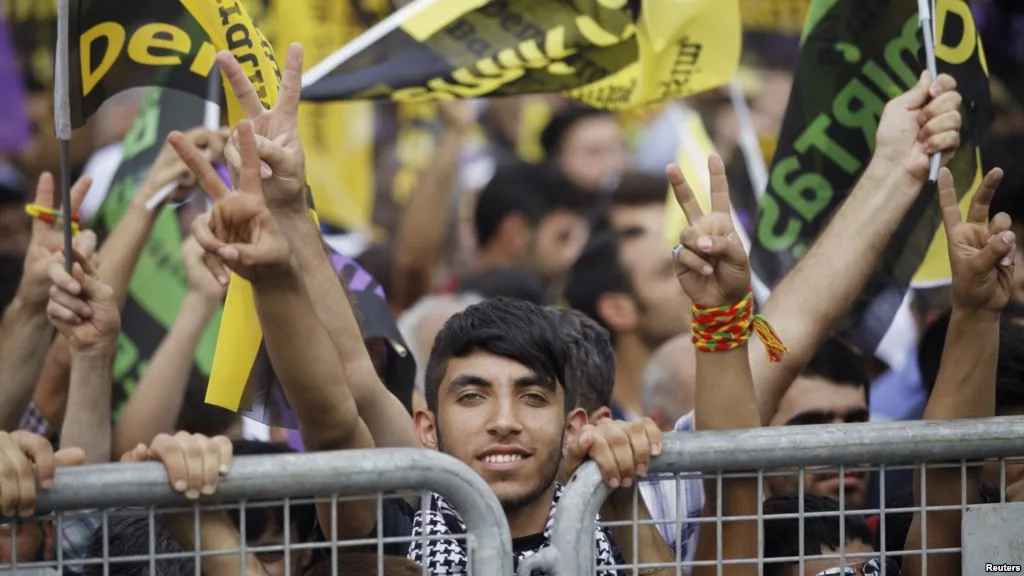
يعتبر السؤال الأهم المطروح الآن على الساحة السياسية التركية هو؛ هل بإمكان حزب الشعوب الديمقراطي تجاوز عتبة الـ 10% أم لا؟ ويحمل هذا السؤال في طياته الكثير من التساؤلات  عن مستقبل تركيا إذا ما استطاع الحزب تجاوز نسبة 10%، خصوصًا مع إعلان حزب العدالة والتنمية بأن غايته تتمثل في الانتقال بتركيا إلى نظام رئاسي بدلًا من النظام البرلماني المعمول به حاليًا، وعن رغبته في إنجاز الدستور الجديد، إذ إن انتصار حزب الشعوب الديمقراطي سيعتبر نقلة نوعية في التاريخ الحزبي الحديث لتركيا، ويعتبر عائقًا أمام الحزب الحاكم، فالساحة التركية لم تشهد خلال العقدين الماضيين أي ظهور تقريبًا لحزب جديد ليس ذي خلفية إسلامية، استطاع تحريك الشارع التركي بهذه الطريقة، وأضحى في الوقت ذاته قاب قوسين أو أدنى من كسر حالة الجمود الحزبي الذي شهدتها الساحة التركية منذ ظهور حزب العدالة والتنمية، ساعيًا بذلك لخلق خريطة سياسية جديدة قد يشهدها البرلمان التركي بعد الانتخابات البرلمانية، التي ستجري في الـ 7 من يوليو القادم.

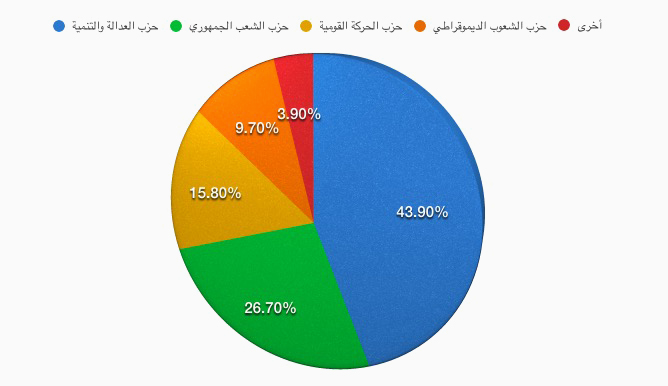
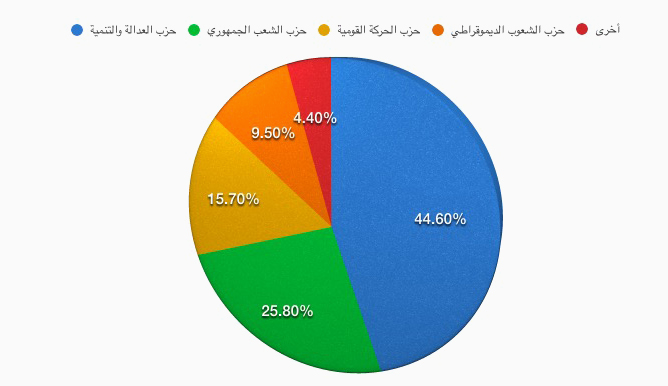
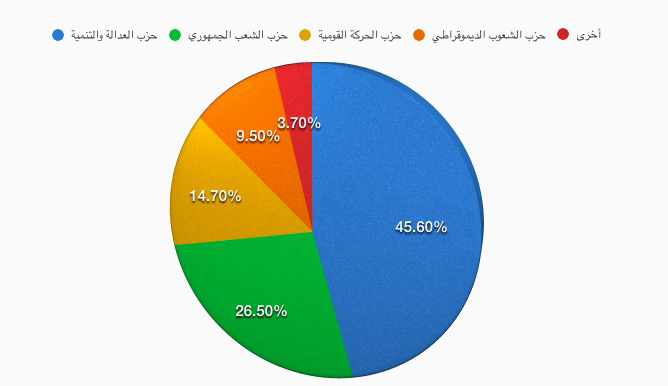
وتشير استطلاعات الرأي التي قامت بها ثلاث شركات في الـ 23 من هذا الشهر، بأن حزب الشعوب الديمقراطي لن يستطيع تخطي عتبة 10% وجاءت استطلاعاتهم كالتالي:  

استطلاع konsensus

نون بوست


استطلاعات Genar


نون بوست


استطلاعات Denge  


نون بوست


إلا أن هناك استطلاعات رأي أجراها حزب الشعوب الديمقراطي وشركات أخرى، تشير إلى حصول الحزب على أكثر من 10%، وهي النسبة التي  تؤهله لدخول البرلمان، فحسب استطلاعات الرأي التي قامت بها شركة Andy-A، فإن حزب الشعوب الديمقراطي سيحصل على نسبة 10.4%.

هذه النسب التي تبدو متقاربة مع بعضها البعض، والتي تعطي مؤشرًا على أن هناك احتمالية لحصول حزب الشعوب الديمقراطي على نسبة تؤهله من الدخول للبرلمان، تجعل من المهم النظر في الشرائح التي ستدعم الحزب في الانتخابات القادمة.

إن خصوصية هذه الانتخابات وموقف  الأطراف المختلفة منها، تجعل من المهم تقسيم الفئات التي ستدعم حزب الشعوب الديمقراطي إلى عدة أقسام:

1- الكتلة الرئيسية للحزب وهي من الأكراد.

2- الكتلة التي تدور حول برنامج الحزب الديمقراطي من جهة تأييده للحريات المختلفة.

3- الاتجاهات اليسارية، التي ستدعم الحزب لكون حزب الشعوب الديمقراطي يساري التوجه، ويحتوي على أحزاب يسارية داخل ائتلافه.

4- التوجهات المخالفة لحزب العدالة والتنمية، التي ترى في نجاح حزب الشعوب الديمقراطي هزيمة لحزب العدالة والتنمية.

أولًا: الأكراد

تعتبر الحركة السياسية الكردية هي الكتلة الأساسية المكونة لحزب الشعوب الديمقراطي، الذي بدوره يعتبر تطورًا من تطورات هذه الحركة وامتدادًا طبيعيًا للأحزاب الكردية السابقة مثل حزب السلام والديمقراطية، ويحمل حزب الشعوب الديمقراطية هموم الشريحة الكردية، ويطالب بحقوقهم الأساسية، بالإضافة إلى حكم محلي للمناطق الكردية، ولا شك أن هذه الانتخابات، ومع وجود حزب الشعوب الديمقراطي، تعتبر انتخابات استثنائية لدى الأكراد؛ الذين يرون أن نجاح حزب الشعوب الديمقراطي قد يعني كثيرًا لقضاياهم العالقة منذ عدة عقود، إلا أن الأمر الذي لا يمتلك أحد الإجابة عليه، هو هل ستنتصر القومية الكردية لحزب الشعوب الديمقراطي، أم أن الاختلافات بين التيارات الفكرية الكردية، الإسلامية منها والعلمانية والقومية واليسارية، ستبقى حاضرة في خيارات الناخب الكردي.

وتقدر نسبة الكتلة التصويتية للأكراد لصالح حزب الشعوب الديمقراطي حوالي 7%، وهي نسبة جيدة، لكنها غير كافية لتمكين الحزب من تجاوز نسبة 10%.

ويعتقد كثيرون، ومن بينهم مرشحة حزب الشعوب الديمقراطي في إسطنبول شريفة أرباي، أن الكثيرين من الأكراد المؤيدين لحزب العدالة والتنمية سيتوجهون للإدلاء بأصواتهم لحزب الشعوب الديمقراطية، خصوصًا بعد موقف الحكومة من أحداث كوباني، حيث يعتبر كثيرون أن تقاعس حكومة العدالبة والتنمية عن نصرة الأكراد في كوباني سيوجه الأكراد الذين يدعمون حزب العدالة والتنمية لتغيير خياراتهم في هذه الانتخابات، ويصوتون  لصالح حزب الشعوب الديمقراطي، دعمًا للقومية الكردية.

ثانيًا: اليساريون

فقد اليساريون في تركيا زخمهم في ثمانينات القرن الماضي، وبعد اتجاه العالم نحو سياسة القطب الواحد والانفتاح بعد سقوط المعسكر السوفيتي، ضعف التواجد الحزبي اليساري ولم يمتلك أي حزب ذي خلفية يسارية زخمًا مهمًا، إذ تتشكل الخارطة اليسارية في تركيا من بعض الأحزاب الصغيرة التي لا حول لها ولا قوة، واعتاد الناخبون اليساريون في تركيا إعطاء أصواتهم لحزب الشعب الجمهوري، الذي يعتبر أقل الأحزاب القوية محافظة، إلا أن الانتخابات الحالية ستوجه اليساريين، سواء أكانوا منتمين لأحزاب يسارية صغيرة أو منتمين لحزب الشعب الجمهوري، للإدلاء بأصواتهم لصالح حزب الشعوب الديمقراطي اليساري الوجهة، ومع ذلك لا يمكن التنبؤ بنسبة الأصوات التي سيخسرها حزب الشعب الجمهوري لصالح حزب الشعوب الديمقراطي؛ لأنها المرة الاولى التي تشهد الساحة التركية هذا الحدث الاستثنائي.

ثالثًا: الديمقراطيون وداعمو الحريات

لا يوجد شريحة يطلق عليها كتلة أو شريحة الديمقراطيين، إلا أن هناك العديد من المهتمين بالشؤون السياسية يعتبرون أنفسهم ديمقراطيين قبل أي اعتبار آخر، وهؤلاء يسعون لتعزيز المفاهيم الديمقراطية والارتقاء بمستوى الحريات، والضغط ضد أي محاولة انفراد بالسلطة من قِبل أي حزب، هؤلاء المؤمنين بالحريات والداعمين للديمقراطية يرون في حزب الشعوب الديمقراطي غايتهم، وذلك لأمرين اثنين؛ أولًا لأن حزب الشعوب الديمقراطي يمتلك برنامًجا ديمقراطيًا حرياتيًا – ليبراليًا – أكثر من غيره من الأحزاب، إذ يؤيد حزب الشعوب الديمقراطي على سبيل المثال حقوق المثليين، وثانيًا لأن حزب الشعوب الديمقراطي، بنظر هؤلاء الديمقراطيين، هو ضمانة لديمقراطية أفضل، حيث يعتبرون انتصار حزب الشعوب الديمقراطي انتصارًا للديمقراطية من خلال تمثيل شرائح أوسع في المجتمع التركي داخل البرلمان، بالإضافة إلى تقييد حزب العدالة والتنمية.

رابعًا: المعارضون للنظام الرئاسي

ينضوي تحت هذا اللواء كل من ينوي التصويت لصالح حزب الشعوب الديمقراطي لمنع حزب العدالة والتنمية من تحقيق رؤيته بشأن النظام الرئاسي وتغيير الدستور، وهؤلاء أيضًا يتمثلون في داعمي الديمقراطية وبعض المناوئين لحزب العدالة والتنمية حتى من أحزاب المعارضة، الذين يرون أن إيقاف حزب العدالة والتنمية أهم من التصويت لأحزابهم، ولذلك سيتجهون لدعم حزب الشعوب الديمقراطي، الوحيد الذي يستطيع تحقيق هذه الغاية في الوقت الراهن، ومن بين الذين ربما يسلكون هذا الطريق هم جماعة فتح الله غولن، حيث من المحتمل أن يؤيدوا حزب الشعوب الديمقراطي لعدائهم المعلن للحكومة ولحزب العدالة والتنمية.

أخيرًا لا يمكن لحزب الشعوب الديمقراطي الانتصار بدون تأييد شرائح من المجتمع التركي، حيث إنه لا يمكنه الاعتماد على الأكراد فقط الذين ينتمون لأكثر من تيار فكري، وبينما يبدو أن الحزب واثق من انتصاره في هذه المعركة، إلا أن العوامل التي توجه الناخب الكردي والتركي متعددة ومتغيرة، قد تكون كافية لإدخاله البرلمان، وقد تقف عقبة أمام تحقيق هذا الأمر.

TAGGED: أكراد تركيا ، الانتخابات البرلمانية التركية ، البرلمان التركي ، حزب الشعوب الديموقراطي ، حزب العدالة والتنمية
TAGGED: الانتخابات التركية
Download this article as PDF
Share this Article
Facebook Twitter Whatsapp Whatsapp Telegram Email Copy Link
مصعب أبو شعبان
By مصعب أبو شعبان باحث سياسي واجتماعي مختص بالشأن التركي
Follow:
Next Article نون بوست The Stigma of “ISIS”: A Heavy Legacy Haunting Women and Children of Former Members

Read More

  • U.S. Regime‑Change Policies: Why They Are Destined to Fail U.S. Regime‑Change Policies: Why They Are Destined to Fail
  • The Gulf’s Balancing Act: Iran, Israel, and Hidden Links
  • Iraq–Turkey Oil Export Treaty: Why Did Ankara Cancel It After 52 Years?
  • Syria’s Northeast on Edge: QSD Between Ankara and Damascus
  • Has Europe Changed Its Stance on Israel… or Just Its Language?
part of the design
NoonPost Weekly Newsletter
dark

An independent media platform founded in 2013, rooted in slow journalism, producing in-depth reports, analysis, and multimedia content to offer deeper perspectives on the news, led by a diverse young team from several Arab countries.

  • Politics
  • Society
  • Rights & Liberties
  • Opinions
  • History
  • Sports
  • Education
  • Technology
  • Economy
  • Media
  • Arts & Literature
  • Entrepreneurship
  • Travel
  • Cinema & Drama
  • Food
  • Health
  • Culture
  • Latest Reports
  • Files
  • Long Reads
  • Interviews
  • Podcast
  • Interactive
  • Encyclopedia
  • In Pictures
  • About Us
  • Our Writers
  • Write for Us
  • Editorial Policy
  • Advanced Search
Some rights reserved under a Creative Commons license

Removed from favorites

Undo
Go to mobile version