

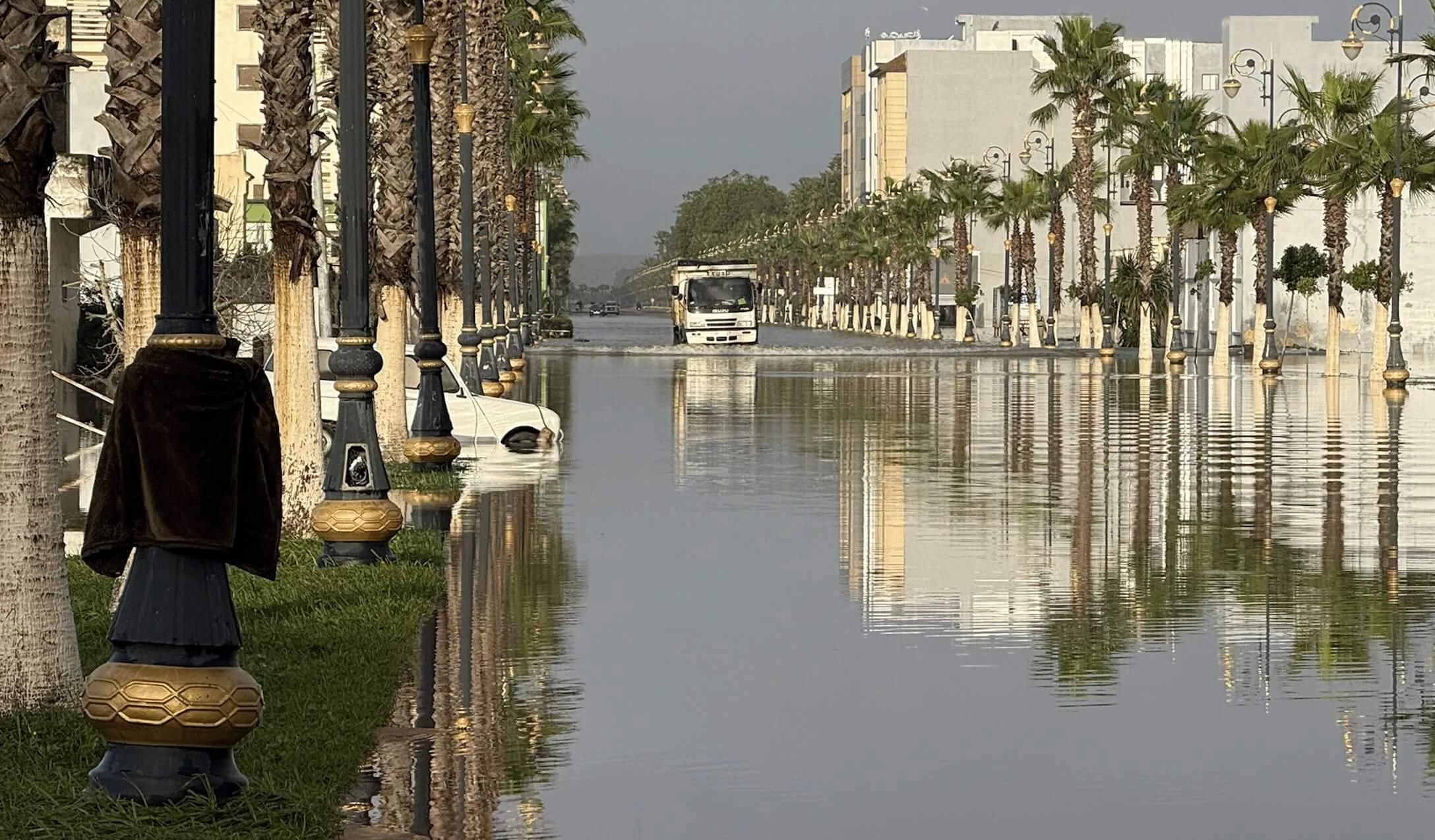
Ksar el-Kebir, thrust back into the spotlight by the recent floods that forced the evacuation of its residents, lies in northwestern Morocco along the banks of the Loukkos River. Since antiquity, its strategic location has drawn successive civilizations from the Phoenicians and Romans, who established settlements and trading posts, to Muslim rulers who transformed it into a vibrant urban center beginning in the eighth century. The city flourished further under the Almohads and Marinids, when trade and agriculture reached new heights.
This layered history has made the city a witness to sweeping historical turns. It has known periods of economic prosperity and others marked by conflict and war, most notably the Battle of Wadi al-Makhazin. It has also endured recurring natural disasters, particularly floods, which have posed a persistent challenge to its inhabitants for centuries.
Geography and Historical Development
Ksar el-Kebir ranks among the oldest urban centers in northern Morocco. Its ancient past and the archaeological sites surrounding it point to a Phoenician presence dating back to the first millennium BCE, when Phoenician traders founded early colonies in the region, drawn by abundant water resources and trade routes stretching along the Atlantic coast.
In the centuries that followed, the Romans and their successors settled the area, naming it “Oppidum Novum,” or “New Fortress,” in reference to its defensive function within a network of sites designed to secure the overland route linking Tangier, Volubilis, and other inland centers.
That road served as a vital artery for Roman administration, whether for moving troops or safeguarding commercial exchanges. Military outposts were established along its length to protect caravans from attacks by mountain tribes that resisted Roman rule in the region.
With the decline of the Roman Empire and the fragmentation of its administrative structures in later centuries, researcher Walid Mouhan notes in his “historical and contemporary” study of Ksar el-Kebir that the fortress gradually faded from record. It is absent from early Arabic accounts of North African cities, suggesting it had already lost its significance well before the Islamic conquest.
With the arrival of Islam in Morocco, Ksar el-Kebir gradually emerged as a thriving urban center under the influence of the Kutama tribe. It was known by several names, including “Souk Kutama” and “Qasr Abd al-Karim al-Kutami,” before ultimately adopting the name Ksar el-Kebir.
The city experienced remarkable expansion during the Almohad era, when it was fortified and its infrastructure strengthened particularly under Caliph Yaqub al-Mansur.
Its intellectual standing was further consolidated during the Marinid period, when educational institutions were established, invigorating religious and cultural life. High walls were erected around the city in the twelfth century for protection, only to be dismantled in the seventeenth century by order of Sultan Ismail Ibn Sharif amid local political tensions.
In the twentieth century, the city entered a new phase under Spanish administration beginning in 1911. It was repurposed as a military garrison and saw the construction of modern facilities and new neighborhoods as part of an expansion plan in the 1920s. It was also linked to the railway network, and Spanish authorities built a large theater.
Following Morocco’s independence, the city continued to evolve within a region defined by significant water resources. The construction of the Wadi al-Makhazin Dam in 1979 one of the most important water storage facilities in the area further shaped its trajectory.
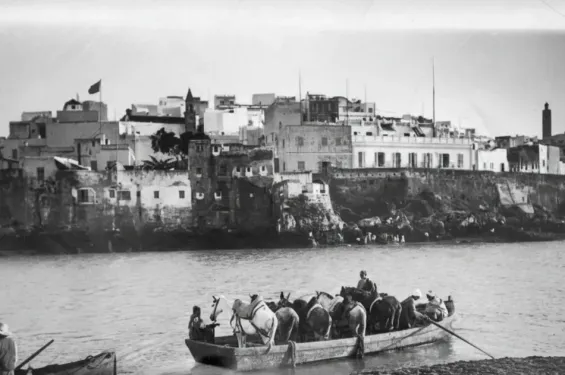
Drawing from the Loukkos River, whose waters have irrigated fields for centuries and around which human settlements first emerged, the city developed patterns of life tied to agriculture and seasonal flooding. The river has played a central role in both its growth and its challenges.
A Long History with Floods
The recent floods that swept through Ksar el-Kebir, prompting evacuations, did not come as a surprise to geographers and historians. The same Loukkos River that has endowed the city with immense resources and underpinned its rise across civilizations has also rendered it vulnerable to sudden climatic shifts that human intervention alone cannot fully contain.
This time, successive heavy rains throughout January saturated the soil, while the Wadi al-Makhazin Dam reached an unprecedented level exceeding 150 percent capacity during certain periods for the first time since its construction 47 years ago. Authorities were compelled to release large volumes of water, leading to the inundation of several residential neighborhoods and the precautionary evacuation of residents.
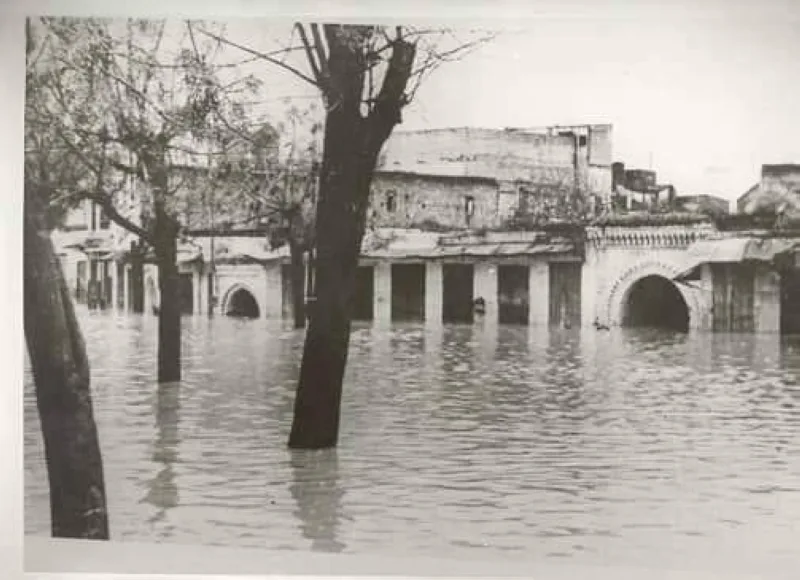
This was not the first time the Loukkos River has flooded the city. Historically, the river has posed a recurring threat. Archival records document twelve floods between 1936 and 1951 alone, underscoring the frequency of the phenomenon and its deep ties to the region’s geography rather than to isolated climatic fluctuations.
Rachid Fassah, an expert in environmental and sustainable development issues, explains that the city’s flat topography makes it a natural basin for runoff from surrounding highlands and waterways, amplifying the impact of floods whenever river levels rise.
In the modern era, flooding has persisted even after the construction of the Wadi al-Makhazin Dam in the late 1970s, which was intended to regulate water flow and mitigate inundation risks. Prior to the dam’s construction, floods regularly submerged wetlands, the coastal plain, and often the city itself.
The twenty-first century has seen several major flood events in 2001, 2008, 2010, 2013, and 2014 affecting agriculture and daily life in Ksar el-Kebir and its surrounding areas, and inflicting significant material losses on residents.
Fassah adds that the city’s proximity to the dam, despite its vital role in water storage, can increase pressure during periods of heavy rainfall when technical necessity requires the discharge of substantial volumes of water. He also notes that urban expansion into certain areas has reduced the natural floodplains that once absorbed excess water, heightening the vulnerability of the urban landscape to exceptional rainfall peaks.
Major Historical Turning Points
Among the most defining episodes in Ksar el-Kebir’s history was the Battle of Wadi al-Makhazin in 1578, also known as the “Battle of the Three Kings,” after three monarchs were killed: King Sebastian of Portugal; the Saadian Sultan Abd al-Malik Abu Marwan, who died after illness worsened during the campaign; and the deposed Moroccan Sultan Muhammad al-Mutawakkil, who drowned while supporting the Portuguese in a bid to reclaim the throne.
The confrontation took place near the city in the area of Souaken, between Moroccan forces led by Sultan Abd al-Malik al-Saadi and the Portuguese army under King Sebastian. It ended in a decisive Portuguese defeat and the deaths of their leaders, marking a turning point in the histories of both Morocco and Europe.
The victory consolidated the Saadian state’s regional standing and halted Portuguese expansionist ambitions in Morocco. It also precipitated Portugal’s political and economic collapse, accelerating its annexation by Spain in 1580.
Ksar el-Kebir’s proximity to the battlefield bound it closely to this historic encounter, underscoring its place within the broader geopolitical struggles of the sixteenth century, when Moroccan coasts were the object of intensifying European rivalry.
Beyond this battle, the city experienced other periods of tension linked to Morocco’s shifting political landscape. On June 10, 1911, Spanish forces entered Ksar el-Kebir as part of their expanding influence in northern Morocco, carrying out harsh practices that included looting, arrests, and acts of violence that left a deep imprint on the population.
In response, groups of local residents began organizing clandestinely to regroup and prepare to confront the foreign presence, drawing on a spirit of solidarity and a determination to defend their homeland.
On July 7, 1913, a confrontation known as the “Battle of Ansera” erupted, as resistance fighters attacked Spanish positions. Despite their courage, the engagement ended in defeat due to limited military experience and inadequate weaponry and supplies.
Yet the battle significantly deepened collective awareness of the importance of resisting occupation and prompted Spanish authorities to reassess their governance approach.
They quickly appointed a new representative endowed with political acumen and the ability to win support and contain rising tensions.
Through it all, continuity has remained the dominant thread in the city’s history. After each crisis, Ksar el-Kebir has regained its balance, sustained by its agricultural base and its integration into broader economic networks. This capacity to adapt to political and military transformations has enabled it to preserve its standing as a resilient urban center across the centuries.