NoonPost NoonPost

NoonPost

  • Home
  • Politics
  • Economy
  • Society
  • Culture
  • Files
  • Long Reads
  • Podcast
AR
Notification Show More
نون بوست
“There Are Nights I Can’t Close My Eyes”: How Gazans Are Living in Homes on the Brink of Collapse
نون بوست
From al-Jolani to Ahmad al-Shara: The Evolution of Syria’s New Leader
نون بوست
When Political Islam Receded in Egypt: Who Filled the Void?
نون بوست
An Extension of Genocide: Gaza’s Detainees Speak Out
نون بوست
A Tightrope Between Survival and Sovereignty: The Syrian Government Faces Normalization Pressures
نون بوست
American Aircraft Carriers: Has the Era of “100,000 Tons of Diplomacy” Ended?
نون بوست
U.S. Regime‑Change Policies: Why They Are Destined to Fail
نون بوست
Transformations of Israeli Judaism: Between the Victim Complex and the Colonizer’s Doctrine
نون بوست
The Gulf’s Balancing Act: Iran, Israel, and Hidden Links
نون بوست
Iraq–Turkey Oil Export Treaty: Why Did Ankara Cancel It After 52 Years?
نون بوست
Syria’s Northeast on Edge: QSD Between Ankara and Damascus
نون بوست
Has Europe Changed Its Stance on Israel… or Just Its Language?
NoonPost NoonPost
AR
Notification Show More
نون بوست
“There Are Nights I Can’t Close My Eyes”: How Gazans Are Living in Homes on the Brink of Collapse
نون بوست
From al-Jolani to Ahmad al-Shara: The Evolution of Syria’s New Leader
نون بوست
When Political Islam Receded in Egypt: Who Filled the Void?
نون بوست
An Extension of Genocide: Gaza’s Detainees Speak Out
نون بوست
A Tightrope Between Survival and Sovereignty: The Syrian Government Faces Normalization Pressures
نون بوست
American Aircraft Carriers: Has the Era of “100,000 Tons of Diplomacy” Ended?
نون بوست
U.S. Regime‑Change Policies: Why They Are Destined to Fail
نون بوست
Transformations of Israeli Judaism: Between the Victim Complex and the Colonizer’s Doctrine
نون بوست
The Gulf’s Balancing Act: Iran, Israel, and Hidden Links
نون بوست
Iraq–Turkey Oil Export Treaty: Why Did Ankara Cancel It After 52 Years?
نون بوست
Syria’s Northeast on Edge: QSD Between Ankara and Damascus
نون بوست
Has Europe Changed Its Stance on Israel… or Just Its Language?
Follow US

Drone Firm Expelled from NYC Amid Gaza Controversy

فريق التحرير
Noon Post Published 26 March ,2026
Share
نون بوست
نون بوست

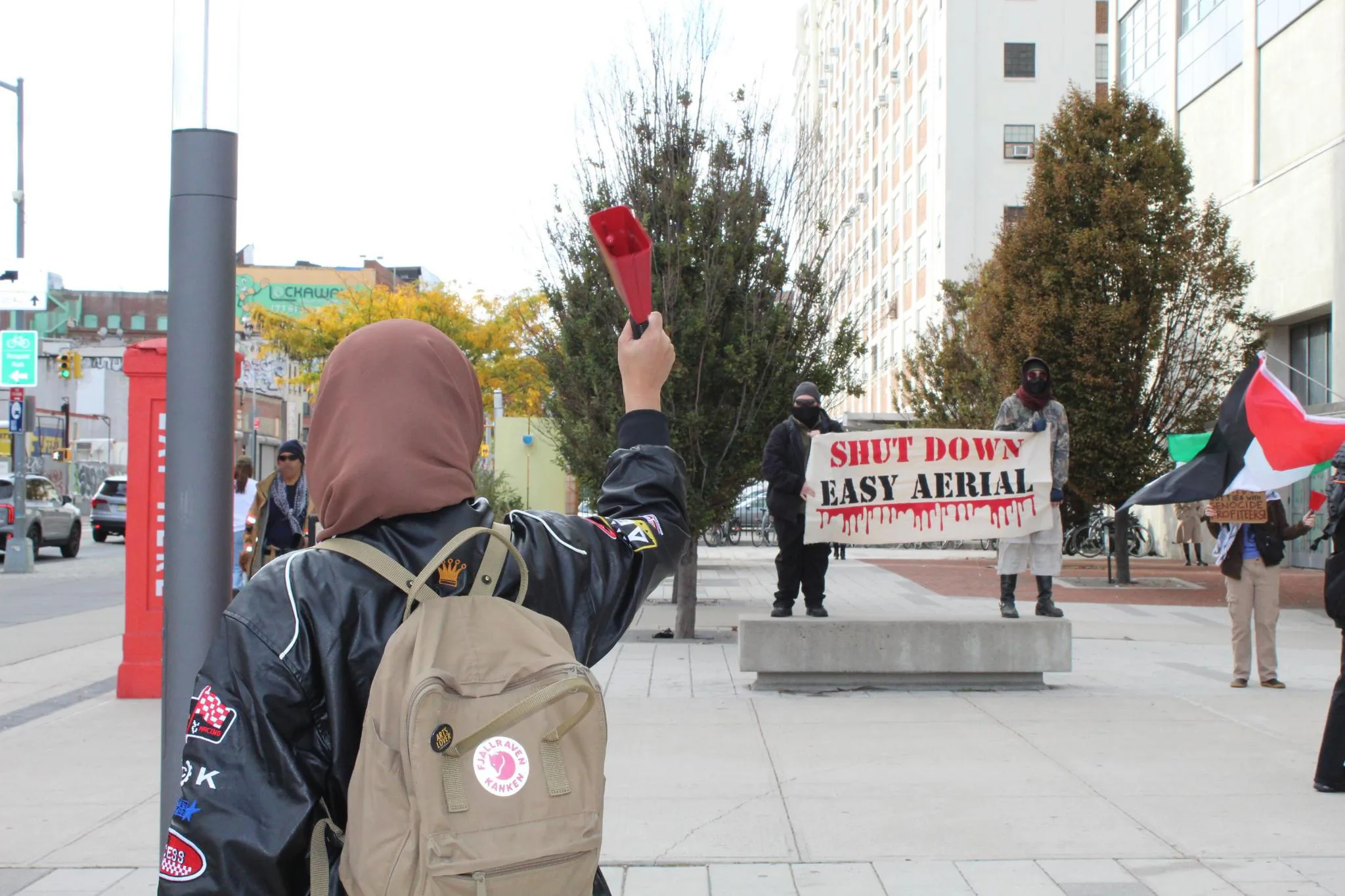
Drone technology company Easy Aerial has found itself outside the gates of the Brooklyn complex owned by the City of New York, only weeks after the city’s new mayor, Zohran Mamdani, assumed office.

The municipality terminated the company’s lease following months of protests led by pro-Palestinian activists, raising pressing questions about the firm’s identity, the reasons behind the decision not to renew its license, and the nature of its ties to the Israeli military and the assault on Gaza.

Why Did New York Refuse to Renew the Company’s Contract?

Brooklyn City Council member Lincoln Restler explained that the board of the Brooklyn Navy Yard Development Corporation a government entity that manages the complex — decided in its January 2026 meeting not to renew Easy Aerial’s lease. “Public property should not be leased to companies that turn drones into weapons of war,” he said.

The decision was officially announced in mid-February 2026, six weeks after Zohran Mamdani took office as mayor of New York City.

Although neither the mayor nor the board explicitly framed the decision as political, activists and several city council members argued that the company is involved in manufacturing weapons used in war crimes, and that its presence in a municipally owned facility contradicts the city’s stated values.

The company itself offered no detailed comment. However, a spokesperson for the complex told the New York Post that the decision was made “for business reasons related to operational requirements and compliance with regulations.” In other words, the administration did not publicly acknowledge political pressure, but it also did not deny the company’s military activities.

The grassroots campaign Demilitarize Brooklyn Navy Yard described the decision as the culmination of a yearlong effort, asserting that posters, demonstrations, and coordinated messaging were all part of a sustained campaign to remove the company.

What Is Easy Aerial?

Founded in 2014 in the United States, Easy Aerial develops autonomous drones and so-called “drone-in-a-box” systems.

The company maintains two principal locations: its headquarters in Brooklyn and another office in Gan Shomron in the occupied Palestinian territories.

It describes itself as a manufacturer of multi-use drones serving military, security, and commercial sectors.

On its official website, the company states that its products were “designed by former military personnel and aerospace and robotics engineers, with support from the U.S. Air Force.”

Its client list includes the U.S. Army, the U.S. Air Force, and U.S. Border Patrol. Hebrew-language media have also reported that it has sold equipment to the Israeli military.

Who Runs the Company and Who Founded It?

Easy Aerial was founded by Serbian-American engineer Ivan Stamatovski and Israeli entrepreneur Ido Gur.

Stamatovski has served as the company’s chief technology officer and head of product, drawing on a background in robotics engineering and overseeing design and development. Ido Gur, a co-founder, has longstanding ties to Israel’s drone industry.

The anti-war organization Workers World has stated that the company was founded in 2015 by Stamatovski and “a former Israeli occupation soldier named Ido Gur,” accusing it of supplying surveillance drones used in West Asia and in monitoring communities of color in New York.

Gur later moved on to lead another U.S.-based aerial technology firm, according to a report by The Jerusalem Post.

Behind the company’s operational facade stands a network of investors who have poured millions into Easy Aerial, many of whom maintain strong ties to Israel’s technology ecosystem. This financial structure suggests that Easy Aerial is not merely an American security company, but part of an investment portfolio aimed at advancing Israeli technological superiority and marketing it globally through the U.S. gateway.

What Are the Company’s Key Products?

1. The “Drone-in-a-Box” System:
A rugged, portable ground station that houses a drone. The system operates entirely autonomously: the box opens automatically, the drone launches to execute a pre-programmed mission or respond to a security sensor signal, and then returns to land and recharge on its own, requiring no human intervention on site.

2. Tethered Continuous Surveillance Technology:
Perhaps its most militarily significant innovation, these “smart aerial surveillance systems” do not rely on battery-powered free flight. Instead, the drone is connected to its ground station via a reinforced cable that supplies continuous power while transmitting video and sensor data through the same cable rather than radio waves. This renders the connection resistant to jamming and shielded from electronic hacking.

3. The Aerial Fleet:
The company produces several models tailored to different missions, including:

  • Albatross: A hexacopter designed for heavy payloads (up to 3.8 kilograms, or 8.4 pounds).

  • Raptor: A hybrid drone capable of operating in tethered mode for continuous surveillance or switching to free flight to pursue a moving target.

  • Alpine Swift: A lightweight, fast quadcopter used for rapid response and close-range monitoring.

What Is the Nature of Easy Aerial’s Ties to Israel?

Despite its U.S. registration and marketing claims that its products are “Made in the USA,” the company’s roots extend deep into Israel’s military ecosystem.

In 2019, Easy Aerial and the Israeli firm Blue White Robotics received a joint grant from the BIRD Foundation a U.S.-Israel government-backed binational industrial research and development initiative to develop a drone program for homeland security purposes.

Stamatovski has acknowledged that the project was never commercially launched due to funding constraints, but he has confirmed that the company maintains an office in the occupied territories and sought early collaboration with Israel.

Since 2021, promotional videos broadcast on the Israeli outlet Yedioth Ahronoth’s channel have showcased the company’s systems in the context of Israeli military border surveillance, suggesting their use in monitoring Palestinians.

A 2022 LinkedIn post by Ido Gur further indicated that Easy Aerial supplied Elbit Systems Israel’s largest arms manufacturer with drone control software.

How Were the Company’s Technologies Used in Gaza?

During Israel’s October 2023 offensive on the Gaza Strip, Ivan Stamatovski acknowledged that his company’s products saw “immediate demand” and that its tethered drones were deployed to provide “perimeter surveillance and protection.”

Marwa Fatafta of Access Now argued that such drones cannot be described as merely “defensive,” noting that surveillance technology forms an integral part of the occupation infrastructure, reinforcing systems of separation and control over the Palestinian population.

She added that companies like Easy Aerial cannot control where their products are used, rendering them complicit when those technologies are deployed in the occupied Palestinian territories.

A report by Mondoweiss cited activists from the Demilitarize Brooklyn Navy Yard campaign who said the Israeli military had displayed Easy Aerial drones patrolling Gaza’s border in a 2021 video. The activists further asserted that the company’s hexacopter and quadcopter models are capable of carrying bombs or sniper systems, despite being marketed as surveillance tools.

The report also referenced a contract with Elbit Systems to integrate these drones onto military vehicles effectively transforming them into combat platforms.

The closure of Easy Aerial’s Brooklyn site marks the first major victory for the Demilitarize Brooklyn Navy Yard campaign, which has also targeted Crye Precision, a manufacturer specializing in military apparel.

Activists say they will continue pressing until all companies involved in supplying weapons to Israeli forces are removed, reflecting a broader expansion of solidarity with Palestine in the United States where outrage over alleged war crimes has increasingly translated into concrete demands to sever ties with arms manufacturers.

Download this article as PDF
Share this Article
Facebook Twitter Whatsapp Whatsapp Telegram Email Copy Link
فريق التحرير
By فريق التحرير تقارير يعدها فريق تحرير نون بوست.
Follow:
Previous Article نون بوست Libya Fifteen Years After February: What Remains of the Revolution?
Next Article نون بوست What Has Changed in the U.S. Presence in Syria?

Read More

  • U.S. Regime‑Change Policies: Why They Are Destined to Fail U.S. Regime‑Change Policies: Why They Are Destined to Fail
  • The Gulf’s Balancing Act: Iran, Israel, and Hidden Links
  • Iraq–Turkey Oil Export Treaty: Why Did Ankara Cancel It After 52 Years?
  • Syria’s Northeast on Edge: QSD Between Ankara and Damascus
  • Has Europe Changed Its Stance on Israel… or Just Its Language?
part of the design
NoonPost Weekly Newsletter

You May Also Like

U.S. Regime‑Change Policies: Why They Are Destined to Fail

U.S. Regime‑Change Policies: Why They Are Destined to Fail

إسراء سيد Esraa sayed 8 April ,2026
The Gulf’s Balancing Act: Iran, Israel, and Hidden Links

The Gulf’s Balancing Act: Iran, Israel, and Hidden Links

فريق التحرير Noon Post 8 April ,2026
Iraq–Turkey Oil Export Treaty: Why Did Ankara Cancel It After 52 Years?

Iraq–Turkey Oil Export Treaty: Why Did Ankara Cancel It After 52 Years?

فريق التحرير Noon Post 8 April ,2026

من أتاتورك إلى أردوغان: الجمهورية الأولى

نهى خالد
نهى خالد Published 29 May ,2015
Share
١٢٣٤٥٦٧

لم يكن سهلًا أن يفقد السلطان العثماني شرعيته في الأناضول، ليس فقط لأنه انحدر من الشجرة العثمانية العريقة التي انتمى لها الجميع هناك، ولكن لأن السلطنة والخلافة جسّدا في آن هوية المسلمين الذين قطنوا الأناضول قادمين من آسيا بعد هجرات طويلة، وصلت لأوجها مع حُكم السلاجقة في إيران ثم خلافة العثمانيين، وقد انحصرت هويتهم في هذا الإطار الديني، في حين ظلت أصولهم التركية بادية في اللغة فقط، دون أن تظهر بشكل واعٍ في أي خطاب عن الهوية، وكان يمكن لزوار إسطنبول حتى مطلع القرن العشرين أن يلحظوا ذلك بمجرد سؤال أحد المارة عن هويته، إذ كانت الإجابة ببساطة آنذاك “عثمانلي” وليس “تُرك”.

في ظل هذا الرسوخ الذي تمتع به العثمانيون في عقول وقلوب الأتراك، على المستوى السياسي والهوياتي، كيف تحوّل الوعي التركي من تلك الحالة اللاإثنية إلى القومية التركية إذن؟ وكيف فقد السلطان شرعيته بعد الحرب العالمية الأولى؟ وكيف نجح مصطفى كمال في تدشين شرعية جديدة بين الأتراك ليقوم بكل الإصلاحات التي قام بها على مدار 15 عامًا حكم فيها تركيا؟

الشرعية تنتقل من السلطان إلى مصطفى كمال

لطالما استقى السلطان العثماني شرعيته، على غرار كافة النُظُم في العصور الوسطى، من انضواء أكبر مساحة من الأرض تحت لوائه، لا سيما أراضي المسلمين، وهو ما تلقى ضربة قاضية بالطبع أثناء الحرب العالمية الأولى باتفاقية سايكس بيكو، ووقوع مناطق مختلفة من تركيا اليوم تحت احتلال القوى الأوربية، ومنها إسطنبول وإزمير، وقد كان المسمار الأخير في نعش شرعية النظام القديم هو القرار الرسمي العثماني بالاستسلام لقوى الحلفاء والتوقف عن المقاومة.

نون بوست

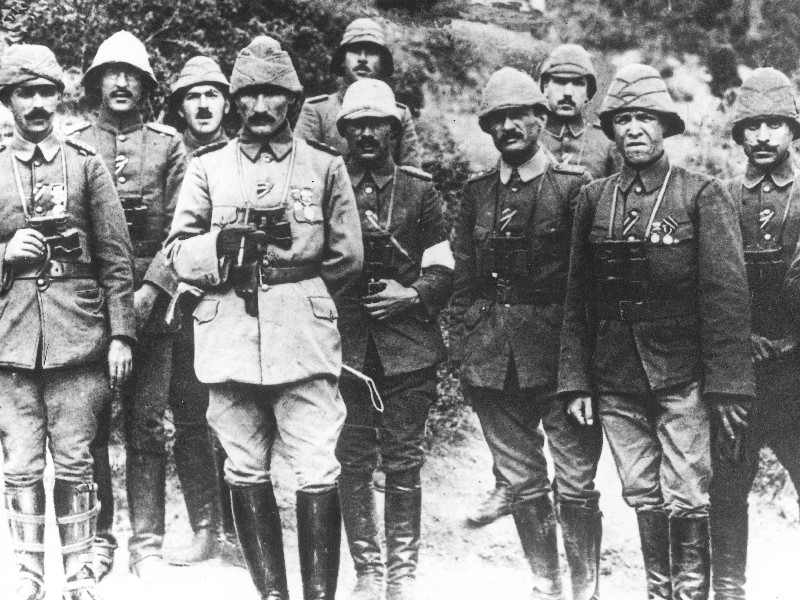
مصطفى كمال أثناء حرب الاستقلال

بالطبع رفضت مجموعات عسكرية عدة أن تتوقف عن المقاومة، وضربت بالقرار الرسمي عرض الحائط، وكان مصطفى كمال أبرز اسم من بين هؤلاء، إذ اتجه إلى شرق البلاد وعقد مجلسًا في أرضروم ثم آخر في سيواس ضم كل منهما ممثلين من كافة أنحاء تركيا، ليتمخّض عن ذلك الحراك جمعية الدفاع عن حقوق الأناضول التي ترأسها هو، والتي نسقت كافة جهود المقاومة لاستراجع أكبر قدر من الأراضي العثمانية، وقد ذاع صيتها آنذاك، وبدأت تشكل ضغطًا على السلطان، ولا يدلل على ذلك أكثر من نتائج انتخابات برلمان 1920، والذي حصل فيه أنصار المقاومة على أغلبية كبيرة مقابل أقلية ناصرت السياسات الرسمية.

عمل البرلمان الجديد على تبني قرارات مجلسي أرضروم وسيواس بشكل رسمي، ثم أعلن عن “الميثاق الملّي”، والذي أكد على مطالب الحراك المقاوم آنذاك، من فتح البوسفور واستراجع القسطنطينية وحق تقرير المصير، وهي مطالب لاقت رد فعل عنيف من جانب الحلفاء، والذين وسعوا من نطاق احتلالهم للعاصمة، واعتقلوا الكثير من نواب البرلمان الجديد، دون أن يستطيع السلطان أن يحرّك ساكنًا، وهو ما دفع بتلك المجموعات إلى داخل الأناضول، في مدينة أنقرة، حيث عُقِدت أولى جلسات مجلس الأمة الكبير، والذي سيصبح برلمان الجمهورية فيما بعد.

أعلن المجلس أن السلطان خاضع لسيطرة أعداء الأمة، وأن السيادة أولًا وأخيرًا هي للأمة، كما ذكر لأول مرة كلمة “تركيا” كاسم للدولة، ثم عكف على تنظيم المقاومة من ناحية، ومواجهة القوات العثمانية التي التزمت بالقرارات الرسمية من ناحية أخرى، وهو ما نجح فيه بكفاءة، ليبدأ تراجع اليونانيين حتى استعادة إزمير عام 1922، ثم تراجع الحلفاء عن احتلال إسطنبول بعد اتفاقية مودانيه، ولتنتهي شرعية السلطان محمد وحيد الدين تمامًا والذي تعاون مع الحلفاء طوال تلك الفترة، ويتم إعلان إلغاء السلطنة عام 1922 مع بقاء الخلافة لعبد المجيد، والذي سيكون آخر خليفة، ثم إعلان الجمهورية عام 1923 برئاسة مصطفى كمال.

تأسيس أول جمهورية تركية

نون بوست

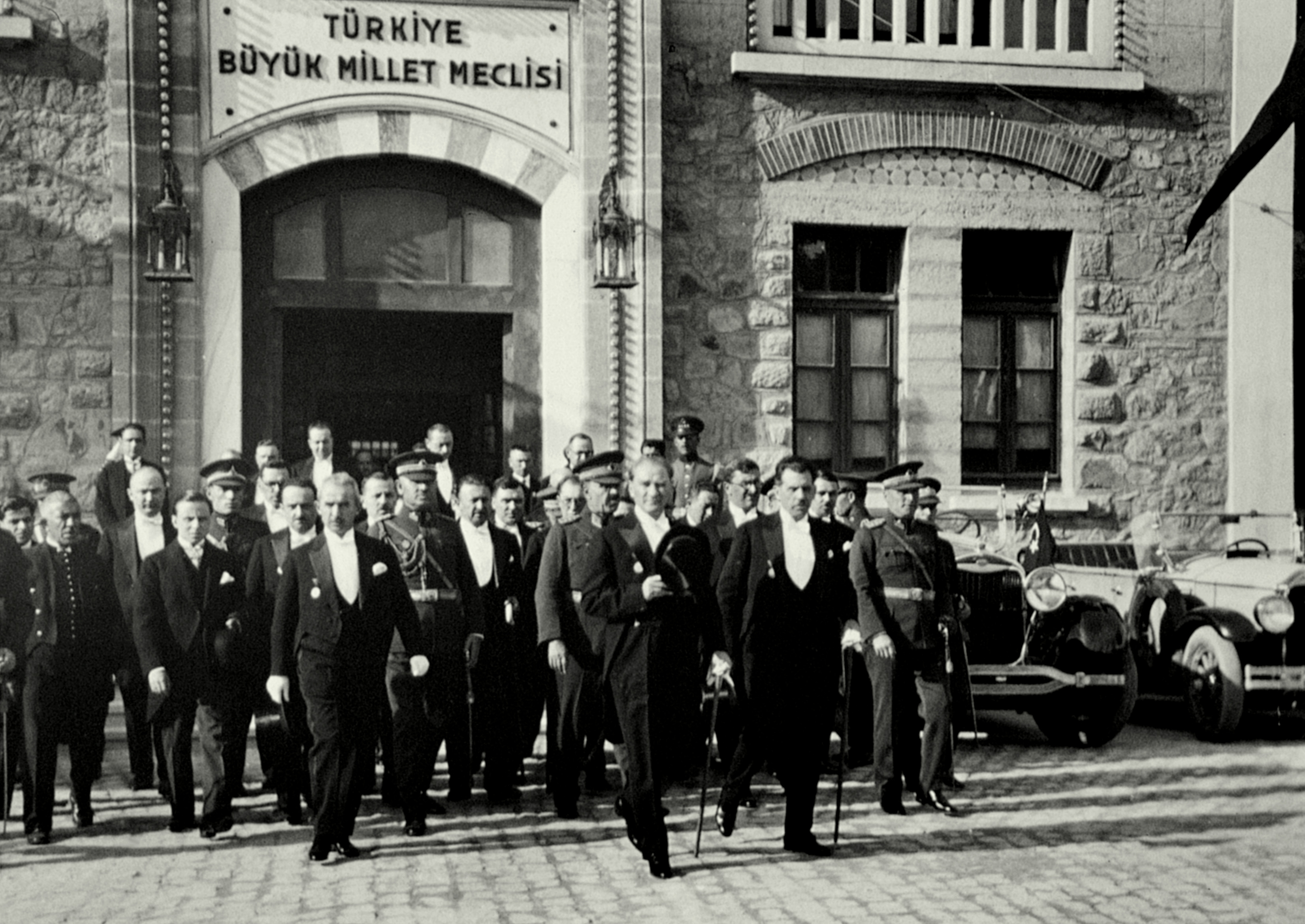
مصطفى كمال وعصمت إينونو (إلى اليسار) مع أعضاء حزب الشعب الجمهوري أمام مجلس الأمة الكبير

إبان إعلان الجمهورية، بدأت الخلافات في الظهور بين المجموعات المؤيدة لمصطفى كمال، ومجموعات أخرى كانت من بين المعارضين للسلطان ولكنها لم تشاركه نفس أفكاره وتوجهاته، وأبرزها التجار والمحافظون، وقد انقسم مجلس الأمة في ذلك الوقت إلى 197 من أنصار مصطفى كمال، و118 من مخالفيه، وهو ما لم يعجب مصطفى كمال، والذي أراد توطيد أركان حكمه ليتمكن من القيام بالمرحلة التأسيسية التي رآها ضرورية لقيام الجمهورية بشكل شامل، مما دفعه لحل المجلس عام 1923، وتشكيل مجلس جديد لم يضم سوى ثلاثة من المجموعة الثانية مقابل هيمنة حزبه الجديد: حزب الشعب الجمهوري.

على عكس المجلس القديم، هيمن ذوو المِهَن المدنية وأصحاب التعليم الجامعي على المجلس الجديد، وقد كان معظمهم بالطبع من أنقرة وإسطنبول، وشاركوا مصطفى كمال رؤيته في القيام بـ”ثورة” من أعلى لتأسيس النظام الجديد في تركيا، وعدم السماح ببروز معارضة قوية، وهو ما توطد بعد عام 1926 حين حوكمت مجموعة من المتهمين بتهمة محاولة اغتياله، ثم في أعقاب الانتفاضات الكردية في أعوام 1925 و1930 و1937، والتي اتخذها كمال حجة لضرب الشبكات الصوفية التقليدية خارج المدن.

على مدار سنوات حكمه بين عامي 1923 و1938، قام مصطفى كمال بإصلاحاته الشهيرة، والتي تضمنت إغلاق التكايا الصوفية عام 1925، وإلغاء الطربوش ومنع ارتداء العباءة الدينية خارج دور العبادة، ثم تبني قانون مدني جديد بدلًا من الشريعة عام 1926، وتبني الحروف اللاتينية بدلًا من العربية كأساس للغة التركية وإلغاء الإسلام كدين للدولة عام 1928،  ثم تدشين أيديولوجية حزبه في ست أفكار أساسية هي الجمهورية والشعبوية والقومية والعلمانية والثورية والارتكاز للدولة، والتي أضيفت للدستور رسميًا عام 1937.

كان مبدأ الارتكاز للدولة قد أضيف عام 1931 في رغبة لترسيخ دور الدولة في الاقتصاد، لا سيما وأن الاقتصاد التركي لم يتعافى أبدًا من رحيل المجتمعات الأرمنية واليونانية بعد سقوط الخلافة، والتي سيطرت على نصيب كبير من التجارة، مما خلّف فراغًا رأي كمال أن تشغله الدولة لتُحكِم قبضتها اجتماعيًا، وهي واحدة من أبرز نقاط الخلاف التي نشبت بينه وبين التجار في أول مجلس للأمة، والذين تلاشى نفوذهم السياسي فيما بعد، ليتم تطبيق مجموعة من الخطط لبناء قاعدة صناعية واقتصادية دون أن تُثمر نهضة حقيقية.

إينونو والنظام العالمي الجديد

نون بوست

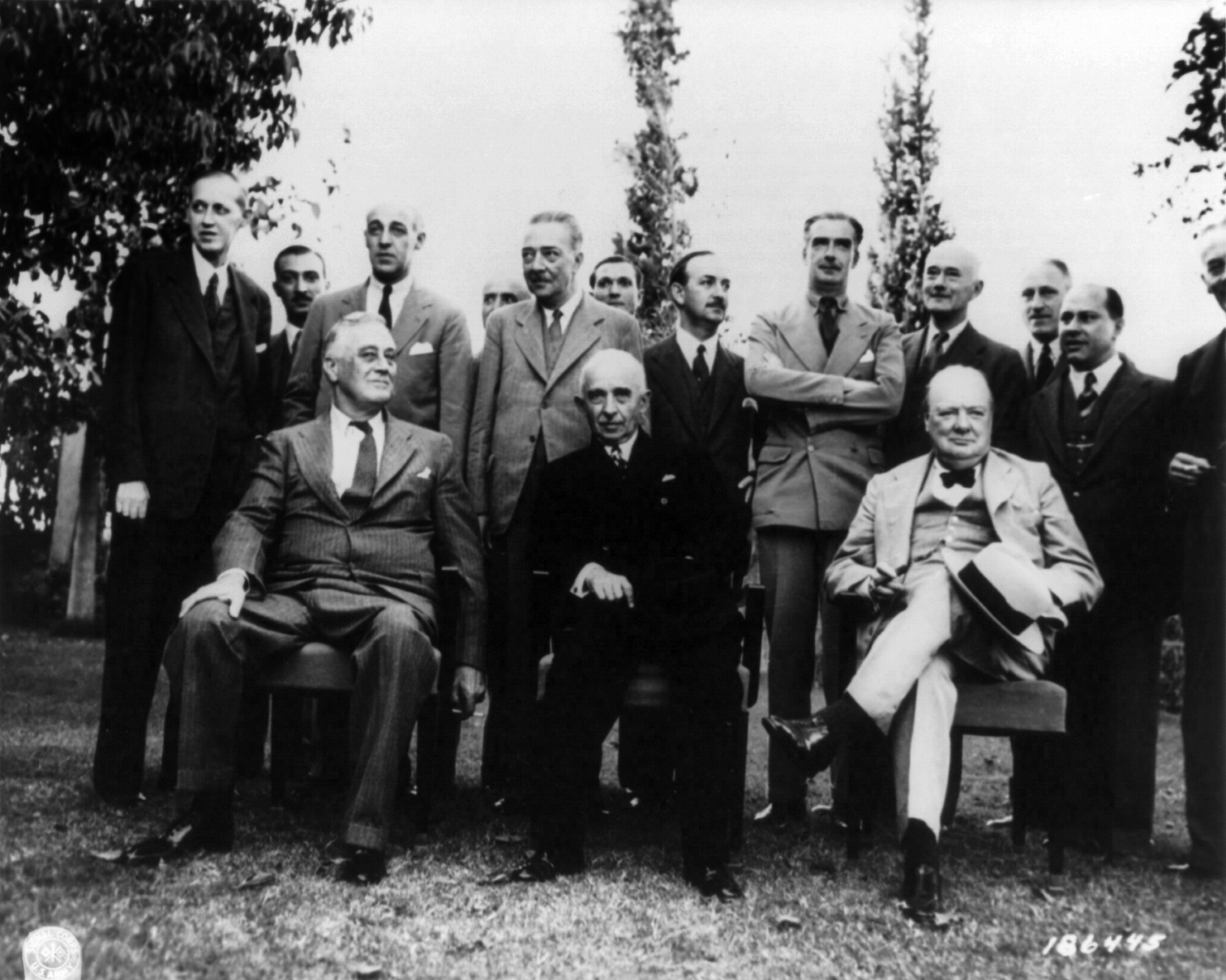
عصمت إينونو بين رئيس الوزراء البريطاني وينستون تشرشل (اليمين) والرئيس الأمريكي فرانكلين روزفلت (اليسار)

توفي مصطفى كمال عام 1938، قبل اندلاع الحرب العالمية الثانية، تاركًا رئاسة الجمهورية في أيدي نائبه عصمت إينونو، والذي وقع على عاتقه إدراك التحولات المحيطة بتركيا، لا سيما بعد نهاية الحرب، والتي شهدت ترسيخ مبدأ الديمقراطية على مستوى عالمي بقيادة الولايات المتحدة، ثم صعود روسيا كقوة كبرى بشكل أقلق النظام التركي، ولا يدلل على ذلك أكثر من تباطؤ إينونو في الانضمام إلى الحلفاء في الحرب العالمية نتيجة تعاطف الكثيرين في إدارته مع الألمان باعتبارهم أعداء للروس، بل وكان البعض يرى أنه يمكن عقد اتفاق معهم لتحصل تركيا على مناطق في آسيا الوسطى من الروس بعد انتصار الألمان ليضموا الناطقين بالتركية هناك.

قبل نهاية الحرب بأشهر انضمت تركيا للحلفاء، واتجهت أنظارها بالأساس إلى واشنطن بحثًا عن الحماية بمواجهة التوسع الروسي الذي أحاط بها في القوقاز والبحر الأسود، وهو ما رحب به الأمريكيون بالطبع في إطار استراتيجيتهم الجديدة للتعامل مع الروس فيما أصبح لاحقًا الحرب الباردة، ليقوموا بجهود كبيرة في تدعيم وتوسيع دور الجيش التركي كلاعب مهم في التوازن العسكري مع الروس، وهي الجهود التي حملت بذور الدور الكبير الذي سيتسنى للجيش لعبه في الساحة السياسية، بعد أن كان كمال حريصًا على إبعاده عن السياسة والإبقاء على حجمه صغيرًا.

بالإضافة لكل ذلك، كان إينونو مهتمًا بترسيخ قواعد الديمقراطية التي تليق بتركيا، على عكس الكثيرين من حرس كمال القديم، ونتيجة للشرعية التي تمتع بها كنائب لكمال، نجحت ضغوطه وجهوده في إجراء أول انتخابات ديمقراطية عام 1950، والتي خرج منها خاسرًا، وهو ما رآه تحولًا ضروريًا لفتح آفاق التعددية السياسية والتي كان مشغولًا بها أكثر من الأيديولوجيات العلمانية والقومية، على عكس سلفه، لتبدأ تركيا مرحلة جديدة من تاريخها تراجع فيها الحرس العلماني القديم، وتقدم فيها كل من المحافظين عبر باب الديمقراطية، والجيش التركي عبر توسع دوره في الحلف الأمريكي، لتنتقل تركيا إلى مرحلة جديدة.

TAGGED: الأكراد ، الإسلام السياسي ، الانقلابات في تركيا ، التاريخ السياسي التركي ، الجمهورية التركية
TAGGED: الانتخابات التركية
Download this article as PDF
Share this Article
Facebook Twitter Whatsapp Whatsapp Telegram Email Copy Link
نهى خالد
By نهى خالد باحثة وكاتبة مصرية ومترجمة
Follow:
Next Article نون بوست The Stigma of “ISIS”: A Heavy Legacy Haunting Women and Children of Former Members

Read More

  • U.S. Regime‑Change Policies: Why They Are Destined to Fail U.S. Regime‑Change Policies: Why They Are Destined to Fail
  • The Gulf’s Balancing Act: Iran, Israel, and Hidden Links
  • Iraq–Turkey Oil Export Treaty: Why Did Ankara Cancel It After 52 Years?
  • Syria’s Northeast on Edge: QSD Between Ankara and Damascus
  • Has Europe Changed Its Stance on Israel… or Just Its Language?
part of the design
NoonPost Weekly Newsletter
dark

An independent media platform founded in 2013, rooted in slow journalism, producing in-depth reports, analysis, and multimedia content to offer deeper perspectives on the news, led by a diverse young team from several Arab countries.

  • Politics
  • Society
  • Rights & Liberties
  • Opinions
  • History
  • Sports
  • Education
  • Technology
  • Economy
  • Media
  • Arts & Literature
  • Entrepreneurship
  • Travel
  • Cinema & Drama
  • Food
  • Health
  • Culture
  • Latest Reports
  • Files
  • Long Reads
  • Interviews
  • Podcast
  • Interactive
  • Encyclopedia
  • In Pictures
  • About Us
  • Our Writers
  • Write for Us
  • Editorial Policy
  • Advanced Search
Some rights reserved under a Creative Commons license

Removed from favorites

Undo
Go to mobile version