NoonPost NoonPost

NoonPost

  • Home
  • Politics
  • Economy
  • Society
  • Culture
  • Files
  • Long Reads
  • Podcast
AR
Notification Show More
نون بوست
“There Are Nights I Can’t Close My Eyes”: How Gazans Are Living in Homes on the Brink of Collapse
نون بوست
From al-Jolani to Ahmad al-Shara: The Evolution of Syria’s New Leader
نون بوست
When Political Islam Receded in Egypt: Who Filled the Void?
نون بوست
An Extension of Genocide: Gaza’s Detainees Speak Out
نون بوست
A Tightrope Between Survival and Sovereignty: The Syrian Government Faces Normalization Pressures
نون بوست
American Aircraft Carriers: Has the Era of “100,000 Tons of Diplomacy” Ended?
نون بوست
U.S. Regime‑Change Policies: Why They Are Destined to Fail
نون بوست
Transformations of Israeli Judaism: Between the Victim Complex and the Colonizer’s Doctrine
نون بوست
The Gulf’s Balancing Act: Iran, Israel, and Hidden Links
نون بوست
Iraq–Turkey Oil Export Treaty: Why Did Ankara Cancel It After 52 Years?
نون بوست
Syria’s Northeast on Edge: QSD Between Ankara and Damascus
نون بوست
Has Europe Changed Its Stance on Israel… or Just Its Language?
NoonPost NoonPost
AR
Notification Show More
نون بوست
“There Are Nights I Can’t Close My Eyes”: How Gazans Are Living in Homes on the Brink of Collapse
نون بوست
From al-Jolani to Ahmad al-Shara: The Evolution of Syria’s New Leader
نون بوست
When Political Islam Receded in Egypt: Who Filled the Void?
نون بوست
An Extension of Genocide: Gaza’s Detainees Speak Out
نون بوست
A Tightrope Between Survival and Sovereignty: The Syrian Government Faces Normalization Pressures
نون بوست
American Aircraft Carriers: Has the Era of “100,000 Tons of Diplomacy” Ended?
نون بوست
U.S. Regime‑Change Policies: Why They Are Destined to Fail
نون بوست
Transformations of Israeli Judaism: Between the Victim Complex and the Colonizer’s Doctrine
نون بوست
The Gulf’s Balancing Act: Iran, Israel, and Hidden Links
نون بوست
Iraq–Turkey Oil Export Treaty: Why Did Ankara Cancel It After 52 Years?
نون بوست
Syria’s Northeast on Edge: QSD Between Ankara and Damascus
نون بوست
Has Europe Changed Its Stance on Israel… or Just Its Language?
Follow US

Turkish-Saudi Rapprochement: A New Alliance Reshaping Regional Power

فريق التحرير
Noon Post Published 26 March ,2026
Share
نون بوست
نون بوست
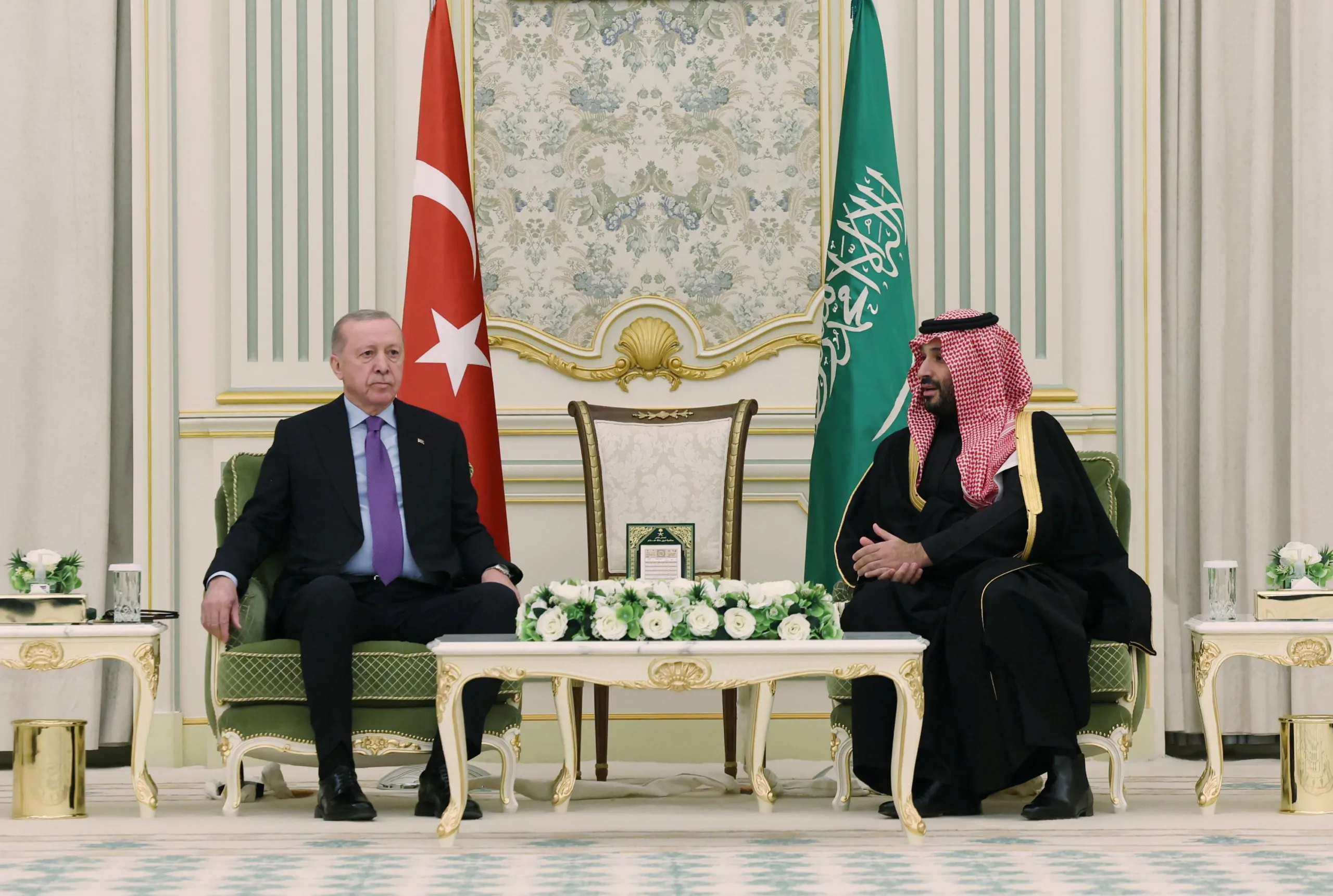
Erdogan to meet Saudi Crown Prince in Riyadh on February 3, 2026 (Reuters)

In early February 2026, a high-profile meeting in Riyadh between Turkish President Recep Tayyip Erdoğan and Saudi Crown Prince Mohammed bin Salman sent a clear message across the Middle East: Turkish-Saudi ties are deepening fast.

This encounter was more than a ceremonial exchange; it underscored a rapidly expanding strategic partnership that is beginning to unsettle Israel’s regional designs.

This rapprochement, which culminated in sweeping agreements across energy, defense, and economic sectors, marks a significant shift in regional alliances. For Israel, however, it signals a complex challenge.

Tel Aviv no longer sees the Ankara-Riyadh dynamic as a bilateral development it is increasingly viewed as part of a larger, emergent network that could restrict Israel’s political, economic, and strategic maneuverability.

The Roots and Drivers of Reconciliation

Just a few years ago, a warm Erdoğan welcome in Riyadh would have been unthinkable. Relations soured dramatically after the 2018 killing of journalist Jamal Khashoggi, compounded by opposing stances on issues such as Egypt and Libya.

But shifting regional priorities have redrawn the landscape. According to The Jerusalem Post, the growing threat from Iran and subtle tensions between Riyadh and Abu Dhabi prompted Saudi Arabia to re-engage with Turkey, once a bitter rival.

Riyadh’s disillusionment with the UAE over Yemen and Sudan, and its reassessment of Israel as a competitor rather than a partner—especially after the 2025 war on Gaza—accelerated this pivot. Israeli analysts believe Saudi Arabia has cooled on normalization with Israel due to its destabilizing policies in Syria and a controversial 2025 airstrike in Doha.

Within this recalibrated context, Riyadh views Ankara as a strategic alternative to restore regional balance.

Turkey, meanwhile, has pursued a sweeping policy of regional reconciliation, mending ties with Egypt and the UAE in 2023–2024 and even briefly engaging Israel before relations soured again over Gaza.

More consequential, however, is Turkey’s shift toward unconventional defense alliances. A 2026 Bloomberg report revealed Ankara is in advanced talks to join a mutual defense pact with Saudi Arabia and Pakistan the Islamic world’s sole nuclear-armed state.

The alliance, announced in September 2025, includes a mutual defense clause and could place Turkey under Pakistan’s nuclear umbrella a development Israeli media described as a “game-changer” in the regional power equation.

Turkey’s Expanding Influence

Israeli strategists are increasingly uneasy about Turkey’s rapid rise as a regional power. The 2024 fall of Bashar al-Assad’s regime opened the door for Ankara to become a central player in post-war Syria.

Saudi Arabia implicitly backed this transformation, particularly in supporting the integration of the Syrian Democratic Forces (SDF) into the new Syrian state a position aligned with Turkish goals.

Turkey capitalized on the new landscape, expanding security coordination with Syria’s Arab neighbors Jordan, Iraq, and Lebanon. In March 2025, Amman hosted a groundbreaking security summit that included officials from Turkey, Jordan, Iraq, and the new Syrian government to bolster counterterrorism and border security efforts.

With Saudi support, Ankara’s role as a regional security guarantor deepened. It is now involved in post-ISIS reconstruction, urging the transfer of detained ISIS fighters from Kurdish custody to its Syrian allies.

Erdoğan also reached out to Lebanon, pledging support for the country’s stability in a call with President Joseph Aoun. In Iraq, despite longstanding tensions over Turkish incursions and PKK presence, Israel-based assessments suggest Ankara has solidified both security and economic ties with Baghdad to counter Iranian influence.

This Turkish footprint from the Levant to Mesopotamia is complemented by a successful diplomatic outreach to Cairo and Abu Dhabi. Turkey restored ambassadors to both capitals in 2024, pivoting to a pragmatic, interest-based relationship. Its ties with Qatar have remained robust.

With Saudi Arabia now joining this network, Turkey is positioned at the center of a web connecting nearly every major Arab power from the Gulf to North Africa.

Backed by Saudi capital, Pakistani military weight, and balanced diplomacy with Washington and Moscow, Ankara is transforming into a regional linchpin bridging the Maghreb, the Mashreq, and the Horn of Africa.

A Defense and Economic Alliance with Strategic Weight

The Turkish-Saudi alliance isn’t limited to diplomacy. It is rooted in substantial defense and economic cooperation developments with strategic implications for Israel.

Newly signed agreements during Erdoğan’s recent visit reflect major foreign investment flows into Turkey’s energy sector, a sign of Saudi confidence in the Turkish economy. A proposed regional megaproject to link the Turkish and Saudi electricity grids could transform regional energy flows.

The two nations also aligned their long-term visions Saudi Vision 2030 and Turkey’s “Century Vision”—to synchronize infrastructure development, non-oil trade, and manufacturing.

On the defense front, Saudi Arabia has emerged as the largest buyer of Turkish defense products, diversifying its arms sources and bolstering indigenous capacity. For Turkey, this translates into critical foreign currency inflows and expanded defense clout.

Israeli analysts warn that Turkey’s role as a security provider could undercut Israel’s defense exports across Islamic regions in Africa and Asia, closing off key markets.

This growing Turkish role also threatens Israel’s infrastructure and energy ambitions, especially the India-Middle East-Europe Corridor (IMEC), announced in 2023, and its gas and electricity export plans via Cyprus and Greece.

If Riyadh favors routes through Turkey and Syria, Israel’s geopolitical value as an energy hub could diminish. A Hebrew-language study notes that sidelining Israel in energy logistics would undermine IMEC and erode the economic benefits of the Abraham Accords.

Continued Saudi investment in Turkey and surrounding states further reduces prospects for future Israeli-Saudi tech-defense collaborations once envisioned in Tel Aviv.

Israel’s Rising Alarm

Across Israeli policy circles, the Turkish-Saudi rapprochement is seen as a direct challenge requiring countermeasures.

In January 2026, Maariv reported growing unease in Israel over the deepening Ankara-Riyadh defense ties and Turkey’s warming relations with Washington.

Israel is concerned that Turkey’s expanding influence stretching from Syria to Jordan, Lebanon, and Iraq could culminate in a new strategic bloc linking the Middle East, North Africa, and the Red Sea, with Saudi Arabia at its core.

This potential axis, particularly with Pakistan’s implicit nuclear backing, could severely restrict Israeli freedom of movement in Gaza, Iran, Syria, and energy policy.

Maariv described Erdoğan’s regional strategy as “realist and pragmatic,” aimed at forging joint security and economic interests with Saudi Arabia. Tel Aviv views this alignment, supported by Islamabad, as a geopolitical squeeze on Israeli influence especially as all three states have condemned Israel’s 2025 war on Gaza.

This condemnation was visible at the late 2025 Organization of Islamic Cooperation (OIC) summit and the Erdoğan–MBS joint statement denouncing Israel’s assault and blockade, while calling for a ceasefire and a two-state solution.

Israeli observers say this signals a shift in Riyadh’s traditionally moderate stance toward Israel, adding regional legitimacy to anti-Israeli positions.

Prime Minister Benjamin Netanyahu subtly expressed frustration with this axis on January 27, 2026, stating, “We expect those who seek peace with us not to join efforts led by ideologies that reject peace and seek to delegitimize the State of Israel.”

Israel is now reassessing its alliances, deepening military cooperation with Greece and Cyprus and exploring alternative trade and energy routes via Egypt, Jordan, and the Red Sea, aiming for greater flexibility in an evolving region.

Israeli circles are also troubled by Washington’s tacit approval of this shift. According to Bloomberg, US allies like Saudi Arabia and Turkey increasingly doubt the reliability of American support and are building independent security frameworks.

Ankara’s rapport with former President Trump allowed it to pursue its regional agenda with a green light. Trump even hinted at re-admitting Turkey into the F-35 fighter jet program—despite Israeli opposition—offering Erdoğan the latitude to coordinate closely with Riyadh in reshaping the region.

Download this article as PDF
Share this Article
Facebook Twitter Whatsapp Whatsapp Telegram Email Copy Link
فريق التحرير
By فريق التحرير تقارير يعدها فريق تحرير نون بوست.
Follow:
Previous Article نون بوست Conflating Anti-Semitism with Anti-Zionism: How Israel’s Immunity Was Engineered
Next Article نون بوست Washington Vs Beijing: Europe Redraws Its Alliance Map in a Shifting World

Read More

  • U.S. Regime‑Change Policies: Why They Are Destined to Fail U.S. Regime‑Change Policies: Why They Are Destined to Fail
  • The Gulf’s Balancing Act: Iran, Israel, and Hidden Links
  • Iraq–Turkey Oil Export Treaty: Why Did Ankara Cancel It After 52 Years?
  • Syria’s Northeast on Edge: QSD Between Ankara and Damascus
  • Has Europe Changed Its Stance on Israel… or Just Its Language?
part of the design
NoonPost Weekly Newsletter

You May Also Like

U.S. Regime‑Change Policies: Why They Are Destined to Fail

U.S. Regime‑Change Policies: Why They Are Destined to Fail

إسراء سيد Esraa sayed 8 April ,2026
The Gulf’s Balancing Act: Iran, Israel, and Hidden Links

The Gulf’s Balancing Act: Iran, Israel, and Hidden Links

فريق التحرير Noon Post 8 April ,2026
Iraq–Turkey Oil Export Treaty: Why Did Ankara Cancel It After 52 Years?

Iraq–Turkey Oil Export Treaty: Why Did Ankara Cancel It After 52 Years?

فريق التحرير Noon Post 8 April ,2026

إنهم يحرقون بستان الكمسري

محمد ديريه
محمد ديريه Published 10 June ,2015
Share
23-02-15-967618538-2

هذا ليس بستانًا سيدي، لن أتركه ولسوف أعود، كما تعود الطيور المهاجرة إلى أغصانها، كم سأغيب وكم ستدوم الحرب، عامًا أو عامين؟ في الأخير سيموت المتحاربون وتنتصر الحرب، سأعود على المركب ذاته، اتجه غبشًا لبستان الكمسري، سأدخل من جهة دار سعد وسأمشي من مكتب بريد الشيخ عثمان حتى أستظل تحت أطول شجرة، أعرف مكانها جيدًا محاذاة صوت محمد سعد، وهو يغني: مابا بديل .. مابا بديل.

لقد كان جدي هنا حين نزلت الملكة اليزابيث ضيفة على أجمل بساتين عدن وجنوب الجزيرة العربية كلها سنة 1954، وكان أبي ممن خرجوا للوحدة مهللين، ولكن بعد أن تحول البستان العريق إلى مدينة ملاهٍ بعد الوحدة كان والدي أول من اعترض وأول من قال: إنهم يبيعون حتى الشجر، ويحولون البلد لشركة كبيرة بلا رائحة ولا أصوات، إنهم يلمسون أشجار عدن ويشوشون الألحان، كيف سنستمع لصوت محمد سعد وهذه الألعاب تنتصف الحديقة كغول رأسمالي في تربة اشتراكية، كيف لفيصل أن يوزن أوتار عوده، كي يغني لمحبوبته في البستان، وكنت طفلًا حين داعبت كرة القدم للمرة الأولى هاهنا، وسقطت في حفرة لم تردم جيدًا، برأسي شجة من تلك السقطة، ولكني فخور بهذه الشجة، سيبقى من الكمسري شيء على جسدي، كما وشمت ذكرياته قلبي وقلب أبي وجدي.

أول الحب .. كان هنا، وكل الأغنيات مرت من هنا، رويدًا جلست بالقرب من ذلك الماء، العطروش ابتسم وصوته يلون خضرة القات ويزيد من نضارة البلس الجاذب للجميلات، كم زواجٍ بدأت قصته من هنا، وانتهت على ساحل أبين، عكس ما زعم الموسيقار أحمد بن أحمد قاسم، وكم مكلومٍ عاد خائب اليدين مهيض القلب بعد معاناة كان مسرحها بستان الكمسري! كان المذياع ينقل لمن لم يجدوا مقاعد في مسرح التواهي صوت أبي بكر سالم، وكنا نغني خلفه ومعه، أذكر ذلك الصوت جيدًا سنة 1982، كنا في شهر أغسطس، رطوبة عدن تخففك من كل شيء، الشعر الأسود الكث، البنطال الضيق من الأسفل، فلجة أبيبكر وهدوء معاني المحضار بينما عدن كلها لا تنام، موالعة القات كلهم وقفوا معنا تحت شجرة المانجو الكبيرة، بدأ العود يرفع درجة حرارة المكان والزمان، العود يكاتف الناي، الناي لا يسلم من تصفيق الحاضرين، أبوبكر يتحرك على المسرح، يعطي ظهره للجمهور، يوجه الفرقة، يسقط رجلان من الشجن، يقبل على الناس ويبتسم: يارسولي توجه بالسلامة .. زر صحابي .. وبلغهم سلامي.

بائعات الآيس كريم يحملن حاجاتهن ويقتربن من الصوت الذي لا يترك أحدًا في حاله، صوت أبي بكر أشهر من رطوبة عدن، أول ما يسمعه النازلون من البحر، هو فطام الصبايا وفحوى رسائل العاشقين، صوته يدخل البستان ويخرج باتجاه الصحراء، يتركك قليلًا حين ينزل بين وديان حضرموت، يصافح أهله، يراقصهم الشرح ليلة في الغنا أو في الطويلة، ثم يعود ليصطحبك باتجاه الجبل، تتورد خدود نساء البدو في شبوة حين يتناهى إلى أسماعهن، أما في عدن، فيكفي أن تدعو فتاة للاستماع إلى طرف أغنية بصوت أبي أصيل، وهن يرتعن تحت الأشجار الظليلة، يقطفن الثمر لي في العناقيد.

في الدقيقة الخامسة، اقتحمنا الكورال، وجدنا أنفسنا جالسين بعد العود وفوق اللحن، تمامًا خلف صوت أبي بكر، الرطوبة تزداد، الأطفال فوق العاشرة رموا الكرة، واصطفوا خلفنا: أنا خضت بحر الهوى سبعين قامة، شفت أهوال جم ما هي قليلة، ياضنيني، تشيب بالمواليد، الشبابيك لا تنام في عدن حين يأتي أبوبكر، أما فوق الأسطح ومع شاي الضحى، تجلس المطلقات حول صوت محمد سعد، هذا الشجن الحزين، هذه القدرة على إعطائك الحق في السكوت من دون أن يطلب منك أحد المشاركة، المناديل بيد الرجال وكل أنثى تتناول -مصرها- وتلاحق دمعة على الخد، حزن المسافر، لوعة الخائف من البحر والهارب إليه، ليس لناقد أن يتناول صوت محمد سعد بالتشريح قبل أن يفهم خبايا عدن، المقاهي، مخبوزات الخالات، بطون الهنديات حول الساري، أيادي الصوماليات في الشيخ عثمان، عيون البدويات، سيقان الإنجليزيات، من لم يفهم عدن لن يفهم محمد سعد، ولن يتباكى على كل شجرة في بستان الكمسري، البساتين بيوت الناس الكبيرة، هنا لا تحتاج إلى استئذان، بإمكانك الجلوس وحيدًا، مجموعات فوق حصير كريم، لعينك أن تسرح، لا قيود على النظر داخل بستان الكمسري، هنا عدن، كتف المتعبين من دوار البحر، حاضرة البدو بغترهم كثيرة الألوان، المذياع بيد كل شيخ، القات بلا عود كشاي بلا رفاق، كل شيء ساخن هنا، البحر كريم، حين تمل السمك، تمش قليلًا حتى تستقر في المنصورة وهناك، ستجد حتى السلاحف معلقة من بيوتها ومقدمة لك مع كأس شاي عدني في عز الظهيرة، الأشياء كلها تحدث، وذاكرتي يا صديقي متعبة، لقد اقتحموا المدينة، وهم يقاتلون بلا داع سوى المدد، يريدون البحر، وحين يعطيهم ظهره، قبل الهزيمة، وقبل انتصار عدن سيحاولون إحراق الكمسري، لقد حولها بعد الوحدة إلى ملاه للأطفال مستخفًا بذاكرة الأرض قبل الناس، وهم يحرقون الآن كل ما يقع بأيديهم، أرجوك يا صديقي، حتى أعود على هذا المركب بعد البحر، تترَّسوا واحموا جيدًا ذاكرة المدينة، موتوًا جميعًا قبل أن يختنق صوت محمد سعد بالدمع، أرجوك .. لا تودعني، توجه هناك، إنهم يحرقون بستان الكمسري، وصوت محمد سعد لن يموت مادامت عدن، عاشت عدن.

المصدر: جريدة الحياة

TAGGED: آثار اليمن ، أطفال اليمن ، الأوضاع الأمنية في اليمن ، الاشتباكات في اليمن
Download this article as PDF
Share this Article
Facebook Twitter Whatsapp Whatsapp Telegram Email Copy Link
محمد ديريه
By محمد ديريه طبيب وكاتب صومالي
Follow:
Next Article نون بوست The Stigma of “ISIS”: A Heavy Legacy Haunting Women and Children of Former Members
part of the design
NoonPost Weekly Newsletter
dark

An independent media platform founded in 2013, rooted in slow journalism, producing in-depth reports, analysis, and multimedia content to offer deeper perspectives on the news, led by a diverse young team from several Arab countries.

  • Politics
  • Society
  • Rights & Liberties
  • Opinions
  • History
  • Sports
  • Education
  • Technology
  • Economy
  • Media
  • Arts & Literature
  • Entrepreneurship
  • Travel
  • Cinema & Drama
  • Food
  • Health
  • Culture
  • Latest Reports
  • Files
  • Long Reads
  • Interviews
  • Podcast
  • Interactive
  • Encyclopedia
  • In Pictures
  • About Us
  • Our Writers
  • Write for Us
  • Editorial Policy
  • Advanced Search
Some rights reserved under a Creative Commons license

Removed from favorites

Undo
Go to mobile version