NoonPost NoonPost

NoonPost

  • Home
  • Politics
  • Economy
  • Society
  • Culture
  • Files
  • Long Reads
  • Podcast
AR
Notification Show More
نون بوست
“There Are Nights I Can’t Close My Eyes”: How Gazans Are Living in Homes on the Brink of Collapse
نون بوست
From al-Jolani to Ahmad al-Shara: The Evolution of Syria’s New Leader
نون بوست
When Political Islam Receded in Egypt: Who Filled the Void?
نون بوست
An Extension of Genocide: Gaza’s Detainees Speak Out
نون بوست
A Tightrope Between Survival and Sovereignty: The Syrian Government Faces Normalization Pressures
نون بوست
American Aircraft Carriers: Has the Era of “100,000 Tons of Diplomacy” Ended?
نون بوست
U.S. Regime‑Change Policies: Why They Are Destined to Fail
نون بوست
Transformations of Israeli Judaism: Between the Victim Complex and the Colonizer’s Doctrine
نون بوست
The Gulf’s Balancing Act: Iran, Israel, and Hidden Links
نون بوست
Iraq–Turkey Oil Export Treaty: Why Did Ankara Cancel It After 52 Years?
نون بوست
Syria’s Northeast on Edge: QSD Between Ankara and Damascus
نون بوست
Has Europe Changed Its Stance on Israel… or Just Its Language?
NoonPost NoonPost
AR
Notification Show More
نون بوست
“There Are Nights I Can’t Close My Eyes”: How Gazans Are Living in Homes on the Brink of Collapse
نون بوست
From al-Jolani to Ahmad al-Shara: The Evolution of Syria’s New Leader
نون بوست
When Political Islam Receded in Egypt: Who Filled the Void?
نون بوست
An Extension of Genocide: Gaza’s Detainees Speak Out
نون بوست
A Tightrope Between Survival and Sovereignty: The Syrian Government Faces Normalization Pressures
نون بوست
American Aircraft Carriers: Has the Era of “100,000 Tons of Diplomacy” Ended?
نون بوست
U.S. Regime‑Change Policies: Why They Are Destined to Fail
نون بوست
Transformations of Israeli Judaism: Between the Victim Complex and the Colonizer’s Doctrine
نون بوست
The Gulf’s Balancing Act: Iran, Israel, and Hidden Links
نون بوست
Iraq–Turkey Oil Export Treaty: Why Did Ankara Cancel It After 52 Years?
نون بوست
Syria’s Northeast on Edge: QSD Between Ankara and Damascus
نون بوست
Has Europe Changed Its Stance on Israel… or Just Its Language?
Follow US

Israeli Complicity? Why Organized Crime Is Ravaging Palestinian Communities Inside Israel

فريق التحرير
Noon Post Published 26 March ,2026
Share
نون بوست
نون بوست

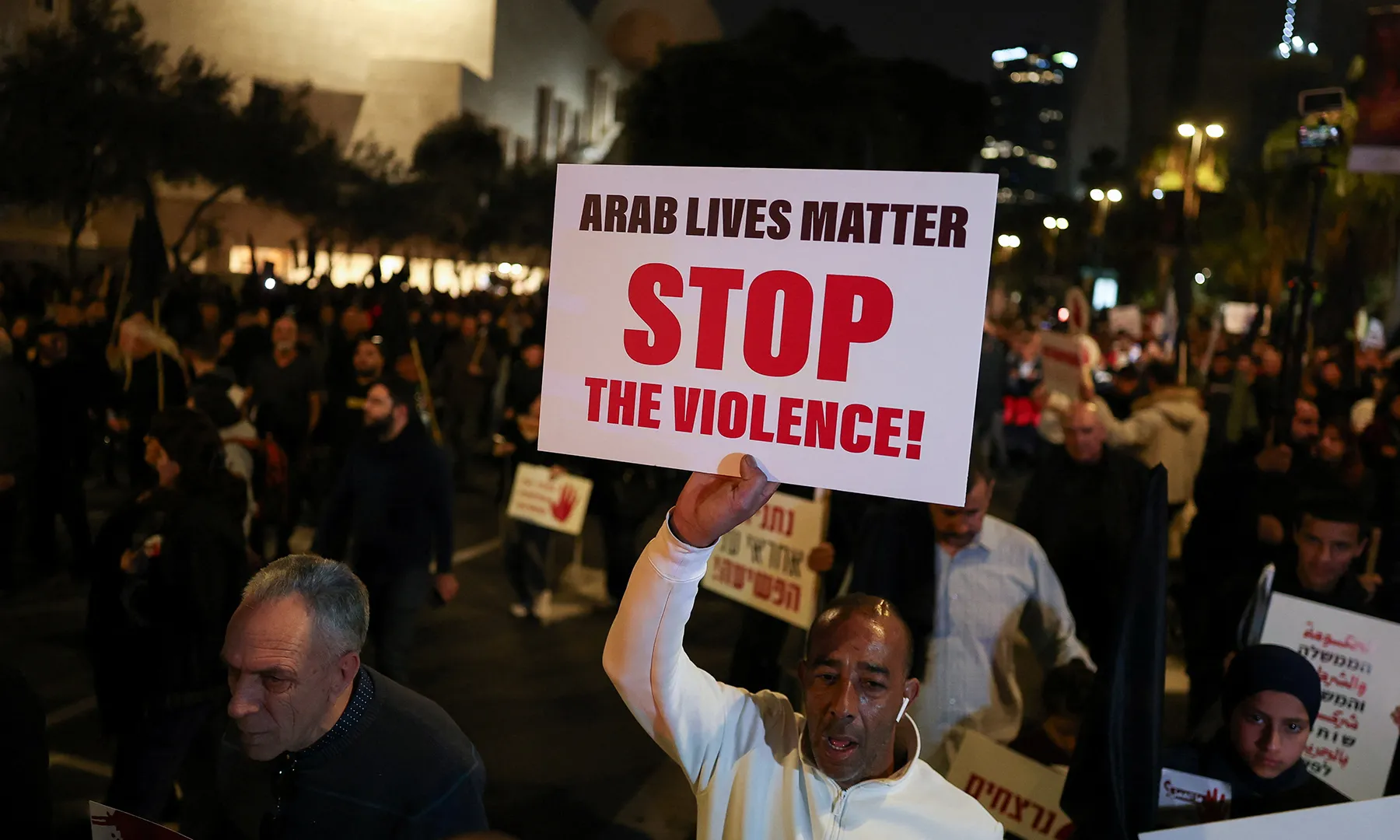
Since late January 2026, Palestinian citizens of Israel have launched an unprecedented wave of protests against a surge in organized killings that have rocked their towns and cities.

Tens of thousands have marched through cities like Sakhnin, the Triangle, the Galilee, and even Tel Aviv, brandishing black flags and chanting in Arabic: “Oh [Itamar] Ben Gvir, you poor fool Arab blood is not cheap,” in direct accusation of Israel’s far-right National Security Minister’s role in enabling the violence.

The movement was sparked by a record spike in killings about 25 Palestinians were murdered in the first month of 2026 alone in areas legally under Israeli jurisdiction but long subject to systemic neglect and discrimination.

A Bloody Record

The year 2025 was the deadliest ever for Palestinian communities in Israel, with 252 victims in 218 incidents surpassing 2024’s toll of 230. Gun violence has become an almost daily occurrence, eroding any sense of safety and leaving residents feeling abandoned by the very state meant to protect them.

Firearms are the weapon of choice in most of these killings, a fact that underscores the alarming proliferation of illegal arms in these communities. Statistics reveal that Palestinians in Israel are murdered at rates dramatically higher than their Jewish counterparts: in 2024, the ratio of Palestinian to Jewish murder victims was approximately 14:1 (220 vs. 58).

Palestinian citizens make up roughly 21% of Israel’s population of over 10 million. Yet many say they are treated as second-class citizens subjected to systemic neglect, poverty, and targeted violence.

Roots of the Crisis

Observers trace the crime wave to decades of state neglect and structural discrimination. Many Arab towns inside Israel suffer from rampant poverty, crumbling infrastructure, and decaying services conditions ripe for criminal syndicates to flourish.

Rather than confronting the problem, critics say the Israeli police have allowed criminal gangs to operate with impunity in Palestinian neighborhoods. According to the Abraham Initiatives a nonprofit monitoring crime among Palestinian citizens of Israel organized crime has metastasized due to an absence of law enforcement and a culture of impunity.

A particularly damning revelation is that an estimated 90% of illegal weapons in circulation originate from Israeli military and police stockpiles either stolen or deliberately leaked.

The combination of poverty, widespread weaponry, and intentional inaction has created a deadly ecosystem. While Palestinians plead for protection, Israeli police are routinely accused of turning a blind eye or worse, colluding with the gangs.

Official data is damning: in 2023, only about 8% of murder cases involving Palestinian victims led to indictments, compared to 55% among Jewish victims.

Gangs Filling the Vacuum

In the absence of law enforcement, powerful criminal families have seized control. Yedioth Ahronoth newspaper has reported extensively on six of the most notorious:

  1. Abu Latif Family (Galilee) – Four brothers lead a force of around 200 armed men. Their dominance is so extensive that Shin Bet once recommended canceling municipal elections in Rama village, citing state impotence.

  2. Jarushi Family (Ramla & Lod) – Their turf wars, especially with the rival Masrati family, have transformed neighborhoods into battlegrounds, leaving dozens dead—including women and children.

  3. Hariri Family (Wadi Ara) – Led by Nasser Hariri, even from prison, the gang commands about 300 armed members and engages in extortion and violent clashes with the rival Bakri clan in Nazareth.

  4. Karja Gang (Harish) – Engaged in loan-sharking and extortion, it controls large swaths of the city through armed enforcers.

  5. Abu Mot Gang (Baqa al-Gharbiyye) – Its leadership has been picked off one by one in a bloody power struggle.

  6. Suhaib Al-Asmar Gang (Umm al-Fahm) – Despite their leader’s imprisonment, the gang’s 120 members continue to terrorize the city.

These crime syndicates have amassed billions through violence and coercion, turning entire neighborhoods into war zones.

Extortion and Economic Strangulation

In the past year, gang activities have escalated from drug and weapons trafficking to blatant extortion. Business owners now face a dire choice: pay monthly “protection” fees or risk being shot or bombed.

One merchant in Nazareth recounted making a modest profit about $9,700 a month until anonymous callers demanded $2,700 monthly in extortion payments. After refusing, his store was riddled with bullets. He eventually shut down to protect his family.

Others in Nazareth and cities across northern Israel have shared similar tales. In one striking case, Al-Noor Bakery in Sakhnin was repeatedly attacked and looted. Staff were injured, and customers traumatized. The owner eventually shuttered the business, saying, “Nothing on Earth is worth a single drop of blood.”

Such violence has sparked a new exodus. Business owners and skilled professionals are increasingly contemplating emigration to escape a society being strangled by fear.

Official Complicity?

Given Israel’s extensive surveillance apparatus, many Palestinians ask: how could crime spiral so far out of control unless the state allowed it?

The prevailing belief is that Israel is intentionally allowing this violence to fester. The aim: to weaken and control Palestinian society under the guise of “internal chaos.”

Reports by Times of Israel and Channel 13 have revealed that many crime bosses double as informants for Shin Bet, Israel’s internal security agency granting them de facto immunity.

In 2021, a senior police officer reportedly admitted that “most crime lords in the Arab community are Shin Bet agents,” and thus untouchable.

Despite official denials, grassroots activists and victims point to evidence of collusion. Activist Muhammad Taher Jabareen from Umm al-Fahm asserts that Israeli police have accepted bribes from gangs and knowingly allowed weapons to flood Arab neighborhoods.

He asks: “How can they claim to be the region’s strongest security force and not know where the guns are coming from?”

Many believe that state inaction is not just negligence it’s strategy. In 2021, the Israeli government proposed legislation granting police sweeping new powers to raid Palestinian homes in the name of “fighting crime” a move rights groups said would legalize repression.

As one activist put it: “They plant crime in our towns, admit their spies are involved, and then use the chaos to justify more crackdowns. This is colonialism in its ugliest form.”

For protesters, the blame lies not just with the criminals but with the entire Israeli state apparatus that, they argue, created the perfect storm for their rise.

Download this article as PDF
Share this Article
Facebook Twitter Whatsapp Whatsapp Telegram Email Copy Link
فريق التحرير
By فريق التحرير تقارير يعدها فريق تحرير نون بوست.
Follow:
Previous Article نون بوست From Epstein’s Cell to the Middle East: What’s Behind the Timing of the Latest Leaks?
Next Article نون بوست Egypt: How the Military Academy Is Reengineering the Judiciary and Religious Preaching

Read More

  • U.S. Regime‑Change Policies: Why They Are Destined to Fail U.S. Regime‑Change Policies: Why They Are Destined to Fail
  • The Gulf’s Balancing Act: Iran, Israel, and Hidden Links
  • Iraq–Turkey Oil Export Treaty: Why Did Ankara Cancel It After 52 Years?
  • Syria’s Northeast on Edge: QSD Between Ankara and Damascus
  • Has Europe Changed Its Stance on Israel… or Just Its Language?
part of the design
NoonPost Weekly Newsletter

You May Also Like

U.S. Regime‑Change Policies: Why They Are Destined to Fail

U.S. Regime‑Change Policies: Why They Are Destined to Fail

إسراء سيد Esraa sayed 8 April ,2026
The Gulf’s Balancing Act: Iran, Israel, and Hidden Links

The Gulf’s Balancing Act: Iran, Israel, and Hidden Links

فريق التحرير Noon Post 8 April ,2026
Iraq–Turkey Oil Export Treaty: Why Did Ankara Cancel It After 52 Years?

Iraq–Turkey Oil Export Treaty: Why Did Ankara Cancel It After 52 Years?

فريق التحرير Noon Post 8 April ,2026

القامشلي: العاصمة الشبح لإقليم كردستان سوريا

ألان كافال
ألان كافال Published 16 June ,2015
Share
unnamed

ترجمة من الفرنسية وتحرير نون بوست

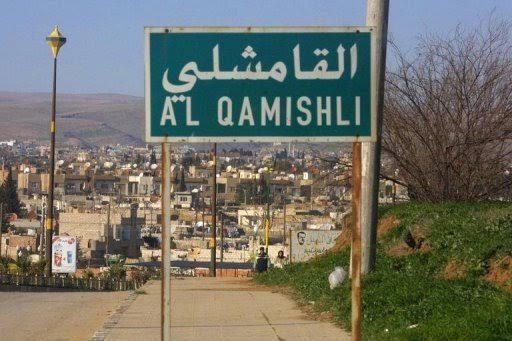
في أحد الطرق الفرعية يمكنك رؤية صورة لبشار الأسد على قطعة من البلاستيك، وبعيدًا نحو الضواحي الشرقية للقامشلي وفي أحد الطرق الرئيسية توجد صورة أخرى لعبد الله أوجلان، الزعيم السياسي الكردي المسجون في تركيا، وهو أيضًا الزعيم التاريخي لحزب العمال الكردستاني، هذا الحزب الذي يتبنى أفكارًا ماركسية لينينية، وقد تمكن الفرع السوري لهذا الحزب وهو حزب الاتحاد الديمقراطي من السيطرة بشكل جزئي على المناطق ذات الأغلبية الكردية في سوريا منذ يوليو 2012، وذلك بفضل اتفاقية سلام موقعة مع دمشق.

ومنذ ذلك الوقت أعلن حزب الاتحاد الديمقراطي الحكم الذاتي، ووضع تحت سيطرته مؤسسات الدولة، وحتى بعد أن أصبحت مدينة القامشلي الآن عاصمة كردستان الغربية أو “روج آفا”، بحسب المفردات القومية الكردية، فإن هذه المدينة لا تزال نقطة ارتكاز رئيسة للنظام السوري في شمال شرق البلاد.

وتسيطر السلطات السورية على المطار الذي تستخدمه لأغراض عسكرية، وللحفاظ على شريان الحياة مع العاصمة دمشق، كما تسيطر على المعبر المغلق مع الجارة تركيا، وعلى الرغم من أنه تم التخلي عن الضواحي لصالح القوات الكردية، إلا أن دمشق لا تزال تسيطر على وسط المدينة حيث يعيش المسيحيون، الذين كانوا يمثلون أغلبية السكان في الماضي، واستبدلوا اليوم بأعداد كبيرة من النازحين القادمين من المناطق العربية، وفي الشوارع المدمرة بالمدينة، يتجاور مقاتلو حزب الاتحاد الديمقراطي الكردي مع شبيحة بشار الأسد.

عوالم موازية تتقاطع وتتجاهل

هذا التعايش الغريب لا يخص فقط المسلحين، فقبل غروب الشمس وعودة الهدوء للشوارع غير الآمنة، يتقابل كبار السن من رجال البدو مع الأرامل المسيحيات وطالبات المدارس الكرديات، وهكذا تتقاطع في مدينة القامشلي عوالم موازية، هذه المدينة الحدودية التي تأسست منذ أقل من قرن حول محطة على خط للسكك الحديدية بين برلين وبغداد.

في مكتبه في طابق لمبنى مجهول، يتحدث خليل ريدور، المتحدث باسم القوات الكردية، والتي أطلق عليها اسم وحدات حماية الشعب، عن العلاقات المتضاربة التي تربط حزبه مع النظام السوري، قائلاً: “هدفنا الرئيس في المستقبل القريب هو التصدي لتقدم تنظيم داعش، فليس من مصلحتنا فتح جبهة ثانية مع النظام، وبالنسبة إليهم نفس الشيء، وهذا بالطبع لا يعني أننا حلفاء”.

وقد واصلت القوات الكردية هجومها، يوم الأحد 14 يونيو، فقد أعلن ممثلوها أنهم على وشك تطويق تنظيم داعش في تل الأبيض، وبالتالي فتح ممر بين القطاع حيث تقع مدينة القامشلي في قلب منطقة الجزيرة، ومدينة كوباني، على الحدود التركية، أين سبق التصدي لمقاتلي تنظيم داعش أواخر يناير بدعم من التحالف الدولي.

ومن خلال انسحابه من المنطقة، سمح النظام السوري للحركة الكردية باستخدام الأراضي التي أصبحت تحت سيطرته لفرض نموذجه السياسي، أي “الحكم الذاتي الديمقراطي”، تطبيقًا لمبادئ عبد الله أوجلان، والتي من المفترض أن تؤدي، وفقًا لفكر حزب العمال الكردستاني، إلى بناء نظام سياسي من دون دولة حيث يحكم المجتمع نفسه.

ويتمثل تنفيذ هذا الفكر في بناء شبكة مؤسساتية تتكون من “بيوت الشعب”، البلديات والمجالس المحلية، ومختلف اللجان والوزارات التي تنصب نفسها بنفسها، حيث كل المناصب العليا تخضع للتكافؤ التام بين الرجال والنساء، وفي الواقع، فإن كل من هذه المؤسسات، مخترقة من قِبل كوادر حزب الاتحاد الديمقراطي، الذين تدربوا لدى حزب العمال الكردستاني ضد الجيش التركي على مدى العقود السابقة.

المجتمع في حالة حرب حيث القانون يُفرض بالقوة

في مدينة القامشلي، يحاول أنصار هذا النظام الجديد، المدعومون من قِبل حزب الاتحاد الديمقراطي، تعويض ما تبقى من الدولة السورية، وهكذا، فبالتوازي مع سير العدالة الرسمية، نجد “المحاكم الشعبية” الموالية للحكومة الكردية والتي تؤمن عدالة موازية، ويقول روفيند خلف، رئيس محكمة القامشلي الشعبية، والتي تم تركيزها في ثكنة عسكرية سابقة صادرها الأكراد بالقوة من ميليشيا موالية للأسد والمتواجدة بالقرب من مركز للشرطة ما زال يتبع النظام في دمشق: “القضاة والمحامون يطبقون القانون السوري، لكننا نفضل الحكم بالتراضي لأن نتائجه أسرع”.

وراء هذا الارتباك الواضح، تظهر ملامح مجتمع في حالة حرب، حيث القانون يُفرض بالقوة وأين الشرعية مستمدة من دماء المقاتلين الذين سقطوا في أرض المعركة، ويمكن ملاحظة وجود صور “الشهداء” الأكراد في كل مكان، ويقول أحد كوادر حزب الاتحاد الديمقراطي: “أسر الشهداء لديها الأولوية في الخدمات والوظائف في المؤسسات الجديدة”.

ويقول مدرس من أصل كردي: “العديد من وجهاء المدينة لا يثقون في الحكم الذاتي الكردي؛ ما يسمح لسائقي سيارات الأجرة أو للباعة المتجولين الذين انضموا لحزب الاتحاد الديمقراطي من أن تكون لهم اليد الطولى في إدارة الحزب”، ولا يزال المدرسون في القامشلي يحصلون على رواتبهم من قِبل النظام السوري في دمشق، ولكنهم مع ذلك من أشد المدافعين على الحكم الذاتي الكردي، وهم قلقون بشأن انخفاض عدد الطلاب انخفاضًا كبيرًا خلال السنوات الثلاث الماضية، حيث أضاف المدرس: “شبابنا يذهب إلى كردستان العراق وتركيا وأوروبا، وستجد إدارة الحكم الذاتي الكردي نفسها في نهاية المطاف على رأس إقليم خال من السكان إذا استمر الوضع على ما هو عليه”.

وتعاني المناطق الكردية في سوريا منذ ثلاث سنوات، من نزيف ديموغرافي متواصل؛ فمع تقدم القوات الكردية، تفرغ الأراضي من سكانها الفارين من عمليات التدمير بالنسبة للبعض، والفارين من عزل أراضيهم بين الجبهات والحدود بالنسبة للبعض الآخر، وكلهم يحاولون الهروب من سوء معاملة السلطات المحلية التي تقمع جميع أشكال المعارضة، هذا مع هروب السكان الأصغر سنًا من التجنيد القسري من قِبل الميليشيات الكردية التابعة لحزب الاتحاد الديمقراطي، وهكذا فإن نسبة كبيرة من السكان الأكراد يفضلون أن يتركوا “روج آفا” للمحاربين والشهداء.

المصدر: صحيفة لوموند الفرنسية

TAGGED: الأكراد في سوريا ، النظام السوري ، حزب الاتحاد الديمقراطي ، حزب العمال الكردستاني
TAGGED: الأكراد
Download this article as PDF
Share this Article
Facebook Twitter Whatsapp Whatsapp Telegram Email Copy Link
ألان كافال
By ألان كافال صحفي مختص في الشأن السياسي الداخلي والخارجي لتركيا وإيران والتاريخ الوطني وهوية الأقليات في الشرق الأوسط.
Follow:
Next Article نون بوست The Stigma of “ISIS”: A Heavy Legacy Haunting Women and Children of Former Members

Read More

  • U.S. Regime‑Change Policies: Why They Are Destined to Fail U.S. Regime‑Change Policies: Why They Are Destined to Fail
  • The Gulf’s Balancing Act: Iran, Israel, and Hidden Links
  • Iraq–Turkey Oil Export Treaty: Why Did Ankara Cancel It After 52 Years?
  • Syria’s Northeast on Edge: QSD Between Ankara and Damascus
  • Has Europe Changed Its Stance on Israel… or Just Its Language?
part of the design
NoonPost Weekly Newsletter
dark

An independent media platform founded in 2013, rooted in slow journalism, producing in-depth reports, analysis, and multimedia content to offer deeper perspectives on the news, led by a diverse young team from several Arab countries.

  • Politics
  • Society
  • Rights & Liberties
  • Opinions
  • History
  • Sports
  • Education
  • Technology
  • Economy
  • Media
  • Arts & Literature
  • Entrepreneurship
  • Travel
  • Cinema & Drama
  • Food
  • Health
  • Culture
  • Latest Reports
  • Files
  • Long Reads
  • Interviews
  • Podcast
  • Interactive
  • Encyclopedia
  • In Pictures
  • About Us
  • Our Writers
  • Write for Us
  • Editorial Policy
  • Advanced Search
Some rights reserved under a Creative Commons license

Removed from favorites

Undo
Go to mobile version