In recent months, the West Bank has witnessed a surge in what observers describe as a wave of “silent forced displacement,” as entire Palestinian villages and refugee camps are being emptied away from media attention.
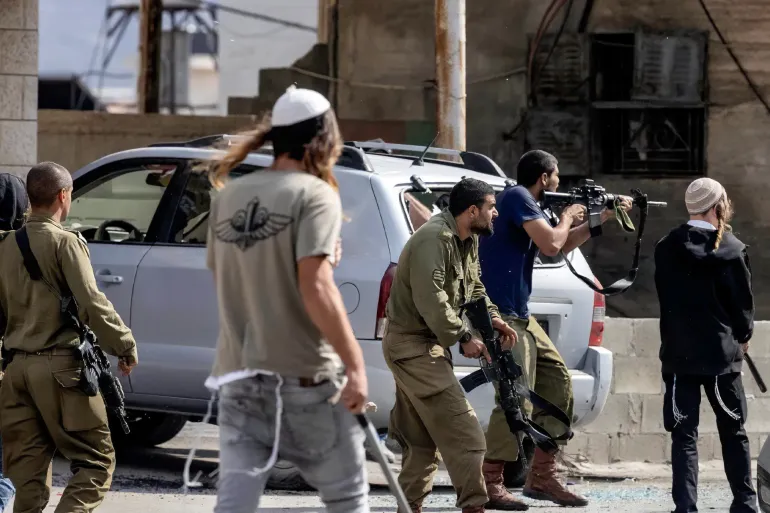
Palestinians are increasingly targeted by Israeli settlers often under the protection of Israeli soldiers and with the backing of Prime Minister Benjamin Netanyahu’s government who aim to drive them out. The United Nations has warned that the West Bank is now facing its worst humanitarian crisis since 1967, due to widespread demolitions and mass displacement, particularly in refugee camps.
According to UN estimates, more than 37,000 Palestinians were displaced from their homes in the West Bank in 2025 alone a record high since data collection began. But how, when, and why has this escalation occurred?
Displacement Intensifies After October 7
The escalation of settler violence and forced displacement in the West Bank intensified dramatically following the October 7, 2023, outbreak of war in Gaza. As global attention fixated on the situation in Gaza, Israeli settlers seized the moment to step up their attacks on Palestinian towns and villages.
Human rights organizations documented the complete depopulation of at least seven Palestinian communities in October and November 2023, due to armed settler assaults carried out with the direct involvement and protection of Israeli forces.
A recent Human Rights Watch report revealed that settlers physically assaulted and tortured Palestinians, stole their livestock and belongings, and threatened them with death if they did not leave scenes reminiscent of the ethnic cleansing that accompanied the 1948 Nakba.
As a result of this systematic violence, more than 1,200 Palestinians nearly half of them children fled from rural communities in the first few months following the war on Gaza. The UN confirms that settler attacks during this period reached the highest level since monitoring began in 2006.
And it wasn’t just settler militias. Reports show that the Israeli army was present in nearly half of all settler attacks in late 2023, and in some cases, actively participated in the eviction of Palestinians from their homes.
Human Rights Watch documented multiple incidents in which Israeli soldiers accompanied settlers during village raids, detaining and beating residents at gunpoint to coerce them into fleeing. In one case in southern Hebron, settlers and soldiers destroyed every home in the village of Khirbet Zanuta, forcing the entire population to flee on October 30, 2023.
Similar expulsions occurred in areas like Khirbet al-Ras al-Ahmar and al-Qanub in Hebron, as well as two Bedouin communities in Ramallah (Ein al-Rashash and Wadi al-Seeq).
Amid this escalation, observers warned that Israeli authorities are exploiting the war in Gaza as a smokescreen to redraw the demographic map of the West Bank through a systematic and largely unreported campaign of displacement.
The Destruction of Refugee Camps
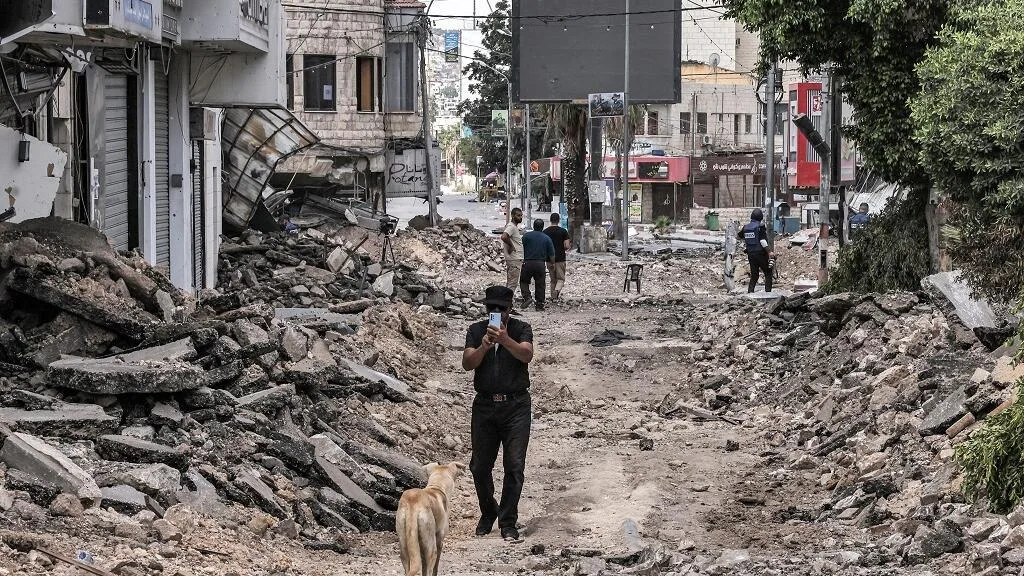
At the start of 2025, the Israeli military launched a large-scale offensive across northern and central West Bank cities and refugee camps. The operation dubbed “Iron Wall”—targeted refugee camps in Jenin, Tulkarem, and surrounding areas, under the pretext of pursuing armed resistance. However, it involved unprecedented levels of destruction.
Entire sections of the camps were flattened, forcing tens of thousands of residents to flee.
A year into the offensive, UNRWA Commissioner-General Philippe Lazzarini confirmed that nearly 33,000 Palestinian refugees remain in a state of forced displacement from northern West Bank camps particularly Jenin, Nur Shams, and Tulkarem. He noted that the Israeli military “demolished vast swaths of these camps, drastically limiting their ability to recover.”
Hundreds of refugee families lost their homes and possessions, with many now taking shelter in schools, temporary halls, or with relatives, amid a severe shortage of essential services like healthcare and education.
The West Bank has not witnessed displacement on this scale since the 1967 Naksa. UNRWA estimates that the total number of Palestinians displaced by Israeli military operations in 2025 alone has reached approximately 33,362 from the Jenin, Tulkarem, and surrounding camps.
This staggering figure reflects the consequences of a prolonged military campaign. For example, Jenin camp suffered its fiercest assault in July 2023, followed by repeated raids throughout 2024, and then a full-scale invasion in January 2025 marked as the longest and deadliest operation to date.
During this incursion, the Israeli military deployed bulldozers and armored vehicles to destroy nearly the entire camp’s infrastructure, including roads, homes, and public facilities.
UNRWA reported that 12,557 Palestinians were displaced from Jenin camp in 2025 alone, in addition to 20,805 from the Nur Shams and Tulkarem camps that same year.
While some displaced families have managed to return, many found their homes completely destroyed or uninhabitable rendering their displacement long-term, if not permanent.
The Palestinian Authority has accused Israel of using these operations to impose a new reality in the northern West Bank by emptying entire areas of refugees and expanding nearby settlements.
Entire Villages Erased
Beyond the refugee camps and major cities, settler violence has also targeted small, remote Palestinian rural communities especially those located near newly erected settlements.
International organizations report that entire Bedouin villages have disappeared from the map over the past two years due to settler terror.
Along the area between Ramallah and Jericho east of Ramallah and north of the Dead Sea some seven Bedouin communities totaling around 1,000 residents lived up until 2022.
By early 2025, only one remained: the village of al-Muarrajat, now home to just a few dozen families. All others including Ein Samia, Wadi al-Seeq, Ras al-Teen, and Ein al-Qabou have been emptied due to settler violence.
According to data from the Norwegian Refugee Council and Human Rights Watch, an accompanying infographic illustrates the Bedouin communities displaced by settler crimes, the populations that once lived there, and what—if anything—remains of them.
Official Complicity and Military Protection
Palestinians attribute the growing brazenness of settlers to the green light and support they receive from the Israeli government and military apparatus.
On one hand, the current far-right government includes ministers and settler leaders who openly advocate for expanding settlements and imposing Israeli sovereignty over the West Bank. This government has taken concrete steps to ensure that settlers enjoy near-total impunity.
According to the Israeli rights group Yesh Din, over 90% of settler attacks on Palestinians are closed without any charges being filed against the perpetrators.
This culture of impunity emboldens settlers, who know that Israeli soldiers rarely intervene often providing cover during attacks instead.
Numerous videos have documented soldiers standing by as settlers attack villages or even firing on Palestinians who attempt to defend their property.
On the other hand, the Netanyahu government has directly supported settler armament and the formation of local militias under the guise of “self-defense.” Following the October 7 attacks, the Israeli military called up 5,500 reservist settlers and tasked them with “regional defense” duties in the West Bank.
Additionally, Israeli authorities distributed 7,000 rifles to settlers and so-called “civil guard units” stationed in settlements and outposts.
Israeli media admitted that among these recruits were settlers with criminal records for previous offenses against Palestinians—now officially armed and deployed on the ground.
In parallel, 2023 also saw the Israeli government legalize dozens of settlement outposts that were previously deemed “illegal,” even under Israeli law, and pour public funds into their development connecting them to road and power networks.
On the ground, the picture is grim: a silent war aimed at reengineering the West Bank’s demography one eviction at a time.
While the world remains fixated on Gaza or other global developments, Palestinian families are being expelled under cover of night, their villages erased from existence in scenes reminiscent of past catastrophes.