NoonPost NoonPost

NoonPost

  • Home
  • Politics
  • Economy
  • Society
  • Culture
  • Files
  • Long Reads
  • Podcast
AR
Notification Show More
نون بوست
“There Are Nights I Can’t Close My Eyes”: How Gazans Are Living in Homes on the Brink of Collapse
نون بوست
From al-Jolani to Ahmad al-Shara: The Evolution of Syria’s New Leader
نون بوست
When Political Islam Receded in Egypt: Who Filled the Void?
نون بوست
An Extension of Genocide: Gaza’s Detainees Speak Out
نون بوست
A Tightrope Between Survival and Sovereignty: The Syrian Government Faces Normalization Pressures
نون بوست
American Aircraft Carriers: Has the Era of “100,000 Tons of Diplomacy” Ended?
نون بوست
U.S. Regime‑Change Policies: Why They Are Destined to Fail
نون بوست
Transformations of Israeli Judaism: Between the Victim Complex and the Colonizer’s Doctrine
نون بوست
The Gulf’s Balancing Act: Iran, Israel, and Hidden Links
نون بوست
Iraq–Turkey Oil Export Treaty: Why Did Ankara Cancel It After 52 Years?
نون بوست
Syria’s Northeast on Edge: QSD Between Ankara and Damascus
نون بوست
Has Europe Changed Its Stance on Israel… or Just Its Language?
NoonPost NoonPost
AR
Notification Show More
نون بوست
“There Are Nights I Can’t Close My Eyes”: How Gazans Are Living in Homes on the Brink of Collapse
نون بوست
From al-Jolani to Ahmad al-Shara: The Evolution of Syria’s New Leader
نون بوست
When Political Islam Receded in Egypt: Who Filled the Void?
نون بوست
An Extension of Genocide: Gaza’s Detainees Speak Out
نون بوست
A Tightrope Between Survival and Sovereignty: The Syrian Government Faces Normalization Pressures
نون بوست
American Aircraft Carriers: Has the Era of “100,000 Tons of Diplomacy” Ended?
نون بوست
U.S. Regime‑Change Policies: Why They Are Destined to Fail
نون بوست
Transformations of Israeli Judaism: Between the Victim Complex and the Colonizer’s Doctrine
نون بوست
The Gulf’s Balancing Act: Iran, Israel, and Hidden Links
نون بوست
Iraq–Turkey Oil Export Treaty: Why Did Ankara Cancel It After 52 Years?
نون بوست
Syria’s Northeast on Edge: QSD Between Ankara and Damascus
نون بوست
Has Europe Changed Its Stance on Israel… or Just Its Language?
Follow US

The Fate of Egypt’s January Generation in a Lost Decade

عبد الحميد أحمد
Ahmed Abdelhalim Published 26 March ,2026
Share
نون بوست
نون بوست

The experience of the Arab Spring generation stands as one of the most profound historical ruptures and complex socio-political transformations in the modern history of the Eastern Mediterranean. In less than a decade, this generation moved from being a central political actor seeking to forge a new social contract based on dignity, justice, and human rights to a fragmented mass subjected to systematic “recycling” by both regional and international systems.

The breakdown of the January moment in Egypt was not merely a temporary political setback or a localized defeat; it marked the launch of a comprehensive engineering project led by counter-revolutionary forces. This project sought not only to suppress protest but to dismantle the “core nuclei” of this generation and redirect its energies almost entirely outside the political arena.

The rebellious citizen, who once broke the barrier of fear in the streets, was recast as raw material to be consumed in alternative economic and security tracks. Roles and boundaries were redefined in ways that ensured the continuity of authoritarian regimes and safeguarded the interests of regional and global powers.

This article attempts to deconstruct the mechanisms through which this generation was contained how it was transformed from an agent of reform or revolution into numbers in exile records, cheap labor in the global market, or silent bodies in their own homelands, crushed by the “dangerous trade-off” between security and freedom.

Dismantling of the Regional Order

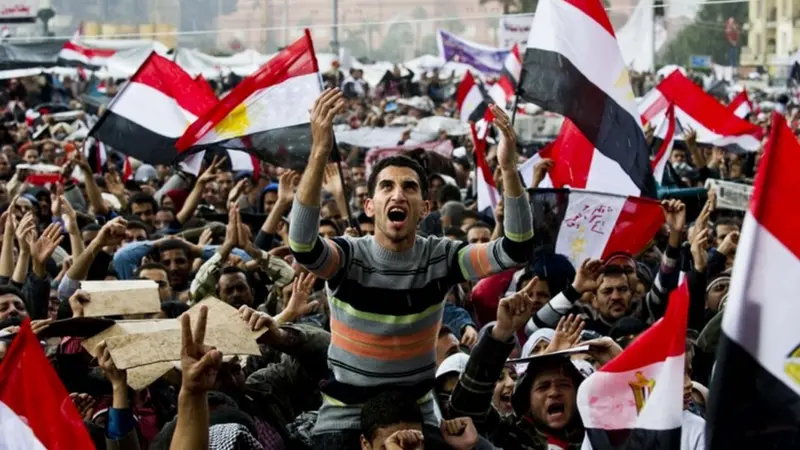
Post-2013, the regional order adopted a calculated strategy of fragmentation, designed to eliminate any possibility of cross-border collective action. Within this framework, the phenomenon of “Liquid Alliances” emerged as a central instrument for managing the phase pragmatic, temporary partnerships devoid of ideological or institutional commitments, unified solely by the goal of managing conflicts to prevent the rise of democratic forces, especially those linked to political Islam.

Traditional frameworks of Arab joint action, notably the Arab League—now impotent—were replaced by security coalitions led by the UAE, Saudi Arabia, Egypt, and Jordan. These alliances worked to dry up sources of popular mobilization and criminalize protest under the banner of “counterterrorism.”
نون بوست

This approach stemmed from a structural anxiety and an ever-present fear of change, leading regimes to adopt a strategy of “destruction followed by abandonment of internal conflicts,” where managed chaos became a tool of control and external security intervention a precondition for sustaining fragile political life.

These partnerships, along with brutal domestic repression especially in Egypt, Saudi Arabia, and the UAE contributed to the erosion of civil society and the creation of hostile economic environments. Young people’s energies were redirected toward proxy wars in Syria, Libya, and Yemen, and later in Sudan, transforming them from advocates of democracy into instruments in broader geopolitical conflicts.

In other words, this generation was “recycled” as fuel for regional conflicts or as bargaining chips in negotiations between regional powers and Europe. This effectively emptied the Arab Spring of its revolutionary and moral content, reducing it to a crisis of “managing massive human flows.”

The regional order didn’t merely confront the generation of change head-on; it restructured the region itself, leaving no space for future political action only pathways to migration or enrollment in transnational armed groups serving cross-border agendas.

The Carceral State and the Making of the “Silent Citizen”

Domestically particularly under the military regime that emerged in Egypt after the July 2013 coup we witnessed the gradual formation of what French philosopher Michel Foucault termed the “Carceral State”: a system that extends beyond prison walls to encompass the entire public sphere, with the modern state at its center.

This state is built upon a strategy of “political extermination” targeting all forms of independent organization, offering society a perilous bargain: security and stability in exchange for the complete abandonment of political rights. Here, the “silent citizen” emerges not as a passive absence of opinion, but as a form of individual resilience imposed by a climate of fear, reinforced by an enormous legal and media arsenal that demonizes activists and criminalizes any criticism of the president or state institutions.

Silence thus became a reward, and the ideal citizen is now one who is detached from public affairs, focused solely on survival amid harsh neoliberal policies that have impoverished the middle class—the same class that was a major engine of the January revolution.

Repression did not stop at the individual. It extended to the families of activists through “proxy punishment” or contagious repression, resulting in what has been termed the “depoliticization” of households. Violations against relatives created internal pressures on youth to withdraw from public life, eroding social capital and dismantling the networks of solidarity that had fueled the uprisings.

At the same time, widespread NGOization of what remained of public activism turned many activists into professionalized “employees” of international organizations bound by technocratic language and funding agendas that distanced them from genuine political struggle and severed their connection with the broader public.

This form of political exit, though offering some individuals relative protection, served to strip the movement of its revolutionary charge and transform it into bureaucratic projects and reports, in a global system increasingly indifferent to democratic and human rights values.

These accumulated pressures gave rise to widespread political depression among Arab youth, with rising levels of anxiety, despair, and a sense of futility especially among those aged 18 to 30. This collapse in morale is not a mere byproduct; it is a central pillar of the counter-revolutionary strategy, which aims to discipline consciousness and convince this generation that any attempt at change inevitably leads to either collective ruin or personal imprisonment.

Thus, regimes succeeded in transforming the 2011 “energy of hope” into energy of fear or indifference, allowing the system to persist without constant confrontation where society itself becomes the enforcer of self-surveillance.

Transnational Exile

Leaving one’s homeland no longer guarantees escape from state control; rather, it marks entry into a new phase of economic and security “recycling” beyond borders. Today, we live in the golden age of transnational repression, as authoritarian regimes pursue their opponents abroad through digital surveillance, abuse of Interpol red notices, and direct threats of assassination or abduction. They even erase dissidents from official records by denying the renewal of essential documents.

Exile has thus transformed from a potential site of resistance into a battlefield ruled by fear, where exiles are often silenced to protect their families back home, turning diaspora communities into withdrawn and isolated groups that prefer difficult individual integration over collective opposition.

Economically, the Arab Spring generation has been absorbed into the global labor market as cheap labor, raw material, or exploited talent. Massive youth and brain drains from Egypt, Syria, and Lebanon have created enormous losses in national human capital, while the Global North benefits from these ready-made energies without bearing the costs of their education or training.

This reality has entrenched a chronic state of waiting for Arab youth, stuck in a kind of social adolescence, unable to start families or build stable futures in their home countries. This drives them to chase any opportunity for migration, even through illegal routes or smuggling networks that trade in their bodies or through recruitment into wars that have nothing to do with their cause.

Reducing the refugee or migrant to a mere “economic unit” reflects the internationalization of the Arab Spring’s failure, transforming it into a bureaucratic file in Brussels or Washington a matter of managing these human masses without allowing them any political impact, whether locally, regionally, or globally. In some of the most tragic cases, they have been weaponized as demographic bargaining chips to pressure the European Union.

Thus, the cycle of “fragmentation and recycling” is complete: those who remain at home are silenced or imprisoned, while those who flee are economically drained or hunted down leaving the regional order insulated from any real threat by the very generation that once held the keys to change.

Ultimately, the fate of Egypt’s January generation should not be read as a total defeat, but as the story of a suppressed potential stifled by a deliberate regional strategy of slow, methodical dismantling rather than brute repression alone.

The counter-revolution succeeded in redirecting this generation’s energy away from collective action and national projects, toward individualized survival whether in the heavy silence of the “Second Republic” or in fragile functional integration across the diaspora, under a new social contract based on suspended security and consumption, not citizenship and rights.

Yet this suppression does not equate to extinction. The revolutionary experience despite its unraveling has reshaped collective consciousness in ways that cannot be erased by force or technology.

The January generation, even amid fragmentation and retreat, still carries in its political memory the “genes of change” born in the squares. Meanwhile, the regimes remain incapable of addressing the structural crises that sparked the initial uprising.

Thus, the real bet lies not in reclaiming the past, but in reconstructing these scattered selves in exile and in silent homes into new solidarity networks capable of penetrating the carceral state and reclaiming agency beyond the maps drawn by the regional order to reproduce its dominance.

Download this article as PDF
Share this Article
Facebook Twitter Whatsapp Whatsapp Telegram Email Copy Link
عبد الحميد أحمد
By عبد الحميد أحمد صحيفة الرأي العام السودانية
Follow:
Previous Article نون بوست Where Are the Political Actors of the January Revolution?
Next Article نون بوست Frenemies: What’s Changed in Riyadh’s Rhetoric Toward Abu Dhabi?

Read More

  • U.S. Regime‑Change Policies: Why They Are Destined to Fail U.S. Regime‑Change Policies: Why They Are Destined to Fail
  • The Gulf’s Balancing Act: Iran, Israel, and Hidden Links
  • Iraq–Turkey Oil Export Treaty: Why Did Ankara Cancel It After 52 Years?
  • Syria’s Northeast on Edge: QSD Between Ankara and Damascus
  • Has Europe Changed Its Stance on Israel… or Just Its Language?
part of the design
NoonPost Weekly Newsletter

You May Also Like

U.S. Regime‑Change Policies: Why They Are Destined to Fail

U.S. Regime‑Change Policies: Why They Are Destined to Fail

إسراء سيد Esraa sayed 8 April ,2026
The Gulf’s Balancing Act: Iran, Israel, and Hidden Links

The Gulf’s Balancing Act: Iran, Israel, and Hidden Links

فريق التحرير Noon Post 8 April ,2026
Iraq–Turkey Oil Export Treaty: Why Did Ankara Cancel It After 52 Years?

Iraq–Turkey Oil Export Treaty: Why Did Ankara Cancel It After 52 Years?

فريق التحرير Noon Post 8 April ,2026

أحمد منصور تغلب على السيسي بهدف مقابل لا شيء

ديفيد هيرست
ديفيد هيرست Published 23 June ,2015
Share
6201522211434973

اعتبر الكاتب الصحفي البريطاني ديفيد هيرست أن أحمد منصور انتصر على زعيم الانقلاب عبد الفتاح السيسي الذي سعى لاعتقاله في ألمانيا، معتبرا أن التهم التي وجهت إليه كانت مفبركة من النظام المصري.

وفي مقالة له، على موقع هافنغتون بوست، أشار هيرست إلى تغطية أحمد منصور لمعركة الفلوجة عام 2004، واصفا بأنها “أزعجت المؤسسة العسكرية الأمريكية” التي اشترطت خروج أحمد منصور لوقف إطلاق النار، وبحصوله على أعلى أوسمة صحفيي الحرب عبر انتقاد دونالد رامسفيلد لتقاريره، بحسب تعبير هيرست.

وأضاف هيرست بأن التهمة التي اعتقل أحمد منصور بسببها مفبركة، وتمت فبركتها في مصر، حيث “يعلق الناس على المشانق على جرائم يستحيل أن يكونوا قد ارتكبوها لأنهم كانوا حين وقوعها وراء القضبان في السجون”، مشيرا إلى أن السلطات الألمانية تدرك ذلك جيدا، حيث تعمدت المستشارة أنغيلا ميركيل تعمدت انتقاد لجوء مصر إلى عقوبة الإعدام أثناء المؤتمر الصحفي الذي عقدته مع السيسي حينما كان في ألمانيا.

وتابع هيرست بأنه “وبالرغم من ذلك جرى اعتقال أحمد منصور بناء على مذكرة توقيف أعدت في القاهرة، وكان أحمد منصور، الذي يحمل الجنسيتين المصرية والبريطانية قد أدين غيابيا بتهمة ممارسة التعذيب بحق أحد المحامين في ميدان التحرير بالقاهرة أثناء ثورة يناير 2011، وهي تهمة بلغت من السخافة حدا جعلها تنهار عند أول اختبار”.

وأشار هيرست أن البوليس الدولي (الإنتربول) رفض قبول التهمة، وصدر عنه في تشرين الأول/ أكتوبر ما يفيد بأن مذكرة حمراء تطالب بتسليم أحمد منصور لم تستجب للقواعد المعمول بها لديهم، موضحا بذلك أن مذكرة التوقيف التي اعتقل أحمد منصور بموجبها قد أعدت من قبل المدعي العام الألماني نفسه بالتشاور مع القاهرة، على حد قوله، ضمن حملة السيسي ضد صحفيي الجزيرة.

واعتبر هيرست بأن الإفراج عن منصور اليوم يعدّ نصرا معتبرا، مستدركا أنه “يظل نصرا محدودا، فهناك الكثيرون غيره ممن يتهددهم الخطر ذاته، وما تزال ألمانيا من البلدان التي قد تستجيب لطلبات المحاكم المصرية الفاسدة”.

التسريبات 

وقال الكاتب البريطاني المخضرم إن “من كان يظن بأن المحاكم في مصر مستقلة عن السلطة التنفيذية فليستمع إلى أشرطة التسريبات، التي ثبتت صدقيتها، والتي توثق الحوارات التي كانت تجري في مكتب السيسي نفسه حول كيفية تلفيق الدليل المتعلق باعتقال الرئيس محمد مرسي”، ناقلا التحذير المسرب للواء ممدوح شاهين، الذي وجهه إلى مدير مكتب السيسي عباس كامل من أن القضية المرفوعة ضد مرسي مهددة بالانهيار؛ لأنه كان محتجزا في معسكر للجيش، وليس في سجن تديره وزارة الداخلية، حيث إن ذلك يعد إجراء غير شرعي بموجب القانون المصري.

وفي الشريط المسجل يمكن سماع اللواء شاهين يقول: “المدعي العام يطالب بتعديل تاريخ الاعتقال بحيث يصبح في فترة سابقة أو شيء من ذلك”، مضيفا أن “على وزير الداخلية أن يقابلني غدا في مصلحة السجون، ويعطيني اسم المبنى، ونذكر اسما توصيفيا، على سبيل المثال – بناية كذا وكذا هي التي ستذكر وليس الوحدة العسكرية”.

واعتبر هيرست أن |هذه فقط لمحة مما يجري حقيقة في مصر، وهي عالم مختلف تماما عن الصورة الاستعراضية التي سيحصل عليها حاكمها عندما يرحب به على باب مقر رئيس الوزراء البريطاني في لندن”.

خلل قضائي دولي

وأضاف هيرست بأن هذه الأحداث تدل أن “ثمة خلل هنا. فقراءة بريطانيا الحالية لالتزاماتها بموجب الولاية القضائية الدولية تسمح لأشخاص مثل السيسي ووزرائه بدخول ومغادرة الولاية القضائية لنظامنا القضائي وهم يتمتعون بالحصانة ضد المساءلة والمقاضاة – وهم نفس الأشخاص الذين كانوا في موضع المسؤولية والتحكم وإصدار الأوامر يوم ارتكبت المذابح في القاهرة في أغسطس من عام 2013، والذين يتوفر بحقهم للوهلة الأولى دليل دامغ بتورطهم في ارتكاب جرائم ضد الإنسانية”، متابعا بالقول بأن “هذا النظام القضائي ذاته يسمح لمجرمي الحرب هؤلاء بتعقب وملاحقة صحفيين مثل أحمد منصور”.

واعتبر هيرست أن العدالة الدولية في بريطانيا تخضع لمتطلبات المصلحة السياسية، موضحا أنه “لا الشرطة البريطانية ولا دائرة المدعي العام تسارع بإصدار مذكرات توقيف عندما يقدم لها مثل هذا الدليل، بل تستمر تحقيقاتهم ببطء شديد، وتستغرق عاما تلو الآخر بحجة فحص الدليل، وهم في واقع الأمر يخلون عن عمد بالتزاماتهم تجاه الولاية القضائية الدولية”.

واعتبر هيرست أن السيسي يدرك ذلك جيدا، إذ “حينما أعلن عن زيارته هبت عاصفة من الاستنكار في ألمانيا. وأعلن حينها نوربيرت لاميرت، رئيس البرلمان الألماني، عن إلغاء اجتماع مع السيسي كان مخططا له، وذلك احتجاجا على سجل نظامه في مجال حقوق الإنسان”، ما جعل القضاء المصري يصدر أمرا بتأجيل جلسة محكمة لتأييد حكم الإعدام الذي كان قد صدر بحق محمد مرسي.

وتابع “ما أن تمت الزيارة واكتملت حتى عقدت المحكمة وصدر تأييد حكم الإعدام بحق الدكتور مرسي، ثم لم يلبث السيسي بعيدا حتى تأكدت زيارته إلى بريطانيا”.

ونقل هيرست دفاع صحيفة التايمز البريطانية الأسبوع الماضي عن زيارة السيسي، التي قالت “إنها ينبغي أن تمضي قدما؛ لأنه إذا لم تكن لبريطانيا علاقة استراتيجية بالسيد السيسي، فإنها ستتخلى بذلك عن أي فرصة للضغط عليه ليستأنف الحياة الديمقراطية وليفتح مؤسسات البلاد. وهي بذلك ستتخلى عن حاكم مصالحه تتطابق مع مصالح بريطانيا، وأعداؤه يشكلون تهديدا مميتا لها”.

واختتم هيرست مقابله بالقول: “ولكن، للأسف، الموضوع عكس ذلك تماما. من شأن تقبل ميركيل وكاميرون للسيسي وتعاملهما معه أن يطيل معاناة مصر، وأن يزيد من احتمال التداعي الكامل من الناحية الاجتماعية لمصر”، معتبرا أن “محاباتهما لن يكون لها أي تأثير على أوضاع حقوق الإنسان في البلاد”.

وانتقد هيرست استقبال كاميرون للسيسي، قائلا إنه بهذا الاستقبال لا يساعد مصر، “بل يساعد حاكمها الملطخة يداه بالدماء، ويتواطأ معه في جرائمه”، على حد قوله.

المصدر: هافنغتون بوست – ترجمة عربي 21

TAGGED: اعتقال أحمد منصور ، اعتقال الصحفيين
TAGGED: انقلاب مصر
Download this article as PDF
Share this Article
Facebook Twitter Whatsapp Whatsapp Telegram Email Copy Link
ديفيد هيرست
By ديفيد هيرست مدير تحرير ميدل إيست آي، وكبير الكتاب في الجارديان البريطانية سابقاً
Follow:
Next Article نون بوست The Stigma of “ISIS”: A Heavy Legacy Haunting Women and Children of Former Members

Read More

  • U.S. Regime‑Change Policies: Why They Are Destined to Fail U.S. Regime‑Change Policies: Why They Are Destined to Fail
  • The Gulf’s Balancing Act: Iran, Israel, and Hidden Links
  • Iraq–Turkey Oil Export Treaty: Why Did Ankara Cancel It After 52 Years?
  • Syria’s Northeast on Edge: QSD Between Ankara and Damascus
  • Has Europe Changed Its Stance on Israel… or Just Its Language?
part of the design
NoonPost Weekly Newsletter
dark

An independent media platform founded in 2013, rooted in slow journalism, producing in-depth reports, analysis, and multimedia content to offer deeper perspectives on the news, led by a diverse young team from several Arab countries.

  • Politics
  • Society
  • Rights & Liberties
  • Opinions
  • History
  • Sports
  • Education
  • Technology
  • Economy
  • Media
  • Arts & Literature
  • Entrepreneurship
  • Travel
  • Cinema & Drama
  • Food
  • Health
  • Culture
  • Latest Reports
  • Files
  • Long Reads
  • Interviews
  • Podcast
  • Interactive
  • Encyclopedia
  • In Pictures
  • About Us
  • Our Writers
  • Write for Us
  • Editorial Policy
  • Advanced Search
Some rights reserved under a Creative Commons license

Removed from favorites

Undo
Go to mobile version