NoonPost NoonPost

NoonPost

  • Home
  • Politics
  • Economy
  • Society
  • Culture
  • Files
  • Long Reads
  • Podcast
AR
Notification Show More
نون بوست
“There Are Nights I Can’t Close My Eyes”: How Gazans Are Living in Homes on the Brink of Collapse
نون بوست
From al-Jolani to Ahmad al-Shara: The Evolution of Syria’s New Leader
نون بوست
When Political Islam Receded in Egypt: Who Filled the Void?
نون بوست
An Extension of Genocide: Gaza’s Detainees Speak Out
نون بوست
A Tightrope Between Survival and Sovereignty: The Syrian Government Faces Normalization Pressures
نون بوست
American Aircraft Carriers: Has the Era of “100,000 Tons of Diplomacy” Ended?
نون بوست
U.S. Regime‑Change Policies: Why They Are Destined to Fail
نون بوست
Transformations of Israeli Judaism: Between the Victim Complex and the Colonizer’s Doctrine
نون بوست
The Gulf’s Balancing Act: Iran, Israel, and Hidden Links
نون بوست
Iraq–Turkey Oil Export Treaty: Why Did Ankara Cancel It After 52 Years?
نون بوست
Syria’s Northeast on Edge: QSD Between Ankara and Damascus
نون بوست
Has Europe Changed Its Stance on Israel… or Just Its Language?
NoonPost NoonPost
AR
Notification Show More
نون بوست
“There Are Nights I Can’t Close My Eyes”: How Gazans Are Living in Homes on the Brink of Collapse
نون بوست
From al-Jolani to Ahmad al-Shara: The Evolution of Syria’s New Leader
نون بوست
When Political Islam Receded in Egypt: Who Filled the Void?
نون بوست
An Extension of Genocide: Gaza’s Detainees Speak Out
نون بوست
A Tightrope Between Survival and Sovereignty: The Syrian Government Faces Normalization Pressures
نون بوست
American Aircraft Carriers: Has the Era of “100,000 Tons of Diplomacy” Ended?
نون بوست
U.S. Regime‑Change Policies: Why They Are Destined to Fail
نون بوست
Transformations of Israeli Judaism: Between the Victim Complex and the Colonizer’s Doctrine
نون بوست
The Gulf’s Balancing Act: Iran, Israel, and Hidden Links
نون بوست
Iraq–Turkey Oil Export Treaty: Why Did Ankara Cancel It After 52 Years?
نون بوست
Syria’s Northeast on Edge: QSD Between Ankara and Damascus
نون بوست
Has Europe Changed Its Stance on Israel… or Just Its Language?
Follow US

Evacuations and Fortifications: How Israel Is Expanding the “Yellow Line” in Gaza

فريق التحرير
Noon Post Published 26 March ,2026
Share
نون بوست
نون بوست
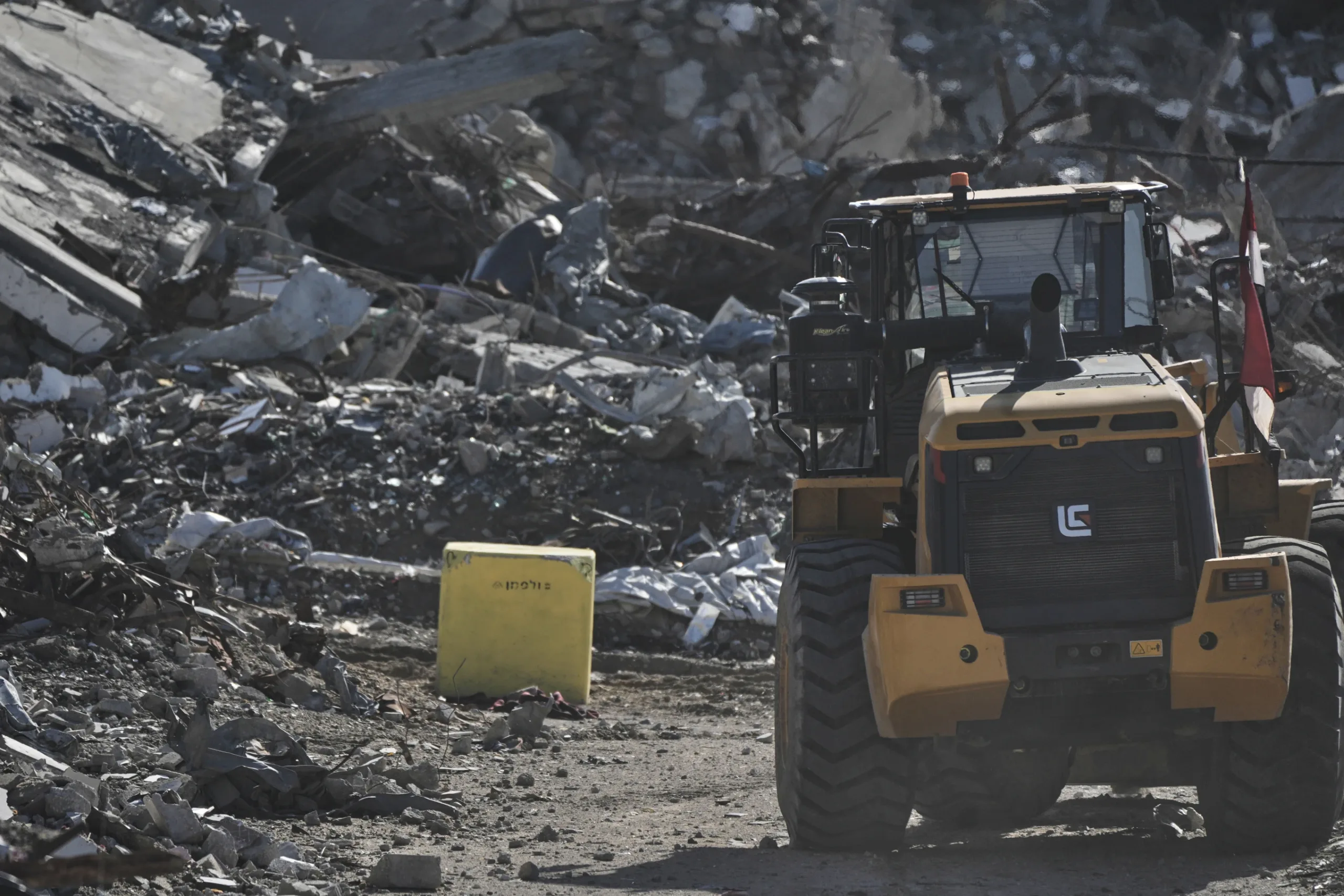
A yellow concrete block marks the “yellow line” separating the areas under occupation from other places.

In a dangerous development the first of its kind since the fragile ceasefire began in Gaza on January 19, 2026, the Israeli military dropped leaflets east of Khan Younis giving dozens of Palestinian families only moments to leave their homes.

The evacuation orders in the southern town of Bani Suheila marked a de facto expansion of Israeli control inside the enclave, sparking fears of a continued incremental advance of Israeli lines despite the ceasefire agreement.

This move coincided with ongoing reports of repeated expansions of the so-called withdrawal boundary, or “yellow line,” since the truce began intensifying internal displacement and exacerbating the suffering of Palestinians trapped in an ever-shrinking geographic space.

Evacuation Orders

The leaflets, printed in Arabic, Hebrew, and English, carried a terse message: “Urgent Message: This area is under the control of the Israeli army. You must evacuate immediately.”

Local residents reported that the warning targeted at least 70 families living in tents and homes already partially damaged in earlier attacks. These families were forced to hastily gather their belongings and flee westward, away from the danger zone.

The Israeli military later claimed there was no intent to forcibly displace civilians, contradicting media reports. According to its spokesperson, the leaflets were meant to warn civilians not to cross the yellow demarcation line.

A military spokesperson confirmed the leaflets were dropped east of Khan Younis, stating they followed the observation of several Palestinians allegedly attempting to cross into the “Israeli” side of the line.

However, the explicit wording of the leaflets which contained a direct order to evacuate left residents feeling it was a serious warning of forced displacement, particularly given the precedent during previous stages of the war when such leaflets often preceded attacks and invasions, followed by mass displacement.

The Bani Suheila incident was just the latest in a series of on-the-ground expansions carried out by Israeli forces since the ceasefire took effect.
نون بوست
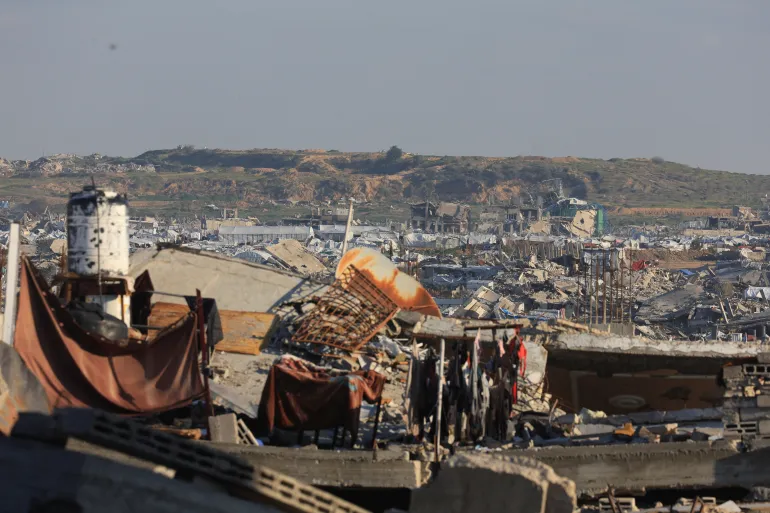
A general view of the destroyed homes in the areas designated by the Israeli army as the “yellow line” east of Gaza City (Reuters)

Mahmoud, a father of three from the area, said they were once again forced to flee west following the recent warning. “This is probably the fourth or fifth time the Israelis have pushed their yellow line forward since last month,” he said.

He confirmed that the army has, each time, carved out a strip between 120 to 150 meters into previously Palestinian-held territory, “swallowing more land.”

Fortifications and Concrete Blocks

The historic al-Tuffah neighborhood in eastern Gaza City offered another stark example of Israel’s attempts to entrench a new on-the-ground reality during the ceasefire period.

The Israeli army used yellow concrete blocks to adjust its withdrawal line, as shown by satellite images that reveal the initial placement of the blocks along the original boundary, followed by a push some 200 meters deeper into the neighborhood in December 2025.

Following this, the military leveled the area and demolished no fewer than 40 residential buildings within the newly expanded zone, turning large portions of the neighborhood into scattered rubble.

Only a few buildings remain standing between the newly placed blocks and the original yellow ceasefire line, offering a visual measure of the destruction caused by the expanding buffer zone at the expense of civilian housing.

In the south, Khan Younis was not spared from similar actions to solidify these new lines. Recent imagery shows Israeli forces installed forward-positioned concrete blocks extending roughly 390 meters and another set 220 meters beyond the agreed-upon line east of Khan Younis in December.

This was accompanied by the destruction of multiple buildings in the area and the dismantling of two displaced persons camps that had sheltered hundreds of families fleeing earlier fighting.

Along the length of the yellow line, the Israeli army has constructed at least six large military fortifications near its control boundaries some as close as 264 meters from the demarcation line in Beit Hanoun in the north to house troops and secure the newly expanded zones.

Despite these actions, the Israeli military insists it has not unilaterally altered the lines, claiming that the placement of blocks falls under “temporary field arrangements” to ensure troop safety, and that the shifting locations are due to terrain and logistical challenges on the ground.

Mounting Humanitarian Fallout

These repeated expansions have deepened Gaza’s humanitarian crisis, already dire after more than two years of war.

Over two million Palestinians are now confined to just one-third of Gaza’s original area, most of them living in tents or partially destroyed buildings with minimal access to shelter or basic services.

According to the Gaza Government Media Office, the Israeli army has extended its control east of Khan Younis five times since the ceasefire began, displacing at least 9,000 Palestinians from that area alone.

The most recent incursion, following the leaflet drop in Bani Suheila, forced around 3,000 people to flee. The media office described this as part of a systematic campaign of intimidation and pressure aimed at pushing civilians away from their communities.

The ongoing push of the yellow line westward has displaced thousands, compressing Gaza’s entire population into a narrow coastal strip that now comprises just 30% of the territory’s original landmass, according to an official Hamas statement.

Local officials warn that recent waves of displacement have further deteriorated the already overwhelmed shelter infrastructure.

The makeshift shelters and crumbling infrastructure in the crowded coastal zone are under immense pressure, with few options for relocation or return, as many of the original hometowns now lie behind newly imposed Israeli lines.

Toward Permanent Occupation

These developments have sparked local and international warnings that Gaza may be heading toward de facto partition and the entrenchment of a long-term Israeli occupation under the guise of security.

Palestinian officials say the new reality effectively enforces a forced separation of areas now under Israeli control. They caution that future reconstruction efforts may be limited to these Israeli-controlled zones, while the rest of Gaza remains devastated and overcrowded, with no clear horizon.

Meanwhile, official statements in Tel Aviv have revealed clear intentions to maintain a permanent military presence inside Gaza.

Israeli Defense Minister Israel Katz has repeatedly declared that Tel Aviv will not fully withdraw from Gaza, stating that even in the second phase of the ceasefire agreement, Israel will retain a broad security corridor within the enclave “to protect nearby settlements.”

This stance blatantly violates the war-ending roadmap, which stipulates freezing combat lines, prohibiting expansion, and banning any reoccupation or construction of new settlements in Gaza.

As implementation of the ceasefire’s next phase begins, skepticism is growing over Gaza’s future due to Israel’s delays in withdrawal and its claim that pullback depends on disarmament.

Amid the reality imposed by Israel’s military power on the ground, Palestinians fear that temporary arrangements could harden into permanent borders, leaving the vast majority of Gaza’s population trapped in a barren, resource-starved enclave while Israel tightens its grip on what remains of the territory.

Download this article as PDF
Share this Article
Facebook Twitter Whatsapp Whatsapp Telegram Email Copy Link
فريق التحرير
By فريق التحرير تقارير يعدها فريق تحرير نون بوست.
Follow:
Previous Article نون بوست Selective Housing and Digital Surveillance: Inside the UAE’s Rafah Project
Next Article نون بوست Why Gulf States Fear the Fall of the Iranian Regime

Read More

  • U.S. Regime‑Change Policies: Why They Are Destined to Fail U.S. Regime‑Change Policies: Why They Are Destined to Fail
  • The Gulf’s Balancing Act: Iran, Israel, and Hidden Links
  • Iraq–Turkey Oil Export Treaty: Why Did Ankara Cancel It After 52 Years?
  • Syria’s Northeast on Edge: QSD Between Ankara and Damascus
  • Has Europe Changed Its Stance on Israel… or Just Its Language?
part of the design
NoonPost Weekly Newsletter

You May Also Like

U.S. Regime‑Change Policies: Why They Are Destined to Fail

U.S. Regime‑Change Policies: Why They Are Destined to Fail

إسراء سيد Esraa sayed 8 April ,2026
The Gulf’s Balancing Act: Iran, Israel, and Hidden Links

The Gulf’s Balancing Act: Iran, Israel, and Hidden Links

فريق التحرير Noon Post 8 April ,2026
Iraq–Turkey Oil Export Treaty: Why Did Ankara Cancel It After 52 Years?

Iraq–Turkey Oil Export Treaty: Why Did Ankara Cancel It After 52 Years?

فريق التحرير Noon Post 8 April ,2026

هل يؤدي أسطول الحرية 3 رسالته؟

فريق التحرير
Noon Post Published 26 June ,2015
Share
marmara

أسطول الحرية 3 ( Freedom Flotilla‬ III) هو أسطول يتكون من 5 سفن وناشطين متعددي الجنسيات، إنطلق في 10 مايو 2015 من السويد ليتوقف في عدة مدن أوروبية وكان من المتتظر أن يكون الإنطلاق الرسمي من أثينا في اليونان في 23 و24 يونيو 2015 إلى قطاع غزة في فلسطين، قبل أن يتم تأجيله نظرا لسوء الأحوال الجوية.

ويتكون الأسطول من خمس سفن تحمل شخصيات سياسية واعتبارية، وستنطلق سفن منه من اليونان لتلتقي في عرض البحر بالسفينة السويدية التي انطلقت منذ فترة، وتحمل هذه السفن مساعدات رمزية مثل الألواح الشمسية بهدف الإشارة لأزمة الطاقة التي تعاني منها غزة بعد عشر سنوات من الحصار، فالهدف الأول للحملة ليس مجرد إيصال مساعدات للقطاع، بل وضع قضية الحصار على أولويات الأجندة السياسية الدولية؛ يأتي هذا الأسطول  بعد أسطول الحرية 1 في 2010، ثم أسطول الحرية 2 في 2011.

دعم واسع للأسطول

ويشارك في هذا الأسطول عدد من الفنانين والمثقفين والسياسيين والرياضيين من العالم، على رأسهم الرئيس التونسي السابق المنصف المرزوقي، والناشط الأسترالي روبرت مارتين والبرلماني الأردني يحيى السعود، والراهبة الإسبانية تيريزا فوركادس، والناشط الكندي روبرت لوف لايس إضافة للنائب العربي في الكنيست باسل غطاس.

وقد أقيمت عدة وقفات في دول أوروبية لدعم هذا الأسطول كما وقع حوالي 100 نائب في البرلمان الأوروبي عريضة يدعمونه فيها ويدعون عبرها إلى رفع الحصار عن غزة وعدم التعرض له من قبل سلطات الإحتلال الإسرائيلي من بينهم نائب رئيس البرلمان ديمتريوس باباديموليس.

كماعقد نواب في البرلمان الأوروبي ندوة صحفية في 26 مايو 2015 أعلنوا فيها على دعمهم لأسطول الحرية في نسخته الثالثة. وفي السياق ذاته، إلتقى وفد من الحملة الأوروبية لكسر الحصار عن غزة مع وزيرة الخارجية السويدية مارغو والستروم، أين بحثوا سبل دعم الأسطول وكذلك الضغط على كل الأطراف لتخفيف الحصار عن القطاع، وأكددت على افتخارها باعتراف بلادها قبل أشهر بدولة فلسطين.

كما قامت ساندرا وايت، النائبة في البرلمان الاسكتلندي، بتقديم  مشروع قرار لبرلمان بلادها لدعم أسطول الحرية 3 وجهود كسر الحصار عن غزة وذلك بهدف دعمه من محاولات الاعتراض، وزارت هيلفي لارسون، النائبة في البرلمان السويدي، مقر الحملة الأوروبية لكسر الحصار عن غزة في السويد وذلك لتعبر عن دعمها للأسطول وللحملة بصفة عامة.

وفي 19 يونيو 2015، وصلت السفينة ماريان لإيطاليا، وكان في استقبالها جمع كبير من المساندين، ومنهم ليولوكا أورلاندو رئيس بلدية مدينة باليرمو وعبر عن مساندة مدينته لحقوق الإنسان ودعم الجهود لرفع الحصار عن غزة.

الكيان الصهيوني يتوعد

من جهة أخرى، أكد الناطق باسم الخارجية الإسرائيلية عمانوئيل نحشون إصرار بلاده على منع أسطول ‘الحرية-3’ من الوصول إلى قطاع غزة.

وبرر نحشون قرار بلاده بأن غزة تحت حصار بحري أقره القانون الدولي، وأضاف أن الأسطول إذا كان يرغب في إيصال مساعدات إلى سكان غزة، فبإمكانه فعل ذلك عبر إسرائيل، غير أنه شكك في ذلك، معتبرا أن القائمين على الأسطول لديهم أغراض سياسية وليست إنسانية، وقال إن بلاده ستعيد القادمين في الأسطول إلى بلدانهم.

وبحسب مختصين في الشأن الإسرائيلي، تخشى دولة الإحتلال بشكل كبير تسيير هذه القوافل والأساطيل الهادفة لكسر الحصار المستمر على غزة وتتخبط في كيفية التعامل معها، كما أنها تخشى من التداعيات والأبعاد الدبلوماسية في حال تعاملت البحرية (الإسرائيلية) بقوة وبشكل علني مع الأسطول.

ويرى المختص بالشأن الإسرائيلي، مأمون أبو عامر، أن الاحتلال سيحاول جاهدا منع وصول الأسطول إلى شواطئ غزة، وأن  السؤال الآن هو كيف سيتم ذلك، خاصة وهي التي لا تريد أن تعيد الخطأ الماضي الذي عرضها لانتقادات واسعة. ويتوقع

أبو عامر أن تقدم البحرية الإسرائيلية على إعطاب الأسطول قبل وصوله إلى حدود غزة المائية كما حدث مع الأسطول الثاني في عام 2011 كم يتوقع أن تلجأ دولة الاحتلال إلى استخدام عنف أقل حدة من الذي اتبع مع نشطاء مرمرة، من خلال استخدام مدافع المياه والغاز وإطلاق النار في الهواء.

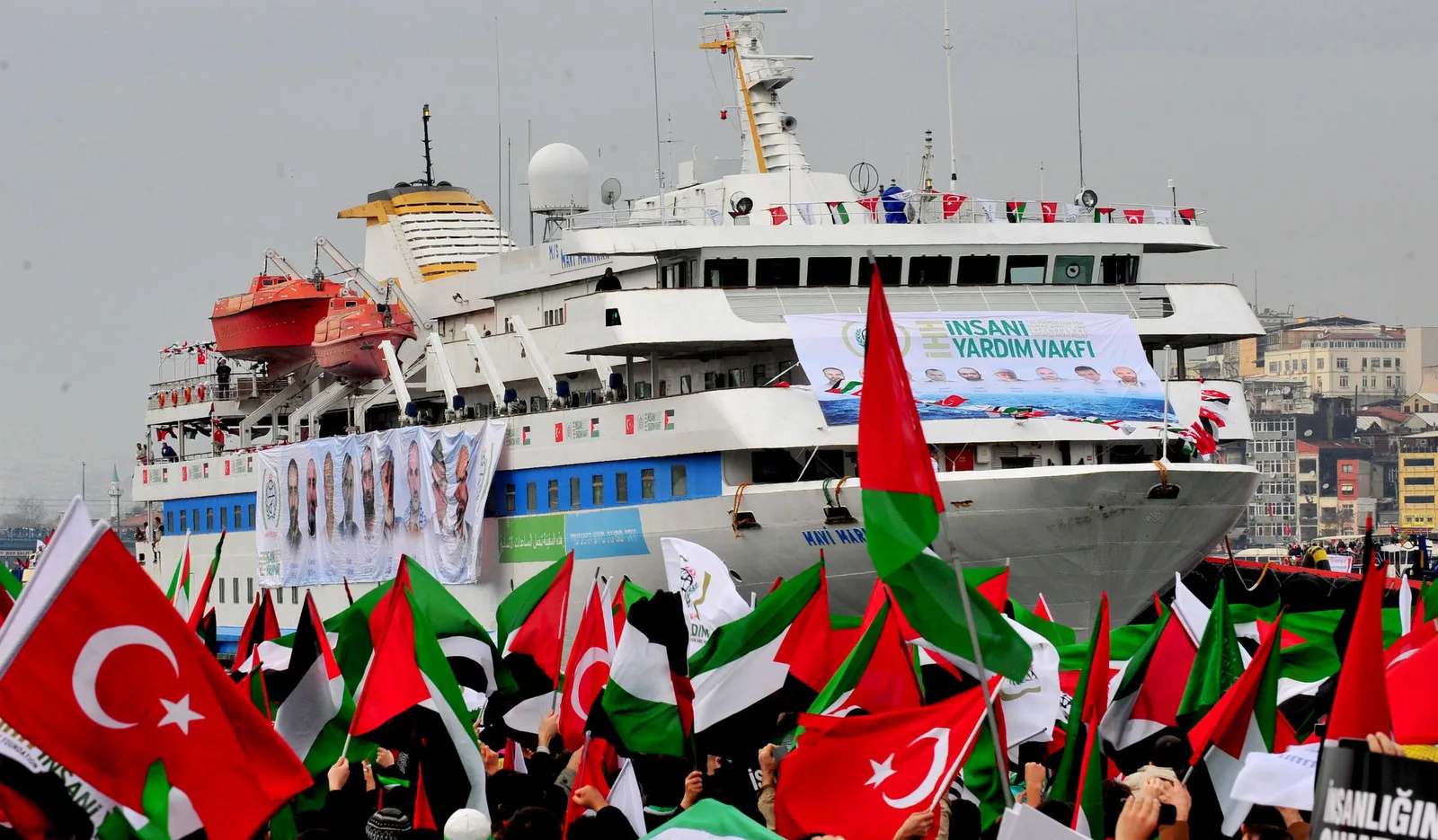
يذكر أن قوات الاحتلال هاجمت منتصف العام 2010 سفينة ‘مافي مرمرة’ التركية -أكبر سفن أسطول ‘الحرية2’- في المياه الدولية بالبحر المتوسط بينما كانت متجهة إلى قطاع غزة لكسر الحصار. وكان على متنها أكثر من خمسمئة متضامن معظمهم من الأتراك، مما أسفر عن مقتل عشرة وجرح خمسين آخرين.

هل تصل الرسالة؟

ويحمل أسطول الحرية 3 رسالة رمزية تتمثل في تسليط الضوء الدولي على الظلام الذي يعيشه الفلسطينيون منذ نحو 8 سنوات بسبب الحصار. وفي هذا السياق، قال رئيس الحملة الأوربية لرفع الحصار عن غزة، مازن كحيل، أن الهدف الرئيس من هذه الحملة هو الضغط على العالم لإجبار دولة الإحتلال على رفع الحصار، مؤكداً أن هذه الحملة البحرية حظيت بترحيب نيابي وشعبي أوروبي واسع.

وقال:” ما يجري في قطاع غزة غائب عن الأجندة السياسية الدولية وهدفنا هو إعادة الأولوية لغزة في هذه الأجندة لدفع أوروبا والعالم لإيجاد حل سياسي للمعاناة التي يعيشها القطاع”، مضيفا:” هناك حالة شبة إجماع في صفوف النواب الأوروبيين على رفض الحصار المفروض على غزة، وهم يقفون إلى جانب كافة المحاولات لكسر هذا الحصار”.

أما فيما يتعلق بالعوائق الإسرائيلية والتهديدات بمنعها من الوصول لغزة، فيرى أن ذلك لا يعد نهاية المطاف بالنسبة للحملة، ولا يعتبر فشلاً بالمطلق، بل نجاحا كبيرا، متابعا:” هذا هو النجاح بالتأكيد أن نوصل الرسالة للعالم تحمل أفعال دولة الإحتلال وقيودها على الحركة البحرية أمام غزة”.

وبين في الوقت ذاته في حال تمكن القائمون على الأسطول من نيل حماية دولية عليه فإن المهمة ستبدو صعبة جداً أمام الكيان الصهيوني ولن يبقى خيار الاعتداء عليه متاحاً وهو الأمر الذي يعني الاتجاه نحو الجهود الدبلوماسية من أجل وقف تسيير الأسطول لغزة.

وأيا كانت نسب إمكانية الوصول إلى شواطئ غزة، ومهما كان عدد الأميال التي قد تتوقف عندها سفن الأسطول تحت وطأة العدوان الصهيوني، سيُدفع الرأي العام الدولي دفعا لمتابعة ما يحدث وماذا سيحدث في تلك المنطقة الساخنة في الشرق الأوسط، في فترة قد تكون فيها أخبار داعش والحرب في سوريا واليمن أكثر جاذبية، وسينتهي حتما يتعرية قبح دول الإحتلال وأجهزتها القامعة للحريات والإنسانية.

TAGGED: أسطول الحرية
Download this article as PDF
Share this Article
Facebook Twitter Whatsapp Whatsapp Telegram Email Copy Link
فريق التحرير
By فريق التحرير تقارير يعدها فريق تحرير نون بوست.
Follow:
Next Article نون بوست The Stigma of “ISIS”: A Heavy Legacy Haunting Women and Children of Former Members

Read More

  • U.S. Regime‑Change Policies: Why They Are Destined to Fail U.S. Regime‑Change Policies: Why They Are Destined to Fail
  • The Gulf’s Balancing Act: Iran, Israel, and Hidden Links
  • Iraq–Turkey Oil Export Treaty: Why Did Ankara Cancel It After 52 Years?
  • Syria’s Northeast on Edge: QSD Between Ankara and Damascus
  • Has Europe Changed Its Stance on Israel… or Just Its Language?
part of the design
NoonPost Weekly Newsletter

You May Also Like

U.S. Regime‑Change Policies: Why They Are Destined to Fail

U.S. Regime‑Change Policies: Why They Are Destined to Fail

إسراء سيد Esraa sayed 8 April ,2026
The Gulf’s Balancing Act: Iran, Israel, and Hidden Links

The Gulf’s Balancing Act: Iran, Israel, and Hidden Links

فريق التحرير Noon Post 8 April ,2026
Iraq–Turkey Oil Export Treaty: Why Did Ankara Cancel It After 52 Years?

Iraq–Turkey Oil Export Treaty: Why Did Ankara Cancel It After 52 Years?

فريق التحرير Noon Post 8 April ,2026
dark

An independent media platform founded in 2013, rooted in slow journalism, producing in-depth reports, analysis, and multimedia content to offer deeper perspectives on the news, led by a diverse young team from several Arab countries.

  • Politics
  • Society
  • Rights & Liberties
  • Opinions
  • History
  • Sports
  • Education
  • Technology
  • Economy
  • Media
  • Arts & Literature
  • Entrepreneurship
  • Travel
  • Cinema & Drama
  • Food
  • Health
  • Culture
  • Latest Reports
  • Files
  • Long Reads
  • Interviews
  • Podcast
  • Interactive
  • Encyclopedia
  • In Pictures
  • About Us
  • Our Writers
  • Write for Us
  • Editorial Policy
  • Advanced Search
Some rights reserved under a Creative Commons license

Removed from favorites

Undo
Go to mobile version