
In the heart of occupied Jerusalem, the Qalandia area is facing an unprecedented environmental and humanitarian challenge following the Israeli occupation authorities’ announcement of a plan to establish a waste landfill and a waste‑to‑energy plant serving the Israeli Electricity Company on inhabited Palestinian land.
The project’s implications extend far beyond environmental concerns; it poses a direct threat to public health, agricultural land, biodiversity, and the livelihood of local residents. While Israeli authorities claim the project’s aim is to harness waste for energy generation, environmental experts and human rights advocates warn that the landfill will have serious short‑ and long‑term consequences from air, groundwater, and soil contamination to indirect forms of population displacement.
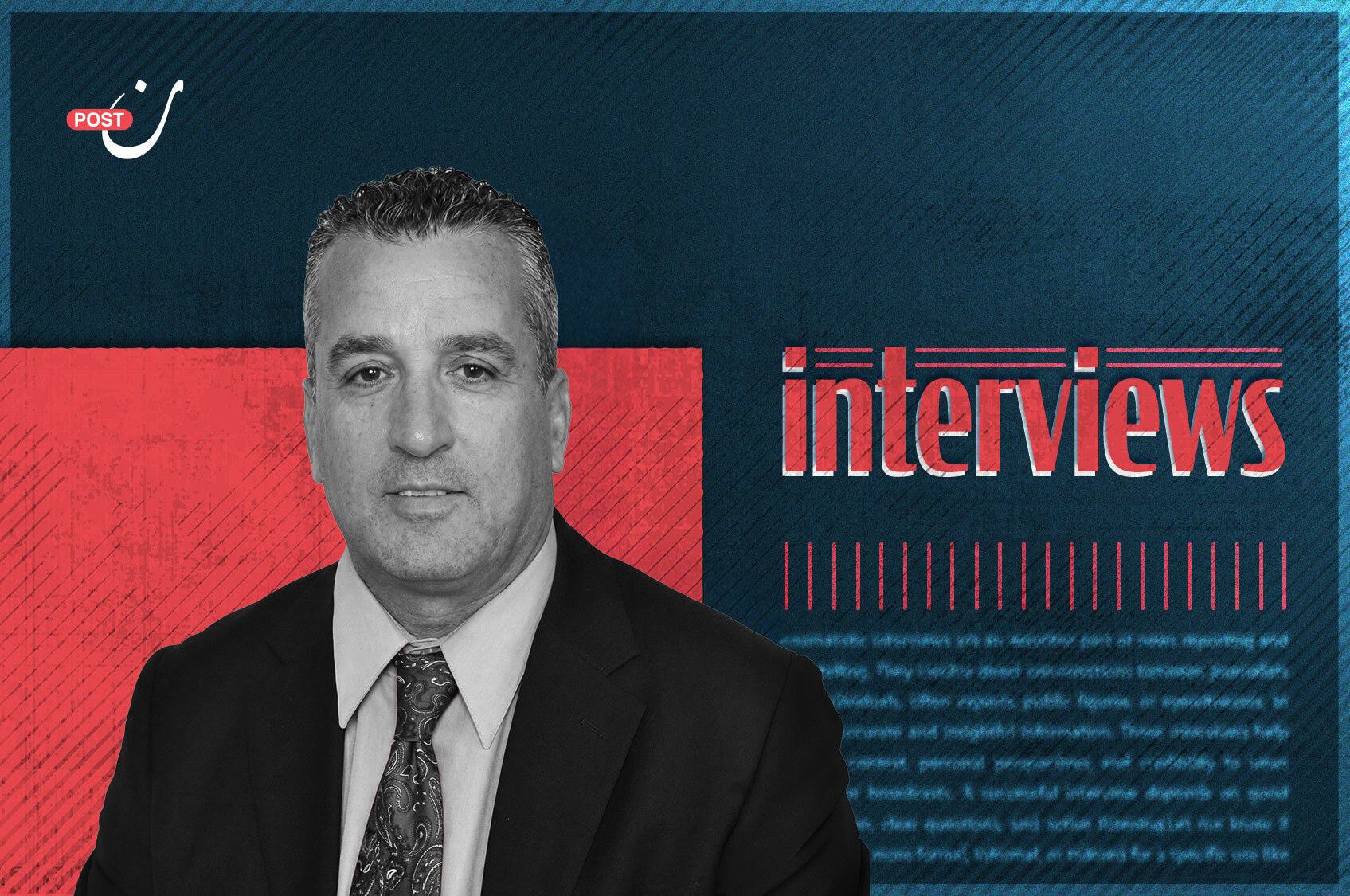
In this context, Noon Post conducted an in‑depth interview with Dr. Aql Abu Quraʿ, Director of Environmental and Climate Change Projects at the Development Work Center/“Together,” in which he provided a detailed analysis of the environmental and health hazards posed by the landfill and connected them to Israeli policies concerning settlement expansion and land expropriation.
Dr. Abu Quraʿ also discussed the legal tools available to oppose the project at local and international levels, and the role of civil society and rights institutions in pressuring to stop it.
He underscored that the proposed Qalandia landfill is not merely an environmental project but an instrument with deep political, social, and legal dimensions. The project threatens the Palestinian ecosystem, endangers the health of residents, undermines the productive use of agricultural land and biodiversity, and contributes to the gradual displacement of local communities.
What is the nature of the waste landfill plan proposed by the Israeli occupation authorities in Qalandia?
In principle, establishing a waste landfill in an occupied area is unacceptable under international humanitarian law and United Nations resolutions. The Jerusalem, At‑Tur, and Qalandia areas are legally classified as occupied territories meaning that building a waste landfill there lacks any legal or humanitarian legitimacy.
This rejection is not limited to political and legal dimensions alone; it also encompasses serious health and environmental implications. The plan involves not only a landfill but also a facility to process and potentially burn waste to generate energy all within a densely populated residential area.
Qalandia is surrounded by numerous Palestinian towns and neighborhoods, making the placement of such a project in this location fundamentally unacceptable from political, legal, health, and environmental standpoints.
Why was Qalandia chosen as the site for this landfill? Why place it on Palestinian land, and to what end?
The occupation’s focus is on the At‑Tur area, a confiscated Palestinian region on the outskirts of the old Qalandia Airport. Officially, the project is presented as a means to process waste from various parts of Jerusalem by burning it to produce energy.
The core question remains: why specifically Qalandia? Why build this facility in a densely populated Palestinian area?
In my view, the political objective is clear. The occupation seeks to assert control over the area in various ways, including implementing projects that appear service‑oriented but are fundamentally political and colonial in nature designed to entrench control over the land and change its character.
What are the environmental impacts of building a waste landfill in this specific area?
The proposed landfill would sit amid densely populated communities including al‑Ram, al‑Dahiya, Beit Hanina, Shuʿfat, Kafr ʿAqab, extending toward Ramallah and al‑Bireh. Placing a waste landfill at the center of such an expansive residential cluster constitutes a major environmental and health disaster.
Potential effects include air pollution from smoke and gas emissions and the hazards associated with handling various kinds of waste, including medical, chemical, and hazardous materials.
Decomposition of such waste can also contaminate soil and leach harmful substances into groundwater, creating a complex array of environmental repercussions dependent on the design and operation of the landfill and processing facility.
How might the landfill affect air quality, groundwater, and soil in the future?
It is well established that any landfill or waste processing facility produces leachate a liquid containing hazardous chemicals that, sooner or later, can percolate through soil and reach groundwater. Emissions from the landfill or processing plant also contribute to air pollution.
Furthermore, waste collection mechanisms prior to processing may spread foul odors, degrading the quality of life for nearby residents a phenomenon observed around other sites such as the Zahret al‑Fanjan landfill in Jenin.
Chemical leachate seeping into the soil reduces fertility and harms the broader ecosystem, including air, soil, and groundwater, with potential effects extending into the local food chain.
What are the repercussions for surrounding agricultural land and biodiversity?
The area around the project is among the region’s vital agricultural zones. Establishing a landfill or waste processing facility would sharply reduce cultivated land and vegetation density, thereby directly impacting soil health and agricultural productivity.
Land once used for farming would either be confiscated for the project or degraded by contamination and nearby waste accumulation, stripping the soil of fertility and limiting its agricultural utility.
The repercussions extend beyond agriculture to biodiversity: pollution of soil and air and the degradation of natural landscapes damage plant cover and the organisms that depend on it. The spread of foul odors, declining air quality, and the loss of scenic value may also encourage local residents to leave reinforcing indirect displacement strategies linked to such projects.
What health risks might the landfill pose to Qalandia residents and neighboring communities, especially the elderly and children? Could it lead to higher disease rates long term?
The severity of health risks theoretically depends on the design and operation of the landfill, but research and experience indicate that most landfills contain a mix of waste including chemical, cleaning agents, organic waste, and medical refuse. When this mixture breaks down or is burned, it releases pollutants that can negatively impact the health of surrounding populations.
Short‑term exposure to continuous emissions and odors may increase respiratory and chest illnesses, while long‑term exposure, even at low levels, may lead to serious diseases, including certain cancers. Vulnerable groups children, the elderly, pregnant and nursing women are particularly at risk, as chemical agents can cross the placenta, raising the likelihood of birth defects and long‑term health problems.
Given that the project claims to use waste for energy generation, the health risks multiply in the absence of strict environmental standards. Numerous studies worldwide show that landfills and waste‑processing plants near residential areas are linked to both immediate and chronic health impacts, affecting local communities broadly and disproportionately harming the most vulnerable.
How would the project affect residents’ daily lives if implemented?
Experiences in other Palestinian areas show that landfills near population centers fundamentally alter daily life. For example, communities around the Zahret al‑Fanjan landfill in Jenin continue to grapple with air pollution, persistent foul odors, and the seepage of chemicals into groundwater and soil consequences that have degraded agricultural quality and health.
Based on these precedents, similar effects in Qalandia would directly impact residents’ daily lives, potentially prompting some families to leave the area due to worsening environmental and health conditions, with significant short‑ and long‑term implications for community stability.
What about similar projects in Palestinian areas like Abu Dis, al‑ʿEzariyya, Naʿlin, and Idhna?
Experiences in those areas demonstrate that landfills often exceed capacity, especially when used to handle waste from settlements and other occupied zones. Without scientific management and strict environmental controls particularly in densely populated areas their consequences are severe for both the environment and public health.
Likewise, if the Qalandia landfill is implemented without careful scientific and humanitarian consideration, it could inflict significant harm on residents and neighboring areas, especially given the lack of protective measures for Palestinian communities against the environmental and health impacts of such projects.
How does this issue reflect double standards in how Palestinians are treated, given settlers’ rejection of landfills near their communities?
This issue starkly reveals double standards in the treatment of Palestinians: settlement communities reject landfills near their own areas yet transfer these projects to populated Palestinian towns. Past experiences affirm this trend; in one area near Ramallah, a proposal for a large landfill was canceled due to residents’ objections, reflecting broad social and psychological resistance to such projects within residential zones.
Despite this clear rejection, landfills are imposed on Palestinian communities without regard for their safety or rights. These facilities handle various waste types, many containing hazardous chemicals from plastic waste and pesticide residues to cleaning agents and medical and veterinary waste which degrade over time into even more dangerous compounds.
Long‑term exposure, even at low levels, can lead to chronic and serious illnesses, including respiratory and skin diseases, cancer, and birth defects effects akin to those seen with chemical pesticide use in agricultural areas.
How does this plan fit within occupation policies that impose environmental burdens on Palestinians?
This plan forms part of a deliberate policy to expropriate Palestinian land and assert control, whether for settlement expansion or the establishment of polluting industrial facilities. The At‑Tur area, for example, already hosts several factories, including chemical plants, alongside the proposed landfill signaling a clear pattern of converting Palestinian areas into receptacles for hazardous environmental projects.
Such policies create a repellent environment, dissuading residents from living or investing near landfills and polluting factories out of fear for their health and wellbeing. Thus, the project becomes part of a broader strategy that tightens restrictions on Palestinian life, contributes to indirect displacement, and seizes land under the guise of service or industrial development.
Is the project a form of environmental colonialism or a transfer of pollution from Israel into Palestinian lands?
Yes. According to international law and norms, this project can be viewed as a form of environmental colonialism exploiting Palestinian land to host polluting facilities while transferring waste from settlements or inside Israel to Palestinian areas.
This practice degrades the Palestinian ecosystem soil, agricultural lands, groundwater, and air quality and mars the landscape. It creates an inhospitable environment that drives residents away and increases the environmental and health burdens on Palestinian society.
What is the connection between this landfill and settlement expansion schemes or the isolation of Palestinian areas?
The project is clearly linked to Israeli policies aimed at controlling land and severing connections between Palestinian communities in Jerusalem and the West Bank. The landfill serves as an indirect tool to isolate Palestinian localities and establish facts on the ground, including the gradual displacement of residents and weakening demographic stability.
Moreover, shifting complex environmental burdens from inside Israel to Palestinian territories helps achieve short‑term goals like reducing environmental liabilities and long‑term strategic aims related to demographic and geographic control strengthening dominance over Palestinian land and undermining resistance to such policies.
Given that establishing a landfill on Palestinian land violates international law, what legal tools are available to oppose this plan locally and internationally?
The Palestinian Authority, in cooperation with international environmental bodies, has a legal basis to object to the transfer of waste and hazardous materials across territories under international agreements. Palestinian officials can file objections with relevant international institutions, highlighting the health, environmental, and social risks associated with the landfill.
In addition, civil society organizations play a pivotal role including the Development Work Center/“Together” by engaging with international partners and U.N. environmental bodies, clearly communicating the dangers, and pressing global actors, such as the European Union and environmental programs like UNEP, to halt the project.
The media also plays a critical role in exposing the reality on the ground and building international pressure against the plan.
How is your center following this issue? Is there a legal avenue to challenge the plan?
As an organization, we maintain relationships with international institutions and environmental NGOs, enabling us to launch global advocacy campaigns to stop the project.
Although achieving tangible results is difficult given Israeli pressure on the international community and its disregard for legal norms, documenting and presenting the true situation on the ground is an important step. In the future, after the landfill is established, we plan to conduct scientific research, collect samples, analyze them, and document findings as part of legal and environmental follow‑up efforts.
What message would you like to send to the international community to help combat this plan?
My message is clear: the international community must act to stop this project, which threatens to displace residents, seize land, and degrade the region, in addition to the expected health, environmental, and psychological harms in the short and long term. It is unacceptable to remain silent in the face of these risks; they must be confronted, and necessary measures taken to preserve the ecosystem and the rights of Palestinians on their land.