
NoonPost NoonPost

NoonPost

  • Home
  • Politics
  • Economy
  • Society
  • Culture
  • Files
  • Long Reads
  • Podcast
AR
Notification Show More
نون بوست
“There Are Nights I Can’t Close My Eyes”: How Gazans Are Living in Homes on the Brink of Collapse
نون بوست
From al-Jolani to Ahmad al-Shara: The Evolution of Syria’s New Leader
نون بوست
When Political Islam Receded in Egypt: Who Filled the Void?
نون بوست
An Extension of Genocide: Gaza’s Detainees Speak Out
نون بوست
A Tightrope Between Survival and Sovereignty: The Syrian Government Faces Normalization Pressures
نون بوست
American Aircraft Carriers: Has the Era of “100,000 Tons of Diplomacy” Ended?
نون بوست
U.S. Regime‑Change Policies: Why They Are Destined to Fail
نون بوست
Transformations of Israeli Judaism: Between the Victim Complex and the Colonizer’s Doctrine
نون بوست
The Gulf’s Balancing Act: Iran, Israel, and Hidden Links
نون بوست
Iraq–Turkey Oil Export Treaty: Why Did Ankara Cancel It After 52 Years?
نون بوست
Syria’s Northeast on Edge: QSD Between Ankara and Damascus
نون بوست
Has Europe Changed Its Stance on Israel… or Just Its Language?
NoonPost NoonPost
AR
Notification Show More
نون بوست
“There Are Nights I Can’t Close My Eyes”: How Gazans Are Living in Homes on the Brink of Collapse
نون بوست
From al-Jolani to Ahmad al-Shara: The Evolution of Syria’s New Leader
نون بوست
When Political Islam Receded in Egypt: Who Filled the Void?
نون بوست
An Extension of Genocide: Gaza’s Detainees Speak Out
نون بوست
A Tightrope Between Survival and Sovereignty: The Syrian Government Faces Normalization Pressures
نون بوست
American Aircraft Carriers: Has the Era of “100,000 Tons of Diplomacy” Ended?
نون بوست
U.S. Regime‑Change Policies: Why They Are Destined to Fail
نون بوست
Transformations of Israeli Judaism: Between the Victim Complex and the Colonizer’s Doctrine
نون بوست
The Gulf’s Balancing Act: Iran, Israel, and Hidden Links
نون بوست
Iraq–Turkey Oil Export Treaty: Why Did Ankara Cancel It After 52 Years?
نون بوست
Syria’s Northeast on Edge: QSD Between Ankara and Damascus
نون بوست
Has Europe Changed Its Stance on Israel… or Just Its Language?
Follow US

Qandil Mountains: How a Remote Stronghold Became a Kurdish Militants’ Fortress

فريق التحرير
Noon Post Published 26 March ,2026
Share
نون بوست
نون بوست
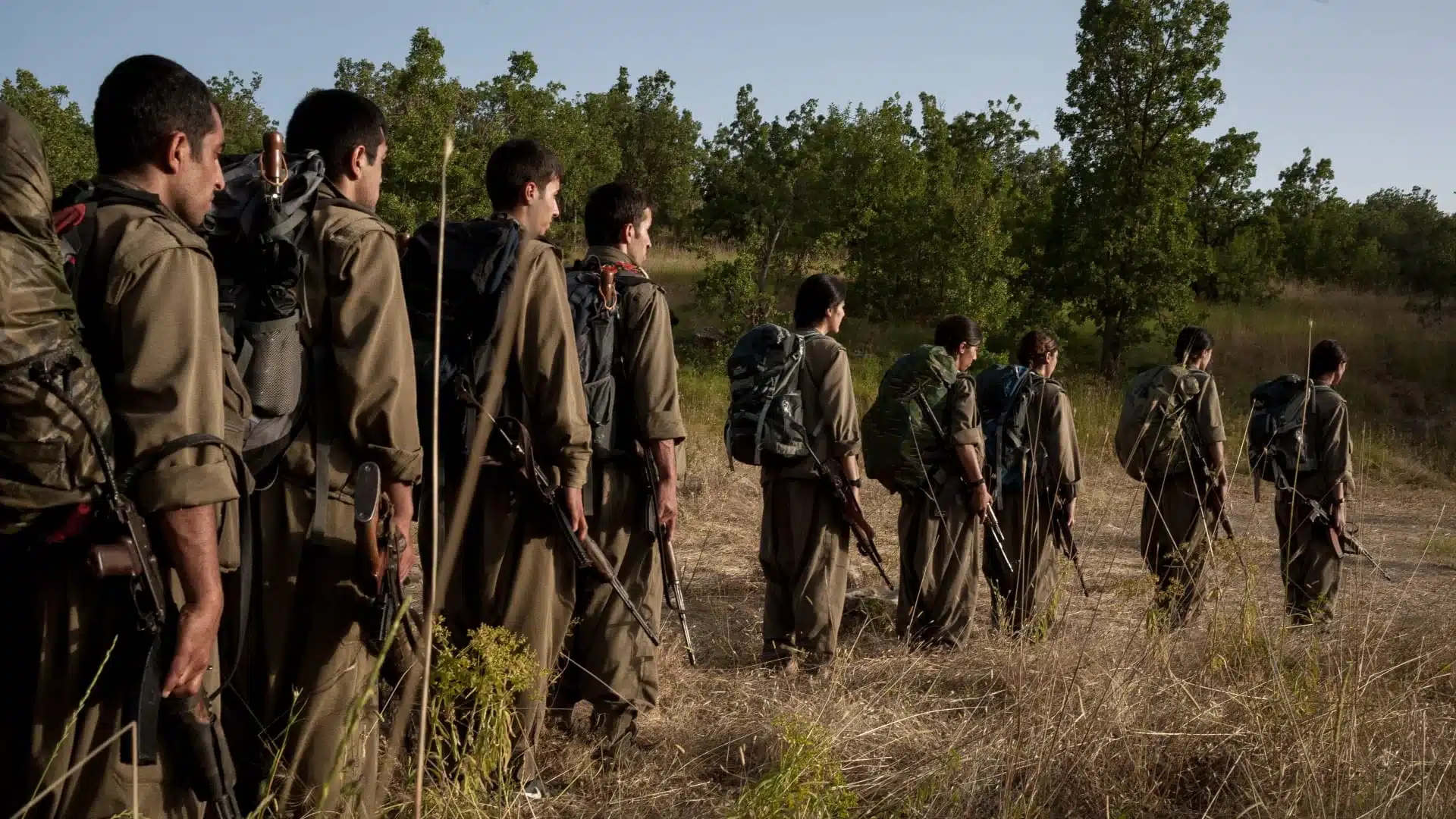
Over the decades, the Qandil Mountains have become an ideal rear base for a protracted guerrilla war.

In a striking statement that once again brought the Qandil Mountains into the spotlight, Syrian President Ahmad al-Shara described the Kurdistan Workers’ Party (PKK) leaders hiding there as “people cut off from social life for over 40 years.”

The comment came as part of al-Shara’s emphasis on the need to protect Syria’s Kurdish population and integrate them into national institutions. He warned against “cornering the Kurds into an armed faction with foreign affiliations,” calling it “a strategic error against them.”

Despite the PKK’s announcement of its dissolution and disarmament as part of a historic peace deal with Ankara following four decades of conflict that claimed more than 40,000 lives its fighters and commanders continue to live in the caves of Qandil.

Their continued presence raises questions about the enduring significance of this mountainous stronghold and its complex role in the region’s overlapping conflicts.

A Mountain Fortress at the Junction of Three Nations

The Qandil mountain range lies in the northeastern tip of Iraq, bordering both Turkey and Iran. It is part of the rugged Zagros range and has historically served as a natural border between the Ottoman and Persian empires. Owing to its dense Kurdish population, the region is often seen as part of what is known as “Greater Kurdistan.”

The area’s harsh terrain and towering peaks—some rising above 3,000 meters—have made it virtually impenetrable for decades.

Kamran Qardaghī, former adviser to late Iraqi President Jalal Talabani, recalls a grueling 1974 trek on foot from the town of Rania, crossing seven mountain ridges to reach the remote Qandil outposts. He described the mountains as a “natural fortress,” difficult to invade but easy to defend for those entrenched within.
نون بوست
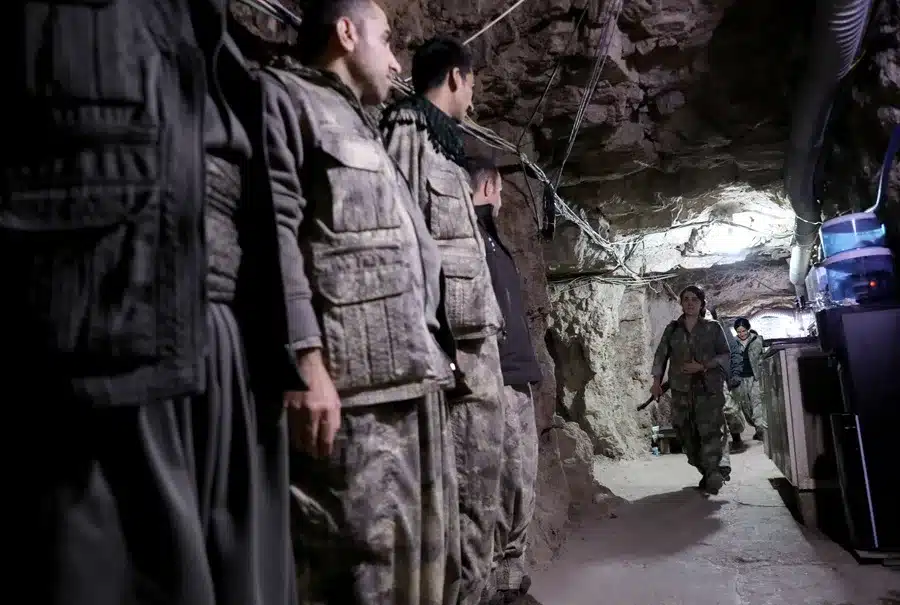
Kurdish fighters, both men and women, live in isolated barracks in the Qandil Mountains.

The lack of paved roads and treacherous geography turned the area into a natural haven for insurgent groups, far from the reach of the militaries of Iraq, Turkey, and Iran.

Following the 1991 Gulf War, Qandil became part of the Kurdistan Region of Iraq an autonomous area creating greater space for militant operations due to the political sensitivity of direct intervention by either Baghdad or Erbil.

These geographic and political conditions laid the foundation for Qandil’s transformation into a near-perfect base for prolonged guerrilla warfare something the PKK quickly recognized and capitalized on.

PKK’s Ascent to the Peaks of Qandil

After the Gulf War and the Kurdish uprising against Saddam Hussein’s regime in 1991, the PKK seized the opportunity to move into Qandil, exploiting the power vacuum and chaos.

Qardaghī, who witnessed the events firsthand, says that PKK fighters first entered Qandil in 1991 and solidified their presence by 1992, slipping in through Iran and establishing permanent bases in the mountains.

Throughout the 1990s, the PKK clashed violently with the two main Kurdish parties in Iraq the Patriotic Union of Kurdistan (PUK), led by Talabani, and the Kurdistan Democratic Party (KDP), led by Masoud Barzani. These parties, under pressure from Turkey and Iran, sought to curb the PKK’s expansion.

One of the fiercest confrontations occurred in 1997 when Kurdish factions launched a regional-backed campaign to oust the PKK from Qandil, temporarily forcing the surrender of some 2,000 fighters. Yet remnants of the group returned to their mountain sanctuaries through complex smuggling routes once the offensive subsided.

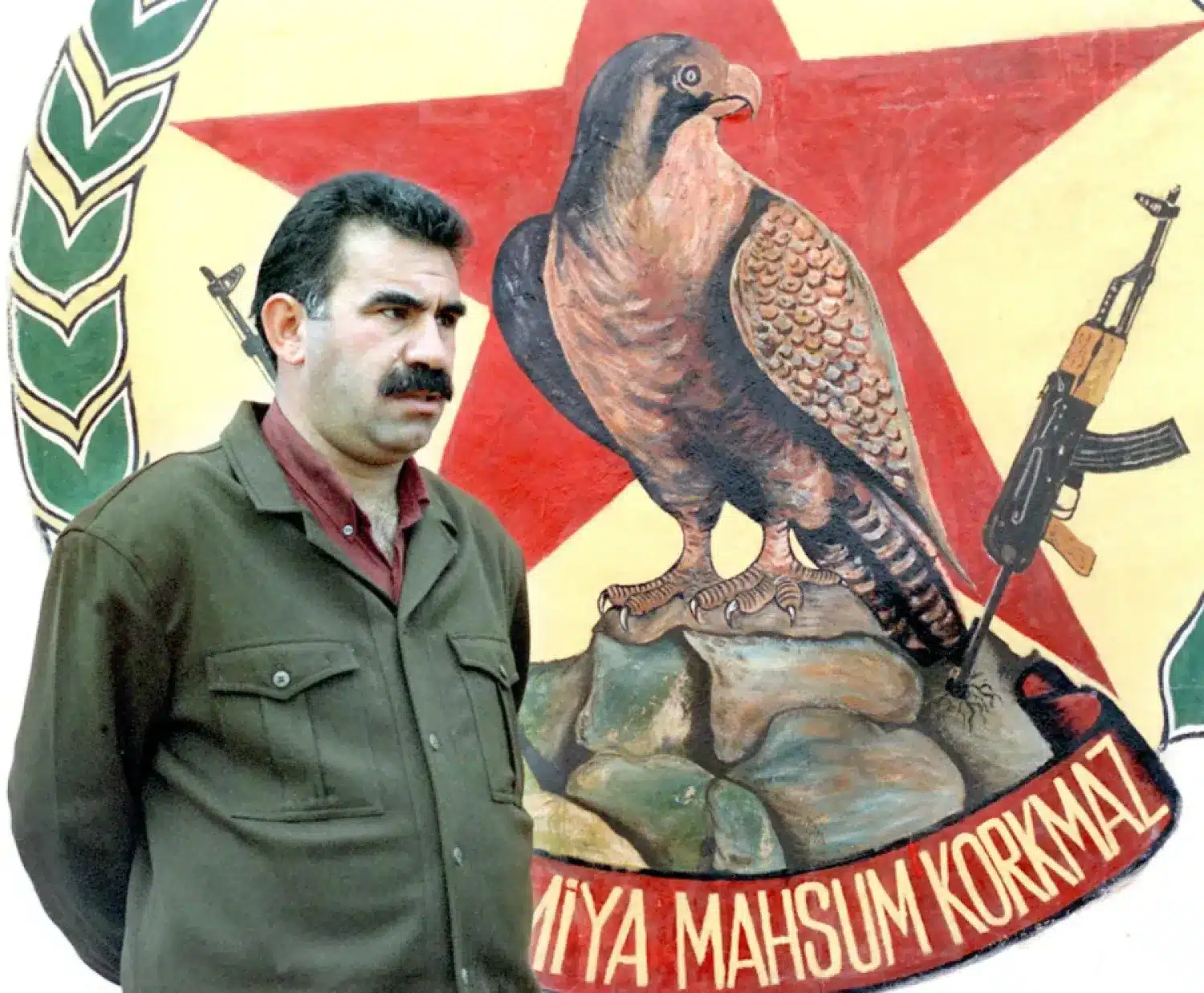
By the late 1990s, the PKK had firmly established Qandil as its strategic command center. After Turkey captured its founder, Abdullah Öcalan, in 1999, a new leadership took over figures like Murat Karayılan, Cemil Bayık, and Duran Kalkan, collectively known as the “Qandil Command.” Most are Turkish-born Kurds.
نون بوست
Kurdistan Workers’ Party leader Abdullah Ocalan a few years before his arrest (AFP)

Under their leadership, the PKK evolved from a secretive Marxist movement into an organization with its own ideological framework ”Democratic Confederalism” inspired by Öcalan’s writings during his imprisonment. The group also reorganized under a broader umbrella, the Kurdistan Communities Union (KCK), uniting various Kurdish militant factions from Turkey, Syria, Iraq, and Iran under a central command in Qandil.

Qandil’s role expanded beyond sheltering Turkish PKK militants. Starting in 2004, it became home to the Free Life Party of Kurdistan (PJAK), the PKK’s Iranian wing, which launched insurgent operations inside Iran. Similarly, early cadres of Syria’s People’s Protection Units (YPG) found refuge and training in Qandil.

In effect, the mountains became a transnational Kurdish reservoir, uniting fighters from across the region under a shared nationalist vision. By recent estimates from the International Crisis Group, some 7,000 fighters were entrenched in Qandil a testament to the scale and sophistication of its militarized infrastructure.

Qandil Becomes a Regional Knot

The Qandil Mountains have become a symbol of resistance to regional powers, and at times a battlefield for proxy wars between them and Kurdish factions.

For decades, Turkey has viewed Qandil as a “terrorist hub” from which the PKK launches attacks. Ankara has regularly bombarded the area and, on several occasions, threatened ground invasions. One of the most notable came in mid-2018, when President Recep Tayyip Erdoğan vowed to “drain the terror swamp in Qandil” and raise the Turkish flag there.

While Turkish forces have carried out limited incursions into northern Iraq, fully seizing Qandil remains elusive—a challenge analysts attribute to the scale of military resources such an operation would require, particularly as the Turkish army remains entangled in the Syrian theater.

In recent years, however, Ankara has adjusted its tactics, establishing forward bases inside Iraq and deploying drones to target PKK leaders even in remote enclaves undermining the fighters’ longstanding sense of security in the rugged terrain.

To the east, Iran also sees the Kurdish presence in Qandil as a security threat. The Iranian PJAK has engaged in bloody clashes with the Islamic Revolutionary Guard Corps over the past two decades. Tehran has frequently responded with cross-border artillery strikes targeting Qandil’s highlands, often forcing the evacuation of Kurdish Iraqi villages.

Beyond Turkey and Iran, Qandil’s complications extend to Syria. Ankara has long maintained that Syria’s YPG is essentially an offshoot of the PKK headquartered in Qandil.

During the Syrian civil war, PKK commanders in Qandil maintained strong ties with YPG leadership. Notably, senior PKK figure Bahoz Erdal was widely reported to have advised Kurdish forces in Syria further weaving Qandil into the region’s tangled conflicts.

Life Inside the Mountains

Within the caves and scattered camps of Qandil, a self-contained society has emerged over the years one governed by its own rules, far removed from civilian life. Former defectors from the PKK have described life there as follows:

  • Fighters live in isolated barracks and undergo daily ideological training centered on Öcalan’s teachings.

  • A self-sufficient system includes schools, training camps, field hospitals, internal courts, and even centralized media.

  • The environment is tightly controlled, resembling a real-life version of Squid Game, as one defector put it.

  • “Mountain law” enforces strict discipline and punishes dissent or attempted defections harshly. Solitary confinement cells in Qandil are reportedly rarely empty.

  • In 2007, Abdullah Öcalan’s brother Osman was placed in solitary for three months simply for suggesting internal reforms.

The Qandil leadership promotes a lifestyle that cuts fighters off from the temptations of civilian life. Romantic relationships and marriage among members are strictly prohibited, as they are seen as distractions that undermine revolutionary discipline.

An internal manual explicitly states that “emotions are a weakness” unworthy of a “committed revolutionary.”

A Perennial Enigma

Today, even amid calls for peace and disarmament, particularly after 2025 initiatives, Qandil remains a mysterious and unresolved chapter. The stronghold still poses a significant challenge to any comprehensive settlement of the Kurdish issue especially given the fighters’ refusal to descend from the mountains and the lack of a clear plan to reintegrate armed Kurds in Syria.

And so, as many hope for an end to the conflict, one question persists:
Will the world ever witness the final descent of fighters from Qandil’s peaks, closing the book on the “mountain war”?
Or will the region’s geopolitical terrain prove even more forbidding than Qandil’s crags, keeping the embers of conflict smoldering beneath a fragile ceasefire?

Download this article as PDF
Share this Article
Facebook Twitter Whatsapp Whatsapp Telegram Email Copy Link
فريق التحرير
By فريق التحرير تقارير يعدها فريق تحرير نون بوست.
Follow:
Previous Article نون بوست Palestinian Lands as a Dump for Israeli Waste… An Interview with Dr. “Aql Abu Qura”
Next Article نون بوست What Has Changed for Syrian Women After Liberation?

Read More

  • U.S. Regime‑Change Policies: Why They Are Destined to Fail U.S. Regime‑Change Policies: Why They Are Destined to Fail
  • The Gulf’s Balancing Act: Iran, Israel, and Hidden Links
  • Iraq–Turkey Oil Export Treaty: Why Did Ankara Cancel It After 52 Years?
  • Syria’s Northeast on Edge: QSD Between Ankara and Damascus
  • Has Europe Changed Its Stance on Israel… or Just Its Language?
part of the design
NoonPost Weekly Newsletter

You May Also Like

U.S. Regime‑Change Policies: Why They Are Destined to Fail

U.S. Regime‑Change Policies: Why They Are Destined to Fail

إسراء سيد Esraa sayed 8 April ,2026
The Gulf’s Balancing Act: Iran, Israel, and Hidden Links

The Gulf’s Balancing Act: Iran, Israel, and Hidden Links

فريق التحرير Noon Post 8 April ,2026
Iraq–Turkey Oil Export Treaty: Why Did Ankara Cancel It After 52 Years?

Iraq–Turkey Oil Export Treaty: Why Did Ankara Cancel It After 52 Years?

فريق التحرير Noon Post 8 April ,2026

“تل أبيب لايف” تثير غضب المغردين العرب ودعوات لبث مماثل من مكة ليلة 27 رمضان

فريق التحرير
Noon Post Published 10 July ,2015
Share
11108alsh3er

سناب شات هو تطبيق للرسائل في شكل مقاطع فيديو مصورة تمكن المستخدمين من التقاط الصور ومقاطع الفيديو وبثها إلى المتلقين، كما يُتيح التطبيق خاصية “سناب شات لايف” المتوفرة لجميع المشتركين به لبث لقطات فيديو حية من مناطقهم وبلادهم.

استخدم هذا التطبيق الإسرائيليون وأطلقوا حملة “تل أبيب لايف” وقاموا بمشاركة معالم مدينة “تل أبيب” الفسلطينية المحتلة وشواطئها والمأكولات المقدمة بها، كما تضمنت الحملة على التطبيق بق رسائل مصورة لشواطئ المدينة العامة ورياضة ركوب الأمواج، واحتوت على مقاطع للإسرائيليين وهم يتناولون مأكولات عربية وغيرها مما ادعوا أنها مأكولات إسرائيلية تقليدية.

ظلت مجموعة اللقطات التي نشرها إسرائيليون عن حياتهم اليومية على تطبيق “سناب شات” للرسائل المصورة في تل الربيع نشطة على التطبيق لمدة أيام، حيث حقق نشر تل أبيب لايف مستوٍ عالٍ من الوصول لدى مستخدمي التطبيق خاصة في مصر والأردن، وهو الأمر الذي أشعل مواقع التواصل الاجتماعي بعدما أصبح هاشتاج “#تل_أبيب_لايف” الأوسع انتشارًا لفترة على مستوى العالم العربي.

فقد أتت هذه الصور من داخل مدينة تل الربيع الفسلطينية المحتلة في ظل ذكرى العدوان الإسرائيلي على غزة في شهر رمضان من العام الماضي وهو ما خلف دمار وخراب في القطاع جراء القصف الإسرائيلي، بينما يقوم الإسرائيليون ببث لقطات من داخل المدن الفلسطينية المحتلة متابهين بالعمران والتقدم بها بل وما زاد حنق المغردين أن هذا الأمر حظي بانتشار واسع على مواقع التواصل الاجتماعي.

This is reality, why don't you show it?#تل_ابيب_لايف#telaviv_live https://t.co/pzUr6d3HAx

— عبدالله العنزي (@abdullahalen) July 8, 2015

استفز الأمر المغردين العرب وقاموا بالرد على هذه الصوربنشر صور للقتلى والدمار الذي خلفه الإسرائيليون في قطاع غزة، كما انتقدوا مشاركة صور لمدينة عربية فلسطينية تحت اسم تل أبيب وشاركوا الأمر باسم مدينة “تل الربيع” وهو الاسم العربي للمدينة، كما انتقد مغردون آخرين صور الأطعمة المنشورة على الهاشتاج وباشروا بالتصحيح أن هذه أكلات عربية وليست إسرائيلية كما يدعي الإسرائيليون.

وصل الأمر بالبعض بالدعوة لمقاطعة تطبيق “سناب شات”، لكن برز اتجاه آخر من المغردين يدعو التطبيق لاختيار مكة  من المدن التي يبث منها خدمة البث المباشر “لايف” بعدما غضب المغردون العرب من اختيار مدينة تل الربيع تحت اسم تل أبيب.

#تل_ابيب_لايف على #سناب مدعومة من إدارة التطبيق بمقابل مادي أو شيء آخر، لأجل تحسين صورة الاحتلال ونحن سنقاوم ذلك بنفس الأداة.
اضيفوني rdooan

— رضوان الأخرس (@rdooan) July 7, 2015

الروح التي تسري في جسد كل فلسطيني حر وتدفعه لمقاومة المحتل والاصرار على تحرير فلسطين رغم أنف العالم هي أجمل وأعظم من كل صور #تل_ابيب_لايف

— إبراهيم الحارثي (@ihharthi) July 7, 2015

فقد أطلق نشطاء حملة تطالب إدارة “سناب شات” بوضع “مكة لايف” بشكل رسمي في اليوم الذي يوافق الثالث عشر من يوليو الجاري والذي يوافق ليلة السابع والعشرين من شهر رمضان الذي يتحرى فيه كافة المسلمين “ليلة القدر” لما له من مكانة روحيه.

فكرت ليه مانتعاون ونسوي حملة نطلب من شركة ⁦@Snapchat⁩ نشر ⁧#مكه_لايف⁩ ⁦#mecca_live⁩ في ليلة ٢٧ من رمضان .. بيكون تأثيرها عالي جداً بإذن الله

— أحمد الجبرين (@Aljbreen) July 8, 2015

شاركوا في #mecca_live #مكة_لايف @khalidjassem74 pic.twitter.com/RUZ3LAyLFU

— استغفرالله (@54_Malkh) July 9, 2015

بدأ الأمر بهاشتاج يحمل اسم “مكة لايف” أو بالإنجليزية mecca_live  وقد أخذ بالانتشار الواسع على موقع التواصل الاجتماعي “تويتر”، حتى وصل لمراتب العشر الأوائل في “الترند”  الأكثر انتشارًا على مستوى العالم في أقل من ست ساعات، وقد طالب الجميع الدخول على حساب “سناب شات” وكتابة تغريدات تدعو للاستجابة لهذا المطلب.

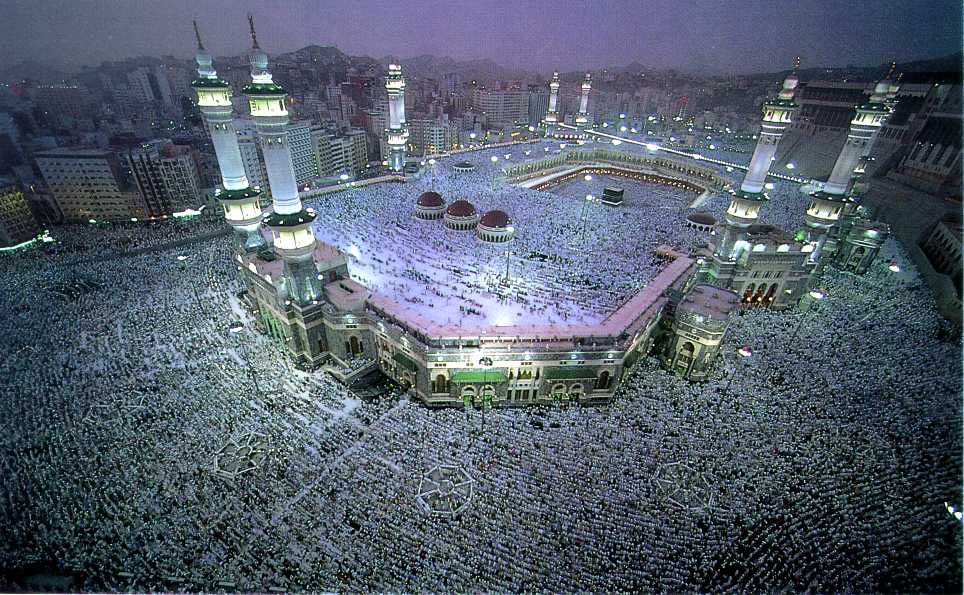
تداول النشطاء على تويتر صورًا للحرم المكي وكسوة الكعبة ولقطات مصغرة ومكبرة للمصلين والمعتمرين أثناء تأدية المناسك في شهر رمضان، وطالبوا بتفعيل الحملة خلال الساعات المقبلة لتصل بشكل أكبر وجدي لإدارة التطبيق لا سيما وأن جل التعليقات والغريدات موجهة إليهم عبر حسابهم الرسمي.

Athar most beautiful parts of the earth and that the world must see @Snapchat #مكه_لايف #Makkah_live pic.twitter.com/2585t2hpZ0

— عبدالله الدوسري #١٢ (@_46afm) July 9, 2015

ألا يحق لهذا الطُهر أن يُرى ؟ #مكه_لايف pic.twitter.com/sqtGB8cpyv

— عبير الشهري. (@abeermohamme_d) July 10, 2015

في حين دعى بعض النشطاء الفسلطينيون للرد على حملة “تل أبيب لايف” بإطلاق حملات من داخل المدن الفلسطينية لبث الرسائل المصورة من داخلها على تطبيق “سناب شات”، وذلك للرد على ادعاءات الاحتلال وفضح جرائمه بالمدن الفسلطينية

صور تنشر لأول مرة لجنود الاحتلال أثناء تفخيخهم مسجد في #خزاعة قبل تفجيره، هنا يظهر مدى حقدهم على الإسلام…#غزة_لايف pic.twitter.com/JX5rX5ImMu

— رضوان الأخرس (@rdooan) July 9, 2015

عنجد بتمنى يكون في #غزة_لايف ليشوف العالم عنجد شو يعني احتلال #الضفة_الغربية_لايف

— Ayaa Alghouti (@aayaalghouti) July 10, 2015

#الضفة_الغربية_لايف الصهيوني يبغا يثبت للعالم انه الناس عايشه طبيعي،هي اكبر كذبه معروفه عند المتعلمين..ياخي اعملو #غزه_لايف خلي العالم تشوف

— Faris Alghamdi (@Faris_Dammas) July 9, 2015

TAGGED: الضفة لايف ، تل أبيب لايف ، تويتر ، سناب شوت ، غزة لايف
TAGGED: الشبكات الاجتماعية
Download this article as PDF
Share this Article
Facebook Twitter Whatsapp Whatsapp Telegram Email Copy Link
فريق التحرير
By فريق التحرير تقارير يعدها فريق تحرير نون بوست.
Follow:
Next Article نون بوست The Stigma of “ISIS”: A Heavy Legacy Haunting Women and Children of Former Members

Read More

  • U.S. Regime‑Change Policies: Why They Are Destined to Fail U.S. Regime‑Change Policies: Why They Are Destined to Fail
  • The Gulf’s Balancing Act: Iran, Israel, and Hidden Links
  • Iraq–Turkey Oil Export Treaty: Why Did Ankara Cancel It After 52 Years?
  • Syria’s Northeast on Edge: QSD Between Ankara and Damascus
  • Has Europe Changed Its Stance on Israel… or Just Its Language?
part of the design
NoonPost Weekly Newsletter
dark

An independent media platform founded in 2013, rooted in slow journalism, producing in-depth reports, analysis, and multimedia content to offer deeper perspectives on the news, led by a diverse young team from several Arab countries.

  • Politics
  • Society
  • Rights & Liberties
  • Opinions
  • History
  • Sports
  • Education
  • Technology
  • Economy
  • Media
  • Arts & Literature
  • Entrepreneurship
  • Travel
  • Cinema & Drama
  • Food
  • Health
  • Culture
  • Latest Reports
  • Files
  • Long Reads
  • Interviews
  • Podcast
  • Interactive
  • Encyclopedia
  • In Pictures
  • About Us
  • Our Writers
  • Write for Us
  • Editorial Policy
  • Advanced Search
Some rights reserved under a Creative Commons license

Removed from favorites

Undo
Go to mobile version