


NoonPost NoonPost

NoonPost

  • Home
  • Politics
  • Economy
  • Society
  • Culture
  • Files
  • Long Reads
  • Podcast
AR
Notification Show More
نون بوست
“There Are Nights I Can’t Close My Eyes”: How Gazans Are Living in Homes on the Brink of Collapse
نون بوست
From al-Jolani to Ahmad al-Shara: The Evolution of Syria’s New Leader
نون بوست
When Political Islam Receded in Egypt: Who Filled the Void?
نون بوست
An Extension of Genocide: Gaza’s Detainees Speak Out
نون بوست
A Tightrope Between Survival and Sovereignty: The Syrian Government Faces Normalization Pressures
نون بوست
American Aircraft Carriers: Has the Era of “100,000 Tons of Diplomacy” Ended?
نون بوست
U.S. Regime‑Change Policies: Why They Are Destined to Fail
نون بوست
Transformations of Israeli Judaism: Between the Victim Complex and the Colonizer’s Doctrine
نون بوست
The Gulf’s Balancing Act: Iran, Israel, and Hidden Links
نون بوست
Iraq–Turkey Oil Export Treaty: Why Did Ankara Cancel It After 52 Years?
نون بوست
Syria’s Northeast on Edge: QSD Between Ankara and Damascus
نون بوست
Has Europe Changed Its Stance on Israel… or Just Its Language?
NoonPost NoonPost
AR
Notification Show More
نون بوست
“There Are Nights I Can’t Close My Eyes”: How Gazans Are Living in Homes on the Brink of Collapse
نون بوست
From al-Jolani to Ahmad al-Shara: The Evolution of Syria’s New Leader
نون بوست
When Political Islam Receded in Egypt: Who Filled the Void?
نون بوست
An Extension of Genocide: Gaza’s Detainees Speak Out
نون بوست
A Tightrope Between Survival and Sovereignty: The Syrian Government Faces Normalization Pressures
نون بوست
American Aircraft Carriers: Has the Era of “100,000 Tons of Diplomacy” Ended?
نون بوست
U.S. Regime‑Change Policies: Why They Are Destined to Fail
نون بوست
Transformations of Israeli Judaism: Between the Victim Complex and the Colonizer’s Doctrine
نون بوست
The Gulf’s Balancing Act: Iran, Israel, and Hidden Links
نون بوست
Iraq–Turkey Oil Export Treaty: Why Did Ankara Cancel It After 52 Years?
نون بوست
Syria’s Northeast on Edge: QSD Between Ankara and Damascus
نون بوست
Has Europe Changed Its Stance on Israel… or Just Its Language?
Follow US

Is Sudan Becoming the Next Battleground in the Saudi–UAE Rivalry?

عماد عنان
Emad Anan Published 26 March ,2026
Share
نون بوست
نون بوست

It would be a mistake to view the events in Yemen merely as an isolated power struggle between Saudi Arabia and the United Arab Emirates one that concluded with Abu Dhabi retreating under Riyadh’s pressure and the matter now closed. In truth, Yemen represents only one chapter in a broader trajectory that is likely to unfold across other regional arenas.

For years, Saudi Arabia has attempted to contain Emirati maneuvers that have undermined Arab national security across multiple fronts, from Yemen and Sudan to Somalia, Libya, and the Horn of Africa. This restraint was guided by a desire to avoid a direct confrontation that could damage the cohesion and influence of the Gulf alliance.

However, Abu Dhabi’s crossing of red lines lines Saudi Arabia regards as vital to its national security—marked a turning point. Riyadh has since adopted a firmer approach, signaling a new phase of resistance to Emirati policies now seen as posing a direct threat not only to Saudi security but to Arab national security as a whole.

Within this context, Sudan emerges as the next likely arena of confrontation following Yemen. Emirati actions in Sudan are widely perceived as bolstering separatist tendencies and endangering the country’s territorial integrity an outcome with repercussions that extend beyond Sudan’s borders to impact regional security and maritime stability in the Red Sea.

Shifting the Balance of Power

Over the past year, the power dynamics in Sudan have notably shifted. The Rapid Support Forces (RSF) regained ground and demonstrated renewed military strength after earlier setbacks that had suggested the Sudanese army was on the verge of winning the conflict.

This reversal is widely attributed to direct and sustained Emirati support for the RSF, a connection documented in multiple international and media reports. Abu Dhabi’s backing of RSF leader Mohamed Hamdan Dagalo, known as Hemeti, and his militias, has significantly altered the battlefield, emboldening Hemeti to move beyond military engagement toward advancing overtly separatist political projects including proposals to form a parallel government. These moves have pushed Sudan closer to a dangerous path of fragmentation.

In response to this escalating crisis which threatens the unity of Sudan and, by extension, Arab national security Saudi Arabia and Egypt have launched a diplomatic initiative aimed at stabilizing the situation without resorting to direct military involvement.

Several reports suggest that Egypt has provided indirect support to the Sudanese army as part of its longstanding commitment to state institutions and national unity support that Hemeti has repeatedly condemned.

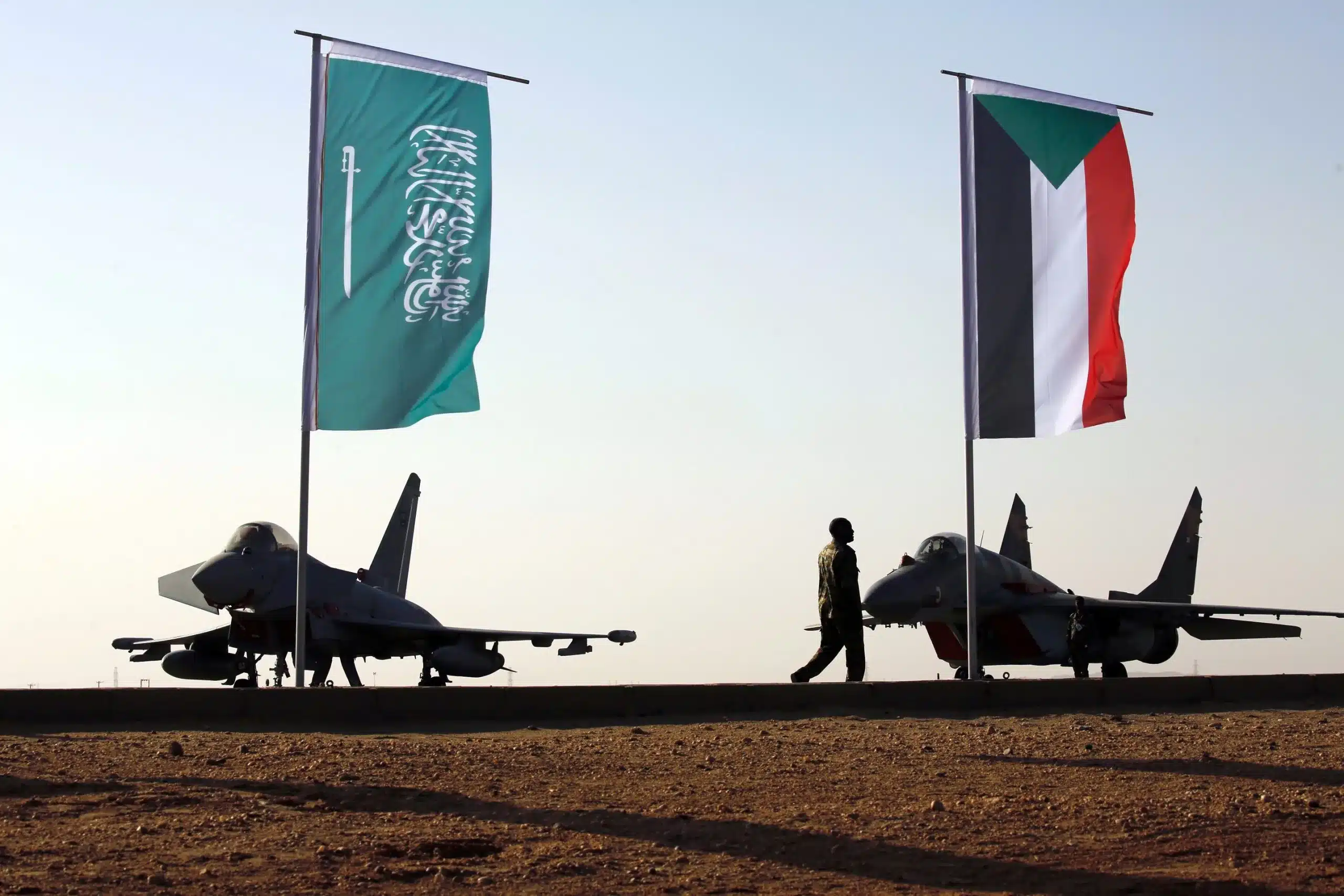
In a notable development, Pakistan recently announced it is close to finalizing a $1.5 billion arms deal with Sudan to boost the Sudanese army’s capabilities in its fight against the RSF. According to Reuters, the deal includes aerial equipment, drones, and advanced air defense systems.

Citing a former senior official in the Pakistani Air Force and three informed sources, Reuters reported that Islamabad is in the final stages of concluding the agreement. Two anonymous sources revealed that the package includes 10 Karakoram-8 light attack aircraft, over 200 surveillance and attack drones, and advanced air defense systems.

Retired Air Marshal Amir Masood, who previously served in the Pakistani Air Force, stated that the deal is essentially finalized. He added that it may also include Super Mushshak trainer aircraft and possibly a number of JF-17 fighter jets, developed in collaboration with China and produced in Pakistan, though he did not specify quantities or delivery timelines.

What Role Is Saudi Arabia Playing?

Following news of the Pakistan–Sudan arms deal, speculation has mounted that Saudi Arabia may be playing a key behind-the-scenes role despite the absence of concrete evidence or official confirmation of direct involvement.

Proponents of this view point to several plausible scenarios. The first is financial: Saudi Arabia could be partially or fully financing the deal. Given the Sudanese army’s financial constraints, the $1.5 billion price tag would be difficult to cover without external assistance.

Such support could take various forms credit guarantees, soft loans, or indirect payment mechanisms allowing Riyadh to avoid publicly appearing as a party arming one side in a civil war. General Amir Masood has been among the key voices suggesting this possibility.

The second scenario envisions Saudi Arabia as a political broker, using its strong relationships to facilitate the deal. Riyadh maintains close ties with Sudanese army chief General Abdel Fattah al-Burhan, who has visited the Kingdom three times since the outbreak of the war, most recently just days ago. Saudi Arabia also enjoys a deep strategic relationship with Pakistan’s military establishment, recently solidified by a joint defense agreement.

Some observers interpret the arms deal as a political reward to the Sudanese army an incentive to align with the Saudi-led Arab vision for Sudan’s future. The goal: reduce tensions and prevent further fragmentation.

Intelligence sources suggest that the deal may be part of a broader Saudi–Pakistani defense framework. The two countries are reportedly negotiating a larger agreement worth between $2 and $4 billion, which could include supplying Riyadh with JF-17 fighter jets and other military hardware, potentially incorporating Sudan as a third-party beneficiary.

Strategic Gains for All Sides

A deal of this magnitude offers overlapping benefits for all parties involved. For Pakistan, it presents an opportunity to expand its domestic defense industry particularly in drones and JF-series fighter jets and generate much-needed revenue for an economy under increasing structural pressure.

It also allows Pakistan to challenge the dominance of traditional arms suppliers in Africa, such as China, Turkey, and Iran, opening new markets for its military exports.

For Sudan, the deal could significantly enhance the army’s aerial and drone capabilities, addressing a critical gap that the RSF has recently exploited. This would restore some balance to the conflict and potentially help the army regain the battlefield initiative lost due to external support for the RSF.

As for Saudi Arabia, the deal fits into a broader strategy to deepen military and strategic cooperation with Pakistan. It reinforces their mutual defense pact and paves the way for enhanced coordination on key regional security issues.

Countering Emirati Influence

At its core, the deal appears aimed at curbing growing Emirati influence in Sudan. This influence, by many accounts, is driving the country toward division a trajectory that threatens the wider Arab security architecture. As such, Riyadh appears to be executing a calculated strategy to counter Abu Dhabi’s advance without engaging directly on the ground.

A direct military intervention would carry high political and military costs and risk triggering uncontrollable regional fallout. Supporting the Sudanese army through the Pakistani arms deal offers a less visible, yet potentially more effective alternative restoring military parity and undermining the RSF’s recent dominance.

Combined with Egypt’s indirect military and intelligence support, this assistance may enable the Sudanese army to reclaim key capabilities and engage the RSF on more equal footing. It could halt the RSF’s momentum and usher in a turning point either toward resolution or at least a strategic stalemate.

A New Saudi–UAE Flashpoint

Sudan cannot be viewed in isolation from broader regional dynamics particularly recent developments in Yemen. Saudi Arabia increasingly sees its rivalry with the UAE not as limited to one geography, but as a multi-front competition. Sudan, given its strategic weight, is now a top priority in Riyadh’s calculus.

Khartoum has never been peripheral to Saudi interests. It remains a pivotal player in Riyadh’s regional security architecture, owing to a complex mix of geopolitical, economic, and security considerations. Sudan’s stability is therefore seen as essential to safeguarding the Red Sea and maintaining the broader Arab strategic sphere.

From this perspective, Saudi policy toward the Sudan war is shaped by a deep understanding of the dangers of strategic vacuums and unchecked regional interference. The growing UAE role in Sudan especially when viewed alongside its expanding influence in the Horn of Africa has heightened Riyadh’s concerns about the regional balance of power and prompted more assertive action.

In conclusion, there is growing evidence that Sudan is becoming the second front in the Saudi–UAE rivalry, after Yemen. This raises serious questions about how Abu Dhabi will respond especially given parallel moves in Libya, where Pakistan signed a $4 billion arms deal with Khalifa Haftar’s forces just three weeks ago.

That deal could also challenge Emirati dominance in eastern Libya and further complicate the balance of power.

The key question now is whether the UAE will respond to Saudi maneuvers in Sudan as it did in Yemen or pursue a different strategy focused on resilience or repositioning. Either path carries significant political and strategic costs whether it means accepting a diminished role or escalating the rivalry.

These questions go beyond Sudan. They signal the potential opening of a new and volatile chapter in the Gulf rivalry, unfolding at a highly sensitive moment for the region one in which fears are growing that indirect conflicts may spiral into more direct and destabilizing confrontations.

Download this article as PDF
Share this Article
Facebook Twitter Whatsapp Whatsapp Telegram Email Copy Link
عماد عنان
By عماد عنان كاتب صحفي وباحث في الإعلام الدولي
Follow:
Previous Article نون بوست What Has Changed for Syrian Women After Liberation?
Next Article نون بوست Is “Israel” Planning to Relocate Gazans to Somaliland

Read More

  • U.S. Regime‑Change Policies: Why They Are Destined to Fail U.S. Regime‑Change Policies: Why They Are Destined to Fail
  • The Gulf’s Balancing Act: Iran, Israel, and Hidden Links
  • Iraq–Turkey Oil Export Treaty: Why Did Ankara Cancel It After 52 Years?
  • Syria’s Northeast on Edge: QSD Between Ankara and Damascus
  • Has Europe Changed Its Stance on Israel… or Just Its Language?
part of the design
NoonPost Weekly Newsletter

You May Also Like

U.S. Regime‑Change Policies: Why They Are Destined to Fail

U.S. Regime‑Change Policies: Why They Are Destined to Fail

إسراء سيد Esraa sayed 8 April ,2026
The Gulf’s Balancing Act: Iran, Israel, and Hidden Links

The Gulf’s Balancing Act: Iran, Israel, and Hidden Links

فريق التحرير Noon Post 8 April ,2026
Iraq–Turkey Oil Export Treaty: Why Did Ankara Cancel It After 52 Years?

Iraq–Turkey Oil Export Treaty: Why Did Ankara Cancel It After 52 Years?

فريق التحرير Noon Post 8 April ,2026

في ذكرى وفاة عرابي: ذيل على دروس الثورة العرابية

محمد إلهامي
محمد إلهامي Published 11 July ,2015
Share
13

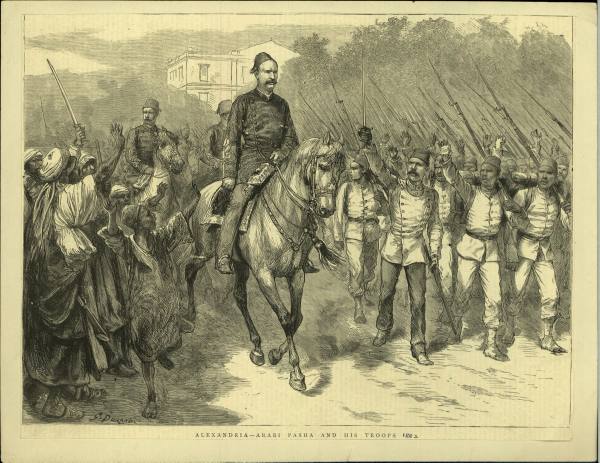
توفي أحمد عرابي (17 رمضان 1329هـ)، وكان جديرا ألا تمر ذكرى وفاته الرمضانية دون وقفة، وقد استعرضنا في المقال الماضي خمسة من عشرة دروس رأينا أنها الأهم في قصة الثورة العرابية، وبقي هنا أن نلقي النظر على خمسة أخرى لا نزال بحاجة إلى أن نستوعبها ونهضمها كي نجيد التصرف في مسار ثورتنا الحالية.

(6)

جيل الثورة وجيل الذل

في زمن الثورة يأتي الناس بالعجائب، وفي زمن الذل كذلك! وإن الرجل نفسه يكون في غاية البسالة والبطولة والبذل والتضحية في وقت الثورة ثم إذا نزلت الهزيمة وفشا الإحباط يكون على النقيض من هذا، وإن استيعاب هذا الدرس يجعلنا نفهم قيمة الزمن في اقتناص الفرصة واستثمار الثورة ويجعلنا نخشى أكثر ما نخشى من طول الوقت والحلول المؤجلة والتخطيط البعيد المدى، فالزمن قيمة لا تُعوَّض.

وقد جرت هذه السنة على الثورة العرابية، من أول السلطان عبد الحميد الثاني الذي انتعشت كل آماله فدعم الثورة بشكل سري وكانت بينه وبين عرابي مراسلات تحرض على التخلص من حكم أسرة محمد علي كلها، ورفض أي تدخل عسكري ضد عرابي. فلما أن صارت هزيمة الثورة محققة أصدر عبد الحميد منشورا يعتبر عرابي عاصيا وينفض يده منه، وكان لهذا أسوأ الأثر على وضع عرابي الذي صار محتاجا لأن ينفي عن نفسه تهمة العصيان والخروج على الخلافة!

ثم جرى هذا على عرابي نفسه، الرجل الزعيم الذي قاد أحلام الجماهير وصار معقد رجائهم، لما هُزِم وقُضِي عليه ونُفِي عشرين سنة، عاد بعدها شيخا هرما محطما، وأصدر تصريحات سيئة تتحدث عن صداقة الإنجليز وأيد فيها سياستهم ووجودهم بمصر!

وجرى هذا على سائر رجال الثورة فكان أحسنهم حالا من إذا عاد إلى مصر بعد المنفى ظل في بيته ولم يتكلم بالسياسة كمحمود سامي البارودي (رئيس حكومة الثورة قديما، ورب السيف والقلم)، وقد جرى في المنفى نزاعات بين رجال الثورة تبادلوا فيها إلقاء مسؤولية الفشل على بعضهم وتنافروا من بعد ما كانوا على قلب رجل واحد!

وظل خطيب الثورة وزعيمها السياسي عبد الله النديم مطاردا تسع سنوات، متخفيا شريدا، وكان منتهى أمله أن يظل هكذا بعيدا عن يد الإنجليز، من بعد ما كان –في زمن الثورة- يخطط لإسقاط نظام وإنشاء نظام!!

إن الهزيمة تقتل النفوس وتهدم الأبطال! وإن الاستسلام والتراجع بدعوى حقن الدماء إنما يُثمر خسرانا على مستوى القيم والمبادئ والتاريخ ومكانة الرجال، وأسوأ منه أنه يؤسس لجيل يتعايش مع الذل والظلم أو مع الاحتلال، فلا يكون ثمة أمل في ثورة إلا بعد جيل آخر على الأقل.

(7)

مأساة احتكار الجيوش للسلاح

لقد حاولت فرنسا احتلال مصر (1798م) فوجدت مقاومة عنيفة لثلاث سنوات، ثم حاولت بريطانيا (1807م) فردَّها الأهالي بلا أي دعم من الدولة. وكان من أعظم جرائم محمد علي أنه نزع السلاح من الجماهير وجعل القوة المسلحة حكرا على الجيش النظامي.. ومنذ تلك اللحظة والجيش المصري لم يحقق نصرا قط، وأسوأ من ذلك أن هزيمة هذا الجيش الرسمي كانت تساوي سقوط البلد في قبضة الاحتلال، وكان الحال من قبل هذا أن سقوط الجيش النظامي يعني بدء المقاومة الشعبية.

بمجرد ما سقط جيش عرابي سقطت مصر في قبضة الاحتلال، ولم يجد الاحتلال مقاومة إلا في الأقاليم التي لم تكن تشبعت بعد بـ “تحديثات” محمد علي، أما المدن الكبرى فلم يجد الإنجليز فيها مقاومة، بل واستسلم عرابي نفسه ولم يخطر بباله أن يقود مقاومة شعبية، ولعله –لطبيعته العسكرية- لم يتصور إمكان القيام بمقاومة شعبية.

إن احتكار الجيوش النظامية للسلاح مأساة وكارثة على البلاد من وجهين؛ الأول: أن الشعوب تكون في حكم الأسير لا تستطيع فعل شيء ضد الاستبداد إلا إن كان لها ذراع في الجيش أو انحاز الجيش لها، فإن لم يكن لها ذراع فيه وكان الجيش تابعا للمستبد أو المحتل فلا أمل في التغيير إلا بثمن ضخم وفادح. والوجه الثاني: أن الجيوش حين تنهزم أمام العدو يتسلم العدو البلد بلا مقاومة، وقد تكون هذه الجيوش ذراعا للعدو نفسه وحامية لمصالحه وجزءا عضويا منه. وكلا الوجهين تعاني منه شعوبنا اليوم في مصر وسوريا واليمن وليبيا وتدفع ثمن تصحيحه من دماء أبنائها بالآلاف والملايين.

ولهذا فإن من أبرز أخطاء الثورة العرابية أنها لم تسلح الجماهير، وكانت قادرة على ذلك لو أرادت، وهو خطأ ينبغي أن تستوعبه الثورات جيدا، إذ لا نصير للثورة إلا الشعب، وخلوّ الشعب من القوة يعني أن الثورة صارت ضعيفة يتيمة مرهونة بموازنات وحسابات واتفاقات الأقوياء المسلحين.

(8)

القضاء الشامخ والإعلام الحر!

القضاء والإعلام ليسا إلا صورة لنفوذ القوى الغالبة، وأي هوامش عدالة أو حرية يتمتع بها القضاء أو الإعلام إنما تكون في ظل سلطة عادلة أو في ظل سلطة مستبدة متمكنة ولكنها ذكية، فتترك من الهوامش ما لا يؤثر على وضعها كسلطة، أحيانا كنوع من التنفيس وأحيانا كنوع من إدارة التناقضات والخلافات بين أجنحة قائمة في المجتمع. أما في أوقات المعارك الحقيقية أو الثورات المهددة للنظام أو اهتزاز النظام فلا حرية ولا عدالة، ولا يُقبل من الإعلام أو القضاء إلا أن يكون خادما طيعا ووسيلة من وسائل النظام.

لقد حاول الخديوي والإنجليز احتواء الثورة فجاءوا برجل قانون معروف بوطنيته هو محمد شريف باشا، ورجال القانون بطبيعتهم إصلاحيون وهم لذلك متناقضون مع المرحلة الثورية، ذلك أنهم يتفانون في إصلاح النظام ولا يفكرون في إسقاطه، وهكذا أنجز شريف باشا بعض الإجراءات التي قصد منها إنهاء الثورة، فمنها ما كان إصلاحا حقيقيا طالبت به الثورة ومنها ما كان إجراءات لقتل الثورة مثل نقل عرابي إلى الشرقية وزميله عبد العال حلمي إلى دمياط ثم أصدر قانون المطبوعات ليتخلص من الصحف التي تمثل صوت الثورة المضاد للأجانب (فهو في النهاية حريص على ودّ الأجانب وحفظ مصالحهم).

وبعد فشل الثورة العرابية حوكم زعماء الثورة أمام “محكمة عسكرية مصرية” لا إنجليزية، وبتهمة “عصيان أمر الخديو” لا بتهمة مقاومة الإنجليز ولا بتهمة التسبب في “مذبحة” الإسكندرية التي كانت ذريعة التدخل الأجنبي أساسا! واستغرقت المحكمة حوالي ربع الساعة: تُلِي الاتهام على عرابي وأقر به ثم رفعت للمداولة وأعيدت لتلاوة الحكم بالإعدام وتخفيفه!

ومنذ قُبِض على عرابي والصحف الصادرة مبتهجة بالخبر، وصدرت الأهرام تبشر قراءها بالقبض على العاصي عرابي وصحبه البغاة الذين نشروا الفتنة في البلاد، وصار كل ذي صوت إعلامي ينافق ويشمت حتى لقد صدرت جريدة الوطن تعترض على تخفيف حكم الإعدام عن عرابي، وبلغت في اعتراضها حدًّا أغضب الإنجليز أنفسهم فاعتذرت وقالت: “قد رأينا أن ندفع ما علق بأوهام البعض من أننا نددنا على انجلترا في مصر والحال أننا لم نأتِ شيئًا إدّا ولم نخرج عن الحد أبدًا ولم نستعمل حدة ولا شدة في كلامنا على نتيجة محاكمة البغاة بل إن جريدة الوطن دون غيرها طالما دافعت عن سياسة إنجلترا ونشرت مآثر أهلها ومكارم أخلاقهم. ولما اشتد كرب تلك الفئة الباغية كنا نتمنى لو أتت دولة البرابرة لتنقذنا من مخالبها فما بالك بدولة بريطانيا المتمدنة المشهورة بحسن السياسة ومزيد الكياسة ودهاء الرجال وسداد الأعمال فهل يظن أن يقابل معروفها بالغمط والكفران”!!

وإن ما جرى علينا في الثورة المصرية لدرس بليغ بليغ في شأن الإعلام والقضاء!! درس لا ينساه إلا من اختار الضلالة على الهدى.

(9)

سطوة الثقافة الغالبة

هُزِمت الثورة العرابية، التي كانت ثورة على الاستبداد الخديوي والنفوذ الأجنبي المهيمن على البلد، ونزل الجيش الإنجليزي بنفسه لكي يحمي إمبراطورية الأجانب ومصالحهم في مصر، فما إن تم ذلك حتى انقلب شأن التاريخ!

لقد اعْتُبِر عرابي هو السبب في الاحتلال الإنجليزي، وأنه لو كان أكثر مرونة لما وصلت البلاد إلى الاحتلال، بل تمنى الرافعي (والرافعي ممن أنصف عرابي إلى حد كبير، ولكن غَلَبَه طبعه القانوني وتوجهه القومي في التحليل والتأريخ) أن لو استجاب عرابي لمطلب الإنجليز والفرنسيين بمغادرة مصر. وظل عرابي منذ هزيمته ملوثا مذموما تنشأ الأجيال على أنه السبب في الاحتلال لا على أنه محاولة تحرر مجيدة!!

ومن المؤسف أن ممن ساهموا في تلويث عرابي وحركته أناس لا يُتَهَمون في إخلاص ولا وطنية ولا حمية على الدين والناس، ولكن عصر الهزيمة هو البيئة التي تنبت فيها بذور الأفكار الضالة، ومن أولئك الشيخ محمد عبده الذي اعتنق فكرة التربية والتعليم قبل أي شيء، وسار في فكرته هذه حتى كان صديقا لكرومر وهجَر أستاذه الأفغاني ولم يكتب حتى رثاء فيه! ثم لم يحقق شيئا ومات والاحتلال ممكن مستقر. ومنهم مصطفى كامل ومنهم محمد فريد الذي كان يسميها “الثورة المشئومة”. وظل عرابي مشتوما ملوثا طوال عصر أسرة محمد علي حتى إن كتاب عبد الرحمن الرافعي عنه صودر، ولم يُنشر إلا بعد انقلاب يوليو 1952 حين احتاج العسكر إلى كل ما يطعن في أسرة محمد علي فرُفِع الإصر عن سيرة عرابي وثورته.

وعليه، فيجب أن نعلم أن انتصار الانقلاب العسكري هو انتصار لكل القيم المنحطة والوضيعة، وهو تلويث لكل الشخصيات الشريفة والقِيَم النبيلة.

(10)

نقص الإنسان وتدبير الله

ليس ثمة نظام كامل لا ثغرة فيه، لم يبلغ البشر بعد شأن الكمال، بل إن الإسلام –وهو المنهج الكامل- يعتري النقصُ تطبيقه لأن القائم على التطبيق بشر، ومن هنا نفهم أن العدو بشر وأنه مهما حرص على السيطرة علينا وصمم أنظمته ومؤسساته على قهرنا فإنه يخطئ وإن نظامه ناقص، ولا يخلو من ثغرات يجب أن تستفيد منها الثورة والمقاومة، بل إن كل نظام يحمل داخله بذور فنائه!

برغم توصية محمد علي لأولاده ألا يترقى المصريون في سلك الجندية وإلا ستكون نهاية أسرتهم إلا أن حفيده سعيدا فعلها فخرج من الجيش زعماء ثورة كادت تنهي حكم أسرتهم فعلا. وقد أنشأ إسماعيل البرلمان ليكون سندا له أمام القوى الأوروبية فصار بعدئذ مطلبا ثوريا يقيد حركته وحركة ابنه توفيق ويفتح الطريق لرقابة الشعب على السلطة. وقد أضعف الإنجليز الأزهر ليقضوا على جذور المقاومة فانبثقت مقاومتهم من فئة الأفندية لا الأزاهرة (لم يكن حسن البنا ولا معظم جماعة الإخوان أزاهرة)… وهكذا! وما من نظام يغلق طريقا ويفتح طريقا حتى يكون الطريق الذي فتحه باب شر عليه، فالديمقراطية التي ينشرها الغرب تأتي له بالإسلاميين.

ومثلما ينبغي على الثورة والمقاومة أن تفكر خارج إطار النظام والمنظومة وبطريقة ثورية تتجاوز السقوف المفروضة عليها، مثلما ينبغي عليها أن تستفيد من كل خلل وتنفذ من كل نقص وتستثمر كل فرصة في الأنظمة القائمة، وهكذا فعلت كل ثورة ناجحة فلم توجد حركة انفلتت من واقعها من كل وجه وبدأت من الصفر تماما ثم نجحت.

TAGGED: الثورة المصرية ، الثورة المضادة ، ثورةعرابي ، رمضان
TAGGED: الثورات
Download this article as PDF
Share this Article
Facebook Twitter Whatsapp Whatsapp Telegram Email Copy Link
محمد إلهامي
By محمد إلهامي باحث في التاريخ والحضارة الإسلامية
Follow:
Next Article نون بوست The Stigma of “ISIS”: A Heavy Legacy Haunting Women and Children of Former Members
part of the design
NoonPost Weekly Newsletter
dark

An independent media platform founded in 2013, rooted in slow journalism, producing in-depth reports, analysis, and multimedia content to offer deeper perspectives on the news, led by a diverse young team from several Arab countries.

  • Politics
  • Society
  • Rights & Liberties
  • Opinions
  • History
  • Sports
  • Education
  • Technology
  • Economy
  • Media
  • Arts & Literature
  • Entrepreneurship
  • Travel
  • Cinema & Drama
  • Food
  • Health
  • Culture
  • Latest Reports
  • Files
  • Long Reads
  • Interviews
  • Podcast
  • Interactive
  • Encyclopedia
  • In Pictures
  • About Us
  • Our Writers
  • Write for Us
  • Editorial Policy
  • Advanced Search
Some rights reserved under a Creative Commons license

Removed from favorites

Undo
Go to mobile version