


NoonPost NoonPost

NoonPost

  • Home
  • Politics
  • Economy
  • Society
  • Culture
  • Files
  • Long Reads
  • Podcast
AR
Notification Show More
نون بوست
“There Are Nights I Can’t Close My Eyes”: How Gazans Are Living in Homes on the Brink of Collapse
نون بوست
From al-Jolani to Ahmad al-Shara: The Evolution of Syria’s New Leader
نون بوست
When Political Islam Receded in Egypt: Who Filled the Void?
نون بوست
An Extension of Genocide: Gaza’s Detainees Speak Out
نون بوست
A Tightrope Between Survival and Sovereignty: The Syrian Government Faces Normalization Pressures
نون بوست
American Aircraft Carriers: Has the Era of “100,000 Tons of Diplomacy” Ended?
نون بوست
U.S. Regime‑Change Policies: Why They Are Destined to Fail
نون بوست
Transformations of Israeli Judaism: Between the Victim Complex and the Colonizer’s Doctrine
نون بوست
The Gulf’s Balancing Act: Iran, Israel, and Hidden Links
نون بوست
Iraq–Turkey Oil Export Treaty: Why Did Ankara Cancel It After 52 Years?
نون بوست
Syria’s Northeast on Edge: QSD Between Ankara and Damascus
نون بوست
Has Europe Changed Its Stance on Israel… or Just Its Language?
NoonPost NoonPost
AR
Notification Show More
نون بوست
“There Are Nights I Can’t Close My Eyes”: How Gazans Are Living in Homes on the Brink of Collapse
نون بوست
From al-Jolani to Ahmad al-Shara: The Evolution of Syria’s New Leader
نون بوست
When Political Islam Receded in Egypt: Who Filled the Void?
نون بوست
An Extension of Genocide: Gaza’s Detainees Speak Out
نون بوست
A Tightrope Between Survival and Sovereignty: The Syrian Government Faces Normalization Pressures
نون بوست
American Aircraft Carriers: Has the Era of “100,000 Tons of Diplomacy” Ended?
نون بوست
U.S. Regime‑Change Policies: Why They Are Destined to Fail
نون بوست
Transformations of Israeli Judaism: Between the Victim Complex and the Colonizer’s Doctrine
نون بوست
The Gulf’s Balancing Act: Iran, Israel, and Hidden Links
نون بوست
Iraq–Turkey Oil Export Treaty: Why Did Ankara Cancel It After 52 Years?
نون بوست
Syria’s Northeast on Edge: QSD Between Ankara and Damascus
نون بوست
Has Europe Changed Its Stance on Israel… or Just Its Language?
Follow US

Is “Israel” Planning to Relocate Gazans to Somaliland

فريق التحرير
Noon Post Published 26 March ,2026
Share
نون بوست
نون بوست
Israel is the first country in the world to recognize the breakaway Somaliland.

In a statement that reignited the debate over the forced displacement of Palestinians, Somali Defense Minister Ahmed Moalim Fiqi revealed that Mogadishu possesses credible intelligence indicating that Israel is planning to forcibly relocate residents of the Gaza Strip to the breakaway region of Somaliland in northern Somalia.

Speaking to Al Jazeera, Fiqi said he had “confirmed information” about an Israeli plan to “transfer Palestinians and send them to Somaliland,” calling it a “serious violation” of international law.

The minister warned that any such forced displacement would amount to a direct assault on Somalia’s territorial integrity, accusing Tel Aviv of exploiting separatist leaders in Somaliland to advance its agenda.

He also urged Israel to immediately revoke its recognition of the breakaway region, asserting that Prime Minister Benjamin Netanyahu has “no legal or legitimate authority to confer legitimacy on an entity within a sovereign state.”

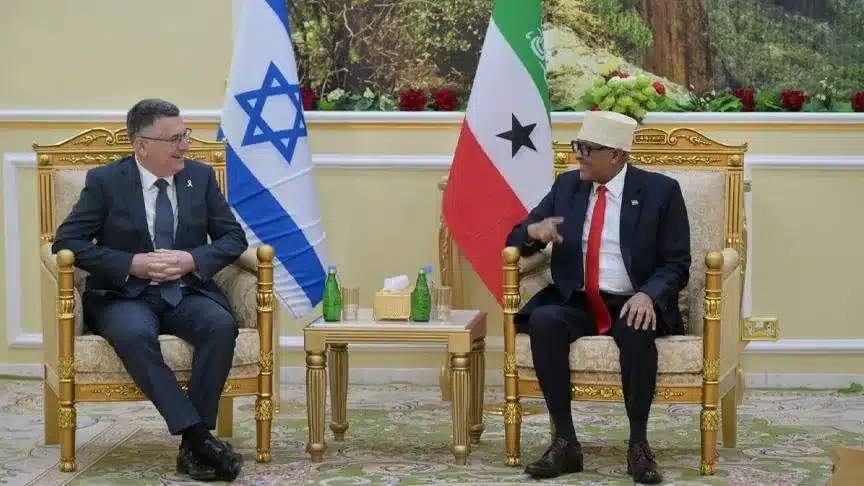
The warning comes as Israel deepens its diplomatic presence in Somaliland, including a recent visit by Israeli Foreign Minister Gideon Sa’ar to Hargeisa his first since Israel formally recognized the region. The move has sparked fears that besieged Gazans could become pawns in a geopolitical power play in the Horn of Africa.

A Resurrected Plan

The idea of relocating Palestinians has gained renewed traction amid the ongoing war on Gaza. Former U.S. President Donald Trump floated what he called a “peace plan” that proposed the permanent relocation of over two million Palestinians from Gaza to alternative territories.
نون بوست
Israeli Foreign Minister Gideon Sa’ar visited Hargeisa for the first time in late 2025

Netanyahu publicly praised what he described as the plan’s “bold vision,” and called for it to be seriously considered, despite widespread international condemnation.

As part of efforts to find potential host countries for such mass displacement, senior U.S. and Israeli sources confirmed that covert talks had been held with three East African entities—Sudan, Somalia, and Somaliland—to explore the possibility of resettling Gazans there.

Israeli officials reportedly led these behind-the-scenes negotiations in coordination with Trump’s team, offering financial and diplomatic incentives to countries willing to take part in the project.

Some Israeli ministers have not concealed their intentions. Finance Minister Bezalel Smotrich, for instance, stated openly that Israel was identifying countries willing to absorb Palestinians, and revealed the formation of a “large immigration department” within the Ministry of Defense to oversee the effort.

However, the plan has met with widespread Arab and international rejection, with many condemning it as an act of “ethnic cleansing.” Rather than relocation, Arab leaders have put forward a reconstruction initiative aimed at rebuilding Gaza while ensuring its people remain on their land.

This global opposition even prompted the Trump administration to officially backtrack, stating that any departure by Gazans—if it occurred—would be voluntary and temporary.

Israeli media reports later revealed that, by early 2026, the relocation plan had effectively been shelved after no country agreed to host Gaza’s population.

Why Somaliland?

Israel’s interest in Somaliland stems from both strategic geography and the region’s isolation. Located in the Horn of Africa, Somaliland offers a unique position to contain displaced Palestinians in a remote area, far from their homeland, with little prospect of return.

On December 26, 2025, Israel became the first UN member state to officially recognize Somaliland as an independent country a decision laden with geopolitical implications.

Although Israel claimed the recognition was not an act of hostility toward Somalia but rather an “opportunity for partnership,” the timing and context of the move raised serious doubts about its true motivations.

According to Somali Information Minister Daud Aweis, reliable intelligence indicated that Israel’s recognition came with strings attached specifically, that Somaliland would agree to host resettled Gazans on its territory.

Israel reportedly envisions placing hundreds of thousands of Palestinians in a volatile area bordered by Djibouti to the north (home to French and U.S. military bases), Ethiopia to the south and west, and the internationally unrecognized Somaliland government to the east.

Observers have described this potential scenario as a plan to trap Gazans in a “giant prison,” effectively cut off from the outside world and subject to strict political and security controls.

The Arab League, speaking before the United Nations, warned against any consequences arising from this “illegitimate” recognition, whether to forcibly transfer Palestinians or to establish military outposts at northern Somali ports.

Pakistan’s UN envoy also voiced deep concern, citing recent proposals that named Somaliland as a potential destination for deported Palestinians from Gaza.

The Strategic Lure

Beyond the relocation scheme, “Israel’s” growing interest in Somaliland is driven by several key strategic factors:

  • The region boasts nearly 460 miles of coastline along the Gulf of Aden near the Bab el-Mandeb Strait, a vital chokepoint for global maritime trade.

  • This makes it a prime location for monitoring international shipping lanes and countering militant threats in the region.

  • “Israel” has openly declared its intent to confront Yemen’s Iran-backed Houthi movement, which has targeted Red Sea shipping and engaged in direct fire with Israel during the recent Gaza war.

  • In this context, Somali Defense Minister Fiqi revealed that “Israel” is seeking to establish a military base in Somaliland, leveraging its proximity to Bab el-Mandeb, the Red Sea, and the Arabian Sea.

Analysts believe such a base would grant “Israel” unprecedented strategic depth in the Horn of Africa, and a forward-operating position to monitor and control regional trade and maritime routes.

As diplomatic pressure mounts on Israel to abandon its relocation plans, all eyes are now on how this latest geopolitical gambit in the Horn of Africa will unfold especially given the repeated failure of previous resettlement schemes and the universal refusal of countries to accept Gaza’s population.

Download this article as PDF
Share this Article
Facebook Twitter Whatsapp Whatsapp Telegram Email Copy Link
فريق التحرير
By فريق التحرير تقارير يعدها فريق تحرير نون بوست.
Follow:
Previous Article نون بوست Is Sudan Becoming the Next Battleground in the Saudi–UAE Rivalry?
Next Article نون بوست Saudi Monye, Pakistan’s Nuclear, and Turkey’s Military Power: Is an Islamic Alliance in the Making?

Read More

  • U.S. Regime‑Change Policies: Why They Are Destined to Fail U.S. Regime‑Change Policies: Why They Are Destined to Fail
  • The Gulf’s Balancing Act: Iran, Israel, and Hidden Links
  • Iraq–Turkey Oil Export Treaty: Why Did Ankara Cancel It After 52 Years?
  • Syria’s Northeast on Edge: QSD Between Ankara and Damascus
  • Has Europe Changed Its Stance on Israel… or Just Its Language?
part of the design
NoonPost Weekly Newsletter

You May Also Like

U.S. Regime‑Change Policies: Why They Are Destined to Fail

U.S. Regime‑Change Policies: Why They Are Destined to Fail

إسراء سيد Esraa sayed 8 April ,2026
The Gulf’s Balancing Act: Iran, Israel, and Hidden Links

The Gulf’s Balancing Act: Iran, Israel, and Hidden Links

فريق التحرير Noon Post 8 April ,2026
Iraq–Turkey Oil Export Treaty: Why Did Ankara Cancel It After 52 Years?

Iraq–Turkey Oil Export Treaty: Why Did Ankara Cancel It After 52 Years?

فريق التحرير Noon Post 8 April ,2026

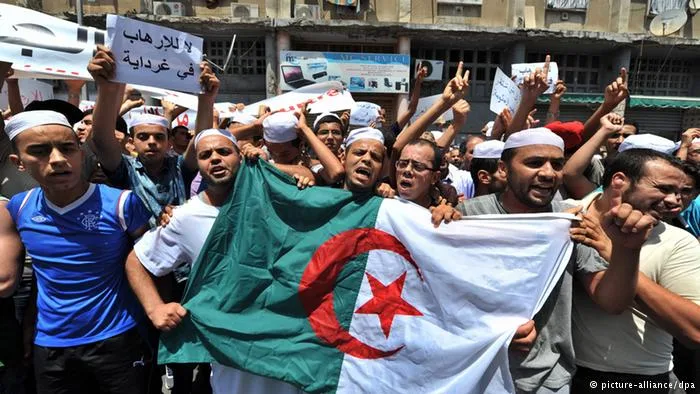
ما تريد أن تعرفه حول أزمة غرداية الجزائرية

فريق التحرير
Noon Post Published 11 July ,2015
Share
0,,18571602_303,00

تسود حالة من الارتباك والقلق في صفوف السلطات الجزائرية مع فقدانها لتصور واضح لحل الأزمة في محافظة غرداية (600 كلم جنوب العاصمة الجزائر) مع شعور بالعجز عن وقف تدهور الاوضاع الأمنية في هذه المنطقة الصحراوية وبلوغها مستوى من الخطورة، كانت السلطات تعتبر أن الوصول إليها يعني أن الأزمة ستصبح عسيرة على الحلّ، والأخطر من ذلك كله أن بعض الملاحظين يقدرون أن تواصلها يمكن أن يشعل صراعات مشابهة في مناطق أخرى من البلاد.

وتندرج هذه الأحداث في سياق الأزمة بين العرب المالكيين والأمازيغ الإباضيين التي اندلعت في كانون الأول/ديسمبر 2013، مع تسجيل استعمال الأسلحة النارية لأول مرة وتجاوز عدد الضحايا العشرين قتيل.

ارتباك النظام أمام تسارع الأحداث

وأمام تسارع الأحداث، بادر الرئيس الجزائري، عبدالعزيز بوتفليقة، لاتخاذ قرارين متناقضين حول أزمة غرداية في غضون أقل من 48 ساعة؛ اتخذ الأول الثلاثاء مطالبا بتكليف الجيش بإدارة الأزمة، ثم جاء الثاني لكي ينقضه ويعيد صلاحية تسيير الأزمة للداخلية.

وجاء في وسائل إعلام محسوبة على السلطة نقلا عن مصادر مقربة من الرئاسة بأن قرار الرئيس بوتفليقة إعادة ملف إدارة الأزمة الى الى وزارة الداخلية وقواتها الأمنية كان بهدف إبعاد الجيش عن أزمة قد تتحول قريبا إلى مستنقع خطر، وهو ما لم يقنع عديد المطلعين على خبايا المشهد الجزائري بالنظر إلى سرعة تكليف الجيش بملف الوضع الأمني في غرداية ثم سحبه منه بشكل أسرع.

واعتبر مراقبون أن مثل هذه القرارت المتذبذبة والمتسرعة كشفت أن السلطات الجزائرية ما تزال بلا خطة واضحة للحلّ بينما تزداد الأزمة خطورة ورغم أن بوادرها انطلقت منذ سنتين، كما ذهب بعض المحللين إلى أن أخذالقرار ونقيضه قد يكون ترجمانا لصراع أجنحة داخل السلطة لهما وجهتا نظر مختلفتين في التعاطي مع الوضع في المنطقة الصحراوية الملتهبة، بين طرح يريد الحسم باستخدام القوة والسطوة الأمنية للسيطرة على الوضع بحزم حتى لا تظهر السلطة في ثوب العاجز، وطرح ينادي بالمعالجة السياسية باعتبار أن إدخال عنف الدولة “الشرعي” في المعادلة قد يزيد في إشعال الأزمة، خاصة وأن كلا طرفي الصراع يعتبر أنه صاحب حق ومظلوم.

ويبدو أن بوتفليقة أراد فعلا أن يدفع بالجيش للواجهة لكنه تراجع في آخر لحظة لأنه خشي نتائج عسكرة المعالجة بعد أن نصحه بعض المقربين من بعدم المجازفة بإقحام الجيش في ملف غرداية في هذا التوقيت بالذات لأن ذلك يمكن ان يورط الجيش في معركة شاقة لا سيما اذا ما انتشرت في ربوع الجزائر، في حين أن مهمته الأساسية -الجيش-  تتعلق بحماية البلاد من الأخطار الإرهابية القادمة اليها من دول الجوار كليبيا..

وفي السياق ذاته، ذهبت تحاليل الكتاب المقربين من السلطة أن هذه الأحداث يمكن أن تركبها أطراف جزائرية عديدة غاضبة من النظام، لإطلاق شرارة “الربيع العربي” الذي تأجل حدوثه في الجزائر.

وقال مصدر أمني رفيع إن وزير الداخلية أمر بإجراء 3 تحقيقات، الأول يتعلق بنوعية الذخائر التي استعملت في الاعتداءات بالسلاح الناري ومصدرها، حيث وصل إلى المدينة 8 خبراء من معهد الأدلة الجنائية التابع للدرك الوطني من أجل فحص كل أنواع الذخائر التي تنزع من جثث الضحايا أو من الجرحى.  كما أمر بإجراء تحقيق حول شبهة وجود تقصير أمني بأمر من الرئيس بوتفليقة، أما التحقيق الثالث فيتعلق بشبهة وجود تخطيط يكون قد سبق مجزرة الڤرارة.

قراءات مُختلفة لجذور الإقتتال

عندما تسأل الجزائريين عن علاقة الميزابيين الأمازيغ الذين يعتنقون المذهب الإباضي، بالعرب الشعانبة السنة الذي يعتنقون المذهب المالكي، يجتمع أغلبهم على أنها من أرقى علاقات التعايش في تاريخ الجزائر عبر قرون من الزمن، في مدينة غرداية.

هذا التاريخ الجيد من التواصل بين الفرقتين لم يمنع ظهور مناوشات تحولت في السنوات القليلة الماضية إلى صراعات، ثم تطورت إلى صدامات أدت إلى سقوط ضحايا من الجانبين، وتحولت مدينة غرداية الهادئة إلى مركز لأعقد الأزمات التي تعيشها الجزائر.

وبدأت الأحداث الأخيرة في غرداية في شهر تشرين الثاني/نوفمبر الماضي بعد أن شهدت مدينة الڤرارة (110 كلم شمال شرقي غرداية)  مشادات عنيفة بين سكان عدد من أحياء المدينة، على خلفية اشتباكات دامية بين أنصار فريقين لكرة القدم جمعت فريقين من ذات المنطقة، وأسفرت المشادات آنذاك في يوم واحد عن إصابة ما لا يقل عن 60 شخصا بجروح منهم 20 من رجال الأمن و40 مواطنا 4 منهم إصاباتهم خطيرة.

غير أن هذه الأحداث ليست الأولى في المنطقة التي تبدأ باشتباكات ثم تأخذ أبعادا طائفية ومذهبية، لتبقى الأسباب الحقيقية في كل مرة غير واضحة،  حيث تتباين التحاليل لأصول ما يقع في غرداية، بين ترجيح للمنطلق الطائفي بين الأمازيغ والعرب، أو المذهبي بين الإباضيين والسنة، في حين يربطه بعضها بالأبعاد الإجتماعية والإقتصادية.

بشير مصيطفى، الوزيرالجزائري السابق والخبير الاقتصادي والذي واكب عن قرب الأوضاع في إطار مبادرة  التهدئة التي أطلقها في شهر أوت/آب 2014 ، وفي تحليله لجذورالأزمة يُقدّر أن ما يحصل هو نتيجة مباشرة لتظافر سببين أساسيين وهما ضعف مؤشرات التنمية وضعف الأداء الأمني الرسمي، إذ يعتبر أن ضعف مؤشرات التنمية زاد من الصراع حول الموارد الشحيحة وزاد من معدل البطالة وسط الشباب، وأن ضعف المنظومة الأمنية أضعف أداء القضاء في متابعة مستعملي العنف وقلل من دور استشراف وتوقع الأحداث بمعنى غياب اليقظة الاستراتيجية في المجال الأمني، كما يقلل من أهمية البعدين العرقي والمذهبي مستدلا بالتعايش بين العرب المالكيين والأمازيغ الاباضيين لمدة 10 قرون.

كما يشير مصيطفى في قراءته إلى وجود عوامل أخرى ساعدت على تفاقم الأوضاع وهي ظهور سلطة الشباب الجديد المستقل عن سلطة مجالس الأعيان عند الاباضية والمتأثر بشبكات التواصل الاجتماعي، والفرق المذهبي غير المتسامح بين الاباضية والمالكية الذي تغذي من السببين المذكورين، بالإضافة إلىما يعتبره وضعية الانعزال الاجتماعي والثقافي للاباضيين ( ضعف الاندماج مع العرب : السكن ، المساجد ، المقابر ، المدارس ، المراكز الثقافية ، المحاكم ) مما أفرز مناطق تماس ساخنة.

على صعيد آخر، يرى ويرى المختص في علم الاجتماع، ناصر جابي، أن الصراع في غرداية هو صراع “بين الغني والفقير”. ويعتقد جابي أن وجود مكونين اجتماعيين في المدينة أحدهما ميسور الحال (المزابيين) والآخر فقير (العرب) أدى إلى حدوث صراعات دائمة بينهما، ويعتبر أن محور ذلك الصراع كان دائما الموارد الطبيعية في المدينة كالأراضي الصالحة للزراعة والنزاعات حول قطع بناء مساكن للعرب الذين جاءوا من البدو.

وتعود جذور هذه الفوارق حسب جابي إلى كون المزابيين “ميسوري الحال” ويشتغلون في التجارة ولديهم موارد اقتصادية كبيرة منذ القدم، في حين أن العرب المالكيين “كانوا يشتغلون في الزراعة البسيطة ويربون الإبل والماشية في البوادي، لكن حين دخلوا للمدينة وجدوا أنفسهم فقراء مقارنة مع المزابيين، وقد نظر إليهم المزابيون على أنهم ينافسونهم على الموارد الاقتصادية”.

أما المحلل السياسي عبد العالي رزاقي، فيعتقد أن أزمة غرداية سببها صراع على مستوى السلطة، لأن غرداية منطقة مهمة بالنسبة للجزائريين، أولا باعتبار أن لها مذهب خاص هو الإباضية، إضافة إلى أنها تشكل أهمية كبيرة على المستوى الاقتصادي كون أغلبها تجار، ناهيك عن كونها أهم منطقة سياحية للجزائريين والأجانب، وفق تعبيره. ويعتبر رزاقي أن الصراع في غرداية ليس بين الإباضية والمالكية، وإنما بين “أطراف في السلطة”.

TAGGED: غرداية
Download this article as PDF
Share this Article
Facebook Twitter Whatsapp Whatsapp Telegram Email Copy Link
فريق التحرير
By فريق التحرير تقارير يعدها فريق تحرير نون بوست.
Follow:
Next Article نون بوست The Stigma of “ISIS”: A Heavy Legacy Haunting Women and Children of Former Members

Read More

  • U.S. Regime‑Change Policies: Why They Are Destined to Fail U.S. Regime‑Change Policies: Why They Are Destined to Fail
  • The Gulf’s Balancing Act: Iran, Israel, and Hidden Links
  • Iraq–Turkey Oil Export Treaty: Why Did Ankara Cancel It After 52 Years?
  • Syria’s Northeast on Edge: QSD Between Ankara and Damascus
  • Has Europe Changed Its Stance on Israel… or Just Its Language?
part of the design
NoonPost Weekly Newsletter

You May Also Like

U.S. Regime‑Change Policies: Why They Are Destined to Fail

U.S. Regime‑Change Policies: Why They Are Destined to Fail

إسراء سيد Esraa sayed 8 April ,2026
The Gulf’s Balancing Act: Iran, Israel, and Hidden Links

The Gulf’s Balancing Act: Iran, Israel, and Hidden Links

فريق التحرير Noon Post 8 April ,2026
Iraq–Turkey Oil Export Treaty: Why Did Ankara Cancel It After 52 Years?

Iraq–Turkey Oil Export Treaty: Why Did Ankara Cancel It After 52 Years?

فريق التحرير Noon Post 8 April ,2026
dark

An independent media platform founded in 2013, rooted in slow journalism, producing in-depth reports, analysis, and multimedia content to offer deeper perspectives on the news, led by a diverse young team from several Arab countries.

  • Politics
  • Society
  • Rights & Liberties
  • Opinions
  • History
  • Sports
  • Education
  • Technology
  • Economy
  • Media
  • Arts & Literature
  • Entrepreneurship
  • Travel
  • Cinema & Drama
  • Food
  • Health
  • Culture
  • Latest Reports
  • Files
  • Long Reads
  • Interviews
  • Podcast
  • Interactive
  • Encyclopedia
  • In Pictures
  • About Us
  • Our Writers
  • Write for Us
  • Editorial Policy
  • Advanced Search
Some rights reserved under a Creative Commons license

Removed from favorites

Undo
Go to mobile version