
A growing chorus of political and media voices in Israel is casting Turkey as the region’s next looming threat after Iran. This shift is not merely a reactive fluctuation triggered by recent statements or diplomatic spats; rather, it reflects a deliberate campaign to redefine Ankara in the global imagination from a difficult regional partner to an ideological adversary deserving of caution and suspicion.
Within this emerging narrative, Israel is foregrounding a complex web of accusations: from alleged ties to “terrorism” via its support for Hamas, to charges of antisemitism and persecution of Christians, and portrayals of Turkey’s leadership as driven by expansionist ambitions that destabilize the Middle East.
It is worth tracing how this mobilization is unfolding, who is leading it, why it is intensifying now, and what Israel hopes to gain politically and strategically. Equally important is understanding the tools being used and the potential implications for regional and global alignments.
The New Israeli Discourse on Turkey
For decades, Israeli discourse toward Turkey fluctuated between cautious partnership and managed tension. But in recent years, a striking transformation has occurred: Turkey is no longer merely an “irksome ally” but is now cast as a “dangerous ideological foe.” This evolution goes beyond a shift in tone; it represents a concerted effort to delegitimize Turkey’s regional role and tarnish its global image.
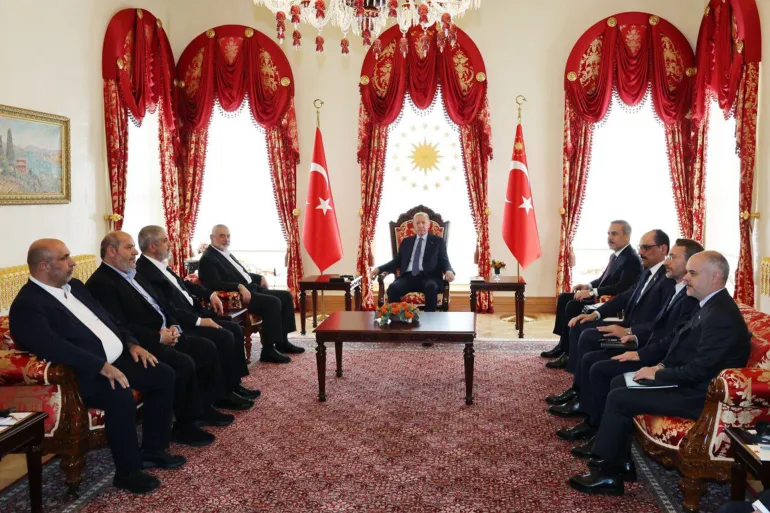
At the heart of this narrative are allegations of support for “terrorism,” centered on Turkey’s relationship with Hamas. Israeli officials highlight Ankara’s refusal to designate Hamas a terrorist organization and its hosting of some of the group’s leaders.
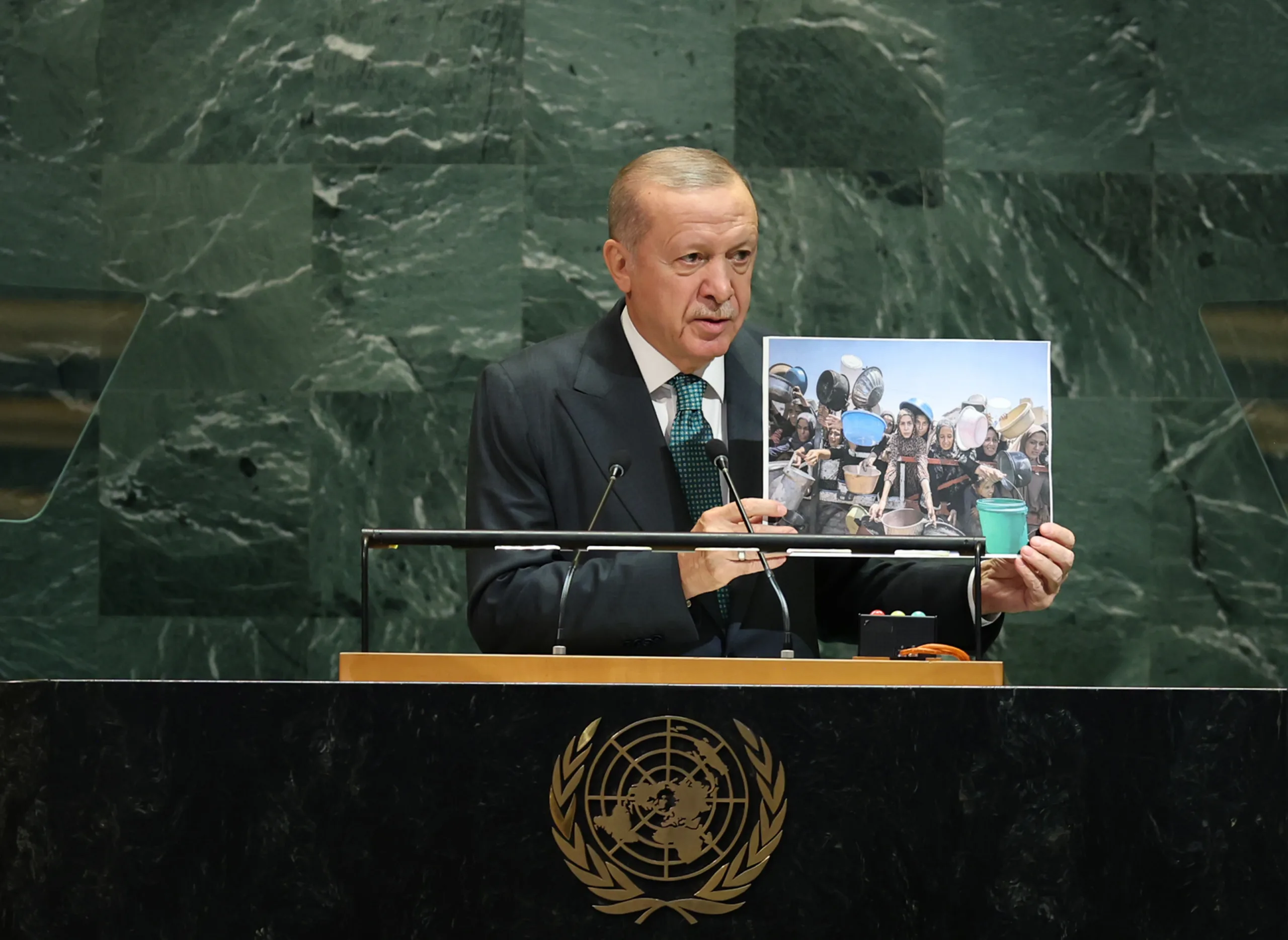
These accusations peaked after the October 7, 2023, attack, when President Recep Tayyip Erdoğan condemned Israeli operations in Gaza and described Hamas as a “national liberation movement,” not a terrorist group, accusing Israel of committing war crimes.
This stance triggered an uproar in Tel Aviv, prompting The Jerusalem Post to label Erdoğan an “open enemy of Israel.” Israeli media followed with reports alleging that documents found in Gaza revealed Hamas plans to establish a clandestine network in Turkey offered as proof that Turkish territory was being used to facilitate hostile activity against “Israel”.
The second prong of Israel’s narrative accuses Turkey of antisemitism. In this framing, Ankara’s critiques of Israeli policies are no longer seen as political objections but as systematic incitement against Jews. Israeli officials and media figures accuse Erdoğan of using state platforms and pro-government media to disseminate antisemitic rhetoric under the guise of Palestinian solidarity.
Mass demonstrations in Turkish cities waving Hamas flags and denouncing Zionism are cited as evidence of collective demonization of Jews. Columnists like David Ben Bassat claim that Turkey has directly contributed to a global surge in antisemitism. Official statements have gone even further, branding Erdoğan a “Jew-hating tyrant.”
The third narrative leverages the issue of religious minorities, focusing particularly on claims of Christian persecution in Turkey. This aspect is aimed at appealing to Western, especially conservative Christian, audiences.
In late 2025, Prime Minister Benjamin Netanyahu, speaking to American evangelical leaders, listed Turkey among countries where Christians face persecution, pointing to a growing international alliance to protect these communities despite the fact that tens of thousands of Christians in Turkey officially enjoy freedom of worship.
Israeli media has also exploited symbolic moves by Ankara, such as converting Hagia Sophia back into a mosque, to depict Turkey as an opponent of Western civilization and values, while framing Israel as a guardian of religious pluralism in the region.
The fourth narrative focuses on what Israel calls Turkey’s “ideological extremism” and “expansionist drive.” In this view, Erdoğan is portrayed as an Islamist leader bent on reviving the Ottoman Empire at the expense of Middle Eastern stability. The concept of “Neo-Ottomanism” is deployed negatively in Israeli media to describe Ankara’s regional ambitions, including alliances with groups like the Muslim Brotherhood and Hamas, and its ties to Israel’s rivals such as Iran and Qatar.
Israel cites Turkey’s military activity in nearby theaters especially Syria as strategic threats. A key government advisory body, the Nagel Committee, warned that the growing Turkish military presence in Syria could pose a danger comparable to Iran, potentially even leading to direct confrontation if Syria became a corridor for Turkish forces toward Israel’s borders.
Statements allegedly made by Erdoğan comparing potential Turkish interventions in Israel to past operations in Libya and Nagorno-Karabakh have fueled security debates in Israeli media about possible scenarios of conflict, even if largely speculative.
Adding to these narratives, Israel often references Turkey’s domestic record to reinforce its image as a “malicious adversary.” Israel’s Foreign Ministry regularly criticizes Ankara for suppressing dissent and undermining the rule of law, arguing that a regime that jails its own citizens lacks the moral authority to criticize others.
Israeli ministers have labeled Erdoğan a “dictator” and a regional threat, while opposition leaders like Benny Gantz have warned that “the Erdoğan regime is a threat to global stability.”
Despite political differences, both the Israeli right and left converge on one point: portraying Turkey as a comprehensive ideological enemy, not just a temporary regional rival.
Who Is Driving This Campaign?
The hostile turn in Israeli discourse toward Turkey is not the result of spontaneous outrage. It is the product of a coordinated campaign led by a full-spectrum political-media apparatus.
At the forefront is Netanyahu’s right-wing government, which returned to power just before the 2023 Gaza war and made Turkey a central theme of its confrontational foreign policy.
Netanyahu has personally fueled this campaign, repeatedly linking Ankara’s criticism of Israel to antisemitism and insinuating that Turkey persecutes Christians. This posture dates back years, as Netanyahu has long sought international condemnation of Erdoğan, calling his statements “shameful” and urging global disavowal.
Israeli foreign and security officials have also played a central role. Successive foreign ministers have used combative language toward Erdoğan. Former Foreign Minister Avigdor Lieberman, for example, called the Turkish president a “bully and antisemite,” and condemned Europe’s silence on his rhetoric.
Security and military institutions have contributed to this narrative through leaked reports and official warnings. Notably, the Nagel Committee’s recommendations on defense spending published in a pro-government newspaper identified Turkey as a growing threat and advocated for a more assertive Israeli stance, especially in Syria.
In the media, right-leaning Israeli outlets have spearheaded the campaign. The Jerusalem Post has published numerous reports and op-eds portraying Erdoğan as “part of the problem, not the solution,” and a “declared enemy of Israel.” Israel Hayom, closely aligned with Netanyahu, has warned of escalating Turkish military moves in Syria that could reach Israel’s borders.
International Jewish news platforms and think tanks such as JNS and the Jerusalem Center for Strategic Studies have amplified the message, producing a steady stream of content promoting the idea of a “Turkish threat.” Some reports openly ask whether Turkey is “the next big threat” after Iran.
Even more measured Israeli think tanks, such as the Institute for National Security Studies (INSS), have joined the conversation. One paper described Turkey in Israeli public discourse as “the new Iran.”
This momentum is further supported by pro-Israel lobbying groups in Washington and other Western capitals, which are working to reframe Turkey as a “problematic ally” within NATO. Academic-style reports highlight Ankara’s departure from Western consensus citing its purchase of Russia’s S-400 missile system and military involvement in Syria to argue that Turkey under Erdoğan is an unreliable partner.
There is also indirect coordination with Arab regional actors opposed to Turkey, who use media messaging to warn against “Ottoman revivalism,” drawing on the legacy of regional power rivalries.
In sum, Israel’s “Turkophobia” campaign is not the product of a single entity but of a tightly coordinated system: political leaders, security institutions, media platforms, think tanks, and foreign lobbying networks all working together to craft a coherent narrative that frames Turkey as a multifaceted threat security-wise, ideologically, and civilizationally. The aim is to lay the groundwork for more aggressive Israeli policies toward Ankara both regionally and internationally.
A growing chorus of political and media voices in Israel is casting Turkey as the region’s next looming threat after Iran. This shift is not merely a reactive fluctuation triggered by recent statements or diplomatic spats; rather, it reflects a deliberate campaign to redefine Ankara in the global imagination from a difficult regional partner to an ideological adversary deserving of caution and suspicion.
Within this emerging narrative, Israel is foregrounding a complex web of accusations: from alleged ties to “terrorism” via its support for Hamas, to charges of antisemitism and persecution of Christians, and portrayals of Turkey’s leadership as driven by expansionist ambitions that destabilize the Middle East.
It is worth tracing how this mobilization is unfolding, who is leading it, why it is intensifying now, and what Israel hopes to gain politically and strategically. Equally important is understanding the tools being used and the potential implications for regional and global alignments.
The New Israeli Discourse on Turkey
For decades, Israeli discourse toward Turkey fluctuated between cautious partnership and managed tension. But in recent years, a striking transformation has occurred: Turkey is no longer merely an “irksome ally” but is now cast as a “dangerous ideological foe.” This evolution goes beyond a shift in tone; it represents a concerted effort to delegitimize Turkey’s regional role and tarnish its global image.
At the heart of this narrative are allegations of support for “terrorism,” centered on Turkey’s relationship with Hamas. Israeli officials highlight Ankara’s refusal to designate Hamas a terrorist organization and its hosting of some of the group’s leaders.
These accusations peaked after the October 7, 2023, attack, when President Recep Tayyip Erdoğan condemned Israeli operations in Gaza and described Hamas as a “national liberation movement,” not a terrorist group, accusing Israel of committing war crimes.
This stance triggered an uproar in Tel Aviv, prompting The Jerusalem Post to label Erdoğan an “open enemy of Israel.” Israeli media followed with reports alleging that documents found in Gaza revealed Hamas plans to establish a clandestine network in Turkey—offered as proof that Turkish territory was being used to facilitate hostile activity against Israel.
The second prong of Israel’s narrative accuses Turkey of antisemitism. In this framing, Ankara’s critiques of Israeli policies are no longer seen as political objections but as systematic incitement against Jews. Israeli officials and media figures accuse Erdoğan of using state platforms and pro-government media to disseminate antisemitic rhetoric under the guise of Palestinian solidarity.
Mass demonstrations in Turkish cities waving Hamas flags and denouncing Zionism are cited as evidence of collective demonization of Jews. Columnists like David Ben Bassat claim that Turkey has directly contributed to a global surge in antisemitism. Official statements have gone even further, branding Erdoğan a “Jew-hating tyrant.”
The third narrative leverages the issue of religious minorities, focusing particularly on claims of Christian persecution in Turkey. This aspect is aimed at appealing to Western, especially conservative Christian, audiences.
In late 2025, Prime Minister Benjamin Netanyahu, speaking to American evangelical leaders, listed Turkey among countries where Christians face persecution, pointing to a growing international alliance to protect these communities despite the fact that tens of thousands of Christians in Turkey officially enjoy freedom of worship.
Israeli media has also exploited symbolic moves by Ankara, such as converting Hagia Sophia back into a mosque, to depict Turkey as an opponent of Western civilization and values, while framing Israel as a guardian of religious pluralism in the region.
The fourth narrative focuses on what Israel calls Turkey’s “ideological extremism” and “expansionist drive.” In this view, Erdoğan is portrayed as an Islamist leader bent on reviving the Ottoman Empire at the expense of Middle Eastern stability.
The concept of “Neo-Ottomanism” is deployed negatively in Israeli media to describe Ankara’s regional ambitions, including alliances with groups like the Muslim Brotherhood and Hamas, and its ties to Israel’s rivals such as Iran and Qatar.
Israel cites Turkey’s military activity in nearby theaters—especially Syria—as strategic threats. A key government advisory body, the Nagel Committee, warned that the growing Turkish military presence in Syria could pose a danger comparable to Iran, potentially even leading to direct confrontation if Syria became a corridor for Turkish forces toward Israel’s borders.
Statements allegedly made by Erdoğan comparing potential Turkish interventions in Israel to past operations in Libya and Nagorno-Karabakh have fueled security debates in Israeli media about possible scenarios of conflict, even if largely speculative.
Adding to these narratives, Israel often references Turkey’s domestic record to reinforce its image as a “malicious adversary.” Israel’s Foreign Ministry regularly criticizes Ankara for suppressing dissent and undermining the rule of law, arguing that a regime that jails its own citizens lacks the moral authority to criticize others.
Israeli ministers have labeled Erdoğan a “dictator” and a regional threat, while opposition leaders like Benny Gantz have warned that “the Erdoğan regime is a threat to global stability.”
Despite political differences, both the Israeli right and left converge on one point: portraying Turkey as a comprehensive ideological enemy, not just a temporary regional rival.
Who Is Driving This Campaign?
The hostile turn in Israeli discourse toward Turkey is not the result of spontaneous outrage. It is the product of a coordinated campaign led by a full-spectrum political-media apparatus.
At the forefront is Netanyahu’s right-wing government, which returned to power just before the 2023 Gaza war and made Turkey a central theme of its confrontational foreign policy. Netanyahu has personally fueled this campaign, repeatedly linking Ankara’s criticism of Israel to antisemitism and insinuating that Turkey persecutes Christians. This posture dates back years, as Netanyahu has long sought international condemnation of Erdoğan, calling his statements “shameful” and urging global disavowal.
Israeli foreign and security officials have also played a central role. Successive foreign ministers have used combative language toward Erdoğan. Former Foreign Minister Avigdor Lieberman, for example, called the Turkish president a “bully and antisemite,” and condemned Europe’s silence on his rhetoric.
Security and military institutions have contributed to this narrative through leaked reports and official warnings. Notably, the Nagel Committee’s recommendations on defense spending published in a pro-government newspaper identified Turkey as a growing threat and advocated for a more assertive Israeli stance, especially in Syria.
In the media, right-leaning Israeli outlets have spearheaded the campaign. The Jerusalem Post has published numerous reports and op-eds portraying Erdoğan as “part of the problem, not the solution,” and a “declared enemy of Israel.” Israel Hayom, closely aligned with Netanyahu, has warned of escalating Turkish military moves in Syria that could reach Israel’s borders.
International Jewish news platforms and think tanks such as JNS and the Jerusalem Center for Strategic Studies have amplified the message, producing a steady stream of content promoting the idea of a “Turkish threat.” Some reports openly ask whether Turkey is “the next big threat” after Iran.
Even more measured Israeli think tanks, such as the Institute for National Security Studies (INSS), have joined the conversation. One paper described Turkey in Israeli public discourse as “the new Iran.”
This momentum is further supported by pro-Israel lobbying groups in Washington and other Western capitals, which are working to reframe Turkey as a “problematic ally” within NATO. Academic-style reports highlight Ankara’s departure from Western consensus citing its purchase of Russia’s S-400 missile system and military involvement in Syria to argue that Turkey under Erdoğan is an unreliable partner.
There is also indirect coordination with Arab regional actors opposed to Turkey, who use media messaging to warn against “Ottoman revivalism,” drawing on the legacy of regional power rivalries.
In sum, Israel’s “Turkophobia” campaign is not the product of a single entity but of a tightly coordinated system: political leaders, security institutions, media platforms, think tanks, and foreign lobbying networks all working together to craft a coherent narrative that frames Turkey as a multifaceted threat security-wise, ideologically, and civilizationally. The aim is to lay the groundwork for more aggressive Israeli policies toward Ankara both regionally and internationally.
Why Turkey?
The intensifying Israeli discourse against Turkey raises a central question: why is Tel Aviv now demonizing Ankara and casting it as “the next enemy,” instead of focusing solely on its traditional adversary, Iran? The answer lies in a convergence of regional and domestic factors that have reshaped Israel’s threat hierarchy.
First, Israeli strategists perceive Turkey as beginning to fill a strategic vacuum in the region once dominated by Iranian influence. After years of focusing on what it calls the “Iran and its proxies axis” across Syria, Lebanon, and Gaza, Israel sees Ankara emerging as a major player in these same sensitive arenas.
Turkey has developed direct ties with Palestinian factions, most notably Hamas, expanded its footprint in Syria through alliances with opposition groups and arrangements with Russia, and signaled interest in shaping post-war arrangements in Gaza.
These developments have led Israeli political and security circles to treat Turkey as a “strategic rival alternative” capable of threatening Israeli interests across multiple theaters—especially Syria. Some Israeli reports warn that Ankara could pose a long-term challenge as significant as Iran, opening the door to a new era of confrontation.
Second, both internal and external calculations are pushing Israel to expand its roster of enemies. Domestically, some Israeli analysts argue that hyping a new foreign threat helps unify the fractured political landscape and deflect internal tensions.
The country experienced a deep societal rift in 2023 over judicial reforms, temporarily overshadowed by the Gaza war. With Iran receding slightly from center stage, invoking the “Turkish threat” enables continued public mobilization around an external adversary, helping absorb internal discord and giving the government more room to maneuver.
Externally, casting Turkey as a rival sends a message to Western allies that Israel faces not just Iran but a broader range of destabilizing regional forces. This bolsters Israel’s image as a frontline defender against multiple threats.
In this narrative, Turkey represents the face of what Israel calls “Sunni extremism” or “the Muslim Brotherhood camp,” in contrast to the “Shiite extremism” embodied by Iran.
Third, Israel possesses potent rhetorical tools for turning Western opinion against Turkey. Unlike Iran, Ankara is part of the Western alliance system a NATO member with longstanding ties to Europe and the US. This positioning allows Israel to spotlight perceived contradictions between Turkey’s actions and Western values.
The charges of “antisemitism” and “Christian persecution” are particularly effective propaganda tools. Accusations of antisemitism carry unique weight when directed at a Western-aligned country, while allegations of Christian persecution resonate powerfully among conservative Christian circles in the US and Europe.
According to the Israeli view, these narratives aim to isolate Ankara diplomatically and erode its Western support, while presenting Israel as a principled defender of universal human values. Turkey has countered this framing by accusing Israel of weaponizing such allegations to manipulate Western media and build international consensus for its actions in Palestine. Ankara argues that the invocation of Christian protection is merely a ploy to curry favor with the evangelical right and justify Israel’s war in Gaza.
Fourth, the timing of the escalation is critical. The hardening of Israeli rhetoric against Turkey coincided with the peak of tensions in Gaza in late 2023 and beyond, when Ankara’s criticism of Israel reached unprecedented levels. Turkish leaders accused Israel of committing genocide and demanded international accountability.
Israel responded with diplomatic retaliation, including temporarily recalling its ambassador from Ankara a sign of disillusionment with a government it had, just a year earlier, hoped to engage through a renewed normalization track.
With Turkey clearly aligning itself with the Palestinians, Israel moved quickly to limit Ankara’s post-war role. It opposed any Turkish involvement in ceasefire talks or Gaza reconstruction efforts, and sought to block Turkish participation in potential international peacekeeping forces.
President Erdoğan himself cautioned against conflating opposition to Israeli policies with hostility toward Turkey’s Jewish community, framing such conflation as a red line. These statements aimed to undermine Israel’s depiction of Ankara as a religious agitator, and to reassert that Turkey’s stance was rooted in legitimate political and humanitarian concerns—not antisemitic ideology.
Similarly, Ankara rejected accusations of supporting terrorism, insisting that its relationship with Hamas is political, aimed at fostering Palestinian reconciliation rather than promoting violence. The Turkish Foreign Ministry responded to Israeli demands to expel Hamas leaders from Istanbul by emphasizing that Hamas is a democratically elected Palestinian movement, and that dialogue with it is part of a broader conflict resolution strategy.
Ankara also highlighted its role in humanitarian mediation, including efforts to secure the release of Israeli hostages in late 2023 alongside Qatar.
Turkey has made deliberate efforts to reinforce its international image as a rational, pragmatic regional actor, resisting attempts to caricature it as an extremist force. It has pursued a multi-track foreign policy: maintaining its NATO commitments and cooperation with the West on security matters while keeping open channels with Russia and Iran.
Turkey’s global standing has been further enhanced through its mediation roles in complex crises and its swift humanitarian aid to Gaza after the ceasefire. These efforts have bolstered Ankara’s reputation as a responsible power that combines military capability with diplomatic engagement a sharp contrast to the depiction pushed by Israeli discourse.
In the short term, Israeli rhetoric toward Turkey is likely to remain inflamed, fueling mutual recriminations without culminating in total diplomatic rupture or real reconciliation. While Israel has succeeded in shaping Turkey’s image as a hostile actor within certain international circles, it has failed to build a global consensus against Ankara. Conversely, Turkey has weathered the pressure campaign and retained its stature as an influential regional player despite the political and media noise.
Ultimately, Israeli “Turkophobia” appears to be a tactical instrument for short-term political gain, rather than a sustainable long-term strategy. As regional and global dynamics shift, this narrative may erode or be redirected. For now, the Israeli-Turkish relationship remains in flux, hostage to shifting calculations and subject to sudden turns that could redraw the region’s map of enemies and allies.