





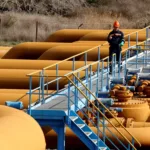



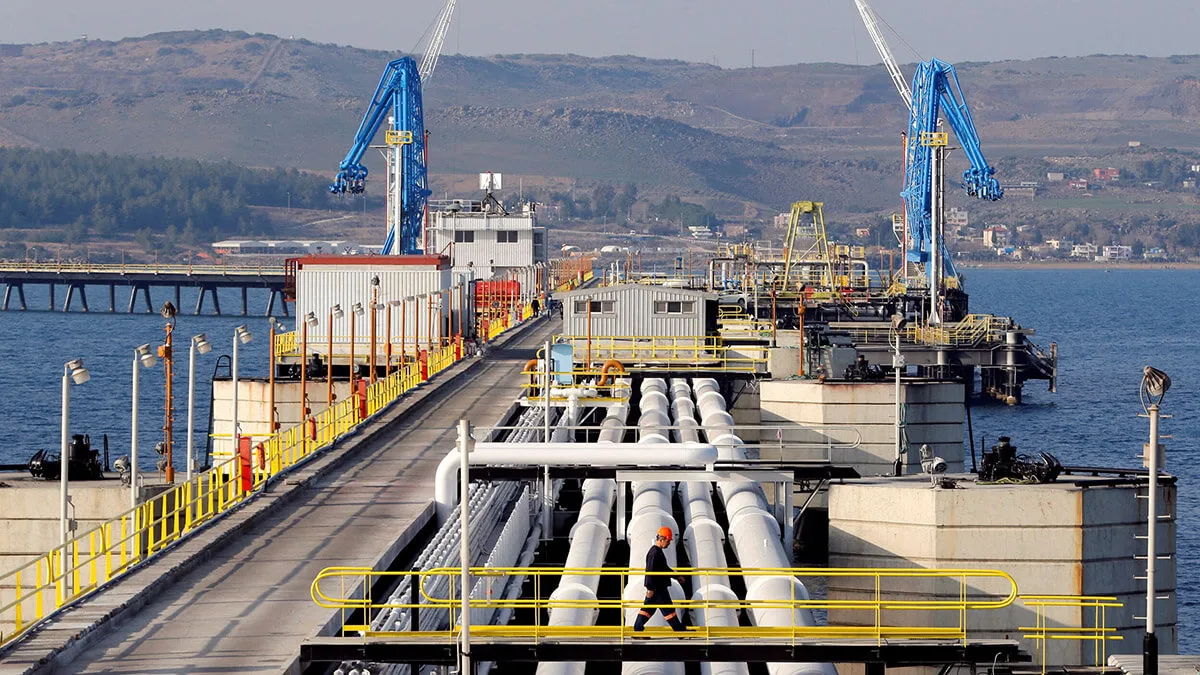
The resumption of operations along the Kirkuk–Ceyhan oil pipeline marks a pivotal moment in the regional energy landscape. It comes at a time when Iraq’s economy is facing structural challenges, and its impact extends far beyond oil and commerce—it is reshaping political and security dynamics among Baghdad, Erbil, and Ankara.
For more than half a century, the Kirkuk–Ceyhan pipeline has been more than a conduit for crude; it has mirrored the shifting tides of regional politics—from nationalizations and wars to sanctions and internal divisions. Despite repeated shutdowns, sabotage, and revivals, the pipeline has stood as a testament to how geography and economic necessity can impose continuity in one of the world’s most volatile regions.
An Economic Lifeline
The renewed flow of oil through Kirkuk–Ceyhan provides critical support to Iraq’s revenue stream, especially given the state’s heavy reliance on oil to finance its national budget. It also eases pressure on southern export routes and gives Baghdad greater flexibility in managing its oil exports.
For the Kurdistan Region, the pipeline’s return is a double-edged sword. On one hand, it enables the resumption of oil exports after a crippling halt that damaged the local economy and hampered the region’s ability to pay salaries and fund public services. On the other, it recalibrates the legal and political relationship with the federal government, reducing the autonomy that Erbil had enjoyed in recent years.
Turkey, meanwhile, views the pipeline’s reactivation as an opportunity to cement its role as a key hub in the regional energy network. It also boosts its negotiating leverage with Iraq, the EU, and global energy firms. Internationally, the restart reflects growing concern over securing energy supply amid geopolitical turbulence.
Political and Economic Origins of the Kirkuk–Ceyhan Pipeline (1958–1979)
The Kirkuk–Ceyhan pipeline was never merely a technical venture it was born of sweeping political and economic shifts in Iraq and Turkey starting in the late 1950s. Following Iraq’s 1958 revolution, Baghdad pursued greater sovereignty over its oil resources.
At the same time, Turkey was grappling with repeated failures to find domestic oil and felt isolated, particularly after the U.S. response during the 1964 Cyprus crisis. These pressures drove Ankara to seek stable energy sources, drawing it closer to oil-rich neighbors chief among them, Iraq.
This rapprochement culminated in a 1965 trade agreement that made Iraq a key market for Turkish exports, and Turkey a primary buyer of Iraqi oil. After Syria shut down the Kirkuk–Baniyas pipeline in 1967 amid the war, Baghdad reassessed its export options and viewed a direct route through Turkey as a safer, politically less costly alternative.
In 1967, Iraqi President Abdul Rahman Arif visited Ankara, resulting in a preliminary agreement to construct a pipeline linking Kirkuk to the Mediterranean port of Ceyhan. Exports began via rail in 1968, and by the early 1970s, Iraq was supplying nearly 75% of Turkey’s oil imports. However, political instability in both countries delayed pipeline construction.
Iraq’s nationalization of the Iraq Petroleum Company’s concessions on June 1, 1972, revived the project. It granted Baghdad greater control over its resources and motivated it to accelerate efforts to find export routes outside the grip of Western firms or regional alliances. Turkey, in turn, supported the move and entered direct talks.
On May 1, 1973, Iraq’s National Oil Company and Turkey’s state oil firm signed a protocol to build a pipeline with an initial capacity of 500,000 barrels per day (bpd), expandable in the future.
Stretching nearly 600 miles, the pipeline runs from Kirkuk through Diyarbakir to the port of Ceyhan. Baghdad agreed to pay a transit fee of 35 cents per barrel and supply Turkey with preferentially priced oil for domestic use.
But the 1973 Yom Kippur War and the ensuing Arab oil embargo upended expectations. Oil prices quadrupled, Turkey couldn’t afford the new costs, and Iraq, needing funds, refused to grant concessions. Disputes over pricing and transit fees led to a temporary halt.
The project resumed in April 1975. Iraq completed its portion in September 1976, and Turkey followed in December. The line officially opened in January 1977, though flows remained below capacity just 160,000 bpd compared to the planned 500,000 due to financial disputes, Turkey’s delayed payments, and disagreements over water rights on the Euphrates.
In December 1977, Iraq suspended pumping entirely over Turkish debts of roughly $230 million. The impasse lasted until August 1978, when the two sides reached a barter deal involving cash payments and agricultural and industrial goods. This salvaged the oil relationship just as prices spiked after Iran’s revolution.
The Pipeline’s Golden Decade (1980–1990)
Despite the Iran–Iraq war’s early strains, the Kirkuk–Ceyhan pipeline performed strongly after 1981, as global oil prices declined. By 1982, with Iraq’s Gulf export terminals under Iranian blockade, Kirkuk–Ceyhan became Baghdad’s primary indeed, only export outlet.
Baghdad and Ankara invested in doubling capacity. A parallel line was built, boosting total throughput to 1 million bpd, later raised to 1.5 million bpd by 1988, making it the largest pipeline system in the Middle East at the time.
Sanctions and Slow Decline (1990–2003)
From 1977 to 2003, Kirkuk–Ceyhan enjoyed remarkable continuity, facing only one total shutdown between 1991 and 1996, when Turkey enforced UN sanctions following Iraq’s invasion of Kuwait.
Exports later resumed under the Oil-for-Food Program but never returned to pre-sanctions levels. The real rupture came after the 2003 US-led invasion. Coalition forces bombed Iraq’s IT2-A pumping station north of Baiji, and insurgents launched repeated attacks on oil infrastructure.
Erbil’s Independent Exports and Baghdad’s Backlash
After 2003, legal deadlock over a national hydrocarbons law allowed the Kurdistan Regional Government (KRG) to exert de facto control over northern oil. In 2007, the KRG passed its own oil and gas law, formed local companies, and signed dozens of contracts with foreign firms without Baghdad’s approval. The central government deemed these moves unconstitutional.
Starting in 2013, the KRG began exporting oil independently through Turkey. This revenue stream was crucial for the region, but it sparked a constitutional and political crisis. Baghdad accused Ankara of violating the 1973 Kirkuk–Ceyhan treaty, which mandates federal oversight of exports through Turkish territory.
The rise of ISIS in 2014 further disrupted development projects and foreign investment. Divisions deepened within the Kurdish political landscape, with the Kurdistan Democratic Party (KDP) and the Patriotic Union of Kurdistan (PUK) accusing each other of mismanaging oil revenues.
The 2023 Shutdown and Legal Dispute with Turkey
Despite Baghdad’s objections, the KRG continued its independent exports. Tensions peaked in 2022, when Iraq’s Supreme Federal Court annulled the KRG’s 2007 oil law, invalidating contracts with international companies.
This led to a legal battle in the International Chamber of Commerce, where Baghdad sued Turkey in 2014 for facilitating unauthorized exports. In March 2023, the court ruled in Iraq’s favor, ordering Turkey to pay $1.5 billion in damages. Oil flows through the Kirkuk–Ceyhan line were halted.
At the time of closure, the line was transporting about 500,000 bpd—far below its 1.5 million bpd capacity. The halt cost the KRG billions, paralyzed salary payments, and hurt SMEs. Baghdad, less dependent on the line due to southern ports, suffered less. According to the Kurdistan Oil and Gas Association, Iraq’s total losses exceeded $35 billion.
After negotiations involving Baghdad, Erbil, Ankara, and international oil firms, Iraq resumed exports through Kirkuk–Ceyhan in September 2025, ending a two-and-a-half-year hiatus.
Under the new framework, Iraq’s SOMO now manages exports, with the KRG receiving a share of revenues. Turkey, in turn, tied future deals to expanded cooperation on gas, electricity, petrochemicals, and possibly water resources.
Initial flows restarted modestly at 200,000 bpd. Still, the political symbolism was significant. Turkish Energy Minister Alparslan Bayraktar called it the dawn of a new energy partnership with Iraq and set July 2026 as the deadline for a comprehensive agreement.
Iraqi Oil Minister Hayan Abdul-Ghani emphasized the goal of boosting revenues and stabilizing flows. KRG Prime Minister Masrour Barzani called the gas resumption a historic achievement.
Economic Implications of the Kirkuk–Ceyhan Restart
Resuming the pipeline has broad economic implications. It not only increases export volume but also reshapes Iraq’s economic architecture and federal-regional relations, intertwining local, Turkish, and international interests.
Iraq: Export Flexibility and Revenue Stability
Economic pressure drove Baghdad and Erbil toward compromise. Between September and December 2025, more than 13 million barrels flowed through the line. Iraq currently exports 4 million bpd, mostly via Basra. Kirkuk–Ceyhan offers an alternative route to Europe, relieving southern pressure and enhancing Baghdad’s flexibility.
Political analyst Yassin Aziz called the restart a breakthrough after 18 years of stalled negotiations. While flows currently hover at 200,000 bpd, there is optimism about rising to 400,000. Aziz stressed the need for a national energy law to clarify jurisdiction and prevent future disputes.
Kurdistan: Recovery Under Federal Oversight
The years-long shutdown dealt a major blow to the KRG, crippling salary payments and shrinking activity in agriculture, industry, and tourism. It also fueled illegal oil smuggling.
Now, the region can resume paying overdue salaries and fund essential services. Yet the KRG can no longer manage exports independently. It must channel revenues to the federal treasury a historic shift toward unified oil policy after two decades of constitutional disputes.
Turkey: From Transit Fees to Strategic Leverage
For Turkey, the pipeline’s return is both financially lucrative and geopolitically valuable. Economically, Ankara benefits from transit fees—about $1.5 per barrel—netting $250–300 million annually. Port operations at Ceyhan add another $365 million. Turkey has invested billions in rehabilitating pipeline infrastructure and is now pushing for a more comprehensive and profitable deal.
Strategically, Kirkuk–Ceyhan cements Turkey’s role as a key conduit between Middle Eastern oil producers and European markets. It enhances Ankara’s leverage in dealings with the EU and energy giants while reinforcing its regional influence. Though Turkey consumes only a fraction of Kirkuk oil, the pipeline mainly serves European nations like Italy, Spain, and Greece.
Ankara’s eagerness to reopen the line reflects its awareness of its strategic importance, especially after a two-year closure amid Erbil–Baghdad tensions.
Regional and Global Reactions
Amid volatile prices and global competition over secure export routes, Kirkuk–Ceyhan’s resumption has wider geopolitical implications. Its 40- and 46-inch twin lines have a combined capacity of up to 1.5 million bpd about 2.5% of global oil demand.
Iran has responded with tactical caution. While it doesn’t oppose higher Iraqi exports outright, Tehran is wary of arrangements that could expand Turkey’s role.
Washington, in contrast, welcomed the agreement, viewing it as a blow to Iran’s access to discounted Kurdish oil, which Tehran resold at inflated prices. The pipeline also enables international firms to operate under Iraq’s federal legal framework, avoiding regional entanglements.
The US State Department praised the Baghdad–Erbil–Turkey–IOC accord, noting US facilitation.
Russia, meanwhile, aims to bolster its role in Iraq’s energy sector. Russian firms are reactivating operations in Kurdistan and seeking investment opportunities.
Researcher Hamzeh Haddad emphasized the American interest in curbing illegal Kurdish oil flows to Iran and revitalizing halted oil projects. The US sees the pipeline as a tool to counter Iran’s regional clout.
Nonetheless, obstacles remain from financial and legal uncertainties to ongoing drone attacks on Kurdistan’s oilfields, reportedly by Iran-backed militias.
Federal courts have also questioned the validity of KRG-signed deals with majors like Total, QatarEnergy, BP, Chevron, and Hong Kong-based firms deals worth tens of billions. These companies now seek legal clarity.
Ultimately, the Kirkuk–Ceyhan restart reflects a shared desire among Baghdad, Erbil, Turkey, and international stakeholders to stabilize oil exports and rebuild trust. The move may mark a turning point in Iraq’s energy saga, and a step toward overcoming decades of political discord.