NoonPost NoonPost

NoonPost

  • Home
  • Politics
  • Economy
  • Society
  • Culture
  • Files
  • Long Reads
  • Podcast
AR
Notification Show More
نون بوست
“There Are Nights I Can’t Close My Eyes”: How Gazans Are Living in Homes on the Brink of Collapse
نون بوست
From al-Jolani to Ahmad al-Shara: The Evolution of Syria’s New Leader
نون بوست
When Political Islam Receded in Egypt: Who Filled the Void?
نون بوست
An Extension of Genocide: Gaza’s Detainees Speak Out
نون بوست
A Tightrope Between Survival and Sovereignty: The Syrian Government Faces Normalization Pressures
نون بوست
American Aircraft Carriers: Has the Era of “100,000 Tons of Diplomacy” Ended?
نون بوست
U.S. Regime‑Change Policies: Why They Are Destined to Fail
نون بوست
Transformations of Israeli Judaism: Between the Victim Complex and the Colonizer’s Doctrine
نون بوست
The Gulf’s Balancing Act: Iran, Israel, and Hidden Links
نون بوست
Iraq–Turkey Oil Export Treaty: Why Did Ankara Cancel It After 52 Years?
نون بوست
Syria’s Northeast on Edge: QSD Between Ankara and Damascus
نون بوست
Has Europe Changed Its Stance on Israel… or Just Its Language?
NoonPost NoonPost
AR
Notification Show More
نون بوست
“There Are Nights I Can’t Close My Eyes”: How Gazans Are Living in Homes on the Brink of Collapse
نون بوست
From al-Jolani to Ahmad al-Shara: The Evolution of Syria’s New Leader
نون بوست
When Political Islam Receded in Egypt: Who Filled the Void?
نون بوست
An Extension of Genocide: Gaza’s Detainees Speak Out
نون بوست
A Tightrope Between Survival and Sovereignty: The Syrian Government Faces Normalization Pressures
نون بوست
American Aircraft Carriers: Has the Era of “100,000 Tons of Diplomacy” Ended?
نون بوست
U.S. Regime‑Change Policies: Why They Are Destined to Fail
نون بوست
Transformations of Israeli Judaism: Between the Victim Complex and the Colonizer’s Doctrine
نون بوست
The Gulf’s Balancing Act: Iran, Israel, and Hidden Links
نون بوست
Iraq–Turkey Oil Export Treaty: Why Did Ankara Cancel It After 52 Years?
نون بوست
Syria’s Northeast on Edge: QSD Between Ankara and Damascus
نون بوست
Has Europe Changed Its Stance on Israel… or Just Its Language?
Follow US

Maduro and the Return of the Global Law of the Jungle

سجود عوايص
Sujoud Awais Published 26 March ,2026
Share
نون بوست
نون بوست

The idea of modern state sovereignty did not emerge in a vacuum. Rather, it crystallized from the chaos of Europe’s bloodiest and most tumultuous wars. In 1648, the Peace Treaties of Münster and Osnabrück brought an end to three decades of religious conflict, establishing a new order in international relations built on the principle of absolute state sovereignty over national territory and internal affairs.

To uphold this principle, states agreed to a mutual non-interference pact and to treat one another as equals, regardless of size or strength. Political allegiance shifted from the Church to the state a transition many viewed as the symbolic burial of religion, the key driver of Europe’s devastating religious wars.

Today, the Peace of Westphalia is widely regarded as the founding moment of modern international law a governing framework for inter-state relations that protects sovereignty and bases interaction on treaties and agreements.

Yet this system, for much of its early existence, was exclusive to Europe. It would later be used to justify colonialism and to divide the world into “civilized” and “barbaric” nations.

As geopolitical rivalry shifted from Europe to the Global South, the Westphalian order failed to prevent the outbreak of the First and Second World Wars. The solution, then, was to transition from a “might makes right” order to one based on “lawful power,” giving rise first to the League of Nations and then to the United Nations.

Law, When Convenient

A wave of legal frameworks followed, imposed by the so-called civilized world: international humanitarian law, human rights law, and a string of treaties backed by the UN Security Council, armed with the veto power, and endorsed by the General Assembly. These legal mechanisms came cloaked in moral rhetoric but were applied with striking selectivity.
نون بوست

Thus, the Global North retained control over the Global South, with conflicts framed through the lens of international law. Its statutes aligned neatly with power dynamics, morphing law into a tool of politics rather than an arbiter over it.

At pivotal moments, this legal system showed strength enforcing decisions with the backing of powerful states. At other times, it was rendered toothless, reduced to expressions of “deep concern” by a series of UN Secretaries-General who appeared to have been appointed more to worry than to act.

But this dynamic is no longer confined to North-South relations. Increasingly, conflicts between Southern states have been shaped by legal systems that serve the interests of great powers. Consider, dear reader, the failure of the international justice system over the past decade illustrated by examples both familiar and distant.

In Yemen, for instance, airstrikes began targeting civilians in 2015 with Western backing or silence. Despite extensive documentation of thousands of civilian deaths, systemic starvation, and a naval blockade using Western-made weapons the international legal system offered little more than reports of condemnation. Even those investigative teams were later disbanded under political pressure.

In Myanmar, remember the 2017 genocide against the Rohingya? Seven hundred thousand people displaced, entire villages wiped from the map. What did international law do? It referred the case to international courts, abandoned the victims in refugee camps, and quietly walked away from justice because, in this case, justice was never the point.

Or take Afghanistan not the US-led invasion, but the chaotic withdrawal after two decades of occupation. No accountability for the primary perpetrators behind thousands of civilian deaths. A nation left in total economic and societal collapse.

And Gaza how could you not know Gaza? Genocide, displacement, starvation, hospital bombings and burnings, entire families annihilated, civilians systematically targeted. A political and public discourse openly advocating for ethnic cleansing. Use of internationally banned weapons. And what did the law do?

Two years of “concern,” paralyzed UN Security Council sessions, threats leveled against the International Criminal Court, and a stalled International Court of Justice process. When either court dared whisper terms like “illegal occupation” or “possible genocide,” their words failed to resonate beyond the walls of the courtroom. Their rulings dissolved at the door.

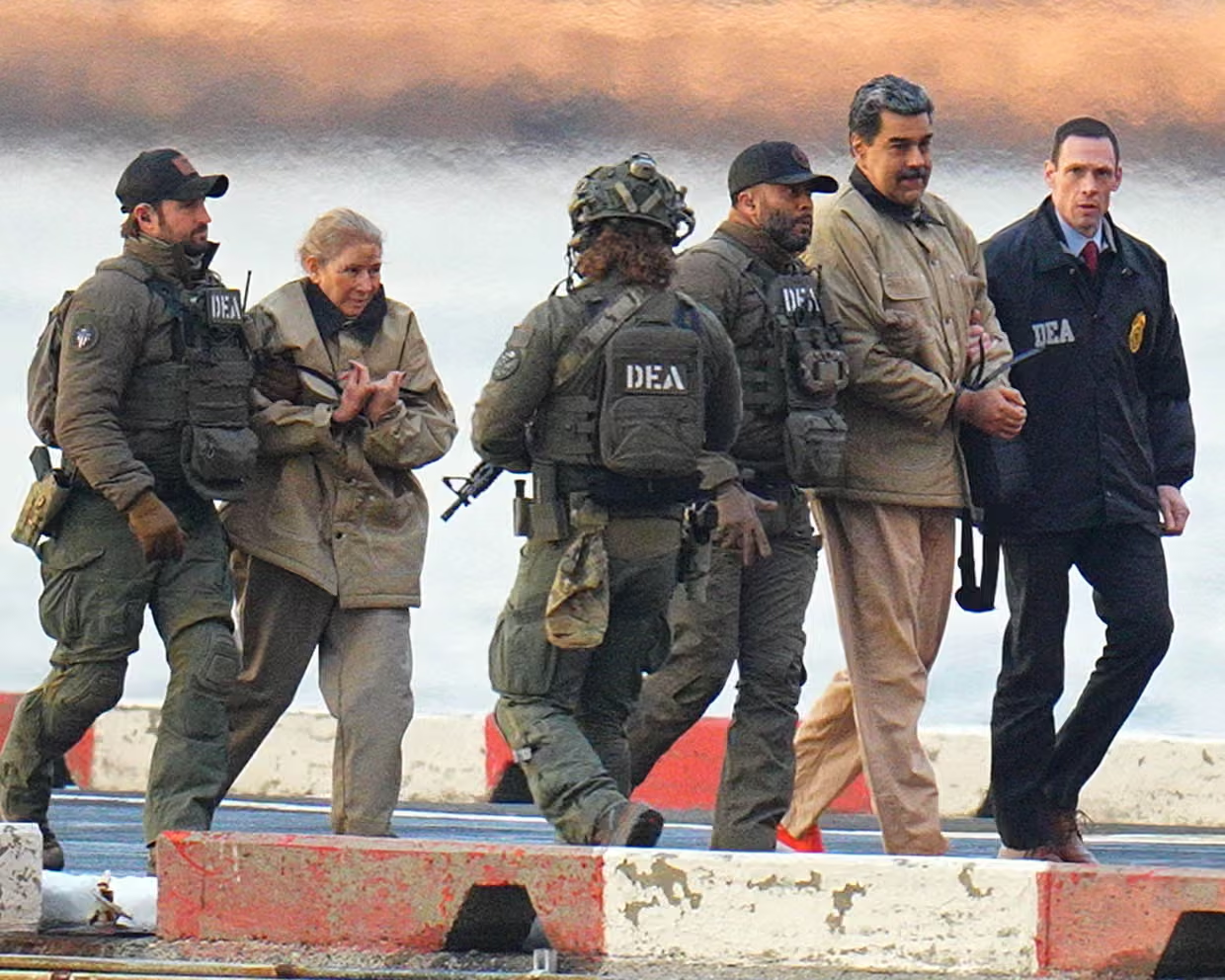
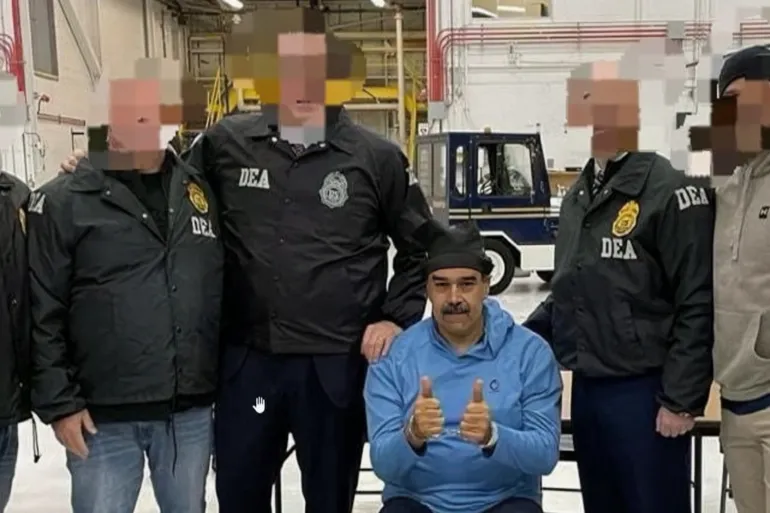
Now, with all this in mind, you can likely predict how international law and justice will respond to the military abduction of Venezuelan President Nicolás Maduro—snatched from a military compound in his own country, by force, and taken to New York for interrogation and trial on charges of drug trafficking and terrorism. The fault lines in international justice are clear to see.

When Force Advances, Law Recedes

On January 3, 2026, the U.S. Department of Defense’s Delta Force launched a precision military operation in the heart of Venezuela. The strike targeted a port, the presidential palace, and the defense minister’s residence. Maduro and his wife were abducted from the capital and flown to New York, where the president now faces trial.

This operation described as “surgical” for its precision brazenly violated multiple principles of international law and the UN Charter. Chief among them is Article 2 of the UN Charter, which prohibits the use of force against the territorial integrity or political independence of any state, unless explicitly authorized by the Security Council or carried out in self-defense.

The abduction essentially, the extrajudicial arrest of a sitting head of state also violates the doctrine of full immunity granted to heads of state and official representatives, whether or not they are accused of crimes. International conventions maintain that kidnapping contravenes the foundational principle of sovereign immunity.

Notably, the crimes Washington accuses Maduro of drug trafficking, gang violence, even selling oil to U.S. adversaries do not meet the international threshold for war crimes, genocide, or involvement in armed conflict. The use of force and the breach of sovereign immunity in this context constitutes a stark violation of international law.

The legal justifications typically required to authorize force such as Security Council mandates or documented self-defense claims were absent. No extradition procedures were followed. This was an unsanctioned, unilateral act of military aggression.

The operation extended beyond the abduction: it was also an assertion of U.S. control over Venezuela’s political future. President Donald Trump openly stated his intent to “reshape” the country a direct infringement on a nation’s right to self-determination, protected under international law.

In bombing ports and government sites, the U.S. violated international humanitarian law principles regarding the protection of civilian infrastructure and the principle of distinction. According to the Geneva Conventions and their First Protocol, disproportionate civilian casualties—32 Venezuelans killed—also amount to a grave breach.

These killings may also constitute extrajudicial executions in violation of the International Covenant on Civil and Political Rights. They undermine the right to life outside the context of legitimate armed conflict and defy UN principles on the use of force.

What the U.S. has done could become a new template: a model of international justice in which powerful states abduct foreign leaders with impunity, under the shield of Security Council vetoes. Today it’s Venezuela; tomorrow it could be Ukraine, Iran, Syria, or Taiwan each targeted under similar pretexts, with no real accountability in sight.

Eichmann or Noriega: How the U.S. Justifies Its Violations

The abduction of Maduro has been described as a dangerous legal precedent, but was it truly unprecedented?

In 1960, Israeli Mossad agents kidnapped Adolf Eichmann, a senior Nazi officer, from Argentina. Despite Argentina’s protest to the Security Council, Eichmann’s trial in Israel proceeded. The charges—crimes against humanity, genocide were universally recognized, and his lack of legal immunity was widely accepted.

Even so, the legality of Eichmann’s abduction remains contentious to this day.

In contrast, the charges against Maduro—based on U.S. domestic indictments—do not carry the same global consensus or legal standing. Nor do they justify military intervention, even if framed as preemptive defense, as U.S. Ambassador to the UN Mike Waltz attempted by citing Article 51 of the UN Charter, which permits self-defense in the event of an armed attack.

Moreover, Maduro retains his head-of-state immunity, regardless of U.S. and European claims about the legitimacy of his presidency. As long as other nations recognize him, his status—and protections—remain intact.

The clearest historical parallel is the U.S. invasion of Panama in 1989. Then-President Manuel Noriega was forcibly taken to the U.S. for trial on drug trafficking charges, following an invasion that killed thousands and devastated Panama’s infrastructure. Washington had already withdrawn recognition from Noriega, but the Security Council rejected the self-defense rationale. Still, the invasion went unpunished.

The UN General Assembly overwhelmingly condemned the action, citing Article 2 of the UN Charter but it could neither stop the trial nor hold the U.S. accountable.

So, while Maduro’s abduction may not be a legal first, it sets a dangerous precedent: not a legal one, but a coercive one. It builds on an old transgression that was never punished, turning it into a replicable pattern.

In an era when international law is more developed than ever strengthened by the Rome Statute and doctrines of sovereign immunity and individual accountability this makes the Maduro case uniquely perilous.

Ultimately, dear reader, this dizzying ride through the history of international law and its violations may offer a sobering reality check: ideals don’t govern the world. Power does.

Power creates the law. It bends the law. It buries or elevates it at will. Law is but a tool amplified by money, media, and yet more power. This is how the world is ruled, how the weak are managed. Without power, all that’s left are stories. Nothing more.

Download this article as PDF
Share this Article
Facebook Twitter Whatsapp Whatsapp Telegram Email Copy Link
سجود عوايص
By سجود عوايص باحثة في قضايا الإعلام الفلسطيني والقانون الدولي الإنساني.
Follow:
Previous Article نون بوست How Oil Is Redrawing Politics Between Baghdad, Erbil, and Ankara
Next Article نون بوست Syrian-Israeli Talks Resume in Paris: What Do We Know So Far?

Read More

  • U.S. Regime‑Change Policies: Why They Are Destined to Fail U.S. Regime‑Change Policies: Why They Are Destined to Fail
  • The Gulf’s Balancing Act: Iran, Israel, and Hidden Links
  • Iraq–Turkey Oil Export Treaty: Why Did Ankara Cancel It After 52 Years?
  • Syria’s Northeast on Edge: QSD Between Ankara and Damascus
  • Has Europe Changed Its Stance on Israel… or Just Its Language?
part of the design
NoonPost Weekly Newsletter

You May Also Like

U.S. Regime‑Change Policies: Why They Are Destined to Fail

U.S. Regime‑Change Policies: Why They Are Destined to Fail

إسراء سيد Esraa sayed 8 April ,2026
The Gulf’s Balancing Act: Iran, Israel, and Hidden Links

The Gulf’s Balancing Act: Iran, Israel, and Hidden Links

فريق التحرير Noon Post 8 April ,2026
Iraq–Turkey Oil Export Treaty: Why Did Ankara Cancel It After 52 Years?

Iraq–Turkey Oil Export Treaty: Why Did Ankara Cancel It After 52 Years?

فريق التحرير Noon Post 8 April ,2026

من هو الضابط هشام عشماوي أمير “المرابطين” في مصر؟

فريق التحرير
Noon Post Published 23 July ,2015
Share
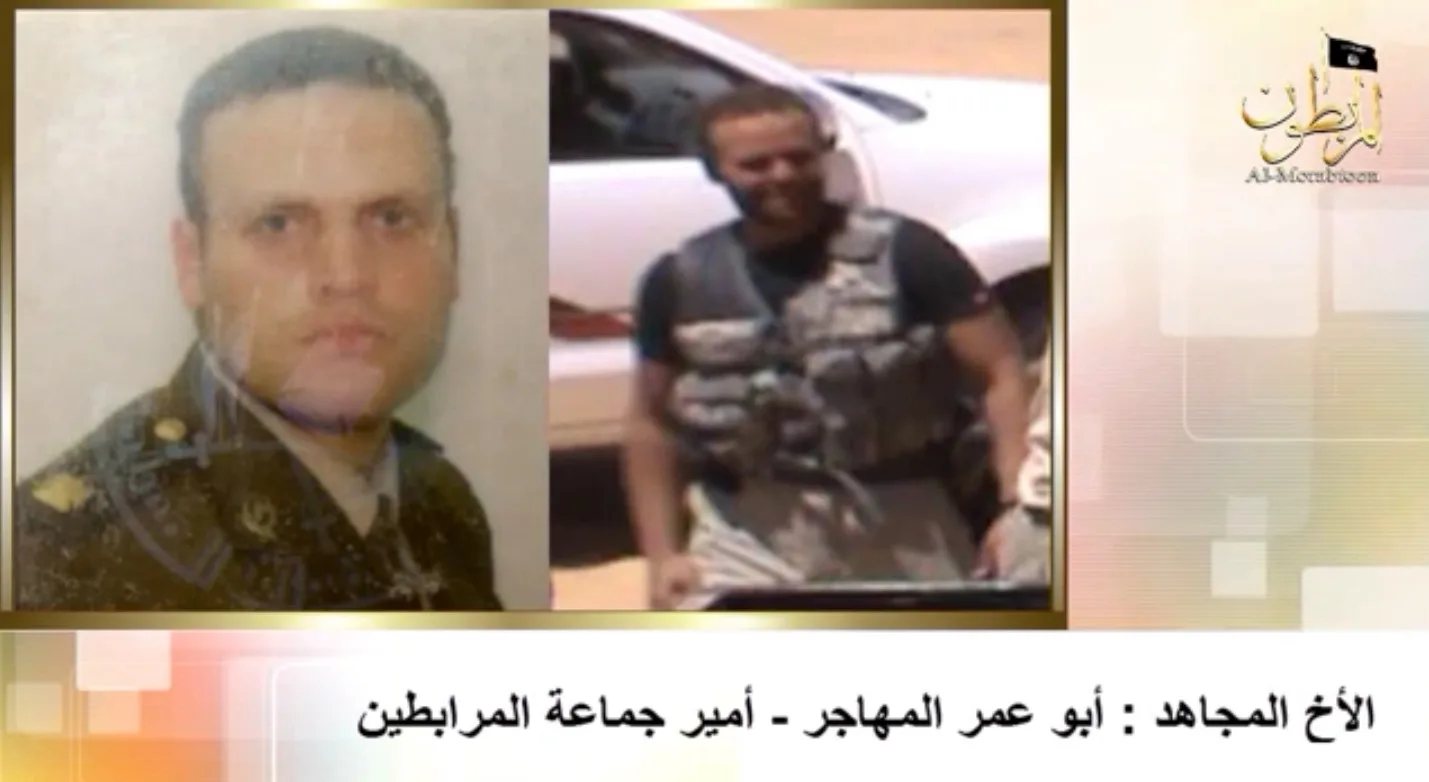
screen_shot_2015-07-23_at_5

ظهر بالأمس تسجيل صوتي منسوب إلى ضابط صاعقة مصري سابق يُدعى “هشام علي عشماوي مسعد إبراهيم” لقب نفسه في المقطع المسجل بأبي عمر المهاجر، وقد ترددت أنباء في السابق أن عشماوي هو أحد القيادات الميدانية لتنظيم أنصار بيت المقدس الذي تحول اسمه إلى “ولاية سيناء” بعد مبايعته لتنظيم الدولة الإسلامية “داعش”.

استهل الفيديو مقطعًا مسجلًا يُظهر كلمة لزعيم تنظيم القاعدة الحالي، أيمن الظواهري، يدعو فيه الأمة إلى “الجهاد بالبيان كما تُجاهد بالسنان” على حد وصفه، ظهور الظواهري في مطلع رسالة عشماوي أثار الجدل حول حقيقة انتمائه الحالي لتنظيم ولاية سيناء، بيد أن البعض رجح عملية انشقاقه عن التنظيم بعد بيعة الأنصار لتنظيم الدولة، إذ يُرجح المتابعون للشأن الجهادي أن ثمة انشقاق داخلي في جماعة أنصار بيت المقدس في سيناء بعد إعطاء البيعة لتنظيم الدولة، فيُرجح أن هناك جناحًا يُصنف على أنه قاعدي يدين بالولاء لتنظيم القاعدة وهو الذي يُحسب عليه الآن عشماوي بحسب مراقبين.

انتقل المقطع المنسوب إلى عشماوي إلى كلمة له بدأها بتهنئة الأمة الإسلامية بحلول عيد الفطر، ثم أردف محرضًا على الرئيس المصري الجنرال السيسي داعيًا إلى الجهاد ضده، وهو الأمر الذي وصفه بأنه فرض عين على كل مسلم لا عذر له في القعود عنه، معلنًا بهذا عن وجود تنظيم جهادي تحت إمرته باسم “المرابطون”.

الجدير بالذكر أن هشام عشماوي قد تردد اسمه كأحد المتهمين الرئيسين في قضية اغتيال النائب العام المصري “هشام بركات” بعد استهداف موكبه في يونيو الماضي، لم تكن هذه المرة الأولى التي يتردد فيها اسم عشماوي في الأوساط الإعلامية المصرية، ففي أكتوبر من العام الماضي تحدث البعض عن ضابط صاعقة سابق يتولى قيادة العمليات الميدانية لتنظيم أنصار بيت المقدس، فمن هو هشام عشماوي؟ وما هي المعلومات المتاحة عنه حتى الآن من خلال ما يتم تدواله بين النشطاء المصريين؟

عشماوي الذي يبلغ من العمر 35 عامًا أحد ضباط القوات المسلحة المصرية منذ منتصف التسعينيات، عمل بالصاعقة المصرية كفرد تأمين بها ونقل البعض عنه نبوغه وتفوقه في تدريبات فرق الصاعقة في مختلف مراحل حياته العسكرية، زوجته نسرين حسن التي تعمل كأستاذة بجامعة عين شمس تؤكد أن هشام عشماوي ظل في الخدمة العسكرية حتى عام 2012 على قوة سلاح الدفاع الشعبي بعد أن تم عزله من سلاح الصاعقة وذلك طبقًا للتحقيقات الأمنية التي تمت وتتم معها باستمرار منذ ظهور اسم زوجها على الساحة المصرية.

بداية التحولات لدى عشماوي كضابط عسكري متفوق مشهود له بالكفاءة من كافة زملائه وقادته كان في مطلع الألفينيات، حيث ظهرت عليه بوادر التزام ديني ومحاولات لنشر أفكار وصفت بأنها متشددة، من بين هذه البوادر التي حُكيت في حياة هشام أنه وبخ قارئًا للقرآن في أحد المساجد التي كان يُصلي بها بسبب أخطاء في أحكام التلاوة، وظل هشام عشماوي هكذا حتى أُحيل إلى محكمة عسكرية بسبب الشبهات التي أثيرت حوله، وقد برزت رواية بأن عشماوي تم تسريحه من الجيش في العام 2009 ورواية أخرى تقول إنه استبعد من الجيش على إثر حكم المحكمة العسكرية في حالته في نهاية العام 2011 مطلع 2012 وهي الرواية المطابقة لشهادة زوجته في التحقيقات الأمنية.

عمل عشماوي في سيناء مدة عشر سنوات وهو ما يفسر معرفته جيدًا بجغرافيتها؛ ما ساعد تنظيم أنصار بيت المقدس كثيرًا في معاركه ضد الجيش في سيناء، عقب فصل عشماوي من الخدمة وانقطاع علاقته بالمؤسسة العسكرية التي لطالما روج بين الجنود والضباط أفكارًا تدور حول عدم إطاعة أوامر القادة بها.

كون بعد ذلك خلية تضم مجموعة من الجهاديين يُقال إن من بينهم 4 ضباط شرطة مفصولين من الخدمة وآخرين من الجيش التحقوا بعد ذلك بتنظيم أنصار بيت المقدس، المعلومات المتوافرة عن هشام تتحدث عن سفره إلى سوريا إبان اندلاع الثورة السورية والدخول السلاح على خط مواجهة النظام، حيث تردد هشام على معسكرات لجبهة النصرة التابعة لتنظيم القاعدة، كذلك تحدثت تقارير أخرى عن علاقة هشام عشماوي الوطيدة بالقاعدة في ليبيا والمغرب العربي عمومًا، وهي التي يتردد عشماوي عليها حتى الآن في درنة.

هشام عشماوي متهم بالضلوع في التخطيط والتنفيذ لكافة العمليات النوعية الكبرى التي تمت في مصر من بينها محاولة اغتيال وزير الداخلية السابق محمد إبراهيم وقضية عرب شركس التي أُعدمت على خلفيتها الخلية التي تم القبض عليها، كما اتهم بأنه المخطط الأول والمشارك في تنفيذ مذبحة كمين الفرافرة، في شهر يوليو 2014، وهي العملية التي قتل فيها 22 مجندًا بالجيش، واتهم أيضًا بالمشاركة في استهداف الكتيبة 101 في شهر فبراير من هذا العام بعد اقتحامها، كما اعتبره البعض المدرب الرئيسي في التنظيم الذي ساهم في تشكيل نواة الخبرة العسكرية لدى أفراد التنظيم في سيناء.

ترددت أنباء عن إصابة هشام عشماوي في اشتباكات مع قوات الجيش على طريق السويس، وهو ما استلزم سفره إلى ليبيا وترك القيادة إلى عناصر جهادية أخرى فُصلت من القوات المسلحة تلقت تدريبات على يديه، كما تحدث نشطاء عن نجاح عشماوي في تجنيد العديد من العناصر المنتمية للقوات المسلحة المصرية في مختلف الأسلحة واستشهدوا بواقعة ضابط البحرية أحمد عامر الذي حاول اختطاف قطعة بحرية مصرية بعد قتل طاقمها بالكامل، وقد آثر سلاح الجوي المصري تدمير القطعة البحرية بمن عليها لغلق القضية تمامًا وعدم فتح ملف العناصر الجهادية التي تساعد عشماوي من الداخل.

بهذا الفصل الجديد الذي أعلنه عشماوي عبر إدخاله لجماعة جهادية جديدة على خط المواجهة مع الدولة في مصر، يكون  تنظيم المرابطين هذه المرة تحت راية القاعدة، بعد أن تأكد انشقاق عشماوي عن تنظيم “ولاية سيناء” التابع لتنظيم الدولة، وليكون أيضًا ثالث الجماعات الجهادية على الأراضي المصرية التي تتبنى العنف في مواجهة نظام السيسي بعد ولاية سيناء وأجناد مصر.

وقد تحدث متابعون عن إثر هذا الخبر على الساحة الجهادية في مصر، بحيث أن خسارة تنظيم أنصار بيت المقدس لخبرة عشماوي سوف يؤثر عليه من الجانب العملياتي البحت، دون مزيد من الحديث عن التنظيم الوليد “المرابطون” التابع للقاعدة والذي يبدو وأنه امتداد لتنظيم المرابطين الذي ينشط في شمال مالي والصحراء الكبرى، وهو الذي أكد أيضًا تبعيته لتنظيم القاعدة بعد أن عزل أميره السابق المبايع لتنظيم الدولة “عدنان أبوالوليد”، وهو ما يؤكد أن ثمة نشاطًا قاعديًا يتجه نحو المغرب العربي ومصر لمواجهة تمدد تنظيم الدولة في هذه المناطق.

الأمر يترك تساؤلات مطروحة حول مصير العلاقة بين تنظيم المرابطين الجديد في مصر بقيادة عشماوي وهو الجناح القاعدي السابق في ولاية سيناء الذي رفض البيعة لتنظيم الدولة، وبين الجناح البغدادي في التنظيم السيناوي الذي بايع تنظيم الدولة، خاصة مع تبادل الاتهامات بين قيادات القاعدة و قيادات تنظيم الدولة، وسابقة الاقتتال فيما بينهما في سوريا، وكذلك التساؤلات مطروحة عن إذا ما كان نشاط ولاية سيناء سوف ينحصر في شبه جزيرة سيناء بعد أن انشق العقل المدبر للعمل داخل الوادي “هشام عشماوي” الذي ربما يتولى بتنظيمه الجديد مواجهة النظام في عقر داره بالعاصمة القاهرة.

TAGGED: أنصار بيت المقدس ، الإرهاب ، الجيش المصري ، تنظيم القاعدة ، جماعة المرابطون
Download this article as PDF
Share this Article
Facebook Twitter Whatsapp Whatsapp Telegram Email Copy Link
فريق التحرير
By فريق التحرير تقارير يعدها فريق تحرير نون بوست.
Follow:
Next Article نون بوست The Stigma of “ISIS”: A Heavy Legacy Haunting Women and Children of Former Members

Read More

  • U.S. Regime‑Change Policies: Why They Are Destined to Fail U.S. Regime‑Change Policies: Why They Are Destined to Fail
  • The Gulf’s Balancing Act: Iran, Israel, and Hidden Links
  • Iraq–Turkey Oil Export Treaty: Why Did Ankara Cancel It After 52 Years?
  • Syria’s Northeast on Edge: QSD Between Ankara and Damascus
  • Has Europe Changed Its Stance on Israel… or Just Its Language?
part of the design
NoonPost Weekly Newsletter

You May Also Like

U.S. Regime‑Change Policies: Why They Are Destined to Fail

U.S. Regime‑Change Policies: Why They Are Destined to Fail

إسراء سيد Esraa sayed 8 April ,2026
The Gulf’s Balancing Act: Iran, Israel, and Hidden Links

The Gulf’s Balancing Act: Iran, Israel, and Hidden Links

فريق التحرير Noon Post 8 April ,2026
Iraq–Turkey Oil Export Treaty: Why Did Ankara Cancel It After 52 Years?

Iraq–Turkey Oil Export Treaty: Why Did Ankara Cancel It After 52 Years?

فريق التحرير Noon Post 8 April ,2026
dark

An independent media platform founded in 2013, rooted in slow journalism, producing in-depth reports, analysis, and multimedia content to offer deeper perspectives on the news, led by a diverse young team from several Arab countries.

  • Politics
  • Society
  • Rights & Liberties
  • Opinions
  • History
  • Sports
  • Education
  • Technology
  • Economy
  • Media
  • Arts & Literature
  • Entrepreneurship
  • Travel
  • Cinema & Drama
  • Food
  • Health
  • Culture
  • Latest Reports
  • Files
  • Long Reads
  • Interviews
  • Podcast
  • Interactive
  • Encyclopedia
  • In Pictures
  • About Us
  • Our Writers
  • Write for Us
  • Editorial Policy
  • Advanced Search
Some rights reserved under a Creative Commons license

Removed from favorites

Undo
Go to mobile version