NoonPost NoonPost

NoonPost

  • Home
  • Politics
  • Economy
  • Society
  • Culture
  • Files
  • Long Reads
  • Podcast
AR
Notification Show More
نون بوست
“There Are Nights I Can’t Close My Eyes”: How Gazans Are Living in Homes on the Brink of Collapse
نون بوست
From al-Jolani to Ahmad al-Shara: The Evolution of Syria’s New Leader
نون بوست
When Political Islam Receded in Egypt: Who Filled the Void?
نون بوست
An Extension of Genocide: Gaza’s Detainees Speak Out
نون بوست
A Tightrope Between Survival and Sovereignty: The Syrian Government Faces Normalization Pressures
نون بوست
American Aircraft Carriers: Has the Era of “100,000 Tons of Diplomacy” Ended?
نون بوست
U.S. Regime‑Change Policies: Why They Are Destined to Fail
نون بوست
Transformations of Israeli Judaism: Between the Victim Complex and the Colonizer’s Doctrine
نون بوست
The Gulf’s Balancing Act: Iran, Israel, and Hidden Links
نون بوست
Iraq–Turkey Oil Export Treaty: Why Did Ankara Cancel It After 52 Years?
نون بوست
Syria’s Northeast on Edge: QSD Between Ankara and Damascus
نون بوست
Has Europe Changed Its Stance on Israel… or Just Its Language?
NoonPost NoonPost
AR
Notification Show More
نون بوست
“There Are Nights I Can’t Close My Eyes”: How Gazans Are Living in Homes on the Brink of Collapse
نون بوست
From al-Jolani to Ahmad al-Shara: The Evolution of Syria’s New Leader
نون بوست
When Political Islam Receded in Egypt: Who Filled the Void?
نون بوست
An Extension of Genocide: Gaza’s Detainees Speak Out
نون بوست
A Tightrope Between Survival and Sovereignty: The Syrian Government Faces Normalization Pressures
نون بوست
American Aircraft Carriers: Has the Era of “100,000 Tons of Diplomacy” Ended?
نون بوست
U.S. Regime‑Change Policies: Why They Are Destined to Fail
نون بوست
Transformations of Israeli Judaism: Between the Victim Complex and the Colonizer’s Doctrine
نون بوست
The Gulf’s Balancing Act: Iran, Israel, and Hidden Links
نون بوست
Iraq–Turkey Oil Export Treaty: Why Did Ankara Cancel It After 52 Years?
نون بوست
Syria’s Northeast on Edge: QSD Between Ankara and Damascus
نون بوست
Has Europe Changed Its Stance on Israel… or Just Its Language?
Follow US

“Europe Isolated”: How Trump Redefined the Transatlantic Alliance

فريق التحرير
Noon Post Published 26 March ,2026
Share
نون بوست
نون بوست
American officials have not hesitated to describe Europe as a weak ally and “of no importance”.

By the end of 2025, Europe found itself reassessing its relationship with Washington, a year after Donald Trump returned to the White House. That year was marked by mounting tensions on multiple fronts: security (Ukraine and NATO), trade (tariff wars), and digital sovereignty (clashes with American tech platforms).

This report delves into the details of that transformation how politics, security, economics, and technology intertwined to redefine the transatlantic relationship in 2025, and what these shifts mean for Europe’s future.

1. European Isolation

Throughout 2025, a prevailing narrative emerged among European elites and in the media: that of “Europe’s isolation” and the “death of the West.” There was a growing sense that Washington was treating the continent as just another player in the global power game, with diminishing commitment to defending Brussels.

Former French ambassador to Washington Gérard Araud captured the prevailing mood, stating: “The West no longer exists in any real sense… we are alone in defending our interests.”

On the American side, officials made no effort to hide their disdain, characterizing Europe as a feeble ally “irrelevant due to its weak defenses, failure to control migration, burdensome bureaucracy, and crackdown on conservative national voices to keep them from power.”

Europe was confronted with a bitter truth: the Western alliance, once a pillar of global order, was no longer cohesive. The “Old Continent” now stood alone in facing escalating security challenges, as noted by Le Point, the French magazine.

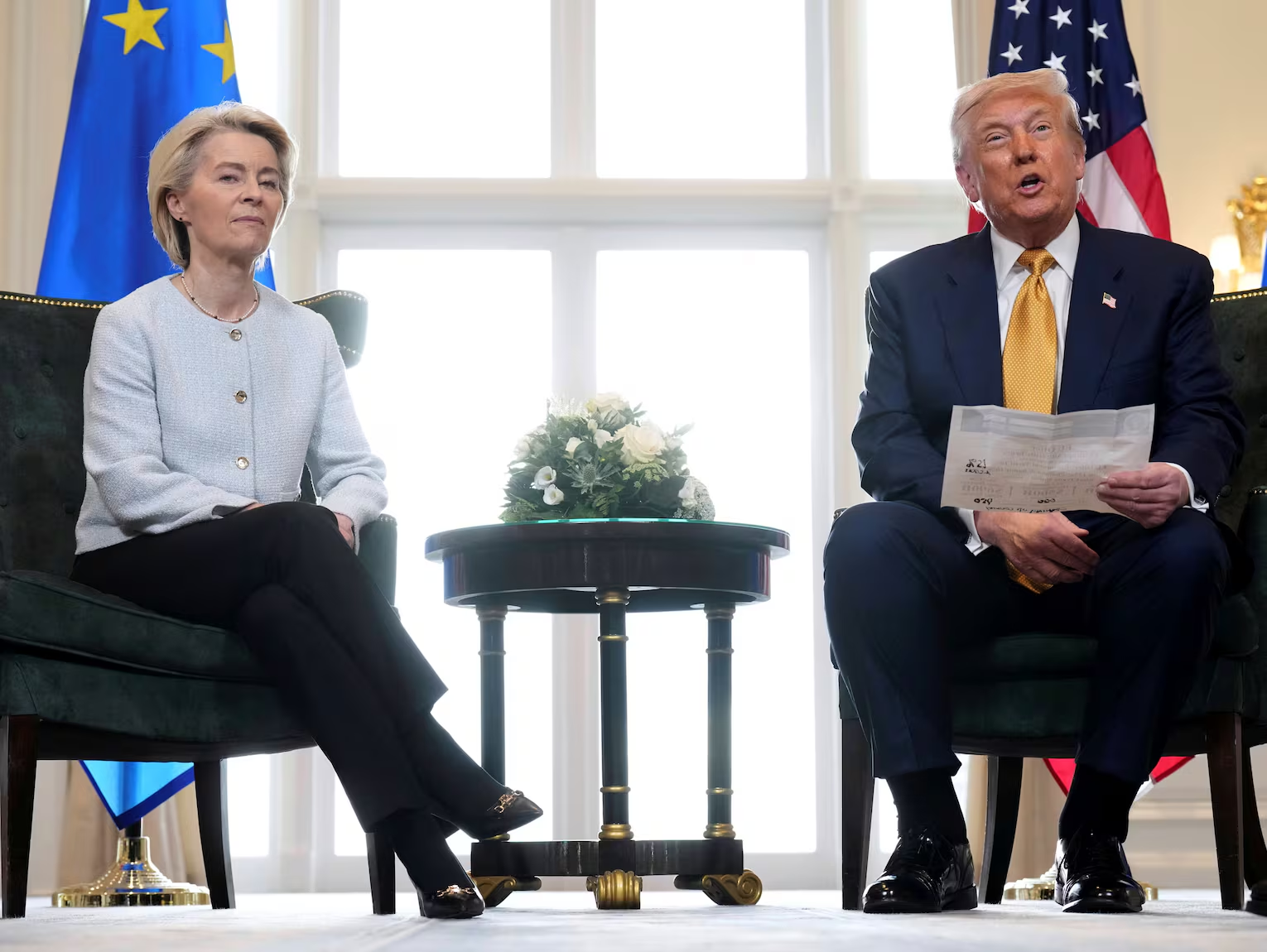
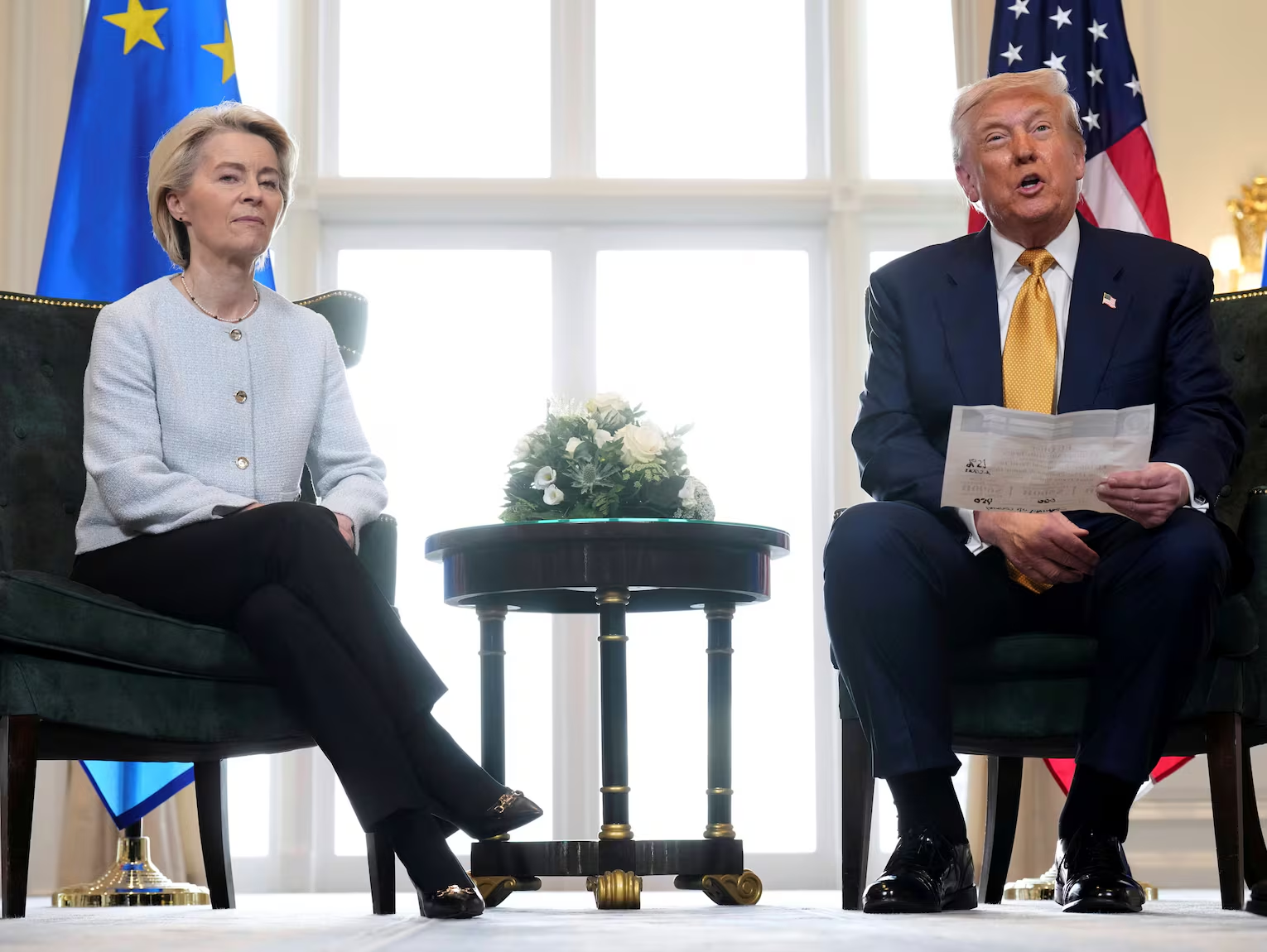
This new reality was made plain from the early days of Trump’s second term. When the US president met European Commission President Ursula von der Leyen in Scotland in July 2025, the encounter was neither cordial nor symbolic, as had often characterized transatlantic summits.

Instead, it marked the culmination of months of escalating tensions. Trump’s actions made that clear:

  • He questioned the relevance of NATO to the United States and hinted at abandoning the alliance’s mutual defense clause.

  • He revived talk of purchasing Greenland from Denmark, treating it as a commodity.

  • He did not hesitate to impose punitive tariffs on EU and UK imports.

2. A Harsh National Security Doctrine

The peak of Europe’s shock came in November 2025, when the Trump administration released its National Security Strategy. The document portrayed Europe as a weak partner in need of “restructuring” and declared that the era of the world relying on the US as a “pillar of the global order” was over. It urged Europeans to shoulder the burden of their own defense.

What rattled Europeans most was the strategy’s bleak portrayal of the continent. According to the document:

  • Europe’s share of global GDP had dropped from 25% in 1990 to just 14% today.

  • The continent is suffering from “civilizational erosion” and could vanish as a cultural-political entity within 20 years.

  • Brussels’ bureaucracy and supranational institutions are undermining national sovereignty.

  • European migration policies are “altering the continent’s identity and fueling internal conflicts.”

  • “Censorship of free expression and suppression of dissent” are choking democracy.

In essence, Washington painted Europe as a critically ill patient in denial about its condition. But the administration didn’t stop at diagnosis. It offered a treatment plan published by Le Point with seven priorities, or “orders,” for Europe if it wanted to remain a relevant US ally:

  1. End the war in Ukraine swiftly and at any cost.

  2. Redefine Europe as a union of “sovereign nations” rather than a supranational bloc.

  3. Encourage populist movements to “resist Europe’s current trajectory.”

  4. Fully open European markets to American goods.

  5. Refocus cooperation on “healthy” Eastern and Southern European states.

  6. Halt NATO expansion and admit no new members.

  7. Align with Washington in confronting China economically and technologically.

Thierry Breton, the former EU Commissioner for the Internal Market, remarked that the strategy shattered long-held assumptions about the strength of US-Europe ties. It forced Europeans to urgently consider self-reliance in defense and technology.
نون بوست
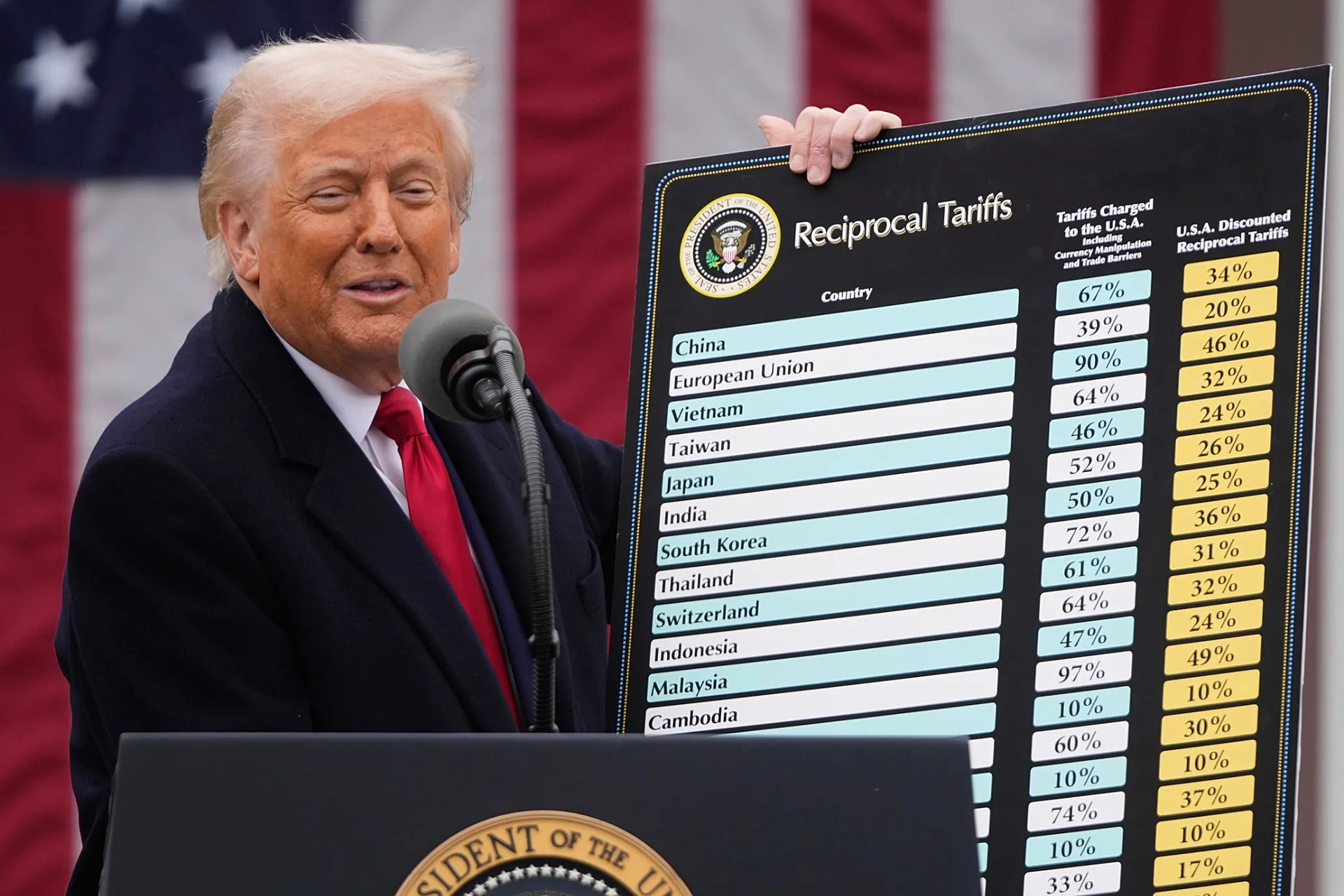
Europe’s security dependence on Washington amid the Ukraine war has reduced its room for maneuver regarding the trade war.

3. Tariff Wars and Economic Blackmail

The crisis deepened on the economic front in April 2025 when Trump announced sweeping tariffs on EU imports (20%), and raised duties on steel and aluminum to 25%, then 50%.

In response, the EU introduced retaliatory tariffs on American goods worth €72 billion and threatened to invoke its new “anti-coercion” instrument against the United States.

But Europe’s dependence on the US for security especially amid the Ukraine war narrowed its room for maneuver. The crisis concluded with a deal in July 2025 that European leaders described as humiliating, a clear capitulation to Washington. The deal included:

  • The EU eliminated most of its industrial tariffs on US products.

  • The US retained 15% tariffs on European exports triple the pre-trade war level.

  • Europeans committed to investing $600 billion in the US and purchasing $750 billion worth of American energy by 2028.

In the aftermath, Europe began picking up the pieces, seeking to reduce its reliance on Washington by diversifying partnerships and sidestepping both US and Chinese tariff regimes. Steps included:

  • Signing agreements with Gulf and Maghreb countries for energy supply and joint infrastructure projects.

  • Reviving stalled free trade talks with major Global South blocs.

4. A Clash Over Digital Sovereignty

On the digital front, Brussels clashed with American tech giants and the Trump administration backing them. The conflict escalated after the EU implemented the Digital Services Act (DSA) and Digital Markets Act (DMA), launching investigations into disinformation and hate speech especially during the Gaza and Ukraine wars.

The European Commission opened formal proceedings against X, accusing it of failing to remove illegal content. On December 5, 2025, it hit the platform with a €120 million fine for violating European content regulations.

This was part of a broader crackdown on Big Tech. Just months earlier, the EU had levied a record fine of nearly €3 billion on Google over monopolistic practices.

The EU’s moves angered the Trump administration, which saw them as a deliberate attack on US companies and an infringement on internet freedom. Washington responded swiftly:

  • It linked any reduction in US tariffs such as those on steel to European rollback of digital legislation.

  • The State Department launched a diplomatic pressure campaign urging European governments to amend or shelve the DSA and DMA.

  • In September, Trump denounced the X fine as “a vile act,” accusing Europe of “heading down a lunatic path to control the internet.”

  • In late December, the State Department imposed visa bans on five European officials involved in content regulation.

Secretary of State Marco Rubio justified the move as part of a broader vision that sees Europe stifling right-wing dissent and risking “civilizational erasure” through its current policies. European officials condemned the step and warned of a firm response unless Washington reversed course.

Dependence or Independence?

As this turbulent year draws to a close, Europe stands at a historic crossroads in its relationship with the United States. It has become clear that the American security guarantees once seen as a cornerstone of Europe’s stability and prosperity are now conditional or perhaps even illusory.

In practical terms, the shocks of 2025 have driven Europe toward several decisive measures:

  • Reviving joint defense projects, accelerating the development of an independent industrial and tech base, and renewing calls for a standalone rapid response force.

  • Increasing defense budgets across most EU countries, projected to reach a combined €381 billion in 2025 a 19% rise from the previous year.

  • Relaunching initiatives to support European tech startups and build alternatives to US platforms.

  • Diversifying raw material and rare earth supply chains through partnerships in Africa and Asia, moving away from both US and Chinese dependencies.

  • Exploring euro-based payment systems to reduce exposure to US sanctions and pressure.

In Brussels, the push for greater “European sovereignty” has now become a formal strategy though its realization will require unprecedented cooperation among states with divergent interests.

While France and Germany have signaled their willingness to lead on defense and economic initiatives, the path to meaningful integration remains fraught. Eastern European nations still cling to the American umbrella, while Western states advocate for more autonomy.

In the end, the shocks of 2025 were not merely a string of transatlantic disagreements they marked a redefinition of the very terms of the partnership. The question now is whether Brussels can unite its ranks and close the divide or if fractured interests will leave Europe reacting from the sidelines, rather than shaping its own destiny.

Download this article as PDF
Share this Article
Facebook Twitter Whatsapp Whatsapp Telegram Email Copy Link
فريق التحرير
By فريق التحرير تقارير يعدها فريق تحرير نون بوست.
Follow:
Previous Article نون بوست How Gaza’s Universities Are Fighting to Survive
Next Article نون بوست Syria’s Interior Ministry: Dismantling a Legacy of Repression and Building a New Security Doctrine

Read More

  • U.S. Regime‑Change Policies: Why They Are Destined to Fail U.S. Regime‑Change Policies: Why They Are Destined to Fail
  • The Gulf’s Balancing Act: Iran, Israel, and Hidden Links
  • Iraq–Turkey Oil Export Treaty: Why Did Ankara Cancel It After 52 Years?
  • Syria’s Northeast on Edge: QSD Between Ankara and Damascus
  • Has Europe Changed Its Stance on Israel… or Just Its Language?
part of the design
NoonPost Weekly Newsletter

You May Also Like

U.S. Regime‑Change Policies: Why They Are Destined to Fail

U.S. Regime‑Change Policies: Why They Are Destined to Fail

إسراء سيد Esraa sayed 8 April ,2026
The Gulf’s Balancing Act: Iran, Israel, and Hidden Links

The Gulf’s Balancing Act: Iran, Israel, and Hidden Links

فريق التحرير Noon Post 8 April ,2026
Iraq–Turkey Oil Export Treaty: Why Did Ankara Cancel It After 52 Years?

Iraq–Turkey Oil Export Treaty: Why Did Ankara Cancel It After 52 Years?

فريق التحرير Noon Post 8 April ,2026

المُثَقَّفون المصريّون وسُؤالُ السلطة

بسمة عبد العزيز
بسمة عبد العزيز Published 31 July ,2015
Share
b5d1383dbbef9f3627c2d557b9ba66a4

تبلْوَرَت مواقفُ المثقَّفين المصريّين حولَ محطَّتين مُهِمَّتين: وصولُ جماعةِ الإخوان المسلمين إلى السلطة، ثمَّ عودةُ المؤسَّسةِ العسكريّةِ إلى المَشهدِ السياسيّ في مُنتَصفِ عام 2013. وقَدْ أعطى معظَمُهم تلكَ المؤسَّسَة شرعيَّة إدارةِ الأمور، دونَ الاكتراثِ بالإرثِ القَمْعيِّ الذي تركَتهُ في مصر.

يمكنُ القولُ إنّ هذا الانحيازَ نتيجةُ الارتِباكِ الذي شابَ فترةَ الحِراك الثوريّ. لقد أحسّ كثيرٌ مِن المثقَّفين خلالَ فترةِ حكمِ جَماعةِ الإخوان المسلمين بأنَّهم إزاءَ خَطرٍ يمَسُّ حرِّيَةَ الفكرِ والتعبيرِ بقدرِ ما يمَسُّ أمانِهم الشخصيّ. وقد ساهَمَ خِطابُ التيّارات الدينيّة حولَ الأمورِ المُتَعلِّقة بالثقافة، ومحاولاتُها السيطرةَ على بعضِ أدواتِ العمل الثقافيّ، بتغذيَةِ تلكَ المخاوِفِ وتَوليدِ ردودِ فعلٍ دفاعيَّة ومواقفَ مُتردِّدة. فالروائيّ الكبير بهاء طاهر صَرَّح بدايةً أنَّه ليسَ مطلوبًا من الجيشِ العودةُ إلى الحكم ، ثم أكَّدَ تعليقًا على دعوَةِ وزيرِ الدفاع لتفويضِه في يوليو 2013 أنَّ “هذا التفويضَ مَوْجودٌ وقائمٌ بالفعلِ، بلْ هوَ تفويضٌ مُلزمٌ للحكومةِ ككُلٍّ وليسَ لوزيرِ الدفاعِ أو الداخلِيّة”، وأعلنَ بعد ذلك بأيّام أنّه سيشاركُ في مسيرةِ المثقَّفين لتفويضِ وزيرِ الدفاع.

تَبريرُ القَوانين “السَّيِّئةِ السُّمعَة”

استمرَّ الشعورُ بالخوفِ والخَطر، حتى بعدَ سقوطِ حكمِ الإخوان المسلمين، ممّا دفعَ بعضَ المثقَّفين إلى القبولِ بإعادةِ تدويرِ السلطةِ السياسيَّة لآلةِ القمعِ. جدير ٌبالذكرِ أنَّ أغلبَ المثقَّفين ظهروا إبّان حُكمِ جماعةِ الإخوان المسلمين مُدافعين عن الحريّات؛ وحين بدَتْ على سلطةِ الجماعةِ إماراتُ الهشاشَة ، اختارَ أغلبُ هؤلاء المثقَّفين أن يدعَموا السلطة الجديدة ، تاركين خلفَهم دفاعَهم عن الحرِّيَات ومبرِّرين الإجراءات الاستِبدادِيَّة المتَّخَذة وإصدارَ قوانينَ “سيِّئةَ السُّمعَة”. وتُبرِّرُ الروائيَّة سكينة فؤاد دعمَها لمشروعِ قانونِ تنظيمِ حقِّ التظاهُرِ قائلةً إنه “يهدِفُ لمواجَهةِ وإسقاطِ مخطَّطِ الفوضى الخلّاقة وتفكيكِ البلادِ وحرقِها”.

وحينَ أصدرَت منظَّمةُ هيومان رايتس واتش تقريراً تُدينُ فيه قمعَ قوى الأمنِ المصريَّة لاعتِصامِ رابِعة العدوية، واصِفةً إيّاهُ بأنَّه “جريمةٌ ضدَّ الإنسانيَّة”، كانَ ردُّ القياديَّة الشهيرة شاهنده مقلِّد مُلفتاً بقوّتِه: “اعتصامُ رابعة هو الجريمةُ الحقيقيَّةُ في حقِّ الشعب المصري”. وأضحَت المبادئُ الحقوقِيَّة والمؤسَّساتُ المدافِعةُ عنها موضعَ استِهزاء، واتُّهِم الناشِطون المصريّون بالرومانسيَّة والانفِصام عن الواقع، والغربيّون بأنَّهم مغرِضون تَعوزُهم النزاهة، كما تغاضى بعضُ المثقَّفين أيضًا عن أزماتٍ كبرى وقعَت وكانت المؤسَّسة العسكرية في موقعِ المسؤوليَّة عنها. في هذا السِّياق، يقولُ الكاتبُ والرِّوائيُّ جمال الغيطاني في شهر مارس عام 2014 إنَّ “الجيشَ من الشعب، ولم يحدُث أنْ قتل فردًا منه”. وفي هذا الاعتبارِ تجاهلٌ لأحداثِ قَتلٍ مُتعدِّدة، منها، وعلى سبيلِ المثال فقط، أحداثُ ماسبيرو التي دهسَت فيها المدرَّعات متظاهرين سلمِيِّين وأردَتهم قتلى.

سِحرُ الطاغِية

مالَ أغلبُ المثقَّفين المصريّين إلى إعادةِ تلميعِ صورةِ السُّلطةِ الأبوِيَّة، وتجميلِ فكرةِ الحاكِمِ المُستَبِدِّ العادِل. قلَّةٌ مِنهم نهضَت للدفاعِ عن مَفاهيمِ أكثرَ نُضجًا كالمُشاركةِ والمُحاسَبة والمُواطَنة. يشدِّدُ الغيطاني في الحوارِ السابق على الاحتِياجِ إلى “شخصٍ قويٍّ ومؤسَّسةٍ قويَّةٍ تَحمي الدولَة”. ما من ذِكْر لحاجَةٍ لبناءِ نظامٍ ديمقراطيٍّ سليم، أو لدولةٍ تحترمُ الدسْتور. راح العديدُ من الفَنّانين والفَنّانات يغذُّون صورةَ الأب المفقودِ منذُ تنحّي الرئيس مبارك عنِ الحُكم، والتي ترمز ُ إليها بعضُ رجالاتِ المؤسَّسة العسكرية. فتصِفُ الفنانة هالة صدقي وزيرَ الدفاع عبدالفتاح السيسي قبلَ أن يترشَّح رئيسًا للجمهوريّة قائلة: “‬الفريقُ أوَّل‮ ]… [ بالرّغمِ من أنَّه وزيرُ الدفاع، إلّا أنه أعطى لكلِّ المصريِّين إحساساً آخر وهو الأبُ والأخُ والمسؤولُ وكبيرُ العائلة‮”. أما عازِفةُ الموسيقى إيناس عبد الدايم، فهي تخاطبُ السيسي مُباشرةً: “أقولُها من كلِّ قلبي فوَّضناك يا سيِّدي الفريق السيسي من كلِّ قلوبِنا وحتى آخرِ نفَسٍ في حياتِنا.

ولكن، أيُفترضُ أن يرفضَ المُثقَّف صنوفَ القمعِ والقهرِ، وإن اختلَف مع توجُّهات المقموعين الفكريّة؟ أ يُفتَرض به أن يَطمَحَ إلى مزيدٍ مِن الحرية، بعيدًا عن مدارات السلطةِ والمستبِدّين؟ حَقيقةُ الأمرِ أنه لا شيء يدفعُ إلى الإجابةِ بنعمٍ سوى الفرَضِيّة التي تعتَبِرُ المُثقَّف كائنًا مثاليّ الصِّفات: عادِلا، شُجاعًا، مُنصِفًا، ساعِيًا إلى الحقيقة. ويُجمِع المثقَّفون الذين تمَّ الحديثُ معَهم في هذه النقطةِ أنَّنا أمامَ وصفٍ أسطوريٍّ محْض، وأنَّ القاعدةَ الثابِتة هي خضوعُ المثقَّف للأنظِمةِ المستَبِدة وتماهيه معها.

مُثَقَّفو البَلاط

تعريفاتُ المثقَّفِ عديدةٌ ولا حصرَ لها. فتارةً هو كلُّ شخصٍ مُتعلّم، وتارةً أخرى هو كلُّ مُشتغِلٍ بقضايا عامَّة تتجاوَزُ اختِصاصَه، وهو أيضًا المُبدِع في مجالاتِ الفنون والعلوم، وأخيرًا هوَ صاحبُ الرؤى والإسهامات النقدِيَّة في المجتَمع، وتُشيرُ كلمةُ (ثَقَف) في مُعجَم لسان العرب إلى كلِّ مَن جدَّدَ وسَوّى. أما الجابِريالذي يطرحُ العلاقةَ بين السلطةِ والمجتَمعِ والمثقَّف على أنَّها معقَّدَة، فهو يعتبِرُ أنَّ المثقَّف جزءٌ من المنظومةِ السياسيّة، قبل أن ينفصِلَ عنْها، إن انفَصَل.

لقد سانَدَ بعضُ المثقَّفين السلطةَ المستَبِدَّة عن قناعة؛ بعضُهم ساندَها عن مصلَحة. يخبرُنا التاريخُ بأنَّ السلطةَ المُستبِدَّة تصنعُ مثقَّفيها، فهي في حاجٍة دائمةٍ لمنْ يصوغُ أفكارَها ويُرَوِّج لها ، لكنها أيضًا تجتذِبُ إلى مداراتِها آخرين كانوا مُعادين لها في السابق. للسُّلطة من الحِيَل ما يفوق معارِف المثقَّفين؛ ويُروى في هذا الصّدَد أنّ محمّد علي باشا مُؤَسّسَ الدولةِ المصريّة الحديثة، وحاكمَ مصر مِن عام 1805 إلى 1848، طلبَ مِن آرتين باشا الذي كانَ يقرأُ له كلَّ يومٍ جزءاً مِن كتابِ الأمير لميكافيللي، أن يكفَّ عن القراءةِ لأنّه –محمد علي باشا- يعرفُ مِن الحِيَلِ أكثرَ مما يَعرفُ مؤلفُ هذا الكتاب. ومع ذلك، لا يشكِّل المثقَّفون جماعةً واحدة منسجمةً، رغمَ الفكرةِ المُسبَقةِ التي تفترِضُ سلفاً وجودَ خطوطٍ عريضةٍ وعناوينَ كُبرى ومبادئٍ مشتركة بين أفرادِ هذه الجماعةِ كحُرّيةِ الفكرِ والتعبير. بيدَ أن تشرذُمَ المُثقَّفين المصريّين يطرحُ تساؤلاتٍ مُتعدِّدة حولَ وجودِ مساحةِ التوافُق تلك.

“ضَميرُ الإنسانية”؟

تبدو الجماعةُ الثقافيّة في عُزلةٍ خياريّة مُرتبطةٍ بهزيمةٍ مُزدَوِجة: فمساومتُها على حرِّيَّتِها الفكريَّة أمامَ هجومِ الإخوان المسلمين أفقدَتها جزءاً من الجمهور ، وتبنّيها مواقفَ السلطةِ المُهيمِنة أفقدَها الجزءَ الآخر. وتجدُرُ الملاحظةُ أنَّ عدداً من النقاشات المطروحةِ، على الرغم من عدمِ اتِّساقِها والتناقضات في مواقفِ المثقفين تجاهَها، كالممارسةِ السياسيَّةِ الكامِلة، وجهوزيَّةِ المواطنِ المصريِّ لتملُّكِ مفهومِ الحرَّيَّة، وأهليَّتِه على أخذِ قرارات مسؤولة ، والحاجةِ لفترةِ إنضاج، كلُّ هذه النقاشاتِ قد حُسِمَت لصالحِ توجُّهات النظام. فيلقاء ٍنُشرَ بعدَ وفاتِه، يقولُ الشاعرُ عبد الرحمن البنوديإنَّ الديمقراطية “وَبال”، لأنَّ الشعبَ جاهلٌ، ولم تنضجْ بعد الحركةُ الشعبيّة في البلاد، وطليعَتُها منفصِلةٌ عن جماهيرِها.

يطرحُ الجدلُ حولَ دورِ المُثقَّف المُفترَضِ في المجتمَع مسألةَ علاقةِ المثقَّفِ بالسلطةِ والحكّامِ بوجهٍ عامٍّ، والطغاةِ منهم بوجهٍ خاص. فجوليان بندا يرسُم صورةً مثاليّةً للمُثقفين على أنَّهم ضميرُ البشرية ، و إدوارد سعيد يؤكِّدُ أن المُثقف يستعمِلُ الحقَّ لمواجَهةِ القوَّة وبالتالي لا يعقُد مساوَمات مع السلطة، بينما يرى المفكِّر والديبلوماسي خالد زيادةأن ثمَّةَ سوءَ تفاهمٍ فيما يخصُّ دورَ المثقَّفِ الذي يُفرَض عليهِ في المجتَمعِ دورٌ يؤولُ بطبيعِتِه للأحزابِ السياسِيّة. أمّا تيري إيجلتون في كتابِه فكرة الثقافة1 ، فبرأيه أنَّ طرحَ الثقافة كحيّزٍ بديلٍ للدّين قد يؤدّي إلى الكشفِ عن “أعراض مَرَضيّة” إذا ما طُلِب منها أداءُ هذا الدور.

من هنا، يُطرح تساؤلٌ حول جدوى ووثاقَةِ دعوةِ المُثقَّف إلى الاضطِلاع بدورٍ أخلاقيّ في مواجهةِ الاستِبداد، خاصّةً وأن التاريخَ يذكُر أعلامًا مِن المثقَّفين انحازوا جذريًا إلى طغاةٍ وساروا في رُكبِهم . ويبقى أقربُ نموذجٍ يمكِنُ الركونُ إليهِ هو انتِخابات الرئاسةِ الأخيرةِ التي أدَّت إلى فوزِ وزيرِ الدفاعِ بمنصبِ رئيسِ الجمهورية.

ما هي الدوافِعُ وراءَ انجِذابِ المثقَّف إلى الطاغيةِ المُستبِدُّ والعكس؟ ثمَّةَ تشابُهات بين الطرفين. الفردِيّة، الإحساس بالتميُّز، والاستِثناءِ لا بل بالتفوُّقِ، هيَ ميولٌ مشترَكةٌ بين المثقَّف والطاغيةِ يتجاذبُ حولَها عقلان ذكيّان مُدركانِ لمَصالِحِهما المُشترَكةِ في المواقِف الحرِجة. أسبابٌ أخرى عدا فكرةِ الانجِذاب العاطفي قد تفسِّر تقارُبَ المثقَّف والطاغية، كأن يجدَ المثقَّف في قربِه من الطاغِيَة وسيلةً فعّالةً لوضعِ تصورِّه للعالمِ قيدَ التنفيذ، رغمَ خطرِ أن يُضيِّع المثقَّفُ طريقَ العودة.

ثمةَ خوفٌ قديمٌ راسخٌ في وجدانِ المثقُّف المصريّ من غيابِ وجْهِ السلطةِ المهيمِنة، فيتشبَّثُ بالبقاءِ تحتَ رعايةِ سلطةٍ أبويَّةٍ تملكُ حقَّ المَنحِ والمَنع. هل ينبعُ هذا الخوفُ من الجهلِ بما سيكونُ عليه الحالُ دونَها، في غيابِ رؤيةٍ متماسِكَةٍ حول مستقبلِ الثقافةِ دون هيمنةٍ ودونَ استبداد؟ لهذهِ المخاوفِ تفسيراتُها، ولكنَّها لا تَعفي المثقَّفين من مَسؤوليّةٍ معنوِيَّة تجاهَ المُجتَمع.

نُشر هذا المقال لأول مرة في موقع أورينت 21

TAGGED: #انتخبوا_العرص ، العسكر في مصر ، انقلاب ٣٠ يوليو
TAGGED: انقلاب مصر
Download this article as PDF
Share this Article
Facebook Twitter Whatsapp Whatsapp Telegram Email Copy Link
بسمة عبد العزيز
By بسمة عبد العزيز طبيبة وباحثة وكاتبة مصرية. من مؤلفاتها: إغراء السلطة المطلقة
Follow:
Next Article نون بوست The Stigma of “ISIS”: A Heavy Legacy Haunting Women and Children of Former Members
part of the design
NoonPost Weekly Newsletter
dark

An independent media platform founded in 2013, rooted in slow journalism, producing in-depth reports, analysis, and multimedia content to offer deeper perspectives on the news, led by a diverse young team from several Arab countries.

  • Politics
  • Society
  • Rights & Liberties
  • Opinions
  • History
  • Sports
  • Education
  • Technology
  • Economy
  • Media
  • Arts & Literature
  • Entrepreneurship
  • Travel
  • Cinema & Drama
  • Food
  • Health
  • Culture
  • Latest Reports
  • Files
  • Long Reads
  • Interviews
  • Podcast
  • Interactive
  • Encyclopedia
  • In Pictures
  • About Us
  • Our Writers
  • Write for Us
  • Editorial Policy
  • Advanced Search
Some rights reserved under a Creative Commons license

Removed from favorites

Undo
Go to mobile version