NoonPost NoonPost

NoonPost

  • Home
  • Politics
  • Economy
  • Society
  • Culture
  • Files
  • Long Reads
  • Podcast
AR
Notification Show More
نون بوست
“There Are Nights I Can’t Close My Eyes”: How Gazans Are Living in Homes on the Brink of Collapse
نون بوست
From al-Jolani to Ahmad al-Shara: The Evolution of Syria’s New Leader
نون بوست
When Political Islam Receded in Egypt: Who Filled the Void?
نون بوست
An Extension of Genocide: Gaza’s Detainees Speak Out
نون بوست
A Tightrope Between Survival and Sovereignty: The Syrian Government Faces Normalization Pressures
نون بوست
American Aircraft Carriers: Has the Era of “100,000 Tons of Diplomacy” Ended?
نون بوست
U.S. Regime‑Change Policies: Why They Are Destined to Fail
نون بوست
Transformations of Israeli Judaism: Between the Victim Complex and the Colonizer’s Doctrine
نون بوست
The Gulf’s Balancing Act: Iran, Israel, and Hidden Links
نون بوست
Iraq–Turkey Oil Export Treaty: Why Did Ankara Cancel It After 52 Years?
نون بوست
Syria’s Northeast on Edge: QSD Between Ankara and Damascus
نون بوست
Has Europe Changed Its Stance on Israel… or Just Its Language?
NoonPost NoonPost
AR
Notification Show More
نون بوست
“There Are Nights I Can’t Close My Eyes”: How Gazans Are Living in Homes on the Brink of Collapse
نون بوست
From al-Jolani to Ahmad al-Shara: The Evolution of Syria’s New Leader
نون بوست
When Political Islam Receded in Egypt: Who Filled the Void?
نون بوست
An Extension of Genocide: Gaza’s Detainees Speak Out
نون بوست
A Tightrope Between Survival and Sovereignty: The Syrian Government Faces Normalization Pressures
نون بوست
American Aircraft Carriers: Has the Era of “100,000 Tons of Diplomacy” Ended?
نون بوست
U.S. Regime‑Change Policies: Why They Are Destined to Fail
نون بوست
Transformations of Israeli Judaism: Between the Victim Complex and the Colonizer’s Doctrine
نون بوست
The Gulf’s Balancing Act: Iran, Israel, and Hidden Links
نون بوست
Iraq–Turkey Oil Export Treaty: Why Did Ankara Cancel It After 52 Years?
نون بوست
Syria’s Northeast on Edge: QSD Between Ankara and Damascus
نون بوست
Has Europe Changed Its Stance on Israel… or Just Its Language?
Follow US

Turkey 2025: Turning the Page on the PKK and First Gains from Monetary Policy

زياد ابحيص
ZAID Published 26 March ,2026
Share
نون بوست
نون بوست

In 2025, Turkey navigated a year of profound political and economic transformation against a backdrop of regional and global turbulence.

Domestically, the country witnessed an escalation in tensions between the government and opposition. Simultaneously, it moved toward resolving one of its most intractable security challenges by initiating a process to end its decades-long conflict with Kurdish militants a potential historic turning point.

On the foreign front, Ankara emerged as an active diplomatic player, from Gaza to the South Caucasus, maintaining a delicate balance between its Western partners and traditional Eastern allies.

Economically, Turkey undertook a year of drastic shifts in monetary policy, aiming to rein in inflation and restore market confidence. Rising investment flows and significant strides in the energy sector bolstered its ambitions to play a central role in regional energy security.

Domestic Politics: Cracks Within the Opposition

The political landscape in 2025 was marked by unprecedented turbulence, with intensifying confrontations between the government and the opposition. One of the most significant upheavals in a decade erupted after a sweeping legal and security campaign targeted opposition figures.

The Republican People’s Party (CHP), still the largest opposition force, entered 2025 with new leadership. Following a 2023 election loss, longtime leader Kemal Kılıçdaroğlu stepped down, and the party elected Özgür Özel a 51-year-old reformist figure promising to regroup and revitalize the opposition.

However, Özel’s unification efforts quickly ran into legal obstacles. Dozens of CHP officials were detained or investigated on charges ranging from corruption to abuse of power. The confrontation peaked on March 19, when Istanbul Mayor Ekrem İmamoğlu and over 100 party members were arrested just days ahead of a primary election expected to launch his presidential bid.

Mass protests erupted in Istanbul and other major cities, prompting the government to impose a wide-ranging security clampdown including bans on public gatherings, road closures, and restrictions on social media access.

While the opposition decried a “soft coup” against the popular will, the government insisted the actions stemmed from legal investigations. Officials alleged entrenched corruption networks within opposition-led municipalities and accused İmamoğlu of unlawfully using Istanbul’s population data and seeking foreign funding through intermediaries linked to intelligence agencies.

In July, İmamoğlu was sentenced for insulting the public prosecutor, followed by espionage charges in October. Authorities also shuttered the opposition-aligned Tele1 TV channel, citing its role in an alleged “media conspiracy.”

These events plunged Turkey into a period of fierce political polarization and attempts to reshape the party system. The government, meanwhile, strengthened its grip under the banner of “anti-corruption,” amid widespread skepticism and unrest.

Despite setbacks, the opposition notched a symbolic legal victory in October when an Ankara court upheld Özel’s leadership of the CHP, rejecting a challenge from a dissident member who alleged financial and procedural irregularities during the party’s 2023 convention.

The ruling was seen as a rare instance of judicial independence and a morale boost for the Özel faction.

A Historic Shift in the Kurdish Conflict

In a landmark development, Turkey made unprecedented progress in ending its decades-long armed conflict with the Kurdistan Workers’ Party (PKK). Signs of de-escalation emerged in late 2024, including tentative outreach to imprisoned PKK leader Abdullah Öcalan. The breakthrough came in May 2025, when the PKK officially declared an end to its armed struggle, initiating a ceasefire and a UN-monitored disarmament process.

In July, PKK fighters symbolically destroyed a cache of weapons in the Qandil Mountains, followed by a full withdrawal from Turkish territory into northern Iraq in the fall. Media coverage highlighted armed militants crossing the border in what was framed as a celebratory ushering in of a new peace era.

The Turkish government cautiously welcomed the development, calling it a “strategic transformation” and a gateway to long-delayed development projects in the country’s southeast. President Erdogan stated, “We are closing a bloody chapter and opening one of unity and progress.”

However, the PKK stressed that the shift to democratic struggle must be met with reciprocal state reforms to ensure Kurdish political and cultural rights.

Security concerns remained elevated throughout 2025. A September attack on a police station in Izmir killed three officers; authorities blamed a suspected ISIS affiliate. Interior Minister Ali Yerlikaya announced in December that security forces had thwarted seven terrorist plots and arrested over 2,000 suspects.

One of the largest counterterrorism operations occurred in December, targeting ISIS cells across 21 provinces. A deadly clash in Yalova province left three police officers and six militants dead, followed by the arrest of 357 suspects.

Meanwhile, Turkish intelligence pursued espionage cases, arresting three defense industry employees in November for allegedly leaking sensitive information to foreign entities.

Foreign Policy: Diplomatic Outreach and Cautious Realignments

Turkey pursued a proactive and calibrated foreign policy in 2025 aimed at reinforcing its regional role and safeguarding national interests.

Tensions with Washington eased somewhat after Turkey’s parliament ratified Sweden’s NATO accession in early 2024, following mutual guarantees. The move paved the way for a long-delayed $23 billion US arms deal, including 40 new F-16s and upgrades for 79 aircraft—a “diplomatic trade-off” that revived Turkey’s air force modernization efforts after its ejection from the F-35 program.

Syria saw major upheaval following President Bashar al-Assad’s flight and the formation of a transitional government in late 2024. An initial agreement in spring 2025 between the interim government and the Syrian Democratic Forces (SDF) proposed integrating the SDF into the national army within a year a move Turkey cautiously welcomed.

However, Ankara remained skeptical. During a high-level visit to Damascus in December, Foreign Minister Hakan Fidan warned that SDF showed little real commitment to integration and accused it of stalling and colluding with Israel to obstruct talks.

Turkey insisted that dismantling the SDF’s leadership structure was essential for any future merger and maintained a military presence in northern Syria, linking withdrawal to the elimination of what it views as PKK-linked terrorist threats.

In the Israeli-Palestinian conflict, Turkey seized on a fragile ceasefire in early 2025 to push for a permanent truce and humanitarian arrangements. It played host to Hamas political leaders in December and positioned itself as a guarantor state for Gaza’s ceasefire, seeking to act as a mediator in ways Western capitals could not.

Turkey also deepened ties with Gulf states and Egypt. Following President Abdel Fattah el-Sisi’s September 2024 visit to Ankara, cooperation expanded in trade, investment, and regional affairs—particularly Libya, Sudan, and Gaza despite lingering disagreements managed pragmatically.

Relations with the EU remained cool but stable, with Turkish calls to modernize the customs union and ease visa rules met by European hesitation over democracy and human rights concerns. Still, cooperation continued on refugees and border security.

In the Eastern Mediterranean, tensions were subdued, with major disputes including Cyprus and maritime boundaries kept within the bounds of “conflict management.”

In the Caucasus, Turkey played a central role in supporting peace between Azerbaijan and Armenia. After a breakthrough agreement in Washington in August 2025, steps were taken toward a peace treaty. Infrastructure projects like the Iğdır-Nakhchivan gas pipeline opened new regional corridors, enhancing Turkey’s connectivity with Central Asia.

Economic Transformation: Stabilization and Early Wins

On the economic front, 2025 marked a turning point. Under Finance Minister Mehmet Şimşek, Turkey embraced a more orthodox monetary and fiscal approach to tackle inflation and restore investor confidence.

Tight fiscal discipline and high interest rates slowed growth to about 3.3%, driven by weak domestic demand. Yet, exports, tourism, and energy gains helped offset the slowdown. Official unemployment hovered around 9%, amid concerns about underemployment and shrinking real incomes due to inflation.

Inflation fell sharply from a mid-2024 peak of nearly 75% to 31.1% by year-end, following aggressive rate hikes to 40.5% before a cautious taper. A March currency plunge prompted emergency measures that strengthened monetary resolve.

These moves restored some policy credibility. Turkey earned successive credit upgrades, thanks to tighter monetary policy, fiscal discipline, and growing reserves, though concerns lingered about potential policy backtracking.

The government cut the fiscal deficit through tax reforms, subsidy reductions, and spending controls. The current account deficit shrank to around 1.3% of GDP, with rising exports and lower luxury imports.

The lira remained weak but more stable, ending the year at around 43 per dollar, compared to 35 at the start. August saw the phase-out of a costly exchange-protected deposit scheme, signaling a shift away from extraordinary measures.

Foreign trade and tourism generated strong hard currency inflows, and Turkish industries expanded their export footprint, including in defense.

In energy, dependence on imports declined thanks to growing Black Sea gas production, new discoveries, higher domestic oil output, and accelerated investment in renewables and hydrogen infrastructure.

Download this article as PDF
Share this Article
Facebook Twitter Whatsapp Whatsapp Telegram Email Copy Link
زياد ابحيص
By زياد ابحيص
Follow:
Previous Article نون بوست With Dogs and Batons: Harrowing Testimonies of Rape Inside Israeli Prisons
Next Article نون بوست After Showering Trump with Praise What Did Netanyahu Really Gain from His Fifth U.S. Visit?

Read More

  • U.S. Regime‑Change Policies: Why They Are Destined to Fail U.S. Regime‑Change Policies: Why They Are Destined to Fail
  • The Gulf’s Balancing Act: Iran, Israel, and Hidden Links
  • Iraq–Turkey Oil Export Treaty: Why Did Ankara Cancel It After 52 Years?
  • Syria’s Northeast on Edge: QSD Between Ankara and Damascus
  • Has Europe Changed Its Stance on Israel… or Just Its Language?
part of the design
NoonPost Weekly Newsletter

You May Also Like

U.S. Regime‑Change Policies: Why They Are Destined to Fail

U.S. Regime‑Change Policies: Why They Are Destined to Fail

إسراء سيد Esraa sayed 8 April ,2026
The Gulf’s Balancing Act: Iran, Israel, and Hidden Links

The Gulf’s Balancing Act: Iran, Israel, and Hidden Links

فريق التحرير Noon Post 8 April ,2026
Iraq–Turkey Oil Export Treaty: Why Did Ankara Cancel It After 52 Years?

Iraq–Turkey Oil Export Treaty: Why Did Ankara Cancel It After 52 Years?

فريق التحرير Noon Post 8 April ,2026

تعرّف على الفتيات المقاتلات في حزب العمال الكردستاني

إليونورا فيو
إليونورا فيو Published 1 August ,2015
Share
P6190043

ترجمة وتحرير نون بوست

“لماذا حزب العمال الكردستاني؟ لأن المجتمع التركي لا يسمح للمرأة أن تتمتع بالحرية التي تريدها”، تقول طالبة الهندسة السابقة روزيرن وان، البالغة من العمر 22 عامًا، من فان – تركيا، وتتابع “على الجهة الأولى كنا نوجد نحن، وعلى الجهة الأخرى كانت المقاتلات الكرديات، اللواتي يعشن بشكل حر ومستقل في الجبال، ويحاربن بهدف حرية شعبهن، لذا أردت أن أكون مثلهن”.

الاتصال مع فرقة الإناث في منطقة قنديل شمالي العراق، والتي انضمت لها “وان” قبل 15 شهرًا، ليس سهلًا على الإطلاق، فحواجز الجيش التي لا تعد ولا تحصى تطيل عمر الرحلة التي يجب أن تكون قصيرة من مدينة السليمانية العراقية، وضمن هذه الرحلة، ومع ازدياد حدة ووعورة الطرقات، تطل الصور المبتسمة لعبد الله أوجلان، أو اختصارًا آبو، زعيم حزب العمال الكردستاني الـ(PKK)، والتي تعبر بوضوح عن تحوّل ديناميات السلطة المحلية.

سافرنا، نحن فريق صحيفة الميدل إيست آي، في شاحنة بيك آب، إلى جانب خمس فتيات يرتدين زيًا مموهًا، ويشددن أوشحة على جباههن، ويمتشقن بنادق هجومية فوق أكتافهن، وهذه المنطقة التي كنا نعبر بها كانت تعد الأخطر على طول امتداد الرحلة؛ فبعد نزولنا من الحافلة، كانت نقطة العلام الوحيدة هي ضوء ساطع قادم بعيد، وإثر مسيرة استمرت حوالي الساعة في منطقة وعرة، وصلنا إلى مدخل مخيم صغير، منظم بشكل جيد.

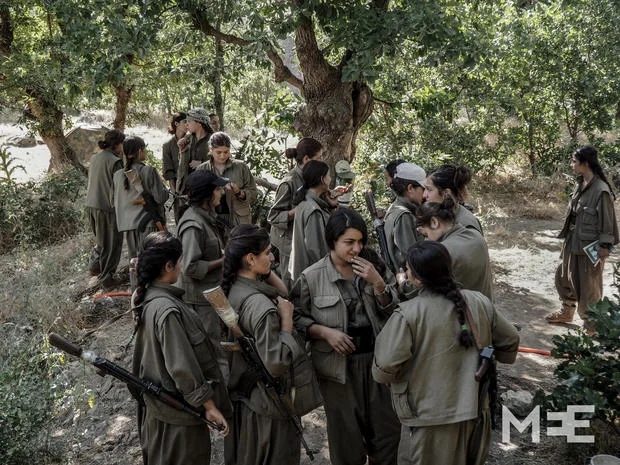
هناك شاهدنا نحو 40 فتاة من المقاتلات الشابات يقفن في خط واحد، ووان كانت إحداهن، هذه المجموعة تتألف من الفتيات الكرديات التركيات، الإيزيديات، والتركمانيات، اللواتي قررن أن ينضممن كمقاتلات إلى حزب العمال الكردستاني، حيث يتم تدريب غالبيتهن هنا في جبال قنديل، وتتخلى كل واحدة منهن عن حياتها السابقة، لتعتنق حياة أحد أكثر حركات المليشيات قوة وإثارة للرعب في العالم.

نون بوست

منذ ثمانينيات القرن المنصرم، تم تصنيف حزب العمال الكردستاني كمنظمة إرهابية من قِبل تركيا والولايات المتحدة، ويرجع ذلك إلى حد كبير إلى الاشتباكات المتكررة والدامية التي شنها الحزب ضد قوات الأمن التركية، ولكن مؤخرًا، اكتسبت الحركة مستوى جديد من الدعم الشعبي.

حملة إعادة الترويج الأخيرة، ساعدت على ازدياد عدد المجندين المنضمين تحت لواء الحزب، ويعود ذلك جزئيًا إلى عدد من الحملات الناجحة الأخيرة التي شنها الحزب ضد الدولة الإسلامية “داعش”، التي لا تزال جارية في جميع أنحاء المناطق الكردية في العراق وسورية، وتمثل انتصار الحزب الأول بقدرته على إجلاء الشعب الإيزيدي من جبل سنجار في أغسطس 2014، وتبع ذلك قيامه بتحرير مدينة كوباني في سورية في يناير من عام 2015، وفي وقت لاحق عزز الحزب انتصاراته في كركوك ومخمور شمالي العراق، ويركز حاليًا على النضال للظفر في معركته ضد أعضاء تنظيم داعش في مدينة تل أبيض الحدودية السورية.

“عندما أنقذنا حزب العمال الكردستاني، كان عناصر داعش يحاصرون جبل سنجار، وقتلوا وأسروا العديد من الإيزيديين”، تقول بيريفان آرين البالغة من العمر 17 عامًا من سنجار، وتتابع “عندما قاموا بنقلنا إلى كردستان سورية، بدأت أقترب من الحزب وعقيدته”، وأردفت قائلة “انضممت إلى الحركة لأنني كنت أريد محاربة هؤلاء المجرمين الذين أساءوا وقتلوا الكثير من أبناء جلدتنا، كما أردت أيضًا أن أتحرر من النظام الذي أعيش ضمنه، فالإيزيديون، الذين أنتمي إليهم، يعتنقون مبادئ تجبر النساء على البقاء في منازلهن، وتسخرهن فقط لتربية الأطفال والحفاظ على الأسرة”.

نوفو راشات، هي إحدى أقدم المقاتلات في وحدة الإناث التابعة لحزب العمال الكردستاني، وتتمتع بما لا يقل عن 17 عامًا من الخبرة، ورغم أنها تنحدر من خلفية مختلفة تمامًا عن آرين، لأنها ولدت ونشأت في كردستان تركيا، بيد أنها انخرطت ضمن صفوف الحزب لسبب مماثل، “انضممت للحزب لأن كردستان المحتلة تعاني منذ مئات السنين، ولكن السبب الأساسي يعود لكون محاربة حزب العمال الكردستاني من أجل الحرية الكردية، تترافق دائمًا مع النضال من أجل تحرير المرأة، وهو أمر كان معوزًا داخل المجتمع الذي كنت أعيش ضمنه”.

هدف البي كي كي تحوّر على مدى السنوات القليلة الماضية؛ ففي الوقت الذي تخلت به الحركة عن حلم الأمة الكردية ذات السيادة، التي تضم المناطق الكردية الأربعة في تركيا وسورية والعراق وإيران، تبنت فكرة النظام الكونفيدرالي الديمقراطي، الذي يمثل سياسيًا جميع الطوائف المضطهدة التي تعيش في هذه المناطق الشاسعة.

“نحن نعتمد على نهج يباشر من الأسفل إلى الأعلى، ويقوم على أساس المشاركة الشعبية”، يوضح المتحدث الإعلامي باسم حزب العمال الكردستاني، زاغروس هيوا، ويتابع “عمليات صنع القرار تكمن ضمن المجتمعات المحلية، الذين يرسلون مندوبيهم الخاصين ومسؤوليهم إلى المجالس العامة، لخدمة أهداف التنسيق والتنفيذ”.

“بما أن عبودية النساء هي شكل من أشكال الظلم البشري المنتشر على طول ضفاف التاريخ، لذا أردنا منح المرأة الحرية بادئ ذي بدء” يقول هيوا.

قمع النساء لا يؤثر على النساء الأفراد فحسب، بل على الجنس الأنثوي ككل، ومفهوم الحرية، كما صاغه أوجلان وأتباعه على مر السنين، تأثر بهذه الرؤية الجماعية، “لا يمكن للمرأة أن تتحرر عن طريق سعيها لحريتها الفردية الخاصة وحسب، بل عليها النضال من أجل تحرير جميع النساء الأخريات أيضًا”، تقول راشات، وتتابع “في حزب العمال الكردستاني، هدفنا الرئيس هو اقتلاع المفاهيم الخاطئة من عقول الفتيات والتي استقينها من المجتمعات الذكورية، فالنساء بحاجة للعثور على حريتهن العقلية قبل أي شيء آخر”.

“لدينا الحق الكامل في تقرير مصيرنا هنا، على عكس المجتمع في الخارج، فنحن لا نفسح المجال أمام الرجال للتأثير والسيطرة على خياراتنا” توضح راشات، وتردف “نحن نقرر كيف نثقف وننظم أنفسنا، وكذلك كيفية تدريب مقاتلاتنا على الحرب الفعلية”.

داخل مخيم المقاتلات النساء، يبدأ اليوم العادي في الساعة الرابعة صباحًا، مع قيام مجموعة من المقاتلات بإعداد طعام الإفطار لإناث المخيم، وبعد ذلك بوقت قصير، يباشر الدرس الأول حول الإستراتيجيات والتكتيكات، والذي يعلم المقاتلات كيفية مواجهة وهزيمة العدو على أرض الواقع.

نون بوست

“أساس كل شيء هو الانضباط الذاتي”، تقول موهين زيران، المدرّسة التركمانية البالغة من العمر 20 عامًا، والتي على الرغم من صغر سنها، بيد أنها تحمل صلادة المقاتلين الأشداء، مع تجارب حقيقية على أرض المعركة، وتتابع “لا يهم مهما كان سلاح عدوك متطورًا، لأنك قادر على أن تهزمه باستخدام عقلك، وهذا يعني أن تعلّم كيفية التحرك خفية، أو ممارسة التمويه الفعّال، لا تكفي وحدها، بل أيضًا يجب أن تتمع برؤية أقوى للعالم من تلك التي يحوزها عدوك أثناء القتال”.

بعد درس التكتيك، تستل الفتيات البنادق الموضوعة قرب أقدامهن، ويركضن باتجاه تل عالٍ، للمباشرة بدورة تدريبية تسمى “كوماندو”، وتحت الشمس الحارقة التي لم تعاف المقاتلات في هذا اليوم، تعزز الفتيات قدراتهن الجسدية القتالية في دورة الكوماندو، قبل مباشرة القتال الفعلي، حيث يمارسن تمارين القفز، الجري، الضغط، التسلق، والزحف على الأرض، ومن هذا المنطلق، فإن هذه الدورة تشبه معسكرات الجيش النمطية.

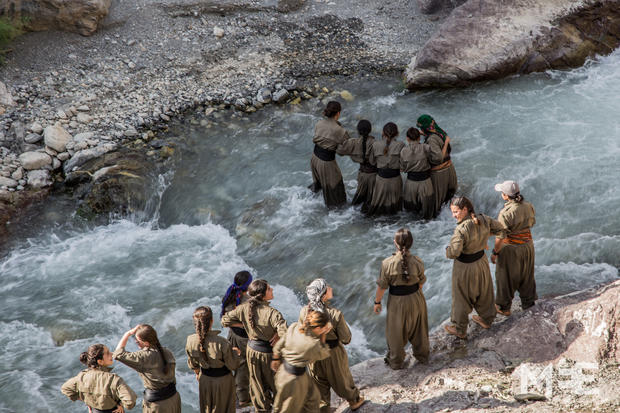
مغرورقات بالعرق الناجم عن تلويح الشمس لأجسامهن، تسارع المقاتلات إلى قمة التل، قبل أن يقفزن فوق منحدر صخري حاد، يصبح أسهل مع وصوله إلى ضفاف النهر الذي يقبع أسفل التل، والذي يحتوي على تيارات قوية وجامحة، ورغم ذلك، تجتازه الفتيات بقوة وشراسة، وبمجرد وصولهن إلى الجانب الآخر من النهر، يكن قادرات على إسقاط القناع الجدي الحربي أخيرًا، لينخرطن في ألعاب سن المراهقة، ويلعبن مع بعضهن في ماء النهر لبضعة دقائق.

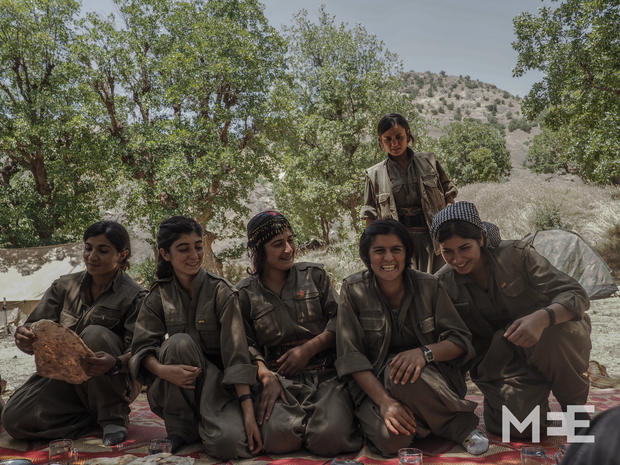
تقضي المقاتلات باقي النهار وهن يحضرن طعام العشاء، ويناقشن أحداث اليوم، ويرقصن ويغنين الأغاني الفلكلورية الكردية، وبمجرد غروب الشمس في حوالي الساعة الثامنة والنصف مساءً، تعود المقاتلات بهدوء إلى خيامهن.

التقدم الذي أحرزته المرأة داخل حزب العمال الكردستاني، ألهم النساء الكرديات في كل مكان، ولكن بشكل خاص في كردستان التركية؛ ففي أعقاب الانتخابات البرلمانية الأخيرة، ظهرت المرأة في حزب الشعوب الديمقراطي الكردي كقوة سياسية مهمة وجديدة.

“هناك بعض أوجه التشابه بين حزب العمال الكردستاني وحزب الشعوب الديمقراطي في رؤيتهما للمساواة في العالم، والنساء ضمنه”، تقول راشات، وتتابع “لكنهم يعملون داخل حزب سياسي، ونحن جماعة مقاتلة مسلحة، وبالتالي لا يمكن أن يجري بيننا أي اتصال”.

فكرة الاختباء ضمن الجبال طوال حياتك، ومتابعة حياتك باستمرار على حافة الخطر، لا تبدو تحررية بشكل خاص، ومع ذلك، فإن حزب العمال الكردستاني يصوغ مفهومًا خاصًا للحرية، الذي ثبت أنه ناجح للغاية في منطقة غالبًا ما تتميز بتجاهلها لحقوق المرأة.

أخيرًا، وعلى أرض الواقع، فإن حزب العمال الكردستاني (بي كي كي) يعطي النساء الشابات فرصة مثيرة للجدل، ولكنها حقيقية وملموسة، للفرار وكسر القيود، القائمة على أساس الجنس، المفروضة عليهن من قِبل مجتمعاتهن، وفرصة ليخدمن شعبهن على حد سواء.

المصدر: ميدل إيست آي

TAGGED: الأكراد ، الأكراد في العراق ، تنظيم داعش ، حزب الشعوب الديمقراطي ، حزب العمال الكردستاني
TAGGED: الأكراد
Download this article as PDF
Share this Article
Facebook Twitter Whatsapp Whatsapp Telegram Email Copy Link
إليونورا فيو
By إليونورا فيو صحفية مستقلة تعمل في الشرق الأوسط منذ سنوات
Follow:
Next Article نون بوست The Stigma of “ISIS”: A Heavy Legacy Haunting Women and Children of Former Members

Read More

  • U.S. Regime‑Change Policies: Why They Are Destined to Fail U.S. Regime‑Change Policies: Why They Are Destined to Fail
  • The Gulf’s Balancing Act: Iran, Israel, and Hidden Links
  • Iraq–Turkey Oil Export Treaty: Why Did Ankara Cancel It After 52 Years?
  • Syria’s Northeast on Edge: QSD Between Ankara and Damascus
  • Has Europe Changed Its Stance on Israel… or Just Its Language?
part of the design
NoonPost Weekly Newsletter
dark

An independent media platform founded in 2013, rooted in slow journalism, producing in-depth reports, analysis, and multimedia content to offer deeper perspectives on the news, led by a diverse young team from several Arab countries.

  • Politics
  • Society
  • Rights & Liberties
  • Opinions
  • History
  • Sports
  • Education
  • Technology
  • Economy
  • Media
  • Arts & Literature
  • Entrepreneurship
  • Travel
  • Cinema & Drama
  • Food
  • Health
  • Culture
  • Latest Reports
  • Files
  • Long Reads
  • Interviews
  • Podcast
  • Interactive
  • Encyclopedia
  • In Pictures
  • About Us
  • Our Writers
  • Write for Us
  • Editorial Policy
  • Advanced Search
Some rights reserved under a Creative Commons license

Removed from favorites

Undo
Go to mobile version