







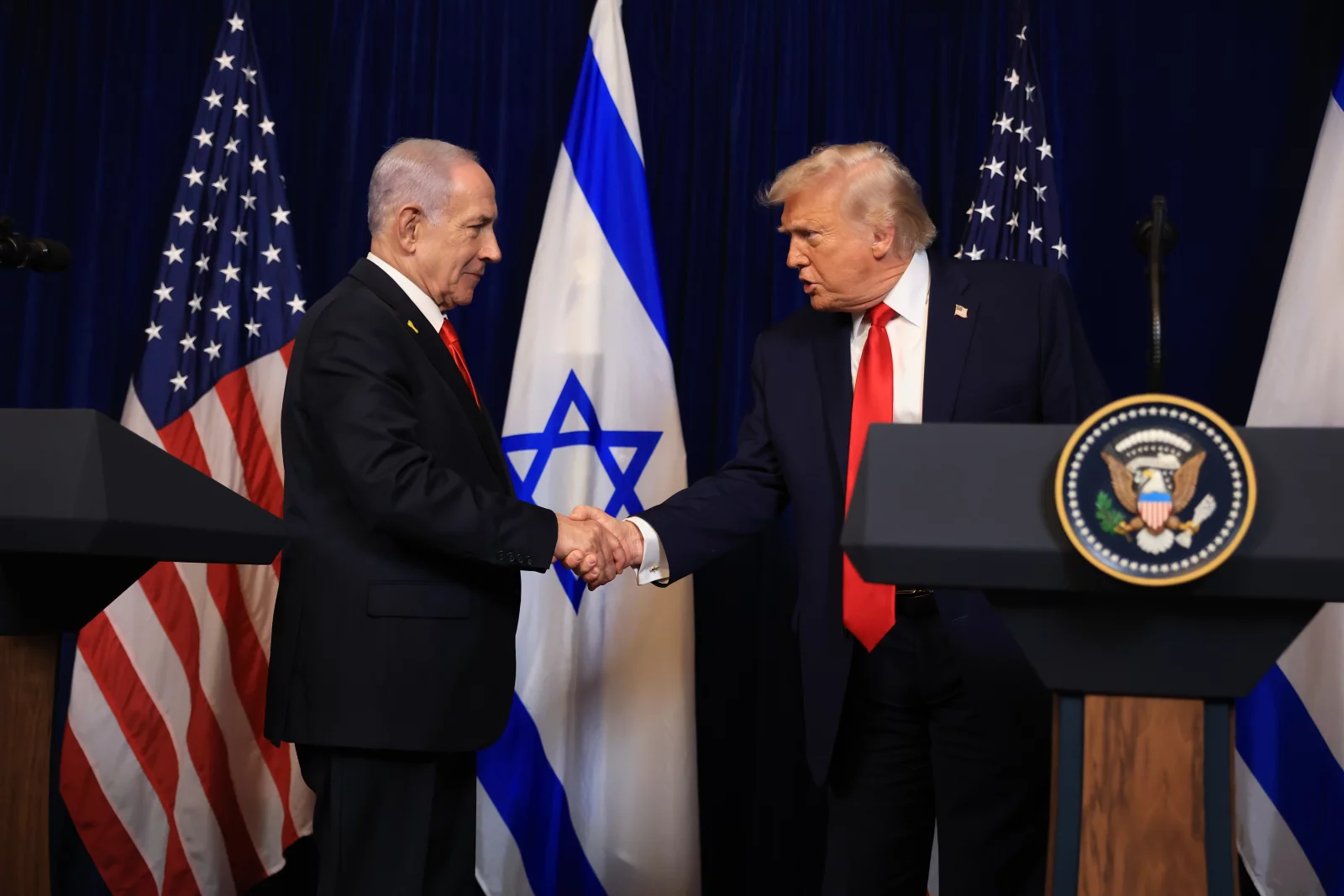
It’s difficult to treat the press statements made by Israeli Prime Minister Benjamin Netanyahu and former U.S. President Donald Trump as definitive outcomes of Netanyahu’s fifth visit to the United States. Laden more with vague expressions and reciprocal political flattery than with clear, actionable decisions, the visit was more symbolic than substantive.
Yet the key lies in the broad contours laid out by Trump comments that offered Netanyahu political breathing room by sparing him public embarrassment or pressure, particularly on the most sensitive issues that Trump often emphasizes as non-negotiable in such settings.
Arranging the visit was no small feat, given the tight holiday schedule in the U.S. and the complex agenda that Israel sought to tailor to Netanyahu’s strategic vision. He understood that the visit would not be free from American pressure to tout certain achievements as wins for Trump’s record, in exchange for advanced U.S. positions on regional issues that align with Israel’s aggressive vision.
A Complex Web of Issues
Netanyahu’s visit comes at a time of mounting deadlock in several regional files, including the aftermath of Israel’s military operations in Palestine, Lebanon, and Syria, as well as its direct confrontation with Iran none of which have yielded stable strategic shifts.
Facing an election year, Netanyahu’s political calculus is increasingly shaped by electoral considerations rather than ideology or long-term strategy. He’s attempting to shore up his domestic standing amid deepening political and legal crises.
While media coverage focused largely on Gaza and the second phase of the ceasefire agreement, Israeli media revealed a much broader and more complex agenda. Chief among the concerns: Iran. Netanyahu aimed to secure U.S. backing for new military scenarios against Tehran amid reports of renewed Iranian ballistic missile and nuclear activities that could undo the results of Israel’s recent 12-day war.
According to Israel’s public broadcaster, Netanyahu brought “intelligence findings” to Washington claiming Iran had successfully restored its ballistic missile program. The objective: to obtain a U.S. green light for potential strikes on Iranian targets.
Regarding Gaza, Yedioth Ahronoth reported Israeli concerns that Tel Aviv might be forced into the second phase of the Gaza agreement without retrieving the body of a captured Israeli soldier or securing clear commitments to disarm Hamas and demilitarize the strip.
This transition to phase two has emerged as a key point of friction between Israel and the U.S., with growing dissatisfaction in the Trump administration over what it perceives as Israel’s “reckless and hasty reactions” and its obstruction of agreement implementation.
In this context, Netanyahu is pushing to discuss the deployment of a U.S.-led international stabilization force in Gaza. Israeli officials admit that Netanyahu may once again have to concede to Trump’s preferences, especially if Turkey’s involvement proves essential to the plan’s success.
The Syrian file is another point of contention. While Washington wants to offer the new Syrian leadership a chance, Israel fears being pressured to withdraw from areas it deems strategically vital. This concern arises amid near-daily Israeli incursions into southern Syria’s Quneitra region, marked by arrests, checkpoints, and destruction of farmland.
On Lebanon, Yedioth Ahronoth notes a rare consensus between the U.S. and Israel, both critical of the Lebanese army’s sluggishness in disarming Hezbollah. Israel is hinting at a possible new offensive if no “effective alternative” emerges. It is reportedly intent on maintaining control over certain areas and continuing airstrikes as needed.
Channel 13 further stated that “the winds of war in Lebanon are intensifying,” and that disarming Hezbollah is now a pressing Israeli priority.
Meanwhile, the issue of U.S. military aid remains on the table, underscoring the shared desire to preserve Israel’s qualitative military edge. However, tensions have arisen over the potential U.S. sale of F-35 fighter jets to regional players like Turkey and Saudi Arabia. According to Yedioth Ahronoth, the Israeli Air Force maintains that its air superiority hinges on exclusive access to fifth-generation aircraft.
Domestic Stakes and Presidential Pardon
Domestically, Netanyahu is also trying to maximize the value of U.S. support particularly Trump’s as leverage to pressure Israeli President Isaac Herzog into granting him a pardon in ongoing corruption cases.
Trump formally requested this pardon on November 12, ahead of Netanyahu’s own controversial appeal, which triggered widespread backlash in Israel and accusations of Trump meddling in domestic legal affairs.
Netanyahu faces three corruption charges involving bribery and breach of trust, any of which could lead to imprisonment if convicted. These looming legal threats made the pardon issue a significant part of Netanyahu’s political agenda during the visit.
A Stage for Mutual Flattery
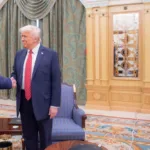
Netanyahu breathed a sigh of relief during the two press conferences surrounding his meeting with Trump, as the former president lavished him with unreserved support across all fronts. The praise was politically invaluable for Netanyahu in a time of crisis.
Trump reached the peak of his admiration when he called Netanyahu “the savior of Israel,” adding, “It took a very special man to lead Israel through this terrible crisis,” and delivering the jaw-dropping line: “Without Netanyahu, Israel wouldn’t even exist today.”
In return, Netanyahu carefully played into Trump’s ego, portraying him as Israel’s greatest ally and a historic peacemaker. Israel’s government even awarded Trump the “Israel Peace Prize,” a gesture that underscored how deeply Netanyahu is investing in their personal rapport.
Trump responded with a provocative comment, hinting that Netanyahu would soon receive “a prize of his own” an unmistakable nod to the sought-after pardon. He reiterated having urged Herzog to issue it, in an unprecedented public intervention in a domestic legal process.
This mutual flattery rests on a deep understanding of each other’s personalities. Netanyahu knows Trump thrives on being cast as a historical figure and peace-broker, which prompts quick, favorable responses. Trump, for his part, recognizes how internal Israeli politics shape Netanyahu’s every move, driven as they are by poll numbers and electoral survival.
Accordingly, Trump didn’t hold back in praising Netanyahu and openly supporting the pardon a gesture Netanyahu sees as key to political survival.
Public Support, Private Ambiguity
Beyond the lavish praise, Trump publicly endorsed most of Netanyahu’s desired positions, giving the Israeli leader an unexpected sense of comfort especially compared to the tense meetings he’d held with U.S. officials earlier.
While press conferences don’t reveal the full picture, they provided Netanyahu with a major political and psychological boost on many sensitive files. Still, that comfort is tempered by the mercurial nature of Trump, who rarely offers binding commitments and prefers to keep options open.
As Maariv’s political correspondent Anna Bresky noted, “Listening closely to Trump’s opening statements—and placing them in context reveals a much more complex picture: not a surrender or victory, but an uneasy blend of real achievements, fundamental gaps, and vast gray areas.”
These “gray zones” are a hallmark of Trump’s style—headline-focused, win-driven, and often deferring volatile details to future piecemeal negotiations. This leaves all parties in a constant state of alert and maneuvering.
American vagueness has historically fueled later crises: as seen in the Iran strike, Lebanon gridlock, and ambiguous handling of the Syrian conflict. A similar approach appears in Gaza and other global files, where Washington leaves room for varied interpretations.
This reality drives players to exploit the gaps in ways that serve their own interests. Netanyahu, for instance, has grown visibly uneasy at the realization that Israel no longer monopolizes U.S. information channels. The Trump team has increasingly engaged with alternate perspectives including Turkey’s.
Netanyahu responded by amplifying his veto against Turkish involvement, but even that faced resistance Trump stood firm on Turkey’s role and confronted Netanyahu directly, exposing the limits of Israel’s objections in the face of such strong White House backing.
Mutual Trade-Offs and Strategic Calibration
Behind the scenes, negotiations were far more layered than the press briefings suggested. As Israeli columnist Nahum Barnea wrote in Yedioth Ahronoth, four distinct agendas were at play: U.S. strategic interests, Israeli security goals, and both Trump’s and Netanyahu’s personal political calculations.
Washington’s priorities include ending regional wars particularly with Iran and resetting the post-October 7 landscape toward a U.S.-led regional stability. Israel, meanwhile, seeks to dismantle Hamas and Hezbollah, enforce new rules of engagement in Lebanon and Syria, and prevent Iran from rebuilding its military capacities.
On the personal front, Trump favors swift, media-friendly wins involving countries close to him—like Saudi Arabia, Qatar, and Turkey even ahead of Israel. Netanyahu, too, is navigating perilous domestic terrain: the second Gaza phase may entail concessions he can’t afford politically, such as accepting Palestinian Authority involvement or an incomplete disarmament process, both of which threaten his fragile coalition.
Netanyahu arrived in Washington prepared for tactical flexibility. He understands that the U.S. will demand Israeli concessions in Gaza and Syria bargaining chips he’s unwilling to give freely.
As a result, both parties leaned toward a strategy of delayed resolution: Israel bets that American fatigue will eventually allow it to reshape facts on the ground, while the U.S. seeks rapid gains to showcase Trump’s diplomatic “success.”
Iran remains the unifying threat a justification for Netanyahu to display flexibility elsewhere and an opportunity for Trump to rein in Israeli escalation in Gaza and Syria. Under this arrangement, Netanyahu agreed to a partial implementation of the Gaza deal and toned down his Syrian intervention, in exchange for public American support for potential military action against Iran and a broader mandate in Lebanon.
Yet this trade-off is inherently unstable. Both sides aim to get through the coming months intact. Netanyahu, for his part, is reserving additional leverage should Trump visit Israel to personally receive the “Peace Prize” an event that would boost Netanyahu’s standing just as Israeli elections approach.
Meanwhile, Trump’s overt support was paired with a massive arms deal: the U.S. granted Boeing an $8.6 billion contract to supply Israel with 25 advanced F-15 fighter jets, with an option for 25 more.
Still, the big question remains: What will Netanyahu actually concede when it comes to implementing the American vision for the region? That answer is likely to emerge gradually after the fanfare of the visit fades and the new year begins.