







Egypt bids farewell to 2025 burdened by a deeply painful political, economic, and even humanitarian legacy one shaped by policies and positions that, at many critical junctures, appeared to fall outside the moral framework that once distinguished the Egyptian state throughout key moments in its history.
These policies, while influential in shaping several public trajectories, ultimately failed to yield substantive breakthroughs in a number of sensitive files, which either stagnated or grew increasingly complex with time.
While state-aligned media and official outlets continue to celebrate what they present as “achievements,” the reality on the ground paints a starkly different picture one defined by crises and unresolved challenges. This disconnect has come to dominate the national landscape: a celebratory tone in official rhetoric met by public anger, declared successes shadowed by tangible failures.
Caught between these two poles stands the Egyptian citizen relegated to the role of a spectator, far removed from the circles of influence and decision-making.
In this brief overview, we spotlight the major developments that shaped Egypt’s domestic and regional landscape over the past year events that sparked fierce debate between supporters and skeptics, optimists and alarmists alike in an attempt to present something of an annual “report card” on Egypt’s political performance in a year rife with contradictions and controversy.
The Gaza Agreement: Between Triumph and Tragedy
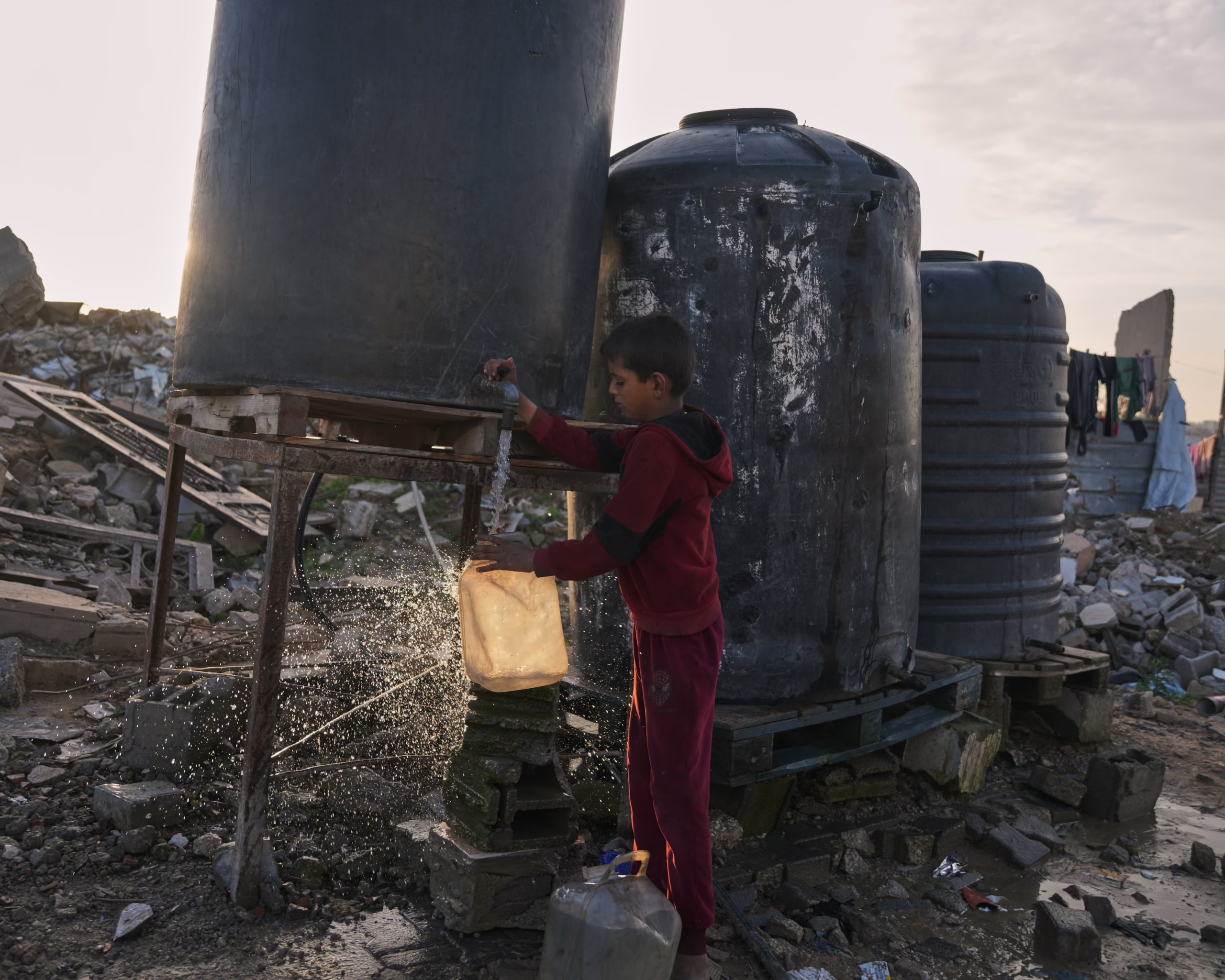
In October 2025, the Sharm el-Sheikh Agreement on Gaza was signed in a bid to end the ongoing war that had ravaged the Strip for two years, bringing widespread devastation. Hopes ran high that this accord would alleviate the suffering of nearly two million Palestinians subjected to relentless killing, siege, and starvation.
The agreement was heralded at the time as a pivotal moment one that might open a window for de-escalation and ease one of the most brutal humanitarian disasters in modern memory.
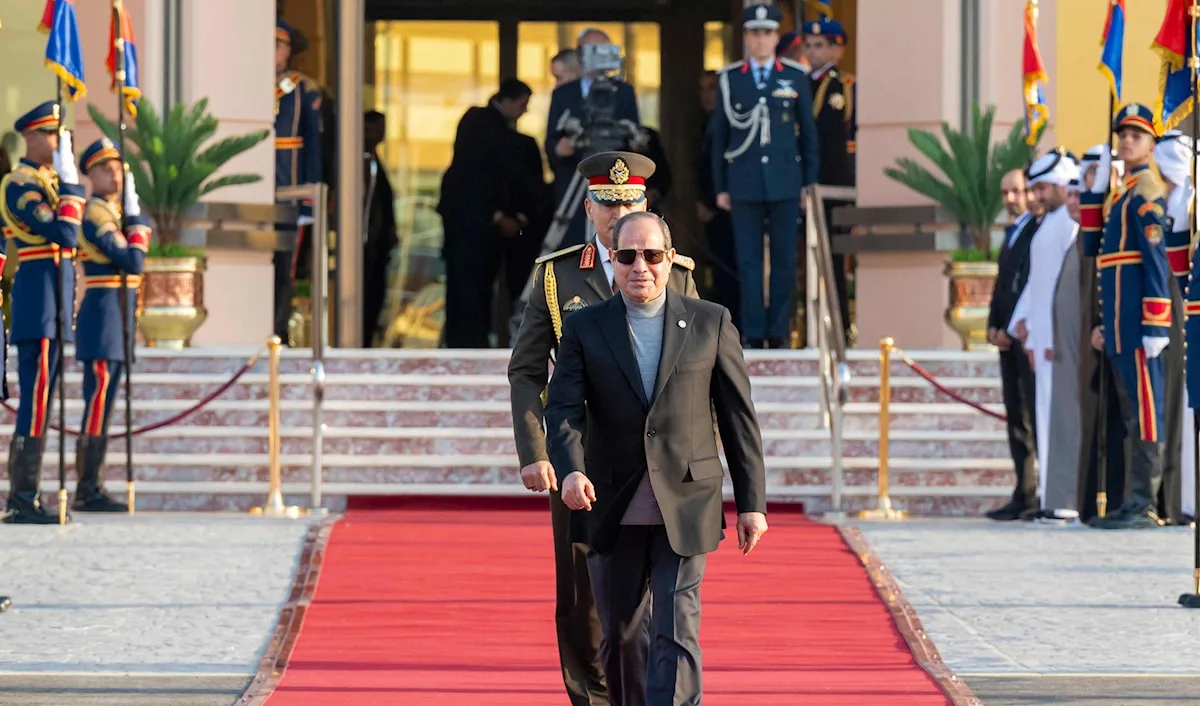
Domestically, Egyptian media framed the accord as a significant diplomatic achievement, crediting Cairo for its role and portraying President Abdel Fattah el-Sisi as a “man of peace in the region.” Some outlets went so far as to dub 2025 “The Year of the President,” as declared prominently on the front pages of the pro-government newspaper Youm7.
However, the celebratory fervor quickly subsided as events unfolded. On the very day the agreement came into effect, it failed to halt the machinery of war. Bombardment and killing continued, while the Palestinian resistance lost a key leverage point: the prisoner exchange file. As a result, the agreement came to be seen as a largely symbolic gesture with no real impact.
Over time, debate intensified over Egypt’s role in the deal, especially as it became clear that Israel had secured gains it could not achieve through military means—without being held to any clear commitments or guarantees. The Arab public grew increasingly divided: some saw the agreement as a limited political success for Egypt, citing its publicly stated rejection of forced displacement.
Others viewed it as a move that stripped the resistance of its tools and left the war open-ended, absent a clear vision for Gaza’s future or the next phase of negotiations. In this light, the agreement remained mired in skepticism and ongoing criticism.
The Gas Deal: Complicity Amid Genocide
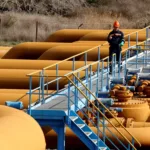
In August 2025, at the height of what many described as a campaign of genocide by Israel against Gaza and as popular and political boycotts of the occupation intensified Tel Aviv announced a massive gas export agreement with Egypt. The deal involved the sale of around 130 billion cubic meters of gas, valued at approximately $35 billion through 2040.
It was promoted by Israeli Energy Minister Eli Cohen as “the largest gas deal in Israel’s history,” and its timing was seen by many as deeply provocative and politically charged.
The announcement triggered widespread outrage across Egyptian and Arab streets, with critics viewing it as a betrayal of the Palestinian cause at a moment when the people of Gaza were being subjected to wholesale slaughter in full view of the world and amid a deafening silence from most Arab governments.
Anger mounted as Israel weaponized the deal as a means of political pressure on Cairo. Then, on December 17, 2025, Israeli Prime Minister Benjamin Netanyahu announced the final approval of the agreement, reiterating its status as the largest in Israel’s history.
Egyptian authorities, for their part, sought to contain the backlash, insisting the deal was not new but an extension of a 2018 agreement, and stressing its purely economic nature—an attempt to strip it of any political dimension.
These explanations failed to stem the criticism. Many saw the deal as a blow to Egypt’s credibility, recasting Cairo not as a neutral mediator or political supporter of the Palestinians, but as a complicit party. Human rights groups went so far as to call for accountability, holding Egypt ethically responsible and demanding that those involved in the deal be scrutinized for their role amid the ongoing war in Gaza.
Parliamentary Elections: A Death Certificate for Political Life
Domestically, the parliamentary elections both for the House of Representatives and the Senate—turned from an opportunity to showcase Egyptian democracy into what many observers described as a formal declaration of political death, amid blatant violations throughout the electoral process.
The elections were marred by widespread scandals, captured in hundreds of video clips showing egregious fraud in favor of pro-government parties, along with rampant vote-buying and organized political coercion. These irregularities placed the government in an embarrassing position and prompted President Abdel Fattah el-Sisi to intervene, calling for a review of all submitted appeals.
That review led to a historic decision: the annulment of election results in nearly 70% of constituencies during the first round an unprecedented move in the history of Egypt’s parliament. This dramatic step laid bare the scale of chaos and political engineering that had distorted the entire process. The fallout from the election debacle overshadowed any other developments in the public arena.
As a result, public trust in the parliamentary institution deteriorated further. Parliament appeared increasingly weak and stripped of genuine popular legitimacy, as many Egyptians came to see the political process as little more than a tool to rubber-stamp the regime’s agenda, rather than a platform for representation or accountability.
Egypt and Its Neighbors: Hollow Red Lines
Egypt’s foreign policy toward neighboring flashpoints has become increasingly marked by inflated rhetoric and populist posturing, with little follow-through on the ground. The result is a form of diplomacy that sounds firm but lacks real deterrent power.
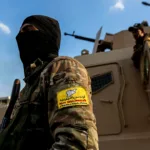
Take Sudan, for example. As conflict escalated between army generals and the Rapid Support Forces (RSF) militia, Cairo announced its “red lines” chiefly, a refusal to accept any threat to Sudan’s unity or institutional cohesion, calling such risks non-negotiable.
Egyptian leadership sees Sudan’s stability as a cornerstone of national security and a bulwark against potential regional chaos.
Yet, these red lines failed to deter the warring factions, especially as the RSF continued to receive military, political, and financial backing from the UAE—Egypt’s traditional ally. As a result, the Sudanese crisis remains intractable, despite Egypt’s firm rhetoric.
A similar pattern emerged in Somalia, where Israel’s unilateral recognition of Somaliland as an independent state sent diplomatic shockwaves across the Horn of Africa, threatening regional stability and the strategic security of the Red Sea.
Cairo’s response? A standard diplomatic statement affirming its support for Somalia’s unity and territorial integrity with no concrete action on the ground. This highlights Egypt’s awareness of strategic threats but its limited capacity to confront expanding Israeli influence.
In Yemen, geopolitical shifts in the south have taken a dangerous turn, with the Southern Transitional Council expanding its hold over Hadhramaut and Aden, and separatist discourse pointing to a potential revival of the former “South Yemen” state. This signals a new chapter in a conflict with serious domestic and regional implications.
Here again, Cairo has adopted a cautious observer role unlike Saudi Arabia, for instance without engaging directly, even though its official rhetoric has acknowledged that developments in southern Yemen represent more than an internal conflict. They reflect intersecting regional and international interests, with direct repercussions for regional security and strategic balances.
Egypt’s strategy is similarly limited in other regional files Libya, Lebanon, Syria, Iraq, and Ethiopia’s Grand Renaissance Dam where populist and threatening language dominates, but meaningful influence on the ground remains elusive.
This leaves Egypt increasingly encircled at its borders, placing its national security at risk, and exposing a glaring gap between bold official statements and actual regional sway.
Most alarming, perhaps, are the threats to Egypt’s northeastern border with Gaza. As Israeli forces rampage along the border, having seized control of the Philadelphi Corridor and repeatedly provoked Egypt, Cairo has chosen not to confront this existential threat.
Instead, it signed a historic gas deal that will funnel billions into Israeli coffers until 2040 an extraordinary and alarming shift in Egypt’s foreign policy approach, and a stark symbol of its contradictory strategies.