NoonPost NoonPost

NoonPost

  • Home
  • Politics
  • Economy
  • Society
  • Culture
  • Files
  • Long Reads
  • Podcast
AR
Notification Show More
نون بوست
“There Are Nights I Can’t Close My Eyes”: How Gazans Are Living in Homes on the Brink of Collapse
نون بوست
From al-Jolani to Ahmad al-Shara: The Evolution of Syria’s New Leader
نون بوست
When Political Islam Receded in Egypt: Who Filled the Void?
نون بوست
An Extension of Genocide: Gaza’s Detainees Speak Out
نون بوست
A Tightrope Between Survival and Sovereignty: The Syrian Government Faces Normalization Pressures
نون بوست
American Aircraft Carriers: Has the Era of “100,000 Tons of Diplomacy” Ended?
نون بوست
U.S. Regime‑Change Policies: Why They Are Destined to Fail
نون بوست
Transformations of Israeli Judaism: Between the Victim Complex and the Colonizer’s Doctrine
نون بوست
The Gulf’s Balancing Act: Iran, Israel, and Hidden Links
نون بوست
Iraq–Turkey Oil Export Treaty: Why Did Ankara Cancel It After 52 Years?
نون بوست
Syria’s Northeast on Edge: QSD Between Ankara and Damascus
نون بوست
Has Europe Changed Its Stance on Israel… or Just Its Language?
NoonPost NoonPost
AR
Notification Show More
نون بوست
“There Are Nights I Can’t Close My Eyes”: How Gazans Are Living in Homes on the Brink of Collapse
نون بوست
From al-Jolani to Ahmad al-Shara: The Evolution of Syria’s New Leader
نون بوست
When Political Islam Receded in Egypt: Who Filled the Void?
نون بوست
An Extension of Genocide: Gaza’s Detainees Speak Out
نون بوست
A Tightrope Between Survival and Sovereignty: The Syrian Government Faces Normalization Pressures
نون بوست
American Aircraft Carriers: Has the Era of “100,000 Tons of Diplomacy” Ended?
نون بوست
U.S. Regime‑Change Policies: Why They Are Destined to Fail
نون بوست
Transformations of Israeli Judaism: Between the Victim Complex and the Colonizer’s Doctrine
نون بوست
The Gulf’s Balancing Act: Iran, Israel, and Hidden Links
نون بوست
Iraq–Turkey Oil Export Treaty: Why Did Ankara Cancel It After 52 Years?
نون بوست
Syria’s Northeast on Edge: QSD Between Ankara and Damascus
نون بوست
Has Europe Changed Its Stance on Israel… or Just Its Language?
Follow US

Syria’s 2025 in Review: Reintegration With the World and Founding a Phase of Renewal

حسن إبراهيم
Hasan Ebrahim Published 26 March ,2026
Share
نون بوست
نون بوست

As 2025 draws to a close, Syria completes its first year outside the rule of the Ba‘th Party and the Assad family in nearly six decades, marking a watershed moment that tested the country’s ability to transition from collapse to state‑building. This report reviews the year’s key outcomes, characterized by a series of political, economic, military, and social shifts that made 2025 a pivotal year in reshaping the Syrian state and defining its new contours.

The spark of change was ignited on November 27, 2024, with the battle dubbed “Repelling the Aggression,” culminating in the fall of Bashar al‑Assad’s regime on December 8 of that year. This event redrew the entire Syrian landscape, as Ahmed al‑Shar‘a, former leader of Hayʾat Tahrir al‑Sham, emerged at the forefront of the transitional period as head of state.

Throughout 2025, actions and decisions unfolded across key milestones as the nascent administration sought to organize and recalibrate the paths of the emerging state amid complex overlaps in multiple arenas.

The result was a heavy and multifaceted harvest, encompassing both achievements and setbacks, that laid foundational structures for the country’s future making 2025 a year remembered in Syria as the first crucial test after liberation.

Political Developments

Domestically, Syria’s new administration took early steps to prevent a governance vacuum and preserve institutions. It began by forming a caretaker government under Mohammad al‑Basheer, previously head of the Salvation Government in Idlib, two days after Assad’s fall. This government served for nearly three months (December 10, 2024–March 29, 2025).
نون بوست
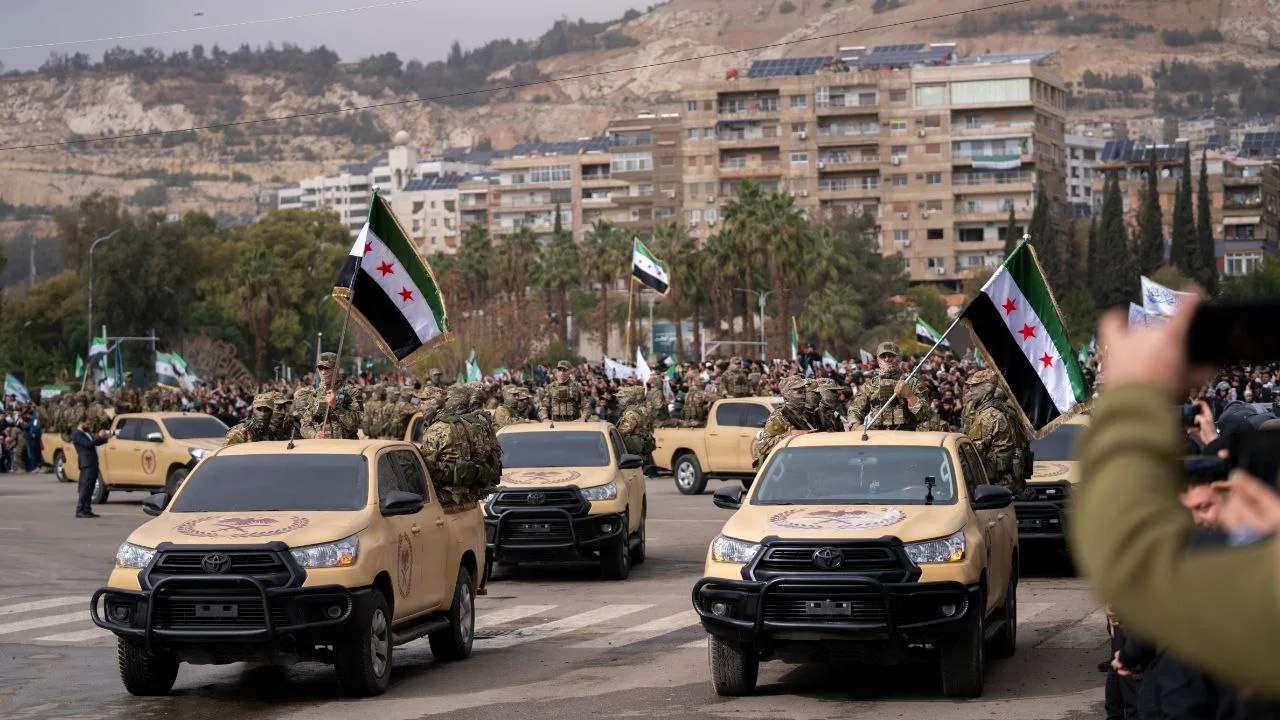
Military parade organized by the Syrian Ministry of Defense in Damascus to mark the first anniversary of Syria’s liberation, December 8, 2025 (Damascus Governorate).

On January 29, 2025, the “Victory Conference” convened, during which Ahmed al‑Shar‘a assumed the presidency and was authorized to form a temporary legislative council for the transitional phase.

The conference’s outcomes included dissolving the Ba‘th Party and the Progressive National Front parties, dismantling former security agencies and the previous army, and rebuilding state institutions including a national army and intelligence apparatus.

All military, political, and civilian factions were to be integrated into state institutions, the 2012 constitution was annulled along with all exceptional laws, and December 8 was declared a national holiday, “Liberation Day.”

A National Dialogue Conference was held on February 24–25, incorporating outcomes from the Victory Conference and accelerating approval of a temporary constitutional declaration. A committee was established to draft a permanent constitution, emphasize human rights and citizenship, support the roles of women and youth, enhance transitional justice, and reform public institutions to ensure stability. The event faced criticism for its rapid timing, short duration, and lack of fair representation for some groups.

On March 10, 2025, an agreement was reached between the Syrian government and the Syrian Democratic Forces (SDF) containing eight points, the most prominent of which were the integration of SDF civil and military structures into state institutions, rejection of separatism and hate speech, and the creation of executive committees to monitor implementation before year’s end. The agreement, however, was not implemented, with mutual accusations of noncompliance and delay.

On March 13, President al‑Shar‘a signed a draft constitutional declaration that drew criticism over presidential powers. On March 29, a transitional government was announced with 23 ministers, including the establishment of two new ministries: Youth and Sports, and Emergency and Disaster Management.
نون بوست
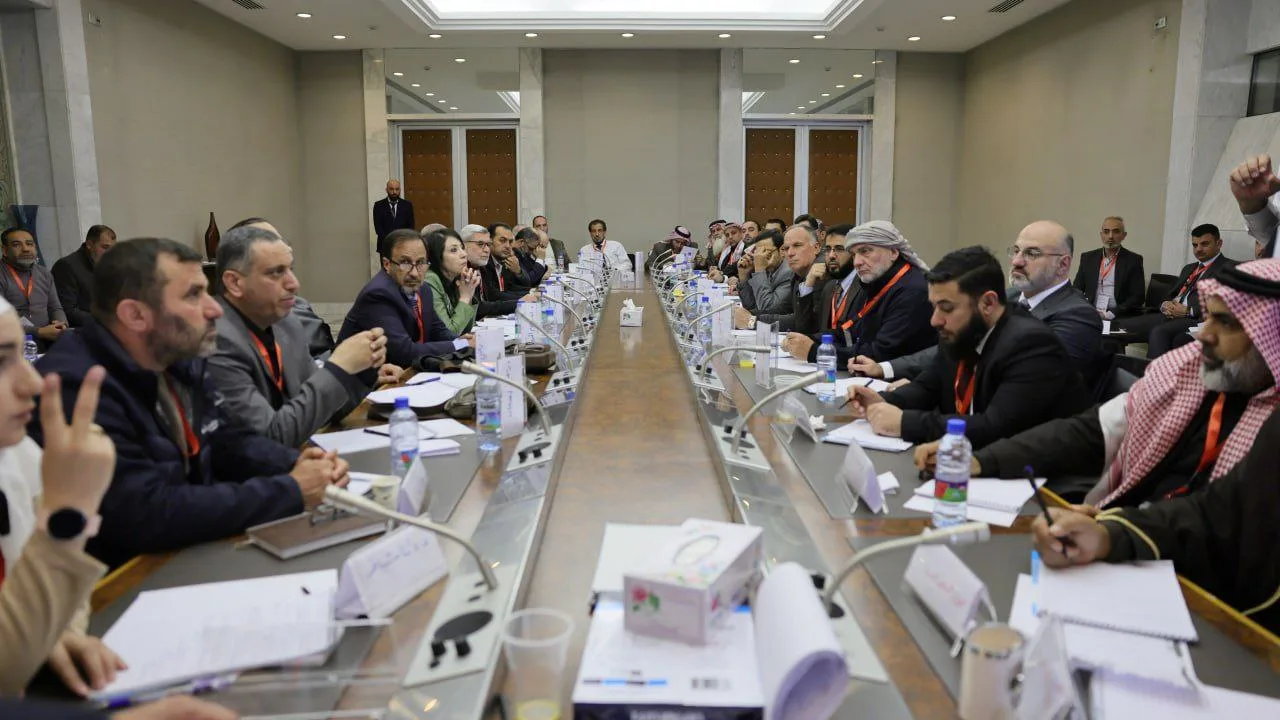
Workshop on institutional reform and rebuilding, held as part of the Syrian National Dialogue Conference, February 25, 2025 (Syrian National Dialogue Conference / Telegram).

Several ministries were merged, including combining Internal Trade, Economy, and Industry into one ministry, and merging Oil, Electricity, and Water Resources into a Ministry of Energy.

Parliamentary elections were organized after fixing the People’s Assembly seats at 210, with two‑thirds (140) elected and one‑third (70) appointed by the president. Completion of the election process remains pending until the presidential appointments are announced. Some provinces were excluded for security reasons, most notably Suwayda and areas under SDF control.

On the international front, Damascus witnessed intense diplomatic activity as the new administration redefined foreign policy beyond the legacy of the previous regime, focusing on building constructive alliances, resolving disputes, and avoiding entanglement in regional conflicts. Syrian Foreign Minister As‘ad al‑Shaybani said, “We do not spurn any relationship with any country, any party, or any event that can serve Syria.”

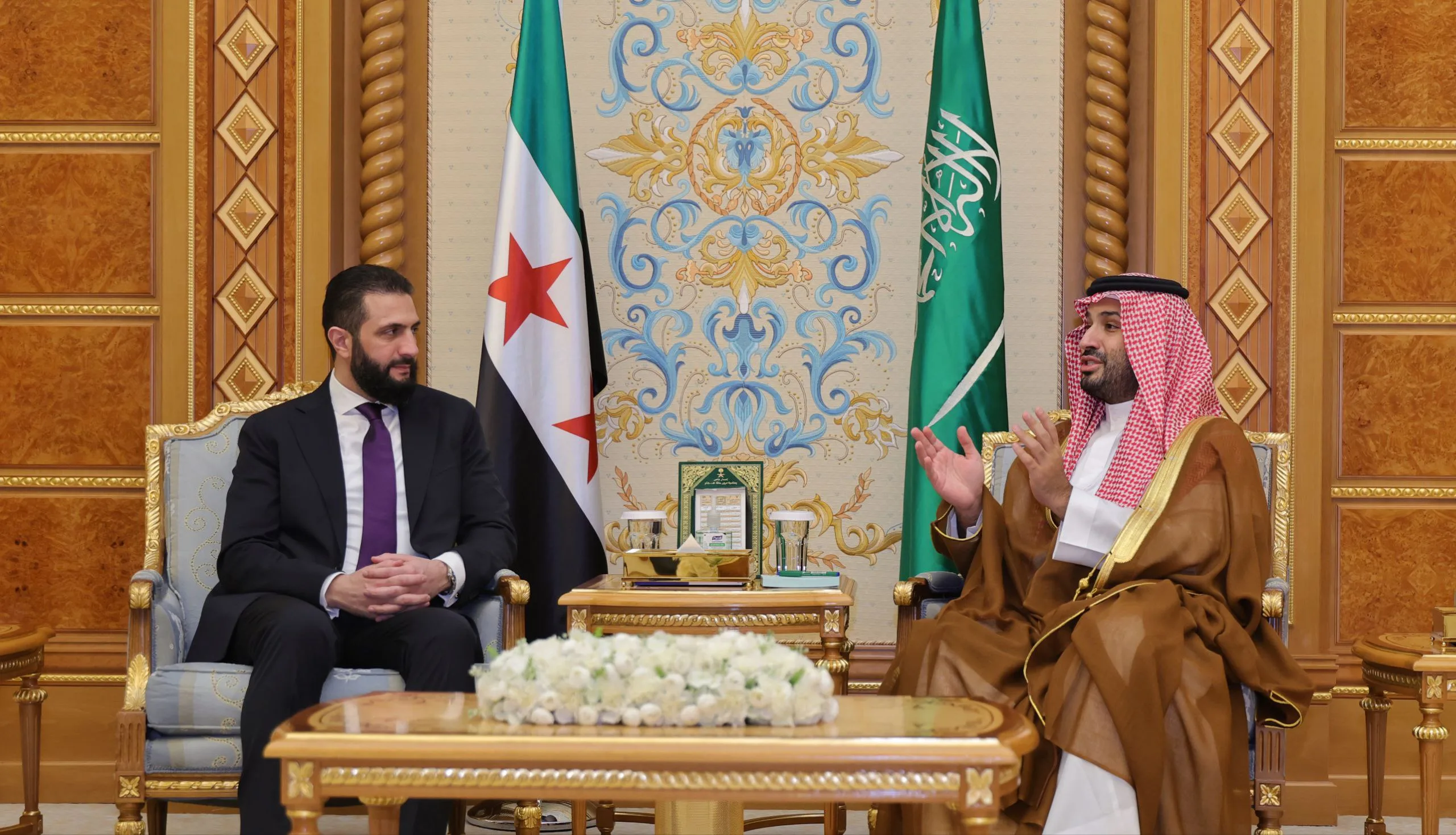
Syrian foreign policy opened new horizons with Arab states through shuttle visits, conferences, and forums, most notably with Saudi Arabia, Qatar, and Jordan. President al‑Shar‘a described Saudi Arabia as “Syria’s key to the world,” and it was his first official international stop after the fall of the old regime.

This was followed by a meeting with U.S. President Donald Trump in Riyadh in May 2025 the first formal encounter between them.

The visit of Qatar’s Emir, Tamim bin Hamad Al Thani, to Damascus on January 30, 2025, was a milestone in bilateral relations, marking the first visit by an Arab leader since Assad’s fall and underscoring Doha’s role as a steadfast ally of the Syrian people throughout the previous fourteen years, continuing political support for the new government.

Relations between Syria and the United States gradually opened after Assad’s fall, with Damascus adopting flexible positions on U.S. demands regarding political representation, counterterrorism, minority protection, and destruction of any remaining chemical weapons stockpiles.

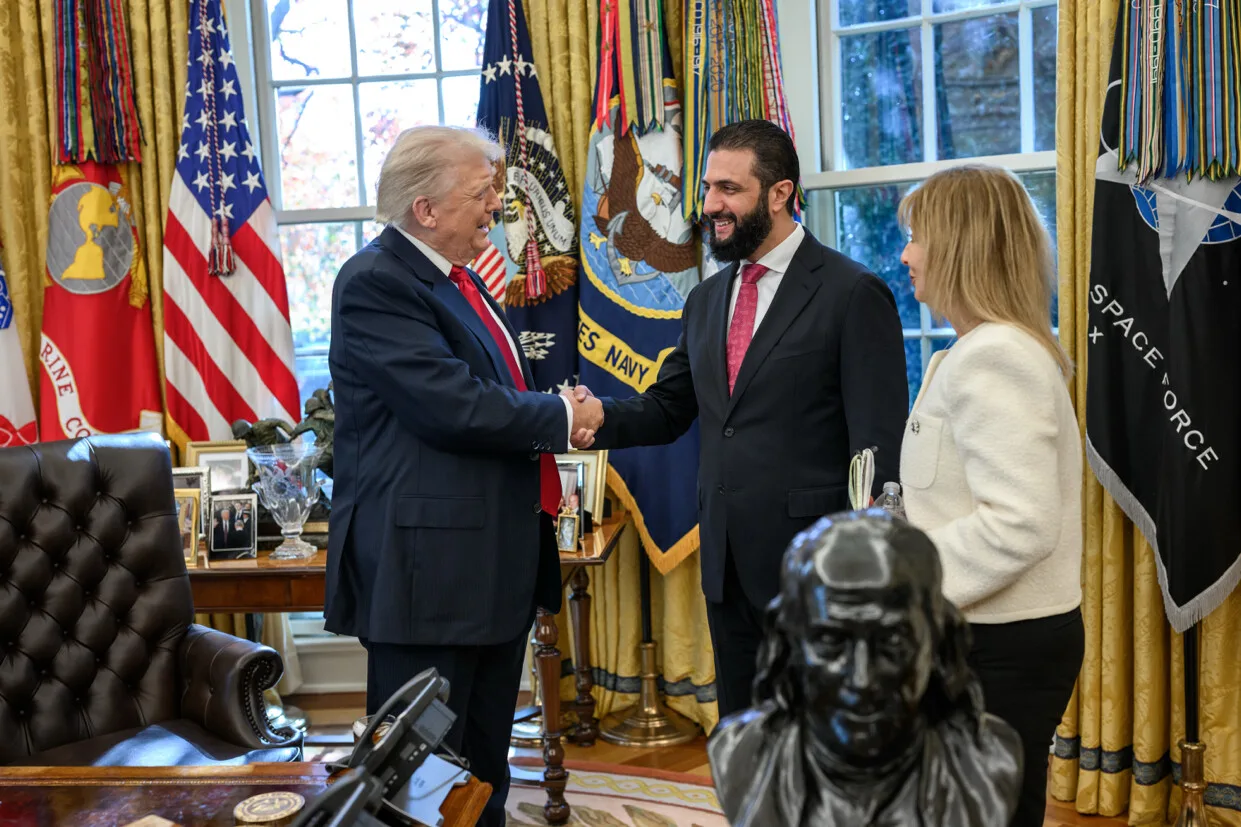
The Trump–al‑Shar‘a meeting helped pave the way for a series of measures to gradually lift U.S. sanctions, including “Caesar” sanctions. In November 2025, President al‑Shar‘a visited the White House the first for a Syrian leader in nearly eighty years with Trump repeatedly praising al‑Shar‘a as “a strong man.”
نون بوست
Syrian President Ahmed al-Sharaa with Saudi Crown Prince Mohammed bin Salman in Riyadh, October 29, 2025 (Presidency of the Republic / X).

Given the historical military and political ties with Russia, including Moscow’s role in operations on Syrian soil, relations with Russia moved cautiously. Negotiations during the “Repelling the Aggression” battle resulted in the withdrawal of Russian forces from the military scene.

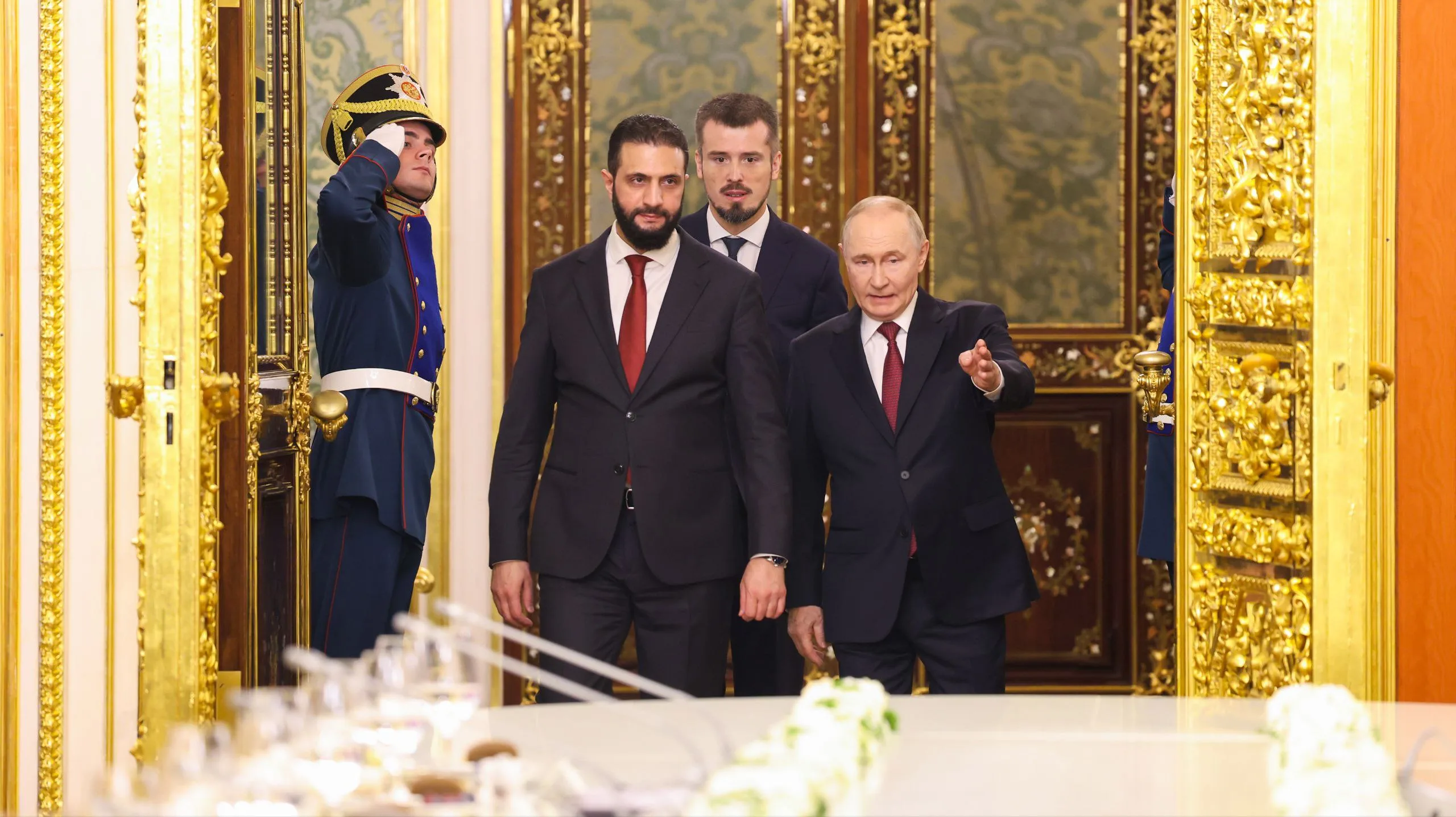
This was followed by high‑level meetings, including President al‑Shar‘a’s visit to Moscow and meeting with President Vladimir Putin in October. Foreign Minister al‑Shaybani said relations with Russia would be reorganized “in Syria’s interest first and foremost.”

Syria also normalized relations with several European countries and the U.K., anchored in commitments for cooperation. Progress included lifting sanctions, official visits, and participation in international forums, with the European Union prepared to support the government conditional on tangible progress in political transition, inclusive minority representation, respect for human rights and women’s rights, freedom of expression, accountability for war crimes, and counter‑extremism.
نون بوست
Syrian President Ahmed al-Sharaa with U.S. President Donald Trump at the White House, November 10, 2025 (Presidency of the Republic / X).

Foreign Minister al‑Shaybani participated for the first time in the ninth Brussels Donors Conference in March, and Damascus hosted the ninth “Dialogue Day” with Syrian civil society organizations, supported by the European Union.

Syrian–Chinese relations advanced slowly after Assad’s fall, with China’s engagement cautious and risk‑aware. The new administration focused on neutralizing Beijing’s use of veto power at the U.N. Security Council. In November, the Syrian foreign minister met his Chinese counterpart Wang Yi, marking the start of economic and security understandings.

Relations with Turkey were among the strongest post‑Assad, with Ankara the first country to re‑establish diplomatic contact with Damascus, along with supportive statements for the transitional phase and stability. President al‑Shar‘a described relations with Turkey, Saudi Arabia, Qatar, and the UAE as “ideal,” and with Egypt and Iraq as “acceptable,” expressing hope for further development.

Relations with Israel remained one of the most sensitive files. In 2025, indirect mediated talks progressed to unprecedented meetings amid repeated Israeli incursions, territorial seizures, and construction of military posts in southern Syria under various pretexts. Damascus prioritized diplomatic solutions and a return to the 1974 disengagement agreement.
نون بوست
Syrian President Ahmed al-Sharaa with Russian President Vladimir Putin in Moscow, October 15, 2025 (Presidency of the Republic / X).

Syria and Israel nearly agreed on broad security arrangements after months of negotiations in Baku, Paris, and London, but the talks faltered over Israeli demands to open a “humanitarian corridor” into Suwayda and establish a demilitarized zone. President al‑Shar‘a asserted that some Israeli policies suggested regret over the previous regime’s fall.

Economic Developments

Syria’s economy in 2025 showed early and slow movements toward recovery after years of deterioration and isolation, with the new administration gradually opening the economy and enhancing the investment climate. In May, President al‑Shar‘a declared that the war on poverty had begun in Syria.

Key economic milestones in 2025 included:

  • Relying on local resources and rejecting external borrowing from the IMF or World Bank.

  • Hosting delegations from major economies, investment conferences, and signing agreements and memorandums of understanding, alongside commitments to improve economic legislation and facilitate domestic and foreign capital participation in reconstruction and comprehensive development, including issuing Decree No. 114 to amend Investment Law No. 18 of 2021.

  • Direct investment reaching $28.5 billion in the first seven months of the year.

  • Removal of most economic sanctions on state institutions, allowing engagement with international markets and UN agencies, with forecasts of 1% GDP growth after a 1.5% contraction in 2024.

  • Increased trade with neighbors and the world, strengthened economic relations with Turkey and Gulf states, resumed ties with global financial institutions, and reentry into the SWIFT system.

    نون بوست
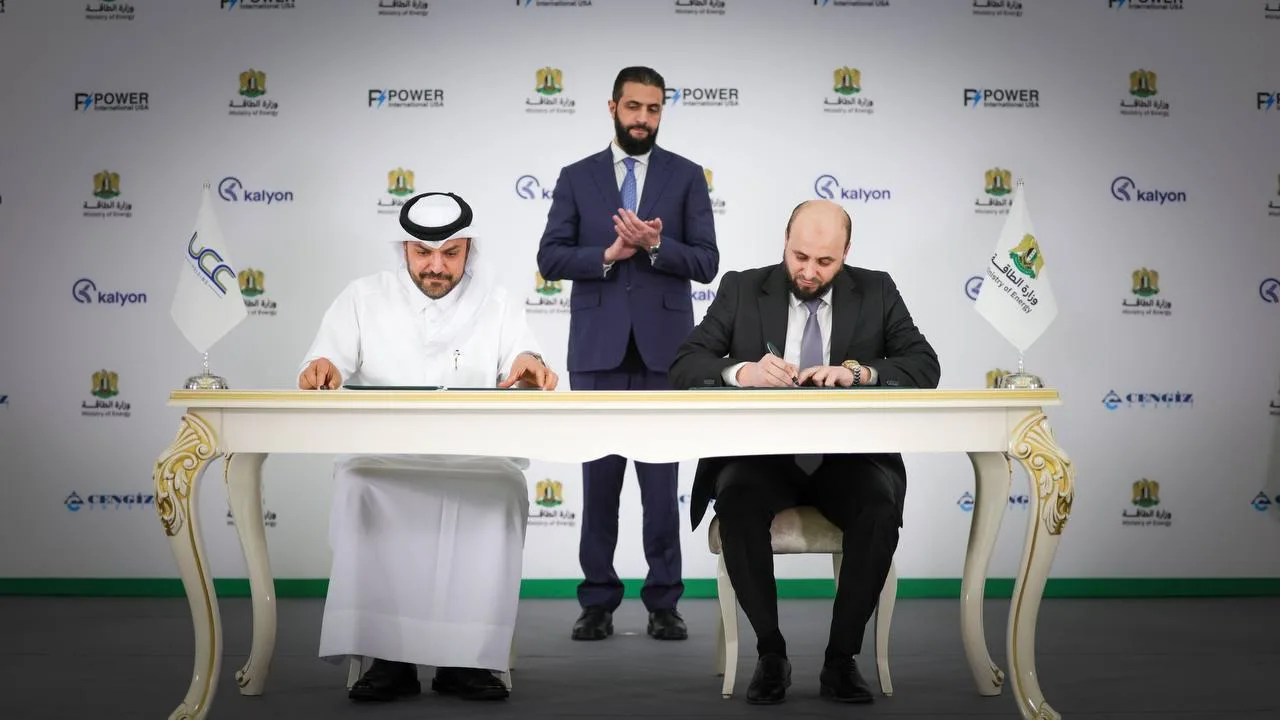
    Signing ceremony of a memorandum of understanding between the Syrian Ministry of Energy and UCC Group, May 29, 2025 (Syrian Ministry of Energy).
  • Relative stability of the Syrian pound against foreign currencies, helping stabilize basic goods prices, launch of a new Syrian currency with redesigned notes and symbols, and removal of two zeros from the old currency.

  • Wage increases of nearly 200%, with differentiated raises for judiciary employees and promises of reforms for education, health, and regulatory agency salaries, though timing was unspecified.

  • Partial improvements in electricity access, followed by significant tariff hikes to the highest levels in decades up to 60 times in some categories.

  • Eased import restrictions and inflows of foreign goods, reducing some prices though most remained high relative to purchasing power.

  • The Central Bank of Syria signed a memorandum with Mastercard to develop digital payment systems.

  • Creation of a Development Fund for reconstruction and infrastructure rehabilitation relying on individual and institutional donations, grants, and monthly subscriptions, along with partnerships with international development funds.

  • Fundraising campaigns across several provinces that reportedly exceeded $1 billion.
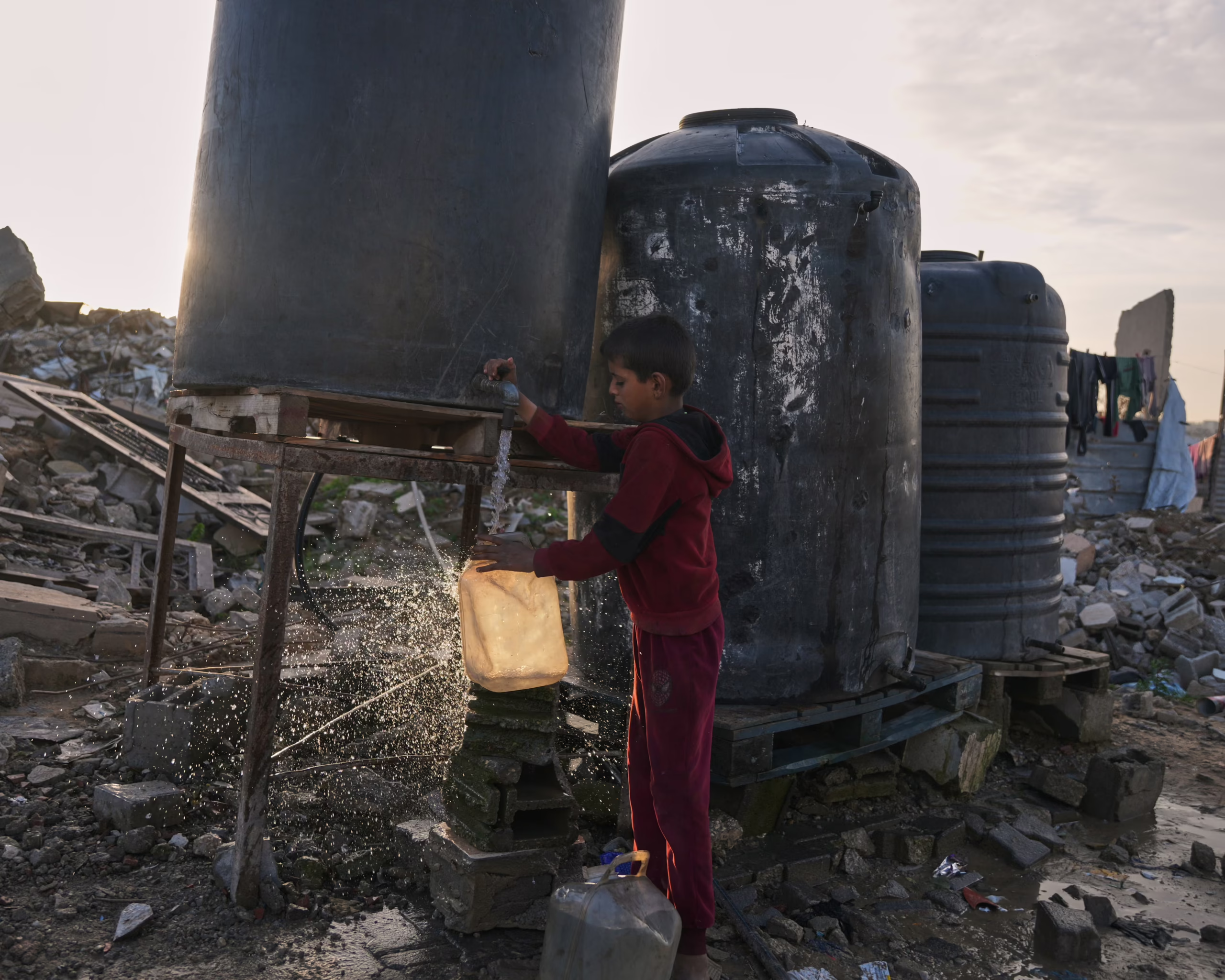
These steps represented Syria’s primary attempts in 2025 to recover from the Assad regime’s legacy and alleviate economic and livelihood crises. Reconstruction costs were estimated at around $216 billion amid one of the world’s most severe humanitarian crises, with 16.5 million people including 7.8 million children needing assistance, 7.4 million internally displaced, and more than 1.2 million returnees lacking basic services.

The World Bank described Syria’s situation as “highly volatile,” linking economic recovery to improved security, institutional stability, eased sanctions, and increased international economic participation, and noting the government’s difficult task of rebuilding economic confidence after over a decade of conflict.

A Reuters investigation found that Syria’s new leadership was quietly restructuring an economy burdened by corruption and long‑standing sanctions under the oversight of Hazim al‑Shar‘a, the president’s older brother.

Social Developments

Security tensions across various regions in 2025 had intertwined political, military, and social dimensions, directly affecting community fabric and local stability. In Syria’s coast, clashes erupted between Ministry of Defense units and remnants of the former regime after pro‑Assad armed groups ambushed government forces.

The confrontations widened, acquiring sectarian and retaliatory characteristics, resulting in hundreds of extrajudicial killings between March 6 and 10.

In Suwayda, deadly confrontations in July claimed at least 1,013 lives from various factions, including local Suwayda groups, government forces, and tribal Bedouin fighters, alongside Israeli interventions targeting government sites. As of December 4, about 155,000 people remained displaced due to these clashes.

The Syrian government acknowledged violations on the Suwayda coast and announced investigative committees, followed by public trials in November and December, with judicial proceedings ongoing.

On May 17, President al‑Shar‘a issued decrees establishing the National Authority for the Missing and the National Authority for Transitional Justice. However, both bodies proceeded slowly with limited tangible impact by year’s end, despite the enormous stakes, with an estimated 150,000–300,000 missing or forcibly disappeared and thousands implicated in abuses, compounded by entrenched institutional legacies of widespread violations.

To reinforce national identity, in July the government unveiled a new visual identity for Syria, with a revised national emblem the “Syrian Golden Eagle.”

The displacement file remained a significant transitional challenge, with about 7 million people living in host communities and camps. By August 21, 2025, 4.8 million were residing outside camps, while 1.4 million remained in 1,782 camps and displacement sites in the northwest and northeast. Meanwhile, Syria saw gradual returns, including over 1.2 million refugees from abroad and nearly 2 million internally displaced returning to their original areas.

Military Developments

The military landscape in Syria remained one of the most complex aspects of the transitional period in 2025, given the multiplicity of factions and the presence of foreign fighters. Key developments included:

  • Meetings with faction leaders in preparation for their integration into the national army, followed by dissolution of military formations at the Victory Conference and beginning the structuring of a new army with leadership appointments.

  • Promotions of defected officers and faction commanders to formal military ranks, including the rank of Major General bestowed upon Marhaf Abu Qasrah, who served as Minister of Defense during the caretaker period and continued through the transition.

  • On May 17, the Ministry of Defense announced the completion of integrating all military units into its structure while continuing administrative organization of the armed forces, issuing codes of conduct and military discipline on May 30.

  • The Ministry of Interior merged the Police and General Security into a single body—the Provincial Internal Security Command and appointed 12 internal security commanders for the provinces, excluding Raqqa and Hasakah.

  • On November 11, Syria joined the International Coalition to Counter ISIS as its 90th member, a move described as a pivotal moment in regional cooperation.

  • The integration of the Syrian Democratic Forces into the Syrian army under the March 10 agreement continued to falter amid disagreements over mechanisms and discrepancies in reported personnel numbers.

  • Emergence of a so‑called “National Guard” in Suwayda, led by Hikmat al‑Hijri, comprising about 30 local factions including members and commanders who formerly served in Assad’s forces, adding complexity to the military scene in the south.

  • Continued presence of groups hostile to the new authority, including remnants of the former regime seeking to perpetuate chaos and evade accountability, and ideologically driven groups such as ISIS as a resurgent foe, alongside the emergence of “Saraya Ansar al‑Sunna,” more visible in media than on the ground.

In conclusion, the achievements of Syrian authorities in 2025 provided a solid foundation from which to pursue more impactful progress for Syrians in the coming year across political, security, economic, and social dimensions.
Download this article as PDF
Share this Article
Facebook Twitter Whatsapp Whatsapp Telegram Email Copy Link
حسن إبراهيم
By حسن إبراهيم صحفي سوري
Follow:
Previous Article نون بوست Soft Expulsion: Why Is Israel Revoking the Licenses of 37 Humanitarian Organizations?
Next Article نون بوست The Elephant in the Room: How Will Mamdani Face Trump?

Read More

  • U.S. Regime‑Change Policies: Why They Are Destined to Fail U.S. Regime‑Change Policies: Why They Are Destined to Fail
  • The Gulf’s Balancing Act: Iran, Israel, and Hidden Links
  • Iraq–Turkey Oil Export Treaty: Why Did Ankara Cancel It After 52 Years?
  • Syria’s Northeast on Edge: QSD Between Ankara and Damascus
  • Has Europe Changed Its Stance on Israel… or Just Its Language?
part of the design
NoonPost Weekly Newsletter

You May Also Like

U.S. Regime‑Change Policies: Why They Are Destined to Fail

U.S. Regime‑Change Policies: Why They Are Destined to Fail

إسراء سيد Esraa sayed 8 April ,2026
The Gulf’s Balancing Act: Iran, Israel, and Hidden Links

The Gulf’s Balancing Act: Iran, Israel, and Hidden Links

فريق التحرير Noon Post 8 April ,2026
Iraq–Turkey Oil Export Treaty: Why Did Ankara Cancel It After 52 Years?

Iraq–Turkey Oil Export Treaty: Why Did Ankara Cancel It After 52 Years?

فريق التحرير Noon Post 8 April ,2026

أفضل 10 جامعات في العالم العربي

فريق التحرير
Noon Post Published 4 August ,2015
Share
40-inspirational-quotes-every-graduate-student-should-know1

لطالما اهتم الباحثون والطلاب في عالمنا العربي بترتيب أحسن الجامعات في العالم، فمن لا يسمع بجامعة هارفارد أو معهد ماساتشوستس للتقنية، ومن لم يشاهد ولو في الأفلام الأجنبية محيط جامعة كامبريدج أو ستانفورد.

 نحاول التوجه نحو الجامعات العربية ، العشرة الأولى منها، لنستكشف اختصاصاتها ومجالات تميزها. خلال البحث والإطلاع على أهم المصادر العالمية التي تهتم بلعبة الأرقام والمقارنات، قد تجد تضاربا بين كل ترتيب وترتيب باعتبار الإختلاف في المعايير المُستعملة وزوايا التقييم.

في هذا التقرير، نعتمد على مؤشرات مجلة أخبار أمريكا والعالم (U.S. News & World Report) باعتبار أنها الوحيدة التي أطلقت مؤشر تقييم خاص بالدول العربية خاصة أمام انعدام قدرتها التنافسية مع جامعات العالم.

كيف يتم احتساب أداء الجامعات العربية

يتيح تصنيف U.S. News، القائم على احتساب أداء الجامعات في مجال البحوث الاكاديمية، الفرصة أمام الطلاب للمقارنة بين أكثر من 90 مؤسسة تعليمية في 16 دولة عربية. إضافةً إلى ذلك، يوجد تصنيفات منفصلة في 16 تخصصاً مختلفاً.

ويتم احتساب مؤشرات كل جامعة وفق التقسيم التالي :

البحوث المنشورة : 30 بالمائة

البحوث المُستعملة في بحوث أخرى : 5 بالمائة

نسبة البحوث المُستعملة في بحوث أخرى : 5 بالمائة

الاستشهادات : 5 بالمائة

احتمالات ومجالات تأثير البحوث : 10 بالمائة

عدد الدراسات ضمن Top 10% التي استندت لنتائج بحثية مصدرها الجامعة المذكورة : 5 بالمائة

نسبة الدراسات ضمن Top 10% التي استندت لنتائج بحثية مصدرها الجامعة المذكورة : 5 بالمائة

عدد الدراسات ضمن Top 25% التي استندت لنتائج بحثية مصدرها الجامعة المذكورة : 5 بالمائة

نسبة الدراسات ضمن Top 25% التي استندت لنتائج بحثية مصدرها الجامعة المذكورة : 5 بالمائة


قائمة العشرة جامعات الأولى عربيا

1- جامعة الملك سعود، السعودية

نون بوست

تقع جامعة الملك سعود في مدينة الرياض. تم افتتاحها في يوم 14 ربيع الثاني 1377 هـ / 6 نوفمبر 1957، وتعتبر ثاني جامعة في المملكة بعد جامعة أم القرى التي أمرالملك عبد العزيز بتأسيس كلية الشريعة في مكة عام 1369 هـ لتصبح أولى المؤسسات التعليمية الجامعية قياما في المملكة العربية السعودية، تم تغيير اسمها إلى جامعة الرياض في عهد الملك فيصل بن عبد العزيز. وأعيد تسميتها بجامعة الملك سعود مرة ثانية في عهد الملك خالد بن عبد العزيز والذي رأى أثناء رعايته لأحد حفلاتها الختامية إعادة اسمها الأول فكان ذلك، جامعة الملك سعود هي ثاني أكبر جامعة بالعالم من حيث المساحة، وقد خصصت حكومة المملكة العربية السعودية لهذه الجامعة ما يعادل 1% من ميزانية الدولة سنويا.

تحتوي الجامعة على أجزاء جامعية متنوعة الإختصاص بين كليات علمية وكليات صحية وكليات المجتمع وكليات العلوم الإنسانية والكليات النسائية.

الموقع الرسمي للجامعة 

رابط الزيارة الإفتراضية للجامعة

2- جامعة الملك عبد العزيز، السعودية

نون بوست

تقع جامعة الملك عبد العزيز في مدينة جدة. انطلق مسار تكوينها  في عام 1384هـ  عندما طُرحت فكرة إنشاء جامعة أهلية بمدينة جدة ثم تبنت الحكومة هذه الجامعة الناشئة من خلال قرار الملك فيصل بن عبد العزيز جعلها حكومية مجانية للطلاب السعوديين وأبناء المواطنات السعوديات المتزوجات من أجانب والقادمين من دول الخليج، فكان لمَ وفرته لها أثر واضح في تحولها إلى جامعة عصرية يبلغ عدد طلابها الآن ما يقارب من  55500 طالب وطالبة.

تضم الجامعة 24 كلية 15 منها في الحرم الجامعي و9 خارج الحرم الجامعي  وهي تباعا كلية الآداب والعلوم الإنسانية، كلية الأرصاد والبيئة، كلية الاقتصاد والإدارة، كلية الاقتصاد المنزلي، كلية الصيدلة، كلية الطب، كلية طب الأسنان، كلية العلوم، كلية المجتمع، كلية الهندسة، كلية الهندسة برابغ، كلية علوم الأرض، كلية علوم البحار، كلية العلوم الطبية التطبيقية، كلية العلوم الصحية، كلية تصاميم البيئة، كلية التصاميم والفنون، كلية الحاسبات وتقنية المعلومات، كلية الحقوق، كلية الحاسبات وتقنية المعلومات برابغ، كلية التربية، كلية الأعمال برابغ، كلية العلوم للبنات، كلية الطب برابغ وكلية الآداب والعلوم الإنسانية فرع البنات.

الموقع الرسمي للجامعة

3- جامعة الملك عبد الله للعلوم والتقنية، السعودية

نون بوست

جامعة الملك عبد الله للعلوم والتقنية واسمها المختصر كاوست هي جامعة سعودية حديثة مخصصة للأبحاث والدراسات العليا، تقع في مدينة ثول شمال مدينة جدة غربي السعودية، وتقدر مساحتها بحوالي 36 مليون متر مربع وهي أكبر المدن الجامعية على مستوى العالم، و بدأت الدراسة بها في 5 سبتمبر 2009 وافتتحت رسميًا في23 سبتمبر 2009 في اليوم الوطني للمملكة العربية السعودية.

وتنقسم الجامعة إلى أربعة أقسام أكاديمية مسؤولة عن برامج الأنشطة التعليمية ومنح الدرجات العلمية، وهي علوم الأرض وعلوم وهندسة البيئة، العلوم الحيوية والهندسة الحيوية، الرياضيات وعلوم وهندسة الحاسوب والعلوم والهندسة الفيزيائية والكيميائية.

وتركز جامعة الملك عبد الله على البحوث لإيجاد حلول للمشاكل المتعلقة بالاحتياجات البشرية، والتقدم الاجتماعي، والتنمية الاقتصادية. ويتألف برنامج البحوث جامعة الملك عبد الله من أربعة محاور استراتيجية للبحوث وهي : الموارد والطاقة والبيئة ؛ والعلوم والهندسة الحيوية، وعلوم وهندسة المواد ؛ والرياضيات التطبيقية وعلوم الحوسبة. ولدعم هذه المحاور، أنشأت جامعة الملك عبد الله مراكز بحثية متعددة التخصصات تركز على الحفز الكيميائي، الاحتراق النظيف، العلوم البيولوجية الحاسوبية، النمذجة الهندسية والتصوير العلمي، الأغشية، جينوميات وتقنية الإجهاد في النبات، علوم وهندسة البحر الأحمر، علوم وهندسة الطاقة الشمسية والطاقة البديلة وتحلية المياه وإعادة استخدامها.

الموقع الرسمي للجامعة

4- جامعة القاهرة، مصر

نون بوست

جامعة القاهرة هي ثاني أقدم الجامعات المصرية والثالثة عربياً بعد جامعة الأزهر وجامعة القرويين . تأسست كلياتها المختلفة في عهد محمد علي، كالمهندسخانة سنة  1820والمدرسة الطبية عام 1827، ثم ما لبثا أن أغلقا في عهد الخديوي محمد سعيد (حوالي 1850). بعد حملة مطالبة شعبية واسعة لإنشاء جامعة حديثة بقيادة مصطفى كامل وغيره. تأسست هذه الجامعة في 21 ديسمبر 1908 تحت اسم الجامعة المصرية، على الرغم من معارضة سلطة الاحتلال الإنجليزي بقيادة لورد كرومر. أعيد تسميتها لاحقاً فعرفت باسم جامعة فؤاد الأول ثم جامعة القاهرة بعد ثورة 23 يوليو 1952.

وتضم الجامعة عدداً كبيراً من الكليات الجامعية، وتقع جغرافيا في مدينة الجيزة غربي القاهرة، وبعض كلياتها تقع في أحياء المنيل والمنيرة والدقي مثل كليات الطب البشري و طب الاسنان و الصيدلة و العلاج الطبيعى، ويبلغ عدد خريجيها الحائزين علي جائزة نوبل هم 3 وتم تصنيفها عالميا عام 2004 ضمن قائمة أكبر 500 جامعة علي مستوي العالم ويتخرج منها سنوياً ما يزيد على 155 ألف طالب.

ومن بين أشهر خريجي هذه الجامعة نذكر صدام حسين وياسر عرفات وصوفي أبو طالب ومحمد مرسي وعدلي منصور وغازي القصيبي ونجيب محفوظ ومحمد البرادعي. وتحتوي الجامعة على كليات متنوعة الإختصاصات وهي تباعا كلية الهندسة وكلية الطب وكلية طب الفم والأسنان جامعة القاهرة، كلية الحاسبات والمعلومات، كلية الصيدلة، كلية الزراعة، كلية العلوم، كلية الاقتصاد والعلوم السياسية، كلية الإعلام، كلية الآثار، كلية الآداب، كلية التجارة، كلية التربية النوعية، كلية التمريض، كلية الحقوق، كلية العلاج الطبيعي، كلية طب الفم والأسنان، كلية الطب البيطري، كلية دار العلوم، كلية رياض الأطفال، معهد الدراسات والبحوث الإحصائية، معهد البحوث والدراسات الأفريقية، المعهد القومي للأورام، كلية التخطيط الإقليمى والعمراني، معهد الدراسات والبحوث التربوية، المعهد القومى لعلوم الليزر ومركز التعليم المفتوح.

الموقع الرسمي للجامعة

الزيارة الافتراضية

5- الجامعة الأميركية في بيروت، لبنان

نون بوست


الجامعة الأميركية في بيروت ومعروفة اختصارا (AUB)، هي جامعة خاصة لبنانية تأسست في 3 ديسمبر 1866م، وتقع في منطقة رأس بيروت في العاصمة اللبنانية.

تأسست عام 1866م على شكل شركة خاصة مستقلة هدفها إنشاء نواة لجامعة في لبنان، على أن تكون مؤسسة غير طائفية. أطلق عليها في ذلك الوقت اسم الكلية السورية البروتستانتية، وقد أسسها دانيال بليس وهو أحد المبشرين الأمريكيين وعين فيها كأول رئيس لها.

وبدأت أبوابها في 3 ديسمبر/كانون الأول عام 1866م لتمارس نشاطها في منزل مستأجر في أحد مناطق بيروت وسجل فيها 16 طالباً فقط.

تخرج منها عدد كبير من الشخصيات في الوطن العربي ممن اشتهروا في مختلف المجالات كسليم الحص ووليد جنبلاط وعبد القادر الحسيني واسحاق الفرحان وعبد الرؤوف الروابدة رئيس وزراء الأردن وسعدون حمادي رئيس الوزراء العراقي الاسبق والشاعر إبراهيم طوقان وأحمد طوقان وقدري طوقان وأحمد محمد الخطيب وجورج حبش والمفكر البحريني محمد جابر الأنصاري ورائد الأعمال والناشط السوري عبد السلام هيكل ورئيس ارامكو السعودية السابق عبدالله جمعه وغيرهم.

ويبلغ عدد كلياتها ستة وهي كلية العلوم الزراعية والغذائية وكلية الفنون والعلوم وكلية الهندسة والعمارة وكلية العلوم الصحية وكلية الطب ومدرسة سليمان عليان لإدارة الأعمال.

الموقع الرسمي للجامعة

6- جامعة المنصورة، مصر

نون بوست

جامعة المنصورة هي إحدى الجامعات المصرية العريقة وتقع تقع في مدينة المنصورة وجزء منها يطل على نهر النيل. وبدأت نشاطها بتدريس الطب عام 1962 كفرع لجامعة القاهرة ثم أنشئت جامعة شرق الدلتا وتم تعديل المسمى إلى جامعة المنصورة عام 1973، وتعتبر الجامعة السادسة من حيث النشأة بين الجامعات المصرية وتضم كليات الطب، طب الأسنان، الصيدلة ، الهندسة ، السياحة والفنادق ،الزراعة ،التجارة ،الحقوق ، العلوم ، التربية ، الحاسبات والمعلومات ، التمريض ، الطب البيطري والتربية الرياضية.

وتخرج من هذه الجامعة عدد كبير من الشخصيات المعروفة مثل محمد غنيم وأيمن نور وعبد الحليم قنديل وخيرت الشاطر ومحمد أحمد عطا ومحمد المنسي قنديل وفرحة الشناوي ومشرق طالب الدليمي و احمد حلقه وحسني إبراهيم شرف وشريف إبراهيم حامد سعيد.

الموقع الرسمي للجامعة

7- جامعة عين شمس، مصر

نون بوست

جامعة عين شمس هي ثالث أقدم جامعة مصرية، تأسست في يوليو 1950 تحت اسم جامعة إبراهيم باشا. وبعد ثورة 23 يوليو 1952، اقترح أن تكون أسماء الجامعات المصرية لها جذور ومعالم تاريخية من البلاد، وفي 21 فبراير 1954 تغير اسم الجامعة إلى جامعة هليوبلس، وفي نفس العام، غُير اسم الجامعة إلى اسمها الحالي جامعة عين شمس.

“عين شمس” هي الترجمة العربية لكلمة “هليوبلس” أو “أون” التي كانت إحدى أقدم الجامعات في التاريخ. ويُقال أنها تأسست من حوالي 5000 سنة.

وتشمل الجامعة سبعة أحرم جامعية، جميعها في القاهرة. الحرم الجامعي الرئيسي يقع في شارع الخليفة المأمون في العباسية، ويشمل إدارة الجامعة وكلية الآداب وكلية الحقوق وكلية العلوم وكلية الحاسبات والمعلومات.

أما الحرم الجامعي الثاني فيقع على الجانب الآخر من شارع الخليفة المأمون، يشمل: كلية التجارة وكلية الألسن وكلية الصيدلة وكلية طب الأسنان ومعهد الدراسات العليا للطفولة ومعهد الدراسات والبحوث البيئة ومستشفى عين شمس التخصصي.

في حين يقع الحرم الجامعي الثالث بجوار مسجد النور بالعباسية، ويشمل كلية الطب وكلية التمريض ومستشفيات الجامعة. كلية الهندسة وكلية التربية النوعية وكلية التربية وكلية البنات وكلية الزراعة تقع كلّ منها على حدة في حرم جامعي مستقل في العباسية، وهليوبوليس، وشبرا الخيمة على التوالي.

الموقع الرسمي للجامعة

8- جامعة الملك فهد للبترول والمعادن

نون بوست

جامعة الملك فهد للبترول والمعادن هي جامعة سعودية حكومية تقع في مدينة الظهران بالمنطقة الشرقية. تم افتتاحها في يوم 9 فبراير 1963 وتعتبر من أوائل الجامعات في السعودية. تم تغيير اسمها من جامعة البترول والمعادن إلى جامعة الملك فهد للبترول والمعادن بعد زيارة الملك فهد للجامعة وتعتبر الجامعة المؤسسة الرائدة للعلوم والتقنية في المملكة العربية السعودية.

يُقسم حرم الجامعة إلى ثلاثة قطاعات رئسية: الشمالي والأوسط والجنوبي. يضم القطاع الشمالي مجمع السنة التحضيرية ومجمع اسكان الاساتذة والموظفين الشمالي ومجمع اسكان الطلاب اما القطاع الأوسط فيشمل كل الإمكانيات الأكاديمية من فصول دراسية ومعامل ومكاتب الاساتذة ويشمل أيضا مقر إدارة الجامعة ومعهد البحوث والمكتبة الرئسية ومركز تقنية المعلومات ومراكز وادارات أخرى واما القطاع الجنوبي فهو عبارة عن اسكان للاساتذة وكبار الموظفين.

وتشمل الجامعات عديد الكليات ذات الإختصاص العلمي وهي كلية علوم وهندسة الحاسب الآلي، كلية العلوم الهندسية، كلية الهندسة التطبيقية، كلية العلوم، كلية الإدارة الصناعية، كلية تصاميم البيئة وكليات المجتمع، وتشتهر الجامعة بتنظيم أولمبياد للرياضيات على غرار أولمبياد الرياضيات العالمي.

رابط الجامعة

9- جامعة الاسكندرية، مصر

نون بوست

جامعة الإسكندرية هي إحدى أكبر الجامعات في مصر، وثالث جامعة أنشأت بعد جامعة القاهرة والجامعة الأمريكية في القاهرة. تضم جامعة الإسكندرية أكثر من 20 كلية تدرس مختلف أنواع العلوم الاجتماعية والطبية والهندسية والرياضية وغيرها، وللجامعة فروع أخرى في مصر خارج مدينة الإسكندرية في دمنهور ومطروح، ومن المقرر إنشاء فروع أخرى للجامعة خارج مصر في جوبا في جنوب السودان، وفي إنجامينا عاصمة جمهورية تشاد، وتتبع جامعة الإسكندرية مثل معظم باقي الجامعات المصرية لإشراف المجلس الأعلى للجامعات، وهو جهاز حكومي يقوم برسم السياسة العامة للتعليم بالجامعات المصرية.

يرجع تاريخ إنشاء الجامعة إلى عام 1938، وذلك في عهد الملك فاروق، وكانت الجامعة تضم وقت إنشائها كلية الآداب وكلية الحقوق، ثم تلى ذلك إنشاء كلية الهندسة عام1941، تم تسمية الجامعة جامعة فاروق في عام 1942، وأعقب هذا إنشاء أربعة كليات جديدة هي كلية الطب، كلية التجارة، كلية العلوم، وكلية الزراعة. وبعد قيام ثورة يوليو سنة 1952 تم تغيير اسم الجامعة إلى مسماها الحالي “جامعة الإسكندرية”، ومنذ ذلك الحين أضيفت للجامعة الكثر من الكليات الأخرى مثل كلية التمريض، كلية الصيدلة، كلية طب الأسنان، كلية التربية، وآخر كلية تم إنشائها في الجامعة كانت كلية السياحة والفنادق أنشأت عام 1983، وفي سبتمبر 1989 ضمت جامعة الإسكندرية إليها الكليات والمعاهد التابعة لجامعة حلوان بالإسكندرية، وهي كلية التربية الرياضية للبنين، كلية التربية الرياضية للبنات، كلية الفنون الجميلة، وكلية الزراعة بمنطقة سابا باشا.

ومن أهم خريجي الجامعة نذكر أحمد زويل ومحمود عبد العزيز ويحيى المشد  وزاهي حواس وعبد العزيز الرنتيسي وعبد الوهاب المسيري.

الموقع الرسمي للجامعة

10- جامعة الإمارات العربية المتحدة

نون بوست

جامعة الإمارات العربية المتحدة، جامعة حكومية تم إنشائها بمبادرة من مؤسس دولة الإمارات زايد بن سلطان آل نهيان في سنة 1976 في مدينة العين، حيث أراد لها أن تكون جامعة اتحادية ذات هوية عربية إسلامية ومصدر إشعاع حضاري للفكر والثقافة والعلوم.

وتضم الجامعة اليوم كلية القانون و كلية العلوم الإنسانية والاجتماعية وكلية العلوم وكلية الإدارة والاقتصاد وكلية الهندسة وكلية الأغذية والزراعة وكلية التربية وكلية تقنية المعلومات وكلية الطب والعلوم الصحية، يدرس فيها ما يقارب 14000 طالب وطالبة.

الموقع الرسمي للجامعة 

TAGGED: التعليم الجامعي
TAGGED: التعليم
Download this article as PDF
Share this Article
Facebook Twitter Whatsapp Whatsapp Telegram Email Copy Link
فريق التحرير
By فريق التحرير تقارير يعدها فريق تحرير نون بوست.
Follow:
Next Article نون بوست The Stigma of “ISIS”: A Heavy Legacy Haunting Women and Children of Former Members

Read More

  • U.S. Regime‑Change Policies: Why They Are Destined to Fail U.S. Regime‑Change Policies: Why They Are Destined to Fail
  • The Gulf’s Balancing Act: Iran, Israel, and Hidden Links
  • Iraq–Turkey Oil Export Treaty: Why Did Ankara Cancel It After 52 Years?
  • Syria’s Northeast on Edge: QSD Between Ankara and Damascus
  • Has Europe Changed Its Stance on Israel… or Just Its Language?
part of the design
NoonPost Weekly Newsletter
dark

An independent media platform founded in 2013, rooted in slow journalism, producing in-depth reports, analysis, and multimedia content to offer deeper perspectives on the news, led by a diverse young team from several Arab countries.

  • Politics
  • Society
  • Rights & Liberties
  • Opinions
  • History
  • Sports
  • Education
  • Technology
  • Economy
  • Media
  • Arts & Literature
  • Entrepreneurship
  • Travel
  • Cinema & Drama
  • Food
  • Health
  • Culture
  • Latest Reports
  • Files
  • Long Reads
  • Interviews
  • Podcast
  • Interactive
  • Encyclopedia
  • In Pictures
  • About Us
  • Our Writers
  • Write for Us
  • Editorial Policy
  • Advanced Search
Some rights reserved under a Creative Commons license

Removed from favorites

Undo
Go to mobile version