
Yemen appears to be on the cusp of a new geopolitical turning point, as shifting power dynamics and rapidly unfolding political and military developments reshape influence in the country’s south. At the heart of these changes is the Southern Transitional Council (STC) backed by the United Arab Emirates and Israel racing to impose a new political reality by seizing control of southern and southeastern governorates.
In just a few days since the start of this month, the STC has successfully expanded its territorial grip to include Hadhramaut and vast areas of eastern Yemen, pushing as far as Aden. For over a decade, the city served as the temporary capital and base for the internationally recognized Yemeni government.
Once Aden slipped from the government’s grasp and most senior political and military leaders—chief among them the Prime Minister and the head of the Presidential Leadership Council—fled, Yemen entered an unprecedented phase of institutional vacuum. This allowed the STC to tighten its grip and consolidate near-total control over decision-making in the south.
Complicating the picture is the STC’s increasingly open embrace of separatism. Gone are the days of paying lip service to power-sharing; the group is now openly reviving its project of an independent “South Yemen.” This marks the potential beginning of a new chapter in the Yemeni conflict, one that extends beyond domestic dimensions to regional power balances in one of the Middle East’s most sensitive zones.
This shift has jolted other players into motion. Riyadh, once content to manage the conflict from behind the scenes, has stepped into the fray. Its latest moves indicate a decisive shift from quietly balancing local actors to delivering firm political and military messages: unilateral power grabs will not be tolerated, and the map will be redrawn by force, if necessary.
Rapid Developments
On December 2, the STC launched a surprise military offensive dubbed “Promising Future,” aimed at full control over southern Yemen. Within days by December 8 the council had effectively taken over most of the southern governorates, including Aden, the former southern capital, and Hadhramaut, Yemen’s largest and oil-rich province, as well as the strategically important al-Mahra.
These military advances quickly triggered political shockwaves. Under direct pressure from STC leaders, Prime Minister Salem bin Brik and several top officials were forced to flee to Riyadh. Their departure created a power vacuum in the south, which the STC moved swiftly to fill by tightening its grip on the levers of authority.
On December 20, after consolidating military control, massive pro-independence rallies erupted across Aden, Abyan, Hadhramaut, and al-Mahra under the banner of “full southern independence.” This marked a pivotal moment, providing the STC and its separatist agenda with popular legitimacy and political cover.
The crisis deepened when a significant faction within the internationally recognized government publicly endorsed the separatist cause. Several ministers openly declared support for the STC’s project to resurrect the former southern state.
This triggered a severe crisis within the Presidential Leadership Council and cast a dark shadow over the future of any political consensus in the country.
Riyadh Breaks Its Silence
As the situation escalated, Saudi Arabia abandoned its previously neutral rhetoric. On December 25, the Saudi Ministry of Foreign Affairs issued a strongly worded statement holding the STC responsible for its unilateral military maneuvers in Hadhramaut and al-Mahra.
These actions, the statement said, occurred without the approval of the Presidential Leadership Council or coordination with the coalition, and had unnecessarily escalated tensions, undermining Yemeni interests, the southern cause, and coalition efforts to support legitimacy.
The following day, STC-affiliated Hadhrami Elite Forces were struck in an air raid that left several casualties. While Riyadh did not officially comment, the STC directly accused Saudi Arabia of carrying out the attack.
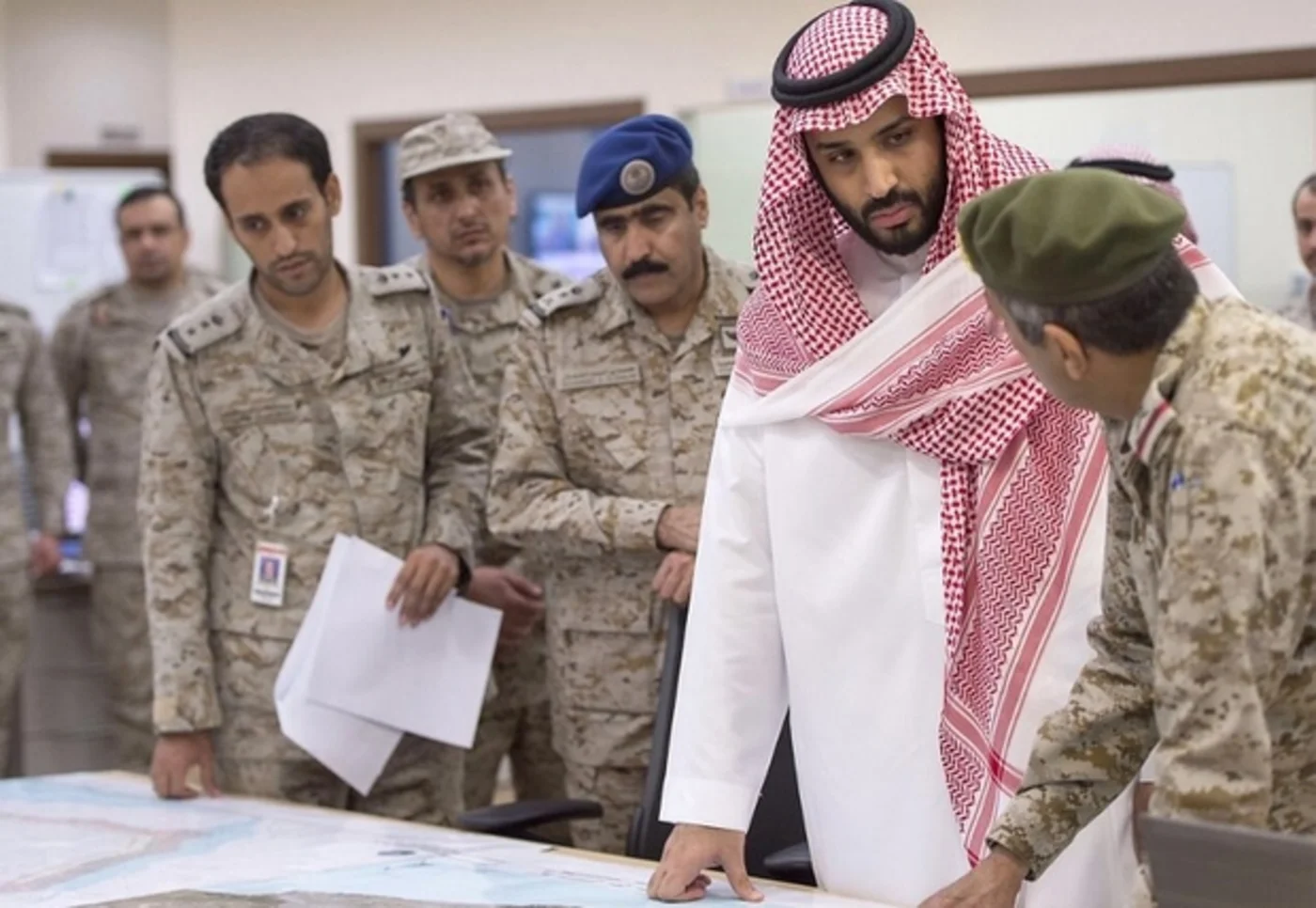
Simultaneously, Saudi Defense Minister Prince Khalid bin Salman issued a sharp political and security message to the Yemeni public. He warned of the dangers of internal escalation particularly in Hadhramaut and al-Mahra and described the December events as “regrettable incidents” that fractured unity and weakened the internal front against the Houthis.
He emphasized that any attempt to exploit the sacrifices made by the coalition and the Yemeni people for narrow gains would only serve “the enemy of all,” a clear reference to the Houthis and other armed groups.
He called on the STC to prioritize reason and respond to Saudi-Emirati mediation efforts by withdrawing its forces and handing over military camps to the “Nation Shield Forces,” thereby enabling local authorities to resume their functions.
The Saudi response went beyond diplomacy. The Saudi-led Coalition to Support Legitimacy announced its readiness to “directly engage” with any STC military movements in Hadhramaut.
Saudi state news agency SPA quoted coalition spokesman Brig. Gen. Turki al-Maliki as saying the coalition’s posture came in response to a formal request from Presidential Council head Rashad al-Alimi, following reports of serious violations against civilians.
The official Yemeni news agency Saba confirmed that al-Alimi had called for all necessary military measures to protect civilians and prevent Hadhramaut from sliding into wider conflict that could threaten public order and state institutions.
STC Pushes Back
In a defiant response, the STC rejected Saudi demands to withdraw from the southern territories it had recently seized. In an official statement, the council said it would continue securing Hadhramaut and al-Mahra, arguing that its presence was a “security necessity” dictated by the volatile situation.
The statement claimed that the STC’s deployment responded to local appeals to counter security threats and block smuggling routes allegedly used by the Houthis. It framed the actions as efforts to restore stability, protect state institutions, and address systemic governance failures.
While expressing openness to coordination with Saudi Arabia to safeguard southern stability and security, the STC also expressed surprise at the airstrikes targeting the Hadhrami Elite Forces. It claimed the strikes followed an armed ambush by militants allegedly linked to a wanted tribal leader.
Sudan: The Hidden Link
The dramatic shift in Yemen and Saudi Arabia’s response did not occur in a vacuum. Observers note striking parallels with the conflict in Sudan, suggesting a broader regional dynamic.
In Sudan, the war reached a critical juncture with the territorial advances of the UAE-backed Rapid Support Forces (RSF), which disrupted regional calculations and raised fears of secession in Darfur. This poses a direct threat to Saudi Arabia’s strategic interests, particularly its Red Sea security and water routes.
A similar pattern appears to be unfolding in southern Yemen. The events in Darfur seem to have emboldened actors in Yemen, with the STC reviving calls for a “Southern State” a move that would effectively divide the country. Riyadh sees this trajectory as a threat to its national security and southern border integrity, placing it in an increasingly precarious position.
A common thread runs through both the Sudanese and Yemeni crises: the UAE’s influence, with Israeli support in the background. Abu Dhabi is widely accused of backing separatist movements in both countries to advance regional agendas aligned with Israeli interests. This has placed Saudi and more broadly, Arab security in the crosshairs.
Aware of the looming threat, Riyadh now views the replication of Sudan’s scenario in Yemen as a red line. The potential loss of control over strategic ports and resource-rich areas such as Aden and Hadhramaut in Yemen, or Port Sudan and Darfur in Sudan has prompted Saudi Arabia to shift to a more assertive stance in an increasingly unstable regional environment.
What Lies Ahead?
Since its formation in May 2017, the STC has made no secret of its desire to restore South Yemen as an independent state, bolstered by substantial UAE support across military, political, and economic fronts. This backing has been decisive, tipping the balance in favor of the STC in recent clashes and enabling rapid territorial gains.
With control over nearly 90% of the south and strategic oil infrastructure in Hadhramaut, the separatist project is no longer a covert ambition it’s an open reality. The STC has built a coherent military-security apparatus and parallel administrative institutions, all while maintaining nominal representation within the legitimacy framework. This dual-track strategy serves its long-term separatist agenda.
In this context, several scenarios for southern Yemen’s future are emerging:
-
Internationally Brokered Settlement: A comprehensive deal, possibly including a referendum, resulting in formal recognition of an independent south. This enjoys clear UAE support but faces strong Saudi objections.
-
De Facto Partition: The most likely short-to-medium term outcome. Yemen would split politically into a Houthi-controlled north and an STC-led south under a nominal federal structure that maintains a fragile balance of power between Riyadh and Abu Dhabi without granting full legitimacy to the STC, leaving it dependent on its backers and vulnerable to public discontent.
-
Saudi-Led Rollback: Riyadh successfully pressures the STC into withdrawing from key cities and reversing its recent gains. This could undercut Abu Dhabi’s influence and damage its credibility among STC leaders and southern Yemenis, potentially leading to a major loss of Emirati sway in the country.
-
Full-Blown Military Escalation: Although less likely, a wide-scale conflict between the STC and the Saudi-led coalition remains possible, especially if the STC declares unilateral independence. This could trigger a broader internal or regional war—though the costs of war and the global focus on countering the Houthis make this scenario improbable in the near term.
Yemen now stands at a critical crossroads on the brink of a possible partition where domestic turmoil and external agendas converge. Caught between internal power struggles and regional ambitions, the Yemeni people remain the biggest losers, exhausted by years of war and division. Once known as “Happy Yemen,” the nation has become one of the world’s most fragile and embattled landscapes.