
The drums of war and mutual threats between Iran and Israel are growing steadily louder, reaching levels not seen since the end of the 12-Day War. That war, deemed a success by both Israel and the United States, was seen as having achieved its declared objectives: delivering severe blows to Iran’s nuclear program, disrupting its ballistic missile development, and operationally draining its capabilities.
This escalation does not emerge in a vacuum it intersects with a range of overlapping Israeli political signals and intelligence assessments regarding what is unfolding behind the scenes.
The timing of this heightened rhetoric, both official and unofficial, about a possible new confrontation with Iran coincides with preparations for Israeli Prime Minister Benjamin Netanyahu’s visit to the United States. It is expected that Netanyahu will carry with him a number of highly sensitive regional files, foremost among them Gaza, Lebanon, and Syria.
In this context, potential American pressure on Netanyahu to make specific concessions is anticipated—prompting him to seek a strategic trade-off that reshapes regional priorities from an Israeli perspective while also serving his domestic political needs.
On the other side, available information points to ongoing Iranian preparations since the conclusion of the last round of hostilities in June, in anticipation of a possible new confrontation. T
ehran has been working to address the vulnerabilities revealed by the war, particularly in terms of security and air defense systems, and in response to the repeated breaches of Iranian airspace by Israeli aircraft.
This strengthens the perception that a collision course remains in play, and may well be repeated though its timing remains uncertain.
An Unfinished War
Since the guns fell silent after the 12-Day War, Israel’s celebratory narrative of “victory” has quickly lost its luster, giving way to growing skepticism about the version promoted by then-President Donald Trump.
His administration presented U.S. involvement in the conflict especially the so-called “Midnight Hammer” strike as a decisive blow to Iran’s nuclear program. Yet subsequent events have shown that this “decisiveness” was, at best, theoretical and temporary.
In this vein, retired Brigadier General Zvika Haimovich wrote on Israel’s Channel 12 website that the truth likely lies somewhere between Trump’s declaration of nuclear destruction and Israeli assessments that the program was merely set back a few steps, not eliminated.
The author notes that just six months after the war, Iran still possesses a significant arsenal of long-range missiles estimated at around 1,500 even before production resumes enough to pose a real threat of a new round of fighting with Israel.
The danger lies not just in the numbers, but in their operational implications. Even a reduced post-war missile production rate is sufficient to disrupt Israel’s functional continuity and pose serious challenges to its defense systems.
In the ongoing race between Iran’s ability to recover and resume production, and Israel and the U.S.’s capacity to replenish defense stockpiles, time becomes a decisive factor.
When comparing Israel’s expectations for the war with its actual outcomes, a wide gap becomes evident. The Israeli government had hoped for a “shock” effect that would force Iran’s regime into retreat or collapse similar to efforts to neutralize Hezbollah in Lebanon via a series of strikes that ended with the assassination of its secretary-general.
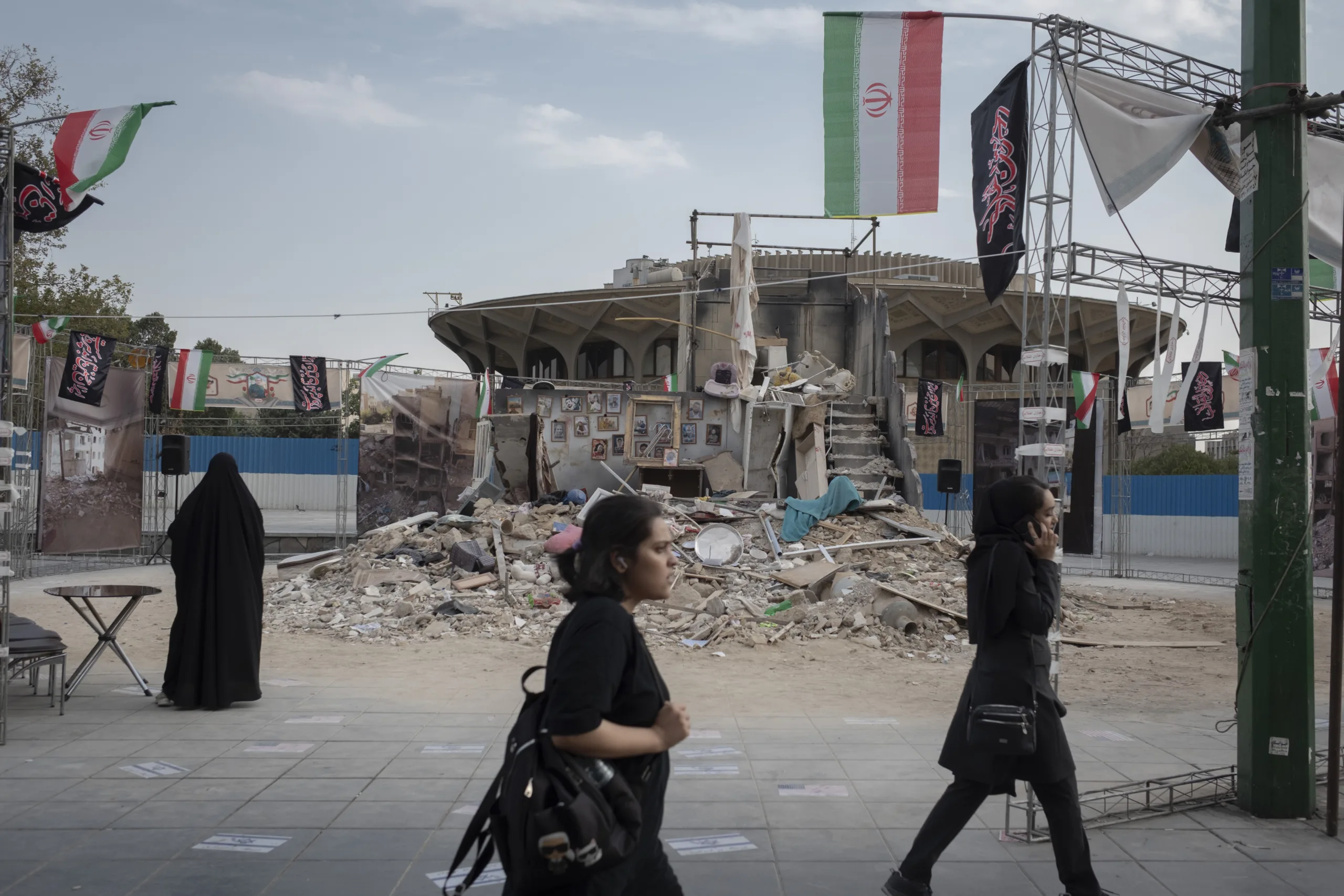
Yet this strategy exhausted Israel’s sensitive intelligence assets most notably its target bank without achieving a decisive outcome. The war ended inconclusively, with Iran demonstrating a clear capacity to strike deep inside Israeli territory and inflict unprecedented urban destruction.
Far from closing the file on Iran–Israel hostilities, this reality has left the door open to even more dangerous possibilities. In a report published on August 19, Newsweek identified four key indicators of a potential return to war. Chief among them are Iran’s rapid rearmament and Israel’s parallel military buildup, backed directly by the United States.
The report also highlighted the persistent uncertainty surrounding Iran’s nuclear program: uranium enrichment continues, cooperation with the IAEA remains suspended, and negotiations with the Trump administration have stalled.
Compounding this are growing political affinities between Trump and Netanyahu in their approach to Iran, along with increased activity by Tehran’s regional proxies particularly in the Red Sea.
The magazine concludes that the accumulation of these factors, along with the proliferation of open fronts, sustains the risk of renewed direct conflict, amid a fragile deterrence balance vulnerable to collapse at the first serious test.
Escalating Threats
Although aggressive rhetoric has long defined the Iran–Israel relationship, the recent surge in statements suggests a shift from mere deterrence to a more serious threshold evoking memories of the lead-up to the 12-Day War.
One of the most direct and alarming statements came from Israeli Chief of Staff Herzi Halevi during a change-of-command ceremony at the Kirya military base in Tel Aviv. He said, “Our enemies once again felt the reach of the Israeli army’s long arm, which will continue to strike wherever necessary, on both near and distant fronts.” He added, “The campaign against Iran is the longest war in Israel’s history.” This framing not only serves as a deterrent message but places Iran squarely at the center of Israel’s next operational doctrine.
In the same vein, Maariv military correspondent Avi Ashkenazi remarked that Halevi’s words clearly signal that “the winds of war are blowing.” He noted the timing of Halevi’s remarks with Netanyahu’s upcoming visit to Washington as indicative of preparations for a move against Iran.
This impression is reinforced by overlapping leaks from Israel’s political and security establishments. Army Radio cited a senior security official stating that Iranian armament will be central to Netanyahu’s discussions with Trump. Meanwhile, Axios revealed that Israel’s Chief of Staff warned U.S. CENTCOM’s commander about what were described as “unusual” Iranian movements in recent weeks.
According to converging Israeli and American sources, Netanyahu is prioritizing Iran on his Washington agenda. Leaks indicate he plans to tell Trump that Iran has moved beyond theoretical threat-building into real-world “field testing” relocating drone launch sites, trialing new radar and air defense systems, and redeploying Revolutionary Guard units. Israeli military command rooms reportedly interpreted these developments as early warning signs of potential escalation.
Tehran, in turn, wasted no time issuing its own counter-threats. Iranian Foreign Minister Abbas Araghchi stated that Iran does not rule out a new attack from the United States or a wider military operation, emphasizing that Iran is “more prepared than ever.”
On the military front, Deputy Chief of Staff Abolfazl Shekarchi asserted the readiness of Iran’s naval, ground, and missile forces. Speaking at Sharif University, he declared, “Even at the height of tensions, Iran did not surrender,” adding, “In the past twelve days, we’ve bolstered our strength and achieved tangible results.”
Iran’s Missile Capabilities
For years, Israel’s public discourse on Iran has centered on the nuclear program. Today, however, Iran’s ballistic missile program has taken center stage in the threat matrix. The 12-Day War provided an unprecedented real-world test for these capabilities, revealing not only the effectiveness of Iran’s missiles but also the depth of the industrial and military infrastructure supporting them. Even within a relatively limited firing range, the missiles managed to cause real damage deep inside Israel.
NBC News, citing informed sources, reported that Netanyahu plans to brief Trump on new intelligence assessments indicating Iran has expanded its ballistic missile production and begun rebuilding facilities damaged in recent Israeli and U.S. strikes. Netanyahu is also expected to present options for additional military action targeting this program.
Israeli intelligence estimates Iran is currently producing about 300 ballistic missiles per month, potentially reaching an annual output of 3,000 an alarming development for Israel. The concern, however, is not merely quantitative. The speed of Iran’s recovery, its swift reactivation of production lines, and the ongoing restoration of damaged air defense systems all contribute to an escalating threat.
While Israeli sources quoted by Axios suggest the pace of Iranian reconstruction does not yet warrant an immediate military response, they caution that next year could mark a turning point particularly if Iran completes the recovery of its missile production capabilities.
General Zvika Haimovich notes that the debate is no longer about whether Iran intends to resume production, but how rapidly it is doing so. Before the war, Tehran aimed to amass a long-range ballistic missile arsenal of around 20,000 by 2027.
During the war, Iran launched roughly 450 missiles a number far below its ambitions but, from the Israeli perspective, more than enough to expose the scale of the threat to Israeli and American defense systems in the region.
In October, CNN reported that Iran was working with China to rebuild its missile program despite renewed UN sanctions. Large shipments of sodium perchlorate a key component for solid-fuel missiles were reportedly delivered to Bandar Abbas since late September 2025, totaling around 2,000 tons. This signals Tehran’s intent to replenish depleted stockpiles.
Satellite imagery analyzed by the Associated Press on September 29 confirmed reconstruction efforts at missile production sites targeted during the war. However, experts caution that full-scale industrial recovery remains dependent on acquiring specialized equipment for mixing solid fuel equipment subject to strict sanctions. Iran’s progress, therefore, is ongoing but incomplete.
The Calculus of Preemptive Strikes
Israel’s latest statements have raised regional tensions to unprecedented heights, coinciding with two significant events: Netanyahu’s impending visit to Washington, and large-scale Iranian missile drills.
Iranian state media reported simultaneous missile tests and launches in several cities—including Khorramabad, Isfahan, Tehran, and Mashhad accompanied by footage released through official and semi-official platforms, though operational details were withheld.
In response, Axios cited Israeli and American sources who claim Tel Aviv warned the Trump administration that Iran might use these drills as a cover for a surprise attack. According to those sources, the Israeli military now faces a significantly reduced margin for error, due to rapid Iranian missile mobilization detected by intelligence.
Still, Netanyahu has confined his public remarks to general deterrence, stating that Israel is aware of the ongoing Iranian drills and affirming that any Iranian attack would be met with a “severe” response.
The most worrying scenario in Israel, however, involves the possibility that Iran’s exercises are merely a smokescreen for a major preemptive missile strike on Israeli territory. Israeli and Western intelligence indicators suggest Iran is shoring up its domestic defenses and upgrading early warning and air defense systems possibly as preparation for an offensive.
Channel 14 analyst Tamir Morag warned that the “gains of the last war may erode with time,” citing a scenario in which Iran regains its capabilities to the point where it could launch a massive missile salvo that seriously challenges Israel’s defense systems.
The irony is that Tehran harbors the same fears albeit in reverse. Iranian leadership views Israel’s media campaign and repeated anonymous leaks usually attributed to “a senior political source,” widely understood to mean Netanyahu’s office as a deliberate strategy to condition international public opinion and justify a preemptive Israeli strike.
This suggests both sides are navigating a perilous web of signals any of which could be misinterpreted.
In this context, Yedioth Ahronoth cited senior Israeli military officers warning that “a miscalculation in managing behavior toward Iran could be enough to reignite the confrontation,” even without a clear intent from either side.
The paper noted the challenges of conducting intelligence operations inside Iran often lead to assessments based on public Israeli statements and leaks potentially prompting Tehran, if it senses war approaching, to consider striking first.
Security officials also warned that an information overload of escalatory headlines might prove more dangerous than military actions themselves. Some of the “unusual activity” observed in Iran could, they suggested, be the result of rumor cycles fueled by Israeli Telegram accounts more than genuine offensive preparations.
An Israeli intelligence assessment concludes that Iran currently has no interest in direct conflict at least not until it completes rebuilding its capabilities, draws lessons from past failures, strengthens its intelligence apparatus, and bolsters its regional allies.
Meanwhile, Israeli military sources openly worry about the heavy price already paid in the last war. A senior officer admitted to Yedioth Ahronoth that Israel “burned through” advanced technologies, deception tools, and specialized weapons not used in two decades—limiting its maneuvering room in future engagements.
Politically, the same outlet ties Israel’s escalation to Netanyahu’s efforts to deflect domestic pressure, including calls for an inquiry into the failures of October 7 and delays in implementing the second phase of Trump’s Gaza plan.
Aware of the intense pressure he will face in Washington to make concessions on Gaza and Syria, Netanyahu appears poised to leverage “the Iranian threat” as a strategic scarecrow using it to justify concessions to his coalition and supporters in exchange for U.S. backing for future actions against Iran and its allies.
Given Netanyahu’s political track record, a new confrontation cannot be ruled out even if it runs counter to intelligence and military assessments should his political interests demand keeping the region on the brink until domestic challenges are overcome.
For its part, Iran having absorbed the lessons of the 12-Day War seems unwilling this time to wait for the first blow. That makes miscalculation not a deliberate decision the most dangerous factor in shaping what comes next.