NoonPost NoonPost

NoonPost

  • Home
  • Politics
  • Economy
  • Society
  • Culture
  • Files
  • Long Reads
  • Podcast
AR
Notification Show More
نون بوست
“There Are Nights I Can’t Close My Eyes”: How Gazans Are Living in Homes on the Brink of Collapse
نون بوست
From al-Jolani to Ahmad al-Shara: The Evolution of Syria’s New Leader
نون بوست
When Political Islam Receded in Egypt: Who Filled the Void?
نون بوست
An Extension of Genocide: Gaza’s Detainees Speak Out
نون بوست
A Tightrope Between Survival and Sovereignty: The Syrian Government Faces Normalization Pressures
نون بوست
American Aircraft Carriers: Has the Era of “100,000 Tons of Diplomacy” Ended?
نون بوست
U.S. Regime‑Change Policies: Why They Are Destined to Fail
نون بوست
Transformations of Israeli Judaism: Between the Victim Complex and the Colonizer’s Doctrine
نون بوست
The Gulf’s Balancing Act: Iran, Israel, and Hidden Links
نون بوست
Iraq–Turkey Oil Export Treaty: Why Did Ankara Cancel It After 52 Years?
نون بوست
Syria’s Northeast on Edge: QSD Between Ankara and Damascus
نون بوست
Has Europe Changed Its Stance on Israel… or Just Its Language?
NoonPost NoonPost
AR
Notification Show More
نون بوست
“There Are Nights I Can’t Close My Eyes”: How Gazans Are Living in Homes on the Brink of Collapse
نون بوست
From al-Jolani to Ahmad al-Shara: The Evolution of Syria’s New Leader
نون بوست
When Political Islam Receded in Egypt: Who Filled the Void?
نون بوست
An Extension of Genocide: Gaza’s Detainees Speak Out
نون بوست
A Tightrope Between Survival and Sovereignty: The Syrian Government Faces Normalization Pressures
نون بوست
American Aircraft Carriers: Has the Era of “100,000 Tons of Diplomacy” Ended?
نون بوست
U.S. Regime‑Change Policies: Why They Are Destined to Fail
نون بوست
Transformations of Israeli Judaism: Between the Victim Complex and the Colonizer’s Doctrine
نون بوست
The Gulf’s Balancing Act: Iran, Israel, and Hidden Links
نون بوست
Iraq–Turkey Oil Export Treaty: Why Did Ankara Cancel It After 52 Years?
نون بوست
Syria’s Northeast on Edge: QSD Between Ankara and Damascus
نون بوست
Has Europe Changed Its Stance on Israel… or Just Its Language?
Follow US

The “Kabyle Republic”: How an Amazigh Cultural Struggle Turned into a Secessionist Project

فريق التحرير
Noon Post Published 26 March ,2026
Share
نون بوست
نون بوست

In a swift and controversial move, the separatist movement “MAK” (Movement for the Autonomy of Kabylia), which Algeria officially designated a terrorist organization on May 18, 2021, held a symbolic ceremony to declare the so-called independence of the Kabyle region and announce the founding of what it called the “Federal Republic of Kabylia.” But what is this movement? Who leads it? And what are its goals, reach, and influence within Algeria?

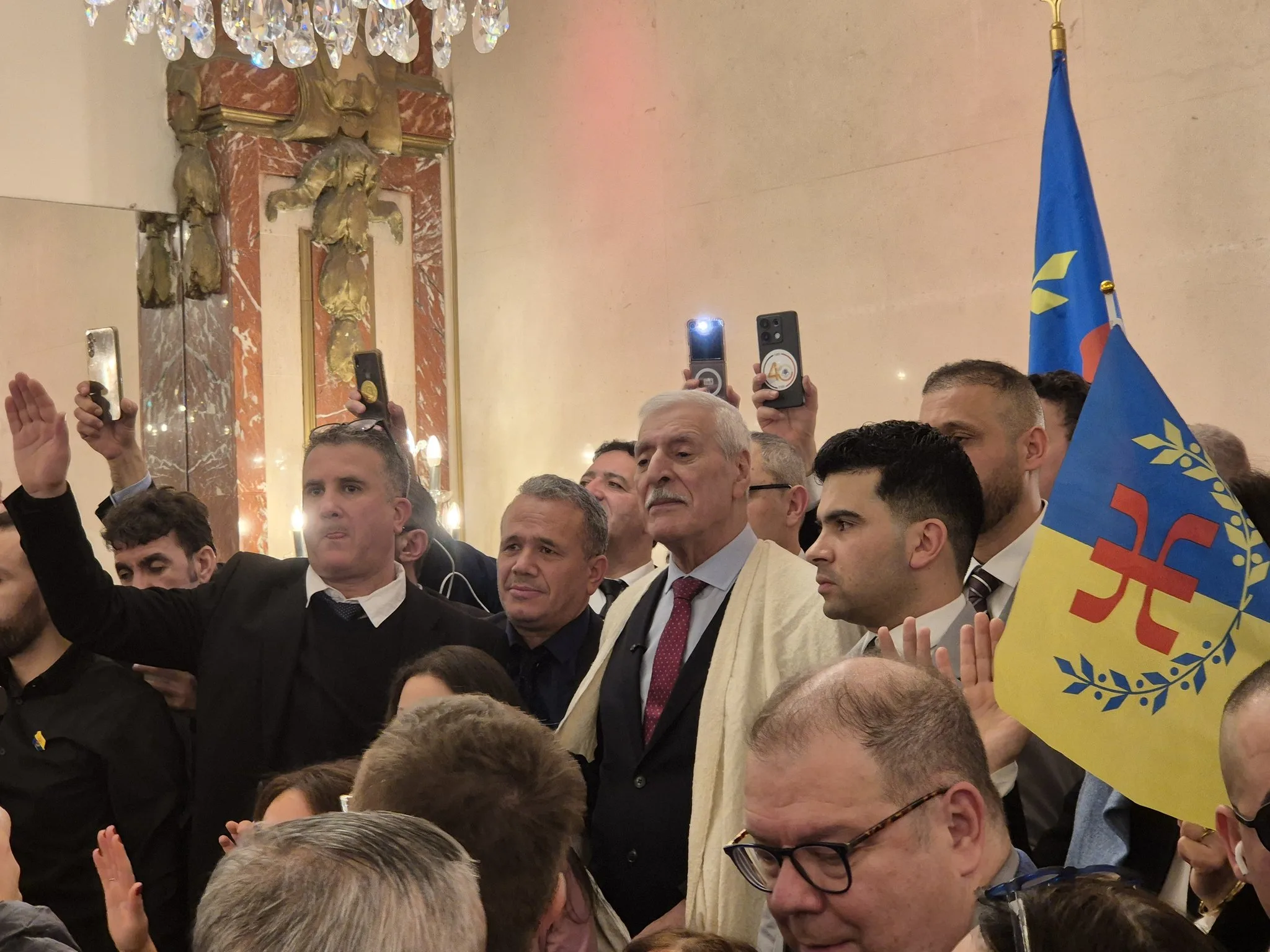
On December 14, at precisely 6:57 p.m., the leader of the MAK, Ferhat Mehenni, signed a document proclaiming the “independence of the Federal Republic of Kabylia” during a ceremony held in a private hall in Île-de-France.

The event was widely covered by various French media outlets, especially right-wing ones known for their hostility toward Algeria. Invitations were also extended to Israeli figures who support the secessionist move, such as academic Emmanuel Navon, who drew parallels between the Kabyle struggle and the founding of Israel.

The ceremony was attended by figures from Morocco, Canada, and France under the banner of defending human and minority rights. The “Kabyle national anthem” was played, with prominent leaders of the movement and members of the self-proclaimed “Kabyle Parliament” in attendance.

Standing before a specially designed flag, Ferhat Mehenni read what he called the “Declaration of Independence,” proclaiming the creation of the “Federal Republic of Kabylia,” outlining its geographic boundaries, and calling for “peaceful negotiations” with the Algerian state, referencing the Czech-Slovak model.

This report delves into the origins and objectives of the movement, the background of its founder, and the extent of its presence and influence within Algeria.

The Rise of Ferhat Mehenni

Ferhat Imazighen Imoula—known in the media as Ferhat Mehenni—made his first televised appearance in 1994 on the Algerian morning show Sabaḥiyyat, hosted by Afifa Maalem. During the interview, he recounted his musical journey that began in the late 1970s and his activism for a pluralistic Algeria.

One of his key statements during the interview was: “I am an Algerian citizen of Amazigh origin… I was born on this noble land… I am a son of Algeria, and I love my country and take pride in my Algerian identity.” However, it appears that over time, Mehenni’s beliefs and core principles shifted, and he adopted a separatist vision.

Initially, he was a leading figure in the Berber Cultural Movement (Mouvement Culturel Berbère) and the Sons of Martyrs Association a group comprising descendants of those who died during Algeria’s war of independence from French colonial rule.

He worked closely with figures like Saïd Sadi, Nordine Aït Hamouda, and the acclaimed francophone writer and intellectual Kateb Yacine (born Mohamed Khelouati). Known as a committed singer of Amazigh identity songs, Mehenni’s music became anthems echoed by crowds in football stadiums.

He was first imprisoned following the Amazigh Spring uprising of April 20, 1980, when Algerian authorities banned a lecture by writer Mouloud Mammeri at the University of Tizi Ouzou.

Mehenni was released on May 14 of the same year but was jailed again in the notorious Berrouaghia prison along with Nordine Aït Hamouda. On December 20, 1985, he was sentenced to three years in prison and fined 5,000 dinars. After 21 months in detention, he was released on April 27, 1987, under a presidential pardon.

The “Satchel Strike” and the Fractures Within

Following his release, Mehenni resumed his activism within the Rally for Culture and Democracy (RCD), alongside Aït Hamouda and Sadi. Their movement was rooted in firm ethical and intellectual values: truth, justice, respect for others, collective action, responsibility, and sacrifice for a shared goal building a united, diverse, and supportive Algeria.

In 1994, a deep rift emerged among Amazigh activists, marking the beginning of internal revolts in the Kabyle region. That year, a school boycott later dubbed the “Satchel Strike” was launched in Tizi Ouzou. The decision was put to a vote at the KATEB Yacine Regional Theater, and Nordine Aït Hamouda was the only figure to vote against it, believing that children should not be dragged into political conflicts.

This strike, which effectively shut down schools across the Kabyle region during the 1994–1995 academic year, became a pivotal moment in the region’s activism. It ultimately led to the creation of the High Commission for Amazigh Affairs on May 27, 1995, following a preliminary agreement between Amazigh associations and then-President Liamine Zéroual.

The institution was tasked with promoting and integrating Amazigh language and culture into Algeria’s social and developmental fabric. Among its accomplishments was the proposal to recognize Tamazight as an official language in the constitutional reform of 2016.

The Black Spring and the Shift Toward Secession

Later, Mehenni split from the RCD following escalating tensions with Saïd Sadi and redirected his focus to the Amazigh cultural movement. After the assassination of iconic singer Matoub Lounès on June 25, 1998, Mehenni took an unprecedented step, openly calling for the establishment of a separate Kabyle state a call that gained traction during the Black Spring protests.

The catalyst was the killing of 17-year-old student Massinissa Guermah on April 20, 2001, by gendarmes in the town of Beni Douala near Tizi Ouzou. The incident ignited massive protests that escalated into violent clashes with security forces, resulting in 126 deaths and over 5,000 injuries.

One outcome of the uprising was the withdrawal of most national gendarmerie units from the Kabyle region, largely due to pressure from the traditional tribal coalition known as the “Arch Movement,” which had emerged as a powerful grassroots force demanding recognition of Amazigh identity. Seizing the moment, Mehenni founded the Movement for the Self-Determination of Kabylia (MAK) following a small gathering in Makouda on August 24, 2001. Soon after, he left Algeria permanently for Paris.

He began appearing frequently at the UN Permanent Forum on Indigenous Issues, an advisory body under the UN Economic and Social Council. There, he condemned the Algerian regime and advocated for Kabyle secession. On June 1, 2010, he announced the formation of a Kabyle government-in-exile, appointing himself as president and naming nine ministers.

Controversial Ties with Israel

Around this period, Mehenni’s relationship with Israel began to solidify. In 2012, he visited Tel Aviv and met with the Deputy Speaker of the Knesset. He expressed solidarity with Israel and drew parallels between the Kabyle and Israeli experiences, saying: “We are in a hostile environment.

Both our peoples are on similar paths but Israel already exists, and that is the only difference.” He even promised to open an Israeli embassy in Kabylia if it became independent. The visit sparked a storm of condemnation across Algeria.

His former prison mate and longtime friend, Nordine Aït Hamouda, described this chapter as “a catastrophic betrayal” and “the worst kind of treachery,” pointing to Mehenni’s appearance waving the Israeli flag during protests in Paris.

Just a week earlier, Mehenni’s nephew, Ben Zohir Jaoud, published an open letter urging him to reconsider:

“I ask you to think again not to give me the right, but to prevent your name from being used by those who wish to weaken the homeland you once claimed to love… You always said you did it for Algeria. So how could you renounce it today after a lifetime of singing for it? You, more than anyone, know that our grandfather died a martyr for a united Algeria not for a divided one, not to see his descendants exploited by those seeking to tear the country apart.”

State Response and the Terrorism Designation

At the height of the 2019 Algerian protests, which saw millions pour into the streets demanding regime change and opposing former President Abdelaziz Bouteflika’s bid for a fifth term, the University of Tizi Ouzou allowed Ferhat Mehenni to deliver a remote lecture advocating the partition of Algeria.

The authorities responded swiftly, banning the Amazigh flag from protests and launching a sweeping crackdown on MAK activists in the Kabyle region.

In May 2021, the Algerian government officially classified MAK as a terrorist organization and issued an international arrest warrant for Ferhat Mehenni, labeling him a terrorist as well.

Download this article as PDF
Share this Article
Facebook Twitter Whatsapp Whatsapp Telegram Email Copy Link
فريق التحرير
By فريق التحرير تقارير يعدها فريق تحرير نون بوست.
Follow:
Previous Article نون بوست Risky Innovation: How Venezuela Is Confronting the U.S. Oil Embargo
Next Article نون بوست Palestinian Bedouins Stand as a Barrier to Settlement Expansion: An Interview with Hassan Mleihat

Read More

  • U.S. Regime‑Change Policies: Why They Are Destined to Fail U.S. Regime‑Change Policies: Why They Are Destined to Fail
  • The Gulf’s Balancing Act: Iran, Israel, and Hidden Links
  • Iraq–Turkey Oil Export Treaty: Why Did Ankara Cancel It After 52 Years?
  • Syria’s Northeast on Edge: QSD Between Ankara and Damascus
  • Has Europe Changed Its Stance on Israel… or Just Its Language?
part of the design
NoonPost Weekly Newsletter

You May Also Like

U.S. Regime‑Change Policies: Why They Are Destined to Fail

U.S. Regime‑Change Policies: Why They Are Destined to Fail

إسراء سيد Esraa sayed 8 April ,2026
The Gulf’s Balancing Act: Iran, Israel, and Hidden Links

The Gulf’s Balancing Act: Iran, Israel, and Hidden Links

فريق التحرير Noon Post 8 April ,2026
Iraq–Turkey Oil Export Treaty: Why Did Ankara Cancel It After 52 Years?

Iraq–Turkey Oil Export Treaty: Why Did Ankara Cancel It After 52 Years?

فريق التحرير Noon Post 8 April ,2026

كيف نجحت “قصة رابعة” في إحياء ذكرى المذبحة؟

فريق التحرير
Noon Post Published 15 August ,2015
Share
1439410732

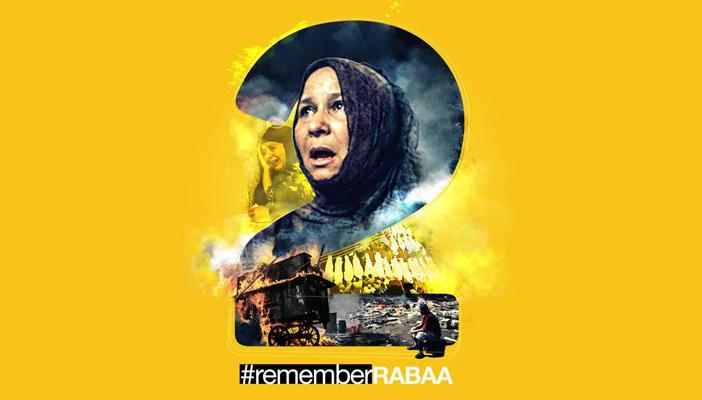
حملة “قصة رابعة” انطلقت منذ عام في الذكرى الأولى لفض اعتصام رابعة العدوية الذي أقامه مؤيدو الرئيس السابق محمد مرسي، والذي قامت قوات الأمن المصرية بفضه بالقوة ما أسفر عن مقتل قرابة 1800 شخص في يوم واحد حسب تقديرات حقوقية.

منظمو الحملة أحيوا ذكراها الأولى منذ عام بعدة فعاليات على مستوى العالم من بينها فاعليات إلكترونية بهدف التوثيق والتعريف بما حدث في مجزرة رابعة العدوية، لذلك أطلقوا على حملتهم اسم “قصة رابعة”، أما الآن في الذكرى الثانية للمذبحة فقد استطاع القائمون على الحملة أن يُحولوها إلى مؤسسة مسجلة مقرها دولة “كندا” لتسجل أهدافها في توثيق أحداث المجزرة التي وقعت في 14 من أغسطس عام 2013، كذلك تعريف العالم بها وإحياء ذكراها السنوية كل عام والدفاع عن ضحاياها.

الحملة بالأساس موجهة لمخاطبة الغرب وهو تطور جديد في أساليب الدفاع عن ضحايا المجازر السياسية في مصر، حيث اكتفت بعض الفصائل السياسية بمحاولة مخاطبة الداخل المصري فحسب، أما الحملة فتسعى حاليًا لتدويل القضية من خلال توصيل أهداف الحملة بأكثر من خمس لغات مع اعتماد اللغة الإنجليزية كلغة رئيسية للحملة.

أطلقت مؤسسة “قصة رابعة” حملات إلكترونية ودشنت موقعها الخاص الذي يحتوي كافة المعلومات عن الحملة وأنشطتها، بالإضافة إلى ألبومات مصورة عن المجزرة، المؤسسة اعتمدت هذا العام على حملات عدة في دول العالم كانت أبرزها فعالية تضامن مع مجزرة رابعة في العاصمة البريطانية لندن، شارك فيها قرابة ألف شخص، بدأت بعرض فريزينج على أرضية ساحة “ترافلغار” للتعبير عن التضامن مع ضحايا المجزرة، كما نسقت الحملة زيارة لمبنى الأمم المتحدة في نيويورك من قبل ممثلي الحملة.

متحف رابعة

كما كشفت المؤسسة قبيل الذكرى الثانية لمجزرة فض رابعة عن الانتهاء من أعمال تصميم مشروع يحمل اسم متحف رابعة العدوية، الذي يهدف إلى تخليد ذكرى ضحاياها، وقالت المؤسسة، في بيان صادر عنها ونشرته وكالة الأناضول للأنباء، إن تصميم المتحف استغرق أكثر من ثلاثة أشهر، بواسطة فريق عمل من عدة دول من بينها إسبانيا وماليزيا، حيث رأس فريق العمل، المعماري المصري يوسف فهمي.

بدأ فريق من المتخصصين في وضع خطة تهدف إلى جمع أكبر قدر من مقتنيات الشهداء، والصور، والوثائق، والآثار المرتبطة بالمذبحة، ونجحت حتى الآن في جمع أكثر من 12 ألف صورة، و600 مقطع فيديو، كما تلقت وعودًا إيجابية باستلام العديد من المقتنيات والوثائق من أسر الضحايا.

وأضاف يوسف فهمي في بيان المؤسسة: إنهم استوحوا فكرة التصميم من اعتصام رابعة العدوية وقت الفض، من حيث شكل الخيام التي ميزت الاعتصام التي هي أساس التصميم، والأرض المتوجة التي تمثل واجهة المشروع، تشير إلى صدى الزلزال الذى ضرب أرض الميدان يوم المذبحة.

وبشأن مكان تدشين المتحف مستقبلاً، أشارت المؤسسة في بيانها إلى أنه سيقام المتحف في العاصمة المصرية القاهرة، راجين أن يكون ذلك قريبًا، وحتى تسمح الظروف بذلك، فإنهم مستمرون في جمع المقتنيات، وقد أعدوا معرضا متنقلًا يجوب العالم بها، لتعريف العالم بالمذبحة.

استهدف القائمون على الحملة من عدة جنسيات مختلفة إلى إضفاء طابع عالمي على الذكرى الثانية للمجزرة عبر اعتماد اللغة الإنجليزية لغة رئيسية للحملة  وللهاشتاج الخاص بها الذي انطلق على موقع التواصل الاجتماعي تويتر “تذكر رابعة” (rememberRABAA#)

كما طالبت المؤسسة التي تتبنى الحملة العالم بالاضطلاع بمسؤولياته أمام ما يحدث في مصر والتحرك السريع لمنع وقوع مزيد من المذابح في مصر تحت غطاء أحكام الإعدام التي تستخدم القانون كغطاء لها، وتحدثت الحملة عن تحمل العالم جزء مما يحدث في مصر بسبب الصمت على المجازر منذ بدايتها.

أرجع نشطاء على مواقع التواصل الاجتماعي نجاح الحملة نسبيًا هذا العام بسبب تحررها من القيود التنظيمية لجماعة الإخوان المسلمين التي تحمل راية الدفاع عن ضحايا المذبحة وإحياء ذكراها، لكن هذا العام انطلقت الحملة بصبغة عالمية تخطت أي أطر تنظيمية تقيد إبداع المجموعات الشبابية القائمة على الحملة.

تفاعل مع الحملة ملايين المغردين في الوطن العربي والعالم مع الهاشتاجات المتحدثة عن المجزرة بالإنجليزية  وبالعربية على مواقع تويتر وفيسبوك وإنستجرام، وغيرها من مواقع التواصل الاجتماعي التي انطلقت الحملة من خلالها، وذلك من خلال نشر تدوينات قصيرة حول المجزرة وذكرياتهم معها، وقد تصدر الهاشتاج “تذكر رابعة” صدارة الأأكثر تدوالًا في مصر عشية ذكرى المذبحة.

وفي سياق عملية توثيق وتخليد الحدث، أعلنت المؤسسة على عن إصدار ألبوم مصور يحتوي على 117 صورة عالية الجودة أغلبها بعدسة المصور مصعب الشامي الذي قتلته قوات الأمن المصرية يوم المجزرة أثناء تغطيته للحدث.

وقد تحدثت المؤسسة عن مشاريعها المستقبلية التي تريد المضي فيها وهي عبارة عن إطلاق جائزتين تحمل اسم رابعة، الأولى ستكون لأفضل عمل فني وإعلامي يتحدث عن اعتصام رابعة وفضه، والثانية ستكون مخصصة لأفضل عمل فني وإعلامي يتحدث عن قضايا إنسانية وهي جائزة تحمل اسم جائزة رابعة للتضامن الإنساني، بحسب ما تنوي المؤسسة.

TAGGED: #RememberRabaa ، #مذبحة_رابعة ، #مذبحة_لم_تقتلنا ، اعتصام رابعة ، ذكرى المذبحة
Download this article as PDF
Share this Article
Facebook Twitter Whatsapp Whatsapp Telegram Email Copy Link
فريق التحرير
By فريق التحرير تقارير يعدها فريق تحرير نون بوست.
Follow:
Next Article نون بوست The Stigma of “ISIS”: A Heavy Legacy Haunting Women and Children of Former Members

Read More

  • U.S. Regime‑Change Policies: Why They Are Destined to Fail U.S. Regime‑Change Policies: Why They Are Destined to Fail
  • The Gulf’s Balancing Act: Iran, Israel, and Hidden Links
  • Iraq–Turkey Oil Export Treaty: Why Did Ankara Cancel It After 52 Years?
  • Syria’s Northeast on Edge: QSD Between Ankara and Damascus
  • Has Europe Changed Its Stance on Israel… or Just Its Language?
part of the design
NoonPost Weekly Newsletter

You May Also Like

U.S. Regime‑Change Policies: Why They Are Destined to Fail

U.S. Regime‑Change Policies: Why They Are Destined to Fail

إسراء سيد Esraa sayed 8 April ,2026
The Gulf’s Balancing Act: Iran, Israel, and Hidden Links

The Gulf’s Balancing Act: Iran, Israel, and Hidden Links

فريق التحرير Noon Post 8 April ,2026
Iraq–Turkey Oil Export Treaty: Why Did Ankara Cancel It After 52 Years?

Iraq–Turkey Oil Export Treaty: Why Did Ankara Cancel It After 52 Years?

فريق التحرير Noon Post 8 April ,2026
dark

An independent media platform founded in 2013, rooted in slow journalism, producing in-depth reports, analysis, and multimedia content to offer deeper perspectives on the news, led by a diverse young team from several Arab countries.

  • Politics
  • Society
  • Rights & Liberties
  • Opinions
  • History
  • Sports
  • Education
  • Technology
  • Economy
  • Media
  • Arts & Literature
  • Entrepreneurship
  • Travel
  • Cinema & Drama
  • Food
  • Health
  • Culture
  • Latest Reports
  • Files
  • Long Reads
  • Interviews
  • Podcast
  • Interactive
  • Encyclopedia
  • In Pictures
  • About Us
  • Our Writers
  • Write for Us
  • Editorial Policy
  • Advanced Search
Some rights reserved under a Creative Commons license

Removed from favorites

Undo
Go to mobile version