NoonPost NoonPost

NoonPost

  • Home
  • Politics
  • Economy
  • Society
  • Culture
  • Files
  • Long Reads
  • Podcast
AR
Notification Show More
نون بوست
“There Are Nights I Can’t Close My Eyes”: How Gazans Are Living in Homes on the Brink of Collapse
نون بوست
From al-Jolani to Ahmad al-Shara: The Evolution of Syria’s New Leader
نون بوست
When Political Islam Receded in Egypt: Who Filled the Void?
نون بوست
An Extension of Genocide: Gaza’s Detainees Speak Out
نون بوست
A Tightrope Between Survival and Sovereignty: The Syrian Government Faces Normalization Pressures
نون بوست
American Aircraft Carriers: Has the Era of “100,000 Tons of Diplomacy” Ended?
نون بوست
U.S. Regime‑Change Policies: Why They Are Destined to Fail
نون بوست
Transformations of Israeli Judaism: Between the Victim Complex and the Colonizer’s Doctrine
نون بوست
The Gulf’s Balancing Act: Iran, Israel, and Hidden Links
نون بوست
Iraq–Turkey Oil Export Treaty: Why Did Ankara Cancel It After 52 Years?
نون بوست
Syria’s Northeast on Edge: QSD Between Ankara and Damascus
نون بوست
Has Europe Changed Its Stance on Israel… or Just Its Language?
NoonPost NoonPost
AR
Notification Show More
نون بوست
“There Are Nights I Can’t Close My Eyes”: How Gazans Are Living in Homes on the Brink of Collapse
نون بوست
From al-Jolani to Ahmad al-Shara: The Evolution of Syria’s New Leader
نون بوست
When Political Islam Receded in Egypt: Who Filled the Void?
نون بوست
An Extension of Genocide: Gaza’s Detainees Speak Out
نون بوست
A Tightrope Between Survival and Sovereignty: The Syrian Government Faces Normalization Pressures
نون بوست
American Aircraft Carriers: Has the Era of “100,000 Tons of Diplomacy” Ended?
نون بوست
U.S. Regime‑Change Policies: Why They Are Destined to Fail
نون بوست
Transformations of Israeli Judaism: Between the Victim Complex and the Colonizer’s Doctrine
نون بوست
The Gulf’s Balancing Act: Iran, Israel, and Hidden Links
نون بوست
Iraq–Turkey Oil Export Treaty: Why Did Ankara Cancel It After 52 Years?
نون بوست
Syria’s Northeast on Edge: QSD Between Ankara and Damascus
نون بوست
Has Europe Changed Its Stance on Israel… or Just Its Language?
Follow US

Simon Levy: A Moroccan Jewish Memory in Defiance of Zionism

يونس أوعلي
Youness Ouali Published 26 March ,2026
Share
نون بوست
نون بوست
Simon Levy

Simon Levy, also known as Shimon Levy, occupies a singular place in the history of Moroccan Jewry. Born in the city of Fez to a Jewish family, he was a leftist political activist who fought against French and Spanish colonialism in Morocco.

From within this struggle, he became involved in movements that would come to define Morocco’s political memory. At the same time, he emerged as a staunch defender of his Moroccan Jewish identity, a chronicler of his community’s heritage in a country celebrated for its cultural diversity. Loyal to Jewish collective memory and firmly opposed to Zionism, Levy rejected the ideology that linked the fate of many Moroccan Jews to emigration to Israel after 1948.

He remained a Jew by culture and religion, a Moroccan by nationality and patriotism, a communist by ideology, and a champion of just causes foremost among them, the Palestinian cause.

Life and Trajectory

Born in Fez in 1934, Simon Levy was raised in a traditional Moroccan Jewish environment shaped by complex ties with both the Arab-Islamic world and the French colonial presence. He was educated in French schools while also receiving traditional religious instruction. His academic interests gravitated toward languages and linguistics, culminating in a degree in Spanish and Portuguese literature in 1956.

From a young age, Levy was committed to Moroccan national causes. He joined the nationalist movement against colonial rule in 1954 and later became active in labor unions, student movements, and the Moroccan Communist Party which later evolved into the Party of Progress and Socialism. His political activism placed him at odds with colonial forces and led to repeated confrontations.

He was arrested on March 23, 1965, along with several other leftist activists, and endured brutal torture in detention. Yet, this ordeal only strengthened his resolve to stand with the Moroccan people in their national and social struggles.

Levy’s refusal to accept French citizenship which had been extended to Jews in the Maghreb—left him stateless for over 24 years, until the enactment of Morocco’s nationality law in late 1958.

He served as editor-in-chief of the weekly newspapers Al-Oumma and Al-Jamahir between 1958 and 1959, contributed for years to the daily Al-Bayan, and taught in the Department of Languages at Mohammed V University.

His academic work focused on the study of Moroccan Jewish language and culture, particularly their relationship to Amazigh and Arab contexts and their integration into broader Moroccan society.

His doctoral dissertation, The Arabic Dialects of Moroccan Jews, supervised by the eminent scholar Haïm Zafrani, became a cornerstone of his scholarly legacy. He dedicated many years to this research, successfully documenting a vast portion of the cultural and religious heritage of Moroccan Jews.

Guardian of Jewish Memory in Morocco

Beyond writing and academic inquiry, Levy played a pivotal role in preserving Morocco’s Jewish memory. In 1996, he founded the Jewish Museum in Casablanca, aiming to collect documents, testimonies, and artifacts that chronicle Jewish history in Morocco, preserve its literary and musical heritage, and safeguard its synagogues ensuring that this memory remained vibrant within the national cultural landscape.

He also served as Secretary General of the Foundation for Moroccan Jewish Cultural Heritage, which he helped establish and lead. Through the foundation, he worked tirelessly to restore synagogues, cemeteries, and Jewish archives across the country.

Levy institutionalized his advocacy, elevating the preservation of Jewish memory to a national cultural priority an effort later encouraged and supported by King Mohammed VI after his ascension to the throne.

This institutional role enabled Levy to safeguard the material and intellectual traces of Jewish life in Morocco its rituals, languages, and patterns of coexistence. In doing so, he crafted a narrative that bridged past and present while challenging the erasure or reduction of Jewish Moroccan history.

This endeavor was a natural extension of his anti-Zionist stance: for him, preserving Jewish memory within Morocco refuted the notion that it needed to be relocated elsewhere.

A Voice Against Zionism

Simon Levy remained deeply committed to his Moroccan national identity. This was evident in his public rejection of attempts to subordinate Jewish identity to foreign political agendas. His background helps explain his transformation into a vocal critic of Zionist policies that encouraged Moroccan Jews to emigrate to Israel after 1948 an exodus that he viewed as a cultural and demographic rupture.

He believed this migration was a historical mistake that harmed Morocco’s social fabric. He argued that the creation of a Jewish nation-state in Palestine, and the subsequent identification of Arab Jews with it, was a detachment from their authentic, localized histories rather than an affirmation of their diverse identities.

He maintained that the State of Israel was not a true expression of Judaism but a political entity that endangered Jewish historical experiences. For Levy, Jewish life in the diaspora including in Morocco represented a deeper, more enduring understanding of Jewish identity that transcended modern nationalism.

In an interview, he explained that the essence of Judaism had been shaped by the diasporic experience, developed over millennia in culturally and religiously diverse societies where Jews lived as minorities. This fostered a unique consciousness and cultural distinctiveness.

He stressed that the contemporary concentration of Jews in a single state—as in Israel—does not necessarily reflect the traditional meaning of Judaism as it evolved in exile. Many of Israel’s citizens, he noted, come from backgrounds outside traditional Jewish heritage, creating new social and political dynamics.

Levy saw the characteristics of diaspora Jews as fundamentally different from those of Israeli Jews, whose identity was shaped within a dominant political majority and institutional power. This, he argued, marked a departure from the historical nature of Jewish belonging and consciousness.

Although Levy’s anti-Zionist positions were in line with the Moroccan left and the Communist Party both vocal supporters of the Palestinian cause and critics of Israeli policy his voice held particular resonance as that of a Moroccan Jew who firmly rejected the conflation of Judaism, as a religion and culture, with Zionism, as a modern political ideology.

He consistently emphasized that anti-Zionism was not anti-Semitism, but rather a legitimate critique of occupation and colonial settlement policies.

Levy’s stance was especially pronounced in 2009, during Israel’s assault on Gaza, which he described as “horrific.” He declared that this violence contradicted his understanding of Judaism and placed humanitarian values above political or nationalistic allegiances.

He expressed unambiguous solidarity with the Palestinian people, asserting that their suffering violated the ethical and spiritual core of Judaism and called on the international community to intervene.

His rhetoric served as a reminder that opposition to Israeli policies is not limited to Arabs or Muslims it is also a principled stance shared by many Jews around the world. Leaders of the Party of Progress and Socialism confirmed that Levy frequently raised the issue of the Palestinian people and their right to justice, condemning Zionism’s colonial roots, which he considered part of imperialist designs dating back to World War I.

Simon Levy passed away on December 2, 2011, at the age of 77 after a long illness. His funeral was attended by prominent Moroccan political figures, including then-Prime Minister Abdelilah Benkirane and royal advisors André Azoulay and Omar Azziman.

King Mohammed VI sent a condolence letter to Levy’s family, praising his early contributions to the national movement, his cultural and intellectual achievements, and describing him as “a distinguished intellectual and progressive activist who dedicated his life to highlighting the place of Moroccan Jewish heritage within the country’s inclusive national identity.”

Download this article as PDF
Share this Article
Facebook Twitter Whatsapp Whatsapp Telegram Email Copy Link
يونس أوعلي
By يونس أوعلي روائي وكاتب مغربي
Follow:
Previous Article نون بوست Via WhatsApp and With Lavish Salaries: How the UAE Recruited Colombians for Sudan’s War
Next Article نون بوست “Persecuted Christians”… How Trump Uses Religion to Subjugate Nigeria

Read More

  • U.S. Regime‑Change Policies: Why They Are Destined to Fail U.S. Regime‑Change Policies: Why They Are Destined to Fail
  • The Gulf’s Balancing Act: Iran, Israel, and Hidden Links
  • Iraq–Turkey Oil Export Treaty: Why Did Ankara Cancel It After 52 Years?
  • Syria’s Northeast on Edge: QSD Between Ankara and Damascus
  • Has Europe Changed Its Stance on Israel… or Just Its Language?
part of the design
NoonPost Weekly Newsletter

You May Also Like

U.S. Regime‑Change Policies: Why They Are Destined to Fail

U.S. Regime‑Change Policies: Why They Are Destined to Fail

إسراء سيد Esraa sayed 8 April ,2026
The Gulf’s Balancing Act: Iran, Israel, and Hidden Links

The Gulf’s Balancing Act: Iran, Israel, and Hidden Links

فريق التحرير Noon Post 8 April ,2026
Iraq–Turkey Oil Export Treaty: Why Did Ankara Cancel It After 52 Years?

Iraq–Turkey Oil Export Treaty: Why Did Ankara Cancel It After 52 Years?

فريق التحرير Noon Post 8 April ,2026

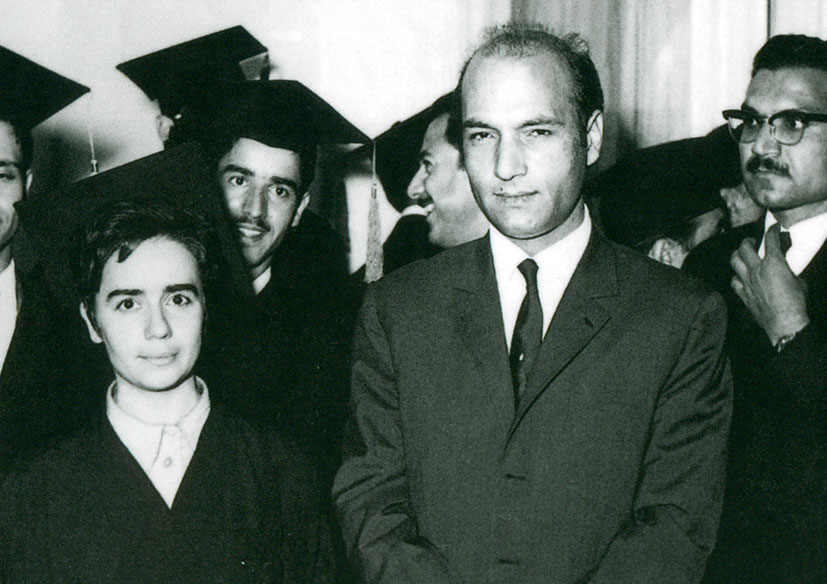
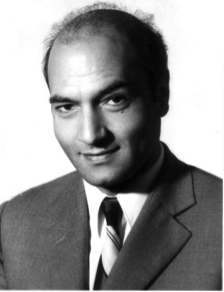
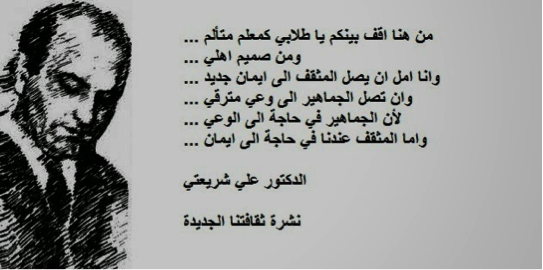
علي شريعتي: الباحِثُ عن ذاتك

عمر سعيد
عمر سعيد Published 18 August ,2015
Share
5-5-1386-4-11-15-58-51-b49e

نعم، انها تلك الفترة التى يموت فيها الضمير الانسانى، وتغيب معانى الحق والعدل ويموج العوام فى عواصف من التضليل والجهل ، ويُصبح الحق مفسدة والباطل منفعة، حينها فقط يُصبح التفكير لعنة والمُفكر خطر، حينها فقط يخرج علينا أُناس ابتعثهم الله فى اوقات موت الجسد، فها هو (قطب ) فى عالمنا السُنىّ يخرج من غياهب الظلام ليُنير عوالم الفكر والتحرر، ولكن هل اقتصر النضال عليه؟!

يُجيب علينا (شريعتي ) فى تلك المنطقة (ايران ) فى عهد الشاه ويُعانى قومها من الاستعمار والجهل، تُعانى أرواحهم من الضلال ونُفوسهم من التلوث الغربى، وعقولهم من سيطرة الدولة وقمعها وظلمها، يخرج علينا رجل من أسرة متدينة شيعية، يقلب موازين العالم الشيعى بالكامل، ويصنع حالة من التمرد الفكرى الثورى التى انتجت الثورة الايرانية, باعتراف قائدها الخُمينى، ان من اهم عوامل نجاحها تعاليم الاستاذ شريعتي، على الرغم من موته قبل قيام الثورة بالاصل .

تلك رحلة بسيطة فى فكر الاستاذ، نُحاول بها القاء قبسات مُضيئة على فكره وكلماته، وكم احوجنا لتلك العقول التى تُنير للامم طريقها وتُحررها من قيودها وتبعث فيها (الامل) من جديد، تلك الكلمة التى اصبح ذكرها مؤلم الان، ولكن بادىء ذى بدء نتساءل:

* من هو شريعتي ؟
مُفكر شيعى، تبحر فى العلوم الدينية وتخصص فى علوم الحضارات الغربية، ودرس علوم الاجتماع الانسانى ثم عاد الى قومه ليصطدم بواقع امة مُغيبة طمست هويتها بأيديها، فرفع سيف المواجهة الفكرية بمحاضراته وكتبه وكلماته الخالدة، اتهمه علماء الدين فى ايران انه (مرتد) وهو لا يقل خطورة عن مسيلمة الكذاب، حينما مدح (عُمر بن الخطاب ) فى احد كُتبه ووصفه بالقائد العادل العظيم، انتج جيلا من الشباب الايرانى حمل ايران لاكبر ثورة فى العصر الحديث وانتصر على سجون الطغيان والظلام، ولكنه اُغتيل على يد السافاك (جهاز مخابرات الشاه ) قبل ان يُبصر نتاجه الفكرى على الواقع .

نون بوست

* شريعتي والانسان

هل فكرت يوما فيما ميزك الله عن باقى المخلوقات ؟
ان الله سبحانه وتعالى حينما خلق الانسان وكرمه اعطاه صفة لم يمنحها لمخلوق قط غيره صفة ( ارادة الاختيار ) او كما يُسميها شريعتي (التمرد ) [1]، ينضج الانسان وتُحاول كل الانظمة التربوية والسياسية وعُلماء السلطان  ان يسلبوه صفة التمرد وتحديد اختياراته وجعله انسانا هادئا مُطيعا مطية للظلم، ومُتقبل لاسوأ الحلول فى كرامته وحريته، حينها يُسلب الانسان من ذاته وينحسر دوره فى اغتراب فى العمل او فى دائرة المادة حتى يموت .

الانسان عند شريعتي هو كائن ميزه الله ب (الابداع ) حيث يُمكنه انتاج ما لا يُمكن تخمينه او التنبؤ به، (واعٍ ) حيث أنعم الله عليه بعقل قادر به على ادراك نفسه وعالمه وذاته، (التمرد ) وتلك الصفة غرزها المولى فى نفس الانسان ليُحافظ بها على ابداعه ووعيه ضد حملات تشويه الفطرة الانسانية وتحقيق مفهوم التوحيد فى الارض،فكما يقول الامام محمد عبده (الانسان عبدٌ لله، سيدٌ لكل شىء بعده ) .

وحينما كان يرد شريعتي على كل من صنف الانسان وحصره فى قوالب جامدة تنزع منه ارداته الانسانية وروحه العقائدية كان يقول (“نعم فأنا (سني المذهب) (صوفي المشرب) (بوذي ذو نزعة وجودية) (شيوعي ذو نزعة دينية) ( ومغترب ذو نزعة رجعية) (وواقعي ذو نزعة خيالية)) (( شيعي ذو نزعة وهابية)) وغيز ذلك ( اللهم زد وبارك))

نون بوست

* الدين عند شريعتي :

يقول شريعتي : ليس من قبيل الصدفة، أن الانبياء حينما يُبعثون، يجتمع حولهم المحرومون والعبيد، ويواجهون مقاومة الأشراف، وتجار الرقيق، والكهنة، والتجار، وأهل القوة والجبروت الذي يصفهم القرآن “ملأ مترفين”.
إنهم حين يظهرون، لا يبدأون دعوتهم متوسلين بالسلطان القائم، والقوة الحاكمة، بل إنهم يبدأون معلنين حرباً لا هوادة فيها على هؤلاء  [2].

“إن الدين الذي يبرّر الفقر ويحرص على بقائه كان يبرر العبودية أيضا وكان يخدّر الناس ويخدعهم لصالح الملأ والمترفين.الدين القائل “إن الله لا يهتم بكظّة ظالم وسغب مظلوم” يجعل من الشعور الديني مادة تخدير تعزل الناس عن المجتمع وتزهّدهم في الأمور المادية لصالح أولئك الملأ الذين يستأترون بها دون غيرهم.إن الدّين الذي أنكر دائما مسؤولية الناس في حقهم في تقرير مصيرهم وبرّر الوضع الظالم عبر التاريخ مستغلا بذلك معنوية الناس وشعورهم الديني القوي.هو الذي كان يوحي للناس بأن الجوع والحرمان والمرض هو علامة على رضا الله ودليل على وجود الأهليّة اللاّزمة للتكامل والكمال وهو الذي يفتح لكل شخص حسابا خاصّا بالنسبة للإعتقاد بالنسبة بما وراء الطبيعة ليبدّل الجمع إلى أفراد والحضور إلى انزواء. وهو الذي يسلب من الناس حق الحياة والتمتّع والتملك والتّحكم ويقوم بكل هذا من أجل الطبقة الحاكمة مستخدما بذلك الوعد والوعيد والتبرير”[3]

“إن الدين هو شعور ينبثق عن وعي الإنسان ومعرفته بنفسه ويدعو الإنسان إلى الكمال عن طريق تقديس القيم السامية من قبيل: الجمال والخير والبصيرة واللطف والإرادة والحرية والمعرفة والكمال والهداية والعزة والعدالة والحق ومناهضة الظلم والجهل والضعف والذل…وتجتمع كل هذه القيم في إطار التوحيد الذي يعدّ أكثر الأطر الدينية شمولاً،في معبود واحد وهو الله تعالى عز وجل.

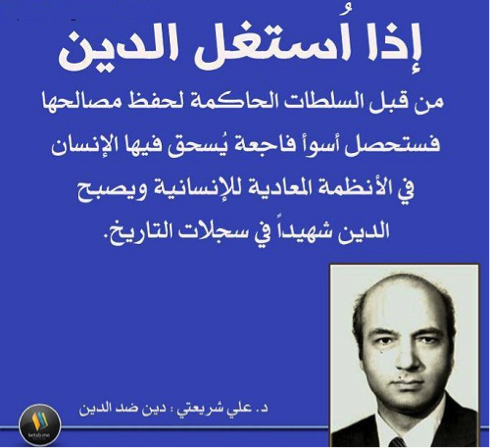
أما إذا استغل الدين من قبل السلطات الحاكمة لحفظ مصالحها فستحصل أسوأ فاجعة يسحق فيها الإنسان في الأنظمة المعادية للإنسانية ويصبح الدين شهيداً في سجلات التاريخ.

الدين هو أداة لتحرير الشعوب، والعودة الى ذاتك، الدين هو مقتضى الفطرة الانسانية، الدين هو الرؤية التى عجز الانسان عن ادراكها وحينما حاول استيعابها وحصرها شوهها وشوه فطرته وشوه العالم من حوله، هكذا كان شريعتي يتأمل فى مفاهيم الاسلام ويبث فى كتاباته فى كل حرف فيها، فى كل جرة قلم معانى التحرر، تحرر الوعى والجسد .

نون بوست

* مابين النباهة والاستحمار

النباهة هى تلك الصفة التى تُميز الشعوب ادراكها لذاتها ولتاريخها ولتراثها، تلك الصفة التى تتسم بها النفوس الواعية، عقيدة الانتباه هى عقيدة كل مؤمن حريص على الا يتم (استحماره ) او التلاعب بعقله ودينه، النباهة والاستحمار هما مصطلحان تمركزت حولهما افكار عديدة للاستاذ فتطرق للحديث عن استحمار رجال الدين للانسان باسم الدين، استحمار المادة للانسان باسم الحضارة، استحمار الاستعمار للانسان باسم التغريب، استحمار الدولة للشعوب باسم الوطنية .
ثم تحدث عن اخطر انواع الاستحمار على الاطلاق ( استحمار النفس والشهوة للانسان ) حيث تُصبح النفس هى الفارس والانسان هو الجواد تُحركه كيفما تشاء وتتحكم فى اوصاله، ولكننا لازلنا لم نلمس خطورة تلك المصطلحات !

لو رأيت هذا العالم الشهير الذى أفنى حياته فى المعمل ليُنتج للبشرية اعظم الاختراعات على الاطلاق، او لاعب الكرة الشهير او المغنى المحبوب الذى افنى عمره فى تخصصه ثم بسهولة شديدة تجد هذا العالم من الممكن ان يكون اختراعه هادما للبشرية، ولاعب الكرة او المغنى نتاجهم الابداعى بلا قيمة ! كيف ؟
حينما عزل الانسان نفسه عن ادراك (ذاته ) ثم ادراك (مجتمعه ) ثم ادراك ( دينه ومشاكل أمته ) سُلبت منه النباهة النفسية و النباهة الاجتماعية، فأصبحت قوى القمع والتضليل تتحكم  فى العالِم والمغنى والرياضى، وحينما لم يهتم صاحبنا بالفكر وصناعة ذاته سقط فى فخ التخصصية الوهمى وغابت عنه مقاصد فعله، فلما انتج ؟ لمن اُبدع ؟ لماذا اُغنى؟  , واصبح كل ما انتج هباءا منثورا حيث تم استحماره واستغلال ما انتجه فى خدمة ما يُريده الطاغية او الاستعمار او استحمرته الشهرة والمجد حتى مات لاهثا ورائها ! غابت القيمة والمقصد، غاب مفهوم الاستخلاف، غاب مفهوم العبودية في كل سكناتك ونواياك للتحرك فأصبح الانتاج البشرى حينها مشوها لا قيمة مرجوة له الا الاشادة والمدح الدنيوى !

إن المعرفة النفسية أو الدراية أو النباهة الموجودة عند الفرد بالنسبة إلى نفسه، هي فوق معرفة الفلسفة والعلم والصنعة، لأن الأخيرة معرفة، وليست (معرفة نفسية) أي ليست الشيء الذي يريني نفسي، فيستخرجني فيعرفني ذاتي، الشيء الذي يلفت انتباهي إلى قدري وقيمتي. فقيمة كل إنسان بقدر إيمانه بنفسه ..

وأي دعوة أو دعاية وكلام وتقدم وحضارة وثقافة وقدرة تكون خارجة عن إطار هاتين الدرايتين….(الدراية النفسية، الدراية الاجتماعية )، فهي ليست إلا تخديرًا للأفكار، وللانصراف عن الإنسانية والاستقلال والحرية. إنه تسخير للإنسان كما يُسخّر الحمار. ومن هنا أطلق عليه اسم (استحمار) … إذًا فمعنى الاستحمار ؛ تزييف ذهن الإنسان ونباهته وشعوره، وحرف مسار النباهة الإنسانية والاجتماعية  [4]  .

نون بوست

لم تكن تلك الكلمات الا بداية، بداية لننهل من ذلك الرجل، نعم انا مُسلم سُنى ولا أكذب عليك لست ممن أسعى لتلفيق المذاهب وتوفيقها ، او تمييع المذهب السنى لحسابات أخرى، نعم لدى ملاحظات تصل احيانا لحد الهجوم على المذهب الشيعى، ولكنى توقفت امام حالة ليست مذهبية بل انسانية بحتة، حالة ابداع من نوع خاص، حالة تضحية فريدة قدمها الاستاذ ليمنح من بعده أجيال حق الحياة والحرية، ننادى ليل نهار بالتمرد على المنظومة والتحرر من التبعية الا ان قليل حفر مسارات للخروج، واقل القليل من ضحى بنفسه لتبقى تلك المسارات مُضيئة لمن بعده، ولا أرى ختاما للفصل الاول من حكايتنا عن شريعتي الا كلماته (عندما يشب حريق في بيت، ويدعوك أحدهم للصلاة والتضرع إلى الله، ينبغي عليك أن تعلم أنها دعوة خائن. فكيف لو كانت دعوته إلى عمل آخر أقل شأنًا ؟ فالاهتمام بغير إطفاء الحريق، والانصراف عنه إلى عمل آخر، ماهو إلا استحمار، وإن كان عملًا  مقدسًا ) .


[1] كتاب الانسان والاسلام – المحاضرة الاولى

[2] كتاب سيماء محمد – على شريعتي

[3] كتاب دين ضد الدين – على شريعتي

[4] كتاب النباهة والاستحمار – على شريعتي 

TAGGED: الثورة الإيرانية ، الفكر العلماني ، المفكرين الإيرانيين
TAGGED: فكر
Download this article as PDF
Share this Article
Facebook Twitter Whatsapp Whatsapp Telegram Email Copy Link
عمر سعيد
By عمر سعيد مؤسس أكاديمية رواد الحضارة للعلوم السياسية والفكرية
Follow:
Next Article نون بوست The Stigma of “ISIS”: A Heavy Legacy Haunting Women and Children of Former Members
part of the design
NoonPost Weekly Newsletter
dark

An independent media platform founded in 2013, rooted in slow journalism, producing in-depth reports, analysis, and multimedia content to offer deeper perspectives on the news, led by a diverse young team from several Arab countries.

  • Politics
  • Society
  • Rights & Liberties
  • Opinions
  • History
  • Sports
  • Education
  • Technology
  • Economy
  • Media
  • Arts & Literature
  • Entrepreneurship
  • Travel
  • Cinema & Drama
  • Food
  • Health
  • Culture
  • Latest Reports
  • Files
  • Long Reads
  • Interviews
  • Podcast
  • Interactive
  • Encyclopedia
  • In Pictures
  • About Us
  • Our Writers
  • Write for Us
  • Editorial Policy
  • Advanced Search
Some rights reserved under a Creative Commons license

Removed from favorites

Undo
Go to mobile version