














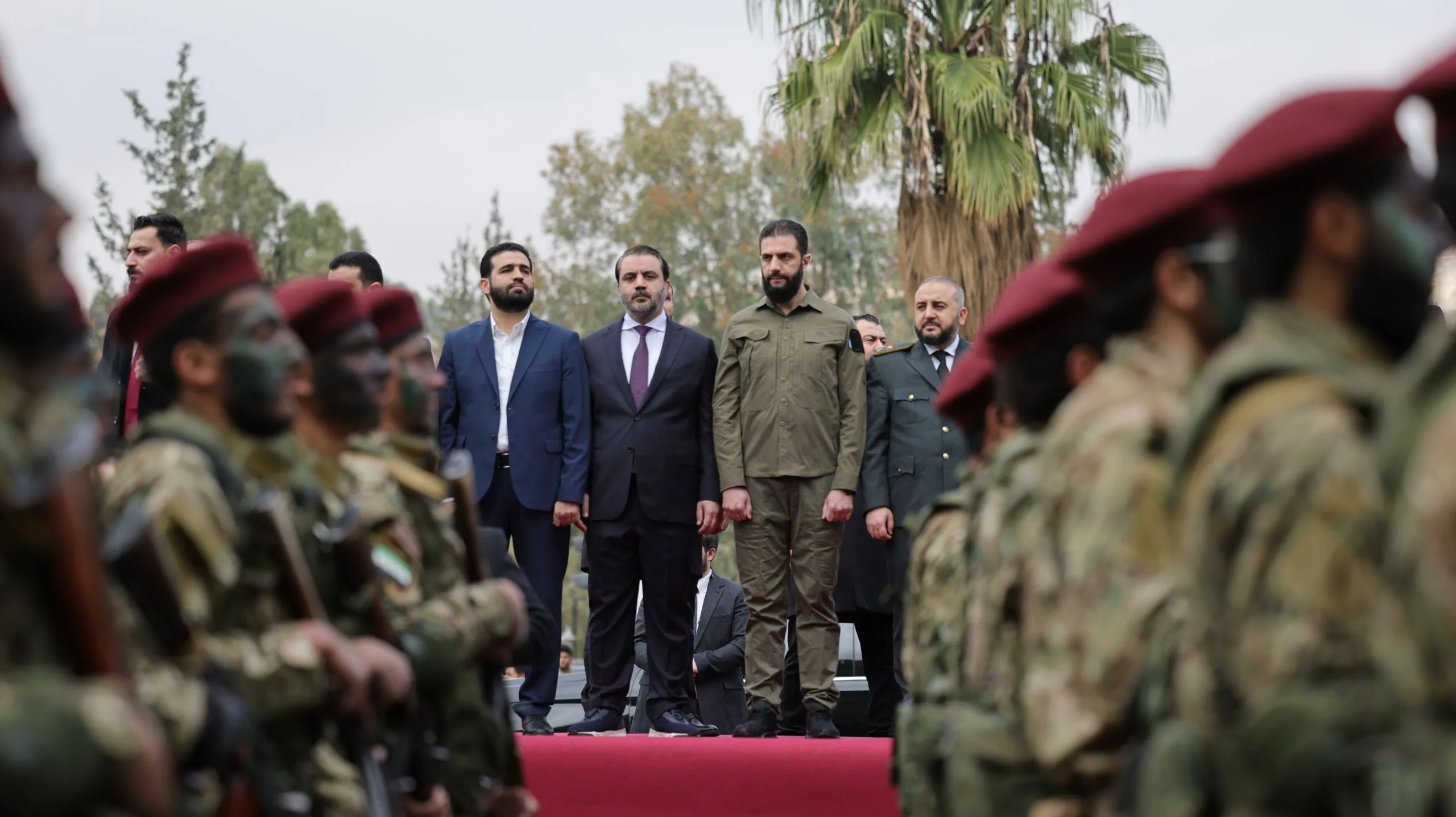
Over recent days, political statements regarding the implementation of the March 10 agreement which calls for the integration of the Syrian Democratic Forces (SDF) into Syrian state institutions have grown more frequent.
These statements have adopted a relatively sharp tone in response to the SDF’s nine months of stalling and failure to achieve tangible progress toward implementing the agreement’s eight provisions. Turkey, which has been watching cautiously, has at times hinted at military action and at others has adopted diplomatic language that contains implicit threats.
Turkish Defense Minister Yaşar Güler said that the SDF should join the Syrian army as individual soldiers, not as a unified military bloc as it desires, emphasizing Ankara’s opposition to any arrangement of this kind and its unchanging position.
He also stated that Turkey will launch a military operation in Syria in the coming period without consulting anyone if deemed necessary, that Washington now better understands the realities and disagreements with it on this issue are receding, and that Ankara is capable of supporting Syria in its war on terrorism and in building its army.
Damascus, for its part, has focused since signing the agreement on a peaceful solution that spares the country a new spiral of violence.
Attempts to Secure Progress
Turkish statements were preceded shortly by a Reuters report, citing unnamed sources, about Syrian, Kurdish, and American officials trying to show progress on the March agreement before the deadline for its full implementation, which expires at the end of the year. The agency said discussions accelerated in recent days despite growing frustration over delays and that a major breakthrough was unlikely.
The report noted that Damascus sent the SDF a proposal in which it showed openness to reorganizing its approximately 50,000 fighters into three main divisions and smaller brigades, provided the SDF relinquishes some of its command chains and opens its areas to other Syrian army units.
There were no indications on whether the idea would move forward, and sources told the agency that a comprehensive agreement was unlikely at the last minute due to the need for further talks.
Separately, a Turkish newspaper published more details about the official Syrian proposal, which consists of 13 points representing a roadmap for reintegration and constitutes the final offer to the SDF.
In pursuit of a peaceful solution and to break the stalemate, the offer included a clause allowing additional Syrian army units to enter northeastern Syria. Meanwhile, the SDF insists that only three divisions composed exclusively of its own forces be deployed in the region, excluding government forces.
It wants to restrict the army’s presence in areas under its control, demanding that only its three divisions be stationed east of the Euphrates a stance rejected by both Damascus and Ankara.
There are other major disputes, notably Damascus’s insistence that the three divisions forming the SDF’s core be subordinated to the Ministry of Defense, while the SDF seeks to retain an independent command structure essentially creating an army within an army.
The newspaper explained that Damascus is still awaiting the SDF’s response to its proposal, noting that rejection could lead to a likely escalation, given that the military option remains on the table and is being seriously considered.
It also said Washington has given preliminary approval for a military operation and indicated it would not obstruct a move led by Damascus in coordination with Ankara, with participating forces limited to the Syrian army and security apparatus, excluding any other formations. American forces would remain outside confrontation zones and might reduce their presence in certain areas.
The potential operation aims to integrate the SDF into Syrian state institutions in exchange for the SDF abandoning its political and military demands.
According to Turkish journalist Abdulkadir Selvi in Hürriyet, although the March agreement has achieved little progress and under pressure from Israeli directives and instigation by France and Iran, the SDF insists on not laying down arms. Here, U.S. policy will be decisive: Washington used to offer only advice to the SDF but realized that guidance alone would not resolve the file.
This has led the Americans to set a timeline for integrating the SDF in Syria, including incorporating military units, handing over customs crossings, and continuing work on transferring oil fields. Delays remain possible, but efforts continue to integrate 75% of SDF members into the Syrian army and 25% into internal security forces a process Ankara is monitoring step by step.
The Turkish‑aligned journalist said that when the topic of integration was raised, the dormant Islamic State organization was reactivated and brought back to the scene. He pointed to earlier frustration in Turkish intelligence over an attempted assassination of Syrian President Ahmad al‑Sharrah by ISIS elements reportedly released from al‑Hol camp under SDF control.
He added that ISIS attacked American soldiers on the same day that American and Syrian forces carried out their first joint operation reinforcing the view that “it is impossible to fight ISIS by means of another terrorist organization, namely the SDF.” He also noted attempts by Israel to prevent SDF integration by reviving the threat of ISIS.
Another Turkish newspaper, Yeni Şafak, reported that the offer from Damascus to the SDF included three high‑ranking posts deputy defense minister, deputy interior minister, and deputy chief of general staff to complete the integration process. It also noted that Turkey considers the integration plan the final peaceful alternative to a possible large‑scale military operation.
Turkish Foreign Minister Hakan Fidan stressed in a televised interview that Ankara does not wish to resort again to military means, saying the SDF must understand that the patience of concerned parties is running out. He said the United States is well aware of the necessity of completing the SDF’s integration into the Syrian army due to its importance for Syria’s unity.
According to Fidan, the SDF is trying to buy time, and Turkey along with other partners believe it may be betting on other regional crises or on expansionist Israeli policies. He also reminded that all Syrian opposition factions joined the Ministry of Defense, and that no state can encompass two or three armed structures under separate authorities.
Possible Scenarios for the Coming Days
“Limited Practical Steps”
Political researcher Dr. Nader al‑Khalil told Noon Post that it is hard to imagine a complete breakthrough in the negotiations between the SDF and Damascus in less than two weeks after nine months of delay. However, “limited practical steps” might be possible, such as forming integration committees, defining brigade maps, or deploying joint posts.
Such measures would allow the parties to announce tangible progress to public opinion, though they would not solve the core issue of command and control. Rapid progress, he said, would be more symbolic and a means to buy time rather than a fundamental shift.
Regarding the SDF’s insistence on an independent military bloc, al‑Khalil said this reflects its desire to preserve its security and economic influence and to ensure its role in managing vital resources. The aim is not only to protect battlefield gains but also to assert itself as an indispensable party in any future political arrangements. This means turning its military bloc into a bargaining chip that gives the SDF greater leverage in negotiations and prevents its rapid dismantlement within the army.
Al‑Khalil considered the government’s responsiveness to SDF demands or display of flexibility a tactical move intended to facilitate integration and avoid internal explosions while maintaining the centrality of political and military decision‑making.
This latitude, he stressed, stops short of transforming the SDF into an independent or semi‑federal entity a scenario Damascus firmly rejects. Even if some local administration or task distribution is allowed, it does not imply tolerance for political or ethnic decentralization.
If integration proceeds, though Syria’s centralized governance will not change, a new reality could emerge in northeastern Syria in which state authority coexists with a local civilian administration linked to the SDF. This might create temporary duality in military and administrative decision‑making and weaken the government’s control there compared to other regions.
Successful integration depends on Damascus’s ability to rotate leadership and redistribute forces to ensure unified command; otherwise, the SDF could continue to impose its conditions indirectly.
The SDF also understands that its position is influenced by regional dynamics, whether through Israeli pressure in the south or ISIS activity in the desert.
Therefore, it stalls and ties any concession to broad political and security guarantees, fearing that rapid integration would weaken its ability to confront these threats. Its conduct, al‑Khalil said, is not merely an internal maneuver but reflects complex regional balances that make it more cautious and delay‑prone at every step.
Extending the Implementation Deadline?
International relations researcher Mahmoud Aloush told Noon Post that the chances for a political settlement in the SDF file still exist, and the coming days will be decisive in determining this. He expects the likely path now is to extend the agreement’s implementation deadline and set a clear roadmap with a defined and limited timeline for integration, along with immediate steps the SDF must take.
Aloush said the problem was not the integration agreement or its deadline, but the SDF, which bet on everything except integration. That means the ball is now in its court, and it must prove its readiness for this process before political settlement talks can proceed.
According to Aloush, neither Syrian President Ahmad al‑Sharrah nor Turkish President Recep Tayyip Erdoğan fully trusted the SDF when they concluded the integration agreement, but they chose to proceed and defer the file into prolonged negotiation despite knowing the likely outcomes to focus on other priorities.
Now, the issue has become a priority for both Damascus and Ankara. The SDF wants to retain a degree of autonomy, as reflected in its proposals and demands, but this stance is unacceptable to both capitals. Therefore, the SDF will face difficult choices to avoid armed conflict with Syria and Turkey.
Damascus and Ankara prioritize resolving this issue via political settlement and share similar visions. Their apparent flexibility aims to reach a political solution without bloodshed. Political settlement, however, is not an end in itself but a means to achieve a goal. If it fails and the SDF does not yield to a political solution, alternatives including military options will follow, Aloush said.
He added that Israeli intervention has given the SDF additional leeway to continue deceptive negotiations and buy more time, hoping for assistance. But since the signing of the integration agreement, the SDF’s bets have failed.
It had counted on an inability of the new Syrian government to endure internal problems, including issues in As‑Sweida and the coast, as well as Israeli interventions and U.S. sanctions all of which proved unfounded. ISIS activity might benefit the SDF but not fully; rather, it will reinforce the U.S. conviction of strengthening the security partnership with Damascus and Ankara, especially as past experience showed the SDF incapable of addressing the ISIS file.
Turkish affairs and international relations researcher Taha Özağaoğlu told Noon Post that over recent months the SDF relied on the presumed inability of the new Syrian government to endure internal crises it faced. But the consensus within Arab, Islamic, and international circles on this administration may have changed the SDF’s calculations, leading it to try to buy time.
This makes the SDF’s position more opaque compared to the clear government stance, which is to avoid chaos, as such turmoil would affect Syria’s political progress and its efforts to regain stability and prevent fractures.
Özağaoğlu also pointed to challenges hindering rapid integration, but at the same time noted that prolonging the crisis would invite other actors, specifically Israel, into the arena which Damascus and Ankara reject, because the SDF’s dependence on Israel would transform the issue from an internal crisis into a regional one, naturally delaying a solution.
Turkish statements about a possible military operation are messages to Washington that the situation will not remain unchanged and that the military option is viable if the U.S. does not pressure the SDF toward integration.
Potential Security Tensions
Writer and political researcher Osama Sheikh Ali told Noon Post that full integration (administrative, service, security, and military) in less than the remaining two weeks before the deadline is unlikely.
However, he predicted the SDF may reach a point of no return and solidify a military‑security agreement, with strong indications already present, even if currently only on paper, with practical steps later within the framework of the March 10 agreement rather than separately.
Sheikh Ali said the SDF seeks constitutional guarantees to preserve a real presence in Syria’s political and military future. A crisis of trust exists between the parties, and the SDF’s desire to retain three military divisions in northeastern Syria shows its intent to maintain a dominant hand in the region.
He stressed that the government’s responsiveness in negotiations should not be seen as leniency; this is a Syrian‑Syrian dialogue based on an agreement, and concessions by both sides are not losses but long‑term gains for the Syrian people that can avert further bloodshed and new wars.
He dismissed the notion that a wide‑open military confrontation is an option on the table, but noted the likelihood of security tensions along front lines if the parties fail to agree on integration.
Successful integration would reduce tensions on the coast and potentially pave the way for a solution in As‑Sweida, since the biggest knot now is the SDF and resolving it peacefully would have positive effects. Conversely, a major battle could heighten internal tensions, which the new Syrian government does not seek. Without solving the northeastern Syria issue, there will be no security stability in the desert and other areas.
According to Sheikh Ali, it is in Israel’s interest to prolong fragility in Syria and the SDF’s rejection of integration, and to keep focal points of tension across the Syrian map. Israel may encourage some SDF elements to stall, even though signing the March 10 agreement reflects the SDF commander Mazloum Abdi and his team’s conviction that their future lies in joining the Syrian state rather than remaining isolated in northeastern Syria.
If the SDF wants a future in Syria, it must take serious steps toward integration, as there is no horizon for isolation and the status quo, and international support cannot last forever.
Sheikh Ali ruled out Turkey opting for a direct military solution in this file, though Ankara may provide logistical support to the Syrian government without direct involvement, either to avoid potential Western sanctions or because of internal Turkish political dynamics and efforts to shape a peace framework with the Kurdistan Workers’ Party (PKK) leadership, Abdullah Öcalan.
However, Turkey continues to hint at the military option as a form of pressure to push the SDF toward integration.


