




NoonPost NoonPost

NoonPost

  • Home
  • Politics
  • Economy
  • Society
  • Culture
  • Files
  • Long Reads
  • Podcast
AR
Notification Show More
نون بوست
“There Are Nights I Can’t Close My Eyes”: How Gazans Are Living in Homes on the Brink of Collapse
نون بوست
From al-Jolani to Ahmad al-Shara: The Evolution of Syria’s New Leader
نون بوست
When Political Islam Receded in Egypt: Who Filled the Void?
نون بوست
An Extension of Genocide: Gaza’s Detainees Speak Out
نون بوست
A Tightrope Between Survival and Sovereignty: The Syrian Government Faces Normalization Pressures
نون بوست
American Aircraft Carriers: Has the Era of “100,000 Tons of Diplomacy” Ended?
نون بوست
U.S. Regime‑Change Policies: Why They Are Destined to Fail
نون بوست
Transformations of Israeli Judaism: Between the Victim Complex and the Colonizer’s Doctrine
نون بوست
The Gulf’s Balancing Act: Iran, Israel, and Hidden Links
نون بوست
Iraq–Turkey Oil Export Treaty: Why Did Ankara Cancel It After 52 Years?
نون بوست
Syria’s Northeast on Edge: QSD Between Ankara and Damascus
نون بوست
Has Europe Changed Its Stance on Israel… or Just Its Language?
NoonPost NoonPost
AR
Notification Show More
نون بوست
“There Are Nights I Can’t Close My Eyes”: How Gazans Are Living in Homes on the Brink of Collapse
نون بوست
From al-Jolani to Ahmad al-Shara: The Evolution of Syria’s New Leader
نون بوست
When Political Islam Receded in Egypt: Who Filled the Void?
نون بوست
An Extension of Genocide: Gaza’s Detainees Speak Out
نون بوست
A Tightrope Between Survival and Sovereignty: The Syrian Government Faces Normalization Pressures
نون بوست
American Aircraft Carriers: Has the Era of “100,000 Tons of Diplomacy” Ended?
نون بوست
U.S. Regime‑Change Policies: Why They Are Destined to Fail
نون بوست
Transformations of Israeli Judaism: Between the Victim Complex and the Colonizer’s Doctrine
نون بوست
The Gulf’s Balancing Act: Iran, Israel, and Hidden Links
نون بوست
Iraq–Turkey Oil Export Treaty: Why Did Ankara Cancel It After 52 Years?
نون بوست
Syria’s Northeast on Edge: QSD Between Ankara and Damascus
نون بوست
Has Europe Changed Its Stance on Israel… or Just Its Language?
Follow US

The Story of Neturei Karta: The Jews Who Stand with Palestine Against “Israel”

إسراء سيد
Esraa sayed Published 26 March ,2026
Share
نون بوست
نون بوست

In dominant Western political and media discourse, “Israel” is widely presented as the state representing Jews everywhere. Any criticism of its policies or foundational nature is often swiftly reduced to the charge of “antisemitism.”

Yet this narrative turned into a tool of moral and political blackmail clashes with an uncomfortable reality: the existence of Jews who fundamentally reject Zionism, deny the legitimacy of “Israel,” and publicly stand with Palestinians against the occupation.

Among such groups, Neturei Karta stands out as a uniquely unsettling case: a movement of Jews who view Zionism as a dangerous religious deviation, and “Israel” as an illegitimate entity both theologically and morally.

They regard what has been done to Palestinians as a crime that cannot be justified not by the Holocaust nor by any modern nationalist rhetoric.

Origins and Historical Roots of the Schism

Neturei Karta did not emerge in a vacuum. It must be understood in the broader historical context of Orthodox Jewry in Palestine before the establishment of the Israeli state.

Contrary to Zionist claims that Palestine was “a land without a people,” cities like Jerusalem hosted longstanding Jewish communities under Ottoman rule communities that lived as religious minorities, not as agents of a sovereign political project.

These communities, known as the Old Yishuv, had no political ambitions; their presence in Palestine was entirely religious in nature, and they maintained good relations with local Arabs.
نون بوست
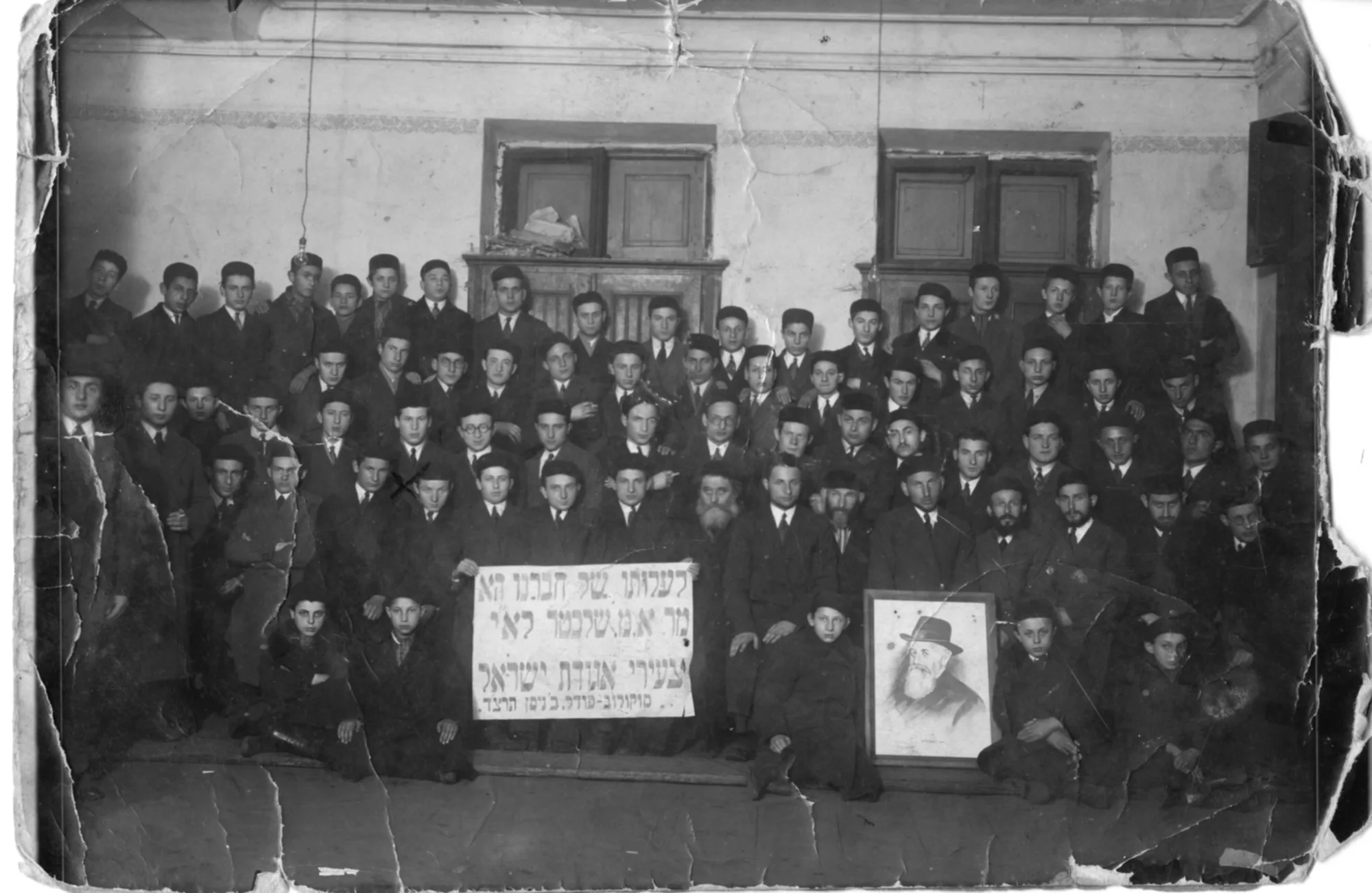
The Agudat Yisrael party was founded in 1900 to counter the Zionist movement.

But with the rise of the Zionist movement in the late 19th century, Orthodox Jews viewed Zionism with deep suspicion as a secular European project that sought to transform Judaism from a spiritual faith into an ethnic nationalism, and from a moral message into a colonial tool.

Opposition to Zionism wasn’t limited to Jews alone. The Pope at the time publicly opposed the First Zionist Congress in Basel in August 1897, a gathering that also faced significant opposition from rabbinical authorities. In the early 20th century, Orthodox Jews worldwide established the Agudath Israel party as an umbrella for anti-Zionist Jews.

For years, this party was a major obstacle to the Zionist movement’s plans to establish a Jewish state in Palestine. However, dramatic political shifts put it to the test particularly after the 1917 Balfour Declaration, in which Britain pledged support for a “national home for the Jewish people” in Palestine. This gave Zionists a platform of legitimacy and accelerated Jewish immigration.

Under the British Mandate, which formally began in 1920, Jewish immigration and political organization expanded. Agudath Israel began to experience internal shifts and pragmatic repositioning, eventually coordinating with Zionist institutions and supporting immigration to Palestine, especially after the horrors of the Holocaust a turn seen by hardline religious elements as a betrayal of their theological principles.

These developments led to internal fractures. By the mid-1930s, a formal split occurred. Prominent rabbis like Amram Blau and Aharon Katzenelbogen led a decisive break from the party, denouncing any attempt to merge religion with the Zionist political project and rejecting “Israel” still just a Zionist idea at the time as an illegitimate concept.

In 1938, the name Neturei Karta (“Guardians of the City” in Aramaic) was formally adopted. The group saw itself as defenders of religious purity, guardians of Jerusalem’s sanctity from nationalist exploitation, and steadfast opponents of what they saw as a heretical deviation: Zionism.

Over the years, many Neturei Karta activists relocated to cities like London and New York, fleeing Israeli authority or harassment, or rejecting the legitimacy of living under Israeli rule. Some were expelled for refusing to pay taxes or cooperate with the state. Despite this, the movement retained its main headquarters in Jerusalem.

Ironically, this pressure contributed to the group’s growth, with major hubs emerging in New York and London. There, they built educational institutions, publishing houses, and organizations such as “Friends of Jerusalem,” estimating their followers and supporters in the thousands across dozens of Jewish communities worldwide.

But Neturei Karta’s importance lies not in its size, but in its symbolic and political weight. It shatters the Zionist claim promoted from within “Israel” that it represents Judaism.

The group exposes the deep contradiction between Judaism as a spiritual covenant governed by divine law, and Zionism as a modern nationalist project rooted in colonialism, ethnic cleansing, and dominance.

Palestine and the Holocaust in the Eyes of Neturei Karta

Neturei Karta doesn’t merely criticize Israeli policies it denies Israel’s very legitimacy. It argues that “Israel” is not just a political imposition, but a religious and legal aberration: a state founded through expulsion, without divine sanction, and by a secular movement alien to Jewish law.
نون بوست
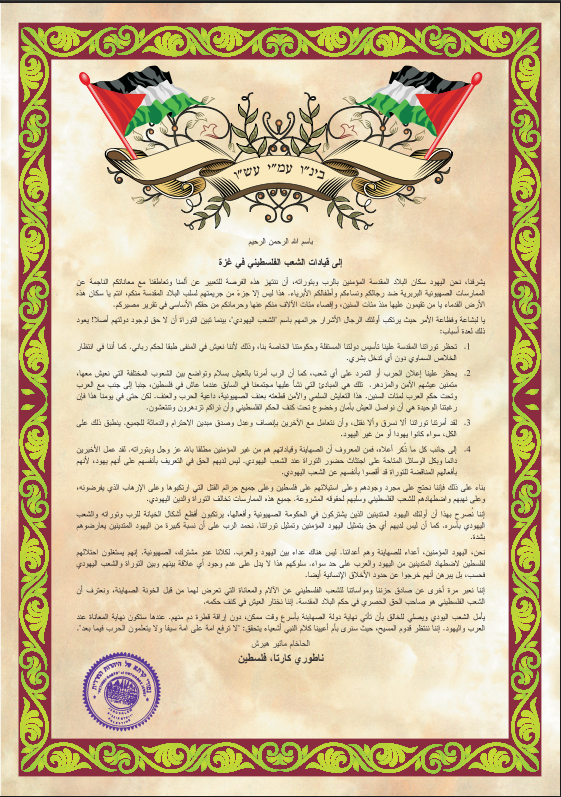
A letter from Neturei Karta was delivered to former Hamas political leader Ismail Haniyeh in Gaza on July 16, 2009.

Their stance on the Holocaust is perhaps the most controversial. They do not deny the Holocaust in fact, many members are descendants of survivors and consider it a great human tragedy. But they draw a clear distinction between the European catastrophe and the political project of Zionism that followed in Palestine. They categorically reject the use of the Holocaust as political justification for dispossessing Palestinians.

The movement sees Zionism’s exploitation of the Holocaust as selective and manipulative—a means to legitimize a new injustice committed against a people who had no role in Europe’s crimes. It opposes turning the Holocaust into an “ideological shield” protecting “Israel” from moral and legal accountability.

To Neturei Karta, using the memory of Jewish victims to produce new victims is a grotesque distortion of history and a double moral offense.

Their critique goes further, accusing certain Zionist leaders of silence, negligence, or even collusion during the Holocaust era arguing that calls for help from European Jews were ignored in favor of hastening their migration to Palestine.

One of the movement’s key theorists, Rabbi Moshe Hirsch, condemned the idea of establishing a state in Palestine in response to Hitler’s crimes. “If Hitler’s crimes justified the creation of a Jewish state,” he argued, “why not in Berlin or the heart of Germany, rather than on the ruins of Palestinian lives and land?”

On the other hand, secular Zionists view Neturei Karta as traitors and “collaborators with Palestinians.” Within “Israel,” they are dismissed as a marginal sect of ultra-Orthodox Jews who do not represent the Jewish people.

Their religious opposition to Jewish return to the Holy Land is framed as theological extremism, especially as some early rabbis did support migration before Zionism’s political rise.

Zionists also argue that the religious prohibition against Jewish sovereignty was voided after the Holocaust, as the conditions under which it was accepted no persecution were no longer met.

Neturei Karta members have faced accusations ranging from attending Iran’s controversial Holocaust denial conference to allegedly accepting funds from Yasser Arafat’s government and maintaining ties with Hamas.

An Early Confrontation with the Zionist Project

From its inception, Neturei Karta adopted an openly hostile stance toward Zionism, refusing to recognize any of its institutions. This positioned the group in constant conflict with “Israel,” making it an internal adversary that undermines the very moral foundation on which the state claims to be built.

When “Israel” declared independence in 1948, Neturei Karta was among the first to reject it, escalating its struggle against Zionism. In the early years, the group worked to remove Jerusalem, including its historic anti-Zionist neighborhood Mea Shearim, from Israeli control, or at least relocate its followers to the Arab-held sector of the city.

Their efforts to internationalize Jerusalem ultimately failed, leaving the group under Israeli rule. As a result, they focused on preserving their anti-Zionist character within their communities, resisting political normalization.

In a scene that exposes the fragility of the supposed Jewish consensus promoted by Zionism, Neturei Karta leaders regularly stage public protests in Jerusalem, burning Israeli flags especially on Israel’s independence day as a symbolic rejection of its legitimacy.

Historical records show that confrontations between the group and Israeli security forces began in the state’s earliest years. Leaders like Rabbi Amram Blau were arrested and put on trial. In one notorious case, Rabbi Jacob de Haan, a key figure trying to cancel the Balfour Declaration, was assassinated widely believed to be on Zionist orders.

Neturei Karta also rejects the 1947 UN Partition Plan, calling instead for a single Palestinian state encompassing all the land, with no Israeli state alongside it.

Their resistance isn’t merely symbolic. Members live in relatively closed neighborhoods, speak Yiddish instead of modern Hebrew, and pray daily for the peaceful dismantling of the Israeli state and the return of the land to Palestinians.

The movement forbids any interaction with Israeli institutions: its Jerusalem-based followers boycott elections, refuse state aid, some even reject using Israeli currency or registering their children as Israeli citizens.

Neturei Karta’s aim is not only to reject the Israeli state, but to erase it from the global map and sever any connection between Judaism and Zionism insisting that Jews have no right to dispossess Palestinians. This has brought them unusually close to the Palestinian cause and to Arab communities.

Staunch Support for the Palestinian Cause

In its stance on Palestine, Neturei Karta adopts a tone rare in Jewish circles. It doesn’t merely condemn the occupation it declares Palestinians the rightful owners of the land. What happened in 1948, it insists, was a historic injustice with no religious or political justification.

Documents and testimonies show that Neturei Karta has gone beyond symbolic solidarity. It established relations with Palestinians and has identified its members in Palestine as “Palestinian Jews.” In 1988, they raised Palestinian flags in Mea Shearim, home to roughly 5,000 of their followers a deeply symbolic act in the heart of a city that “Israel” claims as its capital.

Their ties to Palestine have evolved into real partnerships. The movement’s most notable relationship was with President Yasser Arafat, and particularly Rabbi Moshe Hirsch, who took over leadership after Rabbi Amram Blau’s death in 1974. Hirsch opened direct channels with Palestinian leadership and leveraged his diplomatic skills to build ties with Israel’s regional adversaries, including Iran.

Despite opposing the Oslo Accords for recognizing “Israel,” Neturei Karta reaffirmed its support for Palestinian rights. In 1993, Hirsch accepted the post of Minister for Jewish Affairs in the Palestinian Authority and became an advisor to Arafat a move that deeply shocked Israeli political circles. He was later attacked with a chemical substance that left him blind in one eye.

Their outreach wasn’t limited to the PLO. Neturei Karta engaged with Palestinian resistance movements, attending rallies and joining convoys in solidarity with Gaza, including the high-profile “Viva Palestina 2” convoy in 2009 despite Israeli harassment and media smear campaigns.

Following the launch of Operation Al-Aqsa Flood on October 7, 2023, Neturei Karta reaffirmed its anti-occupation stance, releasing statements supporting Palestinian operations not only as reactions to injustice, but as expressions of a religious and moral struggle rejecting the legitimacy of “Israel.”

Globally, their presence in pro-Palestine protests grew. In cities like New York and London, they joined rallies condemning the bombing and siege of Gaza posing a deeper embarrassment to “Israel” than typical international solidarity because it came from Jews who reject the use of Judaism to justify occupation.

Inside occupied Palestine, Neturei Karta leaders joined anti-war demonstrations in Tel Aviv and Jerusalem, becoming targets of political incitement, media demonization, and physical threats. Israeli National Security Minister Itamar Ben-Gvir even publicly called for their deportation to “enemy” states like Syria or Iran.

These relentless campaigns—from arrests and deportations to foreign funding crackdowns—reflect the threat Neturei Karta poses. Zionists see them as traitors who undermine the image of Jewish unity around statehood, so much so that Israeli media largely ignores them to maintain a façade of national consensus.

Yet as long as the occupation continues, this internal voice however numerically marginal is a breach in the Zionist wall. It stands as proof that truth can emerge from within, and that a colonial project’s gravest threat is a moral unraveling from inside. Judaism, it reminds the world, is bigger than a state, and Palestine was never “a land without a people,” but a homeland taken by force.

Download this article as PDF
Share this Article
Facebook Twitter Whatsapp Whatsapp Telegram Email Copy Link
إسراء سيد
By إسراء سيد صحفية وباحثة في مجال الإعلام السياسي
Follow:
Previous Article نون بوست Israel Moves Defense Ministry to Jerusalem: What Does It Mean?
Next Article نون بوست Has Israel Launched a New “Wrath of God” After October 7?

Read More

  • U.S. Regime‑Change Policies: Why They Are Destined to Fail U.S. Regime‑Change Policies: Why They Are Destined to Fail
  • The Gulf’s Balancing Act: Iran, Israel, and Hidden Links
  • Iraq–Turkey Oil Export Treaty: Why Did Ankara Cancel It After 52 Years?
  • Syria’s Northeast on Edge: QSD Between Ankara and Damascus
  • Has Europe Changed Its Stance on Israel… or Just Its Language?
part of the design
NoonPost Weekly Newsletter

You May Also Like

U.S. Regime‑Change Policies: Why They Are Destined to Fail

U.S. Regime‑Change Policies: Why They Are Destined to Fail

إسراء سيد Esraa sayed 8 April ,2026
The Gulf’s Balancing Act: Iran, Israel, and Hidden Links

The Gulf’s Balancing Act: Iran, Israel, and Hidden Links

فريق التحرير Noon Post 8 April ,2026
Iraq–Turkey Oil Export Treaty: Why Did Ankara Cancel It After 52 Years?

Iraq–Turkey Oil Export Treaty: Why Did Ankara Cancel It After 52 Years?

فريق التحرير Noon Post 8 April ,2026

منتجو النفط الخليجون يترقبون بحذر تذبذب السوق الصينية

نايجل دادلي
نايجل دادلي Published 29 August ,2015
Share
screen_shot_2015-08-28_at_17

التطور الذي حصل على مدى الـ40 عاماً الماضية كبير للغاية ولا يمكن إغفاله، فعندما قامت أوبك برفع أسعار النفط في منتصف سبعينيات العام الماضي، لم يتم على الأرجح ذكر كلمة “الصين”، حتى ولو بصورة عابرة، سواء ضمن اجتماعات كارتل النفط أو ضمن اجتماعات الحكومات الغربية التي كانت تكافح لتجنب عواقب هذا الارتفاع.

ولكن اليوم، القلق إزاء تباطؤ النمو الصيني أصاب الشرق الأوسط وأسواق الأسهم الغربية بالذعر، وأدى التذبذب الصيني إلى هبوط جديد في أسعار النفط، المنخفضة أساساً، إلى مستويات لم تشهدها منذ ذروة الانهيار الاقتصادي الأخير.

هذا الوضع طرح معضلات سياسة معقدة للغاية أمام منتجي النفط في الشرق الأوسط، الذين يدركون تماماً أن أي تحرك سيتخذونه تجاه تعزيز أسعار النفط، سيكون له انعكاسات كبيرة على محافظهم الاستثمارية العالمية.

واليوم أصبحت الصين، دون أدنى شك، البند الأول على جدول أعمال الاجتماعات الحكومية و اجتماعات أوبك.

الانخفاض الأخير الحاصل في أسعار النفط أدى إلى انهيار كامل توقعات ميزانيات الدول المنتجة للنفط في الشرق الأوسط في 2015؛ فعادة تعمد وزارات المالية في تلك الدول لإجراء تقييمات متحفظة على أسعار النفط للخروج بقيمة العائدات النفطية المتوقعة في السنة المالية، وفي معظم السنوات كان متوسط السعر أعلى من الميزانية المتوقعة، مما أدى إلى تعزيز التفاؤل لدى تلك الدول.

ولكن ميزانيات عام 2015 لم تأخذ بعين الاعتبار انخفاض أسعار النفط إلى النصف عن أسعاره في العام الماضي، حيث بقي سعر البرميل مستقراً لمدة زمنية طويلة ضمن حدود سعر الـ110 دولار للبرميل بين عامي 2010 و 2015، ويفترض الاقتصاديون بأن ميزانية المملكة العربية السعودية لعام 2015 تم وضعها على أساس متوسط سعر للبرميل يتراوح في مدار الـ60 دولاراً.

على أرض الواقع، وفي مقابلات تم إجراؤها معه في ديسمبر الماضي إبان الإعلان عن ميزانية المملكة لعام 2015، ناقش وزير المالية السعودي إبراهيم العساف الوقت المتوقع لحصول الانتعاش في أسعار النفط، متوقعاً أن هذا الانتعاش سيحصل في وقت لاحق من هذا العام أو في أوائل العام المقبل، ولكن في أعقاب الأزمة الصينية، تغير المزاج، وأصبح الحديث الآن عن المدى الذي ستصل إليه انخفاضات الأسعار، مع توقع البعض بانخفاض سعر البرميل إلى 30 دولاراً.

هذا الانخفاض سيعكس آثاراً سلبية هائلة على جميع الدول المنتجة للنفط، وخاصة تلك التي لا تزال ميزانياتها تعول بشكل كبير على عائدات هذا القطاع، رغم المحاولات الرامية إلى التنويع في موراد القطاعات الأخرى، مثل القطاع السياحي، وفي هذا السياق، فإن ثبات سعر البرميل على الـ110 دولار، وهو السعر الذي كان سائداً حتى منتصف العام الماضي، يعد أمراً بالغ الأهمية لهذه الدول.

تتجسد مخاوف الدول الخليجية المنتجة للنفط تجاه انخفاض الأسعار من أن الأسعار الحالية قد لا تتلاقى مع متوسط مستوى الدخل المطلوب من قِبل هذه الدول للحفاظ على فائض في ميزانيتها؛ فوفقاً لبحث أجراه دويتشه بنك وصندوق النقد الدولي، يجب أن يكون سعر برميل النفط يفوق الـ104 دولار حتى تستطيع السعودية موازنة ميزانيتها، وعلى الرغم من أن هذا المبلغ ينخفض بشدة عن سعر المساواة الذي تحتاجه ليبيا المتمثل بـ 184 دولار، والسعر الذي تحتاجه إيران المتمثل بـ131 دولار، بيد أنه أعلى بكثير من المستويات التي تحتاجها الإمارات العربية المتحدة (81 دولار)، الكويت(78 دولار)، وقطر (77 دولار).

ضمن هذه الظروف يسهل الوصول إلى العجز المستدام في الميزانية على المدى القصير، وذلك على الرغم من أن دول الخليج تمتلك تريليونات من الدولارات في احتياطياتها من النقد الأجنبي وضمن صناديق ثروتها السيادية، ولكن مع ذلك فإن هذا الانخفاض بأسعار النفط لا يمكن تحمله لفترة طويلة من الزمن؛ فعلى سبيل المثال، المملكة العربية السعودية أنفقت منذ بداية هذا العام حوالي 62 مليار دولار من احتياطياتها من العملة الأجنبية، واقترضت 4 مليار من البنوك المحلية في يوليو، ومن المتوقع أن تصدر سندات خزينة عامة بمبلغ 5 مليون دولار في وقت لاحق هذا العام.

ميزانية المملكة السعودية ترزح تحت وطأة عبء آخر مختلف عن الأعباء التي تعاني منها باقي دول الخليح، فالإنفاق على الموارد الدفاعية وصل إلى ذروة غير مسبوقة في السعودية نتيجة لتمويل الحرب في اليمن وتمويل قصف مجموعات الدولة الإسلامية في سورية، وتزامن ذلك مع المنحة السخية التي منحها الملك سلمان للعاملين في القطاع العام بعيد اعتلائه للعرش في يناير المنصرم.

تاريخياً استجابت أوبك، وبشكل أكثر تحديداً قائد هذه المنظمة المتمثل بالمملكة العربية السعودية، لعدم التوازن الحاصل ما بين العرض والطلب، كالذي يشهده السوق النفطي اليوم، عن طريق خفض الإنتاج، الأمر الذي كان سيرأب صدع عدم التوازن ما بين العرض والطلب تدريجياً، وسيمكّن أسعار النفط من التعافي والعودة إلى المستويات التي كانت عليها في الصيف الماضي.

ولكن بدلاً من ذلك استمرت أوبك بضخ النفط، مما أبقى الأسعار منخفضة، وهذا التصرف سلط الضوء على المنتج الأكبر للنفط ضمن هذا الكارتل، المملكة العربية السعودية، التي لطالما نظرت إلى النفط باعتباره سلعة إستراتيجية.

مواقف المملكة السعودية حول عدم تخفيض الانتاج ما تزال غامضة وغير محددة، حيث يرى البعض بأنها تحاول معاقبة البلدان التي تعوّل بشدة على عائدات النفط، مثل روسيا، بسبب دعمها لبشار الأسد، أو أنها تستهدف بذلك إيران، التي تحتاج لسعر نفط أعلى من المملكة العربية السعودية لتحقيق التوازن في سجلاتها المالية.

ويرى آخرون أن المملكة تتلاعب بأسواق النفط في محاولة منها لسحق المنافسة الناشئة حديثاً لهيمنتها على هذا القطاع، خصوصاً من الدول الجديدة المنتجة للنفط، مثل النفط الرملي الكندي والنفط الصخري الأمريكي، وحجة هؤلاء تذهب للقول بأن انخفاض الأسعار سيضطر بعض المستثمرين الجدد في هذا القطاع للخروج من المنافسة، وسيردع البعض الآخر من الانخراط في هذا السوق من الأساس، مما سيحفاظ على هيمنة أوبك، ومن خلفها السعودية، على سوق النفط، ولكن هذه الحجة منقوضة بالواقع الحالي الذي يتمثل بقيام الشركات الأمريكية مسبقاً بخفض تكاليف انتاج النفط الصخري، مما سيمكنها من النجاة ضمن سوق النفط حتى ولو انخفضت الأسعار إلى أدنى مما هي عليه الآن.

بالإضافة إلى ذلك، يشير بعض المحللين إلى وجود سبب آخر يقف خلف استمرار منتجي النفط في الشرق الأوسط بالتعايش مع الانخفاض الكبير الحالي بأسعار النفط، ويذهب التفسير للقول بأن هذه البلدان هي اليوم جزء لا يتجزأ من الاقتصاد العالمي، وبالتالي فإن أن أي إجراء سيتم اتخاذه لدفع العالم إلى حافة الانكماش الاقتصادي، سينعكس ليحدث أضراراً كبيرة على الاستثمارات في الشرق الأوسط، وغني عن البيان بأن رفع أسعار النفط مخول بشدة لدفع العالم إلى حافة الانكماش.

الأمور كانت مختلفة للغاية في سبعينيات القرن الماضي، فحينها لم يكن أمام الغرب من خيار سوى الرضوخ لارتفاع أسعار النفط الجاري من قِبل منظمة أوبك، والتي كان أعضاؤها محصنون إلى حد كبير من الاختلالات الاقتصادية العالمية التي قد تنجم عن دفع البلدان المستهلكة للنفط لأسعار نفط أعلى، حيث تم إعادة استخدام جزء كبير من عائدات النفط ضمن الصكوك المالية في الولايات المتحدة وأوروبا، ووفّر ارتفاع أسعار الفائدة هناك الحماية للدول المصدرّة للبترول من تأثير التضخم وشاركت أموال البترودولار بالتعزيز من أرباح هذه الدول.

وعندما حاولت الشركات العالمية المشاركة في الأسواق العربية، تصادمت مع القوانين التي توجب عليهم مشاركة المستثمرين المحليين، والشركات العديدة المتوزعة في الدول الخليجية، العائدة بملكيتها لرجال الأعمال الأثرياء المنتمين للأسر الحاكمة، ثبتت موقعها عندما تلقت 51% من أرباح المشاريع الغربية القائمة ضمن بلادهم، بالإضافة إلى حصولها على أسهم ممتازة (أسهم زرقاء)، تخولهم، في بعض الحالات، امتيازات تفوق مجرد انخراطهم في السوق الأوروبية.

أما اليوم فقد تغير الوضع كلياً، كون الحكومات وصناديق الاستثمار السيادية والأفراد استثمروا الكثير من أموالهم في الأعمال التجارية والممتلكات والصناعات في جميع أنحاء العالم، وعندما عمدوا لاستثمار أموالهم في المنطقة، على سبيل المثال في مجال السياحة والفنادق ومجمعات المكاتب والأحداث الرياضية، اعتمدت أرباحهم بشكل كبير على الشركات والزوار الأجانب.

الحكومات وصناديق الثروة السيادية في دول الخليج تدار بشكل سري للغاية، والتخمينات وحدها هي التي تحكم تقييم ثروة هذه الصناديق وإستراتيجيات استثماراتها، ولكن هناك إجماع عام على أن مجموع الأموال التي تملكها هذه الصناديق تبلغ على الأقل عدة تريليونات دولار، وهذا التخمين يلقى صداه عندما تنخرط هذه الصناديق بمعاملة تجارية كبرى، وتتصدر على إثرها عناوين الصحف العالمية.

فعلى سبيل المثال، أحد صناديق الثروة السيادية التي أُنشئت مؤخراً، جهاز قطر للاستثمار، يملك ما لايقل عن 2 تريليون دولار تحت تصرف الإدارة، وهذا الجهاز مختص بالاستثمار المحلي والخارجي، أسسته حكومة قطر في عام 2005 لإدارة فوائض النفط والغاز الطبيعي، كنتيجة لإستراتيجية الصندوق الساعية للتقليل من مخاطر اعتماد قطر على أسعار الطاقة، ويستثمر الجهاز أمواله في الغالب ضمن الأسواق العالمية (الولايات المتحدة وأوروبا ودول آسيا والمحيط الهادئ) إضافة إلى الاستثمار في قطر خارج قطاع الطاقة، وتشمل ممتلكات هذا الجهاز وممتلكات الشركات المرتبطة به، كشركة قطر القابضة وشركة الديار القطرية، حصصاً في بنك باركليز، فولكس واجن، هارودز، سينسبورس، مجموعة كاناري وورف، شارد في لندن، ونادي باريس سان جيرمان الفرنسي لكرة القدم، كما أقدم الجهاز على الاستثمار في ماليزيا والصين أيضاً.

ودعونا نلقي نظرة أيضاً على الحصص الدولية الهائلة التي تمتلكها شركات مثل شركة المملكة القابضة التابعة للسعودية، والتي تضم شبكة استثماراتها العالمية الخدمات المصرفية والمالية، العقارات، الفنادق، وسائل الإعلام، الترفيه، وشبكة الإنترنت وغيرها من التكنولوجيا.

ولا يختلف الأمر إذا نظرنا إلى الشركات التي تعمل ضمن قطاع معين، مثل شركة كريستال جلوبال السعودية التي أصبحت واحدة من أكبر شركات ثاني أكسيد التيتانيوم في العالم، من خلال عمليات الاستحواذ على الشركات التي مارستها ضمن الولايات المتحدة، حيث يعتمد نجاح هذه الشركة على كل من استقرار أسعار السلع، واستقرار الاقتصاد العالمي على حد سواء، علماً أن  ثاني أكسيد التيتانيوم هو أحد المكونات الرئيسية للطلاء الأبيض.

أحد القطاعات التي ستتأثر بشدة في حال تحولت حالة التذبذب الحالية إلى انكماش اقتصادي أشد خطورة، هو قطاع العقارات؛ فهذا القطاع أصبح جذاباً على نحو متزايد مع سعي المزيد من المستثمرين في الشرق الأوسط للاستثمار وفقاً للشرع الإسلامي، حيث تشير إحدى التقديرات إلى أنه في العقد المقبل يستعد المستثمرون في الشرق الأوسط لاستثمار 180 مليار دولار في أسواق العقارات العالمية.

الآثار أيضاً ستمتد لتشمل الاستثمار الدولي في العقارات ضمن دول الخليج بحد ذاتها، حيث يشير المطورون العقاريون إلى أن الرغبة الصينية في شراء العقارات في دبي قد ازداد بشكل ملحوظ نتيجة لاطراد الروابط والعلاقات التجارية بين البلدين؛ لذا فإن أي انكماش اقتصادي في الصين سيؤثر بشدة على هذه العلاقة.

الرابط الآخر الذي يربط اقتصادات الخليج مع بقية الاقتصادات العالمية يتأتى من الرغبة المتزايدة لأسواق الأوراق المالية العربية للانفتاح على المستثمرين الدوليين، حيث انفتحت المملكة العربية السعودية مؤخراً بشكل حذر أمام الاستثمارات الأجنبية من خلال فتح الباب أمام الاستثمار الأجنبي المباشر في السعودية لأول مرة في تاريخها، ومن المتوقع أن يوفر إنهاء العمل بالعقوبات الإيرانية دفعة قوية لهذه السوق.

جميع ما تقدم يعني بأن صناع السياسة في الشرق الأوسط أصبحوا معنيين بحالة الاقتصاد العالمي أكثر من أي وقت مضى، والانهيار الاقتصادي العالمي في عامي 2007 و 2008 وفّر درساً مفيداً بأنه لا يوجد أي جزء من العالم يتمتع بحصانة من تبعات الركود العالمي.

لذلك، وفي خضم مراقبتها لتهاوي السوق الصينية، تتصرف دول الشرق الأوسط المنتجة للنفط بحذر شديد تجاه أسعاره، مدركين بأن الزيادة الحادة في أسعار النفط ستقوض الثقة العالمية، وربما ستدفع العالم نحو الانكماش الاقتصادي، الذي ستعيث عواقبه فساداً بهذه الدول بقدر ما ستحلق الضرر بالدول الغربية.

المصدر: ميدل إيست آي

TAGGED: العلاقات الصينية السعودية ، النفط الخليجي ، النفط السعودي
Download this article as PDF
Share this Article
Facebook Twitter Whatsapp Whatsapp Telegram Email Copy Link
نايجل دادلي
By نايجل دادلي كاتب مختص في شؤون السياسة الدولية
Follow:
Next Article نون بوست The Stigma of “ISIS”: A Heavy Legacy Haunting Women and Children of Former Members

Read More

  • U.S. Regime‑Change Policies: Why They Are Destined to Fail U.S. Regime‑Change Policies: Why They Are Destined to Fail
  • The Gulf’s Balancing Act: Iran, Israel, and Hidden Links
  • Iraq–Turkey Oil Export Treaty: Why Did Ankara Cancel It After 52 Years?
  • Syria’s Northeast on Edge: QSD Between Ankara and Damascus
  • Has Europe Changed Its Stance on Israel… or Just Its Language?
part of the design
NoonPost Weekly Newsletter

You May Also Like

U.S. Regime‑Change Policies: Why They Are Destined to Fail

U.S. Regime‑Change Policies: Why They Are Destined to Fail

إسراء سيد Esraa sayed 8 April ,2026
The Gulf’s Balancing Act: Iran, Israel, and Hidden Links

The Gulf’s Balancing Act: Iran, Israel, and Hidden Links

فريق التحرير Noon Post 8 April ,2026
Iraq–Turkey Oil Export Treaty: Why Did Ankara Cancel It After 52 Years?

Iraq–Turkey Oil Export Treaty: Why Did Ankara Cancel It After 52 Years?

فريق التحرير Noon Post 8 April ,2026
dark

An independent media platform founded in 2013, rooted in slow journalism, producing in-depth reports, analysis, and multimedia content to offer deeper perspectives on the news, led by a diverse young team from several Arab countries.

  • Politics
  • Society
  • Rights & Liberties
  • Opinions
  • History
  • Sports
  • Education
  • Technology
  • Economy
  • Media
  • Arts & Literature
  • Entrepreneurship
  • Travel
  • Cinema & Drama
  • Food
  • Health
  • Culture
  • Latest Reports
  • Files
  • Long Reads
  • Interviews
  • Podcast
  • Interactive
  • Encyclopedia
  • In Pictures
  • About Us
  • Our Writers
  • Write for Us
  • Editorial Policy
  • Advanced Search
Some rights reserved under a Creative Commons license

Removed from favorites

Undo
Go to mobile version