




NoonPost NoonPost

NoonPost

  • Home
  • Politics
  • Economy
  • Society
  • Culture
  • Files
  • Long Reads
  • Podcast
AR
Notification Show More
نون بوست
“There Are Nights I Can’t Close My Eyes”: How Gazans Are Living in Homes on the Brink of Collapse
نون بوست
From al-Jolani to Ahmad al-Shara: The Evolution of Syria’s New Leader
نون بوست
When Political Islam Receded in Egypt: Who Filled the Void?
نون بوست
An Extension of Genocide: Gaza’s Detainees Speak Out
نون بوست
A Tightrope Between Survival and Sovereignty: The Syrian Government Faces Normalization Pressures
نون بوست
American Aircraft Carriers: Has the Era of “100,000 Tons of Diplomacy” Ended?
نون بوست
U.S. Regime‑Change Policies: Why They Are Destined to Fail
نون بوست
Transformations of Israeli Judaism: Between the Victim Complex and the Colonizer’s Doctrine
نون بوست
The Gulf’s Balancing Act: Iran, Israel, and Hidden Links
نون بوست
Iraq–Turkey Oil Export Treaty: Why Did Ankara Cancel It After 52 Years?
نون بوست
Syria’s Northeast on Edge: QSD Between Ankara and Damascus
نون بوست
Has Europe Changed Its Stance on Israel… or Just Its Language?
NoonPost NoonPost
AR
Notification Show More
نون بوست
“There Are Nights I Can’t Close My Eyes”: How Gazans Are Living in Homes on the Brink of Collapse
نون بوست
From al-Jolani to Ahmad al-Shara: The Evolution of Syria’s New Leader
نون بوست
When Political Islam Receded in Egypt: Who Filled the Void?
نون بوست
An Extension of Genocide: Gaza’s Detainees Speak Out
نون بوست
A Tightrope Between Survival and Sovereignty: The Syrian Government Faces Normalization Pressures
نون بوست
American Aircraft Carriers: Has the Era of “100,000 Tons of Diplomacy” Ended?
نون بوست
U.S. Regime‑Change Policies: Why They Are Destined to Fail
نون بوست
Transformations of Israeli Judaism: Between the Victim Complex and the Colonizer’s Doctrine
نون بوست
The Gulf’s Balancing Act: Iran, Israel, and Hidden Links
نون بوست
Iraq–Turkey Oil Export Treaty: Why Did Ankara Cancel It After 52 Years?
نون بوست
Syria’s Northeast on Edge: QSD Between Ankara and Damascus
نون بوست
Has Europe Changed Its Stance on Israel… or Just Its Language?
Follow US

Why Is International Aid in Sudan Collapsing?

فريق التحرير
Noon Post Published 26 March ,2026
Share
نون بوست
نون بوست
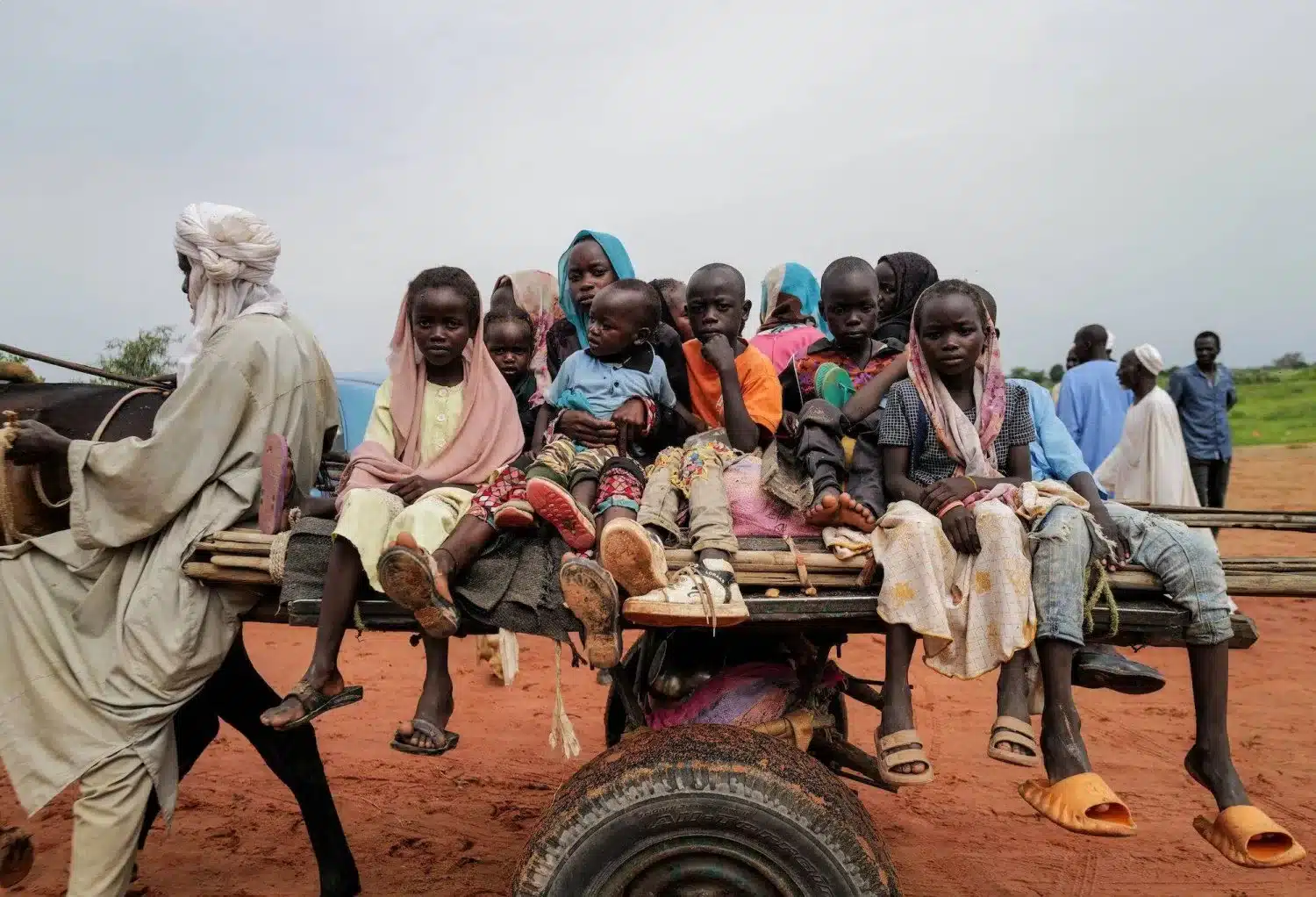
Children, pregnant and breastfeeding women, and internally displaced persons are among the groups most vulnerable to aid cuts.

In Sudan, where war, hunger, and displacement intersect, leading humanitarian organizations are scaling back assistance due to severe funding shortages and compounding global crises at a time when millions of Sudanese are relying on aid as their last lifeline for survival.

This shift threatens not only to reduce food support but also to erode the broader humanitarian response capacity, leaving the most vulnerable populations exposed to growing risks with no clear alternatives.

Who is withdrawing from the aid landscape in Sudan due to the war between the army and the Rapid Support Forces (RSF)? What is the cost to food security, healthcare, and displaced populations? Can alternative channels fill the vacuum, or is the crisis heading toward a harsher phase?

Painful Decisions

On December 12, the World Food Programme (WFP) announced it would begin cutting food rations for Sudanese people starting in January 2026, due to a major funding shortfall.

  • Aid will be limited to 70% of full rations for famine-affected communities and just 50% for those at risk of famine.

  • Current resources will last only a few months, with a projected 34% funding gap for 2025.

  • The program needs $700 million to maintain supplies for six months and warns of a collapse before then.

The financial crisis is not limited to WFP. The International Committee of the Red Cross (ICRC) also announced a 17% cut to its 2026 budget compared to 2025, forcing it to scale back emergency support programs in several countries, including Sudan.

A report by ACAPS revealed that the U.S. administration’s decision in January 2025 to freeze foreign aid for 90 days led to the suspension of vital programs in Sudan, as the U.S. accounted for 44% of the country’s humanitarian funding.

As a result, several international and local organizations have been forced to terminate staff contracts and reduce food and healthcare programs in Sudan.

Alarming Figures

The war has created the world’s largest humanitarian crisis, as reflected in the latest UNICEF report:

  • 30.4 million people in Sudan will need urgent assistance in 2025, including 15.6 million children.

  • Acute malnutrition rates have surpassed the emergency threshold (15%) in most states, reaching over 30% in some areas equivalent to famine conditions.

  • 24.6 million people face severe food insecurity, and nearly 770,000 children are at risk of wasting.

  • Over 11.6 million people have been displaced internally or across borders, and 17 million children are out of school.

  • 70% of healthcare facilities are non-operational, and 3.4 million children under five are at risk of disease outbreaks.

  • 1.4 million children are living in famine or near-famine areas, including 150,000 in North Darfur suffering from acute malnutrition.

These numbers underscore Sudan’s near-total dependence on international aid to provide food, healthcare, education, and clean water.

The Most Affected Groups
Children, pregnant and lactating women, and internally displaced people are among the most vulnerable.

UNICEF reports that at least 130,000 children are trapped in El Fasher, North Darfur, without access to food or medical care.

Displaced populations in Darfur and Khartoum states face acute food insecurity, a shortage of drinking water, and limited access to healthcare. In Darfur, families are often forced to survive on a single meal per day.

What Lies Ahead?

The WFP has warned that the current cuts may not be the end. Ross Smith, Director of Emergency Preparedness and Response at WFP, described the situation as a “dangerous downward spiral” that could collapse entirely by April 2026 without fresh funding.

The likely scenario is a broader famine if funding shortfalls persist, access to aid remains restricted, and the conflict continues. Food, clean water, and healthcare access would decline, resulting in higher rates of acute hunger and mortality.

Families may be forced to adopt desperate survival strategies, such as skipping meals or selling their remaining assets. Displaced populations in Darfur and Khartoum camps would face escalating health risks due to overcrowding and malnutrition.

If health programs are halted, infectious disease outbreaks would increase, further weakening an already fragile health system. UNICEF notes that massive funding gaps have already reduced access to education and child protection services, leaving children without schooling or psychological care.

Both UNICEF and the WFP warn that an entire generation of children could suffer irreversible harm, and Sudan may face an unprecedented humanitarian catastrophe.

How Much Are Arab Countries Contributing?

Qatar

At the 2024 high-level donors’ conference in Geneva, Qatar pledged $50 million toward Sudan’s Humanitarian Response Plan and the Regional Refugee Response Plan.

  • A humanitarian airlift delivered 318 tons of food, clothing, and medical supplies worth over $4 million, in addition to evacuating 1,784 people.

  • In November 2025, the Qatar Fund for Development, in cooperation with Qatar Charity, delivered 3,000 food baskets and 1,650 tents to Dongola in Northern Sudan, setting up a camp that benefited over 50,000 people.

  • Since the outbreak of the war, Qatar Charity has distributed 5,715 tons of food via 142,880 food baskets, reaching 887,000 beneficiaries.

  • Qatar’s total aid to Sudan over the past two decades has exceeded $1 billion.

Saudi Arabia

In April 2023, the King Salman Humanitarian Aid and Relief Center pledged $100 million in aid and launched a national donation campaign.

According to UN Financial Tracking Service (FTS) data, Saudi Arabia’s contributions to Sudan under the 2025 response plan amounted to approximately $3.1 million, supporting four projects covering coordination, water, health, and child protection.

  • In November 2025, the center distributed 1,200 food baskets in Sennar State, benefiting 9,027 people, and 800 baskets in Khartoum State, reaching 5,239 people.

  • In April 2024, it signed a $1.4 million agreement with WFP to treat malnutrition among 35,000 children and pregnant or lactating women in Sudan and South Sudan.

While Saudi Arabia has contributed over $2.2 billion globally to WFP over the past two decades, the share allocated to Sudan does not match the scale of the current funding crisis.

Kuwait

In November 2025, Kuwait donated $4 million to fund two projects with the United Nations Development Programme (UNDP) aimed at enhancing resilience, access to renewable energy, and agricultural recovery in Sudan.

  • The first project, worth $6.8 million and jointly funded with Switzerland and UNDP, targets 160,000 people in Kassala, Gedaref, and Red Sea states, supporting climate-resilient agriculture, value chain improvements, and access to water and clean energy.

  • The second, fully funded by Kuwait with $2 million, provides solar-powered irrigation systems and supports 500,000 farmers in White Nile, Gezira, Kassala, and Red Sea states.

UNDP data shows Kuwait has contributed $18.6 million to development projects in Sudan since 2013.

Additionally, in October 2025, the Kuwait Red Crescent and ICRC signed a $2 million agreement to strengthen health services for vulnerable populations in Sudan highlighting Kuwait’s ongoing humanitarian commitment.

Despite the importance of these contributions, they cannot replace the scale of programs delivered by major international organizations. Qatar’s $50 million pledge, along with food and shelter initiatives by Saudi Arabia and Kuwait, reach tens or hundreds of thousands but the WFP alone requires $700 million to continue operations for six months. Meanwhile, the UN’s 2025 Humanitarian Response Plan exceeds $4.2 billion.

Download this article as PDF
Share this Article
Facebook Twitter Whatsapp Whatsapp Telegram Email Copy Link
فريق التحرير
By فريق التحرير تقارير يعدها فريق تحرير نون بوست.
Follow:
Previous Article نون بوست The Politicization Trap: How the Sydney Attack Undermined a Prepackaged Narrative
Next Article نون بوست Caesar Act Repeal: What Awaits Syrians Politically and Economically?

Read More

  • U.S. Regime‑Change Policies: Why They Are Destined to Fail U.S. Regime‑Change Policies: Why They Are Destined to Fail
  • The Gulf’s Balancing Act: Iran, Israel, and Hidden Links
  • Iraq–Turkey Oil Export Treaty: Why Did Ankara Cancel It After 52 Years?
  • Syria’s Northeast on Edge: QSD Between Ankara and Damascus
  • Has Europe Changed Its Stance on Israel… or Just Its Language?
part of the design
NoonPost Weekly Newsletter

You May Also Like

U.S. Regime‑Change Policies: Why They Are Destined to Fail

U.S. Regime‑Change Policies: Why They Are Destined to Fail

إسراء سيد Esraa sayed 8 April ,2026
The Gulf’s Balancing Act: Iran, Israel, and Hidden Links

The Gulf’s Balancing Act: Iran, Israel, and Hidden Links

فريق التحرير Noon Post 8 April ,2026
Iraq–Turkey Oil Export Treaty: Why Did Ankara Cancel It After 52 Years?

Iraq–Turkey Oil Export Treaty: Why Did Ankara Cancel It After 52 Years?

فريق التحرير Noon Post 8 April ,2026

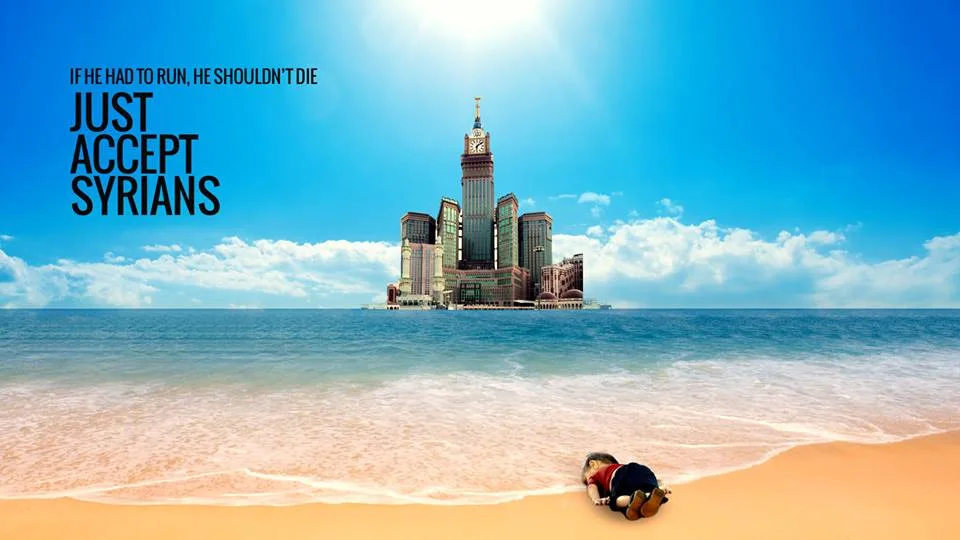
حينما تحتضن السعودية بن علي ولا تُؤوي اللاجئين السوريين

هيثم سليماني
هيثم سليماني Published 3 September ,2015
Share
11933442_10153556397972716_6168060691323022247_n

قال دبشليم الملك لبيدبا الفيلسوف : اضرب لنا مثلا لملك عظُم مُلكه وتوسّع سُلطانه، في قصره كنوز عديدة ولا تقوى غُرفه على تخزين دراهمه، ملك ضعيف البصر لا يرى ما يجب أن يُرى، ومتى استنصره الضّعفاء جفل وانبرى غافلا عن لحظة يُوارى فيها الثّرى.

قال بيدبا : إذا ابتُلي الناس بقصير نظر عمت أبصارهم وكلّوا وملّوا، فلم يلبثوا في انتظار حتى يُصبح بالنسبة لهم انتظار الموت أو سعيهم إليه سيّان. ومن أمثال ذلك أنه كان بقرية “إبلا” شعب ابتلاه الله بملك أوتي من حُب المُلك ما أفقده عقله وما نزع عنه سجيّة الآدميين، ورث حكمه عن أبيه غصبا بلا شورة ولا مشورة، ومكّن لبنو عشيرته في الأرض فعاثوا فيها فسادا، فاغتصبوا الحقوق وظلموا الناس، وظلّوا على حالهم هذا ردها من الزّمن.

وفي يوم من الأيام، اتّفق النّاس على رفع الصّوت قليلا في المُدُن والقرى، فقصير البصر والبصيرة قد لا يرى لكنّه يسمع، فهو من جعل من للجدران آذان صاغية، وخرجوا يجوبون السّهول والرّوابي عُزّلا سوى من حناجرهم، يطلبون القسط وأساس العمران، يهتفون والقلوب ترتجف قبل الأوصال، وكل المنى أن يبلُغ للملك صدى الطّوفان.

تسابق العسس والحرس لإعلام قصير النّظر بالمُستجدّ في مملكته، وبات ليلته تلك مُتقلّبا على فراشه الوثير يُبارز النّوم علّه يُكحّل أجفانه لكن لا مُجيب. ومع صياح أنشط الدّيكة مُعلنا انبلاج الفجر، أصدر فرمانا يقضي بفرم كل من تُسوّل له نفسه الإحتجاج على الأوضاع، مُطالبا عسسه وحرسه بحرق أشجار المُدُن التي انتفضت، علّها تكون عبرة لباقي الأمصار.

وما هي إلا سُويعات حتّى تلوّنات السماء بلون الدّخان، وانقلب كلّ أخضر يانع إلى رُكام مُتفحّم، ووجدت العصافير البريئة نفسها بلا وطن ولا سكن، فقرّر كبير العصافير، ويُدعى مُهاجر، أن يعقد اجتماعا لتحديد المصير. وبعد التّداول انتهى النّقاش إلى خيارين اثنين لا ثالث لهما : إما السفر شمالا نحو بلاد الإفرنج مرورا بدولة اليونان، أو الإنعطاف جنوبا نحو الحجاز بلد أبناء العم.

ولأن ذوي القربى أولى بطلب المعروف وهو الذي بلغ كرمه حد إيواء خنزير إفريقية، قرّرالمجلس المُجتمع إرسال رسول لملك الحجاز، استنصارا وطلبا للجوء، وبعد مُضي أيام عاد المرسول راسما الخيبة على مُحيّاه، قائلا بأنه لم يُسمح له بملاقاة صاحب الحل والعقد، وبأنّ الرّسالة كانت الرّفض والإهمال.

ورغم خطورة السّفر نحو الشمال وطول الرّحلة، انتهى الجمع لتقرير شدّ الرّحال نحو بلاد الإفرنج وإن كان أمل النجاح في بلوغها ضئيلا، فترقّب الموت أشد ألما من المُضي نحوه. وفي طريق الهجرة، قضى من قضى غرقا في البحر، وقضى آخرون من تأثير البرد، وحتى من وصل لبلاد اليونان ظل عالقا أمام أسوار المدينة مُنتظر السماح له بالدّخول، وفي النّهاية أوت بعض مدن الإفرنج من بقي على قيد الحياة، ولازال إلى يوم النّاس هذا البعض منتظرا.

مع كلّ الإعتذار الذي يجب أن يُقدّم لابن المُقفّع على مُحاولة الإستيلاء على نمطه ومدرسته في القص، كان أهون على كاتب هذه الأسطر أن ينسب فعل الناس اليوم للعصافير علّه يُصدّق، فهل يقدر عقل سليم على تصديق أن سوريين أنهكتهم الحرب ركبوا بحر الموت نحو اليونان ثم مقدونيا فأوروبا الغربية لمن استطاع إليها سبيلا، والحال أنه بالنظر جنوبا يقبع أحد أعتى المُجرمين الذين عرفتهم البشرية مُعزّزا مُكرّما في مملكة ترعى بيت الله الحرام، ولم يُؤرق مضجع أصحاب السلطان فيها صور تلك الأشلاء التي كلّت منها حيتان البحر؟

لمّا ثار الشّعب التونسي على نظام بن علي وبلغ الحراك الشعبي نقطة اللاعودة، ركب الأخيرة طائرة بلا وجهة، توسّل لفرنسا ورئيسها فلُفظ، مرّ بإيطاليا فلم يجد ردّا أفضل وانتهى به الأمر في المملكة السعودية وكان رد السلطات وقتها على المُعاتبين أنها ليست ممن يرد السّائلين.

أشهر بعد، صار ماصار في سوريا، ورغم دعمها له بالقرار السياسي المنقوص وحتى بالسّلاح كما تفيد بعض التقارير، لنا أن نتسائل إلى أي حد كانت مضيافة مع المتشرّدين السوريين، وكم من مخيم نصبت لهم؟ ما الذي يدفع الآلاف لركوب بحر الموت؟ أليس الإهمال وانعدام؟

ﻛﻤﺎ استقبل ﺍﻟﺴﻮﺭﻳﻮﻥ ﻣُﺠﺒَﺮﻳﻦ الرّصاص والبراميل المُتفجّرة،استقبلوا ضرورة ركوب قوارب الموت وأمواج البحر الباردة المالحة التيلا تُفرّق بين شاب وكهل أو امرأة وطفل، والنتيجة إما طُعم للأسماء أو محبوس في سجون الدول التي وصلوا إليها إلى حين ترحيلهم مرة أخرى.

ﻻ ﺗﻤﻠﻚ ﺃﻳﺔ ﺟﻬﺔ ﺭﻗﻤﺎً ﺩﻗﻴﻘﺎً ﻷﻋﺪﺍﺩ ﺍﻟﺴﻮﺭﻳﻴﻦ ﺍﻟﺬﻳﻦ ﻫﺎﺟﺮﻭﺍ ﺑﻄﺮﻳﻘﺔ ﻏﻴر ﺷﺮﻋﻴﺔ ﻋﺒﺮ ﺍﻟﺒﺤﺎﺭ ﺳﻮﺍﺀ ﻧﺠﺤﻮﺍ ﺃﻭ ﻓﺸﻠﻮﺍ ﺃﻭ ﻗُﺘﻠﻮﺍ، فسريتها تتعارض مع دقة الأرقام رغم أن راكبي الهجرة اليوم من السوريين باتوا مُجرّد أرقام في عصر ماتت فيها النخوة في قلوب أصحاب الحل والعقد، وبينما يكتفي البعض بإيواء من قتّل وشرّد، تُصارع بعض الشعوب الأخرى من أجل فرض إيواء المُهاجرين الغير شرعيين على حكوماتهم، لسان حالهم يقول، دعكم من أراضي إسلام لا إسلام فيها، فبيننا قد تجدون سلاما وإسلاما بلا مسلمين.


TAGGED: إغاثة اللاجئين السوريين
TAGGED: الأزمة السورية
Download this article as PDF
Share this Article
Facebook Twitter Whatsapp Whatsapp Telegram Email Copy Link
هيثم سليماني
By هيثم سليماني باحث في الشأن المغاربي
Follow:
Next Article نون بوست The Stigma of “ISIS”: A Heavy Legacy Haunting Women and Children of Former Members
part of the design
NoonPost Weekly Newsletter
dark

An independent media platform founded in 2013, rooted in slow journalism, producing in-depth reports, analysis, and multimedia content to offer deeper perspectives on the news, led by a diverse young team from several Arab countries.

  • Politics
  • Society
  • Rights & Liberties
  • Opinions
  • History
  • Sports
  • Education
  • Technology
  • Economy
  • Media
  • Arts & Literature
  • Entrepreneurship
  • Travel
  • Cinema & Drama
  • Food
  • Health
  • Culture
  • Latest Reports
  • Files
  • Long Reads
  • Interviews
  • Podcast
  • Interactive
  • Encyclopedia
  • In Pictures
  • About Us
  • Our Writers
  • Write for Us
  • Editorial Policy
  • Advanced Search
Some rights reserved under a Creative Commons license

Removed from favorites

Undo
Go to mobile version