


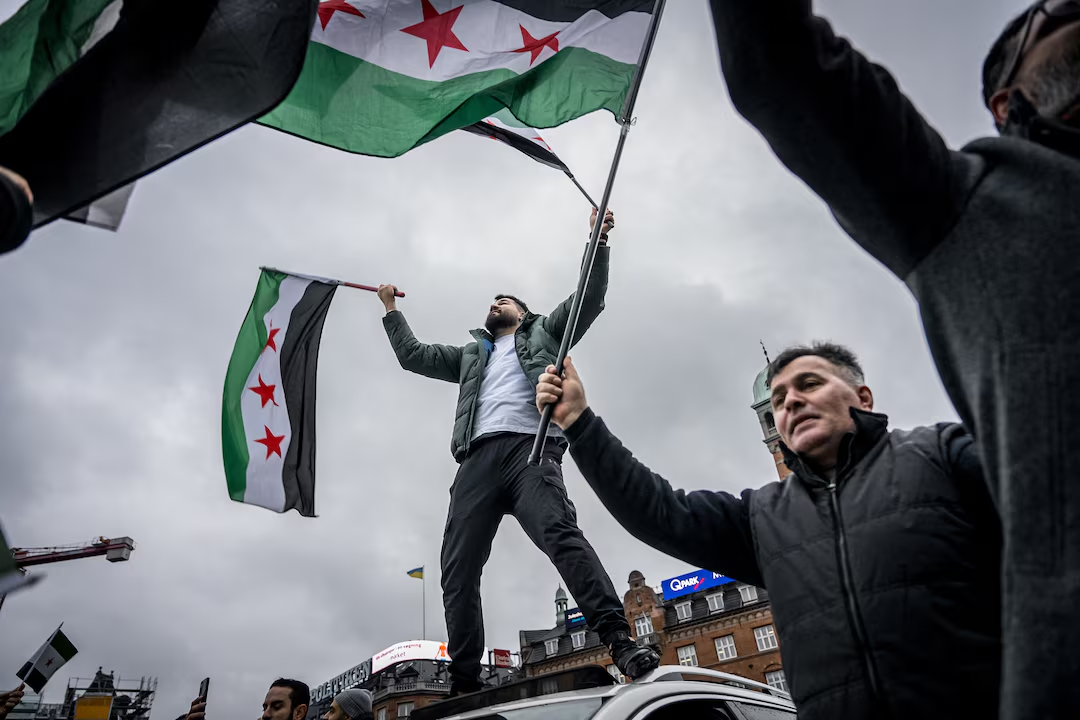
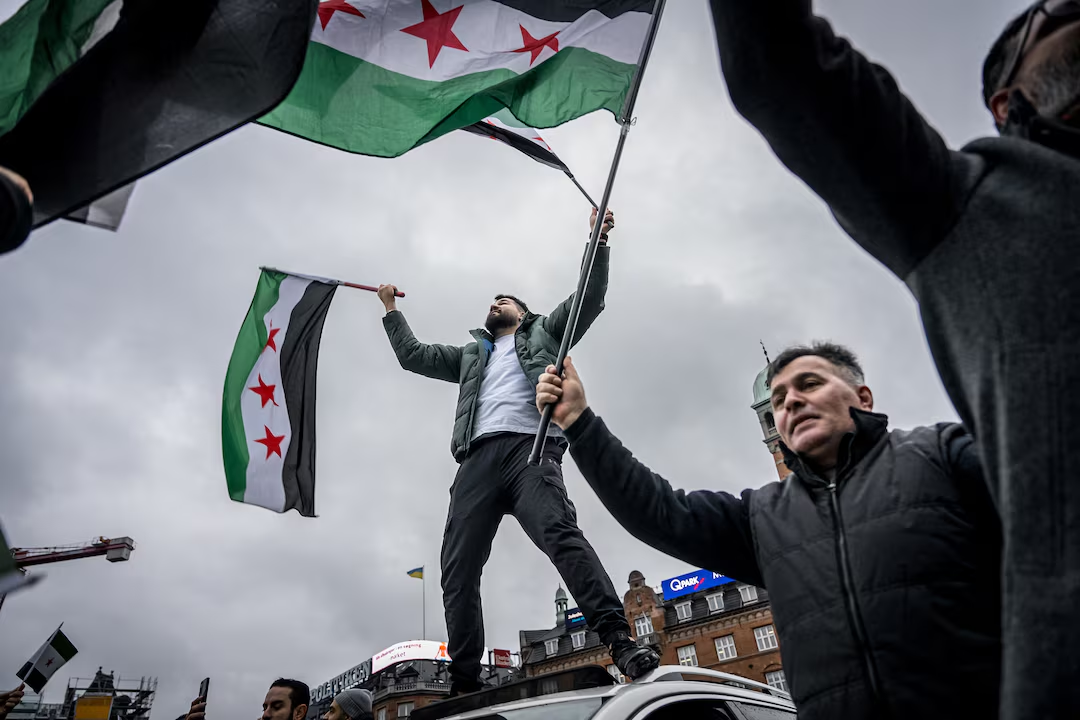
On December 8, 2024, Syria reached a historic turning point with the fall of the Assad regime, which had ruled the country for decades through strict censorship and silencing of dissent. This event was not merely a political change; it opened the door to the birth of a new media landscape that Syrians had not seen in half a century.
With the collapse of the old censorship apparatus, a broad and immediate media explosion took place marked by greater diversity, boldness, and the ability to express societal realities. New digital platforms emerged, and professional journalists along with young activists established diverse media networks.
Some focused on everyday life, while others covered political and economic affairs locally, regionally, and internationally.
This rapid openness enabled unprecedented content production combining real‑time news, investigative reporting, digital features, documentaries, and podcasts. It coincided with a boom in interactive media and citizen journalism, giving Syrians space to express themselves and participate in public discourse.
One year after liberation, Syria is undergoing a foundational moment. The number of media platforms has risen from about 50 before 2024 to more than 500 today, and all forms of media work have evolved. In‑depth print journalism has returned, television channels have resumed broadcasting with new structures, and digital platforms have become the backbone of the new media landscape.
This report highlights the profound transformation Syrian media has undergone since the fall of the regime, tracing its new trajectory and how it has become one of the main pillars shaping public awareness and contributing to rebuilding Syria in the post‑Assad era.
Media Before the Regime’s Fall
Syrian journalism has a long and rich history extending from the Ottoman era, through the French Mandate period, to the post‑independence stage. During these phases, an active press movement produced dozens of newspapers and magazines that reflected political, intellectual, and social life in the country.
However, this landscape was radically transformed when Hafez al‑Assad seized power. Censorship was imposed on all media, independent and opposition newspapers were shut down, and official newspapers, radio, and television channels became propaganda tools of the regime.
Government institutions became the sole source of information, while the media environment came under strict security control. As Ahmed Fakhouri put it, “The profession was obliterated and became a threat to life.”
Despite this tight grip, the two decades before the 2011 uprising witnessed limited attempts at alternative digital platforms and online media; yet these initiatives remained constrained within narrow margins. Many journalists had to work under pseudonyms or from abroad to avoid security persecution.
With the start of the 2011 revolution, a new generation of journalists and activists began establishing local digital platforms to document protests and violations. Small media networks emerged inside besieged cities and displacement areas in northern Syria despite severe repression including arrest, enforced disappearance, displacement, and assassinations. At that time, Syria was considered one of the most dangerous environments for media work in the world.
Simultaneously, regime media became the ugliest weapon against the Syrian people. A group of regime‑aligned media figures actively contributed to justifying atrocities against civilians and promoting the regime’s discourse.
Nevertheless, the regime’s ability to fully control media declined. In contrast, media born of the revolution continued its central role, producing thousands of reports, investigations, and visual materials that documented major societal transformations from peaceful protests to siege, displacement, bombardment, and widespread violations making this media a living memory for Syrians against efforts to erase and mislead.
Reorganizing the Media Infrastructure After Liberation
After the fall of the regime, the new authorities began dismantling the censorship infrastructure that had governed media for decades. They repealed certain old laws used to restrict publishing and redefined the role of the Ministry of Information. According to official statements, the ministry has shifted from a regulatory body to one concerned with creating a more open and pluralistic media environment.
In this context, the Director General of Press Affairs, Omar Haj Ahmed, announced that the ministry has begun drafting a modern media law balancing freedom of expression with professional responsibility, alongside organizing more than 16 workshops on journalistic ethics.
The ministry also affirmed its commitment to producing media content in minority languages, including Kurdish, and involving local journalists in producing original content rather than merely translating it.
This was complemented by an initiative from the Minister of Information to launch a media code of conduct currently involving about 500 journalists. The aim is to establish a “media constitution” organizing journalistic standards, from which laws governing media and cybercrimes will be developed.
Additionally, a specialized academy to qualify media cadres in ministries and government bodies is being established, with legislation to address misinformation.
Accompanying these reforms is an unprecedented expansion in the number of licensed media outlets temporary licenses now exceed 500 entities alongside thousands of individual applications for press cards.
Journalists in the field have reported noticeably improved working conditions including freedom of movement, travel, coverage, and the ability to directly critique government performance without fear of closure or censorship.
To formalize this openness, the government amended the internal system of the Syrian Journalists Union, restructured media offices in ministries, and reformed licensing procedures to be more accessible and transparent, including eliminating previous bank deposit requirements.
These changes aim to encourage local and international media institutions to operate within Syria, reflected in the interest of French channel Monte Carlo in broadcasting from Damascus.
In parallel, the principle of individual accountability for journalists involved in violations during the previous era was adopted within a transitional justice framework, with mechanisms to hold individuals and institutions responsible for content inciting hatred or discrimination.
Despite this openness, Minister of Information Dr. Mustafa acknowledged shortcomings, particularly in media coverage outside Damascus due to logistical and security challenges in unstable areas.
In response, the ministry announced plans to strengthen media in marginalized regions by establishing 12 regional media directorates, appointing official government spokespeople in various ministries, and reviving traditional media institutions like Radio Damascus.
At the union level, the Syrian Journalists Union is undergoing comprehensive restructuring to end the legacy of Baath Party domination and establish a new internal system that protects independence and professional ethics.
According to Baraa Othman, a member of the union’s executive council, the union seeks an active role in protecting journalists inside and outside the country, defending their rights, and developing professional standards in line with current needs.
Media experts such as Dr. Ayman Khalid describe the transformation in Syrian media as radical and comprehensive not just in laws and structures but also in institutional mindset, editorial discourse, and management practices.
He emphasizes that the regime’s fall signaled the complete end of the old media system and the beginning of a new media space aligned with the post‑revolution reality, supported by modern technology and openness to critique.
Within this context, the Ministry of Information presented a media strategy aimed at shifting from a “propaganda” logic to what Minister Hamza al‑Mustafa calls “public media,” based on a three‑tier structure including government media offices, official media outlets, and a broader space for independent public media capable of critique.
The ministry also announced ambitious future projects, including the launch of the “Damascus Gateway” media and cinema city to attract Syrian talent at home and abroad, and the creation of a museum documenting the history of media propaganda and the media crimes that accompanied the Assad family’s rule.
Efforts to enhance media education included a visit by Minister Hamza al‑Mustafa to the College of Media to strengthen communication with young professionals and raise training standards.
In sum, one year after liberation, the Syrian media landscape is being shaped within a complex transitional path combining openness and institutional rebuilding. Its aim is to solidify a professional and responsible media that participates in building the new state not as a tool of power or chaos.
The New Syrian Media Landscape After Assad’s Fall
With the collapse of Assad’s regime and the dismantling of the censorship apparatus that had dominated Syrian media for decades, journalists began revealing their true identities and working openly for the first time free of fear and persecution.
In the initial weeks following liberation, the country witnessed an unprecedented media boom. Some old newspapers were relaunched from inside Syria, and new digital platforms emerged at a rapid pace. Exiled journalists returned to establish media institutions in Damascus and other major cities.
Coverage quickly expanded to include daily news, field reports, investigative journalism, documentaries, and podcasts forming a media scene unlike anything Syria had experienced before.
This shift fundamentally redefined the role of the media: it was no longer just a transmitter of news, but a space for public dialogue, a voice for marginalized areas, and a mirror of society’s pulse. The openness ushered in genuine plurality of voices.
Institutional media outlets, independent platforms, and citizen journalism proliferated. Interactive media played a major role in involving audiences directly in content creation, turning citizens from passive consumers into active participants in shaping the media landscape.
Simultaneously, media production expanded to include cultural and educational content. Podcasts, analytical programs, visual documentaries, and specialized reports flourished. By the end of 2024, the Syrian media environment had become multi-layered, combining official outlets, independent journalism, and local and international digital platforms.
In this context, Syria’s Ministry of Information hosted more than 3,500 foreign media delegations and processed 3,605 applications for individual press cards between liberation and March 2025. It also issued over 450 media licenses from roughly 700 institutional applications a clear reflection of the extraordinary media momentum gripping Syria today.
The Revival of Traditional Media and Print Journalism
Following the regime’s collapse, official media institutions like the Syrian Arab News Agency (SANA) and state television began a comprehensive restructuring process. The goal was to shift from a model of regime-controlled propaganda to one of public service media, with updated programming formats and editorial approaches aligned with the new era.
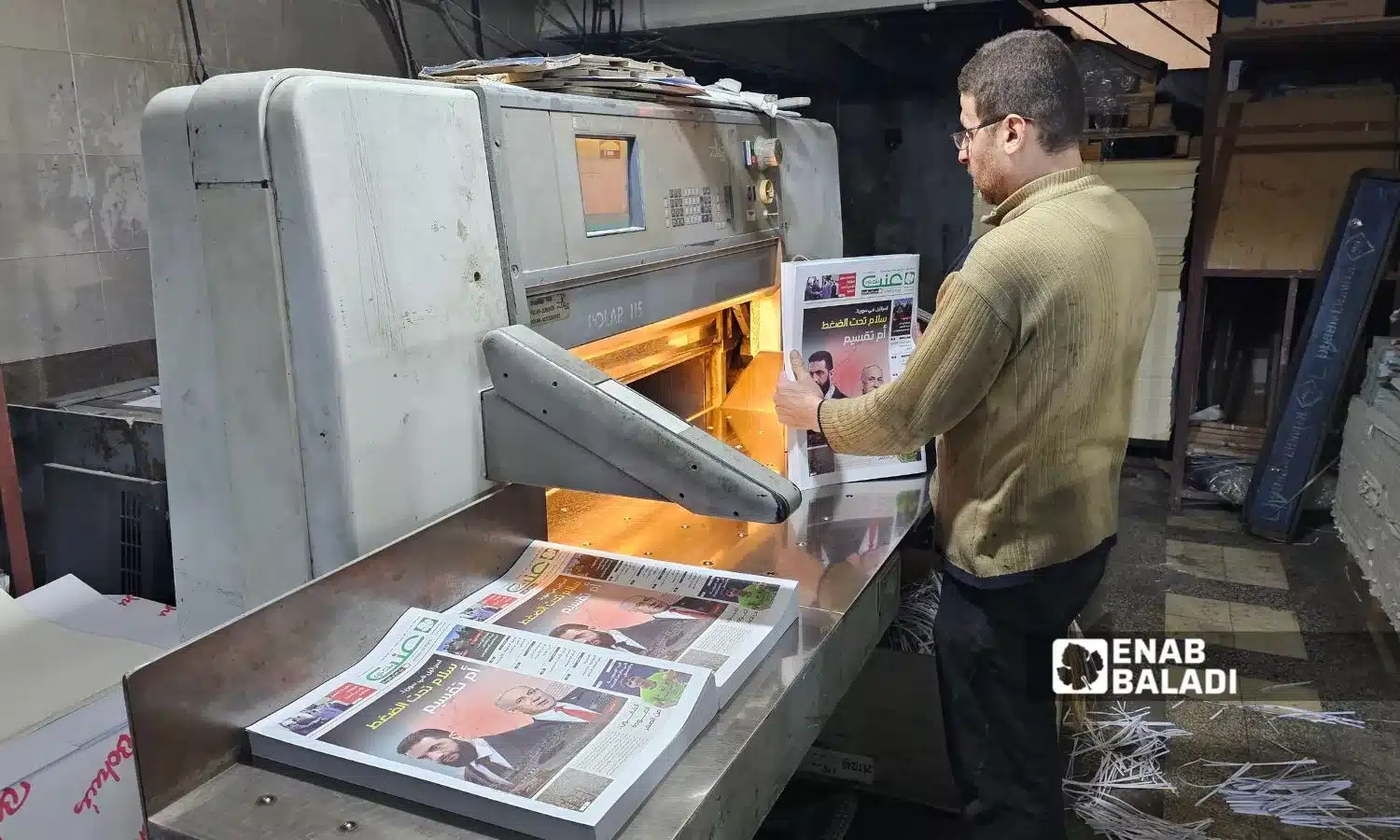
At the same time, several media platforms that had operated in opposition-held territories or from exile reorganized their institutional structures and reopened offices inside Damascus and other cities.
Print journalism, which had all but disappeared by 2024, began making a cautious comeback. New newspapers, such as The Syrian Revolution, were launched, while prominent independent outlets like Enab Baladi resumed their print editions, reopening their Damascus offices and restarting distribution despite the logistical challenges of printing and circulation.
On the broadcasting side, official TV channels resumed operations with revamped formats. Syrian News Channel (al-Ikhbariyah) now reflects the broader state policy, allowing limited internal critique. Meanwhile, SANA and Radio Damascus underwent restructuring toward a more professional and open editorial vision.
Minister of Information Hamza al-Mustafa emphasized that the ongoing changes aim to build a media environment that reflects the daily lives, pain, and aspirations of Syrians. He stressed that print journalism, in particular, should serve as a platform for free debate, not merely a channel for news delivery.
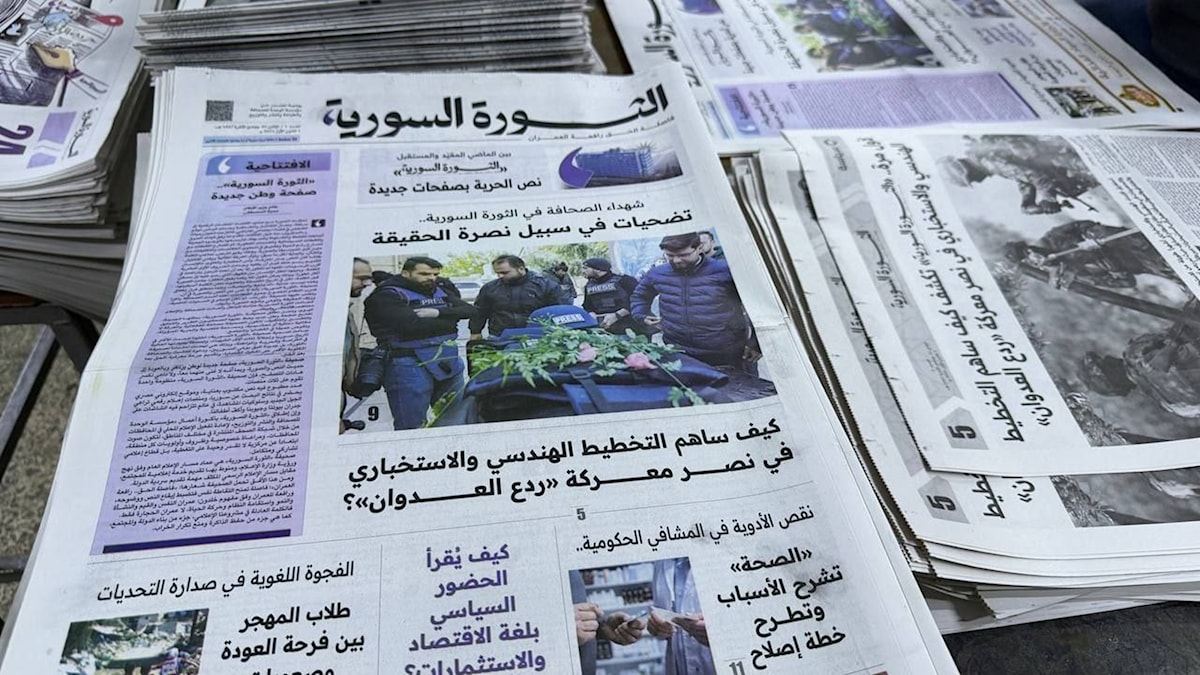
He also announced plans to reactivate suspended newspapers such as Al-Hurriya (specializing in economics and politics) and Al-Mawqif al-Riyadi (a sports weekly), in an effort to revitalize the print media sector.
Moreover, the ministry aims to decentralize media by establishing outlets across Syria’s provinces, moving away from a Damascus-centric approach.
Alongside internal transformations in state media, regional and international platforms are expanding their presence in Syria either by launching editorial teams or by establishing entirely new platforms to offer ongoing coverage and analysis of political, economic, and social developments inside the country.
In effect, Syrian media is no longer confined within national borders it has increasingly become part of the global media ecosystem. State media, too, is gaining visibility on the international stage.
The Digital Media Boom
With the media space open for the first time in decades, Syria has undergone a rapid transformation in both the structure and function of its media. Citizens themselves have become direct participants in news production, using social media to report events in real time. Citizen journalism is now a hallmark of this new era, where publishing is no longer the exclusive domain of professional journalists.
In this environment, digital platforms have taken center stage as the most dynamic and fastest-growing component of the media landscape. Independent platforms such as Enab Baladi, Syria 24, and Syria Now have emerged as pillars of this new media ecosystem, relying on field investigations, public engagement, and audience-driven content creation.
Freed from state repression, coverage has expanded to encompass daily life, reconstruction challenges, market trends, education, and human-interest stories often delivered through videos and visual materials that easily reach audiences both inside and outside Syria. Interactive media has further amplified participation through comments, debates, and discussions.
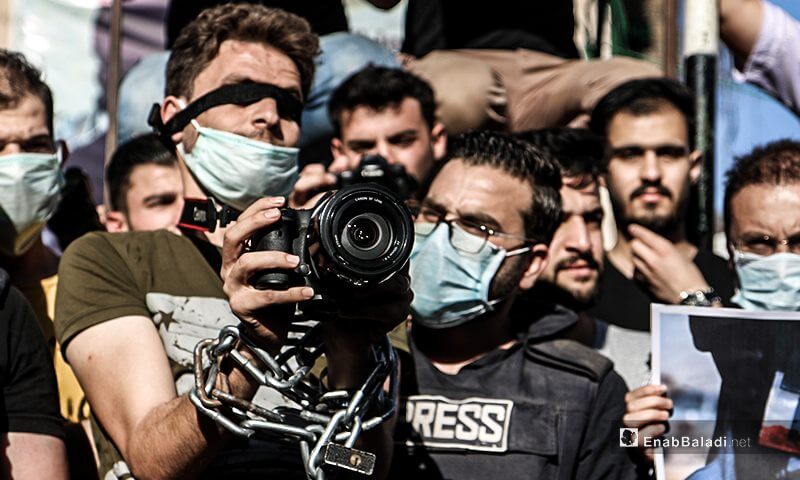
Simultaneously, a new generation of independent journalists has emerged outside traditional institutions. Reporters, photographers, video producers, and podcasters have become the core force documenting the lived realities of Syrians. Through field visits to tense regions, live election coverage, school crisis reporting, humanitarian efforts, and economic developments, they have turned social media into a primary outlet for journalism.
At the heart of this transformation is the podcast boom now one of the most popular formats among young journalists and content creators. Podcasts have become a platform for storytelling and analysis, away from the pressure of breaking news. They offer space for experts, local actors, and citizens to discuss politics, economics, personal stories, and trauma testimonies.
Podcasts now reach a broad audience, including Syrians in the diaspora. They have become a powerful tool of new media, fostering open dialogue and mature, professional, and inclusive discourse on Syria’s future.
Giving Victims a Voice
Syria is currently witnessing an unprecedented expansion of rights-based and investigative journalism. For the first time in decades, it has become possible to document violations, gather testimonies, and uncover truths long buried right from within Damascus and other cities.
Human rights platforms are now operating inside the country to support transitional justice, led by institutions like the Syrian Network for Human Rights, which reopened its Damascus office to record victim testimonies, document detainee and missing persons files, investigate past regime-era crimes, and issue regular reports.
With greater media freedom, many independent journalists have given voice to marginalized groups political, social, or geographic allowing them to share their experiences, hopes, and pain. This has helped restore dignity to victims and positioned the media as a key tool for reform and transitional justice.
Rights-based journalism has also expanded into audio formats. Human rights podcasts have become key platforms for analysis and public discussion, featuring journalists, activists, experts, and witnesses tackling issues such as detainee conditions.
In truth, rights journalism has played a vital role in fostering transparency and accountability, giving transitional justice initiatives essential tools to preserve facts and protect the collective memory of Syrians after decades of suppression and disinformation.
One striking example is the work of Noon Syria, which documented violations in the city of Baniyas offering a new model of community-rooted rights media emerging from within affected societies and chronicling crimes that had gone unrecorded for over a decade.
Thus, post-2024 investigative and rights journalism has become an integral part of rebuilding the state and public awareness serving as both the voice of victims and a credible source of truth.
Between Freedom and Legal Ambiguity
Today, Syrian media enjoys unprecedented openness after decades of security-driven censorship. Many journalists have spoken of feeling liberated. Enab Baladi Editor-in-Chief Ali Eid confirmed that government censorship had ended and red lines had disappeared. Field reporters, including Noon Post correspondent Hamza Abbas, noted that freedom of movement is the most significant change since liberation.
However, this openness is accompanied by complex challenges. Chief among them is the absence of a modern legal framework that protects journalists. Many outdated laws such as the 2001 Press Law and articles of the Penal Code remain partially in effect. Experts argue these laws were designed to control, not protect, the press.
Others point to lingering legacies of the old regime, a lack of professionalism, political polarization, and an institutional culture shaped by decades of authoritarian control. Some observers note that many journalists today have yet to fully grasp the ethical and professional boundaries of the craft leaving Arab and foreign media to fill the gap.
The Syrian media environment also continues to face disinformation, conspiracy theories, and hate speech online. Legacy regime-aligned outlets and personalities still exert influence across digital spaces. These challenges intersect with deeper structural issues, including deteriorating media infrastructure and chronic financial constraints.
Experts like Ayman Khalid warn that Syrian media currently operates in a volatile space between conditional freedom and political necessity. The return of exiled journalists has brought diverse media traditions from the Arab world and beyond—requiring careful coordination to shape a journalism that meets Syria’s current needs.
Meanwhile, officials say the current government is working on new laws to facilitate both local and foreign media operations. Ahmed al-Sharaa envisions a free Syrian media, asserting that constructive criticism and independent voices can strengthen both state and society but emphasizing the need for legal safeguards to protect audiences and media institutions.
Minister Hamza al-Mustafa insists the new media landscape will not revert to state-controlled propaganda. It will instead operate within an enabling environment, where glorifying Assad is criminalized under the current constitutional declaration. Individuals linked to the former regime are allowed to work within legal frameworks.
Though Syria has yet to fully stabilize its media infrastructure, the year since Assad’s fall has ushered in a new media reality: digital platforms, citizen journalism, and expanded public space have emerged as vital tools of reconstruction.
This transformation has made the new Syrian media a central pillar in rebuilding both the state and its society after years of darkness and repression.