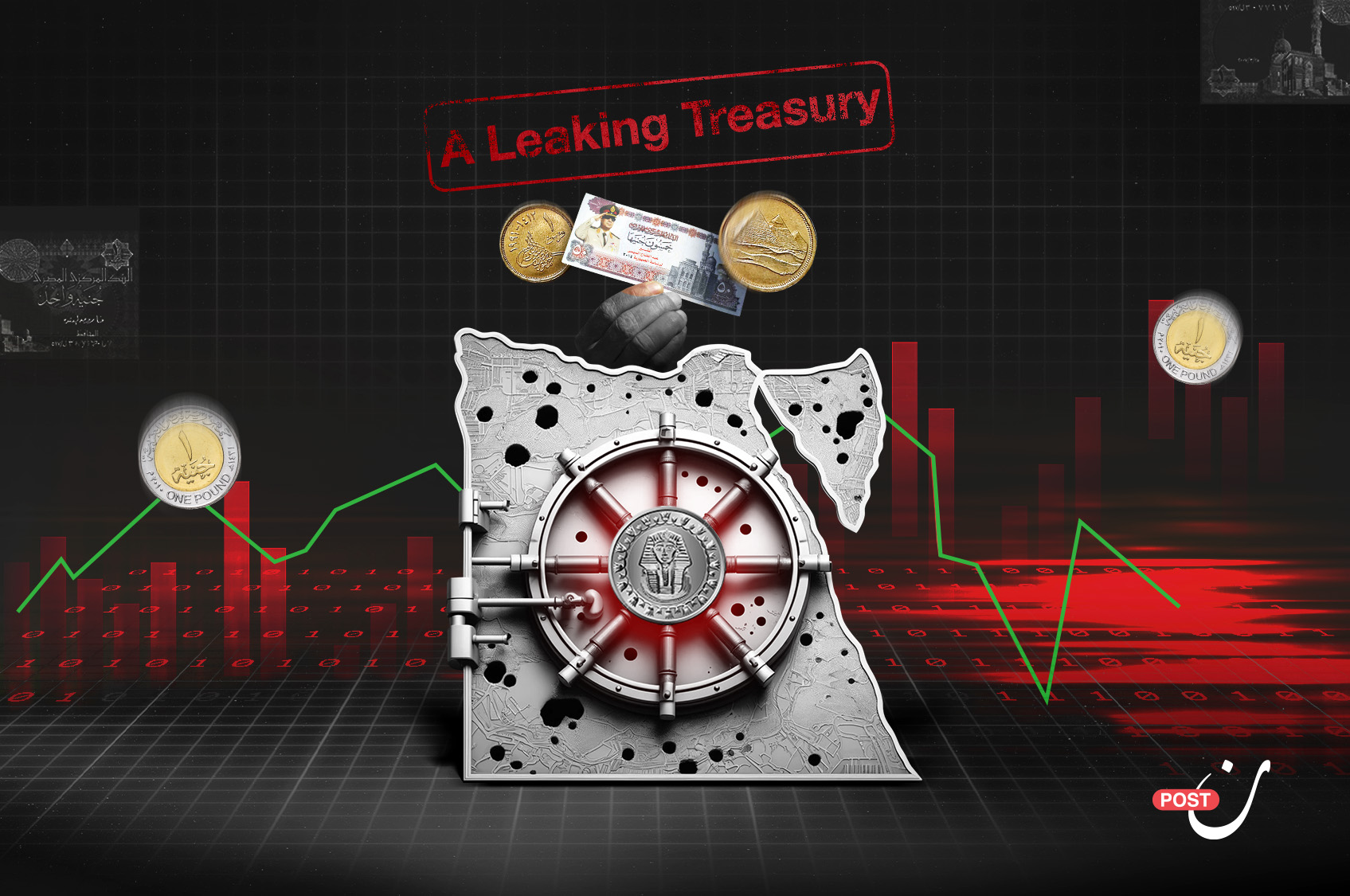
Lately, almost everyone seems to be nostalgically looking back at the Egyptian pound as it was only about two and a half years ago talking about its purchasing power compared with today as if those years were decades ago. The massive decline in the currency’s value and the rapid pace at which this occurred during the current economic crisis were so shocking that it remains difficult to fully absorb or adapt to it.
In general, every people have an imagination of a “better yesterday” for the condition and performance of their currency — even Americans themselves with the “dollar” that governs the world. Yet the difference between then and now for currencies can, in some countries, truly be the difference between a glorious past and a bleak present.
From its very first minting, the Egyptian pound was a strong currency, even if the conditions of daily life in Egypt under the Khedive were far from prosperous. This doesn’t stop Egyptians today from yearning for that era when the pound could do many things as if it were Moses’ staff.
So much so that older generations gave it a nickname symbolizing strength: “the gypsum pound.” But decades of wars followed by economic collapse transformed that pound into nothing more than the “gum” a shopkeeper hands you when all you have left are a few pounds.
Yesterday’s Pound
To understand today’s “pound,” we must go back in time. Muhammad Ali Pasha, governor of Egypt (1805–1845), dreamed of independence from the Ottoman Empire and building his own state. In pursuit of this, he waged wars against the Sublime Porte. Within the independent state he founded came the establishment of its own currency, and here begins the story of the “golden pound” following the war between Muhammad Ali and the Ottomans.
In 1836, Muhammad Ali minted a gold pound worth 8.5 grams of gold. It replaced the Ottoman qirsh as Egypt’s official currency at a rate of 1/100 of the pound. Yet the Ottoman qirsh continued to play its role within daily economic life because a state may be rich and its currency strong, but that doesn’t necessarily mean its people are. Thus, the qirsh remained significant in everyday transactions.
The gold pound remained dominant until 1898 when it became a paper banknote. The National Bank of Egypt issued the new currency now equal to 7.48 grams of gold and because of its high value it was divided into smaller denominations like the qirsh and the millieme, which persisted in people’s memory to this day.
After Britain declared a protectorate over Egypt following World War I, it tied the Egyptian currency to the British pound. The National Bank exported Egypt’s gold reserves to Britain as part of the colonies’ contribution to war expenses, as noted in Wars of Empires. The pound sterling ended up equating to 97 qirsh.
Egypt had fallen under British occupation in 1882 due to a debt crisis. During the world wars, as economist Galal Amin explains in The Story of the Egyptian Economy, Egypt performed well in debt repayment which strengthened the currency.
After World War I, Egypt achieved a trade surplus due to higher cotton prices, but this surplus mainly went toward servicing debt.
Between 1914 and 1934, national debt dropped from 86 million to 39 million pounds representing 20% of national income, compared with 100% when British occupation began.
After World War II, Egypt became a creditor state thanks to the Egyptianization of debt law. Britain owed Egypt 340 million pounds, which Cairo never fully reclaimed after Britain ceased payments due to the 1956 Suez Crisis known historically as sterling balances.
By the end of King Farouk’s reign, Egypt’s debts were nil, and the Egyptian pound never fell below the equivalent of four U.S. dollars. But even with a strong currency and a wealthy state, social mobility did not progress at the same pace.
Although the middle class had grown after the 1919 Revolution, it remained small, while large landowners dominated parliamentary life a major achievement of that revolution, as Asim al‑Dusouqi notes in Major Landowners and Their Role in Egyptian Society 1914–1952.
The pound was strong, but not accessible to large segments of society who lived on qirsh and milliemes. Films from the era reflect how Egyptians related to their strong currency one spoke of the pound with reverence precisely because it was out of reach.
In Give Me 3 Pounds (1939), those three pounds could save a man from eviction. In 1950’s Yasmin, child star Fairuz sings about the riyal worth 20 qirsh: “We have a riyal, oh we have a riyal it’s a high amount, not bad let’s go straight to the grocer and buy supplies.”
Nasser’s Dreams & Nightmares
Egypt remained tied to the pound sterling until 1961, when the newly established Central Bank (founded in 1960) began issuing Egyptian currency. In 1962, Egypt changed the currency’s valuation and pegged it to the U.S. dollar.
Even though the tie to the British pound formally ended in 1961, since 1944 near the end of World War II currencies were being linked to the dollar under the Bretton Woods agreement. In some speeches, President Gamal Abdel Nasser referred to figures in U.S. dollars before 1961.
From the 1952 Revolution, the Egyptian pound’s story became inextricably tied to the U.S. dollar. Abdel Nasser inherited a debt‑free state. Between 1952 and 1967, the dollar’s value rose against the Egyptian pound from 0.25 to 0.38. To finance industrial projects, the High Dam, and government spending, Egypt borrowed and by the end of Nasser’s era, civilian debt reached about $1.8 billion, or around 21% of GDP.
During Nasser’s peak economic years (1956–1965), as Galal Amin notes, Egypt sometimes repaid debt with Egyptian pounds and sometimes with Egyptian‑made goods. Workers’ wages in industry and agriculture rose steadily. Like many post‑colonial states, Egypt pursued nationalization and import substitution. This energized the national industry.
Egypt made radios, televisions, cars and expanded social support systems like health, education, and unemployment programs. The standard of living improved, and the pound held its strength yet the brink was coming due to Nasser’s costly ventures.
The war in Yemen, beginning in 1962, was one such drain. In a declassified 1963 U.S. intelligence document, estimates show Egypt spent between $85 and $110 million supporting its military and allies there a sum the document warned could not continue without affecting development.
The decisive blow was the 1967 defeat. Building up the army afterward cost the state dearly financially and in debt and Anwar Sadat inherited an almost empty treasury with a weakening pound.
Sadat’s “Open Door” & Its Consequences
Despite early improvements, Sadat’s economic policies eroded confidence in the pound. He opened Egypt to free import markets, despite limited foreign currency reserves and weak export growth. Egypt borrowed heavily short‑term at interest rates sometimes reaching 15%. These policies weakened the pound further.
As the Suez Canal reopened and Egyptians worked abroad, foreign currency re‑entered the economy. The black market for foreign exchange flourished, and foreign currency became more important socially and economically with some companies boasting dollar‐denominated salaries and some real estate pricing tied to dollars.
The “gypsum pound” revealed itself as imaginary unable to do much. The government raised the minimum wage to 16 pounds per month, yet this did little to halt depreciation.
The 1977 “Bread Riots,” sparked by the social impact of Sadat’s policies, featured chants that exposed how the currency’s decline made basic goods unaffordable: “One kilo of meat now costs a pound.” Protesters even addressed First Lady Jehan Sadat: “Tell your husband a pair of shoes now costs six pounds.”
By the end of Sadat’s rule, Egypt’s civil and military debt neared $30 billion. His economic system created a society of haves and have‑nots, with a shrinking middle class. A chronic trade deficit, dependency on short‑term high‑interest debt, and rising foreign‑exchange demand hastened the pound’s decline.
Sadat was assassinated in 1981, but his economic legacy lived on. Hosni Mubarak managed these inherited crises similarly, albeit slowing the rate of decline. Early in his rule, Mubarak spent millions on ambitious projects like Sadat City, Toshka, and the Peace Canal, while privatizing and encouraging foreign investment to address economic woes.
Egypt increasingly became a rentier state, relying on tourism, remittances, the Suez Canal, and limited oil revenues.
When oil prices collapsed in the 1980s, Egypt’s economy was hit hard. Many expatriate workers returned home, foreign currency inflows declined, and by 1988 the pound had fallen to about $1.50 and by 1990 it was roughly equal to the dollar, marking the start of a long upward trend for the dollar against the pound.
On the eve of the 1990 Gulf War, Egypt’s debt reached $47 billion 150% of GDP yet the war’s economic fallout paradoxically helped stabilize some aspects of the economy.
The Era of Deepening Collapse
Global inflation and price shocks between 2000 and 2011 further pressured the Egyptian pound. External price rises affected the pound’s value more than they did elsewhere, and when world prices fell, Egypt often saw lagging declines.
The structural causes of chronic weakness persisted: overreliance on imported goods, stagnant markets, low productivity, weak competition, and ineffective consumer protection.
During the Mubarak era’s latter years, the pound was repeatedly devalued in what became known colloquially as “floating.” By the 2011 revolution, the dollar was worth six times as much as the pound.
In a notable economic observation, researcher Samer Suleiman wrote in The Strong Regime and the Weak State (2006): “One undeniable truth is that Sadat inherited an inflated state from Nasser, and Mubarak inherited an even more inflated one from Sadat.”
The Biggest Collapse
After the 2011 uprising, Egypt continued to grapple with structural imbalances. Foreign currency supplies struggled to meet rising import bills triggering a domino effect across the economy.
Major sources of foreign exchange exports, remittances, tourism, foreign direct investment, and Suez Canal revenues all weakened amid post‑revolution instability. Tourism, a major contributor to GDP and foreign exchange before 2011, suffered first. The 2015 crash of a Russian Metrojet flight from Sharm El‑Sheikh led to European flight bans, further damaging tourism.
Parallel currency markets expanded as people sought better rates than official channels, and capital controls limited multinational companies from repatriating profits suppressing foreign investments.
A shortage of foreign currency made it difficult for manufacturers to import raw materials and machinery. With declining oil prices and reduced support from Gulf states who had grown weary of Egypt’s dependency on aid pressure on foreign exchange intensified. As a result, Egypt’s current account deficit surged by July 2016.
By October 2016, the dollar was trading in black markets at rates equal to official ones roughly 16 pounds to the dollar versus an official rate of 8.8. Under mounting pressure, Egyptian authorities had no option but to seek assistance from the International Monetary Fund.
In November 2016, the Central Bank floated the pound for the third time in Egypt’s history after floats in 2003 and 1977.
The pound lost about 32.3% of its value, with the dollar reaching roughly 16.5 pounds. Shortly after, the IMF agreed to a $12 billion program the largest in the Middle East at the time.
Studies noted shocking impacts: by 2017, the Egyptian pound could buy only about 2% of what it did in 1979 and about 4% of the dollar value it could purchase in 1983.
Subsequent administrations continued major projects that demanded heavy spending, further straining the economy and the pound. Additional floats in 2022 and 2024 drove the dollar’s rate to around 48 pounds.
Is the Egyptian pound that our parents knew and we knew for even a short time gone? A study of low‑income households by the International Food Policy Research Institute found that 85% of poor families cut meat consumption, 75% cut eggs, 73% cut poultry, 61% cut fish, and 60% cut dairy by 2022 before the latest float and the highest inflation rates seen in early 2025.
While the government recently set a minimum wage of 6,000 pounds itself questionable in its capacity to sustain a family of four, and only available to a minority of workers a study by the Egyptian Initiative for Personal Rights found many families below the poverty line living on just 500 to 800 pounds per month.
It’s almost unimaginable to survive on such a sum a testament to how deeply currency erosion has affected daily life.
The Egyptian pound’s struggles continue amid chronic state deficits, heavy domestic borrowing with interest rates up to 30%, a foreign exchange funding gap, and an inability to attract sufficient dollar revenues to meet essential needs or service external debts all signaling further depreciation and persistent deterioration ahead.