





NoonPost NoonPost

NoonPost

  • Home
  • Politics
  • Economy
  • Society
  • Culture
  • Files
  • Long Reads
  • Podcast
AR
Notification Show More
نون بوست
“There Are Nights I Can’t Close My Eyes”: How Gazans Are Living in Homes on the Brink of Collapse
نون بوست
From al-Jolani to Ahmad al-Shara: The Evolution of Syria’s New Leader
نون بوست
When Political Islam Receded in Egypt: Who Filled the Void?
نون بوست
An Extension of Genocide: Gaza’s Detainees Speak Out
نون بوست
A Tightrope Between Survival and Sovereignty: The Syrian Government Faces Normalization Pressures
نون بوست
American Aircraft Carriers: Has the Era of “100,000 Tons of Diplomacy” Ended?
نون بوست
U.S. Regime‑Change Policies: Why They Are Destined to Fail
نون بوست
Transformations of Israeli Judaism: Between the Victim Complex and the Colonizer’s Doctrine
نون بوست
The Gulf’s Balancing Act: Iran, Israel, and Hidden Links
نون بوست
Iraq–Turkey Oil Export Treaty: Why Did Ankara Cancel It After 52 Years?
نون بوست
Syria’s Northeast on Edge: QSD Between Ankara and Damascus
نون بوست
Has Europe Changed Its Stance on Israel… or Just Its Language?
NoonPost NoonPost
AR
Notification Show More
نون بوست
“There Are Nights I Can’t Close My Eyes”: How Gazans Are Living in Homes on the Brink of Collapse
نون بوست
From al-Jolani to Ahmad al-Shara: The Evolution of Syria’s New Leader
نون بوست
When Political Islam Receded in Egypt: Who Filled the Void?
نون بوست
An Extension of Genocide: Gaza’s Detainees Speak Out
نون بوست
A Tightrope Between Survival and Sovereignty: The Syrian Government Faces Normalization Pressures
نون بوست
American Aircraft Carriers: Has the Era of “100,000 Tons of Diplomacy” Ended?
نون بوست
U.S. Regime‑Change Policies: Why They Are Destined to Fail
نون بوست
Transformations of Israeli Judaism: Between the Victim Complex and the Colonizer’s Doctrine
نون بوست
The Gulf’s Balancing Act: Iran, Israel, and Hidden Links
نون بوست
Iraq–Turkey Oil Export Treaty: Why Did Ankara Cancel It After 52 Years?
نون بوست
Syria’s Northeast on Edge: QSD Between Ankara and Damascus
نون بوست
Has Europe Changed Its Stance on Israel… or Just Its Language?
Follow US

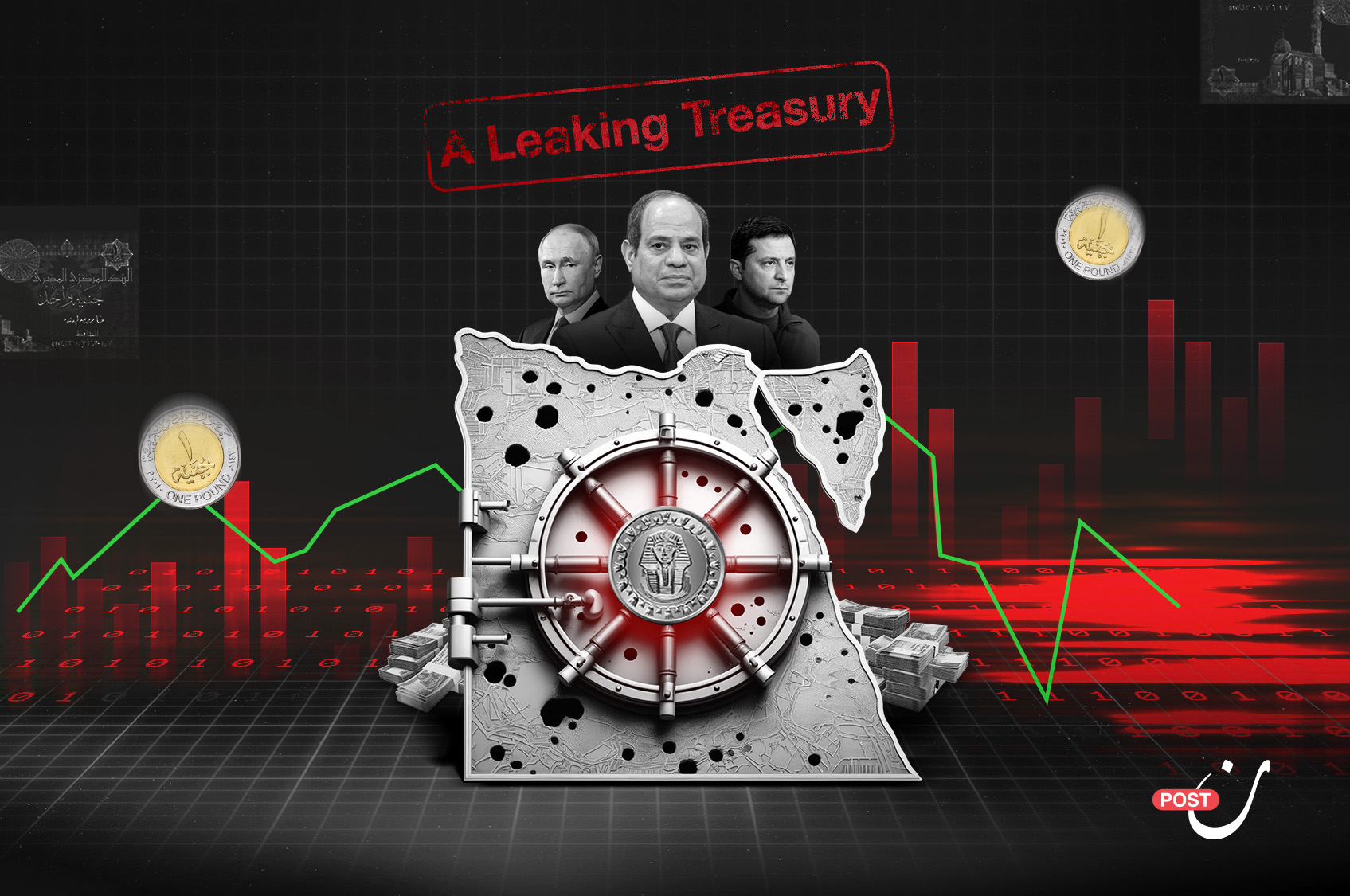
Egypt’s Fragile Economy: Are External Crises a Convenient Scapegoat for Government Failures?

فريق التحرير
Noon Post Published 26 March ,2026
Share
نون بوست
نون بوست

Billions of dollars in foreign investment in Egypt’s sovereign debt instruments fled the country following the outbreak of the Russia-Ukraine war in early 2022. This exodus drained the Central Bank’s foreign currency reserves, plunging the Egyptian government into an unprecedented crisis.

The government scrambled to implement a sweeping series of emergency measures most notably a sharp devaluation of the Egyptian pound and a fresh agreement with the International Monetary Fund.

These decisions ignited one of the most severe economic crises Egypt has experienced in decades an ordeal still unfolding more than two years later, with citizens continuing to endure its painful consequences.

From the very onset, Egypt’s ruling authorities clung to a consistent narrative: the crisis was global, not domestic. This messaging blaming COVID-19 and the Russia-Ukraine war was echoed by President Abdel Fattah el-Sisi, senior officials, and amplified by both state and pro-government media. It served as a ready-made justification for an increasingly disillusioned public.

In a speech last year, President Sisi asserted, “Had it not been for the state’s prior preparations to contain the negative fallout of the global economic crisis, the effects would have been doubly severe.” He also insisted the government had successfully managed the crisis.

Before debating the true roots of Egypt’s economic collapse whether domestic missteps or external shocks it is essential to examine the outcomes. These alone underscore how deeply the Egyptian economy is tethered to external forces, highlighting its inability to weather global shocks.

How the Russian War Sparked the Meltdown

Like many developing economies, Egypt’s financial system is embedded within the global dollar-based order. Events have repeatedly shown that this framework is ill-equipped to shield developing countries from crises originating in wealthier states, particularly the United States.

The US Federal Reserve’s repeated interest rate hikes triggered a global scramble to protect local currencies against the soaring dollar. Unsurprisingly, weaker currencies buckled among them, the Egyptian pound, which became one of the world’s worst-performing currencies after the Russian invasion.

Even before that, Egypt had already begun to align itself closely with the IMF. In 2016, Cairo signed a $12 billion loan deal that saw the pound devalued from 8.8 to nearly 20 per dollar. Alongside painful austerity measures including sweeping subsidy cuts living standards plummeted.

These steps impoverished millions, particularly from the middle class. Still, the government remained optimistic, defending its policies as necessary sacrifices for future economic gains.

Egypt did record impressive growth figures in the years that followed, buoyed by foreign currency inflows mostly from external borrowing and a surge in “hot money” attracted by high interest rates. The government interpreted the ease of acquiring foreign loans as a sign of success and even cited IMF praise for its commitment to reform. Stability, it seemed, was within reach.

Then came the Russian war. According to Egypt’s Prime Minister, roughly $25 billion in foreign investment in government debt fled in under a month funds the country relied on to cover imports and external debt.

Simultaneously, the cost of imports soared especially energy and wheat—just as Egypt, the world’s largest wheat importer, faced oil prices nearing $100 a barrel. Inflation skyrocketed to 40%, the pound nosedived, and purchasing power eroded. Incomes collapsed in real terms, and the cost of living soared.

While the Russian invasion triggered the crisis, it merely exposed the underlying fragilities of Egypt’s economic model.

Unsustainable Policies and Growing Dependency

Egypt’s crisis has deep roots, stretching back decades. Structural weaknesses have worsened under the current administration, with economic indicators deteriorating year after year.

One major issue is the persistent budget deficit the shortfall between government spending and revenues—forcing Egypt to finance itself through borrowing. In the 2024–2025 fiscal year, debt servicing alone consumes 62.1% of the national budget.

The foreign currency shortage is equally alarming, driven by the massive gap between imports and meager exports. In the first nine months of fiscal year 2023–2024, Egypt’s current account deficit ballooned by 225% year-on-year to $17.1 billion.

This has led to a widening financing gap. According to the latest IMF reports, Egypt needs $28.5 billion in foreign currency despite already accounting for inflows from the Ras El Hekma deal and IMF loans.

Over the past decade, Egypt has pursued an unsustainable economic model centered on capital-intensive infrastructure projects with little or no return. President Sisi once stated that the state had spent 10 trillion Egyptian pounds on such “national projects”—equivalent to $300 billion today or $600 billion based on previous exchange rates.

This path has made the government increasingly reliant on external borrowing—from financial institutions, foreign banks, and high-interest foreign capital. It also issued bonds in various currencies to plug fiscal holes.

Despite all this, excessive borrowing has not translated into sustainable growth or boosted production. It has failed to address the chronic balance of payments deficit or diversify exports. Egypt remains dependent on debt to fund everything from wheat to fuel.

In 2014, Egypt imported $60 billion in goods. By 2021, that number had grown to $89.2 billion. Exports, meanwhile, rose from $24.1 billion in 2014 to just $43.6 billion in 2021. These figures show that Egypt has grown more dependent on external markets and less capable of generating the revenues it needs to sustain itself.

In 2025 alone, Egypt must repay $36.3 billion in debt. According to the Central Bank, medium- and long-term external debt servicing obligations total $191.5 billion through 2071, including $58.5 billion in interest.

The government has also marginalized the private sector in recent years, competing with it directly and constraining its access to credit. Banks now primarily finance government deficits at high interest rates, crowding out private investment.

As economist Amr Adly notes in his essay “How the State Devoured Private Sector Opportunities,” this trend has stunted private-sector growth. International institutions have repeatedly called for structural reforms chief among them, boosting private-sector participation in the economy.

State dominance and a fixation on mega infrastructure projects have failed to address deep-seated challenges: stagnant productivity, sluggish investment, and lackluster export diversification. Neoliberal market-driven policies haven’t delivered the promised growth.

Are External Factors Solely to Blame?

While the government continues to point fingers at global events, it’s critical to assess its own crisis-management response. The food sector provides a revealing case study.

In February 2022, following the hot money exodus, Egypt imposed sweeping import restrictions. It required importers to secure letters of credit and pay in full upfront a move that quickly choked supply chains.

Banks struggled to provide hard currency, leading to months-long backlogs at ports. Industries couldn’t access raw materials, and production costs surged. Food shortages spread rapidly, driving prices skyward.

According to the investigative platform Matsadaqsh, the animal protein sector 90% dependent on imported feed was devastated. Feed prices soared by 300% in 2022, crippling poultry, livestock, and fish producers. Nearly 40% of poultry farmers exited the market that year. Egg production fell from 14 billion to 9 billion annually. Chicken numbers dropped from 1.4 billion to 1 billion in 2023.

Mada Masr reported a 60% decline in Egypt’s cattle production capacity in 2022. Dairy prices rose 70% the following year. Fish farming, which supplies 75% of national demand, also suffered as feed costs surged by up to 90%.

By 2023, Egypt’s Central Agency for Public Mobilization and Statistics recorded staggering food price hikes: meat and poultry up 93%, fish up 83%. That July through September, the World Bank ranked Egypt first globally in food inflation.

These figures barely scratch the surface. A 2022 government study found 74% of Egyptian households reduced food consumption due to rising prices. Ninety percent cut back on meat, poultry, and fish. Over two-thirds reduced egg and vegetable intake.

This was in the first year of the crisis. With inflation still soaring, the nutritional situation has likely deteriorated further. Families are now resorting to cheaper, lower-quality foods raising the specter of widespread food insecurity and malnutrition.

Egypt’s failure to manage the food crisis is not an isolated case it is emblematic of deeper policy failures and a broader inability to respond effectively to global shocks.

Conclusion

No economy is immune to disruption. The 20th and 21st centuries have seen pandemics, wars, financial crashes, and technological upheaval. Egypt has experienced its share of turmoil alongside these global shifts.

Yet, one truth is indisputable: no economy enjoys perpetual stability. On the contrary, volatility is the rule, not the exception. Therefore, blaming external events can’t serve as an enduring excuse for poor governance.

Resilient economies are those that adapt, withstand shocks, and recalibrate. As geopolitical tensions rise, especially in Egypt’s immediate neighborhood, the country can ill afford an economic model that cracks under pressure. Without meaningful reform, the next global crisis could prove even more catastrophic.

Download this article as PDF
Share this Article
Facebook Twitter Whatsapp Whatsapp Telegram Email Copy Link
فريق التحرير
By فريق التحرير تقارير يعدها فريق تحرير نون بوست.
Follow:
Previous Article نون بوست Ruling from Behind: Foreign Power in the Gulf
Next Article نون بوست From Administrative Detention to Starvation: What Do Israeli Prisons Under Ben-Gvir Reveal?

Read More

  • U.S. Regime‑Change Policies: Why They Are Destined to Fail U.S. Regime‑Change Policies: Why They Are Destined to Fail
  • The Gulf’s Balancing Act: Iran, Israel, and Hidden Links
  • Iraq–Turkey Oil Export Treaty: Why Did Ankara Cancel It After 52 Years?
  • Syria’s Northeast on Edge: QSD Between Ankara and Damascus
  • Has Europe Changed Its Stance on Israel… or Just Its Language?
part of the design
NoonPost Weekly Newsletter

You May Also Like

U.S. Regime‑Change Policies: Why They Are Destined to Fail

U.S. Regime‑Change Policies: Why They Are Destined to Fail

إسراء سيد Esraa sayed 8 April ,2026
The Gulf’s Balancing Act: Iran, Israel, and Hidden Links

The Gulf’s Balancing Act: Iran, Israel, and Hidden Links

فريق التحرير Noon Post 8 April ,2026
Iraq–Turkey Oil Export Treaty: Why Did Ankara Cancel It After 52 Years?

Iraq–Turkey Oil Export Treaty: Why Did Ankara Cancel It After 52 Years?

فريق التحرير Noon Post 8 April ,2026

فساد التعليم الجامعي في مصر: رداءة لا ترقى لدرجة الشر

فريق التحرير
Noon Post Published 6 September ,2015
Share
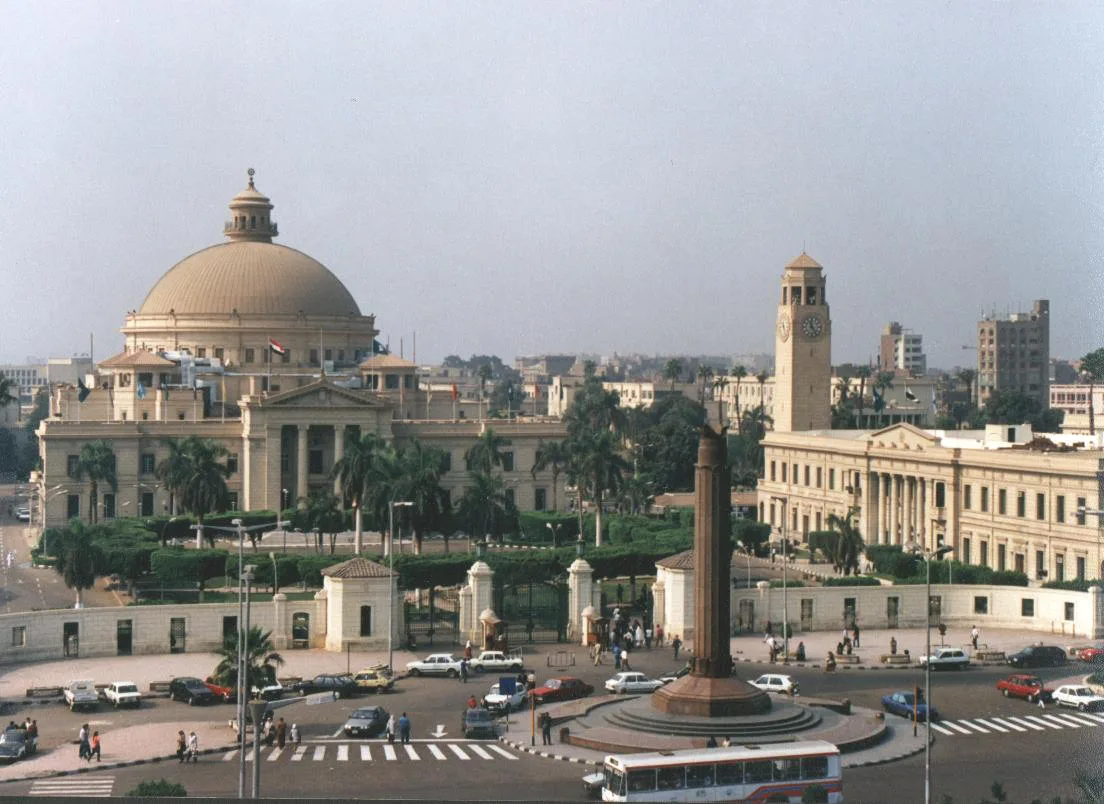
cairouniv

قررت وزارة التعليم العالي منذ بضعة أسابيع في مصر تطبيق نظام التوزيع الإقليمي على الكليات النوعية لأول مرة، أتى هذا القرار مع بداية العام الدراسي الجديد والذي يشهد افتتاح عدد من البدائل للكليات النوعية في أقاليم مصر خارج القاهرة ككليات الإعلام والاقتصاد والعلوم السياسية في الإسكندرية وبني سويف.

تزعم الوزارة أن هذه الكليات تساوي مثيلاتها الأقدم في جامعة القاهرة في جودة التعليم، قد يكون هذا الزعم حقيقي بالنظر إلى الحالة المتردية للتعليم الجامعي في مصر ككل، إلا أن دلالات هذا القرار مهمة لفهم كيف تنظر الدولة المصرية لأسس المواطنة والمساواة، وحق مواطنيها في حرية الحركة داخلها بشكل عام.

إلا أن هذا المقال لا يهتم تحديدًا بهذا القرار، وإنما بقرار تلى هذا القرار باستثناء أبناء الضباط والقضاة منه، أتى القرار تحت تبرير حفظ الأمن القومي بدون أي توضيح أكثر.

يحاول هذا المقال أن يلقي نظرة على نقاط تلاقي أجهزة القضاء والأمن مع المؤسسة الجامعية في مصر بشكل هيكلي، فبنظرة تاريخية سريعة نستطيع أن نرى تزامن تطور المؤسسات الأمنية والقضائية في مصر مع تطور المنظومة العلمية بشكل عام.

في مقال سابق نشره نون بوست عن تطور أساليب السيطرة والهيمنة عبر تصميم المدن؛ تم استخدام مفهوم الفيلسوف ميشيل فوكو عن السلطة كشبكة سائلة من الدماء السارية في جسد المجتمع، وفي المقال حالي سنستخدم هذا المفهوم مع بعض من الأفكار الأخرى لفوكو لفهم الدور الذي تلعبه الأجهزة والنظم السابق ذكرها وعلاقتها ببعضها البعض في الحياة اليومية للمجتمع.

إذا نظرنا للسلطة على كونها سائل يتغلغل في كافة الممارسات الاجتماعية وليس كفعل يمارس من قِبل شخص على شخص آخر؛ يمكن لنا أن نبدأ في فهم التعليم والبحث العلمي على أنهما عملية إعطاء كافة الممارسات والأشياء في حياة الأفراد معنى وعلاقة به وبغيره من الأشياء، المسؤول الرئيس عن عملية إضفاء المعنى هذه هو الباحث/ الأستاذ الجامعي، وبالتالي تصبح عملية التعليم هي بالأساس عملية مستمرة لضبط أداء الأفراد في المجتمع.

في إطار الفهم السابق للسلطة، تصبح قوات الأمن هي المحتكر الرسمي لممارسة العنف داخل المجتمع في حالة الحاجة إليه، وتصبح السلطة القضائية هي الجماعة المسؤولة عن ضبط أشكال السلطة المختلفة ومنها العنف عن طريق تفسير ووضع نصوص قانونية تشبه النصوص الدينية إلى حد كبير، ولكن نظرًا لطبيعة السلطة المتغلغلة واللامتناهية الأشكال؛ يصبح من اللازم تواجد أسطول من الخبراء في مختلف التخصصات لمساعدة الأمن والقضاء في فهم وتطويع الواقع الذي لا يمكن التعامل معه من خلال العنف، هؤلاء الخبراء مسؤولون عن ترتيب الواقع في مجموعة من التصنيفات لكل منها طبيعة وشذوذ، بهذا الشكل يمكن النظر إلى هيئات كالطب الشرعي ولجان الخبراء في المحاكم والتحقيقات بشكل جديد، تستطيع هذه اللجان وضع وتحديد الحقائق التي يمكن الحكم بناءً عليها.

بهذا الشكل تصبح أحداث حالة اشتهرت في مصر مؤخرًا وهي حالة الفتاة مريم صاحبة صفر الثانوية أكثر وضوحًا، استكتبت العديد من لجان الخبراء مريم لمعرفة إن كانت أوراق إجاباتها قد اُستبدلت، في هذه الحالة أصبح أداء مريم الدراسي أو اعتراضها غير هامين بالمرة، فقط لجنة خبراء الخطوط تستطيع الفصل في حقيقة هي خط مريم على ورقة ما، وبناءً على قرار هذه اللجنة يفصل القضاء هذه القضية مفسرًا النص القانوني على الوجه الذي يراه، وتنفذ قوات الأمن قرار القضاء بالقوة إن لزم الأمر (وإن كان الاحتياج إليها في هذا السياق معدومًا بطبيعة الحال).

تعتبر الجامعات في هذا السياق كمهد الخبرة والحقيقة الاجتماعية التي لا يمكن الاعتراض عليها، وهنا يجب لفت الانتباه إلى أهمية عملية البحث العلمي في الجامعة والتي توازي أهمية عملية التعليم، إذ تصنع الجامعة الحقيقة ومعايير الحقيقة عبر البحث العلمي؛ وتعمل على ترسيخها في الوعي عبر عملية التعليم، وإذ تستبشر الجامعات في بعض من طلابها علامات النبوغ واستبطان هذه الحقيقة غير المشكوك بها، تستخلصهم لنفسها ليستمروا في بناء صروح فوق صروح هذه الحقيقة لترسيخها في الواقع أكثر وأكثر.

أثبت هذا النظام من خلق الحقيقة نجاحًا في ترسيخ قواعد التطور والنمو الحداثي في العديد من البلدان إلى حد ما، إذ يسمح الاتفاق على مجموعة من الوقائع والأنماط على أنها الحقيقة في حد ذاتها في خلق نظام يدعي العدالة، وبوجود عدالة وحيادية تنطبق على قطاع عريض من سكان البلد يمكن الوصول إلى حالة من النمو المستمر بما يسمح بتحسن ظروف الحياة والتقدم.

إلا أن الواقع في الحالة المصرية يختلف عن هذا بعض الشيء، فعدد كبير من الأسس والمسلمات الحداثية الكامنة في هذا النظام للسلطة كالإيمان بالعدالة والمساواة والتقدم اللانهائي يغيب بشكل كبير من خطاب الأفراد في مصر.

فعلى صعيد الأداء، يمثل تقاطع مصالح قطاعات الأمن والقضاء مع مصالح قطاع صناع المعرفة/ الحقيقة (الأساتذة الجامعيين) في ظل منظومة منهجية من الفساد تحدي لقيام أي من هذه القطاعات بدوره، وبالتالي تصبح الحقيقة الواجب التعامل معها على كونها مطلقة لضمان استمرار عمل منظومة السلطة نسبية لاعتبارات كـ”الأمن القومي”.

ويتسبب غياب الإطلاق عن الحقيقة في هذه الحالة في غياب حتى العدالة المشكوك في أساسها المذكورة سابقًا، ويتسبب إذعان الجماعة العلمية لضغوط القطاعات الأمنية والقانونية المرتبطة مصالحها بها في نزع رداء العلمية والموضوعية المطلقة عنها، هذا الرداء الذي يخولها أن ترتب الحقائق الاجتماعية وتضبط إيقاع سريان السلطة في شرايين المجتمع، ويتسبب أيضًا في تقويض السلطة المعرفية لهذه الجماعة (أقصد بالجماعة العلمية كلية قطاع صناع المعرفة والهيئات التي ينتمون إليها كالجامعات) أمام أفرادها والذين على وشك الانتماء إليها والمجتمع بشكل عام.

يمكن تشبيه هذه الحالة من تقويض سلطة الذات بالمثل الأمريكي الشهير عن إطلاق المرء النار على قدميه، إذ لن يؤدي مثل هذا الأداء الأخرق إلا إلى إجهاض أي سبيل للوصول إلى حالة من الهيمنة الناعمة والتي يمكن لهذه القطاعات أن ترعى فيها مصالحها في هدوء، إذ ينطبق وصف في مقال سابق للمهندس إبراهيم إمام للنخب المصرية بالرداءة على هذه الحالة تمامًا، رداءة ناتجة عن جهل النخب المصرية بمصلحتها الشخصية قبل المصلحة العامة حتى، وناتجة أيضًا عن عدم احترام التخصص وإعلاء الجهل والاستسهال.

في هذا الإطار من الرداءة يصبح دفع أبناء الضباط والقضاة بالأساليب غير “القانونية” لمجرد أنهم ارتأوا في السلطة والنفوذ العلمي شكلًا أكثر أناقة مفهومًا تمامًا؛ عوضًا من السير في السبل المفتوحة أمامهم لاستكمال مسيرة آبائهم بشكل غير قانوني أيضًا.

ولكن كونه مفهومًا لا يعني أن نغفل أن استمرار هذا التناقض بين نظام التحاكم الذي تتبناه السلطة وأدائها لا يعني سوى ترسيخ عدم الثقة العام في وجود نظام للحكم من الأساس، وتوليد كراهية لنظام الحكم كافية للمناداة باستبداله بأنظمة أخرى أكثر عدالة بالرغم من أنه لم تسنح له فرصة تطبيقه من الأساس.

TAGGED: التعليم في مصر ، الجامعات المصرية ، السلطة القضائية
TAGGED: التعليم
Download this article as PDF
Share this Article
Facebook Twitter Whatsapp Whatsapp Telegram Email Copy Link
فريق التحرير
By فريق التحرير تقارير يعدها فريق تحرير نون بوست.
Follow:
Next Article نون بوست The Stigma of “ISIS”: A Heavy Legacy Haunting Women and Children of Former Members

Read More

  • U.S. Regime‑Change Policies: Why They Are Destined to Fail U.S. Regime‑Change Policies: Why They Are Destined to Fail
  • The Gulf’s Balancing Act: Iran, Israel, and Hidden Links
  • Iraq–Turkey Oil Export Treaty: Why Did Ankara Cancel It After 52 Years?
  • Syria’s Northeast on Edge: QSD Between Ankara and Damascus
  • Has Europe Changed Its Stance on Israel… or Just Its Language?
part of the design
NoonPost Weekly Newsletter
dark

An independent media platform founded in 2013, rooted in slow journalism, producing in-depth reports, analysis, and multimedia content to offer deeper perspectives on the news, led by a diverse young team from several Arab countries.

  • Politics
  • Society
  • Rights & Liberties
  • Opinions
  • History
  • Sports
  • Education
  • Technology
  • Economy
  • Media
  • Arts & Literature
  • Entrepreneurship
  • Travel
  • Cinema & Drama
  • Food
  • Health
  • Culture
  • Latest Reports
  • Files
  • Long Reads
  • Interviews
  • Podcast
  • Interactive
  • Encyclopedia
  • In Pictures
  • About Us
  • Our Writers
  • Write for Us
  • Editorial Policy
  • Advanced Search
Some rights reserved under a Creative Commons license

Removed from favorites

Undo
Go to mobile version