





In recent years, U.S. foreign policy has increasingly relied on “special envoys” to handle its most sensitive files so much so that their presence often overshadows the roles of the Secretary of State and the National Security Advisor in managing international crises.
This shift is particularly evident in the Middle East, Ukraine, and Africa, where Washington has granted these envoys broad leeway to act, take initiative, and craft approaches that transcend traditional diplomacy.
Lebanon was one of the first files tackled by the Trump administration, which appointed a special envoy to oversee both the Syrian and Lebanese tracks. The envoy’s deputy became deeply involved in Lebanon’s intricate political landscape, among the first American officials to arrive in Beirut after the ceasefire and the election of President Joseph Aoun.
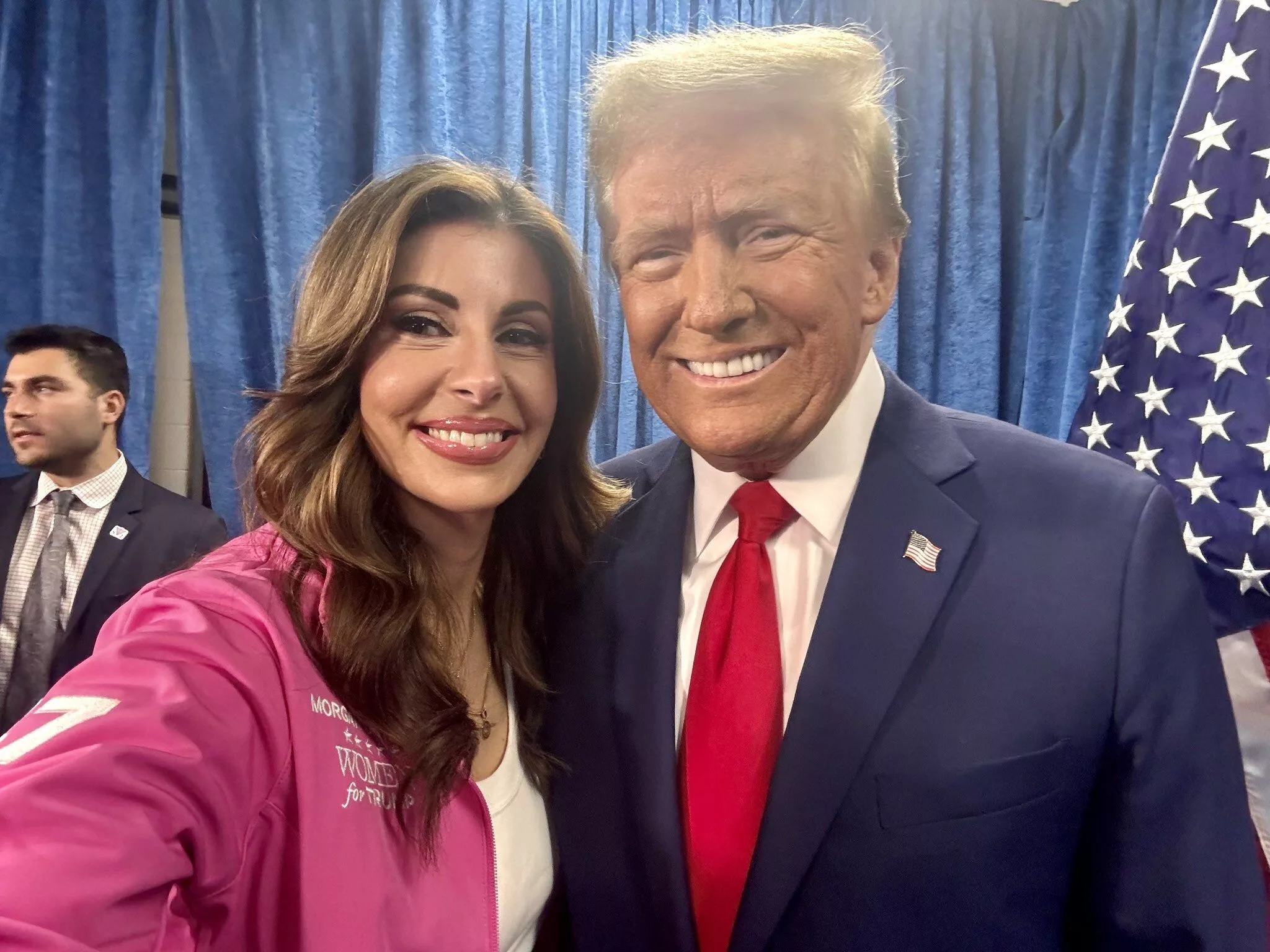
At the forefront of this engagement stands Morgan Ortagus, the Deputy Special Envoy to Lebanon aptly dubbed “the storm-bringer of political discourse.” Her presence in the region has been anything but quiet, consistently marked by provocative statements and controversial conduct that often trigger waves of criticism and place Lebanese officials in politically awkward positions.
This, in a country mired in chronic political fragility and deep divisions within a government that appears inclusive on the surface but is internally fractured, renders Ortagus’s visits far weightier in their political and media impact than in any concrete diplomatic gains they might deliver.
From 9/11 to Judaism
Born on July 10, 1982, in Auburndale, Florida, Morgan Deann Ortagus hails from a middle-class family that owned a small cleaning and restoration business. A tragic incident in her youth the loss of a relative in a drunk-driving accident left a deep mark on her personal trajectory and led her to join awareness campaigns against drunk driving, her first foray into public advocacy.
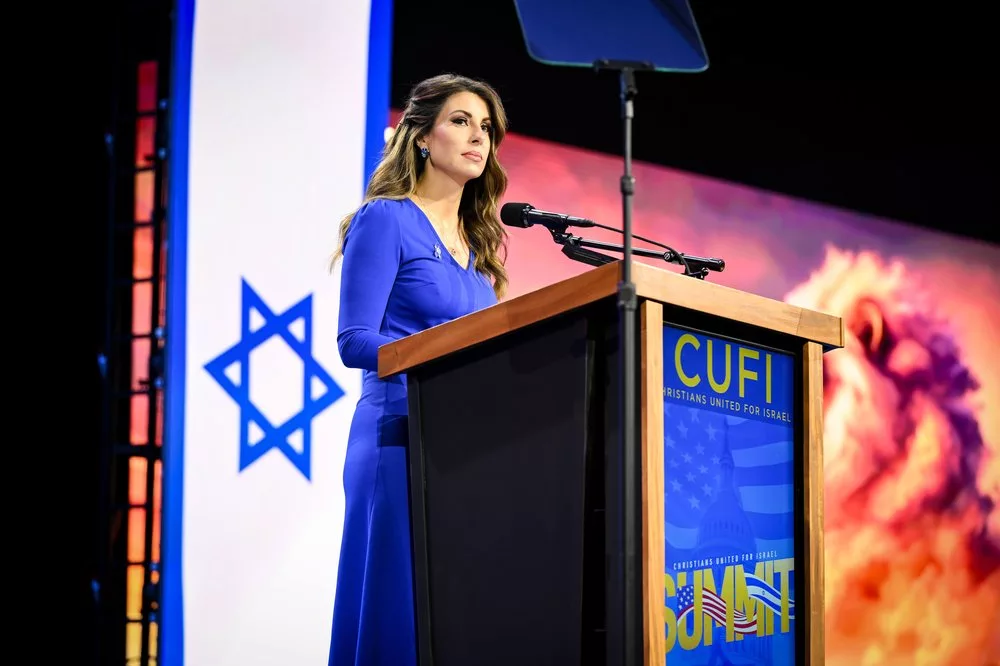
Ortagus began her academic journey studying music, but the events of September 11, 2001, profoundly reshaped her worldview. The aftermath of the attacks prompted her to switch majors to political science an early turning point in what would become a notable diplomatic career.
She earned a bachelor’s degree from Florida Southern College in 2005, then went on to obtain a dual master’s degree in government and business administration from Johns Hopkins University in 2013, through one of the institution’s most prestigious policy-related programs.
On a personal note, Ortagus married attorney Jonathan Weinberger in 2013. The couple had a daughter, Adina, in 2020. Their wedding drew media attention after it was officiated by the late U.S. Supreme Court Justice Ruth Bader Ginsburg, who was also her neighbor. This was Ortagus’s second marriage, her first having ended in divorce.
Another defining moment in her personal life was her conversion to Judaism an identity she embraced during her tenure in Baghdad. She has said that her daily interactions with diverse cultures and the diplomatic community inspired a deeper religious exploration that ultimately led her to Judaism.
From Intelligence to Public Diplomacy
Ortagus entered the political arena in 2004 by joining the re-election campaign of Republican Congressman Adam Putnam of Florida. Two years later, she served as spokesperson for prominent Republican figure K.T. McFarland, a role that helped solidify her presence in both political and media circles.
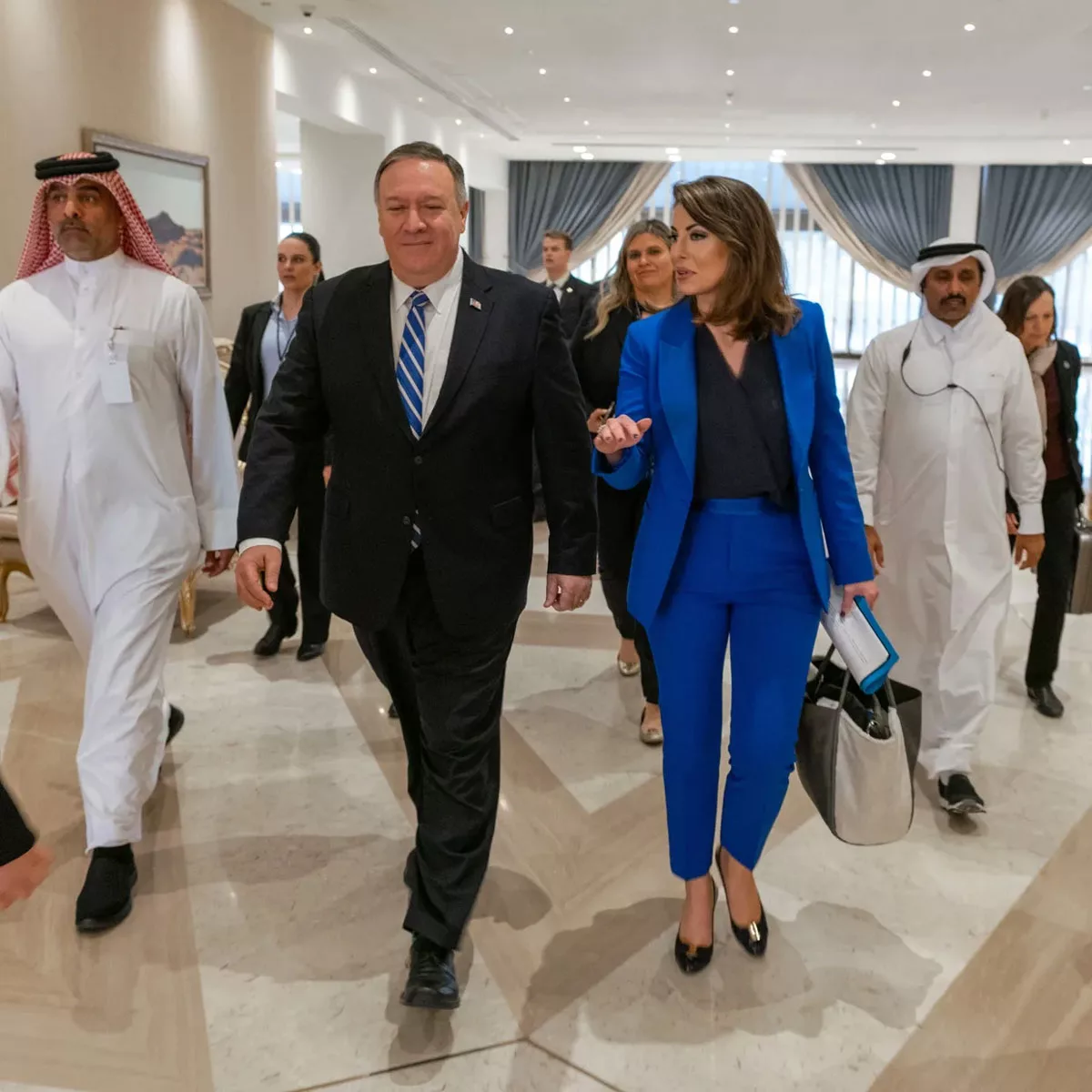
In 2007, she took her first steps into diplomacy as a public affairs officer at USAID, a position that saw her spend several months in Baghdad during a particularly volatile period. This experience deepened her interest in Middle Eastern affairs and Washington’s policy approach to the region.
In 2008, she joined the Treasury Department’s Office of Intelligence and Analysis as an intelligence analyst, focusing on financial networks tied to militant groups and sanctioned states. Two years later, she was posted to Saudi Arabia as Deputy U.S. Treasury Attaché, where she further developed her expertise in counter-terrorism financing and regional financial flows.
In late 2010, she transitioned to the private sector, first as Director of Global Relationships at Standard Chartered Bank, and later, in 2016, joining Ernst & Young’s Business Strategy unit.
With accumulated experience in diplomacy, intelligence, and finance, Ortagus co-founded Go Advisors, a geopolitical consulting firm that provided her a broader platform to influence U.S. policy circles.
From Trump Critic to Foreign Policy Crusader
Ortagus rose to prominence in U.S. media through frequent appearances on Fox News, particularly on influential programs like Special Report and Fox News Sunday, where she analyzed national security issues.
Notably, in 2016 she openly criticized Donald Trump during the Republican primaries, describing his foreign policy as “isolationist” and taking issue with his personal behavior positions that placed her at odds with the Trump camp.
However, her stance shifted after Trump entered the White House. In April 2019, Ortagus was appointed spokesperson for the State Department under Secretary Mike Pompeo, becoming one of the administration’s most visible defenders of its foreign policy.
In that role, she worked closely with the White House on the Abraham Accords, which normalized ties between Israel and several Arab states, and played a key role in reshaping Washington’s Middle East policy narrative.
She also forged a strong working relationship with Jared Kushner, Trump’s son-in-law and senior advisor, particularly on Middle East files a collaboration that continued even after her official tenure ended.
Ortagus accompanied Pompeo on multiple diplomatic tours and coordinated high-level media campaigns addressing major foreign policy issues. She also helped push the designation of China’s treatment of Uyghur Muslims as genocide.
Outside of government, she held influential positions in think tanks and policy institutions. She founded POLARIS National Security, co-chaired the Women’s Democracy Network at the International Republican Institute, and served on the advisory board of the Hudson Institute’s China Center.
Ortagus was also active in academic and research institutions like Johns Hopkins University, the Center for a New American Security, and Concordia. As a Navy Reserve intelligence officer, she built a profile as a rising Republican voice with both security credentials and media savvy.
In 2022, she launched a bid to represent Tennessee’s 5th congressional district, with backing from Trump. However, she was disqualified by the state GOP, though her campaign stood out for its strong focus on national security and foreign policy debates.
Throughout her tenure at the State Department, Ortagus adopted a confrontational tone toward both Iran and China. She accused the Chinese Communist Party of scapegoating the U.S. for the COVID-19 pandemic and advocated for tougher sanctions on Iran while reinforcing U.S.-Israeli ties in international forums.
In doing so, she transitioned from being a Trump critic to one of the most forceful champions of his foreign policy agenda bridging diplomacy, media, and national security to articulate a distinctly hardline Republican approach to the Middle East, China, and Iran.
A Storm From the Start
Following Donald Trump’s victory in the 2024 U.S. presidential election, the White House announced on January 3, 2025, the appointment of Morgan Ortagus as Deputy Special Presidential Envoy for Middle East Peace. According to Axios, Trump expressed his full Republican support for her, adding that he hoped she had “learned her lesson” from her earlier critiques of his foreign policy.
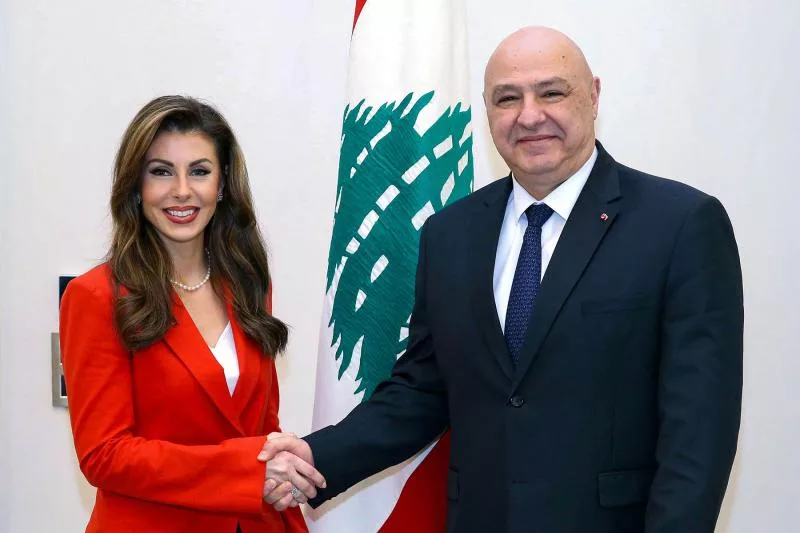
From her first visit to Beirut, Ortagus made clear her mission would not follow the usual diplomatic script. Her arrival ignited political and media uproar after she was seen celebrating what she called Israel’s success in its latest assault on Lebanon while wearing a ring with the Star of David, a gesture widely interpreted as provocative.
At the Presidential Palace in Baabda, she told President Joseph Aoun that the United States supports Lebanon. Yet in the same breath, she bluntly praised the Israeli attacks, calling them a victory that ended “Hezbollah’s terrorism.” She went so far as to declare she had never seen “such excitement” in the U.S. about Lebanon’s future attributing it “largely” to “Hezbollah’s defeat by Israel.”
In a press conference, she didn’t mince words: “I’m absolutely not afraid of Hezbollah. They were defeated militarily. We’ve drawn clear red lines. We will not allow them to intimidate the Lebanese people or be part of the government. The era of Hezbollah terrorism is over. It’s done.”
Her confrontational rhetoric and the symbolism of the ring worn during her handshake with Lebanon’s president sparked outrage. Hezbollah supporters protested at Beirut’s Rafik Hariri International Airport, decrying what they saw as a deliberate provocation.
The controversy didn’t end there. In early December, Israel’s Channel 14, through political correspondent Tamir Morag, reported that Ortagus, during a visit to Israel ahead of the funeral of Hezbollah Secretary-General Hassan Nasrallah, urged Israeli officials to bomb the ceremony at Beirut’s Sports City Stadium, claiming it could eliminate key Hezbollah leaders. Although Israeli fighter jets flew over the capital that day, the military ultimately decided not to proceed.
The report aligned with comments by outgoing IDF Chief of Staff Herzi Halevi, who told students and citizens in a public forum that the army had been “hesitant” about the strike, adding with a smile, “You get the point… What didn’t we decide? The strike.”
All this underscores that Ortagus is not merely a deputy envoy she is a direct extension of Trump’s second-term foreign policy ethos: one that disregards traditional diplomacy in favor of a more aggressive posture, particularly in the Middle East.
Her approach doesn’t reflect Trump’s famed “isolationism,” but rather an assertive, interventionist style aimed at strengthening Israeli dominance, granting Tel Aviv greater freedom of action, and framing Middle East conflicts through a security-first, zero-sum lens leaving no room for neutrality or nuance.