NoonPost NoonPost

NoonPost

  • Home
  • Politics
  • Economy
  • Society
  • Culture
  • Files
  • Long Reads
  • Podcast
AR
Notification Show More
نون بوست
“There Are Nights I Can’t Close My Eyes”: How Gazans Are Living in Homes on the Brink of Collapse
نون بوست
From al-Jolani to Ahmad al-Shara: The Evolution of Syria’s New Leader
نون بوست
When Political Islam Receded in Egypt: Who Filled the Void?
نون بوست
An Extension of Genocide: Gaza’s Detainees Speak Out
نون بوست
A Tightrope Between Survival and Sovereignty: The Syrian Government Faces Normalization Pressures
نون بوست
American Aircraft Carriers: Has the Era of “100,000 Tons of Diplomacy” Ended?
نون بوست
U.S. Regime‑Change Policies: Why They Are Destined to Fail
نون بوست
Transformations of Israeli Judaism: Between the Victim Complex and the Colonizer’s Doctrine
نون بوست
The Gulf’s Balancing Act: Iran, Israel, and Hidden Links
نون بوست
Iraq–Turkey Oil Export Treaty: Why Did Ankara Cancel It After 52 Years?
نون بوست
Syria’s Northeast on Edge: QSD Between Ankara and Damascus
نون بوست
Has Europe Changed Its Stance on Israel… or Just Its Language?
NoonPost NoonPost
AR
Notification Show More
نون بوست
“There Are Nights I Can’t Close My Eyes”: How Gazans Are Living in Homes on the Brink of Collapse
نون بوست
From al-Jolani to Ahmad al-Shara: The Evolution of Syria’s New Leader
نون بوست
When Political Islam Receded in Egypt: Who Filled the Void?
نون بوست
An Extension of Genocide: Gaza’s Detainees Speak Out
نون بوست
A Tightrope Between Survival and Sovereignty: The Syrian Government Faces Normalization Pressures
نون بوست
American Aircraft Carriers: Has the Era of “100,000 Tons of Diplomacy” Ended?
نون بوست
U.S. Regime‑Change Policies: Why They Are Destined to Fail
نون بوست
Transformations of Israeli Judaism: Between the Victim Complex and the Colonizer’s Doctrine
نون بوست
The Gulf’s Balancing Act: Iran, Israel, and Hidden Links
نون بوست
Iraq–Turkey Oil Export Treaty: Why Did Ankara Cancel It After 52 Years?
نون بوست
Syria’s Northeast on Edge: QSD Between Ankara and Damascus
نون بوست
Has Europe Changed Its Stance on Israel… or Just Its Language?
Follow US

In a Region on Fire, the Doha Forum Charts a Path Toward a More Humane World Order

عماد عنان
Emad Anan Published 26 March ,2026
Share
نون بوست
نون بوست

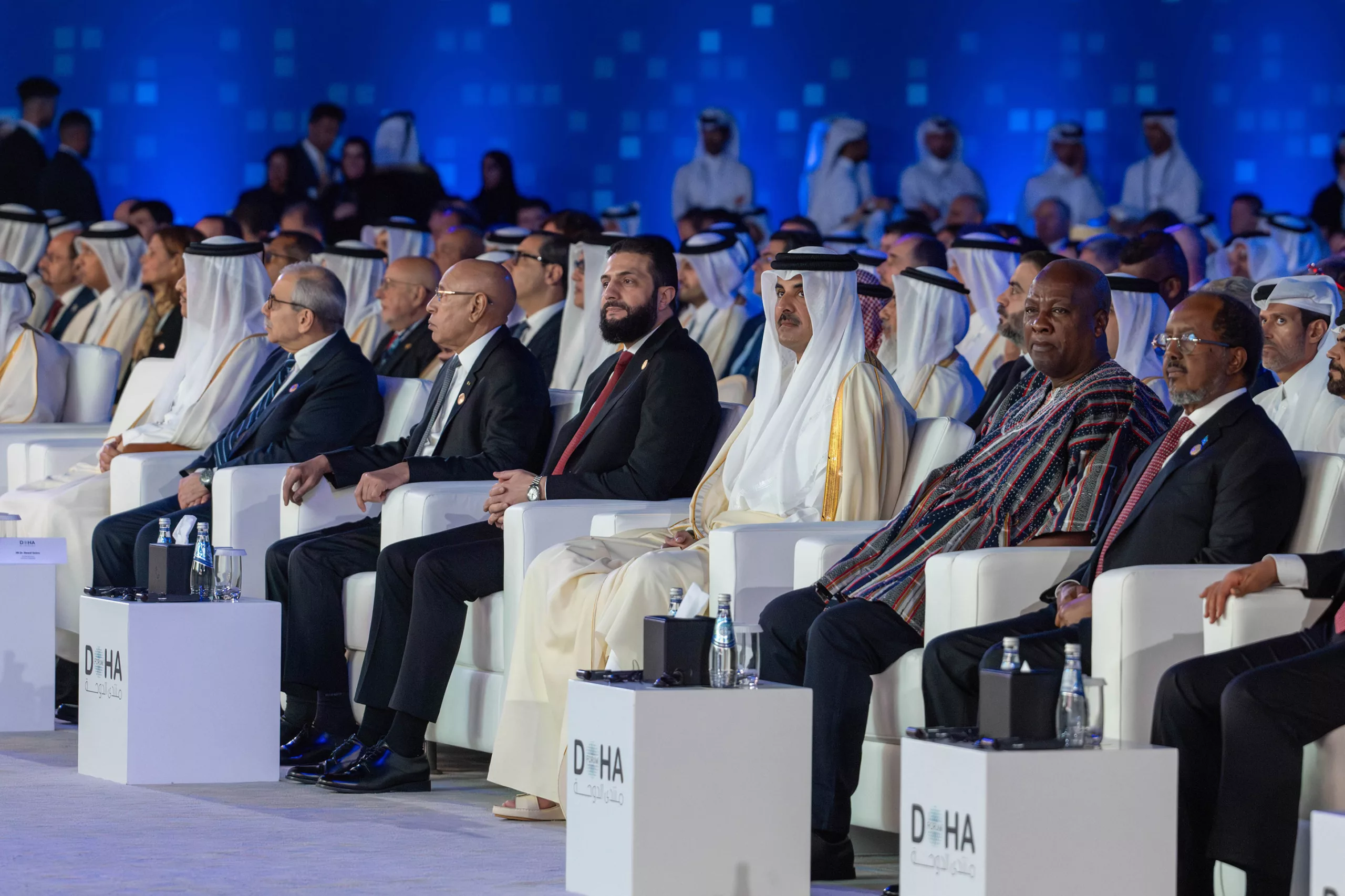
Amid fast-moving geopolitical shifts that are eroding the foundations of justice and human rights where power often prevails over peace and stability Qatar hosted the 23rd edition of the Doha Forum under the theme: “Building Shared Futures: Transitioning from Promises to Reality.”

Over the course of Saturday and Sunday, December 6–7, more than 6,000 participants and 471 speakers from around 160 countries convened in Doha. The gathering brought together heads of state, top officials, and global influencers from the worlds of politics, economics, and technology.

Founded by Sheikh Hamad bin Khalifa Al Thani in 2000, the Doha Forum has evolved into a leading international platform for open dialogue. It raises profound questions about the future of the global order and addresses the key threats to international peace and security championing diplomacy and dialogue over war and confrontation.

This year’s edition carried urgent political and moral messages, chief among them a call to transform the principle of “justice in action” from rhetoric into tangible outcomes. The forum underscored the need to link conflict resolution with efforts to bridge the growing North–South divide and promote inclusive development that guarantees equal opportunity in a world where no one is left behind.

Timing Is Everything

The Doha Forum convened at a particularly volatile moment in the Middle East, against the backdrop of profound geopolitical upheaval. At the heart of these tensions lies the deepening humanitarian catastrophe in Gaza, alongside stalled efforts to revive political negotiations based on the Sharm El Sheikh agreement. The escalation of Israeli violence, paired with the absence of a credible path to sustainable solutions, continues to fuel the crisis.

Meanwhile, Syria remains engulfed in humanitarian and security challenges. Repeated assaults and a fragile political landscape have exacerbated civilian suffering and prolonged the country’s instability coinciding with the first anniversary of the fall of the Assad regime.

These turbulent conditions have made regional and international cooperation an urgent priority. There is a pressing need to de-escalate tensions, re-establish peace, and center justice and human development as essential pathways to safeguard the region’s future. These are the very principles that forum participants sought to amplify framing justice as the gateway to lasting, comprehensive stability.

In Search of Missing Justice

At the core of this year’s forum was its theme: “Building Shared Futures: Transitioning from Promises to Reality” a mission statement that encapsulates the forum’s determination to move justice beyond lofty ideals and into the realm of actionable policy aimed at peacebuilding, human rights protection, and equitable development.

In his opening speech, Qatar’s Prime Minister and Minister of Foreign Affairs, Sheikh Mohammed bin Abdulrahman Al Thani, noted that justice is increasingly absent from the framework of international law. In today’s world, he argued, interests frequently trump principles, and the rule of law is being displaced by brute force.

He emphasized that the proliferation of global crises is not due to a lack of resources or expertise, but rather to a deficit in accountability and the continuation of unresolved conflicts. This, he warned, jeopardizes international peace and security.

The accumulation of tensions has shown that merely managing crises with minimal effort or relying on fragile, short-term agreements that fail to address root causes is no longer viable. Left unaddressed, injustices metastasize, growing more complex and extending beyond their original geographies.

Only fair and just solutions, he stressed, can deliver sustainable peace, end cycles of violence and division, and transform justice from a collective aspiration into a universal right.

The Danger of Impunity

The forum issued a clear warning: the absence of accountability is one of the most dangerous dysfunctions in today’s international system. Nowhere is this more painfully evident than in the Arab world, where the Palestinian people endure flagrant violations of international law, and Sudan remains mired in brutal violence, massacres, and humanitarian catastrophe.

These grim realities highlight that justice is not a political luxury it is an existential requirement for regional stability and the protection of societies from collapse.

The forum cautioned against the continued handling of crises through power-based logic and the practice of shielding aggressors from consequences. Doing so undermines the legitimacy of the international system, turning it into a collection of broken promises with no real enforcement mechanism.

This failure strips the system of its ability to protect the vulnerable and halt the bloodshed.

Perhaps the forum’s most powerful message was that genuine peace cannot be imposed from the top down or manufactured through symbolic gestures. Instead, it requires global, collective efforts rooted in human dignity and rights. Without inclusive justice that vindicates victims and holds perpetrators accountable, peace will remain fragile and humanity will remain trapped in cycles of pain and conflict.

Gaza: The Heart of the Conversation

Gaza took center stage at the Doha Forum. It dominated the discussions, with experts and global leaders addressing the delicate moment surrounding the ceasefire and the urgent need for genuine international engagement.

Qatar’s Foreign Minister stressed that a ceasefire is meaningless without a full Israeli withdrawal from Gaza and the restoration of stability. He underscored the role of mediators in keeping dialogue alive and pushing for just outcomes that alleviate civilian suffering.

Discussions also addressed the second phase of the truce agreement, which is expected to include a comprehensive Israeli withdrawal, the formation of a transitional authority in Gaza, and the deployment of international forces to stabilize the situation.

Turkish Foreign Minister Hakan Fidan warned that failure to implement this next phase would be a devastating indictment of the international community. Security and freedom, he argued, must be guaranteed for all in the region if any lasting settlement is to succeed.

Beyond Gaza, the forum reiterated the need to halt settler violence in the West Bank and begin reconstruction efforts in the Strip. European and international voices called for renewed commitment to the two-state solution as the only realistic path to lasting peace.

UN officials added that the continued suffering of Palestinians exposes the failings of the global order. They called for an end to arms transfers to Israel and the enforcement of fair accountability mechanisms to restore the primacy of human rights.

Syria’s New Chapter

In previous editions of the Doha Forum, the Syrian issue was centered on the people’s resistance to repression and the call to prioritize the national interest over authoritarian rule. Today, the narrative has shifted significantly. Syria is undergoing a new political chapter following the fall of the previous regime, with urgent demands to address the heavy legacy of war and humanitarian trauma.

Syrian President Ahmad Al-Sharaa shared his national vision during a panel discussion, emphasizing that the country is on the right path toward rebuilding the state and regaining its regional standing.

He called for the lifting of sanctions, stabilization of internal affairs, and protection of Syria’s sovereignty from ongoing Israeli violations calling on the international community to support Syria’s right to self-determination and territorial integrity.

Marking a year since the regime’s collapse, Al-Sharaa stressed the importance of inclusive governance and responsible reform. He pledged democratic progress with upcoming elections, economic revitalization, and social stability. His central message: Syrian unity is essential to safeguarding the country’s future, and justice and accountability are the keys to healing national wounds and overcoming divisions.

Empowering the Global South

Forum participants affirmed that the future of development in the Global South must begin with investing in people. Empowering youth, supporting cultural and artistic innovation, and advancing health and education were identified as foundational pillars for building resilient, opportunity-rich societies.

Innovation and advanced technologies featured prominently, especially in discussions on addressing development gaps. Artificial intelligence, speakers noted, could revolutionize education and healthcare delivery and help the Global South overcome infrastructure challenges and narrow the digital divide.

Speakers called for equitable international partnerships involving governments, private sectors, and humanitarian organizations. The aim: to leverage southern resources domestically, promote local manufacturing, and create knowledge-based, creative economies.

Investing in the Global South, they emphasized, is not merely an economic strategy it is a moral imperative that could uplift millions and foster a more balanced, humane world.

Justice Is the Bedrock of Peace

Ultimately, justice remains the foundation of lasting peace. Stability cannot be built on empty promises or geopolitical double standards. The ongoing neglect of the suffering in Palestine, Syria, and Sudan has exposed the hypocrisy of certain Western powers that prioritize their strategic interests over human rights.

That is why forums like this are so vital. They serve as engines of moral and intellectual clarity pushing justice to the forefront of global debate and demanding accountability. Only when international laws truly reflect human dignity and rights, rather than remaining slogans on paper, can we speak of a more just and sustainable world order.

Download this article as PDF
Share this Article
Facebook Twitter Whatsapp Whatsapp Telegram Email Copy Link
عماد عنان
By عماد عنان كاتب صحفي وباحث في الإعلام الدولي
Follow:
Previous Article نون بوست Morgan Ortagus: The Combative Face of U.S. Policy in Lebanon
Next Article نون بوست Illness as Punishment: How Egyptian Prisons Became Theaters of Silent Death

Read More

  • U.S. Regime‑Change Policies: Why They Are Destined to Fail U.S. Regime‑Change Policies: Why They Are Destined to Fail
  • The Gulf’s Balancing Act: Iran, Israel, and Hidden Links
  • Iraq–Turkey Oil Export Treaty: Why Did Ankara Cancel It After 52 Years?
  • Syria’s Northeast on Edge: QSD Between Ankara and Damascus
  • Has Europe Changed Its Stance on Israel… or Just Its Language?
part of the design
NoonPost Weekly Newsletter

You May Also Like

U.S. Regime‑Change Policies: Why They Are Destined to Fail

U.S. Regime‑Change Policies: Why They Are Destined to Fail

إسراء سيد Esraa sayed 8 April ,2026
The Gulf’s Balancing Act: Iran, Israel, and Hidden Links

The Gulf’s Balancing Act: Iran, Israel, and Hidden Links

فريق التحرير Noon Post 8 April ,2026
Iraq–Turkey Oil Export Treaty: Why Did Ankara Cancel It After 52 Years?

Iraq–Turkey Oil Export Treaty: Why Did Ankara Cancel It After 52 Years?

فريق التحرير Noon Post 8 April ,2026

هل تلتقط دارفور أنفاسها من الحرب لستة أشهر قادمة؟

فريق التحرير
Noon Post Published 15 September ,2015
Share
000_par710534

استمرت اجتماعات باريس لأيام، تلك الاجتماعات التي شاركت فيها الجبهة الثورية السودانية المعارضة، والتي تضم الحركة الشعبية قطاع الشمال، والحركات الدارفورية المعارضة المسلحة مع عدد من المبعوثين الدوليين من الولايات المتحدة وبريطانيا وفرنسا والاتحاد الأوروبي والاتحاد الأفريقي، وقد انتهت هذه الاجتماعات بنتائج شبه إيجابية تحمل خارطة طريق لوقف القتال بين الحكومة السودانية والمعارضة المسلحة مدة ستة أشهر لأغراض إنسانية.

هذا بعدما وافقت الجبهة الثورية التي تقاتل الحكومة السودانية على ثلاث جبهات على هذا المقترح الذي يشكل وقف العدائيات بين الجانبين لمدة تصل إلى ستة أشهر، كما أكدت الجبهة قبولها بمبادرة الحوار الوطني شريطة عقد المؤتمر التحضيري بالعاصمة العاصمة الإثيوبية أديس أبابا، مع توفير حزمة من الضمانات قبل الدخول في الحوار.

وقد وقع مالك عقار رئيس الحركة الشعبية لتحرير السودان الشمالي على هذه الخارطة المستقبلية، والذي صرح أن إنفاذها يجب أن يسقبه تنفيذ عدة متطلبات، فيما أشار إلى أن الغرض الرئيسي من وقف القتال هو إيصال المساعدات الإنسانية، وحماية المدنيين، وتهيئة الأجواء أمام الحوار الوطني.

يذكر أن الحكومة السودانية تقاتل فصائل الجبهة الثورية في دارفور منذ العام 2003، كما يخوض الجيش السوداني معارك طاحنة مع الحركة الشعبية لتحرير السودان ـ شمال، في كل من ولايات النيل الأزرق وجنوب كرفان منذ العام 2011، في حين لم تفلح نحو ثمان جولات تفاوضية في وضع حد لتلك الحرب.

نصت خارطة وقف إطلاق النار التي خلصت إليها الاجتماعات المنعقدة في باريس منذ الأسبوع الماضي، على دخول فوري لجميع الأطراف في وقف أي عمليات قتالية في مناطق الحرب عقب التوقيع على هذا الاتفاق المقترح، على أن تكون الجبهة الثورية بما فيها جميع الحركات المنضوية تحت لوائها طرف أول في هذا الاتفاق، والحكومة السودانية طرف ثاني بكل تشكيلاتها العسكرية النظامية وغير النظامية كالقوات المسلحة والمليشيات المرتبطة بها من جماعات الجنجويد وقوات الدعم السريع والاحتياطي المركزي وحرس الحدود وقوات الشرطة والدفاع الشعبي.

هذا ويلتزم الطرفان بالسيطرة على كافة قواتهم من أجل الأغراض الإنسانية في حيز النطاق الجغرافي الدائر به القتال في جنوب كردفان والنيل الأزرق ودارفور، كما يضمن الطرفان تهيئة الظروف المناسبة لوصول المساعدات للسكان بدون أي عوائق وتوفير حرية الحركة والمرور لوكالات الإغاثة الإنسانية للوصول إلى المتضررين في مناطق الصراع وفقًا للقواعد الدولية.

كما سيتم إنشاء لجنة مشتركة لمراقبة تنفيذ هذا الاتفاق بكافة بنوده، تتكون من أطراف النزاع بجانب ممثلين من الاتحاد الأفريقي، ومنظمات الأمم المتحدة، وكذلك البعثة الدولية في دارفور “يوناميد” واليونيسف في أبيي، وقد أوكل لهذه اللجنة المشتركة مهمة رصد تنفيذ الاتفاق ومدى الالتزام به، بما في ذلك الإشراف على عملية إيصال المساعدات الإنسانية، والتحقق من امتثال كل طرف للاتفاقية وعدم القيام بأعمال من شأنها أن تخرق هذه الهدنة.

فتح هذا الاتفاق الطريق أمام الدخول في عملية سلام شاملة بين الحكومة السودانية والجبهة الثورية تحت مظلة أممية، تزامنًا مع عرض الرئيس السوداني عمر البشير خلال شهر أغسطس الماضي، لوقف إطلاق النار، وذلك لضمان تهيئة الأجواء أمام مبادرة الحوار الوطني التي تتبناها حكومة الخرطوم منذ شهر يناير الماضي.

وعلى الجانب الآخر أبدت الجبهة الثورية مرونة واستعدادًا للدخول في عملية السلام هذه بإشراف مجلس الأمن والاتحاد الأفريقي، ولكنها في نفس الوقت ساقت عدة مطالب أولية للمضي في هذا الاتجاه للمشاركة في الحوار الوطني الذي دعا إليه البشير، في مقدمتها عقد مؤتمر تحضيري وفقًا لقرارات مجلس السلم الأفريقي لوضع ترتيبات شاملة لانطلاقة الحوار والاتفاق على إجراءاته، وذلك لضمان الجدية من جانب الحكومة.

يُفسر هذا على أنه تغير في مواقف الجبهة لتصبح أكثر مرونة من ذي قبل، إذ كان موقف الحركة والجبهة مغايرًا لهذا قبل شهرين حينما ذهب مالك عقار إلى أديس أبابا ونفى ذهابه بغرض التفاوض مع الحكومة السودانية، وأكد أن وفد الحركة  ذهب إلى هناك  بدعوة من مندوب الامم المتحدة لبحث المبادرة الثلاثية لتوصيل الطعام  لجبال النوبة والنيل الازرق، وهو ما تم.

وقد أكدت الحركة مرارًا أنها لن تقبل بالحلول الجزئية من جانب الحكومة السودانية، حيث تتمسك بحل مشكلة الحركة والسودان كليًا من خلال إجراءات عاجلة لإظهار حسن النية من الحكومة في مقدمتها الرجوع لاتفاق أديس أبابا الإطاري الذي وقعته الحكومة السودانية وألغاه البشير بعد ذلك، وإجراءات عملية أخرى كرفع الحظر عن الحركة الشعبية ، وإطلاق سراح أعضاء الحركة بما فيهم المحكوم عليهم بالإعدام.

وبالفعل أحرزت الاجتماعات الأخيرة بعض من التقدم في هذا الجانب بعدما تحدثت خارطة الطريق عن تهيئة المناخ لإجراء الحوار الوطني برفع القيود عن الحريات، وإطلاق سراح المحكوم عليهم من المعتقلين السياسيين، وإلغاء كافة القوانين المخالفة للدستور، كذلك طالبت الاجتماعات الحكومة السودانية بالسماح للجبهة الثورية بممارسة أنشطتها في السودان بشكل طبيعي فور الدخول في حيز تنفيذ الاتفاق.

لا أحد يعلم ما هو مدى التزام الطرفين بهذه الخارطة التي ربما لا تخرج عن كونها هدنة إنسانية لا سياسية، لأن تنفيذ هذه الشروط من الجانبين من شأنه أن يُنهي هذا الصراع بشكل كلي، لكن مصير الاتفاقات السابقة في هذا الصدد لا يحمل من المبشرات الكثير بشأن إنفاذه كليًا، ولكن البعض يرى أن الضغط الدولي لإنهاء الأزمة الدافورية قد يكون أحد المحفزات لإتمام هذا الاتفاق.

وعلى أي حال فإن هذا الاتفاق يحمل بارقة أمل لسكان دارفور في تخفيف وطأة الحرب عنهم ولو إلى حين، فمنذ بداية الصراع في دارفور منذ 11 سنة والأوضاع الإنسانية للسكان متدهورة بسبب القتال الدائر بين القوات الحكومية والميليشيات الموالية لها وجماعات المعارضة المسلحة، وهو ما خلق موجة نزوح واسعة النطاق، حتى أنه منذ عامين أتت تقديرات الأمم المتحدة تتحدث عن تسبب أعمال العنف بأنحاء دارفور في نزوح أكثر من نصف مليون  شخص، وبالتأكيد مثل هذه الهدنة ستعطي فرصة لإنقاذ الأوضاع الإنسانية المزرية في الأقاليم التي تشهد حربًا لا تتوقف.

TAGGED: أزمة دارفور ، الجبهة الثورية ، الحركة الشعبية لتحرير السودان ، الحكومة السودانية ، المعارضة المسلحة في السودان
TAGGED: الشأن السوداني
Download this article as PDF
Share this Article
Facebook Twitter Whatsapp Whatsapp Telegram Email Copy Link
فريق التحرير
By فريق التحرير تقارير يعدها فريق تحرير نون بوست.
Follow:
Next Article نون بوست The Stigma of “ISIS”: A Heavy Legacy Haunting Women and Children of Former Members

Read More

  • U.S. Regime‑Change Policies: Why They Are Destined to Fail U.S. Regime‑Change Policies: Why They Are Destined to Fail
  • The Gulf’s Balancing Act: Iran, Israel, and Hidden Links
  • Iraq–Turkey Oil Export Treaty: Why Did Ankara Cancel It After 52 Years?
  • Syria’s Northeast on Edge: QSD Between Ankara and Damascus
  • Has Europe Changed Its Stance on Israel… or Just Its Language?
part of the design
NoonPost Weekly Newsletter
dark

An independent media platform founded in 2013, rooted in slow journalism, producing in-depth reports, analysis, and multimedia content to offer deeper perspectives on the news, led by a diverse young team from several Arab countries.

  • Politics
  • Society
  • Rights & Liberties
  • Opinions
  • History
  • Sports
  • Education
  • Technology
  • Economy
  • Media
  • Arts & Literature
  • Entrepreneurship
  • Travel
  • Cinema & Drama
  • Food
  • Health
  • Culture
  • Latest Reports
  • Files
  • Long Reads
  • Interviews
  • Podcast
  • Interactive
  • Encyclopedia
  • In Pictures
  • About Us
  • Our Writers
  • Write for Us
  • Editorial Policy
  • Advanced Search
Some rights reserved under a Creative Commons license

Removed from favorites

Undo
Go to mobile version