
Morocco represents a unique civilizational space shaped by the convergence of diverse cultural tributaries that have contributed to the formation of a national identity over millennia. Its strategic geographical location bridging Africa and Europe at the gateway to the Mediterranean has made it a crossroads of civilizational exchange.
Here, Amazigh, Arab, and Islamic components have fused, alongside Hassani, Andalusian-Morisco, Jewish, and sub-Saharan African currents.
This rich diversity has forged a cohesive Moroccan identity grounded in the principle of unity within diversity. The Kingdom’s Constitution explicitly affirms this in its preamble: “The Kingdom of Morocco is a sovereign Muslim state, committed to its national and territorial unity, and to preserving the cohesion of its unified national identity, forged through the blending of its Arab-Islamic, Amazigh, and Saharan-Hassani components, enriched by its African, Andalusian, Hebrew, and Mediterranean tributaries.”
Historical Depth and Indigenous Roots
Morocco’s cultural diversity is the outcome of centuries of interaction between the Amazigh and various other communities. The renowned geographer al-Hasan al-Wazzan, known in Europe as Leo Africanus, described the vast extent of the Amazigh presence in his seminal work Description of Africa.
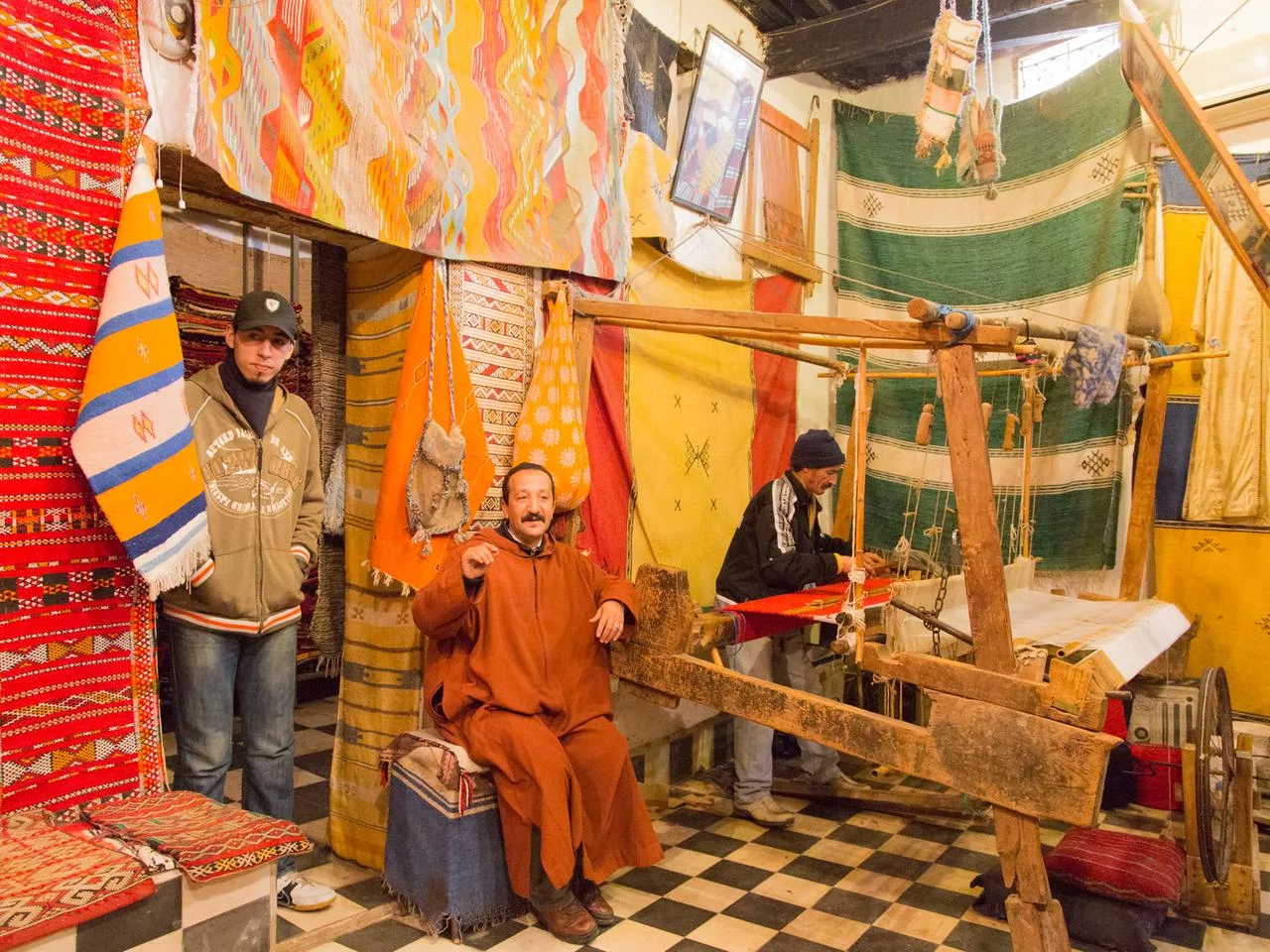
He connected the term “Amazigh” with concepts of freedom and nobility, noting that Amazigh communities spanned from Egypt’s Siwa Oasis to the Atlantic Ocean, stretching north to the Mediterranean and south to the Sahara.
Over thousands of years, Morocco became a nexus of diverse cultures, beliefs, and languages from across the Mediterranean and the East. It was influenced by Phoenician, Carthaginian, and Roman civilizations, followed by the rise of Judaism and Christianity, before undergoing a profound transformation with the arrival of Islam and the spread of Arabic.
In later eras, European powers namely the French, Spanish, and Portuguese left further imprints on Moroccan society. While many of their cultural systems faded, traces remain embedded in Moroccan memory seen in language, social customs, and archaeological remnants that continue to tell the story of this deep intercultural entanglement.
Amazigh as a Cultural Pillar
This intricate fusion of cultures elevates Amazigh beyond a language or local heritage. According to Dr. Ahmed Boukous, Dean of the Royal Institute of Amazigh Culture, Amazigh is a foundational pillar of Morocco’s cultural architecture.
Boukous asserts that the interweaving of Amazigh with other cultural components has reached a point where the boundaries between them are nearly indistinguishable thanks to centuries of coexistence.
He highlights that this intermingling is most visible in oral traditions proverbs, tales, legends, and chants as well as in written literature across genres. Far from being antagonistic, the relationship between Amazigh and Arabic has been one of positive accumulation, enriching and expanding Morocco’s cultural landscape.
Boukous points to the deep social and religious ties between Arabic and Amazigh speakers, rooted in shared values and a unified Islamic identity. This diversity, he argues, is a source of national strength.
Within this rich tapestry, Amazigh stands as the first building block of Morocco’s civilizational memory, shaping the Moroccan identity through its historical depth and continued relevance today.
Islamic Influence
While identity emerges from the long interplay of multiple forces, many scholars regard Islam as the most enduring and influential factor in shaping Moroccan identity. The arrival of Arabs in the 7th century marked a civilizational turning point, as Arab and Amazigh populations merged to form a new society unified by language and Islam.
Religion became both a cultural and political unifier, reflected in legal codes, literature, architecture, and the flourishing of traditional religious schools, Sufi lodges, Arabic calligraphy, and the distinct Moroccan mosque design.
This Islamic presence, however, did not eclipse other cultural streams. Instead, it provided a shared space for coexistence, resulting in a rare and balanced cultural model within the region.
The Hassani Heritage
Hassani culture also constitutes a key part of Moroccan identity, rooted in oral traditions and desert lifestyles. From this heritage emerges the culture of the “Bidan” Arabic-speaking desert dwellers of southern Morocco and Mauritania.
This cultural identity encompasses Arab, Amazigh, and sub-Saharan African groups who developed a common language and similar ways of life in a shared desert environment. Over time, Hassani culture became a cultural bridge between the two countries, united by a common linguistic, social, and emotional heritage tied to the Sahara.
Today, the Hassani component plays a symbolic and political role in contemporary Morocco. Its dialect, rich in Quranic Arabic and local expressions, along with its poetry, music, and oral traditions, contribute to the national narrative.
Recognizing Hassani culture has helped integrate the southern regions into the national fabric, reinforcing their sense of belonging in a culturally pluralistic Morocco.
The Andalusian Legacy
Following the fall of Al-Andalus, Morocco became a refuge for waves of Moriscos who brought with them a rich heritage that deeply influenced Moroccan culture from cuisine to music, architecture, and literature.
Andalusian architectural styles left a lasting mark through intricately decorated domes, curved arches, carved wood, and zellij tilework. These design elements were transplanted into Moroccan cities especially in the north shaping the aesthetics of palaces, riads, and homes that blend Islamic tradition with local taste.
In music, the Andalusian influence gave rise to Moroccan Andalusian music, distinguished by instruments like the oud and qanun, and poetic compositions rooted in the past. One of its most iconic guardians was Abdelkrim Rais, who devoted his life to preserving this musical tradition.
Socially and culturally, the integration of the Andalusian legacy helped form a multidimensional Moroccan identity, blending Amazigh, Arab-Islamic, and Andalusian elements. This is evident in daily life, popular taste, and a collective cultural consciousness that transcends regional affiliations.
African Imprints
The trans-Saharan caravan routes forged a cultural bridge between Morocco and sub-Saharan Africa. Traders and travelers transported not only goods but also customs, spiritual beliefs, and folklore from countries such as Mali, Senegal, and other parts of West Africa. These exchanges brought both people and practices into Morocco.
Some arrivals were migrants; others were soldiers in what was historically known as the ‘Black Guard’ (or ‘Abid al-Bukhari’) slaves who pledged loyalty to Sultan Moulay Ismail on the Sahih al-Bukhari.
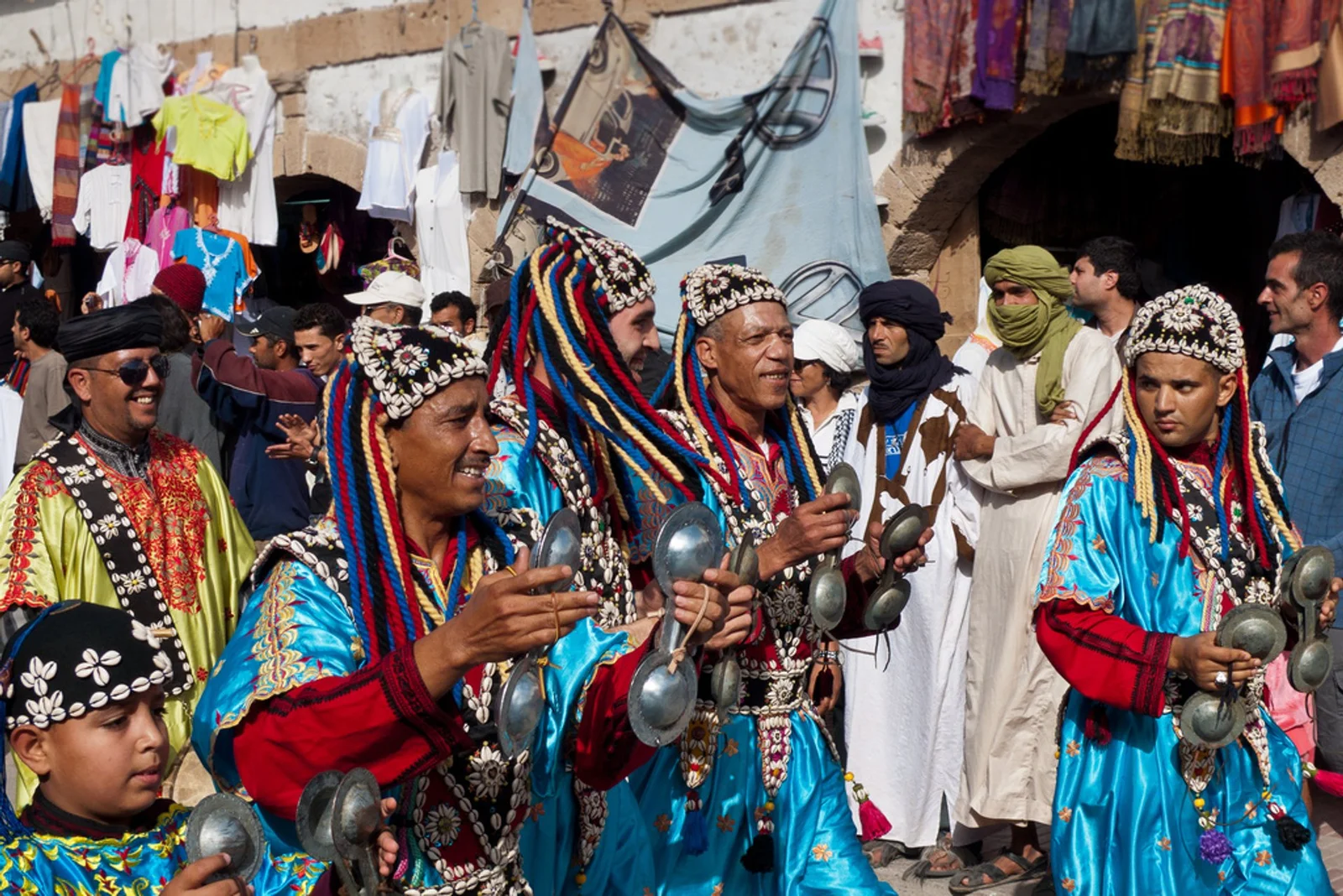
Alongside them came rhythms and spiritual rituals rooted in Africa’s interior. One notable example is Gnawa, a musical genre with deep African roots that has retained many of its original practices over centuries in Morocco.
Jewish Heritage
Historical research traces Jewish presence in Morocco back over 2,000 years, with a significant increase after the fall of Al-Andalus. Fleeing Christian persecution, many Jews settled in Moroccan cities, integrating into public life and contributing to political, economic, and cultural spheres.
As Dr. Abdelrahman Bashir notes in Jews in the Maghreb, Moroccan Muslims embraced coexistence based on Islamic teachings that promote tolerance toward the People of the Book.
According to the same work, Morocco outpaced other North African countries in welcoming Jews, who became known for their involvement in cross-border trade and in sectors like agriculture, livestock, goldsmithing, textile crafts, and jewelry-making.
Jewish cultural influence remains present in Moroccan daily life and traditional arts from cuisine to music, including malhun and folk songs. The historic mellah quarters still stand as testaments to this legacy.
Throughout the 20th century, Moroccan Jews maintained a recognized place in the national fabric. One pivotal moment was King Mohammed V’s refusal to implement the Vichy regime’s anti-Jewish laws or surrender Moroccan Jews to the Nazis an act that remains a moral touchstone in both Moroccan and Jewish narratives.
Despite the varied origins of these tributaries, they have gradually fused into a unified yet multifaceted identity. This is evident in Morocco’s music, dialects, architecture, and social fabric, which seamlessly blends Arab, Amazigh, Andalusian, Saharan, Jewish, and African elements.
The result is a pluralistic cultural system embodying what can be described as unity within diversity, positioning Morocco as a culturally rich and globally connected society anchored in the Arab, African, and Mediterranean worlds.