NoonPost NoonPost

NoonPost

  • Home
  • Politics
  • Economy
  • Society
  • Culture
  • Files
  • Long Reads
  • Podcast
AR
Notification Show More
نون بوست
“There Are Nights I Can’t Close My Eyes”: How Gazans Are Living in Homes on the Brink of Collapse
نون بوست
From al-Jolani to Ahmad al-Shara: The Evolution of Syria’s New Leader
نون بوست
When Political Islam Receded in Egypt: Who Filled the Void?
نون بوست
An Extension of Genocide: Gaza’s Detainees Speak Out
نون بوست
A Tightrope Between Survival and Sovereignty: The Syrian Government Faces Normalization Pressures
نون بوست
American Aircraft Carriers: Has the Era of “100,000 Tons of Diplomacy” Ended?
نون بوست
U.S. Regime‑Change Policies: Why They Are Destined to Fail
نون بوست
Transformations of Israeli Judaism: Between the Victim Complex and the Colonizer’s Doctrine
نون بوست
The Gulf’s Balancing Act: Iran, Israel, and Hidden Links
نون بوست
Iraq–Turkey Oil Export Treaty: Why Did Ankara Cancel It After 52 Years?
نون بوست
Syria’s Northeast on Edge: QSD Between Ankara and Damascus
نون بوست
Has Europe Changed Its Stance on Israel… or Just Its Language?
NoonPost NoonPost
AR
Notification Show More
نون بوست
“There Are Nights I Can’t Close My Eyes”: How Gazans Are Living in Homes on the Brink of Collapse
نون بوست
From al-Jolani to Ahmad al-Shara: The Evolution of Syria’s New Leader
نون بوست
When Political Islam Receded in Egypt: Who Filled the Void?
نون بوست
An Extension of Genocide: Gaza’s Detainees Speak Out
نون بوست
A Tightrope Between Survival and Sovereignty: The Syrian Government Faces Normalization Pressures
نون بوست
American Aircraft Carriers: Has the Era of “100,000 Tons of Diplomacy” Ended?
نون بوست
U.S. Regime‑Change Policies: Why They Are Destined to Fail
نون بوست
Transformations of Israeli Judaism: Between the Victim Complex and the Colonizer’s Doctrine
نون بوست
The Gulf’s Balancing Act: Iran, Israel, and Hidden Links
نون بوست
Iraq–Turkey Oil Export Treaty: Why Did Ankara Cancel It After 52 Years?
نون بوست
Syria’s Northeast on Edge: QSD Between Ankara and Damascus
نون بوست
Has Europe Changed Its Stance on Israel… or Just Its Language?
Follow US

The Military Junta Obsession: How to Understand Africa’s Surge in Coups

إسراء سيد
Esraa sayed Published 26 March ,2026
Share
نون بوست
نون بوست

The image of uniformed officers storming dimly lit television studios to declare their seizure of power and the suspension of the constitution has become a familiar scene in African politics in recent years. What was once a rare occurrence now happens with alarming frequency, signaling a profound shift sweeping across the continent.

The most recent example unfolded in Guinea-Bissau on November 26, 2025, when military officers appeared on state television to announce their complete takeover just three days after a tense presidential election.

They justified the move by citing “threats to the country’s stability,” but the military’s intervention seemed more like a calculated attempt to exploit a moment of political weakness than a reaction to chaos.

With this latest coup, the small West African nation joins a long list of countries that have been swept by a growing wave of coups in recent decades. These events go beyond mere struggles for power they expose deeper structural flaws in the state, the role of the military, and the balance of power across Africa. The trend now demands a new reading of an increasingly complex political landscape that threatens the continent’s democratic aspirations.

A History Steeped in Coups

Since gaining independence from Portugal in 1974, Guinea-Bissau a coastal country nestled between Senegal and Guinea and recently a hub for drug trafficking between Latin America and Europe has witnessed four successful coups and ten failed attempts, the latest reported in October.

Guinea-Bissau is far from an exception. Coups have become increasingly concentrated in Africa and the Sahel region in recent decades, whereas they were once more globally widespread during the Cold War. Between 2001 and 2017, Africa saw 33 coups or attempted coups an average of less than two per year.

Although the continent experienced a decline in coups over the past two decades, this new wave has reversed that trend. In the decade leading up to 2021 a year that saw four successful coups in Africa and one in Myanmar the average number of successful coups per year was just one, according to a comprehensive database compiled by U.S. researchers Jonathan Powell and Clayton Thyne.

Since 2020, an unprecedented wave of repeated coups has emerged, including at least ten successful and seven failed attempts. Most of these occurred in Francophone countries within what is now known as the “Coup Belt” across West and Central Africa and the Sahel. This trend raises serious concerns about the erosion of democratic gains made in recent years.

Even for Africa which has seen more coup attempts than any other region the number is staggering. Of the 492 coup attempts worldwide since the 1950s, the continent alone accounts for 220, with 109 of them successful nearly half of all global coups.

In total, 45 of Africa’s 54 countries have experienced at least one attempted coup. If we narrow that down to successful coups defined as those where the perpetrators remain in power for at least a week the number drops to 37, roughly two-thirds of the continent.

Sudan tops the list with 18 attempted coups since its independence in 1956, six of them successful. The most recent occurred in October 2021, when a civilian-military partnership collapsed. At the time, UN Secretary-General António Guterres described the spate of coups as a “plague.”

The April 2023 attack by the Rapid Support Forces is classified as an attempted coup, plunging the country into a bloody conflict between the army and the paramilitary group.

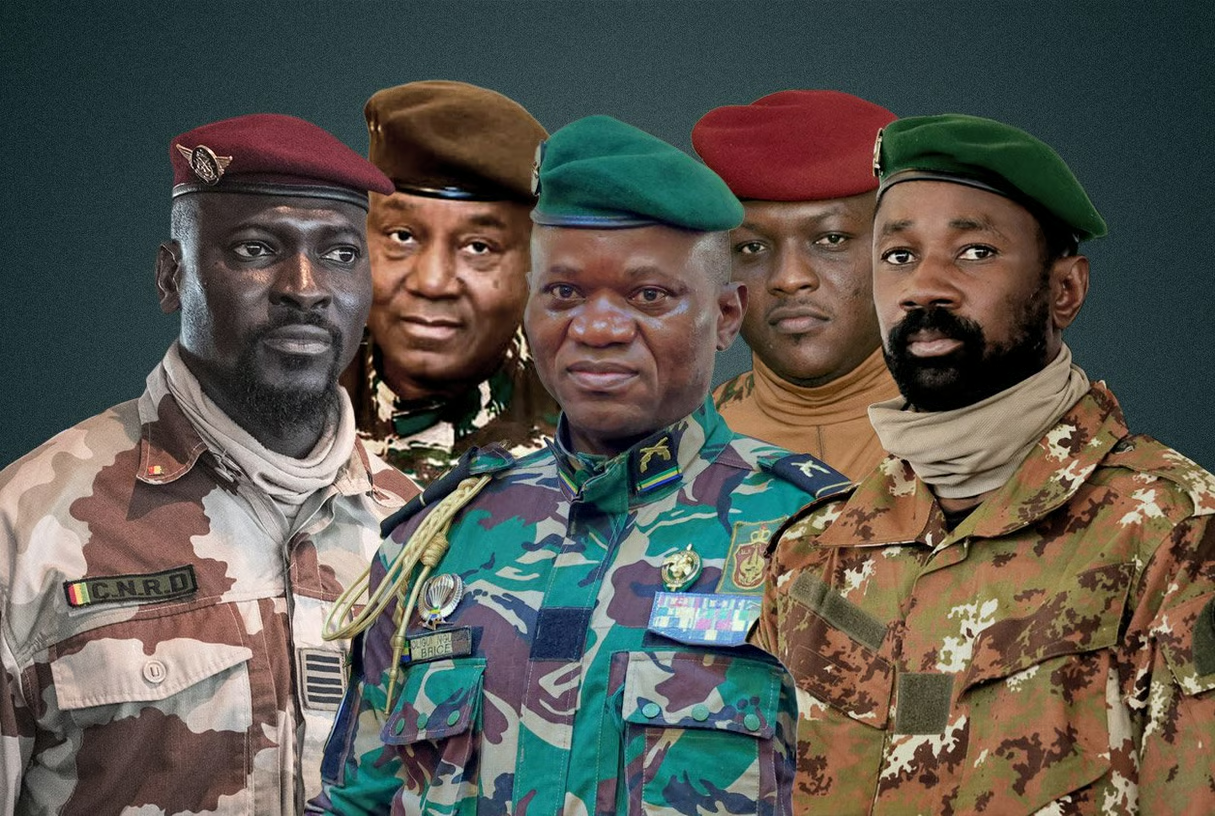
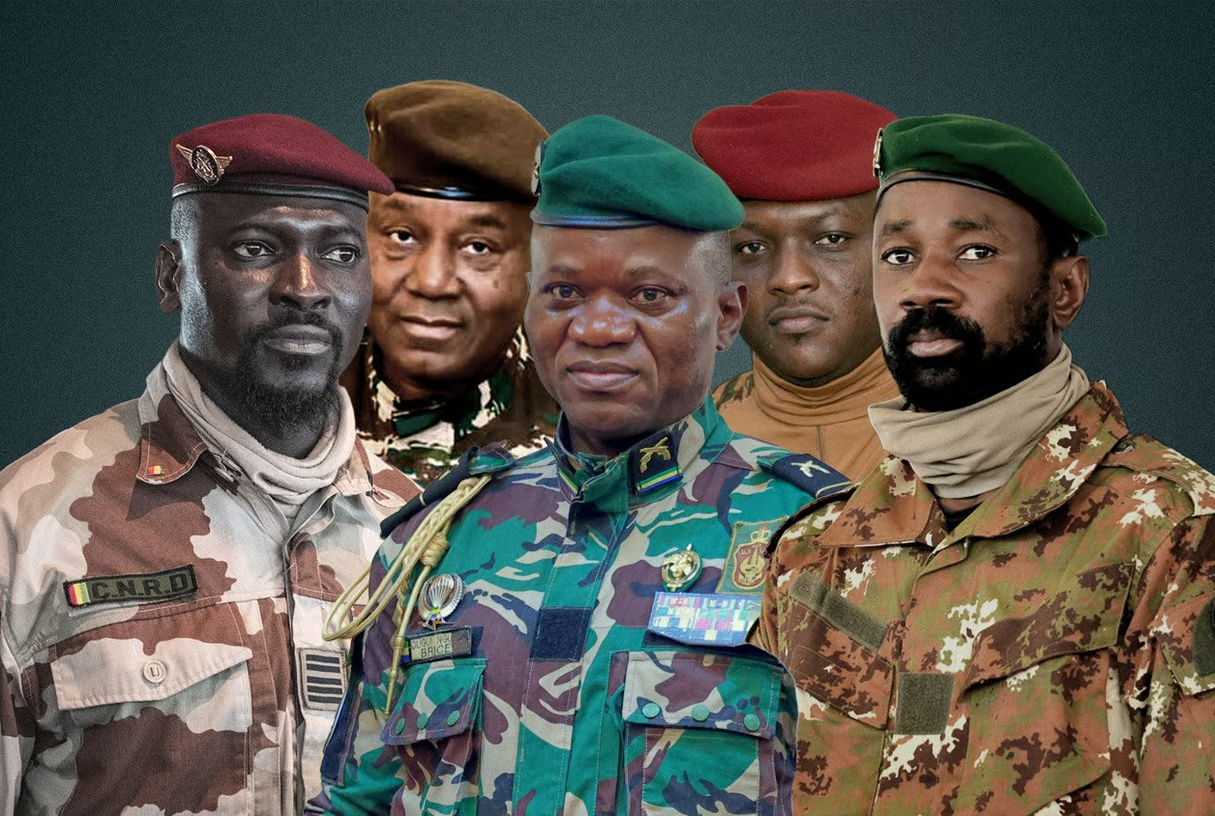
Although Burkina Faso has had fewer attempts, it holds the record for the most successful coups on the continent nine since the 1960s, including two in 2022 alone. Under a new transition plan, the military regime led by Captain Ibrahim Traoré is expected to remain in power until at least 2029.

Analyses show that while coup attempts have become less frequent in the past decade, they are far more successful than during the Cold War, when Africa recorded the highest number of coups. This suggests that while rarer, coups are now more effective.

This is largely due to the structural conditions prevalent in many African countries most notably poverty. Historically, the poorest and least democratically stable countries have been more vulnerable to coups. In 2022, the Fragile States Index listed 15 African countries among the world’s 20 most fragile.

Twelve of them have experienced at least one successful coup, including Somalia, the Democratic Republic of the Congo, Central African Republic, Chad, Sudan, and Zimbabwe.

The Coup-Maker’s Playbook

This latest wave of coups is far from homogeneous; motives and contexts vary by country. In some cases, security concerns were the main driver such as the September 2022 coup in Burkina Faso, which ousted Colonel Paul-Henri Sandaogo Damiba over his failure to confront jihadist insurgencies.

Some countries have fallen into a “coup trap,” with frequent takeovers following periods of relative calm. Mali, for example, has experienced four coup attempts in the past decade after 20 years of political stability.

Colonel Assimi Goïta justified his May 2021 coup by citing public dissatisfaction with the government’s inability to curb extremist violence. Less than a year later, he staged another coup this time removing a transitional government in which he himself had a key role after two influential military ministers were excluded from a cabinet reshuffle.

Elsewhere, coups have been portrayed as “saving democracy.” In Gabon, the August 2023 coup ousted President Ali Bongo following elections widely viewed as rigged. The military dubbed it a “freedom coup” meant to end the Bongo family’s 56-year rule.

In Guinea, the perpetrators of the September 2021 coup cited political stagnation and public distrust in institutions alongside former President Alpha Condé’s decision to override term limits to seek a third term as key reasons for their action.

In Niger and Sudan, senior officers ousted leaders from within their own ruling elites. In Niger, Presidential Guard commander General Abdourahamane Tchiani justified his July 2023 coup and the detention of President Mohamed Bazoum by pointing to worsening security, poor governance, and growing public discontent. Many believe, however, that his true motive was the threat of dismissal.

Despite the varying justifications and contexts, post-coup behavior across countries bears striking similarities. There is, in effect, an unwritten “manual” for military rulers, with one central objective: to stay in power as long as possible.

Rallying public support or at least creating the illusion of it is a cornerstone of this strategy. In Egypt, for instance, then-army chief Abdel Fattah el-Sisi capitalized on civilian political polarization in the summer of 2013, calling on Egyptians to demonstrate and “authorize” him to combat “terrorism.”

That public mandate culminated in a military coup that ended one political era and began another, marked by authoritarian rule that persists today.

In Mali, Niger, and Burkina Faso, coup leaders followed a nearly identical playbook. They mobilized youth around anti-colonial rhetoric especially targeting France portrayed ECOWAS as a hostile force after the bloc imposed sanctions, and eventually withdrew from it in January 2024.

They also turned quickly to outside powers, particularly Russia, which stepped in to amplify these narratives and provide security support to protect the juntas from counter-coups. Russian forces were welcomed under the guise of “fighting terrorism.”

These mirrored actions suggest that military rulers not only observed and learned from one another but at times collaborated directly creating an environment conducive to adventurism and increasing the likelihood of success. This dynamic culminated in the creation of a parallel security pact: the Sahel States Alliance.

Yet coup leaders remain vulnerable to rival factions within their own ranks, with counter-coups a constant threat especially amid growing competition within the armed forces. Typically, those who come to power via unconstitutional means attempt to expand their authority, often triggering new coups and perpetuating a vicious cycle.

Few appear willing to relinquish power anytime soon. Backed by real or manufactured popular support, military rulers adopt tactics to prolong their rule: delaying elections, extending transitional periods indefinitely, imposing referendums, and invoking the need for “stability before democracy.”

This persists in part because the international community worn down by the rapid resurgence of coups allows them to remain in power. The 2000 Lomé Declaration created a strict framework for punishing coups, and for a while, it worked: the number of coups in Africa halved.

But this deterrent has since weakened, with little action taken in cases like Zimbabwe (2017), Sudan (2019), and Chad (2022). Regional organizations such as ECOWAS, once a key player in upholding democratic governance, have also lost much of their enforcement capacity.

The result is now clear: post-coup transitions in the Sahel are averaging three years. In Burkina Faso and Mali, elections scheduled for 2024 have been postponed indefinitely. Mali’s military rulers suspended political activities entirely, citing the need to “maintain public order.”

Following this model, Guinea has set a two-year timeline for a return to constitutional rule. Chad’s transitional military leader Mahamat Idriss Déby extended his own timeline by another two years, despite promising a return to democracy within 18 months.

Gabon’s junta, led by General Brice Oligui Nguema since August 2023, has pledged a new constitution and updated electoral law within two years.

Thus emerges the formula for power-hungry actors across the continent: stage a coup, promise a transitional period, prolong it as much as possible, then hold a controlled election to legitimize the new regime.

But the pressing question remains: how many of these pledges will materialize? More importantly, will coup leaders ever risk surrendering their power at the ballot box?

Download this article as PDF
Share this Article
Facebook Twitter Whatsapp Whatsapp Telegram Email Copy Link
إسراء سيد
By إسراء سيد صحفية وباحثة في مجال الإعلام السياسي
Follow:
Previous Article نون بوست “Bashan Pioneers”: Israelis Falsify Geography and Distort History to Occupy Syria
Next Article نون بوست How Gaza’s Health Sector Is Facing Its Most Dire Crisis Since the Outbreak of War

Read More

  • U.S. Regime‑Change Policies: Why They Are Destined to Fail U.S. Regime‑Change Policies: Why They Are Destined to Fail
  • The Gulf’s Balancing Act: Iran, Israel, and Hidden Links
  • Iraq–Turkey Oil Export Treaty: Why Did Ankara Cancel It After 52 Years?
  • Syria’s Northeast on Edge: QSD Between Ankara and Damascus
  • Has Europe Changed Its Stance on Israel… or Just Its Language?
part of the design
NoonPost Weekly Newsletter

You May Also Like

U.S. Regime‑Change Policies: Why They Are Destined to Fail

U.S. Regime‑Change Policies: Why They Are Destined to Fail

إسراء سيد Esraa sayed 8 April ,2026
The Gulf’s Balancing Act: Iran, Israel, and Hidden Links

The Gulf’s Balancing Act: Iran, Israel, and Hidden Links

فريق التحرير Noon Post 8 April ,2026
Iraq–Turkey Oil Export Treaty: Why Did Ankara Cancel It After 52 Years?

Iraq–Turkey Oil Export Treaty: Why Did Ankara Cancel It After 52 Years?

فريق التحرير Noon Post 8 April ,2026

معركة الانتخابات التركية تبدأ بمفاجآت قائمة العدالة والتنمية

فريق التحرير
Noon Post Published 21 September ,2015
Share
000

بدأت معركة الانتخابات البرلمانية التركية بمفاجآة غير متوقعة هي عودة كافة الأسماء القديمة والثقيلة لحزب العدالة والتنمية على قائمته الانتخابية، وهي نفس الأسماء التي تم إقصاؤها من اللجنة التنفيذية للحزب في اجتماعه الكبير (أو الكونجرس) منذ أيام بعد خلاف بين الرئيس التركي رجب طيب أردوغان ورئيس الوزراء أحمد داوود أوغلو، حيث قيل أن أوغلو كان يرغب في ضم سياسيين مخضرمين مثل نائب رئيس الوزراء بولنت أرِنتش ووزير الاقتصاد الأسبق علي باباجان.

لا نعرف على وجه التحديد أسباب خروج هذه القائمة المختلفة كليًا عن اللجنة التنفيذية للحزب، فالبعض يقول أن القائمة خضعت بالأساس لاختيارات داوود أوغلو المختلفة عن خيارات أردوغان للجنة، في حين قال آخرون أن أردوغان اتفق مع أوغلو على تلك الأسماء لعلمه بأنها تتمتع بمصداقية كبيرة في الشارع التركي وتستطيع أن تعود بالأغلبية البرلمانية للحزب، لا سيما وأن بعض الأسماء الجديدة، مثل المطرب أوغور إشلاق، قد أثارت الجدل بعد أن نزلت على قائمة الحزب في انتخابات يونيو وهزت صورته.

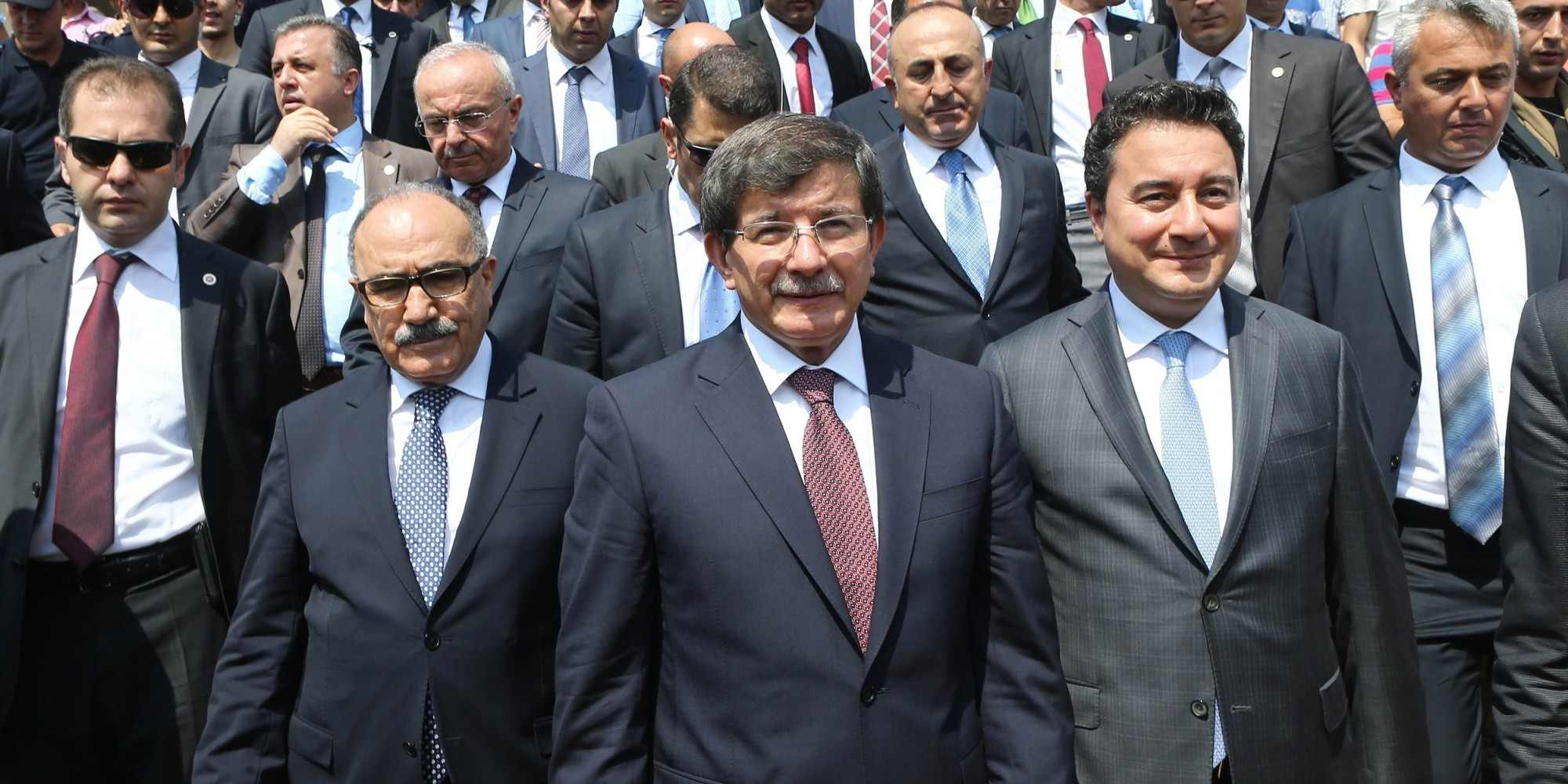
الوجوه الأبرز كانت علي باباجان مهندس النمو الاقتصادي التركي خلال فترته الذهبية في العقد المنصرم، والمرشح على قائمة الحزب في أنقرة، وقد كان رافضًا في البداية نزول الانتخابات بعد إقصائه من لجنة الحزب، ولم يتقدّم في الحقيقة بأوراق ترشحه للانتخابات، في إشارة على عدم رغبته في المشاركة بأي حكومة مُقبلة، بيد أن جهود داوود أوغلو قد أفلحت في إقناعِه بالعودة بعد محادثة هاتفية، وهي محادثة قيل أن أوغلو أكّد فيها على دوره في إدارة الاقتصاد التركي حال شكّل الحزب الحكومة المقبلة.

المتحدث السابق باسم البرلمان التركي جميل تشيتشَك نزل على قائمة الحزب أيضًا في أنقرة، وهو من الأسماء المخضرمة، والقليلة في الحقيقة من الحرس القديم التي احتفظ بها أردوغان في لجنة الحزب، بالإضافة إلى وزير الداخلية الأسبق بشير أطلاي المرشح عن الحزب من ولاية وان (أو فان) في شرق البلاد، وهو من الأسماء التي غابت عن لجنة الحزب، ويتمتع بسمعة قوية كأحد مهندسي عملية السلام مع الأكراد، مما يفسر ربما ترشيح الحزب له في ولاية ذات أغلبية كردية.

وزير العمال السابق والمعروف فاروق تشَليك تم ترشيحه كذلك عن ولاية كردية في الجنوب الشرقي هي أورفا، إلى جانب السياسي الكردي غالب أنصاري أوغلو المرشح من ديار بكر، وهي أسماء يدفع بها الحزب الآن في الولايات الكردية لإعادة اكتساب أرضيته التي فقدها في الانتخابات الماضية لصالح حزب الشعوب الديمقراطي، ولا ندري بالطبع هل ستؤتي أُكُلها أم لا بالنظر للاستقطاب التركي الكردي الشديد الآن، وفقدان عملية السلام لبريقها بينما تعود الحرب بين الجيش التركي وحزب العمال، وهو أمر يعتمد على مدى شعبية ما يقوم به حزب العمال من عدمه بين الأكراد.

نون بوست

وزير النقل والاتصالات السابق بن علي يلدرم مع أردوغان

لا يعني وجود الأسماء القديمة بالطبع غياب المرشحين المقرّبين من أردوغان والأعضاء بلجنة الحزب، فقد ترشح وزير النقل والاتصالات السابق والمقرّب من أردوغان بن علي يلدرم عن مدينة إزمير، والتي ترشح فيها كعُمدة عام 2014 ليخسر أمام مرشح حزب الشعب الجمهوري، حيث تُعرَف المدينة بولائها الشديد للحزب العلماني كمعقل من معاقله التقليدية، إلى جانب الكثير من المُدن المُطلة على البحر المتوسط، والتي يعتمد عليها حزب الشعب، وجدير بالذكر أن يلدرم هو أحد مستشاري أردوغان حاليًا.

من الأسماء المثيرة للجدل أيضًا على قائمة الحزب هو طغرل توركَش، نجل مؤسس حزب الحركة القومية ألب أرسلان توركَش، والذي ترك حزب الحركة بعد خلافه مع رئيس الحزب دولت بغشلي إثر إصرار الأخير على عدم الدخول في أي تشكيل حكومي مؤقت قبل الانتخابات، بينما أصر توركَش على قبول دعوة داوود أوغلو ليتولى منصب نائب رئيس الوزراء، وقد ترشح توركَش عن حزب العدالة والتنمية في أنقرة، هذا وينتقد البعض وجوده على قائمة الحزب نتيجة أفكاره القومية، في حين رأي آخرون أن اسمه يضيف للحزب لا سيما في حالة الاصطفاف الحالية بمواجهة حزب العمال.

كان من المفاجآت أيضًا إقصاء أسماء تصور كثيرون أنها ستنزل الانتخابات نتيجة قُربها من أردوغان ودخولها للجنة الحزب مؤخرًا، وأبرز هؤلاء هو المحامي عبد الرحيم بويون قالِن، صاحب التصريحات النارية أمام مقر جريدة حريّت العلمانية، والتي تعهد فيها بتعزيز سلطات أردوغان كرئيس حتى لو خسر حزب العدالة الانتخابات المقبلة، كما هدد صحافيي الجريدة، وهي تصريحات لم تلقى قبول داوود أوغلو آنذاك، والذي أخرجه من ترشيحات الانتخابات هذه المرة.

نون بوست

عبد الرحيم بويونقالِن

أوغور إشلاق أيضًا خرج من ترشيحات الحزب، وهو مطرب خصص أغانٍ عدة للحزب منذ نشأته عام 2002، وتم ترشيحه في يونيو عن إسطنبول وسط تعهداته الشهيرة بأنه لن ينام أبدًا في البرلمان التركي، وأنه سيعمل على قوانين لتعزيز الفنون والثقافة، وهي تعهدات لم يحفظها على ما يبدو حين التقطت له العدسات صورة وهو نائم بالفعل في أولى جلسات البرلمان قصير العمر، والذي قرر معه داوود أوغلو عدم ترشيحه مجددًا في نوفمبر.

فيما يخص قوائم بقية الأحزاب فإنها لم تحمل مفاجآت كبيرة، فقائمة مرشحي حزب الشعب الجمهوري لم تختلف كثيرًا، باستثناء خروج الدبلوماسي المرموق مراد أوزتشَليك منها نتيجة خلافه مع قيادة الحزب إثر تصريحاته بأنه صوّت لحزب الشعوب الكردي في الانتخابات الماضية لتعزيز عبوره حاجز الـ10٪ اللازم لدخول البرلمان ولم يصوّت لحزبه، وهو إقصاء يتم رسميًا تحت دعوى عدم الانتماء للحزب، في حين يراها كثيرون محاولة لتجنّب خسارته كمرشّح نتيجة انقلاب الكثير من الأتراك على حزب الشعوب نتيجة الاستقطاب الحالي وربما عدم التصويت له بعد تصريحات تلك.

عدا ذلك، دفع حزب الشعب العلماني بأسمائه الكبيرة التقليدية مثل دنيز بايقال، رُغم خلافاته مع رئيس الحزب كمال قلجدار أوغلو، والذي ترشح عن مدينته الساحلية أنطاليا، ومحرم إنجه صاحب الخلافات مع رئيسه أيضًا، والذي ترشح من يالوفا، كما رشح الحزب في المقعد الأول لولاية أردخان القنصل السابق أوزتُرك يلماز، والذي كانت داعش قد اختطفته مع 49 أخرين من قنصلية تركيا بالموصل في يونيو 2014، وهي محاولة لجلب الأصوات بالطبع نتيجة تعاطف الكثيرين معه آنذاك.

بالنسبة لحزب الحركة القومية فقد احتفظ بالأسماء الجديدة التي رشحها في يونيو مثل أكمل الدين إحسان أوغلو، ومدير البنك المركزي السابق ومستشار الرئيس عبد الله غُل، دورموش يلماز، والتغيير الوحيد الذي طال قائمته هو خروج النائبة ميرال أكشَنَر من ترشيحاته نتيجة خلافاتها مع رئيس الحزب بغشلي، لا سيما وأنها تُعَد منافسًا له على قيادة الحزب مستقبلًا، أما حزب الشعوب الكردي فقد أعلن عن تحالف مع جمعية الحقوق الديمقراطية وحزب العمال وحزب الحرية والاشتراكية في محاولة لخلق جبهة توحّد أصوات اليسار، لا سيما وأنه يعلم أنه سيخسر بعض أصوات الأتراك الليبراليين المستائين من علاقاته بحزب العمال، هو ما يفسر ترشيحه لمصطفى صاري سولوك، أخو أحد متظاهري جَزي بارك ممن قتلتهم الشرطة في يونيو 2013.

TAGGED: الانتخابات التركية ، الجمهورية التركية ، السياسة التركية ، حزب الحركة القومية ، حزب الشعب الجمهوري
TAGGED: الانتخابات التركية
Download this article as PDF
Share this Article
Facebook Twitter Whatsapp Whatsapp Telegram Email Copy Link
فريق التحرير
By فريق التحرير تقارير يعدها فريق تحرير نون بوست.
Follow:
Next Article نون بوست The Stigma of “ISIS”: A Heavy Legacy Haunting Women and Children of Former Members

Read More

  • U.S. Regime‑Change Policies: Why They Are Destined to Fail U.S. Regime‑Change Policies: Why They Are Destined to Fail
  • The Gulf’s Balancing Act: Iran, Israel, and Hidden Links
  • Iraq–Turkey Oil Export Treaty: Why Did Ankara Cancel It After 52 Years?
  • Syria’s Northeast on Edge: QSD Between Ankara and Damascus
  • Has Europe Changed Its Stance on Israel… or Just Its Language?
part of the design
NoonPost Weekly Newsletter
dark

An independent media platform founded in 2013, rooted in slow journalism, producing in-depth reports, analysis, and multimedia content to offer deeper perspectives on the news, led by a diverse young team from several Arab countries.

  • Politics
  • Society
  • Rights & Liberties
  • Opinions
  • History
  • Sports
  • Education
  • Technology
  • Economy
  • Media
  • Arts & Literature
  • Entrepreneurship
  • Travel
  • Cinema & Drama
  • Food
  • Health
  • Culture
  • Latest Reports
  • Files
  • Long Reads
  • Interviews
  • Podcast
  • Interactive
  • Encyclopedia
  • In Pictures
  • About Us
  • Our Writers
  • Write for Us
  • Editorial Policy
  • Advanced Search
Some rights reserved under a Creative Commons license

Removed from favorites

Undo
Go to mobile version