NoonPost NoonPost

NoonPost

  • Home
  • Politics
  • Economy
  • Society
  • Culture
  • Files
  • Long Reads
  • Podcast
AR
Notification Show More
نون بوست
“There Are Nights I Can’t Close My Eyes”: How Gazans Are Living in Homes on the Brink of Collapse
نون بوست
From al-Jolani to Ahmad al-Shara: The Evolution of Syria’s New Leader
نون بوست
When Political Islam Receded in Egypt: Who Filled the Void?
نون بوست
An Extension of Genocide: Gaza’s Detainees Speak Out
نون بوست
A Tightrope Between Survival and Sovereignty: The Syrian Government Faces Normalization Pressures
نون بوست
American Aircraft Carriers: Has the Era of “100,000 Tons of Diplomacy” Ended?
نون بوست
U.S. Regime‑Change Policies: Why They Are Destined to Fail
نون بوست
Transformations of Israeli Judaism: Between the Victim Complex and the Colonizer’s Doctrine
نون بوست
The Gulf’s Balancing Act: Iran, Israel, and Hidden Links
نون بوست
Iraq–Turkey Oil Export Treaty: Why Did Ankara Cancel It After 52 Years?
نون بوست
Syria’s Northeast on Edge: QSD Between Ankara and Damascus
نون بوست
Has Europe Changed Its Stance on Israel… or Just Its Language?
NoonPost NoonPost
AR
Notification Show More
نون بوست
“There Are Nights I Can’t Close My Eyes”: How Gazans Are Living in Homes on the Brink of Collapse
نون بوست
From al-Jolani to Ahmad al-Shara: The Evolution of Syria’s New Leader
نون بوست
When Political Islam Receded in Egypt: Who Filled the Void?
نون بوست
An Extension of Genocide: Gaza’s Detainees Speak Out
نون بوست
A Tightrope Between Survival and Sovereignty: The Syrian Government Faces Normalization Pressures
نون بوست
American Aircraft Carriers: Has the Era of “100,000 Tons of Diplomacy” Ended?
نون بوست
U.S. Regime‑Change Policies: Why They Are Destined to Fail
نون بوست
Transformations of Israeli Judaism: Between the Victim Complex and the Colonizer’s Doctrine
نون بوست
The Gulf’s Balancing Act: Iran, Israel, and Hidden Links
نون بوست
Iraq–Turkey Oil Export Treaty: Why Did Ankara Cancel It After 52 Years?
نون بوست
Syria’s Northeast on Edge: QSD Between Ankara and Damascus
نون بوست
Has Europe Changed Its Stance on Israel… or Just Its Language?
Follow US

J.D. Vance: The Face of New Populism and a Potential Heir to Trumpism

إسراء سيد
Esraa sayed Published 26 March ,2026
Share
نون بوست
نون بوست

In 2016, as Donald Trump emerged as a formidable contender for the U.S. presidency, Republican James David Vance widely known as J.D. Vance was one of his fiercest critics. In articles and tweets, he described Trump as a “cynical buffoon,” “the worst presidential candidate ever,” and even likened him to Nazi leader Adolf Hitler.

At the time, it seemed Vance’s political career was over before it began. Attacking the most powerful figure in the Republican Party risked eternal exile from its inner circle, effectively crushing any political aspirations. But a dramatic shift in Vance’s political outlook and public persona would later change everything.

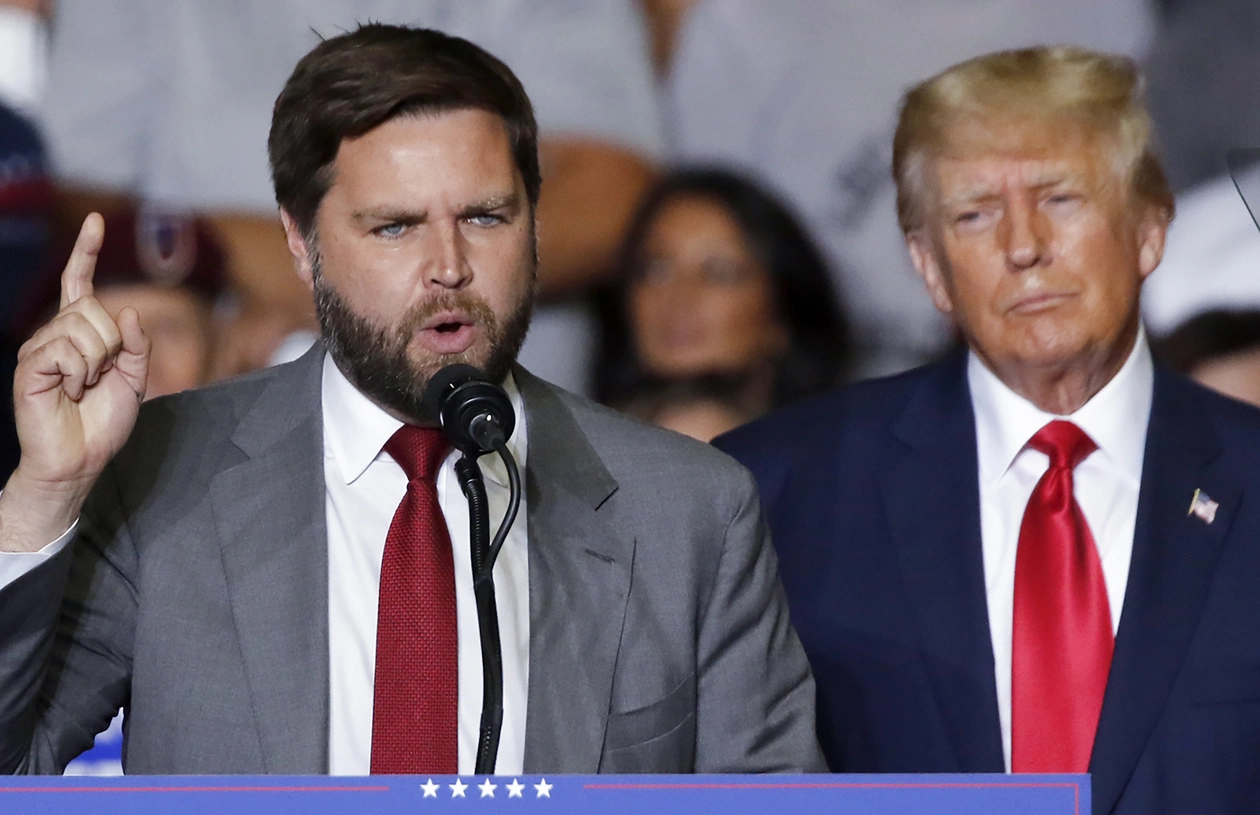
In just eight years, the young politician went from estranged critic to Trump’s top pick for vice president in the 2024 election a transformation that stands as one of the most controversial reversals in modern Republican politics.

A Rising Star from Forgotten America

Born in August 1984 to a fractured household, Vance grew up in Middletown, Ohio, in what he has described as a neglected white working-class community. His roots trace back to the Scots-Irish Appalachian region, long associated with economic hardship, cultural isolation, and social unrest in the American imagination.

His biological father, Donald Bowman, of Irish descent, abandoned the family when Vance was six. His mother, a nurse battling addiction to opioids, alcohol, and other drugs, had multiple marriages five in total leaving Vance shuffling between father figures until he eventually moved in with his impoverished maternal grandparents in Kentucky.

From them, he inherited a deep distrust of elites and the wealthy. He never imagined those turbulent years would one day shape him into a major political figure.

Vance graduated high school in 2003 and joined the U.S. Marine Corps, serving in Iraq in public affairs during the American invasion. He later earned a degree in political science and philosophy from Ohio State University, followed by a law degree from Yale. At Yale, he met his future wife, Usha Chilukuri, the daughter of Indian immigrants.

The couple converted to Catholicism and adopted the surname “Vance,” taken from his maternal grandparents an homage to the only stable presence in his childhood.

He briefly practiced law, working for Senator John Cornyn and Judge David Bunning, then joined a private law firm representing companies in Silicon Valley. Eventually, he left legal practice to work with billionaire entrepreneur and right-wing funder Peter Thiel in San Francisco.

In June 2016, during the presidential race between Trump and Hillary Clinton, Vance published Hillbilly Elegy, a memoir chronicling his working-class upbringing. The book quickly became a bestseller and was adapted by Netflix into a 2020 film.

Without directly mentioning Trump, it offered a compelling explanation for his appeal among the overlooked white working-class, especially in the Rust Belt regions devastated by industrial decline that turned to Trump’s message of political revolt.

From Anti-Trump Crusader to Loyal Vice-Presidential Pick

Vance’s early record was filled with anti-Trump sentiment. Before the 2016 election, he admitted he hadn’t voted for Trump and accused him of exploiting both racism and legitimate fears, saying Trump was leading the white working class “into a very dark place.”

In July 2015, writing in The Atlantic, he called Trump “the opiate of the masses,” comparing him to the very drugs that had ravaged his own family.

Such remarks could have ended his political career, particularly in a Republican Party increasingly dominated by Trump. But Vance understood what it would take to survive and thrive.

By 2020, after Trump’s loss to Joe Biden, Vance began moving closer to the former president’s positions. He embraced the “America First” doctrine and adopted Trump’s combative tone, praising him as “a role model for Americans seeking safety and security” and “the leader who will make America great again.”

During his 2021 Senate campaign in Ohio, Vance reversed many of his previous positions on immigration and trade, apologized for his anti-Trump comments, deleted critical posts, and echoed Trump’s claims of election fraud. In return, he received Trump’s endorsement crucial for securing the seat.

In November 2022, Vance defeated Democrat Tim Ryan to win a Senate seat. His message blending cultural criticism with a defense of rural working-class Americans cemented his status as one of the Republican Party’s most influential new voices.

By January 2023, Vance endorsed Trump’s 2024 candidacy, a far cry from his support for independent Republican Evan McMullin in 2016. His bond with Trump deepened, particularly with Trump’s eldest son, with whom he began communicating almost daily. Donald Trump Jr. played a decisive role in shaping the elder Trump’s shortlist for vice president and his support proved crucial in selecting Vance.

Though a relative newcomer to national politics, Vance represented exactly what Trump sought: a younger, ideologically aligned partner who could appeal to white working-class voters in key swing states.

Trump hailed him as “a champion of working people,” and his generational contrast with Trump nearly 40 years his senior helped ease concerns about the former president’s age. Many Republicans now view Vance as a natural ideological heir to Trump beyond a potential second term.

The Deeper Face of Trumpism

Ideologically, Vance aligns closely with Trump on domestic issues such as abortion, trade, and immigration. He advocates sharply reducing immigration, building a wall along the Mexican border, and expanding law enforcement powers to protect U.S. sovereignty.

But Vance goes even further: he supports policies that encourage high birth rates among white families to offset declining white demographics a central concern of his. While he avoids overt racial language, many observers argue that his vision centers on maintaining Anglo-Saxon dominance in the U.S. social order.

Economically, Vance favors protectionist policies, tariffs, reshoring industries, and vocational education, even if these come at a short-term economic cost. He sees these strategies as necessary to revitalize America’s broken industrial heartland.

On foreign policy, he echoes Trump’s isolationist instincts. Despite his military background, Vance is wary of foreign entanglements. He views NATO as a burden, opposed the Iraq War, and believes the U.S. foreign policy elite lied about its objectives—calling their promises “a joke.”

Regarding the war in Ukraine, Vance criticizes U.S. funding and involvement, arguing that the conflict lacks a clear endgame. He advocates for pragmatic settlements and believes Europe should take greater responsibility for its own security, allowing the U.S. to focus on its main rival: China.

This worldview extends to the Middle East. Vance sees America’s deep involvement in regional conflicts as strategically unwise and believes Washington should avoid overextension. After the Iraq invasion and the rise of Iran’s influence there, he claimed that “America essentially created a proxy for Iran in the Middle East.”

He also blames the Iraq War for displacing 90% of the country’s Christian population, wiping out one of the world’s oldest Christian communities.

On Israel, Vance is a vocal supporter of its military and normalization efforts. He has described Israel as “America’s spoiled child” and supports its continued dominance in the region. Since October 7, 2023, he has expressed full support for Israel’s war in Gaza, arguing that Hamas must be defeated to pave the way for broader regional normalization.

He dismisses comparisons between U.S. support for Ukraine and Israel, insisting that Israel’s security is a direct American interest.

In sum, Vance represents more than just a running mate. He embodies a refined, ideologically mature version of Trumpism. His political rise, shaped by personal struggle and cultural grievance, signals the Republican Party’s deepening shift toward nationalist populism.

Should he one day inherit the presidency, the America he envisions rooted in tradition, economic nationalism, and demographic anxieties would likely diverge significantly from the country we know today.

Download this article as PDF
Share this Article
Facebook Twitter Whatsapp Whatsapp Telegram Email Copy Link
إسراء سيد
By إسراء سيد صحفية وباحثة في مجال الإعلام السياسي
Follow:
Previous Article نون بوست “Iraq’s ‘Development Road’: A Gateway Out of Oil Dependency and Foreign Interference”
Next Article نون بوست “Will My Leg Ever Come Back?” A Child’s Story Captures the Tragedy of Amputations in Gaza

Read More

  • U.S. Regime‑Change Policies: Why They Are Destined to Fail U.S. Regime‑Change Policies: Why They Are Destined to Fail
  • The Gulf’s Balancing Act: Iran, Israel, and Hidden Links
  • Iraq–Turkey Oil Export Treaty: Why Did Ankara Cancel It After 52 Years?
  • Syria’s Northeast on Edge: QSD Between Ankara and Damascus
  • Has Europe Changed Its Stance on Israel… or Just Its Language?
part of the design
NoonPost Weekly Newsletter

You May Also Like

U.S. Regime‑Change Policies: Why They Are Destined to Fail

U.S. Regime‑Change Policies: Why They Are Destined to Fail

إسراء سيد Esraa sayed 8 April ,2026
The Gulf’s Balancing Act: Iran, Israel, and Hidden Links

The Gulf’s Balancing Act: Iran, Israel, and Hidden Links

فريق التحرير Noon Post 8 April ,2026
Iraq–Turkey Oil Export Treaty: Why Did Ankara Cancel It After 52 Years?

Iraq–Turkey Oil Export Treaty: Why Did Ankara Cancel It After 52 Years?

فريق التحرير Noon Post 8 April ,2026

مصر: الترويج لتوسيع دائرة السلام مع إسرائيل

عادل الأسطل
عادل الأسطل Published 28 September ,2015
Share
2f86793ce51f304edb520be297a64713

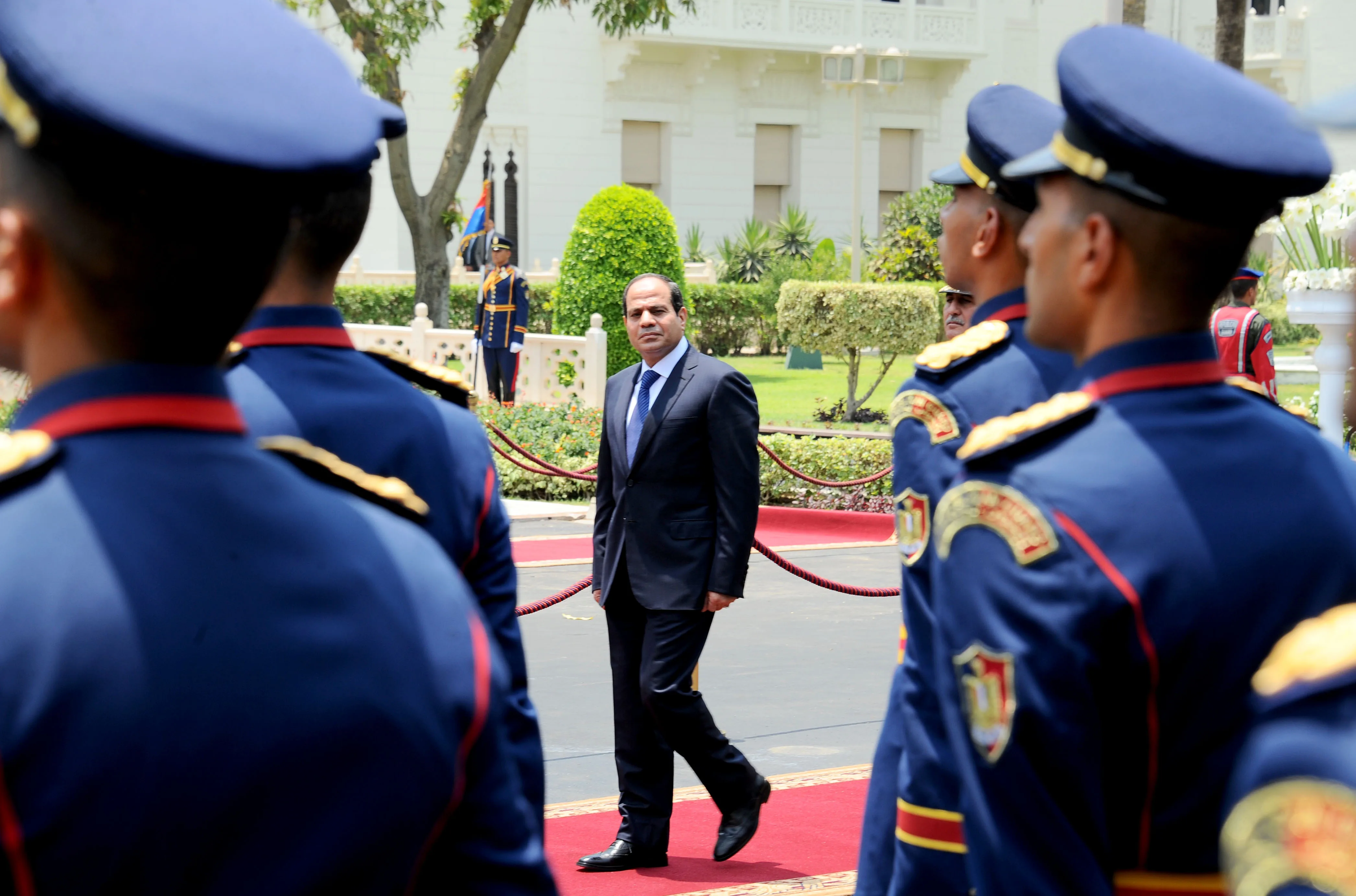
في ضوء تساقط الآمال بشأن نجاح المسيرة السياسية القائمة بين الفلسطينيين والإسرائيليين من أجل التوصل إلى حلول مناسبة للقضية الفلسطينية، وفشل المشاريع الخاصة بها، وسواء كانت غربية وعربية وإسرائيلية، وفي ظل تهديدات الرئيس الفلسطيني “أبومازن” بشأن القنبلة التي أعلن بأنه سيلقيها وسط الحاضرين أثناء انعقاد الجمعية العامة للأمم المتحدة، قام الرئيس المصري عبد الفتاح السيسي بإلقاء دعوة لم تكن على البال ولا الخاطر، حيث كشف خلالها عن أن السلام  مع إسرائيل، يجب أن يشمل دولًا عربية أخرى، من أجل المساعدة في حل القضية الفلسطينية باعتبارها قضية العرب المحورية.

مؤكّدًا بأن هناك فرصة كبيرة، لأن يكون السلام حقيقة على أرض الواقع، ومُذكرًا بأن حل القضية الفلسطينية سيغير وجه المنطقة الشرق أوسطية، وسيجلب تحسينات كثيرة لأوضاع دولها بما فيها إسرائيل، وبالتالي دحر خطر الإرهاب الذي بات يُهدد أمنها واستقرارها.

الرئيس السيسي قال ذلك، وهو يعلم أن العديد من الدول العربية، هي على علاقة ثنائية – تطبيعيّة – مع إسرائيل، وهي تبدو متقدمة إلى حدود جيدة وتشمل المجالات السياسية والأمنية والاقتصادية، وهي ليست خافية عن العيان، سيما وأن هناك اعترافات إسرائيلية تملأ المناسبات المختلفة، بأن علاقات مهمّة تربطها مع أغلبية تلك الدول، وحتى هذه الأثناء فإن هناك ادعاءات تابعة لرئيس الوزراء الإسرائيلي بنيامين نتانياهو يقول خلالها، بأن هناك تغييرًا جذريًا في علاقة إسرائيل بالدول العربية السنّية، وخاصةً في أعقاب صعود الراديكالية الإسلامية في دول عربية أخرى مجاورة.

وبالتأكيد كان قصده، بأن من الضرورة، عقد اتفاقات سلام عربية موسعة مع إسرائيل، تصل إلى المستوى الذي وصلت إليه معاهدتي السلام المصرية -الإسرائيلية، والأردنية – الإسرائيلية، واللتان قطعتا أشواطًا تعاونية باهرة، وبالطبع سيتعين على تلك الدول بأن تقوم بإلقاء المزيد من التنازلات المُغرية، بالقدر الذي ترغب به إسرائيل، باعتبارها دولة تسعى إلى السلام وحسب، باعتبار أن مبادرة السلام العربية التي طرحتها السعودية عام 2002، وأيدتها الجامعة العربية بعد خمسة أعوام من ذلك، والتعديلات التي أُلحقت بها، لم تعد كافية.

نتانياهو سارع إلى الإعلان عن سروره البالغ من مقاصد السيسي باعتباره الصديق الجيد لإسرائيل، وأكثر من ترحيبه بتلك الدعوة، باعتبارها تثبت أن هناك فرصة دافعة نحو التوصل إلى حلول جيدة للصراع، وباتجاه تقوية المصالح المشتركة وعلى رأسها مكافحة الإرهاب داخل المنطقة، لكن هذا السرور وفي حال كان صادقًا، فإنه سيصطدم لا محالة بأغلبية عربية مُعارضة، والتي لا زالت تعلن عن رفضها عقد أية اتفاقيات متسرعة مع إسرائيل، قبل أن تقوم بدفع مستحقات السلام.

وكانت تصدت المملكة السعودية، من خلال إشارة رئيس المخابرات السابق الأمير تركي الفيصل، بأن بلاده لن تتعاون مع إسرائيل ولن تقوم بإنشاء أي علاقات ثنائية معها، طالما أن فلسطين محتلة، وطالما لا يوجد حل للصراع مع الفلسطينيين، باعتبار أن استمرار الصراع هو الذي يقف حائلًا دون حصول أي علاقات مع الدولة الإسرائيلية، ودائما كانت تقوم بتحميل إسرائيل مسؤولية إعاقتها، بفضل سياستها المتشددة باتجاه أي حلول برغم أنها مقبولة.

على أي حال، فإننا وكما نفهم من أن الدول العربية وعلى رأسها الدولة المصرية، أصبحت تفضل المناهج السياسية في حل الصراع مع إسرائيل، باعتبارها حقيقة واقعة، ولها الحق في العيش داخل حدود آمنة، وضمن بيئة مواتية ومُتعاونة، حتى برغم الصدود الإسرائيلي، وتدني كمية التفاؤل باتجاه أن تميل إسرائيل إلى مجاري السلام، فإننا نفهم أيضًا بأنها تسير بعكس شعوبها، حسب استطلاعات دولية ومحلية، والشعب الفلسطيني بخاصة، أصبح أقل قناعةً بالعمل السياسي والدبلوماسي، وأقل ميلًا باتجاه إنشاء علاقات حقيقية مع إسرائيل، بل ويميل جزءًا كبيرًا منه إلى العمل المسلح والقضاء عليها برمتها، باعتباره الطريق الأمثل لتحرير الأرض والإنسان.

صحيح أن إسرائيل أثبتت جدارتها بعدما نالت الوقت الكافي، في تغيير سلوك النظام العربي، من نظام مُعادٍ لها، حيث شعاراته الخرطومية الثلاثة، إلى نظام مختلف بالكلية، بدا أكثر نبذًا للحرب وأكثر طلبًا للسلام، لكنها في نهاية المطاف، لم تفلح في تغيير المزاج العربي بشكلٍ مطلق، لذا فإن دعوة السيسي وفي هذا الوقت بالذات، قد لا تكون قابلة للاستمرار، وذلك للأسباب السابقة، إضافة إلى أن إسرائيل نفسها تكاد تكون مُكتفية بمستويات علاقاتها مع تلك الدول المعنية، لاسيما وأنها تفي بمجموع أغراضها ولو إلى حين.

TAGGED: السلام مع إسرائيل ، العلاقات المصرية الإسرائيلية ، القضية الفلسطينية
TAGGED: مقاطعة إسرائيل
Download this article as PDF
Share this Article
Facebook Twitter Whatsapp Whatsapp Telegram Email Copy Link
عادل الأسطل
By عادل الأسطل محلل سياسي - خان يونس، فلسطين
Follow:
Next Article نون بوست The Stigma of “ISIS”: A Heavy Legacy Haunting Women and Children of Former Members
part of the design
NoonPost Weekly Newsletter
dark

An independent media platform founded in 2013, rooted in slow journalism, producing in-depth reports, analysis, and multimedia content to offer deeper perspectives on the news, led by a diverse young team from several Arab countries.

  • Politics
  • Society
  • Rights & Liberties
  • Opinions
  • History
  • Sports
  • Education
  • Technology
  • Economy
  • Media
  • Arts & Literature
  • Entrepreneurship
  • Travel
  • Cinema & Drama
  • Food
  • Health
  • Culture
  • Latest Reports
  • Files
  • Long Reads
  • Interviews
  • Podcast
  • Interactive
  • Encyclopedia
  • In Pictures
  • About Us
  • Our Writers
  • Write for Us
  • Editorial Policy
  • Advanced Search
Some rights reserved under a Creative Commons license

Removed from favorites

Undo
Go to mobile version