NoonPost NoonPost

NoonPost

  • Home
  • Politics
  • Economy
  • Society
  • Culture
  • Files
  • Long Reads
  • Podcast
AR
Notification Show More
نون بوست
“There Are Nights I Can’t Close My Eyes”: How Gazans Are Living in Homes on the Brink of Collapse
نون بوست
From al-Jolani to Ahmad al-Shara: The Evolution of Syria’s New Leader
نون بوست
When Political Islam Receded in Egypt: Who Filled the Void?
نون بوست
An Extension of Genocide: Gaza’s Detainees Speak Out
نون بوست
A Tightrope Between Survival and Sovereignty: The Syrian Government Faces Normalization Pressures
نون بوست
American Aircraft Carriers: Has the Era of “100,000 Tons of Diplomacy” Ended?
نون بوست
U.S. Regime‑Change Policies: Why They Are Destined to Fail
نون بوست
Transformations of Israeli Judaism: Between the Victim Complex and the Colonizer’s Doctrine
نون بوست
The Gulf’s Balancing Act: Iran, Israel, and Hidden Links
نون بوست
Iraq–Turkey Oil Export Treaty: Why Did Ankara Cancel It After 52 Years?
نون بوست
Syria’s Northeast on Edge: QSD Between Ankara and Damascus
نون بوست
Has Europe Changed Its Stance on Israel… or Just Its Language?
NoonPost NoonPost
AR
Notification Show More
نون بوست
“There Are Nights I Can’t Close My Eyes”: How Gazans Are Living in Homes on the Brink of Collapse
نون بوست
From al-Jolani to Ahmad al-Shara: The Evolution of Syria’s New Leader
نون بوست
When Political Islam Receded in Egypt: Who Filled the Void?
نون بوست
An Extension of Genocide: Gaza’s Detainees Speak Out
نون بوست
A Tightrope Between Survival and Sovereignty: The Syrian Government Faces Normalization Pressures
نون بوست
American Aircraft Carriers: Has the Era of “100,000 Tons of Diplomacy” Ended?
نون بوست
U.S. Regime‑Change Policies: Why They Are Destined to Fail
نون بوست
Transformations of Israeli Judaism: Between the Victim Complex and the Colonizer’s Doctrine
نون بوست
The Gulf’s Balancing Act: Iran, Israel, and Hidden Links
نون بوست
Iraq–Turkey Oil Export Treaty: Why Did Ankara Cancel It After 52 Years?
نون بوست
Syria’s Northeast on Edge: QSD Between Ankara and Damascus
نون بوست
Has Europe Changed Its Stance on Israel… or Just Its Language?
Follow US

A Year Since “Deterrence of Aggression“… Why the Moment of Assad’s Fall Became Possible?

حسن إبراهيم
Hasan Ebrahim Published 26 March ,2026
Share
نون بوست
نون بوست

Before the dawn of November 27, 2024, Syrians did not expect a broad military shift that could topple the rule of the Assad regime especially given an international climate increasingly inclined to politically rehabilitate the regime and accept it as a fait accompli, despite the global community’s documented exposure of massacres and violations carried out by the regime and its allies over 13 years.

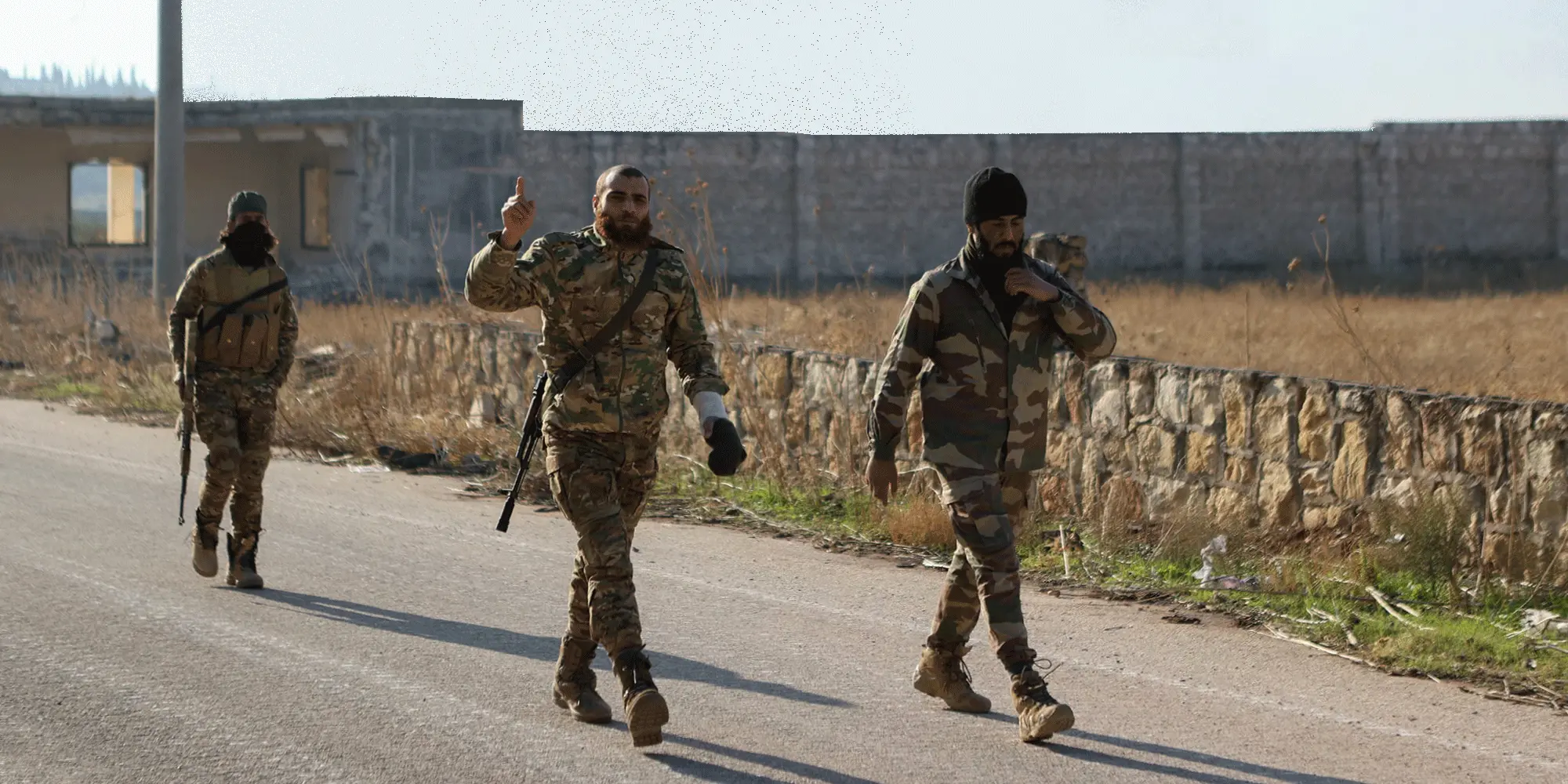
The battle of “Deterring the Aggression” (ـ “Rada‘ al‑ʿUdwan”) was launched amid complex and intertwined political circumstances. Locally, Syria was divided into four zones of influence and control; regionally, ongoing developments such as the “Al-Aqsa Flood” operation and the war in Lebanon were reshaping the region’s balance. Internationally, the main actors in the Syrian dossier Russia, Iran, the United States, and Turkey were maneuvering around their respective interests and direct ties to Syrian geography.

On the first anniversary of the launch of “Deterring the Aggression,” this report sheds light on the domestic, regional, and international political climate that preceded and accompanied the eleven-day battle, which ended on December 8, 2024, with the fall of the Assad regime closing a grim chapter of nearly half a century of rule under Hafez and then Bashar al-Assad.

A look back at the prelude to “Deterrence of Aggression“

After the Assad regime turned the Syrian revolution into an armed conflict, multiple factions began fighting it, while allied states offered political, military, and economic support particularly Iran and Russia. This tipped the balance of power and fragmented territorial control.
نون بوست

The fighting froze in 2020 under the “Moscow Agreement” (also known as the “cease-fire agreement”), signed on March 5 of that year by Russian President Vladimir Putin and his Turkish counterpart Recep Tayyip Erdoğan drawing a military-control map in Syria. Prior “reconciliation” deals, such as the “Sochi agreement,” had also preceded this.

Prior to launching “Deterring the Aggression,” Syria was divided into four main zones of control:

  • The Assad regime and its allies (Russia and Iran), controlling central and southern Syria representing the regime’s central authority.

  • The Syrian Democratic Forces (SDF), supported by the United States, partnered in battling the Islamic State (IS), controlling much of the northeast.

  • The Syrian National Army, backed by Turkey, active in northern and eastern rural Aleppo as well as the cities of Tel Abyad and Ras al-Ain.

  • The Hay’at Tahrir al-Sham (HTS), dominating Idlib and western Aleppo countryside, with indirect relations to Turkey.

Between mid‑2023 and 2024, the number of foreign military bases and installations scattered across Syria reached 801 including 529 Iranian sites, 126 Turkish, 114 Russian, and 32 belonging to the international coalition.

Even with the “Moscow Agreement” in place, near‑daily bombardments by the Assad regime, Russia, and Iran continued targeting opposition-held areas in northwest Syria, particularly Idlib. Opposition factions’ responses were generally limited to sniper fire, occasional strikes on military points near frontlines, or small-scale “infiltration” operations.

According to the Syrian Network for Human Rights, at least 234,145 civilians had been killed since March 2011, more than 202,000 of them by the forces of Bashar al-Assad. Estimates place the number of forcibly disappeared or missing persons in Syria between 200,000 and 300,000.

The 11 Days

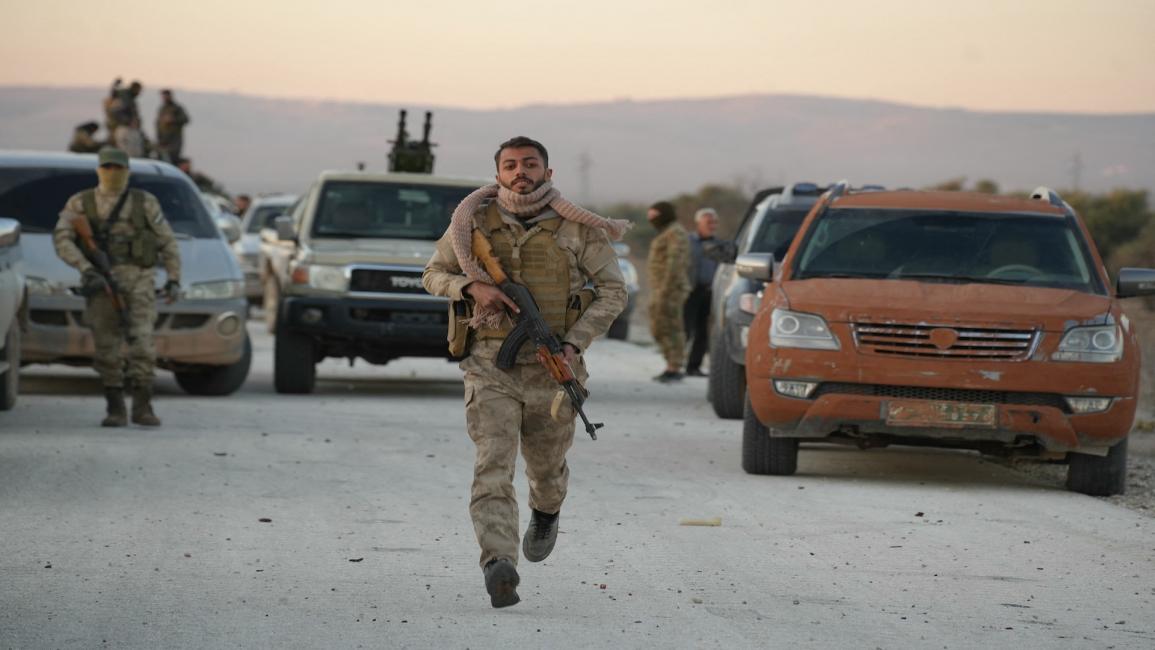
The operation “Deterring the Aggression” was launched under the umbrella of a so-called “Military Operations Management” body a coalition of several factions. Its spearhead included HTS alongside the National Liberation Front (Jabhat al‑Tahrir), the Jaysh al‑ʿIzza, and other factions from the Syrian National Army.
نون بوست

The battle began on the fronts of rural western Aleppo. Quickly, Assad’s forces, affiliated militias, and Iranian groups collapsed. Towns and cities fell one after another under the control of opposition elements wielding light and heavy weapons, supplemented by domestically manufactured drones known as “Shaheen.”

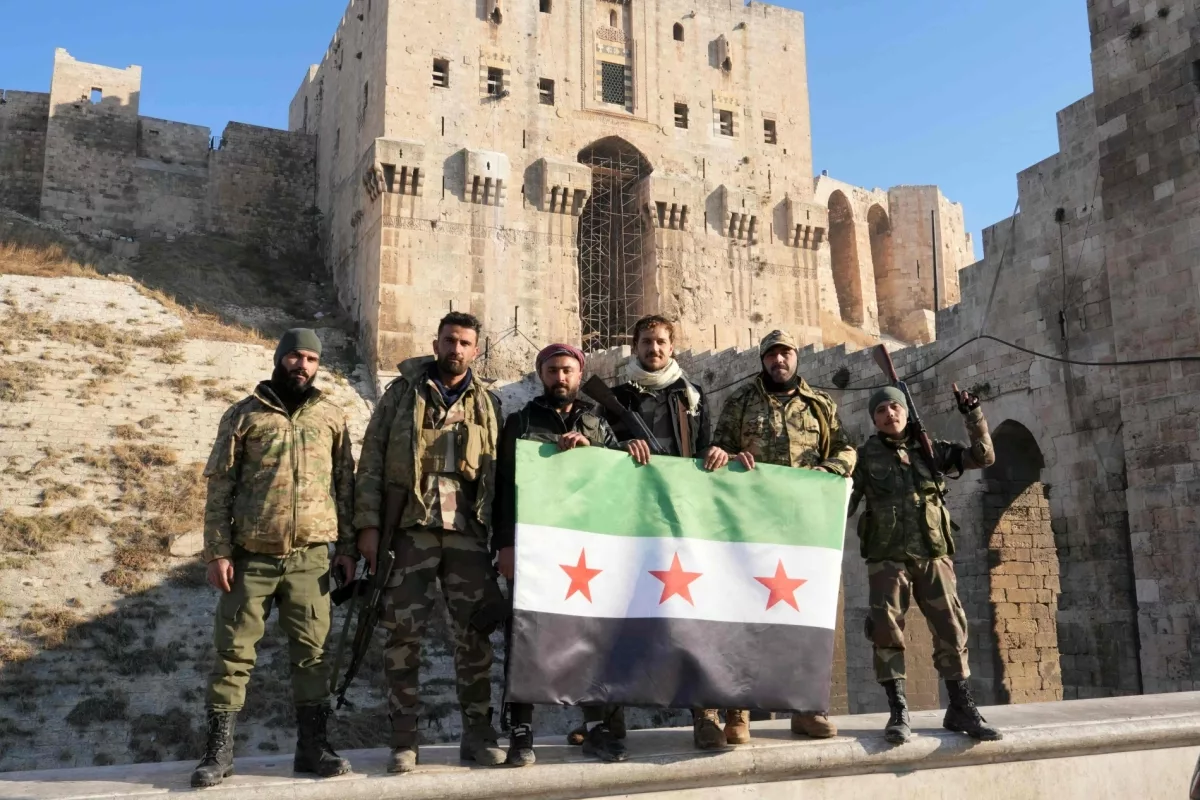
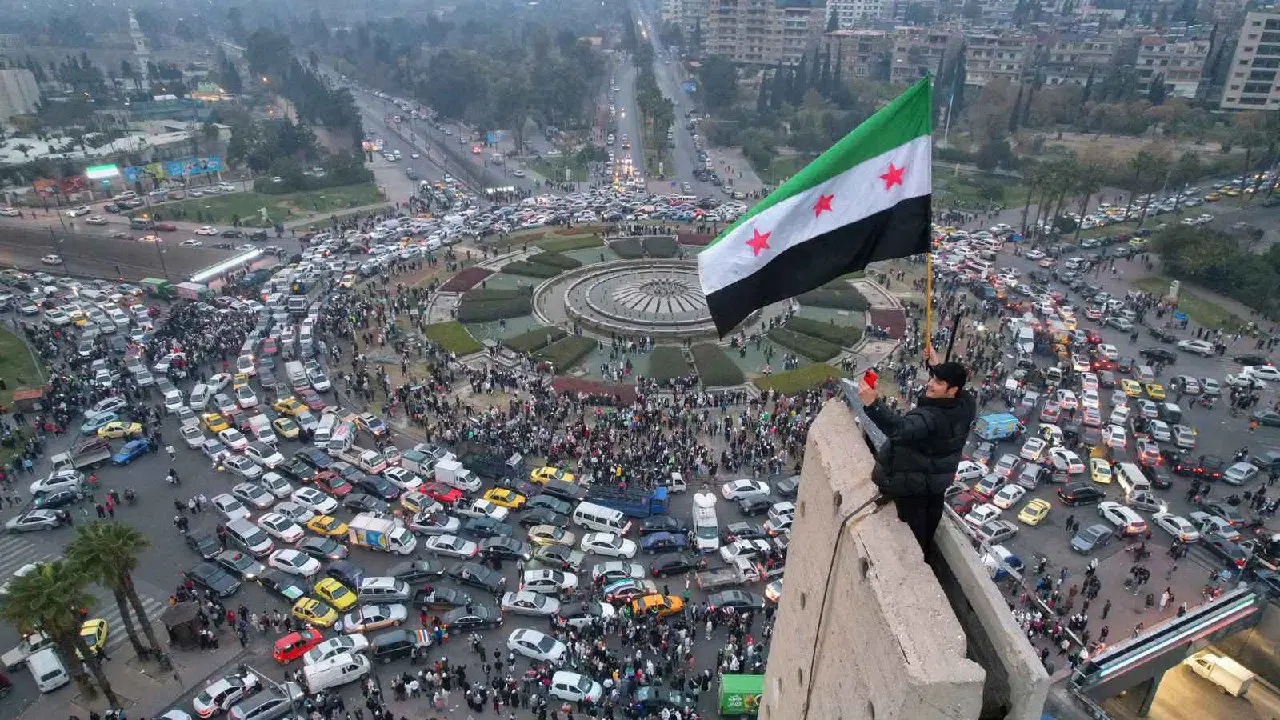
The forces pressed forward until they reached Damascus and on December 8, they declared the fall of the Assad regime, which had fled to Russia.

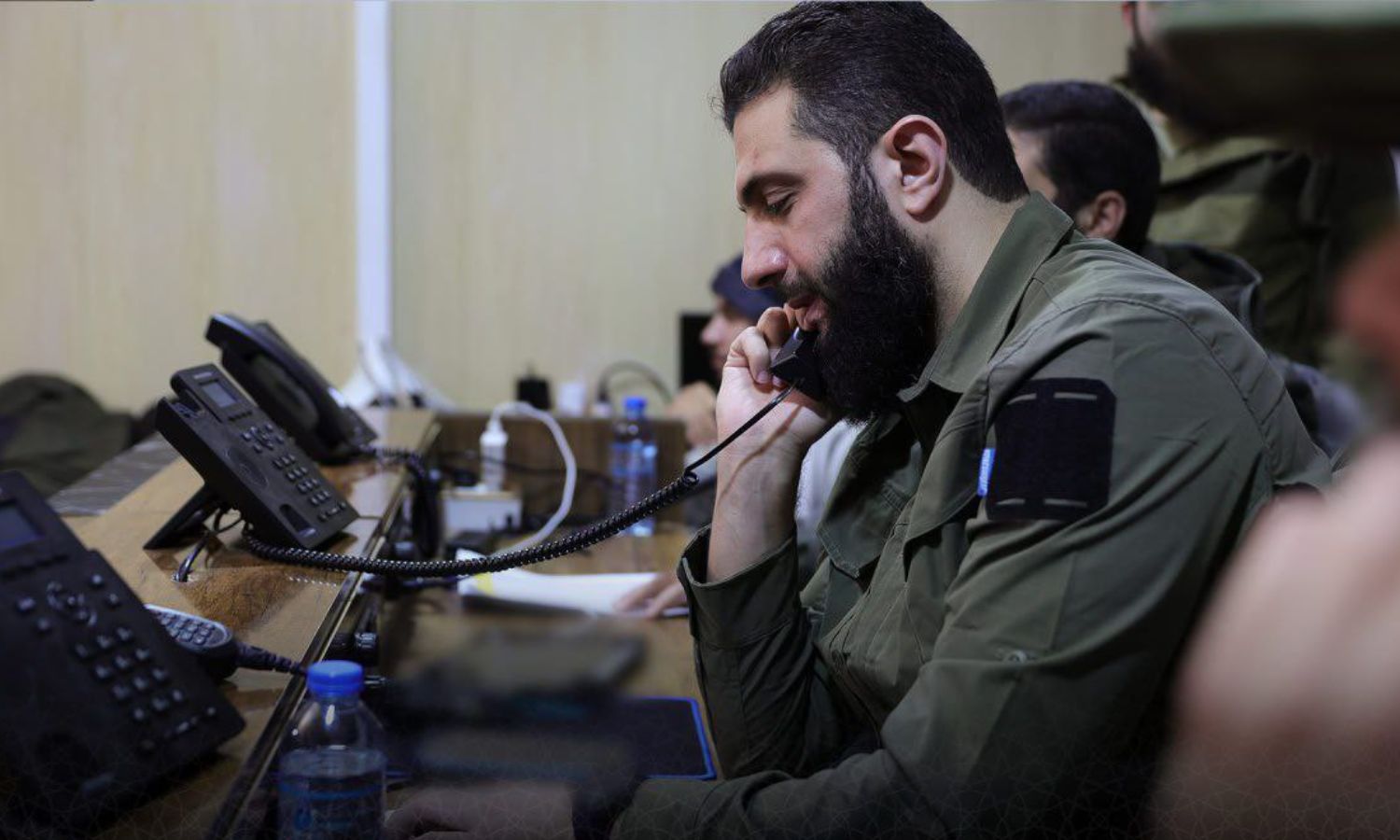
Simultaneously, military factions from southern Syria joined the offensive, seizing Daraa, Quneitra, and As-Suwayda, and marching toward Damascus. They coordinated with HTS, led by its commander Abu Mohammad al‑Julani, who directed the operation from a command center alongside other military leaders.

Throughout the campaign, “Military Operations Management” issued statements aimed at reassuring domestic and international audiences: they pledged no harm to minorities or sectarian communities; affirmed Syria would not threaten any state; and issued instructions to combatants on handling prisoners of war and regime soldiers willing to defect promising safe passage to those who surrendered.

The military campaign unfolded against a highly complex political landscape that played a decisive role in shaping its timing and course. Over preceding years, the Syrian political process had ceased to be exclusively Syrian. Syria had become a theater for regional and international bargaining, its fate determined by the interests of major powers.

At the local level:

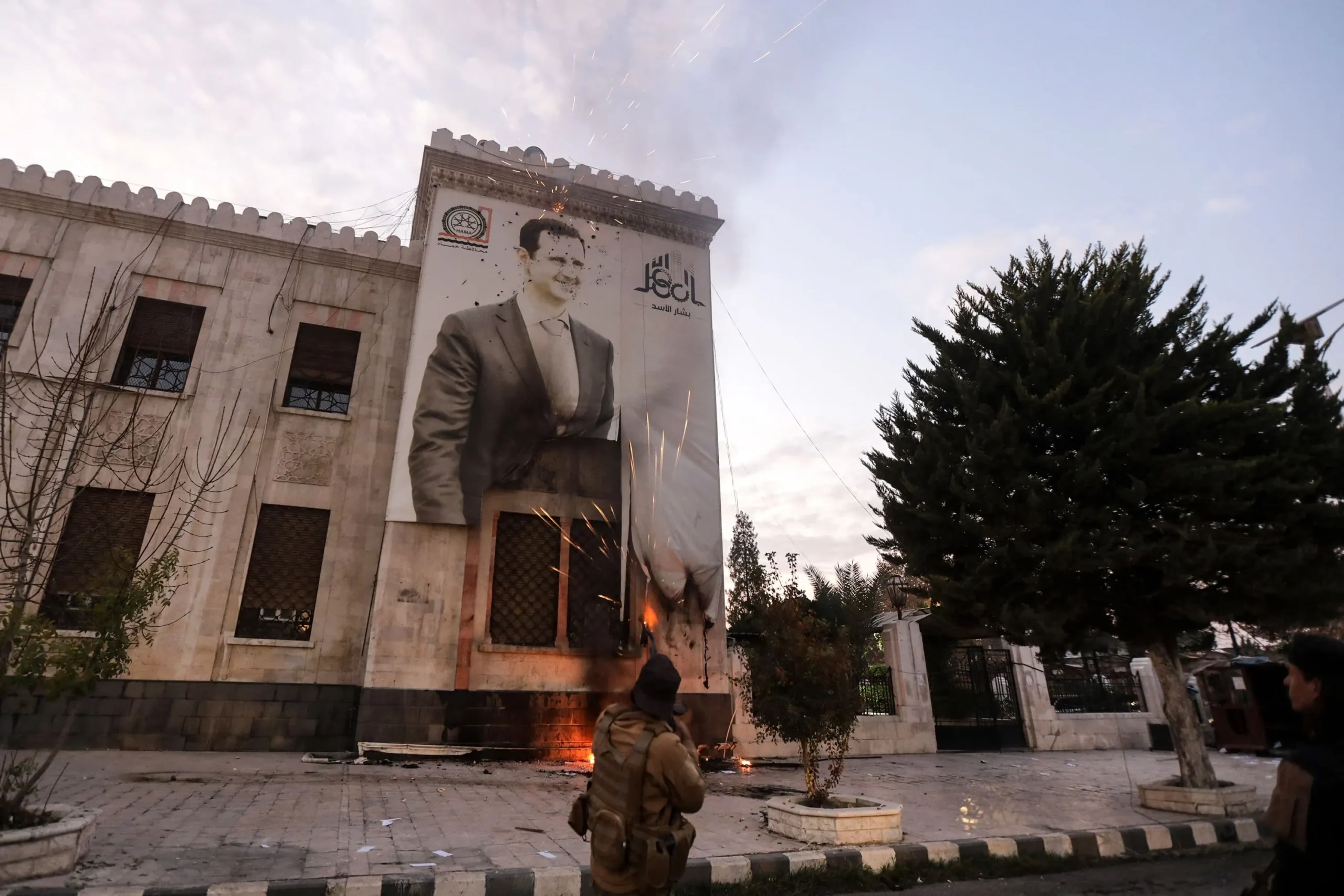
Under mounting European and American sanctions, the Assad regime endured political stagnation. Its diplomatic relations had narrowed down to a limited group of allies chiefly China, the UAE, and Abkhazia.
نون بوست

Meanwhile, the regime blocked any real progress toward political resolution in Syria, dragging its feet with bureaucratic delays and stalling tactics despite some diplomatic openings and renewed Arab‑backed efforts in 2023–2024 to reintegrate the regime into the “Arab fold.”

One such path was the Jordanian Initiative (first proposed in 2021, revived in 2023), which offered phased incentives including sanction relief and reconstruction aid in exchange for refugee returns, combating drugs, the withdrawal or reduction of Iranian forces, political reforms, and ending systemic repression. The regime failed to take any meaningful step.

Furthermore, the regime stalled on rapprochement with Turkey and refused to advance in talks with the opposition under the Astana Process which had conducted 22 rounds with guarantor states Russia, Iran, and Turkey, alongside regime and opposition representatives and international observers since 2017.

Official opposition institutions, whether the National Coalition for Syrian Revolutionary and Opposition Forces or the Syrian Interim Government, saw their influence further decline amid endless negotiations, procrastination, and a growing sense of betrayal, disappointment, and despair among the Syrian revolutionary street.

At the regional level:

Since October 2023, the region has been shaken by the Al‑Aqsa Flood operation in Gaza and escalating war in Lebanon events that placed the Assad regime in a critical test over how to respond to the Gaza conflict and Israel’s war in Lebanon, given Syria’s proximity to Palestine and Lebanon and its integration within the so-called “Axis of Resistance.”
نون بوست

Despite this alliance, the regime’s response never went beyond political posturing. It avoided real confrontation or intervention, even though the regime maintained close ties with Hezbollah which had fought alongside it in Aleppo, Latakia, Daraa, Rif Dimashq, Homs, and Hama, committing atrocities against civilians.

At the same time, Israel targeted Iranian advisors and sites inside Syria. Warnings were issued to Assad about allowing Syrian territory to be used for attacks against Israel. Hezbollah’s influence waned significantly, and several top commanders were killed weakening Iran’s leverage in Syria.

During this period, signs emerged of a broader Israeli–Iranian confrontation playing out on Syrian soil. Syria’s land, air, and sea corridors linking Tehran with Syria and Lebanon became increasingly vulnerable. Israeli strikes also targeted the Iranian embassy in Damascus and eliminated influential Iranian figures on Syrian territory.

According to foreign‑backed assessments, Iran in 2024 was likely unable to effectively intervene to save the Assad regime, particularly given the dire state of its regional standing. Even if it attempted intervention, it would lack the reach and effectiveness that characterized its role in 2015 or 2020.

Meanwhile, an American‑brokered cease‑fire between Israel and Hezbollah, enacted on November 27, 2024, set in motion the environment that allowed “Deterring the Aggression” to begin in northern Syria.

Within that same regional framework, Turkey once a staunch backer of the Syrian revolution had spent the two years leading up to the battle attempting to open political dialogue with the regime in hopes of achieving a resolution. Assad, for his part, repeatedly rejected such overtures, conditioning any negotiation on full Turkish withdrawal from northern Syria first.

The dynamics between the two parties followed a pattern of push and pull. Turkey, Russia, and the regime initially engaged; Iran joined later. Talks even broached a potential meeting between Erdoğan and Assad.

The regime remained adamant: Turkish forces must withdraw entirely before advancing any political process. Turkey, however, linked the withdrawal to broader political reforms a new constitution, elections, and a representative government reflecting all Syrian communities.

On the international stage:

Since the outbreak of the war in Ukraine in February 2022, attention turned to its repercussions for Syria especially for Russia, Assad’s principal backer. Moscow’s influence began to erode as it scaled down its military engagement, becoming preoccupied with the war in Ukraine.
نون بوست

Since Russia’s 2015 intervention in Syria when it heavily tipped the balance in favor of the regime its aerial and ground operations had been central to the regime’s survival.

Though Russia’s air force carried out limited strikes during “Deterring the Aggression,” its involvement in 2024 was far more restrained than in earlier years when it decisively shaped Syria’s dynamics. After rebel factions reached the city of Homs, negotiations reportedly mediated by Assad al‑Shaybani, the then‑foreign minister of the opposition command led to the withdrawal of Russian forces from combat operations.

Talks were held at the border crossing at Bab al‑Hawa and effectively removed Russia from the front lines, changing the course of the confrontation on the ground.

At the same time, the battle coincided with the ascent of Donald Trump to the U.S. presidency a development many anticipated would bring major shifts to the region, given America’s key role in Syria through sanctions, military bases in the east, and ties with Turkey and Israel.

There was also international pressure linked to the fate of missing American journalist Austin Tice, reportedly detained by the regime.

This American leverage in the Syrian file reportedly pushed Assad, just before Damascus was encircled, to present two covert proposals to Washington aimed at retaining power or securing safe exit from Syria.

The first proposal was relayed via the UAE to the U.S. administration: Damascus offered to cut ties with Iranian-backed armed groups especially Hezbollah in exchange for Western intervention to stop the conflict.

The second proposal came through sending the head of the Syriac Orthodox Church, Ignatius Aphrem II, to meet Hungarian Prime Minister Viktor Orbán, urging him to convey fears about an existential threat to the Christian minority should Islamic rebel forces win with the hope that Orbán would raise this concern with Trump.

In the end, it was military force that directly brought down the Assad regime. But the political conditions provided a conducive environment offering the timing and space for “Deterring the Aggression” to unfold. The operation ended five decades of Assad family rule, dating back to the 1970 coup, when Hafez al-Assad seized power and built a repressive, security-dominated state apparatus.

Download this article as PDF
Share this Article
Facebook Twitter Whatsapp Whatsapp Telegram Email Copy Link
حسن إبراهيم
By حسن إبراهيم صحفي سوري
Follow:
Previous Article نون بوست The “Economic Corridor”: An U.S. Attempt to Undermine China’s Global Ambitions
Next Article نون بوست Why Has Digital Freelancing Become a Lifeline for a Jobless morocco Generation?

Read More

  • U.S. Regime‑Change Policies: Why They Are Destined to Fail U.S. Regime‑Change Policies: Why They Are Destined to Fail
  • The Gulf’s Balancing Act: Iran, Israel, and Hidden Links
  • Iraq–Turkey Oil Export Treaty: Why Did Ankara Cancel It After 52 Years?
  • Syria’s Northeast on Edge: QSD Between Ankara and Damascus
  • Has Europe Changed Its Stance on Israel… or Just Its Language?
part of the design
NoonPost Weekly Newsletter

You May Also Like

U.S. Regime‑Change Policies: Why They Are Destined to Fail

U.S. Regime‑Change Policies: Why They Are Destined to Fail

إسراء سيد Esraa sayed 8 April ,2026
The Gulf’s Balancing Act: Iran, Israel, and Hidden Links

The Gulf’s Balancing Act: Iran, Israel, and Hidden Links

فريق التحرير Noon Post 8 April ,2026
Iraq–Turkey Oil Export Treaty: Why Did Ankara Cancel It After 52 Years?

Iraq–Turkey Oil Export Treaty: Why Did Ankara Cancel It After 52 Years?

فريق التحرير Noon Post 8 April ,2026

ماذا فعلت الحرب بأطفال الشرق الأوسط؟

فريق التحرير
Noon Post Published 3 October ,2015
Share
wwmww

يعيش الشرق الأوسط حالة من عدم الأمن والاستقرار منذ أكثر من أربع سنوات، تم الإعلان فيها عن الحرب الأهلية الدموية الموجودة في سوريا والمستمرة حتى الآن، ومن ثَمّ فرار الكثير من اللاجئين السوريين إلى دول الجوار في المنطقة، أهمها لبنان والأردن وتركيا والبعض الآخر إلى أوروبا، بالإضافة إلى دور تنظيم الدولة الإسلامية “داعش” في العراق والشام، والانقلاب العسكري في مصر منذ سنتين، إلى آخر الأحداث في اليمن وعودة الصراعات الانفصالية بين شماله وجنوبه متوّجة بالنزاعات الطائفية، الأمر الذي أدى إلى تغيّرات سياسية جذرية في المنطقة وتغيّرات ديموغرافية شديدة الملاحظة، لاسيما بالنسبة للوضع السوري؛ مما جعل منطقة الشرق الأوسط بقعة مشتعلة بالتغيّرات والأحداث؛ مما أدى إلى أن يكون الشرق الأوسط مرتبطًا في الأذهان الدولية بكلمتين: “النزاعات والحروب”، ليجذب بذلك خبراء السياسة ومحللي الحروب والنزاعات، ودارسي علم السياسة والعلاقات الدولية في مختلف الأنحاء لوضع قضايا الشرق الأوسط بمختلف توجهاتها وميولها وطوائفها على طاولة النقاش السياسي الدولي المتوّج بالقوانين والبروتوكلات والتدخلات الدولية الظاهر منها والباطن، والمكللة بالمصالح السيادية وغيرها، ليغيب عن أعين قادة الدول والخبراء والمحللين وغيرهم ممن يهتم بالشأن السياسي، أن الأوضاع الراهنة في الشرق الأوسط تخلق على المدى البطئ جيلًا بائسًا محرومًا من حق الحلم بالمستقبل، فيرتفع سقف أحلامه إلى أن يكون آمنًا، وألا يخسر ذويه في الحرب، وأن يعود إلى وطنه آجلًا أم عاجلًا، لأنه لا يريد أن يكون ابنًا للمخيمات.

تأثير الحرب على التعليم في الشرق الأوسط

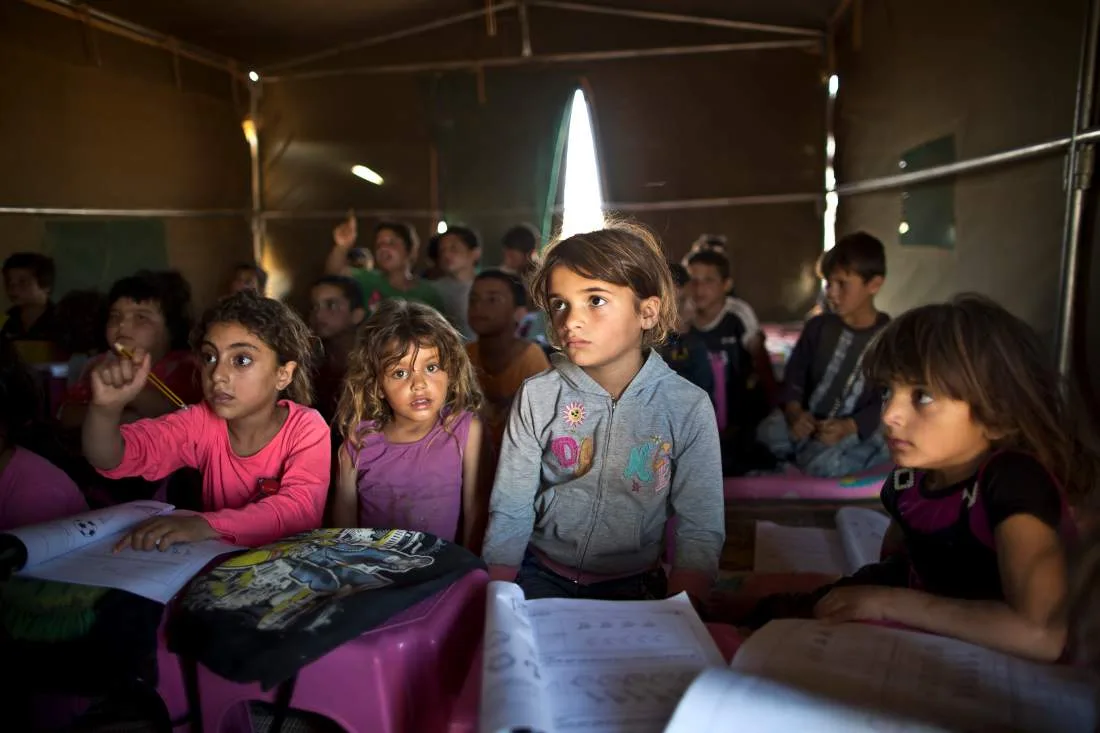
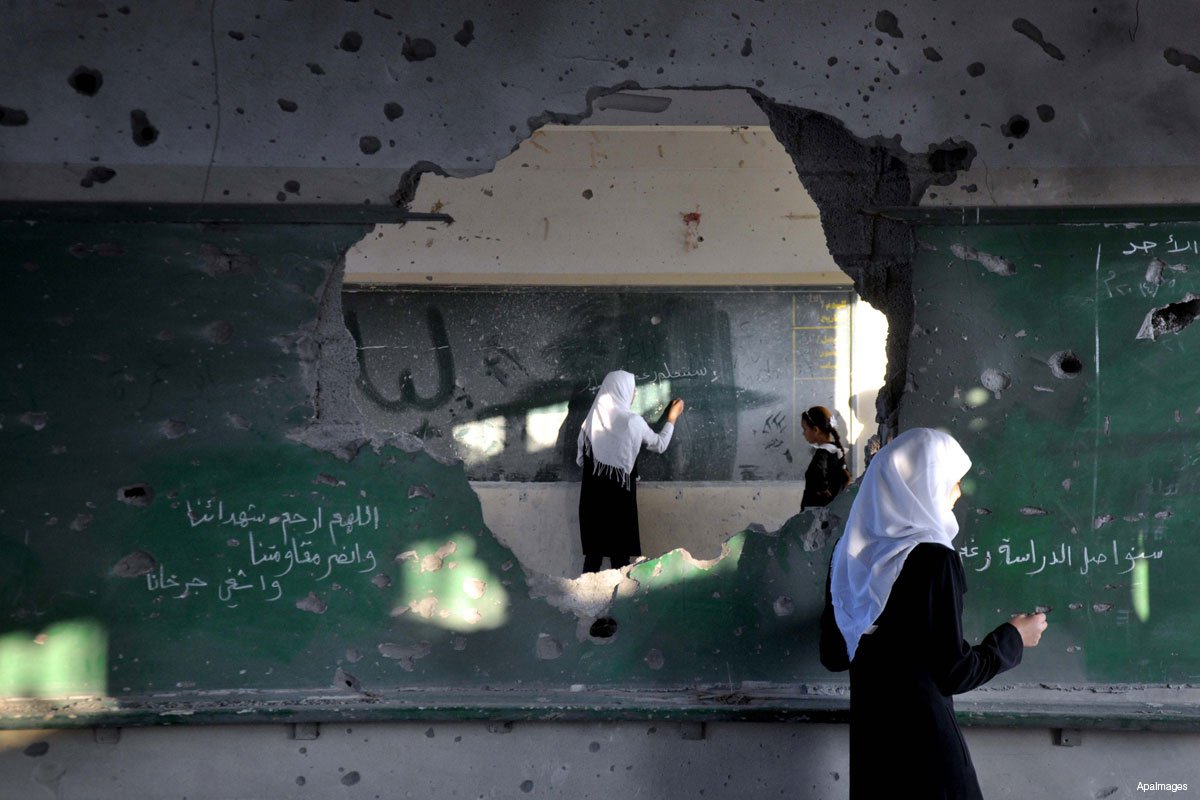
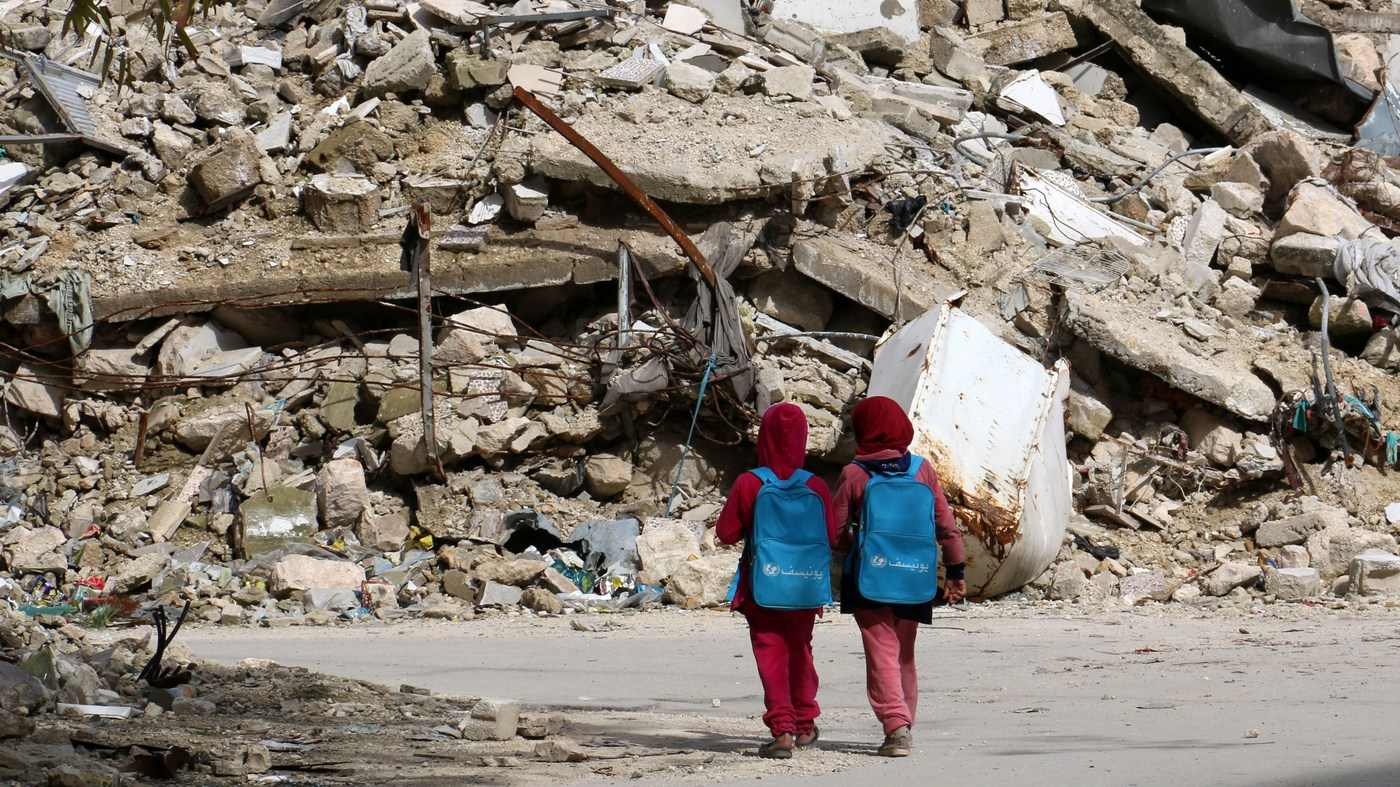
بعد أكثر من أربع سنوات من النزاعات في الشرق الأوسط، أصدر الاتحاد الأوروبي تقريرًا مفصلًا بإحصائيات أعداد الأطفال العرب الذين لا يتلقون أي نوع من أنواع التعليم بسبب الحروب، قال التقرير إنه تم حرمان أكثر من 13 مليون طفل عربي من التعليم بسبب الحروب والنزاعات القائمة في بلدانهم بمختلف توجهاتها، بالإضافة إلى وجود ستة ملايين آخريين مهددين بالخروج من العملية التعليمية قريبًا، حيث تمّ تدمير ما يُقارب 9000 مدرسة في كلٍ من سوريا والعراق واليمن وليبيا، وتم استخدام البعض منها كأماكن لإيواء اللاجئين، والبعض الآخر تم استخدامه كقواعد عسكرية للجيش في سوريا أو لتنظيم الدولة “داعش”،  بحسب شهادات بعض المعلمين والتلامذة في التقرير.

لا يكون الوضع مزدهرًا لمن استطاعوا الهروب واللجوء إلى دول الجوار، كالأدرن ولبنان وتركيا، حيث تقدر نسبة الأطفال الذين لا يتلقون التعليم في مخيمات اللاجئين إلى 56% من نسبة الأطفال اللاجئين، وذلك نتيجة لتردي مستويات المعيشة في كثير من المخيمات التي أقامتها دول الجوار، أو لقلة المساعدات المالية الوافدة من الدول الأوروبية، كما لا ننسى أن ازدياد عدد اللاجئين الشهري يفرض على المؤسسات الإغاثية الخاصة بتعليم الأطفال صعوبة في مواكبة ذلك العدد المتزايد يوميًا، ويمنعها من توفير التعليم لكل من في المخيم.

نون بوستغزة في 2014

يوجد ما يُقارب 700.000 طفل لاجئ في الأردن ولبنان وتركيا لا يتلقى التعليم، بسبب عدم القدرة المادية لذويه لإلحاقه بالمدارس الموجودة في تلك البلد التي طلب اللجوء إليها، ولقلة الموارد المادية في المخيم والتي أحيانًا لا تسمح بإقامة مدرسة داخل المخيم، بالإضافة إلى عدم قدرة المنظمات التعليمية الدولية على استيعاب ذلك العدد المتزايد من اللاجئين.

يقول بيتر سلامة رئيس هيئة “اليونيسيف” في الشرق الأوسط بأن الأمر لا يتوقف فقط على التدمير المادي للمدارس، ولكن خطورة الأمر تصل إلى الضرر النفسي الجسيم على الأطفال، والذي سيخلق جيلًا بائسًا يرى مستقبله مُدمر قبل أن يبدأ.

تقل نسبة دخول الفتاة في الشرق الأوسط إلى المدرسة عنها بالنسبة للصبي بمقدار 25%، وذلك للعديد من الأسباب الاجتماعية التي فرضتها الحروب والنزاعات السياسية على المجتمع العربي، فمنها خوف الأهل على خروج البنت من البيت في تلك الظروف غير الآمنة، ومنها الزواج المبكر للفتيات للحفاظ عليهن من الحرب ومحاولة الأهل في تأمين حياة آمنة لابنتهم، ومنها استغلال بعض العائلات للفتيات في العمل لكسب الرزق بطريقة شرعية وغير شرعية، بعد أن قضت الحرب على كل ما يمتلكه الفرد من أموال.

نون بوست

حرم النزاع الطائفي في اليمن والذي شنته جماعة الحوثي 600.000 طالب يمني ما بين الصف التاسع والصف الثاني عشر من مواصلة التعليم نتيجة للتدمير الذي شنته الجماعة على المدارس والجامعات، كما قضت النزاعات على طفل من بين كل ثمانية أطفال يمنين تم قتله أو تشويه جسده، مما أدى إلى قتل 400 طفل وإصابة 600 آخرين منذ اندلاع الحرب في اليمن، كما يعاني 1.8 مليون طفل يمني من سوء التغذية منذ شهر مارس الماضي وحتى يومنا هذا، وتم إغلاق 3.600 مدرسة حتى الآن وحرمان 92% من الأطفال من الحصول على التعليم الأساسي  بحسب تقارير هيئة اليونيسيف.

اعتقالات الأطفال مكسب للثورة المضادة في مصر

الثورة المضادة هي كل فعل معاكس لما حققته الثورة الأصلية بهدف إرساء القواعد والقوانين التي كانت موجودة بالفعل قبل الثورة، للثورة وجهان وكذلك للثورة المضادة، والتي لها وجه مؤسساتي يلعب على السيطرة على المؤسسات التي حاولت الثورة تحريرها، والوجه الآخر هو الوجه النفسي، أي الصراع على التوقعات أو الآمال التي طمحت الثورة في تحقيقها ومحاولة تدميرها والتقليل من أهميتها حتى يتم محوها تمامًا من أذهان الثوريين.

وهذا هو ما يحدث في مصر منذ الانقلاب العسكري في 2013، والذي هدم فكرة الشعب الثوري ليعود إلى فكرة القائد الملهم الحكيم، بنية جهل عامة الشعب بخبايا الأمور التي تحتاج القائد المخلص لتسوية كل شيء، فقبل ذلك نجحت الثورة في بدايات مراحلها إلا أن انتصرت عليها الثورة المضادة، في البداية نادت الثورة بالحرية والعدالة الاجتماعية وتحسين مستويات المعيشة في مصر وتوفير فرص آدمية للتعليم، إلا أن منذ عام  2000 وصولًا إلى الانقلاب العسكري تعاني مصر من اضطرابات شديدة في التعليم، الأمر الذي كان مكسبًا للثورة المضادة التي أعادت إحكام سيطرتها الفاسدة على مؤسسات التعليم كافة، ليبقى التعليم في مصر بين يد رجال الأعمال، ليبقى العامل الأساسي في خروج الأطفال من المدارس هو الفقر وعمالة الأطفال، وتصبح فرصة التحاق أبناء الأسر الغنية بالتعليم سبعة أضعاف فرصة أبناء الأسر الفقيرة، كما لا تزال مصر تحتل المرتبة الأولى في أكثر الدول العربية أميّة.

أصدرت منظمة “هيومانز وواتش مونيتوري” العديد من التقارير والقضايا المرتبطة بالاعتقال والاحتجاز التعسفي للأطفال المصريين الذين تتهمهم السلطة المصرية بالانضمام لجماعات إرهابية أو محاولة خلخلة الأمن الوطني داخل البلاد، حيث تتبع الشرطة المصرية نظام الاختفاء القسري للطفل باختطافه من الشارع بسبب انتماء أسرته لحزب سياسي معين، ومن ثم ظهوره بعد يومين وسط أحراز من الأسلحة والمنشورات الخاصة بجماعة الإخوان المسلمين في صور على مواقع التواصل الاجتماعي الخاصة بوزارة الداخلية.

لا تعتقل الشرطة المصرية الأطفال القصر تحت عمر الثامنة عشر عامًا فحسب، بل تشن عليهم حملات من الأذى النفسي والبدني وحرمان من الطعام والتريض وزيارة الأهل لشهور لتتم معاملتهم كمجرمين وليس كمعتقلين سياسيين، حيث خضع ما يقرب 150 طفلاً إلى المحاكمات بسبب تهم سياسية وتلقى أغلبهم عقوبة جنائية ليقضي شطرًا من حياته داخل السجن في تأديتها.

تفيد بعض التقارير بوجود 1200 طفل داخل السجون المصرية، ومع عدم كفاية الزنازين لهم فهناك ما يقرب 500 طفل يفترشون أرض الزنازين، في انتهاك واضح للدستور المصري الذي وافق عليه 99% من المصريين والذي يشير بضرورة محاكمة الطفل في محكمة الطفل وليس محكمة الجنايات.

هل هذا هو الجيل الذي يحلم العرب به لإعادة مجدهم المنكوب، ولمحو ذكريات الحرب والنزاعات الدموية والاعتقالات، لن تخلق الحرب إلا جيلًا بائسًا مصابًا بالأمراض العقلية والنفسية المزمنة، أقصى ما يتمنى أن يعيش في أمان، ولكن في بواطن نفسه سيحمل العداء للمجتمع والظروف التي جعلته في تلك الحالة، فإذا كان هدف السلطات إقامة الحرب من أجل القضاء على الإرهاب، فإن هذا الجيل من المحتمل جدًا أن ينتهج الإرهاب بحق في المستقبل.

TAGGED: آثار الحروب ، أطفال الحرب ، اعتقال الأطفال ، الأطفال في الحروب ، الأطفال في العالم العربي
TAGGED: حقوق الأطفال
Download this article as PDF
Share this Article
Facebook Twitter Whatsapp Whatsapp Telegram Email Copy Link
فريق التحرير
By فريق التحرير تقارير يعدها فريق تحرير نون بوست.
Follow:
Next Article نون بوست The Stigma of “ISIS”: A Heavy Legacy Haunting Women and Children of Former Members

Read More

  • U.S. Regime‑Change Policies: Why They Are Destined to Fail U.S. Regime‑Change Policies: Why They Are Destined to Fail
  • The Gulf’s Balancing Act: Iran, Israel, and Hidden Links
  • Iraq–Turkey Oil Export Treaty: Why Did Ankara Cancel It After 52 Years?
  • Syria’s Northeast on Edge: QSD Between Ankara and Damascus
  • Has Europe Changed Its Stance on Israel… or Just Its Language?
part of the design
NoonPost Weekly Newsletter
dark

An independent media platform founded in 2013, rooted in slow journalism, producing in-depth reports, analysis, and multimedia content to offer deeper perspectives on the news, led by a diverse young team from several Arab countries.

  • Politics
  • Society
  • Rights & Liberties
  • Opinions
  • History
  • Sports
  • Education
  • Technology
  • Economy
  • Media
  • Arts & Literature
  • Entrepreneurship
  • Travel
  • Cinema & Drama
  • Food
  • Health
  • Culture
  • Latest Reports
  • Files
  • Long Reads
  • Interviews
  • Podcast
  • Interactive
  • Encyclopedia
  • In Pictures
  • About Us
  • Our Writers
  • Write for Us
  • Editorial Policy
  • Advanced Search
Some rights reserved under a Creative Commons license

Removed from favorites

Undo
Go to mobile version