













NoonPost NoonPost

NoonPost

  • Home
  • Politics
  • Economy
  • Society
  • Culture
  • Files
  • Long Reads
  • Podcast
AR
Notification Show More
نون بوست
“There Are Nights I Can’t Close My Eyes”: How Gazans Are Living in Homes on the Brink of Collapse
نون بوست
From al-Jolani to Ahmad al-Shara: The Evolution of Syria’s New Leader
نون بوست
When Political Islam Receded in Egypt: Who Filled the Void?
نون بوست
An Extension of Genocide: Gaza’s Detainees Speak Out
نون بوست
A Tightrope Between Survival and Sovereignty: The Syrian Government Faces Normalization Pressures
نون بوست
American Aircraft Carriers: Has the Era of “100,000 Tons of Diplomacy” Ended?
نون بوست
U.S. Regime‑Change Policies: Why They Are Destined to Fail
نون بوست
Transformations of Israeli Judaism: Between the Victim Complex and the Colonizer’s Doctrine
نون بوست
The Gulf’s Balancing Act: Iran, Israel, and Hidden Links
نون بوست
Iraq–Turkey Oil Export Treaty: Why Did Ankara Cancel It After 52 Years?
نون بوست
Syria’s Northeast on Edge: QSD Between Ankara and Damascus
نون بوست
Has Europe Changed Its Stance on Israel… or Just Its Language?
NoonPost NoonPost
AR
Notification Show More
نون بوست
“There Are Nights I Can’t Close My Eyes”: How Gazans Are Living in Homes on the Brink of Collapse
نون بوست
From al-Jolani to Ahmad al-Shara: The Evolution of Syria’s New Leader
نون بوست
When Political Islam Receded in Egypt: Who Filled the Void?
نون بوست
An Extension of Genocide: Gaza’s Detainees Speak Out
نون بوست
A Tightrope Between Survival and Sovereignty: The Syrian Government Faces Normalization Pressures
نون بوست
American Aircraft Carriers: Has the Era of “100,000 Tons of Diplomacy” Ended?
نون بوست
U.S. Regime‑Change Policies: Why They Are Destined to Fail
نون بوست
Transformations of Israeli Judaism: Between the Victim Complex and the Colonizer’s Doctrine
نون بوست
The Gulf’s Balancing Act: Iran, Israel, and Hidden Links
نون بوست
Iraq–Turkey Oil Export Treaty: Why Did Ankara Cancel It After 52 Years?
نون بوست
Syria’s Northeast on Edge: QSD Between Ankara and Damascus
نون بوست
Has Europe Changed Its Stance on Israel… or Just Its Language?
Follow US

Are Mummies Enough to Shape Egypt’s Future?

فريق التحرير
Noon Post Published 26 March ,2026
Share
نون بوست
نون بوست

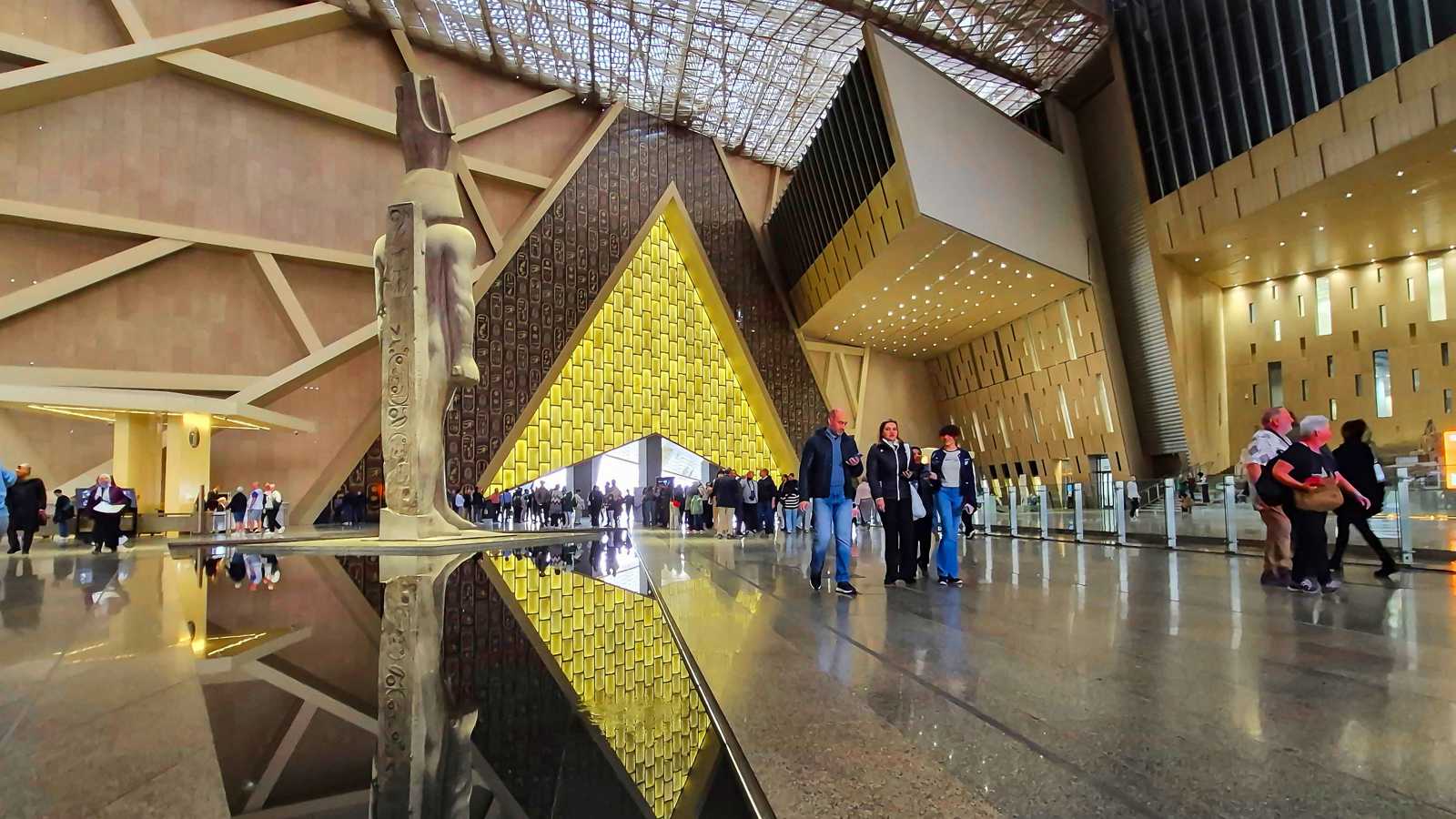
With the opening of the Grand Egyptian Museum, the question of identity has reemerged forcefully in Egypt’s public sphere. Public discourse has largely celebrated Pharaonic civilization as the root of modern Egyptian identity.

Yet as I followed this discussion, I felt the questions ran far deeper than the celebratory surface, and required a voice capable of unraveling these complexities at their core. That’s when I naturally turned once again to Dr. Ali Shariati’s book Return to the Self.

I wasn’t invoking Shariati the man, but rather his book, as if to sit with me before these pressing questions. I read, annotated, and compared his ideas to what’s unfolding in Egypt today.

Gradually, it seemed as though Shariati was answering these dilemmas with remarkable clarity even though his book was written in an entirely different context. What’s striking is that the ideas he proposed still illuminate wide areas of the current Egyptian debate.

In Return to the Self, Shariati argues that identity is not what we place in museums, but what we live in our everyday lives. Identity is not the past that survives in artifacts and statues; it’s that part of the self still alive in the popular consciousness shaping meaning, guiding behavior, and forming the collective conscience.

He draws a clear distinction between heritage and identity: heritage is vast and includes both the living and the dead; identity includes only what is alive and active.

When I applied this framework to Egypt’s situation, the picture became clearer. Pharaonism is an integral part of Egypt’s heritage, and no Egyptian can deny the pride it brings. But it is not the component that animates daily life today.

The language Egyptians speak, the values they hold, their religious conscience, traditions, relationships, and worldview all these were shaped in eras that came after the Pharaonic age. What we see in the museum is part of the memory, but not of the living identity that drives people today.

As I kept reading, I found Shariati restating the same idea in a different form: nations are not built on the past as mere history, but on the parts of it that can be transformed into energy. A past that remains confined to the museum is simply that a past. A living identity is built on the elements people actually experience, not on those they admire in moments of celebration.

In this sense, Shariati through his book helped me see that Egypt’s living identity today is formed from other, more tangible elements: religion, which shapes the collective conscience; the Arabic language, which remains the vessel of awareness and imagination; the modern sense of nationalism, born from Egyptians’ struggles over the past century; the deep partnership between Muslims and Christians; and a unique Egyptian spirituality that’s present in the texture of everyday life.

These aren’t just layers of history they are the active components through which Egyptians move, express themselves, and understand the meaning of homeland and belonging.

As I read on, it became clear that Shariati wants to remind us: memory itself isn’t the problem. Celebrating the Grand Egyptian Museum is natural and necessary. The real danger lies in mistaking memory for identity, and in assuming that the past alone can forge the future.

The museum is a project of memory, not a project of identity. Identity is built in schools, homes, language, and everyday interactions not in glittering halls.

Toward the end of the book, it felt as though Shariati distilled everything into a single sentence: “Returning to the self is not a return to the entire past, but to that part of the past and present that is still alive and gives humans power and vitality.”

And that is precisely what Egypt needs today: to distinguish between memory that evokes pride and identity that breathes life.

I began reading the book in search of answers to the present, and ended up realizing that returning to the self doesn’t mean returning to what was but to what lives in us now and what still inspires.

Egyptian identity today urgently needs this understanding: to be built not on what gleams in a museum, but on what pulses within people. Because the future will not be built by mummies however majestic but by a living identity that gives people clarity of purpose and the power to renew themselves.

Download this article as PDF
Share this Article
Facebook Twitter Whatsapp Whatsapp Telegram Email Copy Link
فريق التحرير
By فريق التحرير تقارير يعدها فريق تحرير نون بوست.
Follow:
Previous Article نون بوست This is how Houthis Are Building a Parallel Judicial System Within Yemen’s Courts
Next Article نون بوست Why Has Global Support for Gaza Waned After the War?

Read More

  • U.S. Regime‑Change Policies: Why They Are Destined to Fail U.S. Regime‑Change Policies: Why They Are Destined to Fail
  • The Gulf’s Balancing Act: Iran, Israel, and Hidden Links
  • Iraq–Turkey Oil Export Treaty: Why Did Ankara Cancel It After 52 Years?
  • Syria’s Northeast on Edge: QSD Between Ankara and Damascus
  • Has Europe Changed Its Stance on Israel… or Just Its Language?
part of the design
NoonPost Weekly Newsletter

You May Also Like

U.S. Regime‑Change Policies: Why They Are Destined to Fail

U.S. Regime‑Change Policies: Why They Are Destined to Fail

إسراء سيد Esraa sayed 8 April ,2026
The Gulf’s Balancing Act: Iran, Israel, and Hidden Links

The Gulf’s Balancing Act: Iran, Israel, and Hidden Links

فريق التحرير Noon Post 8 April ,2026
Iraq–Turkey Oil Export Treaty: Why Did Ankara Cancel It After 52 Years?

Iraq–Turkey Oil Export Treaty: Why Did Ankara Cancel It After 52 Years?

فريق التحرير Noon Post 8 April ,2026
dark

An independent media platform founded in 2013, rooted in slow journalism, producing in-depth reports, analysis, and multimedia content to offer deeper perspectives on the news, led by a diverse young team from several Arab countries.

  • Politics
  • Society
  • Rights & Liberties
  • Opinions
  • History
  • Sports
  • Education
  • Technology
  • Economy
  • Media
  • Arts & Literature
  • Entrepreneurship
  • Travel
  • Cinema & Drama
  • Food
  • Health
  • Culture
  • Latest Reports
  • Files
  • Long Reads
  • Interviews
  • Podcast
  • Interactive
  • Encyclopedia
  • In Pictures
  • About Us
  • Our Writers
  • Write for Us
  • Editorial Policy
  • Advanced Search
Some rights reserved under a Creative Commons license

Removed from favorites

Undo
Go to mobile version