NoonPost NoonPost

NoonPost

  • Home
  • Politics
  • Economy
  • Society
  • Culture
  • Files
  • Long Reads
  • Podcast
AR
Notification Show More
نون بوست
“There Are Nights I Can’t Close My Eyes”: How Gazans Are Living in Homes on the Brink of Collapse
نون بوست
From al-Jolani to Ahmad al-Shara: The Evolution of Syria’s New Leader
نون بوست
When Political Islam Receded in Egypt: Who Filled the Void?
نون بوست
An Extension of Genocide: Gaza’s Detainees Speak Out
نون بوست
A Tightrope Between Survival and Sovereignty: The Syrian Government Faces Normalization Pressures
نون بوست
American Aircraft Carriers: Has the Era of “100,000 Tons of Diplomacy” Ended?
نون بوست
U.S. Regime‑Change Policies: Why They Are Destined to Fail
نون بوست
Transformations of Israeli Judaism: Between the Victim Complex and the Colonizer’s Doctrine
نون بوست
The Gulf’s Balancing Act: Iran, Israel, and Hidden Links
نون بوست
Iraq–Turkey Oil Export Treaty: Why Did Ankara Cancel It After 52 Years?
نون بوست
Syria’s Northeast on Edge: QSD Between Ankara and Damascus
نون بوست
Has Europe Changed Its Stance on Israel… or Just Its Language?
NoonPost NoonPost
AR
Notification Show More
نون بوست
“There Are Nights I Can’t Close My Eyes”: How Gazans Are Living in Homes on the Brink of Collapse
نون بوست
From al-Jolani to Ahmad al-Shara: The Evolution of Syria’s New Leader
نون بوست
When Political Islam Receded in Egypt: Who Filled the Void?
نون بوست
An Extension of Genocide: Gaza’s Detainees Speak Out
نون بوست
A Tightrope Between Survival and Sovereignty: The Syrian Government Faces Normalization Pressures
نون بوست
American Aircraft Carriers: Has the Era of “100,000 Tons of Diplomacy” Ended?
نون بوست
U.S. Regime‑Change Policies: Why They Are Destined to Fail
نون بوست
Transformations of Israeli Judaism: Between the Victim Complex and the Colonizer’s Doctrine
نون بوست
The Gulf’s Balancing Act: Iran, Israel, and Hidden Links
نون بوست
Iraq–Turkey Oil Export Treaty: Why Did Ankara Cancel It After 52 Years?
نون بوست
Syria’s Northeast on Edge: QSD Between Ankara and Damascus
نون بوست
Has Europe Changed Its Stance on Israel… or Just Its Language?
Follow US

Investigation Reveals the Largest Forced Displacement in the West Bank Since 1967

عماد عنان
Emad Anan Published 26 March ,2026
Share
نون بوست
نون بوست

On the morning of Tuesday, January 21, 2025, 65-year-old Sarah awoke to strange noises piercing the sky over Jenin refugee camp. Loudspeakers mounted on drones blared messages in Arabic, urging residents to evacuate the camp immediately via the “Awda Junction” in the northwest.

At first, Sarah assumed it was just another psychological warfare tactic something she and other West Bank residents had grown used to from Israeli forces, especially since it came just two days after a humanitarian truce was announced between Gaza’s resistance factions and the Israeli government.

But what she thought was a bluff turned out to be the prelude to disaster. The following morning, the drones returned, flying low and repeating evacuation orders from 9 a.m. to 5 p.m., declaring in Arabic: “Evacuate your homes.

If you don’t, you will be held responsible. We will destroy the camp.” The drones circled homes, hovered at windows, and stirred panic among residents.

“I thought we’d be gone a day or two, then come back,” Sarah said, recounting how she was eventually forced out under the watch of armed soldiers. “We left in the clothes we were wearing. I didn’t even take my medication.

It was so hard. When you have children or someone with a disability, your only thought is their safety.

As we walked toward the Awda Junction, soldiers nearby fired in the air, maybe to intimidate us… but we kept walking. I haven’t returned since.”

Sarah was not alone. In a report published on November 20, 2025, Human Rights Watch documented that more than 32,000 Palestinians were forcibly displaced from three West Bank refugee camps Jenin, Tulkarem, and Nur Shams between January and February of that year. Israeli authorities have continued to block their return.

The 105-page report, titled “All My Dreams Are Gone: Israel’s Forcible Displacement of Palestinians in the West Bank,” states that the three camps were nearly emptied of their populations, in what is now the largest mass displacement in the West Bank since 1967.

Ten months later, the camps remain largely deserted, with tens of thousands still displaced, unable to return despite the cessation of military operations.

Operation “Iron Wall”: A Timeline of Expulsion

Codenamed “Iron Wall” by the Israeli military, the operation began on January 21 with a full-scale assault on Jenin camp, later extending to Tulkarem on January 27 and Nur Shams on February 9. All three invasions followed an eerily similar pattern: identical tactics and machinery, and the systematic terror-driven expulsion of thousands of residents.

Jenin: The Starting Point

The attack on Jenin began with overwhelming force: Apache helicopters firing live rounds, armed drones, armored vehicles, military bulldozers, and hundreds of soldiers storming in from multiple directions.

“It was around noon,” recalls 44-year-old Fatima. “We heard a drone firing at people. We hid inside, clueless about what was happening. Then people started shouting outside, saying we had to leave immediately.”

The evacuation orders came intermittently via drones with loudspeakers directing people to the Awda Junction. Sarah described being forced out under armed surveillance: “When we arrived at the junction, it was filled with soldiers.

There was a makeshift checkpoint. I wasn’t allowed to pass until they scanned my eye. Others were pulled aside we didn’t know why or where they were taken.”

Tulkarem: A Replay of Fear

Six days later, on January 27, the operation swept into Tulkarem camp with the same terrifying script: ground forces, drones, tanks, bulldozers, and forced evacuations under live fire.

Leila, 54, was cooking lunch at her home in the northeastern part of the camp when the raid began. “We knew they were coming we followed the updates on Telegram. Then, suddenly, they broke the door down… about 25 soldiers entered with a dog. It felt like another Nakba.”

“They were screaming, smashing everything. Some wore masks, others carried large guns and grenades,” she continued. “They forced us out. My pregnant daughter asked for milk and baby clothes. One soldier told her, ‘You no longer have a home here… you have to leave.’”

Leila’s daughter, four months pregnant, collapsed during the chaos and later lost the pregnancy. When Human Rights Watch interviewed Leila in March, she was still in mourning. She described Caterpillar D9 bulldozers clearing rubble from a neighborhood already ravaged by previous assaults.

By 5 p.m., Israeli forces had taken control of nearly every camp entrance. Residents documented the destruction via Telegram, with images and videos later verified by human rights organizations.

Nur Shams: The Final Blow

On February 9, Nur Shams became the third and final target. The military repeated the same pattern raids, mass expulsions, and sweeping destruction this time in full view of the world.

One witness recalled how soldiers blew open a door with an explosive device before storming the neighborhood. “My husband, our 14-year-old daughter, and I were inside, paralyzed with fear,” she said. “We saw them use heavy machinery to break through the garden wall before ordering us to evacuate.”

Tragically, the explosion used in the raid killed 21-year-old Rahaf Al-Ashqar and left her father critically wounded.

Systematic Ethnic Cleansing

Nadia Hardman, senior refugee and migrant rights researcher at Human Rights Watch, summed up the early months of 2025 as follows: “Israeli authorities uprooted more than 32,000 Palestinians from their homes in West Bank camps illegally, without allowing return.

While the world focused on Gaza, crimes were being committed in silence in the West Bank: war crimes, crimes against humanity, and ethnic cleansing. These demand an uncompromising investigation and accountability.”

The organization’s findings are based on 31 testimonies, satellite imagery, demolition records, and verified footage. In the first six months of the operation, 850 structures were destroyed. Bulldozers seemed less interested in buildings than in erasing memory itself.

UN reports mirrored these observations: shattered roads, armored vehicles stationed long-term, military barriers redrawing maps by force, and bulldozers tearing through homes and histories.

This was not just a violation—it was a direct assault on the Fourth Geneva Convention, which explicitly states: “The Occupying Power shall not deport or transfer parts of its own civilian population into the territory it occupies.”


Evacuation Under Fire

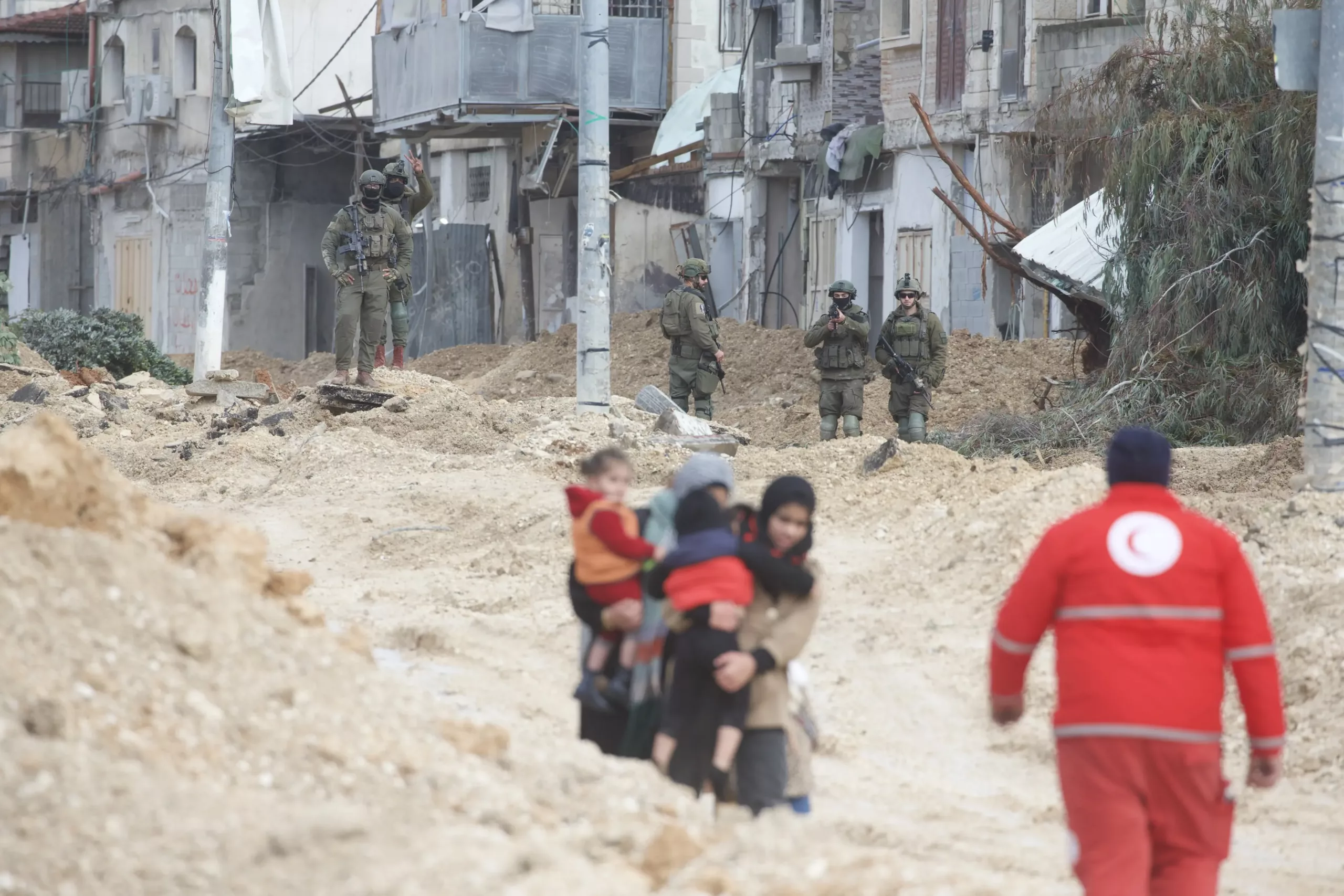
Israeli forces stormed the camps without any structured evacuation plans. Soldiers fired live rounds, while drones thundered overhead. Snipers watched from rooftops as civilians fled.

In Jenin, evacuation routes were vague; in Tulkarem and Nur Shams, they were confusing, often lethal. Human Rights Watch documented incidents of people being shot while attempting to escape.

Those who fled were met with nothing. Many crammed into relatives’ homes, others into mosques, schools, or charity shelters without tents, food, or medicine. The regime that uprooted them abandoned them to fend for themselves.

The Largest Displacement Since 1967

Human Rights Watch emphasized that this was not just a military campaign it was the most extensive displacement of Palestinians since the 1967 war. Israeli claims of “restructuring” and “opening access routes” were mere linguistic veils. In reality, people not just structures were being erased.

The camps remained sealed for six months. Those who attempted to return were shot at. A handful were allowed back only briefly to retrieve essential items before being expelled again.

What unfolded was not temporary or random; it was a calculated plan to depopulate the camps and repurpose the land as part of a broader project to reshape the West Bank into an expanding settlement zone, erasing Palestinian presence.

A Call for Accountability

Based on irrefutable testimonies and evidence, Human Rights Watch concluded that the Israeli military’s actions formed a cohesive campaign of apartheid and persecution. The scale of the violations placed high-ranking Israeli officials under international legal scrutiny for “command responsibility” a charge that does not expire or allow for excuses.

The report named key political and military figures including Benjamin Netanyahu, Israel Katz, Bezalel Smotrich, Major General Avi Blot, Herzi Halevi, and Eyal Zamir as individuals who should be prosecuted for crimes against humanity.

It also called for tangible actions: targeted sanctions, arms embargoes, suspension of preferential trade agreements, bans on settlement products, and enforcement of ICC arrest warrants. These, the organization said, would send a clear message: the world will not turn a blind eye to blatant injustice.

Nadia Hardman concluded with a grave appeal: “Governments worldwide must act urgently to halt the escalation of repression in the West Bank and impose sanctions on Netanyahu, Katz, and others complicit in serious crimes against Palestinians.”

Her words were not just a plea for justice but a wake-up call to a world dangerously asleep, as a humanitarian collapse unfolds in plain sight.

The Burden Returns to Governments

What Human Rights Watch documented may not surprise close observers. Since the outbreak of war in October 2023, Israeli forces have killed nearly a thousand Palestinians in the West Bank, expanded the use of administrative detention, intensified illegal settlement activity, and increased settler violence. Torture and abuse of detainees have also escalated.

Forced displacement and other forms of systematic repression are part of a broader apparatus of apartheid and persecution, the organization argues. This body of evidence can serve legal action against Israel in international forums.

It strengthens the Palestinian case before the International Criminal Court and the International Court of Justice. Some countries also possess laws enabling them to prosecute war crimes extraterritorially.

In the end, these intersecting legal and diplomatic channels could form a powerful international pressure network exposing Israel’s actions and restoring Palestine’s place on the global agenda.

Ultimately, the responsibility returns to Arab and Islamic governments. They no longer need more evidence. If the will exists, they can reclaim their long-abandoned role in defending the Palestinian cause.

The final question remains: Will this moment be seized or will betrayal become a permanent feature of the current generation of regimes?

Download this article as PDF
Share this Article
Facebook Twitter Whatsapp Whatsapp Telegram Email Copy Link
عماد عنان
By عماد عنان كاتب صحفي وباحث في الإعلام الدولي
Follow:
Previous Article نون بوست Akhannouch’s Government Engulfed in Conflict of Interest Scandals
Next Article نون بوست Fatima Zahra Mansouri: On the Brink of Leading Morocco’s Government

Read More

  • U.S. Regime‑Change Policies: Why They Are Destined to Fail U.S. Regime‑Change Policies: Why They Are Destined to Fail
  • The Gulf’s Balancing Act: Iran, Israel, and Hidden Links
  • Iraq–Turkey Oil Export Treaty: Why Did Ankara Cancel It After 52 Years?
  • Syria’s Northeast on Edge: QSD Between Ankara and Damascus
  • Has Europe Changed Its Stance on Israel… or Just Its Language?
part of the design
NoonPost Weekly Newsletter

You May Also Like

U.S. Regime‑Change Policies: Why They Are Destined to Fail

U.S. Regime‑Change Policies: Why They Are Destined to Fail

إسراء سيد Esraa sayed 8 April ,2026
The Gulf’s Balancing Act: Iran, Israel, and Hidden Links

The Gulf’s Balancing Act: Iran, Israel, and Hidden Links

فريق التحرير Noon Post 8 April ,2026
Iraq–Turkey Oil Export Treaty: Why Did Ankara Cancel It After 52 Years?

Iraq–Turkey Oil Export Treaty: Why Did Ankara Cancel It After 52 Years?

فريق التحرير Noon Post 8 April ,2026

في تونس.. حيرة في السّلطة و أخرى بالمعارضة

خليل كلاعي
خليل كلاعي Published 10 October ,2015
Share
rtr4jqbg

هناك علامات لا تخطئها أذن السّامع ولا عين المتابع تفيد بوجود خطب ما على مستوى التحالف الرباعي الّذي يقود الحكم في تونس، لكن هل  يرتقي هذا الخطب إلى مستوى المأزق أو الأزمة ذلك هو السؤال الذّي تبحث له أطراف عدّة عن إجابة واضحة، على رأس الأطراف المعنية بالإجابة عن هذا السؤال، المعارضة التيّ تعيش بدورها مأزقًا من نوع آخر.

إذا ألقينا نظرة عن كثب على التحالف الرباعي الحاكم سنقف على عدد من التناقضات الجوهرية فالحزبان اللذان يمتلكان أكبر عدد من المقاعد البرلمانية واللذان يشكلان قلب هذا التحالف الرباعي، بنى كل منهما حملته الانتخابية على شيطنة الآخر حيث كان حزب “نداء تونس” يعتبر شريكه في الحكم حزب ” النهضة” حزبًا إخوانيًا ذا مرجعية إسلامية متطرّفة، كما كان يحمّله مسؤولية الاغتيالات السياسية والإرهاب في البلاد، وفي المقابل يعتبر النهضويون حزب النّداء الذراع الرئيسي للقوى المضادة للثورة وأنه سليل حزب التجمّع المنحل بعد الثورة، كما يعتبرونه المتسبب في ما عرفته البلاد من فساد و استبداد  زمن حكم الرئيسين بورقيبة و بن علي.

هذا التراشق بالاتهامات خفت وطئته بعد دخول الطرفين في ائتلاف حاكم، رغم ذلك لا يبدو أن موقف قاعدة كل حزب من الحزب الآخر قد تغيّر حتى أن محاولة راشد الغنوشي رئيس حركة النهضة استحضار شخصية عبد العزيز الثعالبي مؤسس الحزب الحر الدستوري التونسي كرصيد مشترك وكأصل جامع بين الإسلاميين و الدستوريين -الذين تحول الغالب الأعم منهم إلى تجمّعيين- رفضها جزء مهم من الندائيين على رأسهم الأمين العام لنداء تونس محسن مرزوق الّذي أنكر هذا “النسب” السياسي المشترك قائلًا: “نحن بورقيبيون جدد و ليس للندائيين جدّ مشترك مع أيّ طرف سياسي يختلف معه فكريًا وأيديولوجيًا”.

هذا الرّد الصارم في وضوحه و قطعيّته يفسّر جانبًا من تناقضات الائتلاف الحاكم فَمَن يُعْرفُونَ بيسار النّداء يَتَهِمون النهضة بتأجيج الخلاف الداخلي بينهم وبين الدستورين هدف النهضة في ذلك حسب زعمهم تقويةَ الدستوريين الأقربَ فكريًا إلى النهضة وإضعافُ اليسارِ الّذي يعتبره الإسلاميون استئصاليًا، حديث الغنوشي عن الجد المشترك واستحضاره للثعالبي كقاسم مشترك مع الدستوريين  وتهيئة الطريق أمام حافظ قائد السبسي ليحظى باستقبال رسمي في تركيا ويلتقي بالرئيس التركي رجب طيب أردوغان، بالإضافة إلى عبارات الغزل السياسي والثناء المتبادلة بين الدستوريين والنهضويين، تفاصيل لم تمر دون انتباه مرزوق و يسار حزب النّداء ودون أن تحدث لديهم حالة من التوجّس من مساعي استمالة الدستوريين ومن الانقسامات بسبب اختلاف توجهات الفريقين.

استمالة لا يُعرف هل تتم بضمانات أو بدونها فالكثير من النهضويين قيادة وقواعد لا يثقون مطلقًا في الدستوريين ويقرّون أن العقل الدستوري يلازمه قلب تجمّعي وأن التجمّعي الّذي كان سببًا في سنوات من الإذلال والقمع والتنكيل بالحركة الإسلامية لا يمكن أن يكون شريكًا صادقًا في استكمال البناء الديمقراطي.

الانسجام بين مكونات الحكومة التونسية (حزب النهضة، وحزب النداء، وحزب أفاق تونس،  وحزب الاتحاد الوطني الحر) لا يتجاوز الحدّ الأدنى المطلوب لتسيير دواليب الدولة بشكل عادي، وعدى التناقضات الجوهرية بين النهضة والنداء فإننا نجد أن التصوّر العام لمشروع الحكومة الحالية لا يختلف في أي من أبعاده العامة عن مشاريع سابقة دون ابتكار ومبادرة وجرأة أو تجديد، وكأن هذه الحكومة -أو هكذا يراد لها- بتركيبتها الرباعية هي مجرّد استحقاق سياسي للمشاركين فيها دورها لا يتعدى تصريف الأعمال حتى تُعِدَّ البلاد لاستحقاق انتخابي وسياسي تنبثق عنه تشكيلة حكومية جديدة ببرنامج مغاير.

أما عن مطبخ الحكومة الداخلي في ظل كل هذه التعقيدات فالمشهد يكاد يكون سرياليًا، فحكومة الحزب الحاكم ليست محل إجماع داخل هذا الحزب، وهو ما يهدد في كل لحظة وجودها  فهناك من نواب الحزب من ينادي بمراجعة تركيبتها بشكل جذري، وقد سبق أن سمعنا وزير الخارجية الطيب البكوش المنتمي لنفس الحزب يقول أنه سيعارض النهضة من داخل الحكومة،  وسمعنا عن عريضة قدمها ثلاثون نائبًا من الحزب الحاكم لمسائلة وزير التعليم العالي الذي عينه نفس الحزب، وأيضًا سمعنا ورأينا وزير الشؤون الدينية عثمان بطيخ  يكاد يثير تصدّعًا في العلاقة بين الحزبين الأغلبيين بسبب استهدافه المتواصل لأئمة مساجد تشكلوا في أطر نقابية لمعارضة سياساته في الوزارة، وشاهد الجميع استقالة مدويّة للوزير المكلف بالعلاقات مع مجلس النواب وعضو المكتب السياسي لنداء تونس لزهر العكرمي والّذي قدم استقالته منذ أيام بسبب ما اعتبره تفشيًا  للفساد عجزت حكومة الأيادي المرتعشة -حسب وصفه  عن التعامل معه-.

جملة التناقضات في علاقة الأحزاب المكونة للحكومة ببعضها البعض واهتزاز تماسك البيت الداخلي للحزب الحاكم  انعكس على مستوى الأداء الحكومي وزاد من تعقيد الوضع ضربات إرهابية موجعة في العاصمة وفي مدينة سوسة السياحية، إذ لم تتجاوز نسبة النمو الاقتصادي  0.7% حسب ما أفاد به وزير المالية، كما أن إحصائيات الأشهر الأولى من سنة 2015  تبيّن كذلك ارتفاع نسبة البطالة من جديد وهي التي انخفضت بشكل متواصل منذ أواخر 2011 ، ناهيك عن تراجع غير مسبوق في عدد السياح القادمين نحو تونس والذي تسبب في مغادرة أسماء عالمية في عالم الفندقة مثل مجمع ريو، وكذلك إلغاء وكالات أسفار معروفة مثل توماس كوك كل سفراتها نحو تونس في ما تبقى من موسم 2015.

هذه التوليفة السياسية بين الأحزاب الأربعة  بالإضافة إلى كونها شديدة الهشاشة فإن استمرارها رهين بوجود الرئيس السبسي في قصر قرطاج، وأنه في حالة عجز أو وفاة هذا الأخير سيكون من الصعب أن تتواصل في ضل ما يعيشه حزب النداء من انقسامات ظهرت بوضوح بعد محاولة الاغتيال التي تعرض لها النائب عن الحزب بجهة سوسة رضا شرف الدين، وهي تبدو مرشّحة للتفاقم مع اقتراب مؤتمر الحزب و الّذي لا يُعرَفُ لهُ بَعْدُ تاريخُ انعقاد.

بكل هذه التناقضات والتقلبات تبدو الحكومة في حالة موت سريري في انتظار رصاصة أخيرة تنهي حالة الترقب القلق حول مصيرها و مصير البلاد أو معجزة تنقذ ما يمكن إنقاذه، الاحتمال الأول سيسعد أولئك الّذين ضاق صدرهم بوجود النهضة إلى جانبهم في الحكم  أما الثاني فسيرضي دعاة التوافق و الترضيات.

على الجانب المقابل من أزمة الحكومة يتراءى لنا كذلك في ساحة المعارضة ما يشبه الأزمة، فالمعارضة التونسية على اختلاف أحزابها تتفق على التباعد والتنافر رغم اتفاقها على معارضتها نهج الرباعي الحاكم في الكثير من الملفات.

الجبهة الشعبية  أكبر الكتل المعارضة في البرلمان ترفض الجلوس مع حزب المؤتمر من أجل الجمهورية (حزب الرئيس السابق منصف المرزوقي)، كما ترفض الجلوس إلى حزب التيار الشعبي المنشق عن حزب حركة الشعب  وهو من مكوّنات الجبهة الشّعبية، وأما  أحزاب ما يُعرف بالعائلة الديمقراطية الاجتماعية فقد قامت بخطوة أولى نحو توحيد جهود المعارضة عبر الدعوة لمسيرة يوم الـ12 من سبتمبر الماضي ضد قانون المصالحة الاقتصادية، رغم أنه لا يُعرف إلى اليوم من من أحزاب هذه العائلة قد طلب إقصاء حزب المؤتمر من التحضير للمسيرة ومن المشاركة فيها جنبًا إلى جنب مع بقية أحزابها.

العائلة الديمقراطية الاجتماعية  التي أظهرت في الأسابيع الأخيرة منسوبًا واضحًا من التنسيق والتقارب تبطن توجسًا وحذرًا داخل مكوناتها حول مسألة الاستئثار بزعامة العائلة، وهناك داخلها ثلاث زعامات على الأقل أحمد نجيب الشابي بما يحمله من تاريخ نضالي كبير وطويل ضد الاستبداد، ومصطفى بن جعفر بما له من تجربة نضالية ومن إسهام في المرحلة الانتقالية كرئيس لثاني مجلس تأسيسي في تاريخ تونس، وكذلك محمد عبو بما له من تجربة نضالية  وحضور ومن حظوة  لدى الشباب، وبالتالي فإن الانطلاق الحقيقي لهذه العائلة السياسية لن يكون إلا بعد حسم مسألة الزعامة و إلا فإن هذا التقارب سيضل شكليًا و حذرًا.

وَعَدَ الرئيس التونسي الباجي قايد السبسي التونسيين قبل مجيئه إلى السلطة بكفاءات قادرة على تسيير أربعة دول،  لكن وضع حكومته وحزبه بعد أقل من سنة على توليه زمام الحكم يبدو بعيدًا جدًا عن هذا الوعد، كما أن الأفق القريب لا يبدو حاملًا لبوادر حلحلة لتعقيدات الوضع على مستوى الحزب الحاكم، بل إن معطى جديدًا دخل على الخط وهو أن جانبًا من المراقبين بات يخشى أن الحرب داخل الحزب وعلى الحكومة قد دخلت بالفعل مرحلة التصفيات المافيوزية.

 محاولة اغتيال النائب رضا شرف الدين بثلاثين رصاصة كاملة والتهديدات التي كانت وراء هروب الإعلامي معز بن غربية إلى سويسرا والتراشقات الإعلامية الحادة جدًا بين شقي الحزب الحاكم هي أوضح العلامات حسب هؤلاء، وهو ما يعني أن حكّام تونس اليوم في قلب أزمة خانقة سيكون لها ما بعدها من الاستتباعات ومن التحولات وحتى ذلك الحين يجد الرباعي الحاكم نفسه حائرًا حول الحل الممكن لهذه الأزمة، في المقابل لا تبدو المعارضة جاهزة لاقتناص اللحظة وهي التي تعيش بدورها تناقضاتها و حيرتها.

ملخّص الوضع التونسي اليوم…حيرة في السلطة وأخرى في المعارضة أما الشعب فله رب العالمين.

TAGGED: آفاق تونس ، الأحزاب التونسية ، الأمنيون في تونس ، الإسلاميون في تونس
TAGGED: الأزمة التونسية
Download this article as PDF
Share this Article
Facebook Twitter Whatsapp Whatsapp Telegram Email Copy Link
خليل كلاعي
By خليل كلاعي كاتب وإعلامي تونسي
Follow:
Next Article نون بوست The Stigma of “ISIS”: A Heavy Legacy Haunting Women and Children of Former Members
part of the design
NoonPost Weekly Newsletter
dark

An independent media platform founded in 2013, rooted in slow journalism, producing in-depth reports, analysis, and multimedia content to offer deeper perspectives on the news, led by a diverse young team from several Arab countries.

  • Politics
  • Society
  • Rights & Liberties
  • Opinions
  • History
  • Sports
  • Education
  • Technology
  • Economy
  • Media
  • Arts & Literature
  • Entrepreneurship
  • Travel
  • Cinema & Drama
  • Food
  • Health
  • Culture
  • Latest Reports
  • Files
  • Long Reads
  • Interviews
  • Podcast
  • Interactive
  • Encyclopedia
  • In Pictures
  • About Us
  • Our Writers
  • Write for Us
  • Editorial Policy
  • Advanced Search
Some rights reserved under a Creative Commons license

Removed from favorites

Undo
Go to mobile version