NoonPost NoonPost

NoonPost

  • Home
  • Politics
  • Economy
  • Society
  • Culture
  • Files
  • Long Reads
  • Podcast
AR
Notification Show More
نون بوست
“There Are Nights I Can’t Close My Eyes”: How Gazans Are Living in Homes on the Brink of Collapse
نون بوست
From al-Jolani to Ahmad al-Shara: The Evolution of Syria’s New Leader
نون بوست
When Political Islam Receded in Egypt: Who Filled the Void?
نون بوست
An Extension of Genocide: Gaza’s Detainees Speak Out
نون بوست
A Tightrope Between Survival and Sovereignty: The Syrian Government Faces Normalization Pressures
نون بوست
American Aircraft Carriers: Has the Era of “100,000 Tons of Diplomacy” Ended?
نون بوست
U.S. Regime‑Change Policies: Why They Are Destined to Fail
نون بوست
Transformations of Israeli Judaism: Between the Victim Complex and the Colonizer’s Doctrine
نون بوست
The Gulf’s Balancing Act: Iran, Israel, and Hidden Links
نون بوست
Iraq–Turkey Oil Export Treaty: Why Did Ankara Cancel It After 52 Years?
نون بوست
Syria’s Northeast on Edge: QSD Between Ankara and Damascus
نون بوست
Has Europe Changed Its Stance on Israel… or Just Its Language?
NoonPost NoonPost
AR
Notification Show More
نون بوست
“There Are Nights I Can’t Close My Eyes”: How Gazans Are Living in Homes on the Brink of Collapse
نون بوست
From al-Jolani to Ahmad al-Shara: The Evolution of Syria’s New Leader
نون بوست
When Political Islam Receded in Egypt: Who Filled the Void?
نون بوست
An Extension of Genocide: Gaza’s Detainees Speak Out
نون بوست
A Tightrope Between Survival and Sovereignty: The Syrian Government Faces Normalization Pressures
نون بوست
American Aircraft Carriers: Has the Era of “100,000 Tons of Diplomacy” Ended?
نون بوست
U.S. Regime‑Change Policies: Why They Are Destined to Fail
نون بوست
Transformations of Israeli Judaism: Between the Victim Complex and the Colonizer’s Doctrine
نون بوست
The Gulf’s Balancing Act: Iran, Israel, and Hidden Links
نون بوست
Iraq–Turkey Oil Export Treaty: Why Did Ankara Cancel It After 52 Years?
نون بوست
Syria’s Northeast on Edge: QSD Between Ankara and Damascus
نون بوست
Has Europe Changed Its Stance on Israel… or Just Its Language?
Follow US

The Battle for Babanusa: When War Turns Inward

يوسف بشير
Yousif basher Published 26 March ,2026
Share
نون بوست
نون بوست

In January 2024, the Rapid Support Forces (RSF) were riding a wave of swift military victories, reaching a peak with the capture of Al-Jazirah State in central Sudan. But it wasn’t long before the Sudanese army regrouped bolstered by various factors, chief among them the resilience of its forces in Babanusa, West Kordofan.

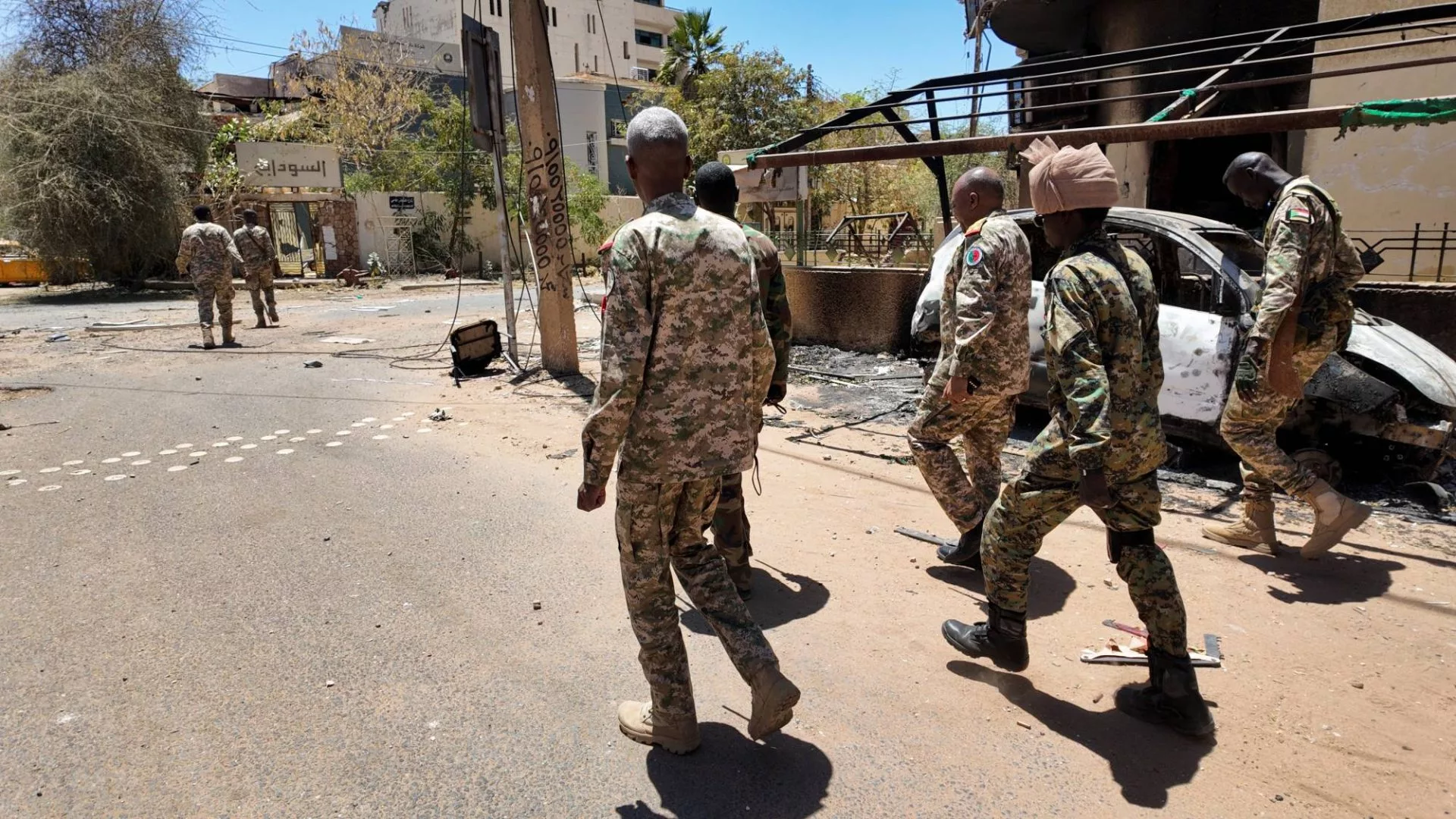
When the RSF first launched its assault on Babanusa in early 2023, the army had yet to establish advanced defensive positions. The militia quickly reached the outskirts of the 22nd Infantry Division and the 89th Brigade inside the city, which had been entirely emptied of its civilian population within days. Yet, RSF suffered a crushing defeat at the hands of besieged army units cut off from external reinforcements.

The RSF withdrew from Babanusa but maintained a land blockade from surrounding towns like Muglad and Al-Fula. A year and a half later, in June 2025 just one month after seizing the town of An-Nuhud the RSF renewed its offensive, only to suffer another setback and retreat once again.

Today, Babanusa is facing a third major assault from the RSF. This time, the militia has returned with significant reinforcements, advanced weaponry, Emirati-supplied armored vehicles, drones, and a Chinese-made FK-2000 air defense system. On November 6, 2025, the system shot down a military transport plane delivering supplies to the 22nd Division.

The 22nd Division comprises several main infantry brigades spread across greater West Kordofan: the 18th Brigade in An-Nuhud, the 89th in Babanusa, the 90th in oil-rich Heglig near the South Sudanese border, the 91st in Al-Fula, and the 92nd the largest stationed across Miram, Hiloof, Al-Qaranti, and Muglad.

A Strategic Location

The 22nd Division is unique among Sudan’s 18 army divisions in that it is based in a non-capital city. While Al-Fula is the capital of West Kordofan, the 22nd operates out of Babanusa underlining its strategic significance as a link between East Darfur and North and South Kordofan.

Babanusa lies 700 kilometers from Khartoum, 360 kilometers from Nyala in South Darfur, and 420 kilometers from El Fasher in North Darfur. It is also the closest city to Ed Daein in East Darfur.

The city hosts the Western Region’s railway headquarters, including one of the most important rail junctions connecting to Wau in South Sudan. It is also home to the Babanusa Dairy Factory, making it an economic and labor hub. The ongoing conflict has devastated the region’s agricultural and economic activities.

Major General Muawiya Hamad Abdullah, commander of the 22nd Division, has vowed that his forces will not negotiate, surrender, or retreat from Babanusa. “There is no money or vehicles here only death for those who approach. We will fight until victory,” he declared.

His statement came after the collapse of a local initiative by the Misseriya tribe proposing a safe withdrawal of army forces from Babanusa and the Heglig oil field without weapons or military equipment so that the RSF could assume control and install a loyal police force in the city.

A Fractured Brotherhood

Misseriya tribal leaders are well aware that the current round of fighting in Babanusa risks spiraling out of control. Nearly all fighters on both sides belong to the same ethnic group many are cousins or even siblings.

This fratricidal conflict threatens widespread destruction of farmland and grazing areas, as well as catastrophic damage to oil fields, with long-term environmental consequences amid an already dire situation.

Following the RSF’s second failed assault on Babanusa, militia leader Mohamed Hamdan “Hemedti” could not hide his frustration. He publicly denounced Hassan Darmoud, commander of the 89th Brigade and deputy commander of the 22nd Division, as a “mercenary.”

In contrast, he praised his own nephew, Ahmed Hamad Darmoud fighting with the RSF and promoted him to First Lieutenant.

This awkward promotion downgrading the apparent rank on his uniform from captain to lieutenant underscored the tribal tensions within Babanusa, where most soldiers of the 22nd Division hail from the Misseriya, whose leaders support the RSF, and some of whose sons fight within its ranks.

From the outset, the conflict in Babanusa has carried strong tribal undertones. Misseriya leaders—part of the largest tribal grouping in West Kordofan and second only to the Rizeigat in terms of their combat presence alongside the RSF had warned against attacking the 22nd Division, fearing an intra-tribal bloodbath and what they described as “creative chaos.”

As polarization deepens within the Misseriya, tribal leaders have once again stepped in to mediate. Throughout the war, Misseriya fighters have worked to secure major cities like Muglad, Al-Fula, and Miram extending as far as Lagawa for the RSF.

The RSF has consistently exploited inter-tribal divisions to recruit as many fighters as possible, including from the Misseriya. These fighters, once deployed in distant battles, now find themselves in direct conflict with their own kin raising the specter of internal fragmentation within RSF ranks.

Thus far, the RSF appears unconcerned with these dangers. It continues to pour reinforcements into Babanusa and arrests civilians including women and children accused of having relatives in the army. This signals the RSF’s intent to turn Babanusa into a full-fledged tribal conflict it can later manipulate to its advantage.

The Next Tribal War

The fighting in Babanusa, though confined geographically, could drag on for months. As clashes continue, they risk evolving beyond conventional warfare into a battle for influence within the tribal landscape itself.

What began as a confrontation between state forces defending Sudan’s sovereignty and a militia seeking profit from chaos now threatens to morph into a tribal conflict potentially destabilizing much of West Kordofan. The internal contradictions within the Misseriya—who form the RSF’s social base in Kordofan could ignite an intra-communal civil war.

Divided loyalties within a single ethnic group battling across the same terrain are bound to escalate into internal rifts and revenge-driven reprisals, fueled by the entrenched culture of vendetta in western Sudan. These dynamics could severely undermine RSF positions across West Kordofan.

The RSF’s continued attempts to overrun the 22nd Division widely seen as the last institutional embodiment of the state in the region will have dire social repercussions.

Such confrontations could fracture the militia’s cohesion and reshape power dynamics in the event of internal defections, especially given the decentralized structure of the RSF, whose fighters pledge allegiance to individual commanders rather than a unified hierarchy.

In the end, what is unfolding in Babanusa cannot be reduced to a simple military confrontation. At its core, it is a test of tribal solidarity one that may lead to lasting internal divisions and long-term instability far exceeding the scope of the current war.

Download this article as PDF
Share this Article
Facebook Twitter Whatsapp Whatsapp Telegram Email Copy Link
يوسف بشير
By يوسف بشير صحافي سوداني
Follow:
Previous Article نون بوست Will Trump Dissolve the Palestinian Authority?
Next Article نون بوست Miloud Ben Najeh: The Tunisian Who Fought the Occupation

Read More

  • U.S. Regime‑Change Policies: Why They Are Destined to Fail U.S. Regime‑Change Policies: Why They Are Destined to Fail
  • The Gulf’s Balancing Act: Iran, Israel, and Hidden Links
  • Iraq–Turkey Oil Export Treaty: Why Did Ankara Cancel It After 52 Years?
  • Syria’s Northeast on Edge: QSD Between Ankara and Damascus
  • Has Europe Changed Its Stance on Israel… or Just Its Language?
part of the design
NoonPost Weekly Newsletter

You May Also Like

U.S. Regime‑Change Policies: Why They Are Destined to Fail

U.S. Regime‑Change Policies: Why They Are Destined to Fail

إسراء سيد Esraa sayed 8 April ,2026
The Gulf’s Balancing Act: Iran, Israel, and Hidden Links

The Gulf’s Balancing Act: Iran, Israel, and Hidden Links

فريق التحرير Noon Post 8 April ,2026
Iraq–Turkey Oil Export Treaty: Why Did Ankara Cancel It After 52 Years?

Iraq–Turkey Oil Export Treaty: Why Did Ankara Cancel It After 52 Years?

فريق التحرير Noon Post 8 April ,2026

ما بعد إسقاط الطائرة: لماذا لم يتهم الأتراك روسيا رسميًا؟

فريق التحرير
Noon Post Published 18 October ,2015
Share
09

قبل أيام قليلة اجتمع الأعضاء الثماني والعشرون لحلف الناتو لاجتماع طارئ على خلفية الانتهاكات غير المقبولة للمجال الجوي التركي، حيث أعلن الأمين العام للحلف يِنس شتولتنبرج  احتجاج الحلف على الحوادث المتكررة من جانب الطيران الروسي الذي حلق عدة مرات فوق الأراضي التركية، في حين أعلنت تركيا من اتخاذها التدابير اللازمة ضد تلك الطائرات في المستقبل، وهو احتكاك بين القوتين حذر منه وزير الخارجية الأمريكي جون كيري، “لو كانت تركيا قد اتخذت رد فعل مناسب لأسقطت تلك الطائرات، وهي مسألة حذرنا منها ونعبر عن قلقنا الشديد تجاهها.”

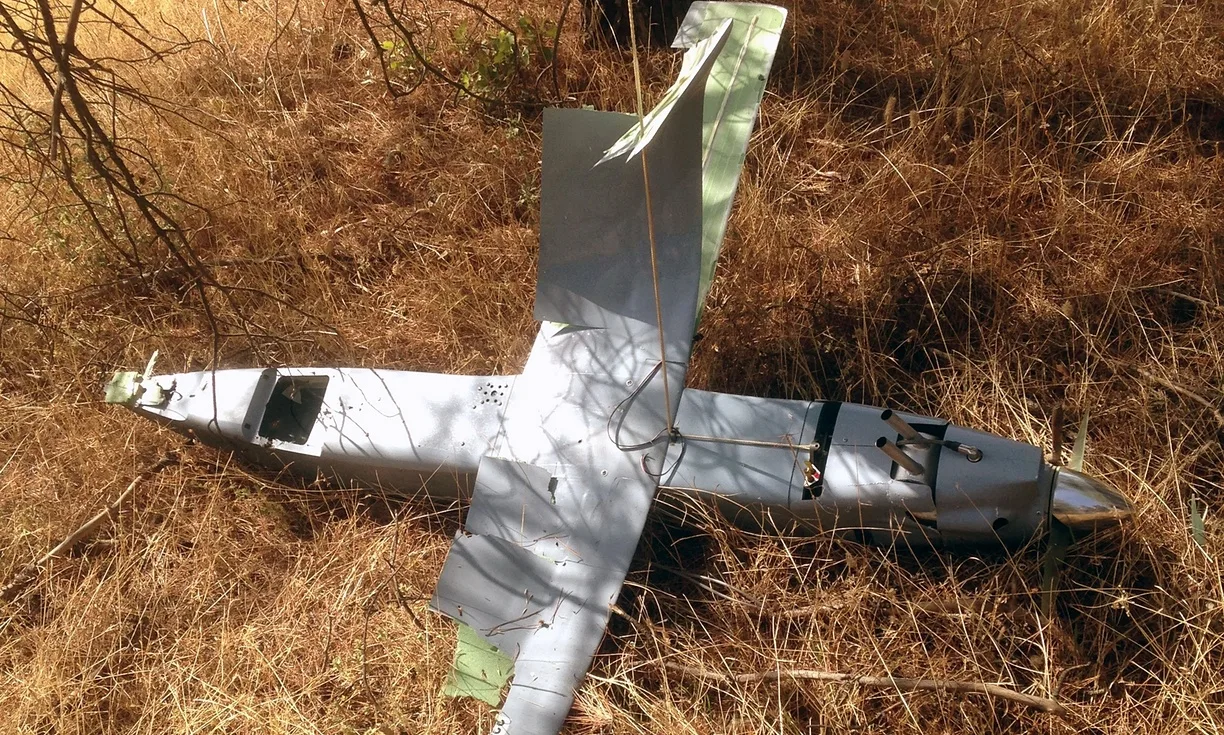
على الرُغم من تلك التحذيرات، لا يبدو أن الروس قد تأثروا كثيرًا للتراجع عن خطواتهم تلك، والمقصودة في الغالب كما يشير محللون عدة كنوع من إرسال رسالة تهديد لحلف الناتو عن طريق العضو الأهم على الحدود السورية وهو تركيا، وهو ما دفع بالأتراك بالفعل إلى إسقاط إحدى طائراتهم بدون طيار أول أمس، بعد أن اخترقت المجال الجوي التركي، دون الإعلان رسميًا عن كونها طائرة روسية لتجنب أي تدهور سياسي في العلاقات بين أنقرة وموسكو، وهي طائرة تبرأت منها موسكو.

بوضع تصريحات موسكو الرسمية بأن كافة طائراتها عادت لقواعدها سالمة جانبًا، لا يبدو أن أحدًا يشك أن الطائرة روسية بالفعل، فقد تطابقت الطائرة في مواصفاتها مع الكثير من طائرات الاستطلاع بدون طيار التي تستخدمها روسيا، وهو ما أكدته مصادر عسكرية تركية ولبنانية رُغم التصريح التركي الرسمي بأن الطائرة مجهولة الهوية، حيث قال رئيس الأركان التركي بأن الطائرة روسية الصنع من النوع أورلان-10، ليقوم مركز بطرسبرغ التكنولوجي الروسي بإنكار تلك التصريحات التركية.

يعرف القاصي والداني بالطبع أن تركيا تستطيع إسقاط أي طائرة تدخل مجالها الجوي بسهولة نظرًا لقوة قواتها الجوية وانتمائها لحلف الناتو الذي تتمتع بنظام دفاعه الجوي، وهو ما يعني أن قرارها غض الطرف عن تلك الحوادث المتكررة في مقابل التدخل أول أمس هو بمثابة رسالة لموسكو بأن صبرها قد نفد بخصوص تلك المسألة، لا سيما وأن تلك الطائرات الروسية قادمة بالأساس لضرب رصيد تركيا الاستراتيجي في سوريا، والذي تراكم بتقدم المعارضة السورية في مدن عدة مثل حلب، التي يحاول جيش الأسد دخولها منذ الأمس بمساعدة الطيران الروسي.

في نفس الوقت، وفي ثنايا تلك الرسالة، كانت الرغبة التركية بعدم الدخول في صدام مفتوح مع روسيا واضحة، فالطائرة التي يعلم الجميع أنها روسية بالفعل رُغم إنكار روسيا، لم تشر لها مصادر تركيا الرسمية إلا بكونها طائرة مجهولة، وذلك باستثناء تصريح رئيس الأركان المتعلق بالجانب التقني من المسألة، وهو ما أكد عليه وزير الخارجية التركي فريدون سينيرلي أوغلو بنفسه، حيث قال بأن التدخل ضد الطائرة كان تدبيرًا ضروريًا لحماية المجال الجوي التركي، ولا يؤثر على العلاقات بين أنقرة وموسكو.

المساحات الواسعة بين الأتراك والروس

نون بوست

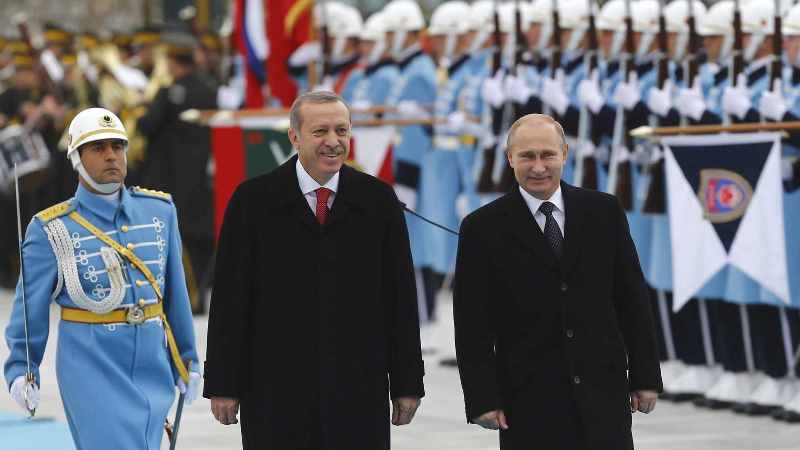
أردوغان وبوتين في أنقرة في آخر زيارة رسمية

خيط رفيع إذن تحاول تركيا الحفاظ عليه باحتواء صديقها الجديد في موسكو، والذي اقترب منه أردوغان مؤخرًا ووقع معه على اتفاق لنقل الغاز للبلقان عبر تركيا واليونان (مشروع توركش ستريم)، في نفس الوقت الذي يزداد فيه تنافرهما حيال الملف السوري الحيوي لتركيا وأمنها القومي، والضروري من ناحية أخرى لاستمرار تواجد الروس في البحر المتوسط والتأثير على معادلات الطاقة بالشرق الأوسط كما أشارت تحليلات عدة، وهو خيط يهم تركيا أن يظل ممدودًا مهما تعرض لصغوط لأسباب كثيرة، لا سيما وأنها تعرف أن انتهاكات مجالها الجوي لم تكن رسالة روسية لتركيا بقدر ما كانت رسالة لحلف الناتو وقياداته في واشنطن وبروكسل.

عدا ذلك، ومن زاوية العلاقات التركية الروسية الثنائية فقط، فإن الطرفين يبدوان في حاجة إلى بعضهما بعيدًا عن ملف سوريا، فالروس لا يمكنهم تعويض الفراغ الذي تركته دول الاتحاد الأوروبي بمقاطعتها اقتصاديًا بعد الأزمة الأوكرانية سوى بالسوق التركي، كما أن توتر الأوضاع في أوكرانيا وتعنت دول أوروبا في تعميق روابط الطاقة مع موسكو يعني أن مشروع الغاز عبر تركيا، وإن لم يبدأ العمل فيه بعد، مسألة مهمة لجذب دول البلقان غير العضوة بعد بالاتحاد الأوروبي عبر تركيا كقوة قائمة بذاتها لكسب جزء على الأقل من سوق أوروبا والاستمرار في الضغط من موقع آخر بجنوب شرق القارة.

من ناحية أخرى، تحتاج تركيا إلى علاقات جيدة مع الروس نظرًا لعلمها بأن دورهم في سوريا وأوكرانيا على السواء، مهما تنافر استراتيجيًا مع دورها، إلا أنه يظل مسألة حتمية جغرافيًا وتاريخيًا، وهو ما يعني عدم جدوي تصعيد الخطاب والتوتر مع موسكو، بالإضافة إلى أن التباعد في الرؤى بين أنقرة وواشنطن مؤخرًا نتيجة دعم الأخيرة لحزب الاتحاد الديمقراطي الكردستاني يعني أن هناك مساحة بين الأتراك والروس بإمكانية إبعاد تركيا لموسكو عن أكراد سوريا بتصويرهم كرأس حربة للتدخل الأمريكي، وهي صورة كفيلة بإبعاد موسكو عنهم كما تحاول أنقرة أن تفعل بجهودها الدبلوماسية، أملًا ألا يحصلوا على دعم مضاعف مهما اشتد دعم الروس الحتمي للأسد.

الحفاظ على القنوات التركية الروسية مفتوحة إذن أمر يهم تركيا بشكل عام للحفاظ على علاقاتها الجديدة مع الروس، وبشكل خاص لحماية القدرة على التأثير على الموقف الروسي نفسه داخل سوريا، والذي يمكن أن يصل لدعم الروس للأكراد إذا ما وقع صدام مفتوح بينهما بالفعل، علاوة على أن الطرفين سيجلسان في نهاية المطاف مع إيران والغرب لرسم خارطة سوريا الجديد عاجلًا أم أجلًا كما يعرفان، وهو ما يعني عبثية خلق توتر سياسي و/أو عسكري في هذه اللحظة في صراع ليس صفريًا على الإطلاق.

أيضًا، لا بد وأن الأتراك يأخذون في الاعتبار التنسيق العسكري المتنامي بين الروس وإسرائيل، فالأخيرة وإن توترت علاقاتها بأنقرة في هذه اللحظة، إلا أن رغبتها في استخدام التقارب مع روسيا لإحداث تباعد نسبي بين الموقفين الإيراني والروسي في سوريا قد يهم الأتراك للخروج مستفيدين من تحجيم دور الميليشيات الإيرانية، وهي ميليشيات قد تقوّض من الدور التركي على المدى البعيد بجانب تهديدها لإسرائيل، في حين سيبقى الدعم العسكري الروسي النظامي محدودًا في أثره نتيجة غياب دور متغلغل له على الأرض مثل طهران، وهو ما يعني مرة أخرى أن هناك مساحة جديدة بين الأتراك والروس لاستخدام التقارب مع إسرائيل في الضغط على التواجد الإيراني بجنوب سوريا.

في نهاية المطاف، ومع وجود كل تلك المساحات بين الأتراك والروس، كما جرت العادة على مدار تاريخهما، رُغم التضاد الاستراتيجي التقليدي بينهما، تظل هناك أيضًا ميزة تقليدية لتنامي الدور الروسي في الجوار التركي، وهو أنه يستدعي دومًا حاجة الأوروبيين لتركيا لإحداث توازن ضروري مع موسكو، بشكل يستتبع اقتراب أوروبا من تركيا ودعم الغرب لها عسكريًا وسياسيًا، وهو ما حدث بالفعل بعد أيام من بدء الحملة الروسية، حيث اتجه أردوغان في زيارة رسمية لبروكسل لأول مرة منذ بضعة أعوام، كما تنتظر تركيا ظهر اليوم المستشارة الألمانية أنغلا مركل التي تتسم علاقات بلادها مع أنقرة عادة بالتوتر نتيجة رفضها لعضويتها بالاتحاد الأوروبي.

Download this article as PDF
Share this Article
Facebook Twitter Whatsapp Whatsapp Telegram Email Copy Link
فريق التحرير
By فريق التحرير تقارير يعدها فريق تحرير نون بوست.
Follow:
Next Article نون بوست The Stigma of “ISIS”: A Heavy Legacy Haunting Women and Children of Former Members

Read More

  • U.S. Regime‑Change Policies: Why They Are Destined to Fail U.S. Regime‑Change Policies: Why They Are Destined to Fail
  • The Gulf’s Balancing Act: Iran, Israel, and Hidden Links
  • Iraq–Turkey Oil Export Treaty: Why Did Ankara Cancel It After 52 Years?
  • Syria’s Northeast on Edge: QSD Between Ankara and Damascus
  • Has Europe Changed Its Stance on Israel… or Just Its Language?
part of the design
NoonPost Weekly Newsletter

You May Also Like

U.S. Regime‑Change Policies: Why They Are Destined to Fail

U.S. Regime‑Change Policies: Why They Are Destined to Fail

إسراء سيد Esraa sayed 8 April ,2026
The Gulf’s Balancing Act: Iran, Israel, and Hidden Links

The Gulf’s Balancing Act: Iran, Israel, and Hidden Links

فريق التحرير Noon Post 8 April ,2026
Iraq–Turkey Oil Export Treaty: Why Did Ankara Cancel It After 52 Years?

Iraq–Turkey Oil Export Treaty: Why Did Ankara Cancel It After 52 Years?

فريق التحرير Noon Post 8 April ,2026
dark

An independent media platform founded in 2013, rooted in slow journalism, producing in-depth reports, analysis, and multimedia content to offer deeper perspectives on the news, led by a diverse young team from several Arab countries.

  • Politics
  • Society
  • Rights & Liberties
  • Opinions
  • History
  • Sports
  • Education
  • Technology
  • Economy
  • Media
  • Arts & Literature
  • Entrepreneurship
  • Travel
  • Cinema & Drama
  • Food
  • Health
  • Culture
  • Latest Reports
  • Files
  • Long Reads
  • Interviews
  • Podcast
  • Interactive
  • Encyclopedia
  • In Pictures
  • About Us
  • Our Writers
  • Write for Us
  • Editorial Policy
  • Advanced Search
Some rights reserved under a Creative Commons license

Removed from favorites

Undo
Go to mobile version