















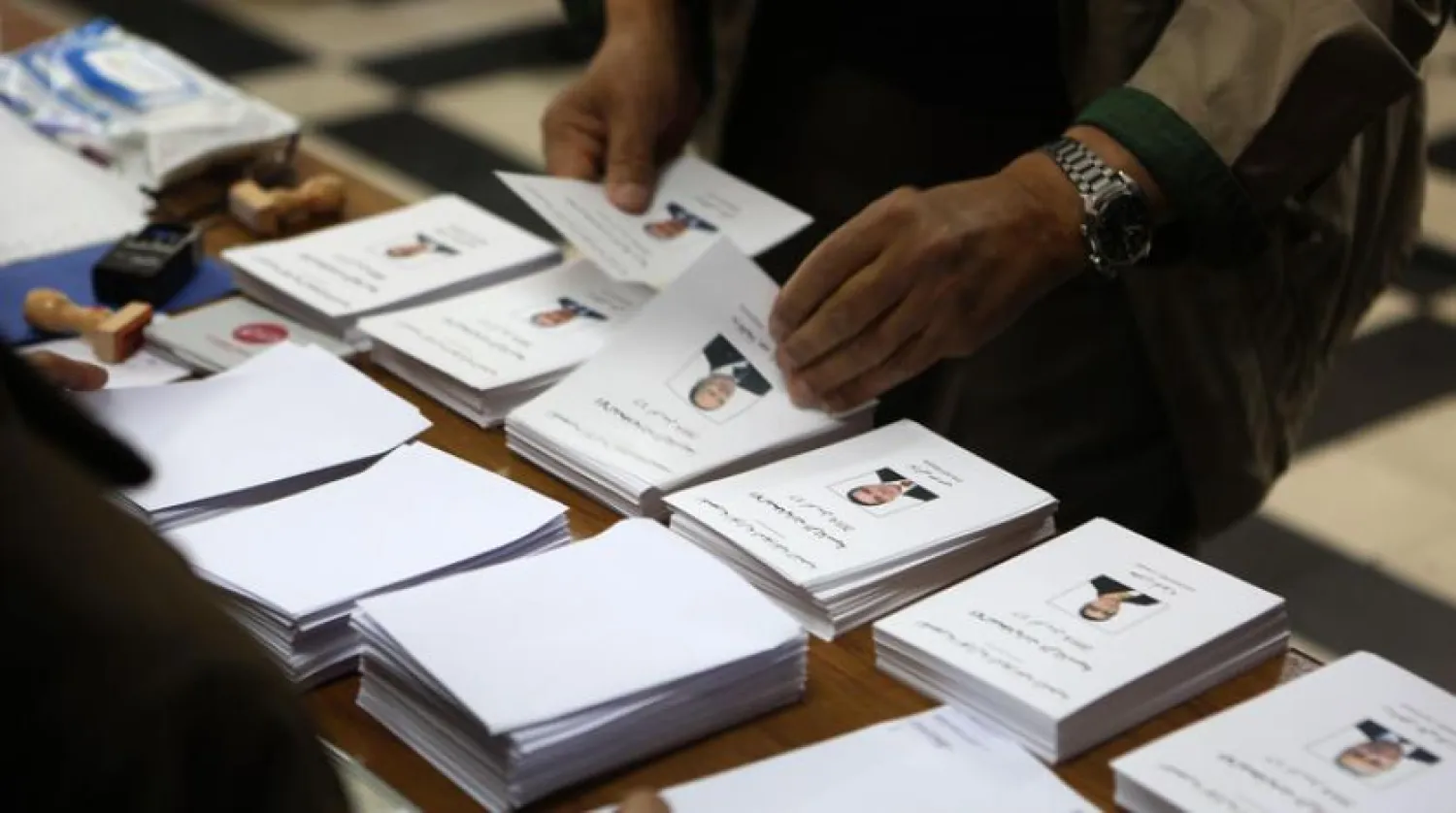
In less than seven months, Algerians will head to the polls for parliamentary elections that could redraw the current political landscape, which is dominated by pro-regime alliance forces.
This dominance has weakened the opposition’s role in the National People’s Assembly, where a single opposition bloc the Movement of Society for Peace (MSP), Algeria’s largest Islamist party holds sway.
Dozens of major political parties are expected to compete for over 400 seats in the lower house of parliament. This report highlights the most prominent parties vying for seats in this critical vote.
National Liberation Front (FLN)
Leading the list of contenders is the National Liberation Front (FLN), which, despite setbacks, remains a key player. In the 2021 parliamentary elections the first since the popular Hirak movement ousted President Abdelaziz Bouteflika the FLN topped the results but suffered a significant seat loss, securing only 100 out of 407 seats, far from the threshold needed for a parliamentary majority.
The FLN, aligned with President Abdelmadjid Tebboune, is grappling with internal strife triggered by a “reform and purge” initiative launched by Secretary-General Abdelkrim Ben Mabrouk, who assumed leadership in 2023 following a “corrective movement” that ousted his predecessor, Abou El Fadl Baadji.
Today, prominent figures and former MPs are pushing for an extraordinary central committee session, aiming to pressure Ben Mabrouk into resigning.
Democratic National Rally (RND)
Founded on February 26, 1997, during Algeria’s turbulent “Black Decade,” the Democratic National Rally (RND) has long positioned itself as a pro-establishment party advocating democratic pluralism and peaceful power transitions. Historically, it has placed second or third in most elections.
However, in the 2021 elections, the RND fell to fourth place with just 60 seats. This drop stemmed from public backlash over its support for Bouteflika’s fifth-term bid and corruption scandals involving top officials most notably former Prime Minister and party leader Ahmed Ouyahia, convicted in 2019. Despite these setbacks, the RND is currently more stable than the FLN.
In a bid to revitalize its image, the party recently transitioned to younger leadership. In July, young MP Mondher Bouden was elected party head at the general congress, signaling a generational shift following the departure of founding figures.
Movement of Society for Peace (MSP)
Algeria’s largest Islamist party, the Movement of Society for Peace (MSP), founded in the early 1990s, remains a formidable force. In the 2021 elections, it surpassed the RND with 65 seats 15.72% of the total and currently represents the largest opposition bloc in parliament.
Since withdrawing from its power-sharing agreement in 2012, citing the regime’s reluctance to pursue genuine reforms, MSP has maintained a critical stance toward domestic policies while expressing strong support for Algeria’s foreign positions namely, non-alignment, Afro-Arab solidarity, and vocal backing for the causes of Palestine and Western Sahara.
Recent political developments suggest possible strategic alliances among Islamist parties ahead of next year’s elections. On September 23, MSP leader Abdelali Hassani Cherif and senior party figures met with representatives of the Ennahda Movement in a visit described as “exceptional.”
Discussions centered on future cooperation, reinforcing speculation about a joint electoral front in the upcoming parliamentary and local contests.
Socialist Forces Front (FFS)
Another party preparing for a political comeback is the Socialist Forces Front (FFS), founded on September 29, 1963, by historic opposition leader Hocine Aït Ahmed. The FFS has traditionally boycotted major electoral events including the 2021 vote during the Hirak movement and the 2002, 2007 legislative elections, as well as the 2009 presidential election.
However, it did participate in the 2012 parliamentary elections, winning 27 seats, and held 14 seats in the 2017–2021 term.
Now, the FFS appears ready to reengage. At a recent National Council session, First Secretary Youcef Aouchiche declared, “The regime thrives on political absenteeism and citizens’ withdrawal from public life.
History is not written in silence but through action, initiative, and participation.” The decision to contest elections, he said, aims to restore the meaning of representation and reaffirm the people’s role as the ultimate source of legitimacy.
Workers’ Party (PT)
Also returning to the scene is the left-wing Workers’ Party (PT), a long-standing force in Algerian politics since the advent of multi-party democracy in 1989. Despite recent challenges, party leader Louisa Hanoune announced an end to the post-Hirak boycott strategy, calling a parliamentary return “vital” to restore past legislative achievements.
The PT emerged in 1990 from the Socialist Workers’ Organization, bringing together unionists and working-class citizens, and has consistently championed labor rights and wealth redistribution.
Politically, the party boycotted the 1991 elections won by the Islamic Salvation Front and opposed the cancellation of the second round scheduled for January 1992. The PT entered parliament in 1997 with four MPs, including Hanoune herself.
From 1999 onwards, the party has participated in every national vote. In 2002, it garnered 3.3% of the vote and 21 seats. Hanoune made history in 2004 as Algeria’s first female presidential candidate, securing over 101,000 votes. In 2007, the party became the largest opposition force with 5.08% of the vote and 26 seats.


